

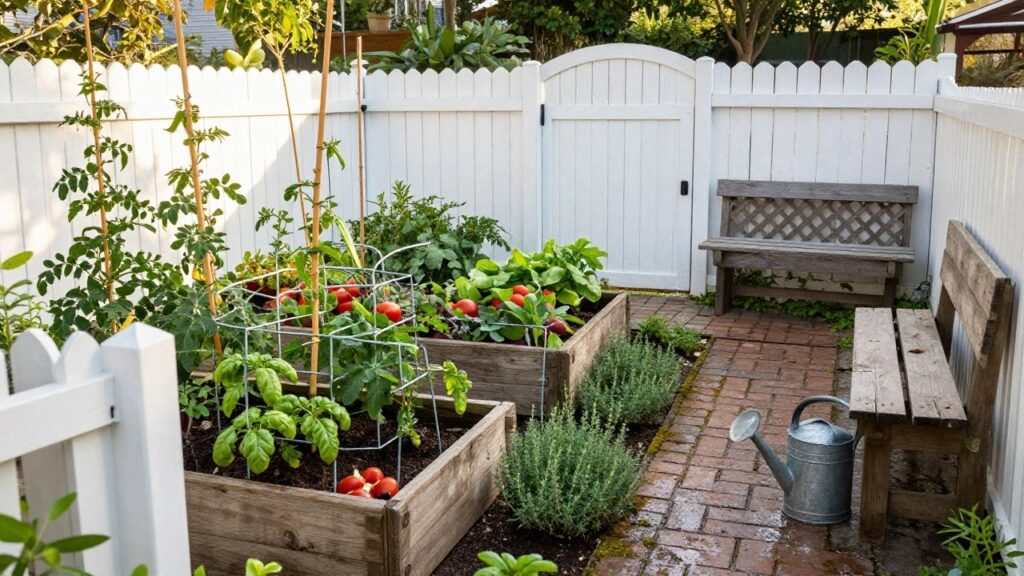
I’ve spent enough time tending vegetable patches to know that without a solid fence, critters turn your hard work into their buffet.
The right one shapes the whole layout, guiding paths between beds and giving structure as plants grow tall through the seasons.
I remember testing a low wood-panel setup in my backyard, and it instantly made the space feel contained and ready for harvest.
Details like height and gate placement catch the eye first when you walk up.
These options give practical ways to build protection that adapts to your yard’s quirks and lasts year after year.
Classic White Picket Fence Garden Gate
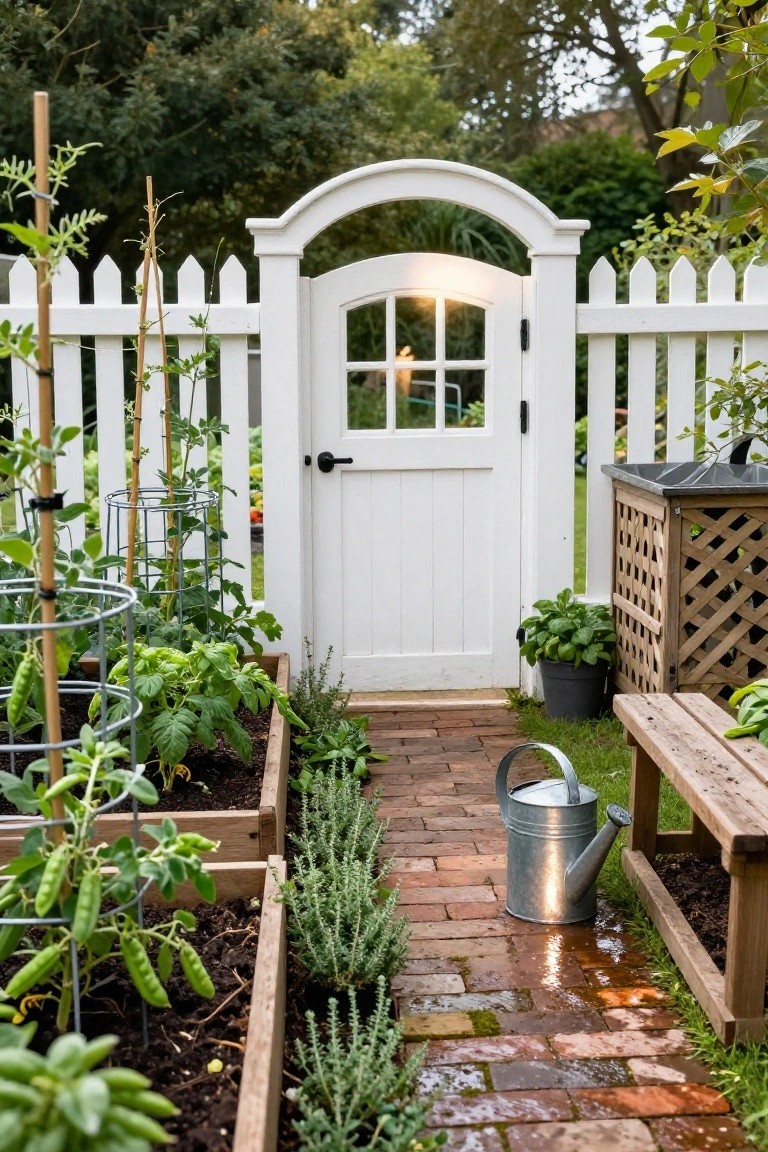
A simple white picket fence with an arched gate makes a perfect boundary for a vegetable garden. It keeps rabbits and deer away from your crops without feeling closed off. That open style lets you see right into the growing space, and the gate adds a welcoming touch to the whole yard.
Put this around raised beds in a sunny backyard spot. It suits older homes or cottage gardens best. Just make sure the fence is tall enough for real protection, and paint it fresh every couple years to hold up.
Slatted Fence Shields Veggie Beds
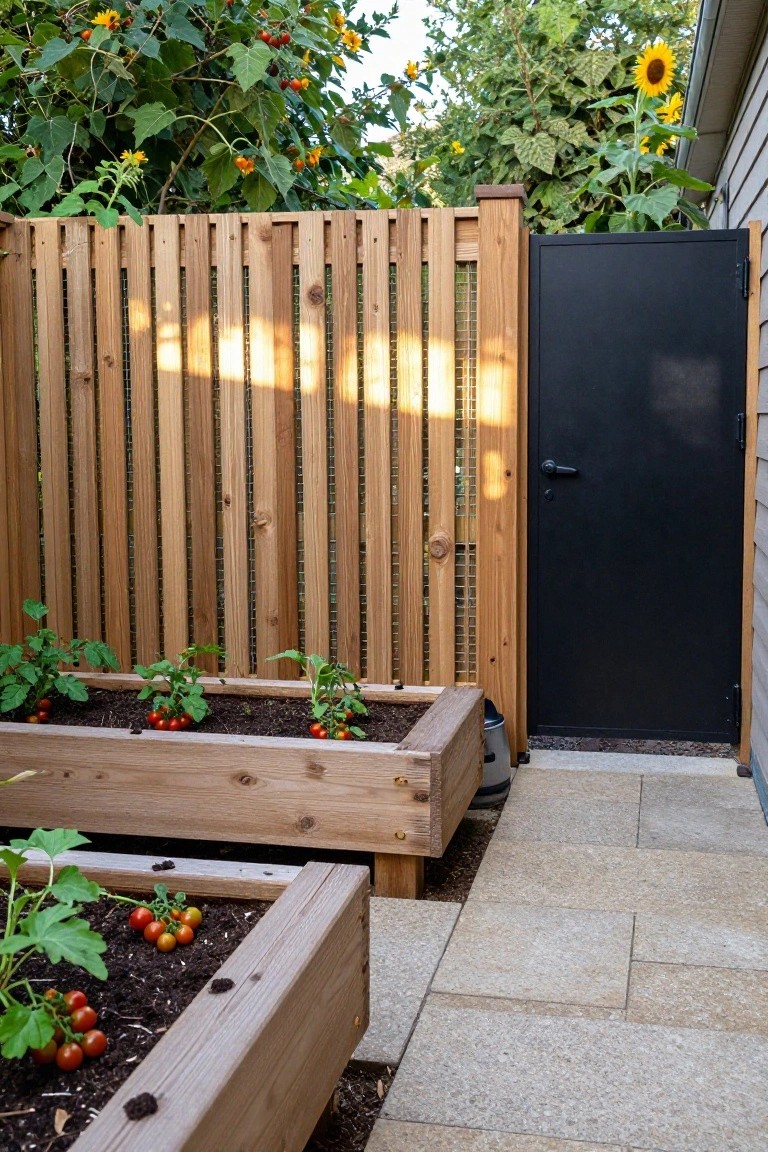
A simple slatted wooden fence like this one keeps rabbits and other pests away from young tomato plants in raised beds. The vertical cedar slats give some privacy from neighbors, while chicken wire fills the gaps to block small animals without blocking too much sun or air. It fits right next to the house and lets you see the garden from inside.
This works best in average backyards where you want protection but not a solid wall that feels closed in. Use cedar or redwood for weather resistance, and add a black metal gate for easy access. Just make sure the mesh is tight so nothing sneaks through… especially with ripe tomatoes tempting everyone.
Protective Mesh Fencing for Vegetable Gardens
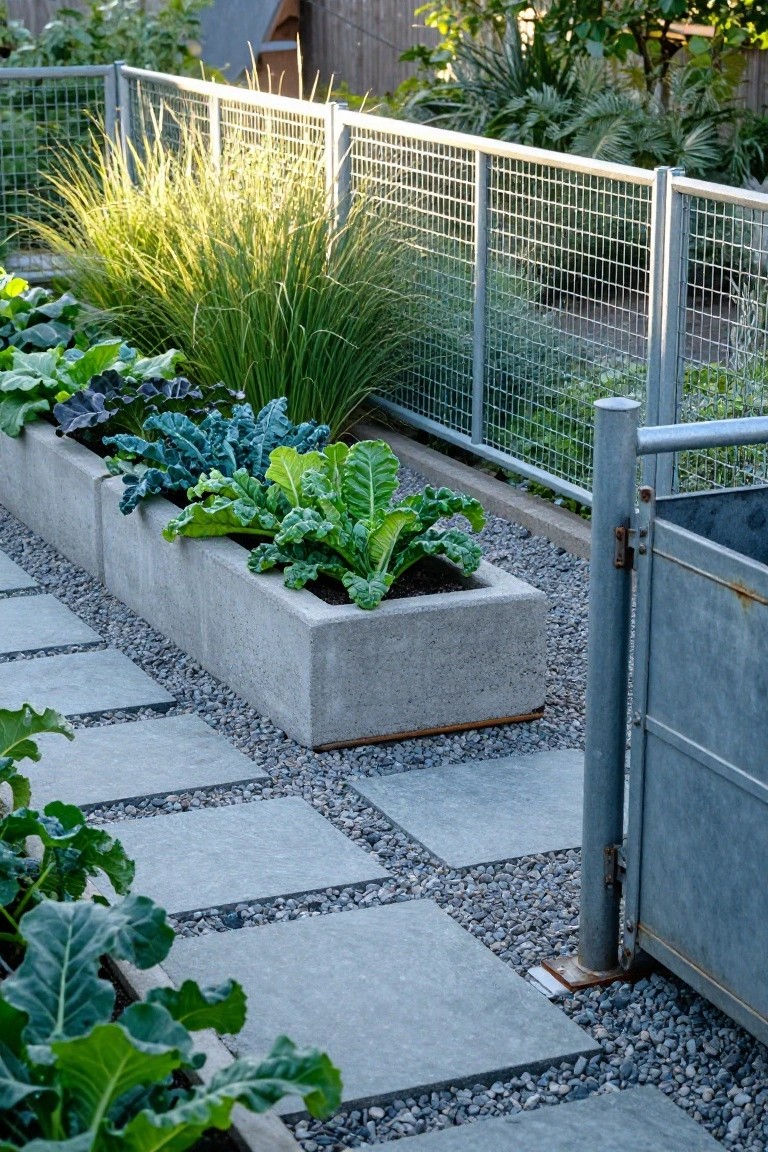
A simple galvanized metal fence like this keeps rabbits and other critters out of your veggie patch without blocking sunlight or airflow. It pairs nicely with raised concrete beds, which hold soil in place and make harvesting easier on your back. The open mesh lets you see your kale and chard growing strong.
This setup works great in small backyards or urban lots where space is tight. Bolt the panels to posts set in gravel paths to keep things tidy, and add some taller grasses nearby for a bit of screening. Just make sure the gate latches securely… nothing worse than losing a crop overnight.
Gated Raised Bed Vegetable Garden
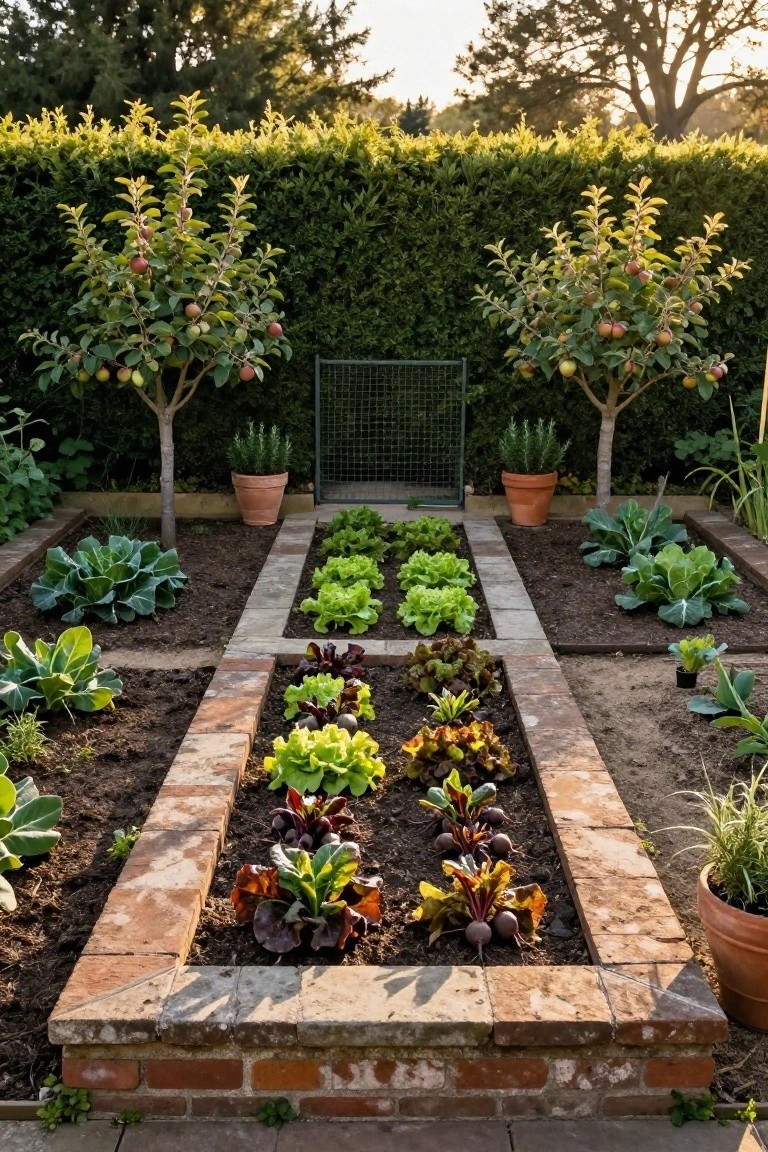
This setup uses a simple metal gate set into a tall hedge to enclose neat raised beds made from brick. It keeps pests out and gives the garden its own protected spot. The paths between beds make it easy to reach everything, and dwarf apple trees in pots add a bit of height without crowding the veggies. Lettuce, beets, and greens grow happily inside.
You can copy this in a backyard corner where you want veggies close to the house. The hedge does most of the privacy work… just make sure it’s thick enough year-round. Brick beds suit sloped yards or poor soil since they hold everything in place. Works best for smaller spaces, maybe 10 by 15 feet.
Bamboo Privacy Fence for Vegetable Gardens
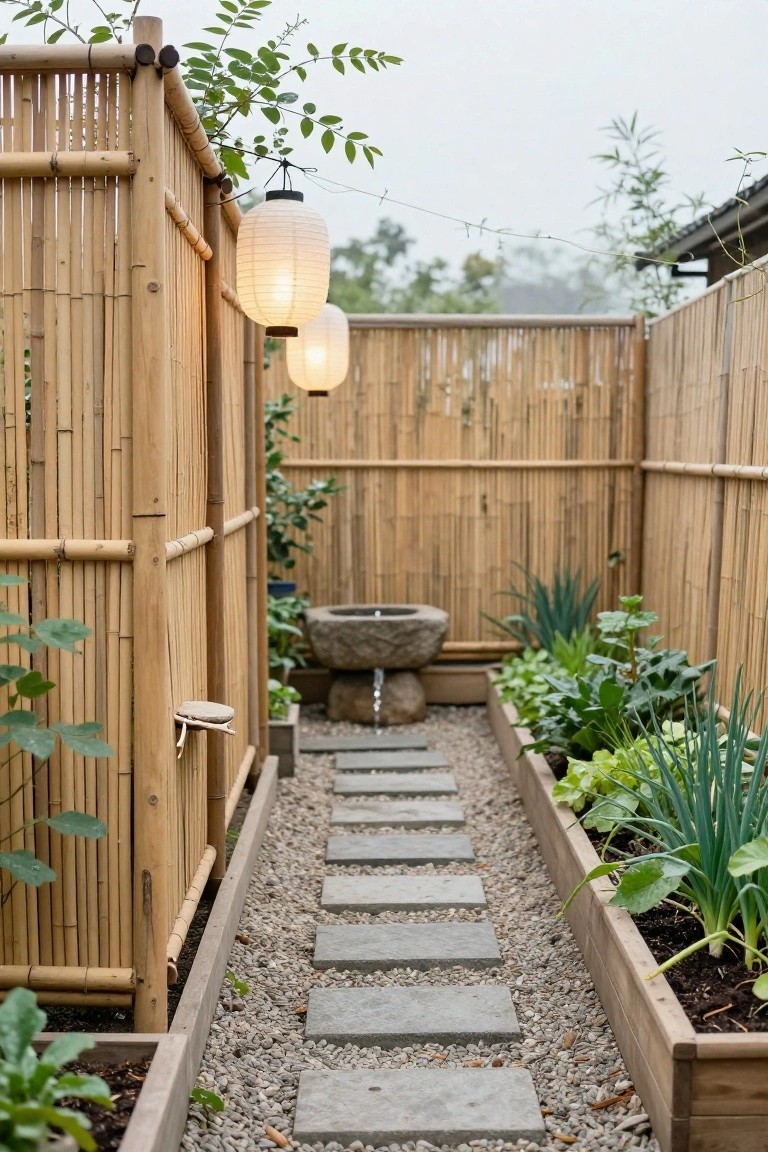
Bamboo fencing works great as a simple privacy screen around your veggie patch. It keeps things enclosed without feeling closed off, and that natural look fits right in with garden plants. Here you see it lining a narrow path with raised beds full of greens and herbs, plus a stone basin for water. The tall panels block views from outside while letting in light and air.
This setup suits small backyards or side yards where you want protection from wind, pests, or nosy neighbors. Use ready-made bamboo rolls on wood or metal frames for easy install. Pair it with gravel paths and stone steps to guide foot traffic. Just make sure it’s treated against weather, or it might wear down faster in wet spots.
Wire Mesh Fence for Vegetable Garden Protection
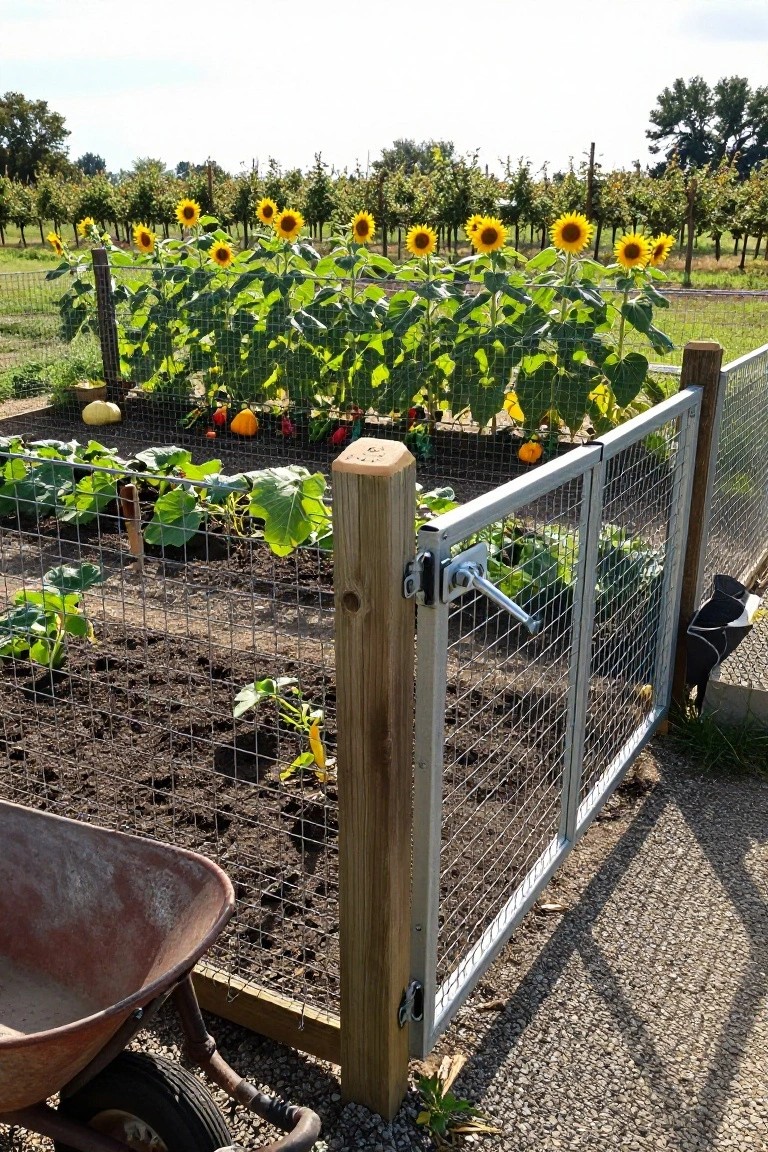
A simple wire mesh fence like this one keeps rabbits, deer, and other critters out of your veggie patch without blocking the view. Here it’s set up around raised beds with pumpkins and squash growing inside, and tall sunflowers along the edge for extra screening. The galvanized metal holds up well to weather, and wooden posts give it a sturdy, rustic feel that fits right into a backyard setup.
You can build something similar using hardware cloth or welded wire panels attached to 4×4 posts, adding a swinging gate for easy access with a wheelbarrow. It works best in smaller home gardens near orchards or open fields where animals roam. Just make sure the mesh is buried a few inches underground to stop diggers, and keep the gate latch secure.
Arched Trellis Tunnel for Climbing Vegetables
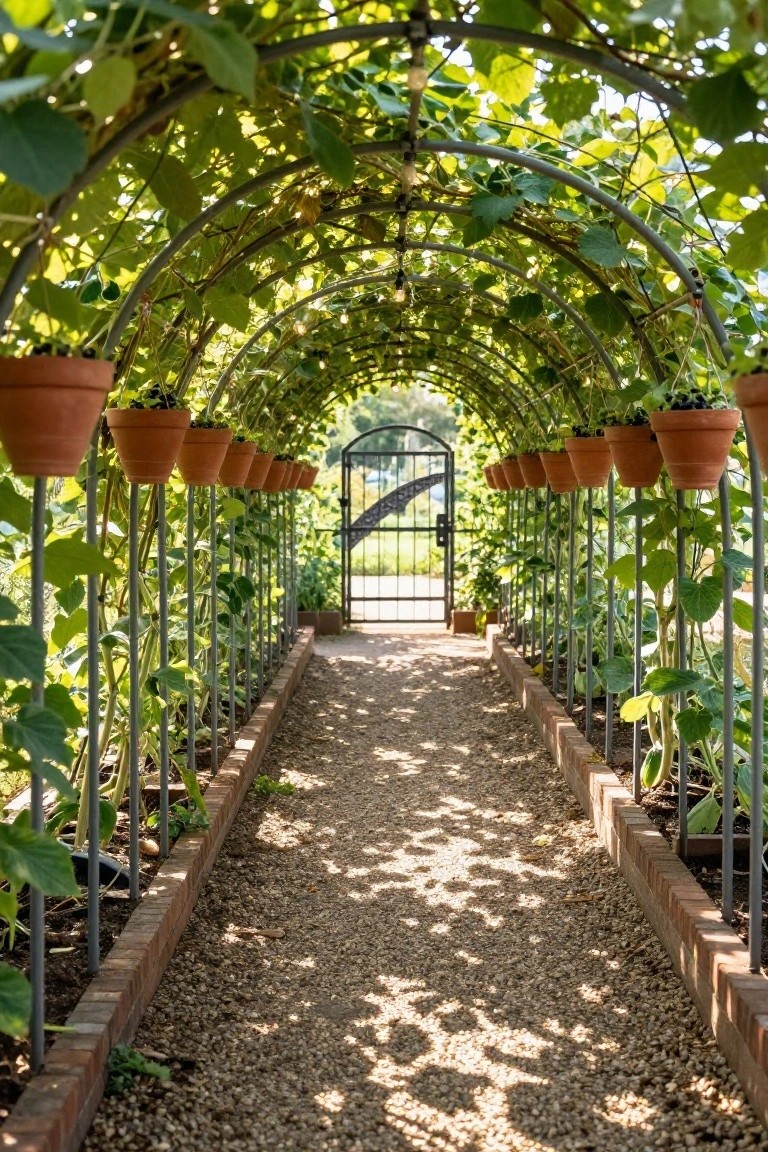
One practical way to fence in your vegetable garden is with arched metal trellises that support climbing plants like pole beans. The vines grow thick along the frames, creating a living wall that keeps pests out and defines the space nicely. A gravel path runs through the middle, and terracotta pots hang from the poles for extra herbs or flowers. It turns a simple support structure into something that looks good too.
This works best in a sunny spot with enough room for the tunnel shape, say 10 feet long or so. Start with galvanized arches set in the ground, train your beans up them early, and watch the coverage build. It suits backyard gardens where you want protection without solid panels blocking light. Just keep the path clear of weeds to make walking easy.
Ladder Trellises on Garden Fences
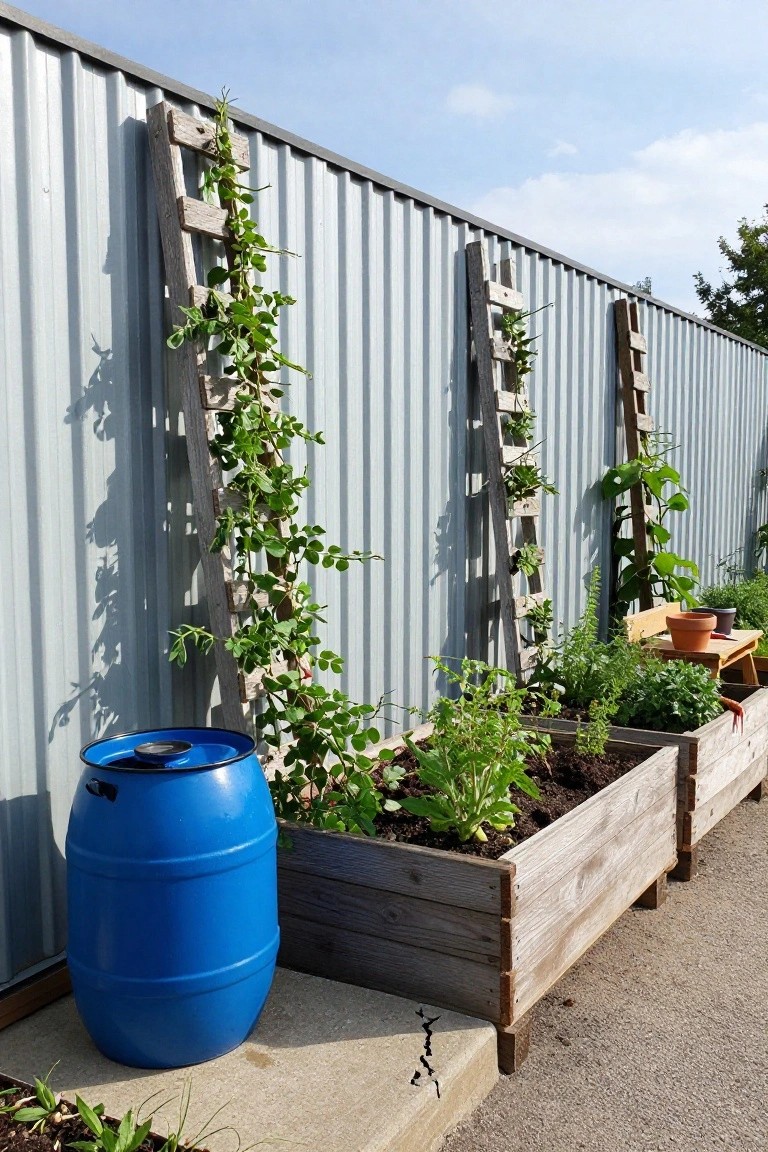
One smart way to make more room in a vegetable garden is to lean old wooden ladders right up against the fence. They give climbing plants like beans and peas a place to grow up instead of out. The fence acts as a solid backdrop and keeps things protected from wind or critters. In this setup, the ladders blend right in with the rough metal fence and let you pack in more plants without crowding the ground.
You can try this in any backyard with a straight fence. Pick ladders that are sturdy enough to hold the weight of vines as they fill out. Mount them securely at the base and top so they don’t shift. It works great next to raised beds for easy picking. Just keep an eye on the plants to train them along the rungs early.
Stone Walls Topped with Wire Mesh
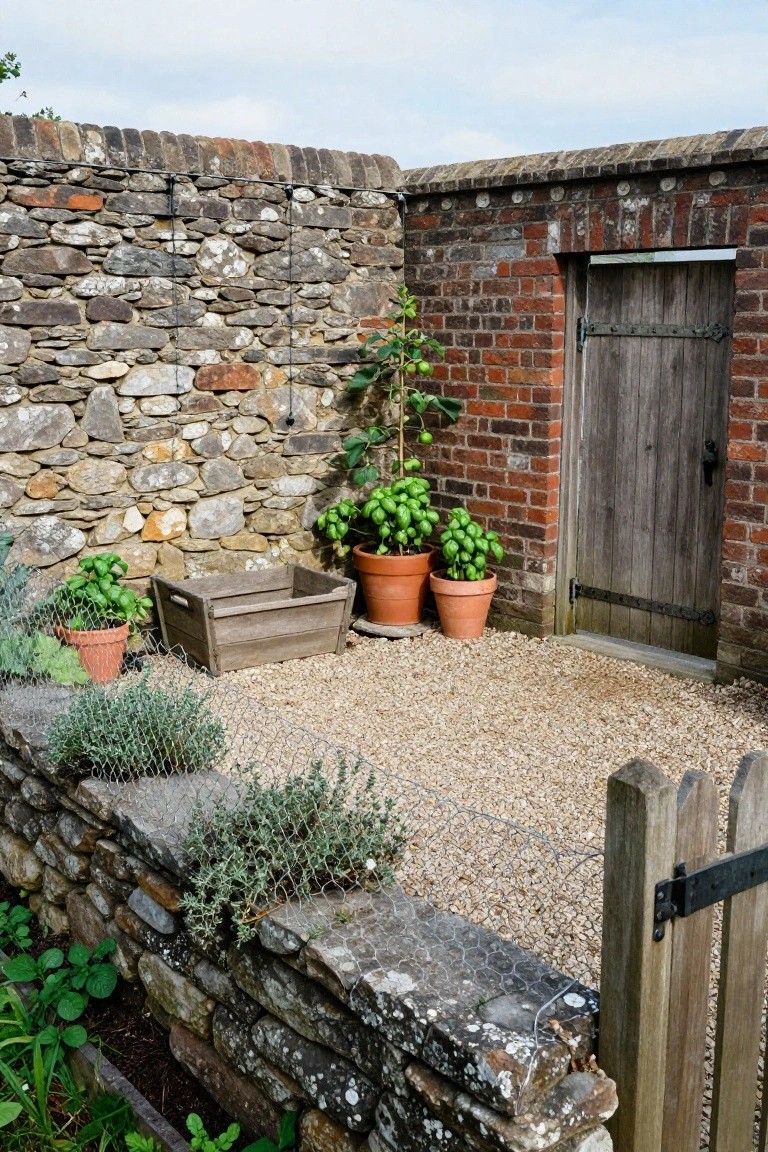
One straightforward way to protect your vegetable plants is to build low stone walls around the garden and top them with wire mesh. This setup keeps out rabbits, deer, and other critters without blocking light or air. In the photo, you see it holding back basil pots and peppers nicely, with gravel on the ground for good drainage.
It works best in a small side yard or courtyard where you want a tidy, enclosed spot. Stack local stone for the base, add mesh that’s buried a bit underground to stop diggers, and pair it with a simple wooden gate. Skip it if your area’s too windy, since the wire can rattle.
Slatted Wood Fence Shields Terrace Veggies
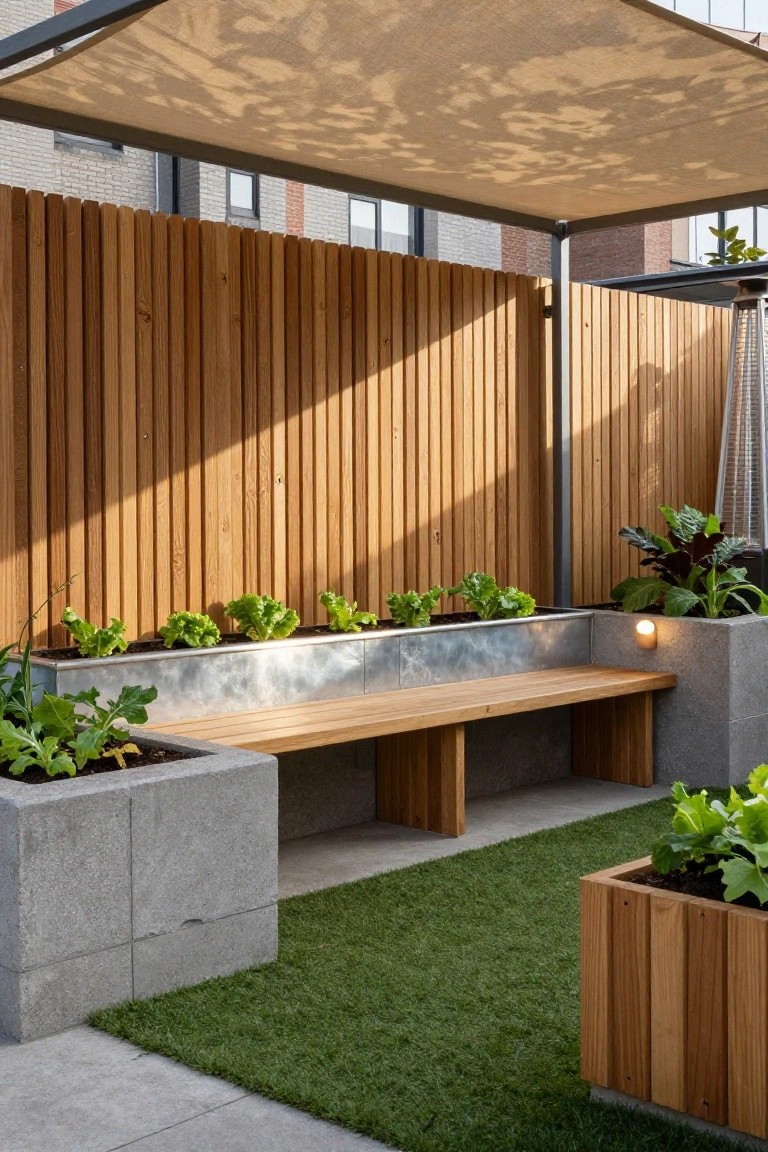
A simple slatted wooden fence like this one wraps around the growing area on a rooftop terrace. The vertical boards stand tall enough to block wind and curious eyes, while gaps let in light for the plants. Here it’s paired with a metal trough planter full of lettuce right along the bench, keeping everything handy and protected.
This works best on balconies or small patios where space is limited. Use cedar or similar weatherproof wood for longevity. Add concrete blocks for extra planters if you want. Just make sure the fence ties into the structure securely… windy spots demand it.
Salvaged Doors Build a Protective Veggie Fence
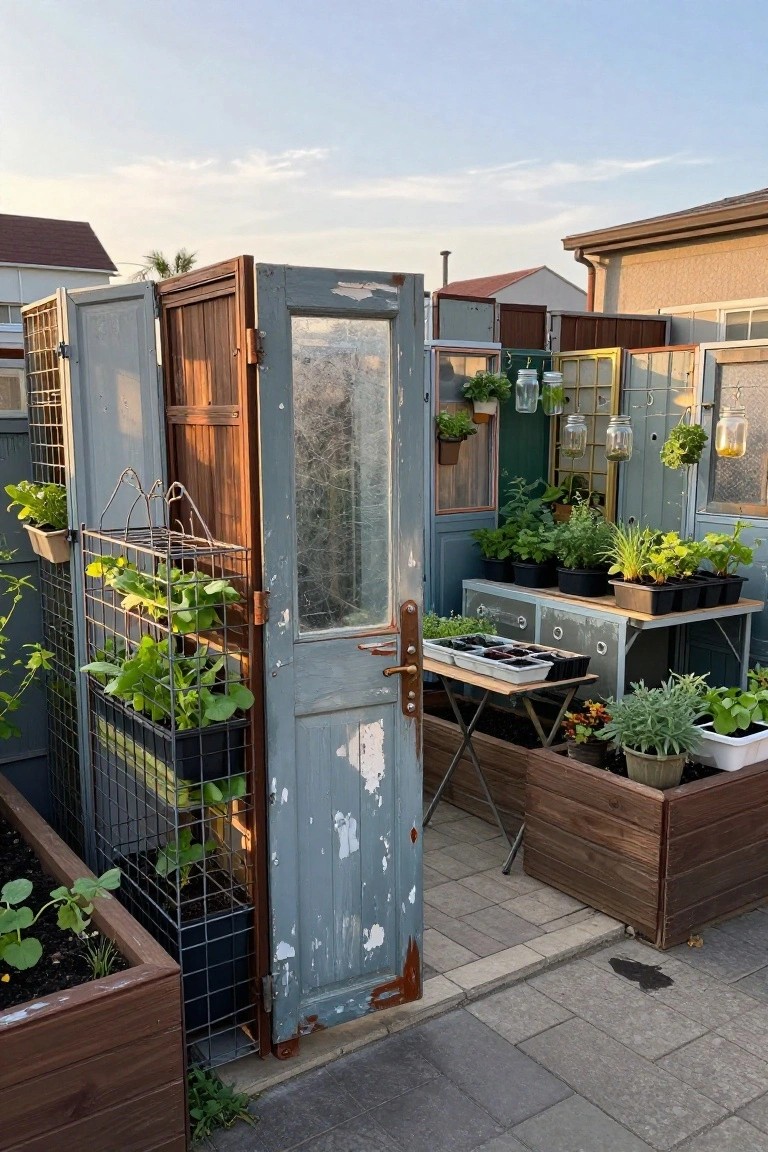
Old doors and windows pieced together make a solid fence that keeps rabbits and wind out of your vegetable patch. In this setup, a weathered blue door swings open to the garden beds, with glass panels letting light through while blocking critters. It’s practical protection with a bit of backyard character… no need for plain chain link.
Hunt for cheap finds at salvage yards or habitat stores, then lean them against posts or wire frames for stability. This works great in small urban yards or cottage gardens where you want enclosure without high costs. Just check for sharp edges before planting close.
Espaliered Fruit Trees on Wall Trellises
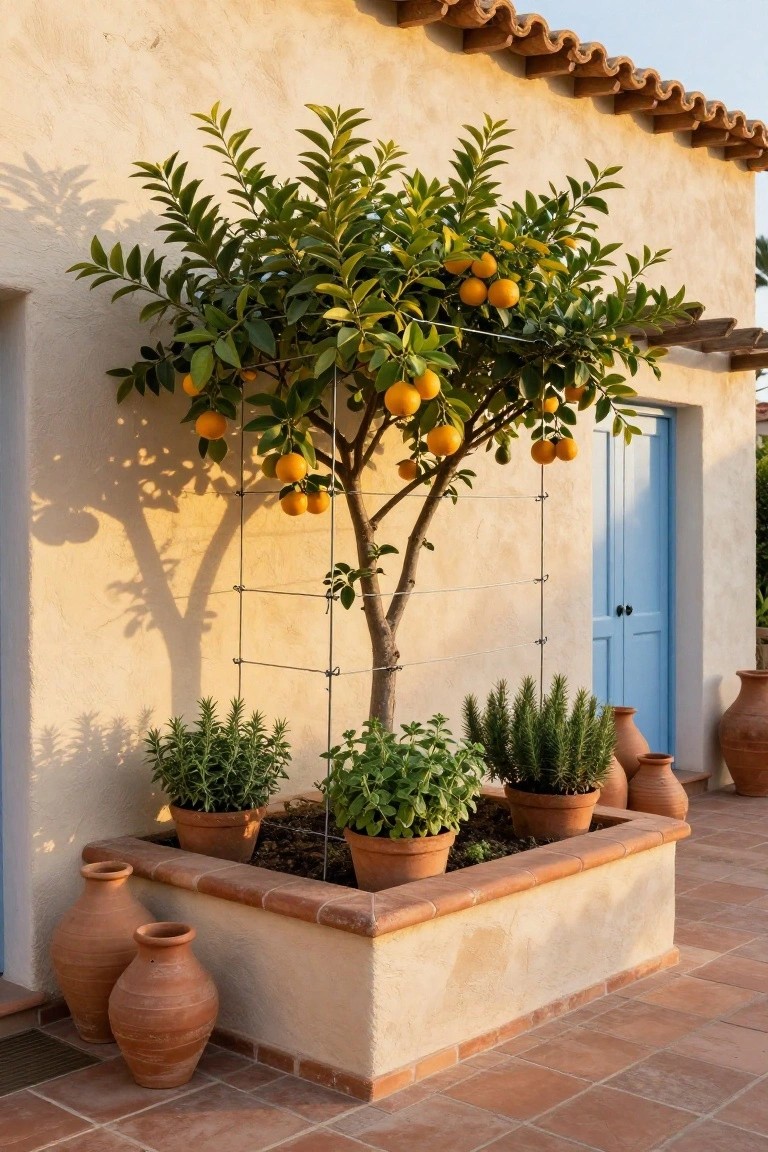
One practical way to fence in a vegetable garden is training a fruit tree like this young orange onto a simple wire trellis right against the house wall. It creates a living barrier that keeps critters out while giving you fresh oranges. The tree stays compact, grows up instead of out, and the raised bed below holds herbs or veggies safely tucked in.
This setup works best in a sunny spot next to a south-facing wall, where the warmth helps the tree thrive. Use it for small yards or patios, pairing the trellis with bricks or stone for the bed. Just prune regularly to keep the shape, and pick a dwarf variety so it does not overwhelm the space.
Natural Reed Fencing for Garden Protection
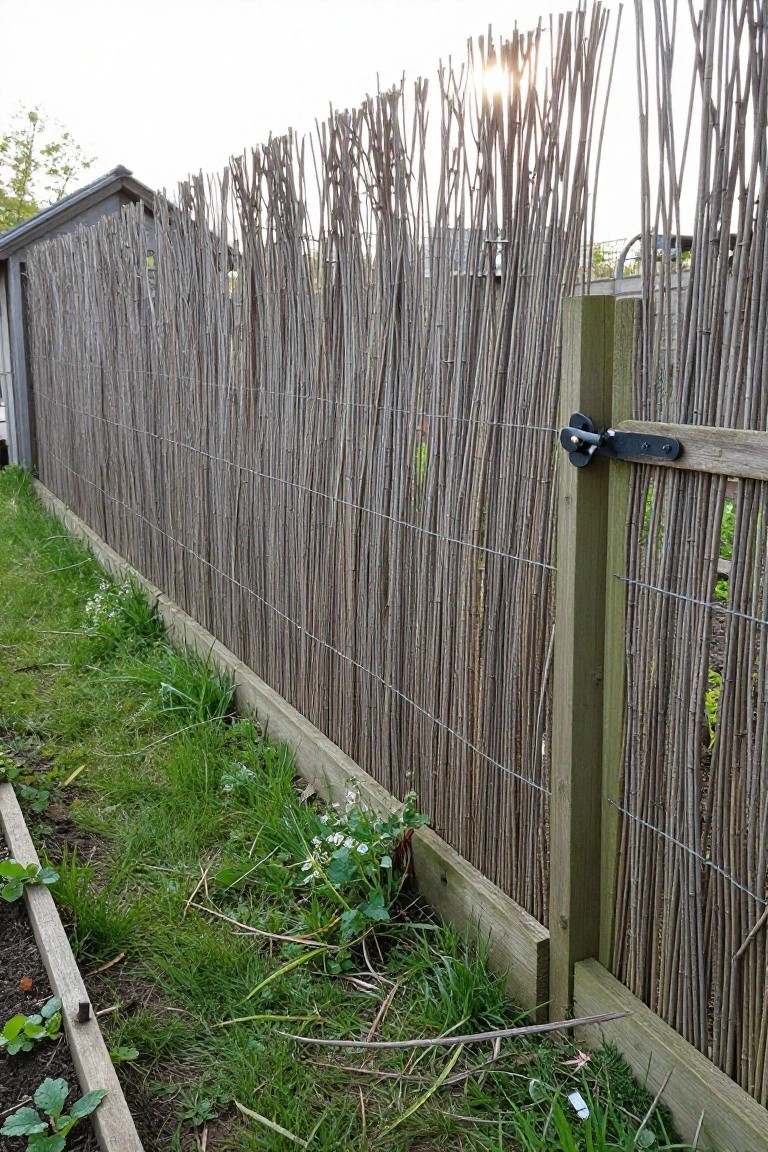
Reed fencing like this gives your vegetable patch a simple, natural barrier. The woven reeds attach right to a basic frame of posts and wire, blocking wind, pests, and views without looking out of place. It blends into the yard so well, especially next to raised beds and grass.
You can put it up pretty easily on wood or metal posts. It works best in smaller gardens where you want low upkeep and a soft look. Just check that the reeds are treated if your area gets a lot of rain.
Vertical Pallet Garden Fence
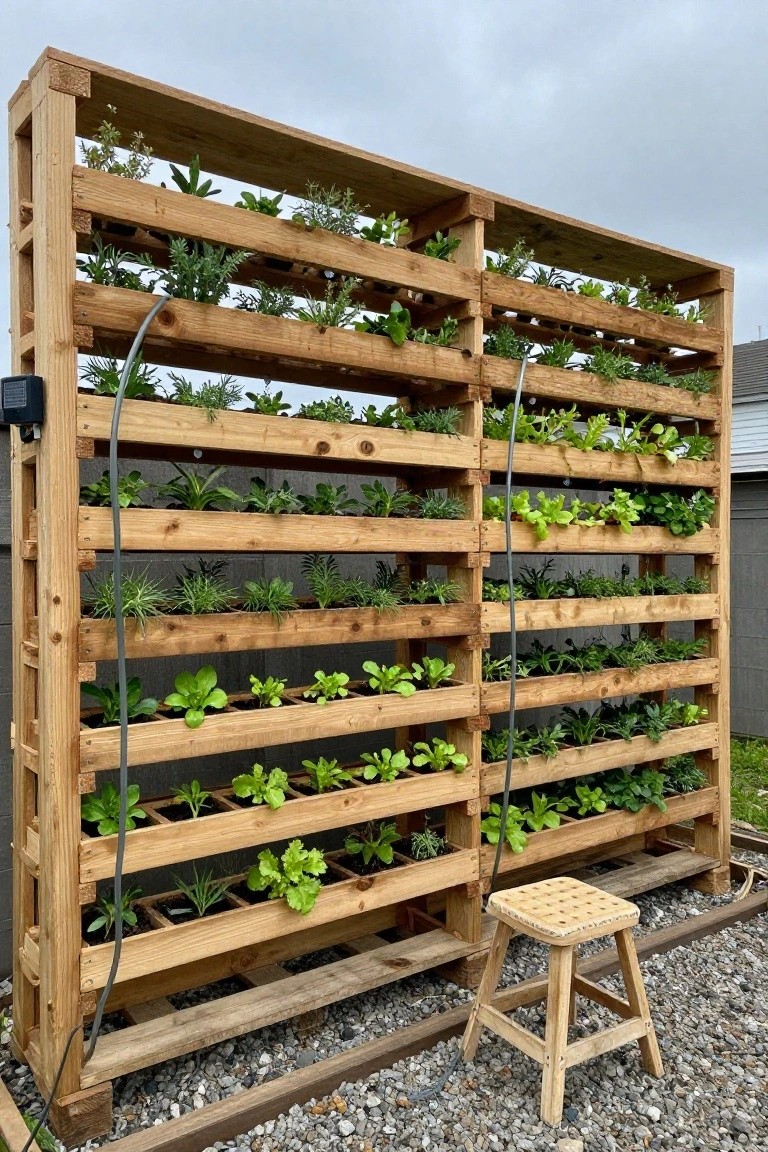
Old shipping pallets make a sturdy frame for this tall vertical garden. Stacked and braced right, they hold rows of soil pockets filled with lettuce, herbs, and succulents. The setup saves yard space and blocks views from neighbors, all while growing fresh produce close to the house.
Put one along a side yard or back boundary where sun hits most of the day. Run drip lines down the front for even watering, and pick pallets that are heat-treated to avoid chemicals. It suits renters or small lots… just check your local rules on wood structures.
Formal Wrought Iron Fencing Around Vegetable Beds
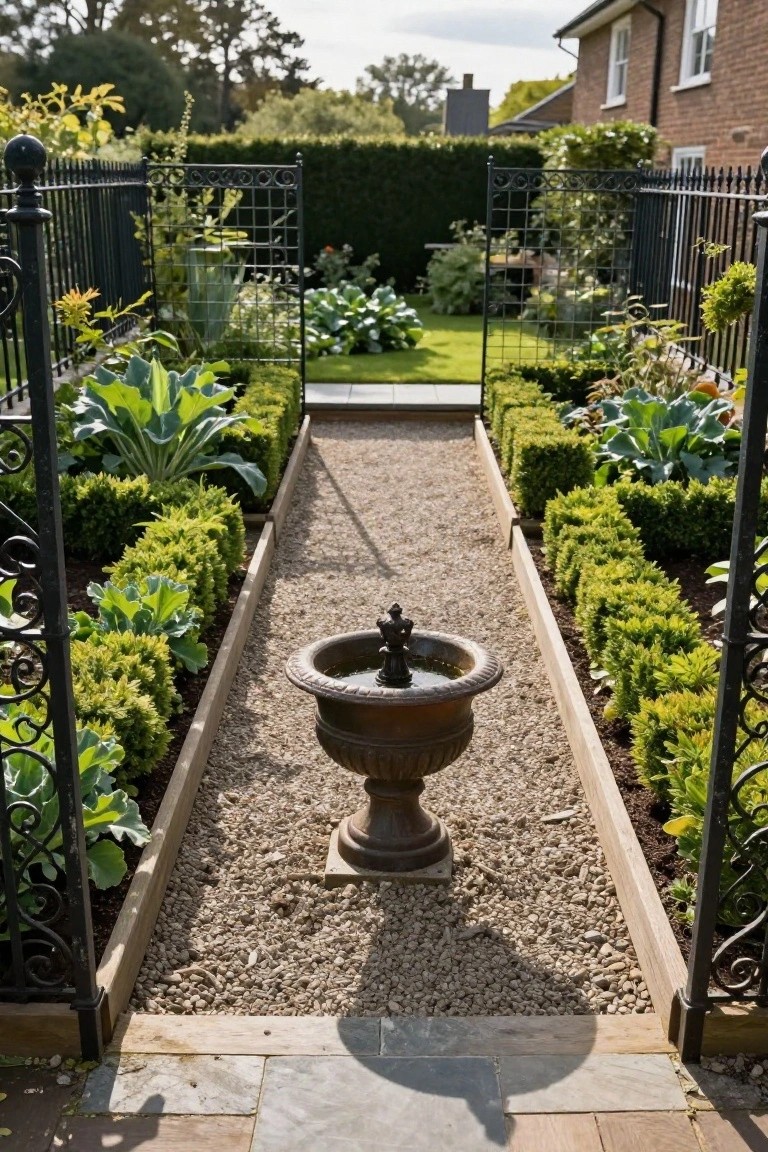
Wrought iron fencing like this makes a vegetable garden feel secure and put-together. The tall black metal posts and gates keep rabbits and deer out of your crops, while the scrollwork adds a bit of old-world style without overpowering the plants. Here, it frames raised beds packed with leafy greens and edged with low boxwood hedges for clean lines.
You can use this in a side yard or along a patio where you want protection plus some visual interest. It suits homes with traditional or cottage vibes, especially if you have gravel paths to match. Just make sure the gates latch well, and consider the height if you have small kids running around.
Raised Beds with Protective Mesh Screens
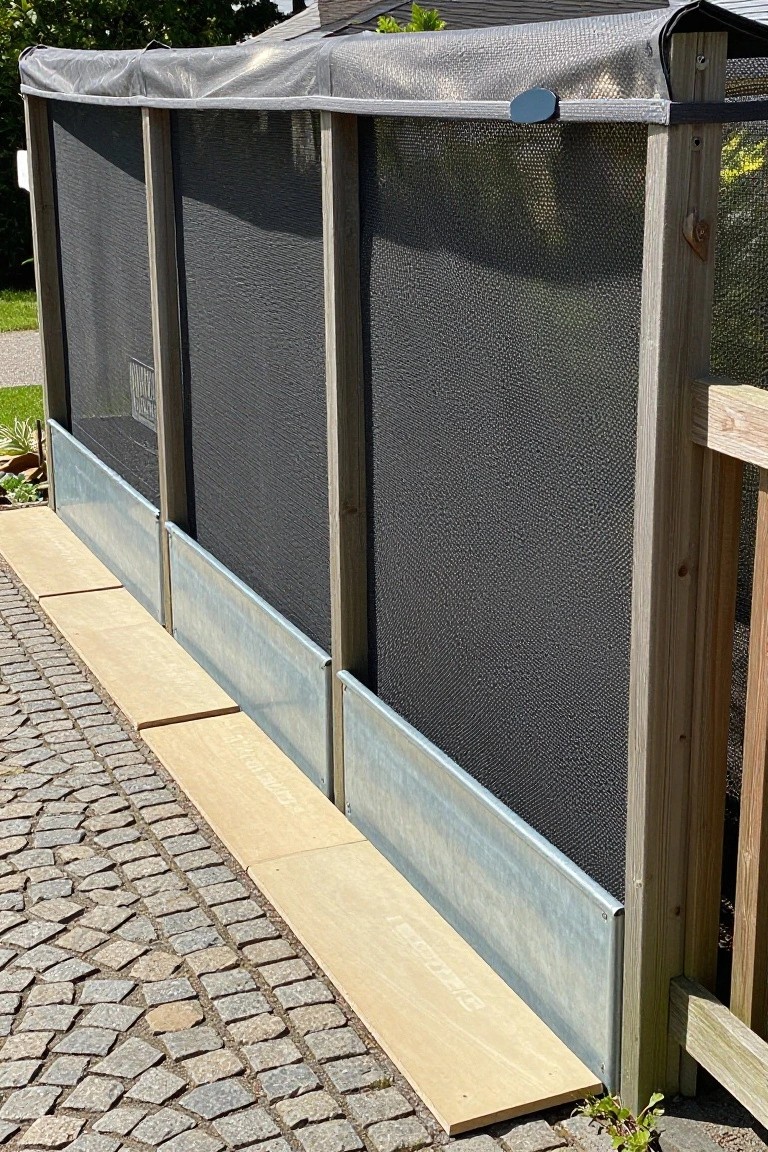
This setup uses sturdy mesh screens mounted on wooden frames to shield raised vegetable beds from pests and wind. The galvanized metal bases form the bed walls right along the fence line, keeping soil in place while the dark mesh blocks bugs without blocking light or air. A simple fabric roof slopes over the top for extra shade and rain protection. It’s practical for anyone wanting a contained growing spot that doesn’t take up much room.
You can build something like this along a side yard or driveway edge, where space is tight. Use pressure-treated wood for the frames to last outdoors, and anchor the screens securely so they hold up in wind. It works best in sunny spots with good drainage under the pavers. Just check local rules if you’re near neighbors, since the screens add some height.
Pergola-Topped Lattice Fence for Veggie Gardens
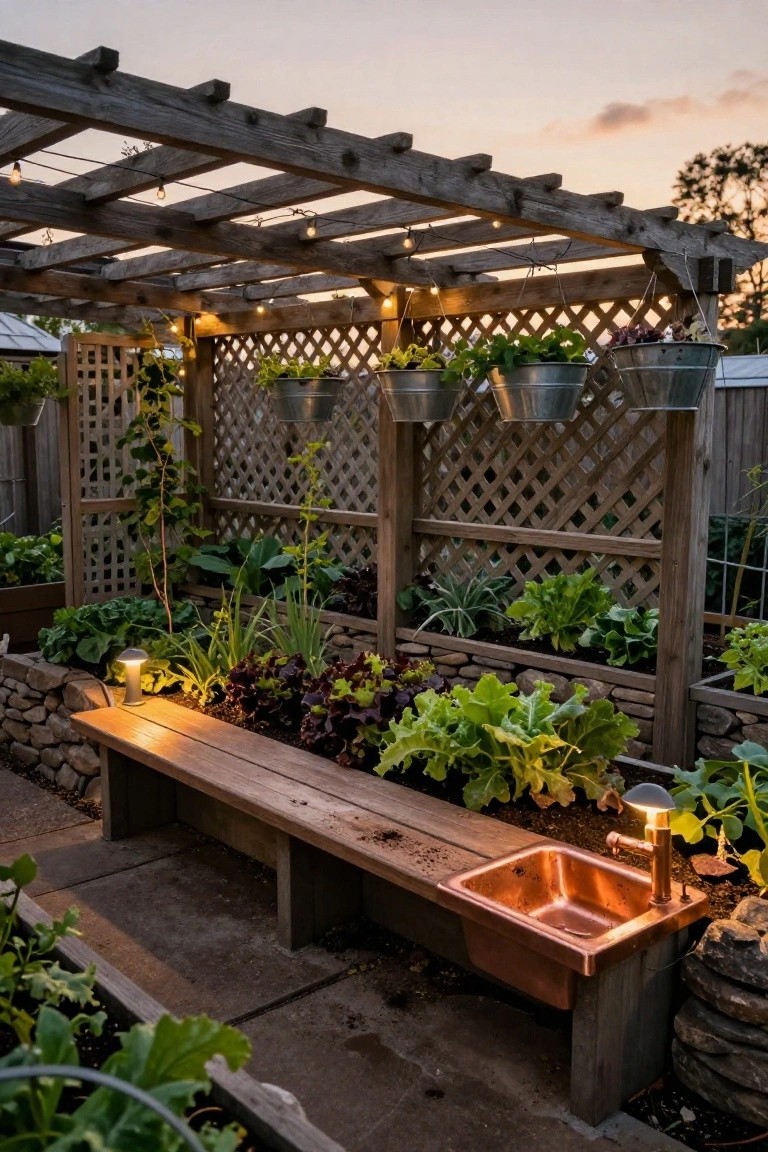
This setup uses a simple wooden pergola with lattice panels to enclose a vegetable garden. The open lattice lets in light and air for healthy plants while keeping out pests and critters. String lights draped over the top make it nice for evening checks on the harvest. Raised beds tucked inside keep everything neat and reachable.
It’s great for backyards with some sun. Build the pergola over your beds using treated wood for weather resistance. Add climbing vines on the lattice for extra shade later on. Pair it with a nearby bench and sink like this one for rinsing produce right there. Works best where you want protection without a solid wall feel.
Translucent Panel Fencing for Veggie Protection
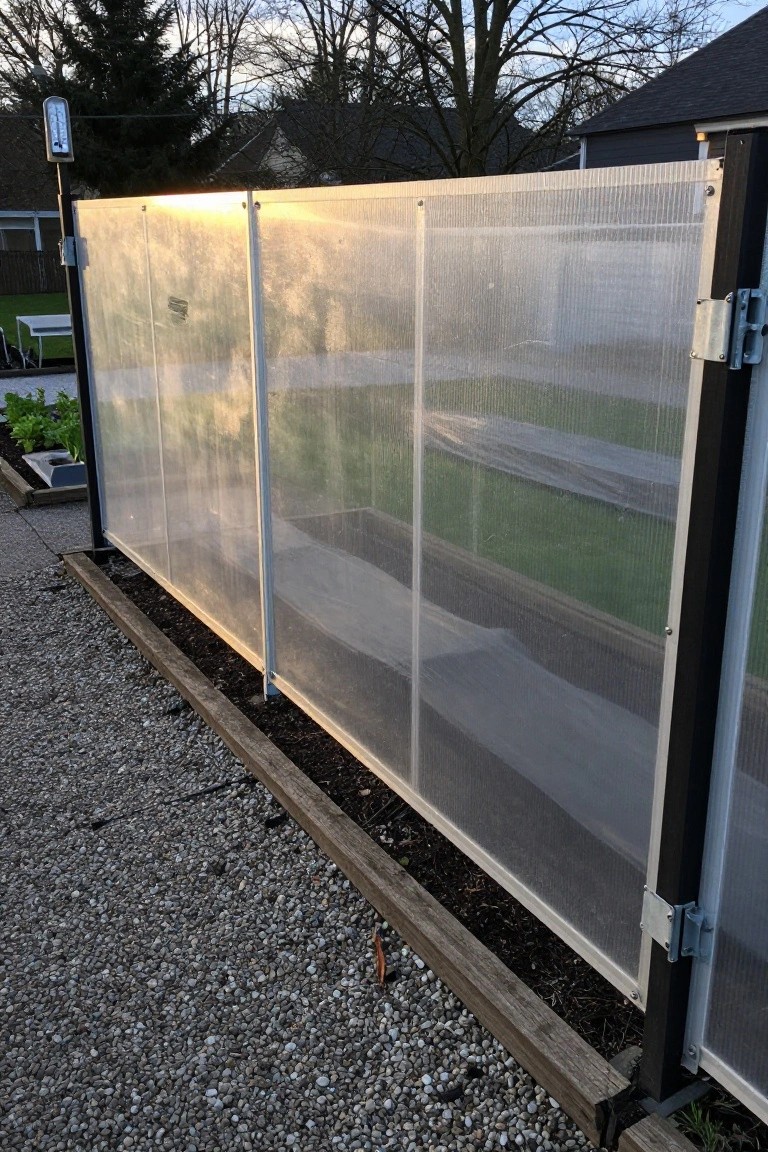
This setup uses clear corrugated panels mounted on sturdy frames to enclose raised garden beds. The panels let in plenty of light while blocking wind and some pests, turning the space into a simple protected zone for growing veggies. You can see young plants thriving inside, safe from harsh weather, and the gravel path keeps things neat around the beds.
It works best in open yards where wind is an issue, or for folks wanting to extend the growing season without a full greenhouse. Mount the panels on posts set into wood or gravel beds, and pair with raised planters for easy access. Just check the panels now and then for wear, especially in sunny spots.
Adding Shelves to Your Garden Fence
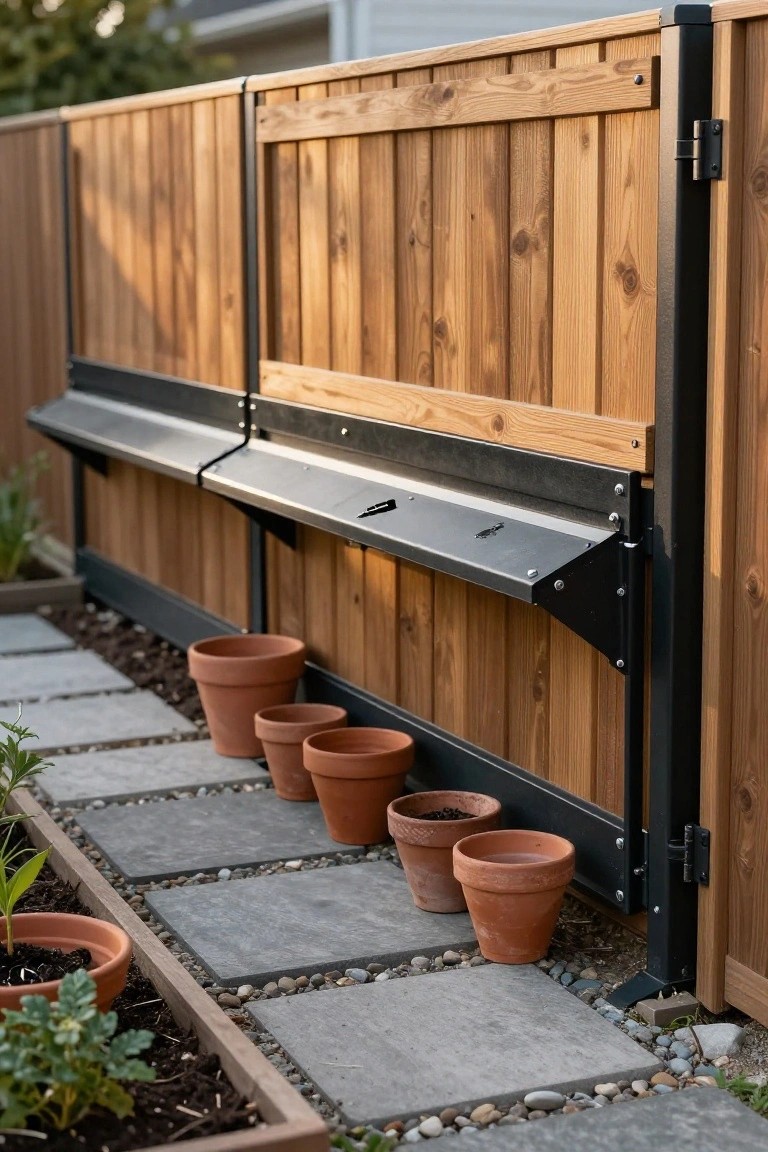
A simple way to squeeze more growing room out of a tight space is mounting shelves right on the fence. These black metal ones fold down flat when not in use, holding pots or trays without taking up ground. Paired with plants at the base, they turn the fence into real working space for veggies, all tucked safely behind the wood panels.
This setup shines in backyard gardens where every inch counts. Bolt sturdy metal brackets to a solid fence like cedar, and load them with lightweight pots of herbs or seedlings. It keeps things off damp soil and adds protection from wandering critters. Just check your fence can handle the weight first.
Simple Wire Mesh Fence for Veggie Beds
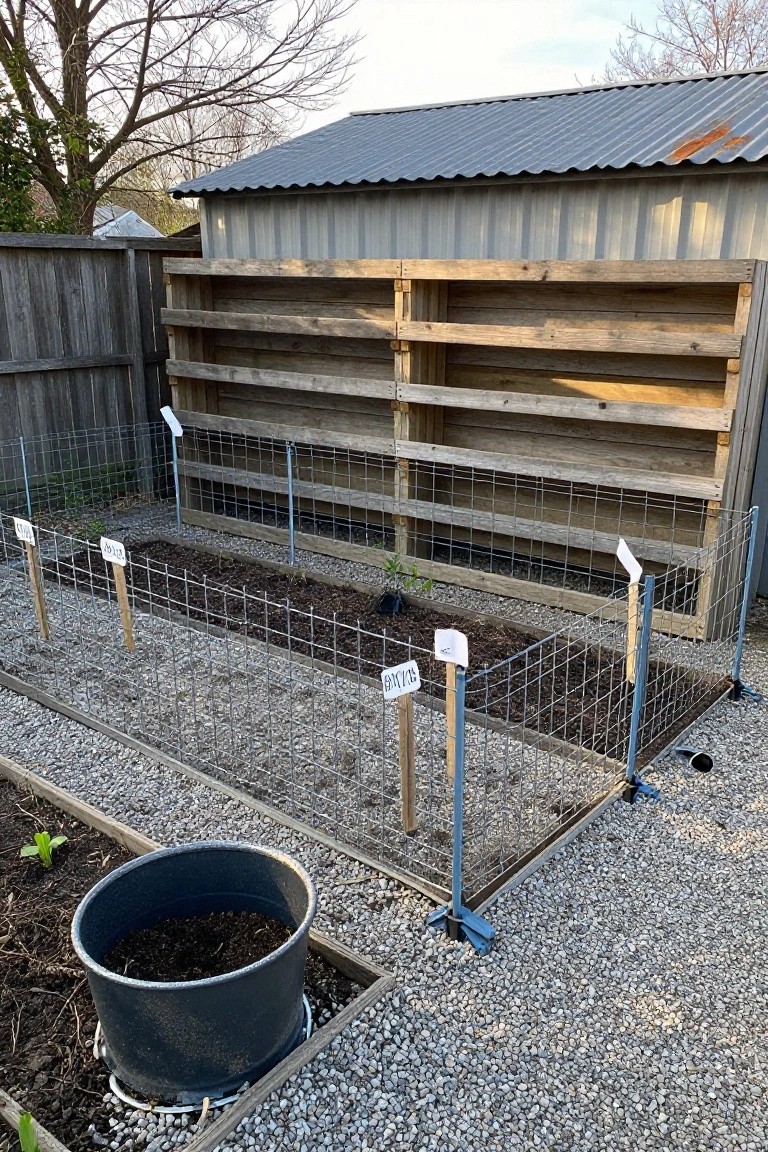
A basic wire mesh fence like this keeps rabbits and other critters out of your vegetable garden without much fuss. You see it here around a couple of raised beds with young plants labeled nicely. The blue panels on simple stakes go up quick and let light and air through, so the plants stay healthy. It’s all about protection that doesn’t block the garden feel.
This setup works great in small backyards near sheds or fences, where space is tight. Use it for tomatoes, peppers, or greens that critters love. Stake it firm into gravel or soil, and pair with raised beds for easy weeding. Just check the mesh height, maybe add taller stakes if deer roam around.
Frequently Asked Questions
Q: How high should my fence be to stop deer?
A: Make it at least eight feet tall.
Deer jump lower fences like they’re not even there.
Add some floppy wire along the top to throw them off.
Q: Does chicken wire really keep rabbits out?
A: Bury the bottom foot underground or bend it outward in an L-shape.
Rabbits dig right under otherwise.
That simple trick stops them cold.
Q: How do I pick a fence that lets in plenty of sunlight?
A: Go for wire mesh or lattice panels.
They block pests but let light pour through.
Your veggies will thank you with bigger harvests.
Q: Can I build one of these without digging deep post holes?
And yeah.
Use T-posts driven in with a sledgehammer.
Drive them a foot deep, then string your wire or netting tight.
