

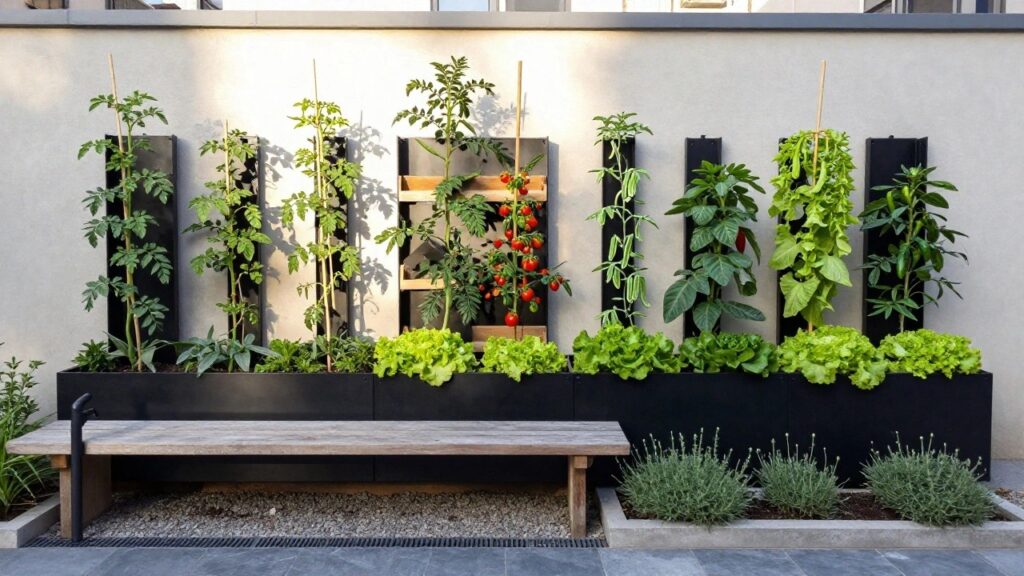
Living with a narrow yard showed me how vertical vegetable gardens reshape tight layouts into something productive and walkable. They stack plants smartly against fences or walls, freeing up ground for paths or pots while sunlight filters down evenly. What catches the eye first is usually that lush, orderly climb of tomatoes or herbs hugging the structure. I set one up along my back fence last year, and the pocket planters edged out the rest for holding soil steady on uneven posts. These ideas make me want to tweak my shady corner with a few sturdy frames that actually last.
Tiered Wall Planters for Vegetables

These black metal planters stack up neatly on a plain wall, turning empty space into a growing spot for tomatoes, peas, lettuce, and peppers. The tiers let plants get good sun without crowding the ground. It keeps things tidy and pulls the eye up, making a small patio feel fuller.
Mount them on a south-facing wall for best light, and add stakes for vining plants like tomatoes. They work well in urban yards or balconies where ground space is tight. Just check the brackets hold soil weight, especially when wet.
Multi-Tiered Shelving for Balcony Veggies

A simple white metal shelf like this takes vertical space on a balcony and turns it into a growing spot for lettuce, kale, basil, and more. It keeps everything off the floor so you can still move around easily. Plus, the terracotta pots give it a homey feel without much fuss.
This setup works great for city apartments or any tight balcony. Just pick a sunny corner away from wind, and group plants by how much water they need. Watch that heavier pots don’t tip the shelves, and rotate them now and then for even light.
Raised Planters Lined Up Against the Fence

One smart way to fit more growing into a tight spot is lining up long raised planters right along your backyard fence. These white beds with metal edging hold lettuce, strawberries, green onions, and more, turning a plain boundary into real veggie space. It keeps everything off the ground and close to hand, without eating into your yard.
This works best in narrow side yards or along a back fence where ground space is short. Bolt the planters secure to the fence posts, fill with decent soil mix, and add gravel mulch below to handle drainage. Skip it if your fence isn’t solid, though. Easy to tend from a path.
Vertical Vegetable Garden on a Concrete Wall

This idea takes a plain concrete wall and covers it with black modular planters in a neat grid. Stuff them with easy veggies like kale, greens, and herbs, and you’ve got fresh produce right outside your door. The stark black against the gray wall keeps it looking sharp and modern, without any fuss.
It works best in tight spots like city patios or side yards. Bolt the planters securely into the wall, pick plants that don’t get too heavy when watered, and add a simple bench below for picking. Just watch for good drainage so roots don’t rot.
Freestanding Vertical Vegetable Rack
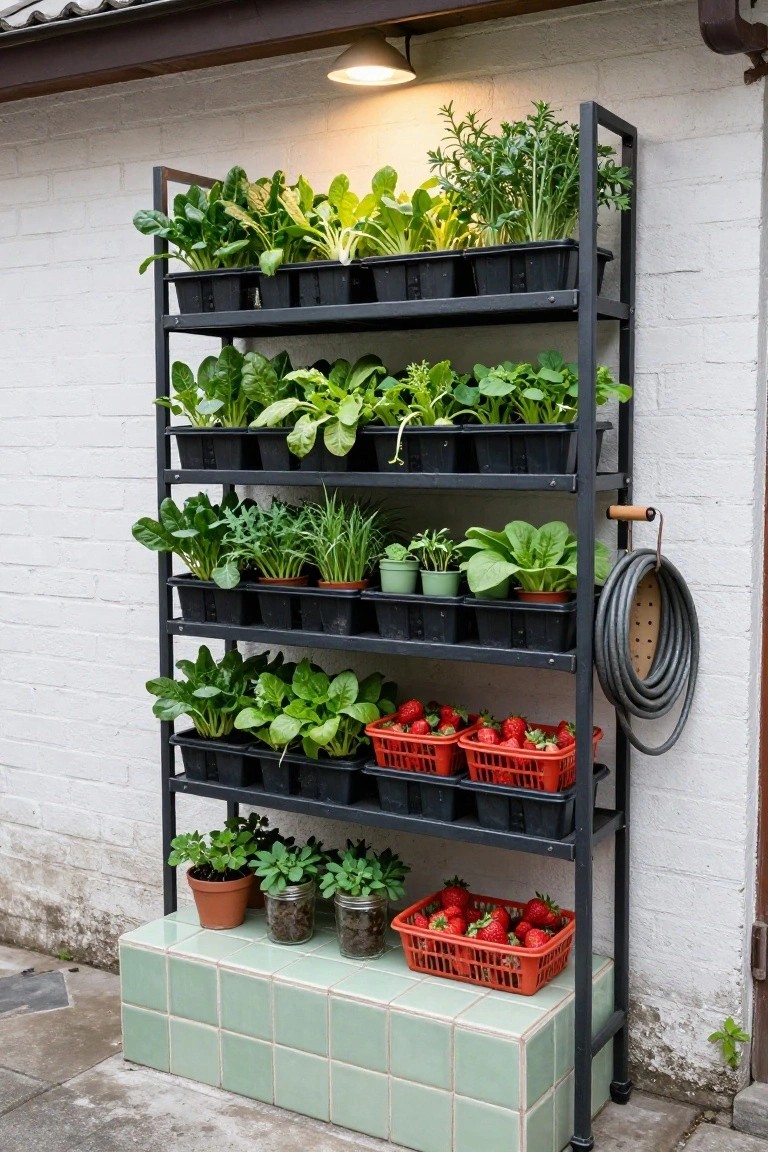
A tall black metal rack like this one turns a plain wall into a growing spot for spinach, chard, herbs, and even strawberries. It stacks trays right up high, so you get a lot of plants without taking up ground space. The simple shelves hold everything steady, and that hose hook nearby makes watering easy.
This works best in a side yard or along a patio edge where you have sun but not much room. Go for metal racks that won’t rust outdoors, and use plastic trays to catch drips. It’s practical for renters too, since you can move it around.
Vertical Veggies in Tall Entry Planters

Tall narrow planters like these make it easy to grow edibles right by your front door. Here black metal boxes hold beans climbing up and nasturtiums spilling over the edges. They hug the modern facade without taking up walkway space. The mix of greens and orange flowers adds life to a sleek entry setup.
These work best on small lots or urban homes where yard room is tight. Pick rust-resistant metal or corten steel for low upkeep. Plant vining veggies that trail naturally. Just make sure the planters drain well so roots stay happy. A simple drip line keeps watering easy.
Stacked Concrete Blocks for Vertical Veggie Gardens

Concrete blocks stacked into tiers make a simple vertical garden that grows a bunch of veggies without taking much ground space. You see spinach, beets, and green onions thriving here in the open blocks. The plain gray blocks look neat and modern. They hold soil well and let roots spread.
Put these along a patio edge or balcony rail where you want plants close by. Drill holes in the bottom blocks for drainage if needed. A bench tucked next to them turns it into a spot to sit and check your harvest. Fits small yards or urban spots best. Keeps things low cost and easy to move around.
Tall Black Vertical Vegetable Planter
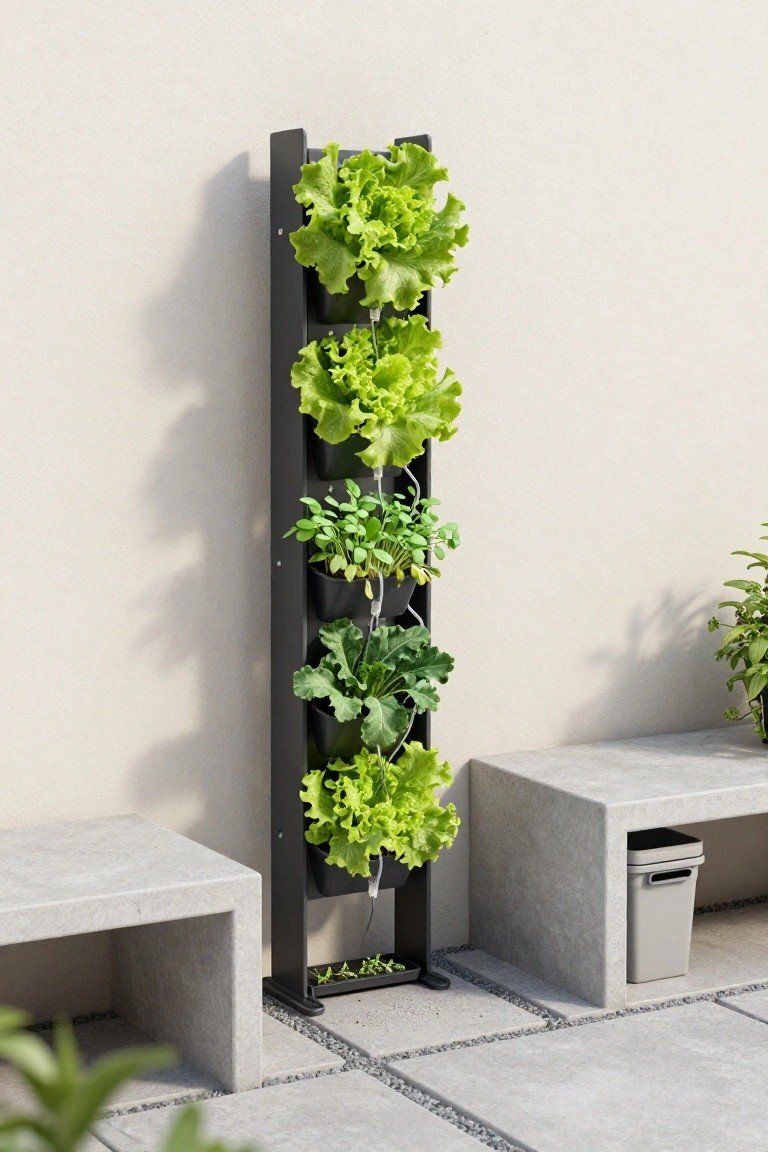
This kind of tall black metal frame holds pots of fresh lettuce and herbs stacked up against a plain wall. It turns a bare spot into a productive veggie patch without taking up any ground space. The slim design fits right into patios or courtyards, and those tubes running down suggest it’s set up for easy hydroponic watering.
You can use one like this in small outdoor spots, like next to seating areas or along fences. It works best where you want low-fuss greens close to the kitchen door. Just pick a sturdy frame that matches your setup… and make sure it gets enough sun.
Black Metal Frame Vertical Vegetable Garden

This vertical garden uses a simple black metal frame screwed right onto the house wall. It holds triangle-shaped black pots filled with cucumbers, beans, herbs, and even a few flowers. The setup looks sharp against a light blue siding, and it turns empty wall space into productive growing area without taking up any ground.
It’s ideal for garages or patios in small yards where you want fresh veggies close to the kitchen door. Mount it at eye level for easy picking, and choose pots deep enough for roots. Watch the weight on the frame, though… start light until it’s secure.
Pallet Shelves for Vertical Veggie Gardens

One smart way to grow fresh greens without taking up ground space is stacking pallets into simple wall shelves. Here black fabric pots hold lettuce heads and herbs like parsley or chives, tucked right against a plain wall. The rustic wood gives a casual look that fits outdoors, and everything stays easy to reach for picking.
These work best on patios or balconies where you have a sunny wall. Bolt the pallets firmly to studs for safety, then fill pots with soil suited to veggies. It’s low cost if you source free pallets, and the fabric lets roots breathe while draining fast. Good for renters too, since it doesn’t mess up the yard.
Tiered Vertical Planters for Tight Spots

A simple black stand holds four round tiers of potted plants like spinach, herbs, and strawberries. This pulls a bunch of veggies into one upright spot without taking up much ground. It fits right into narrow walkways or patios where flat space runs short.
Set one up in full sun near a door or path for easy picking. These work well for apartments or urban yards. Pick pots that drain fast… and check soil stays moist on hot days.
Vertical Wooden Planters on Balcony Walls

These wooden rectangular planters get mounted straight onto the balcony wall in a neat grid. They hold tomatoes, herbs, and greens without crowding the floor. It’s a clean way to grow fresh produce right where you relax, especially on a small outdoor spot like this.
Hang them at different heights for easy picking. Strong brackets are key since soil adds weight. This works best on sunny balconies in apartments or condos. Watch for good drainage so water doesn’t drip down. Simple chair nearby keeps it practical.
Raised Planters Along Garden Paths

A raised white planter box like this one sits on simple black metal legs, tucked right beside a paver walkway. It holds a mix of veggies such as kale and herbs along with flowers and succulents, all growing up instead of out. This keeps the path clear while making good use of vertical space in a backyard.
These work well in tight spots like side yards or next to patios where ground area is limited. Go for treated wood that holds up outdoors, and make sure there is drainage to avoid root rot. They suit most home gardens and give easy access for picking what you grow.
Vertical Planters Mounted on a Fence

Mounting gray metal buckets directly onto a wooden fence creates a simple vertical garden packed with lettuce, herbs, and green onions. It uses the fence as free growing space, keeping the ground clear for paths or seating. The staggered setup makes it easy to reach everything without bending much.
This works best in small backyards or along patios where space is tight. Pick sturdy buckets with good drainage, and screw them securely into the fence. String lights like the ones here add a nice glow for evening checks. Just watch for too much sun on the lower pots.
Tiered Concrete Planters for Vertical Veggies

These stepped concrete planters turn a narrow strip along a wall into a productive vegetable garden. Leafy greens like lettuce and spinach fill the tiers, growing up instead of out. The plain concrete keeps things modern and low-fuss, tying right into the nearby wooden deck without stealing the show.
You can build something like this against a patio edge or fence in a small yard. It works best in sunny spots with good drainage… add gravel at the base like they did here. Fits modern homes or urban setups where space is tight, but skip it if your soil freezes hard in winter.
Vertical Trellis Towers for Poolside Veggies

Tall metal frames with mesh siding let cucumber vines climb straight up along the pool edge. These vertical towers keep the edibles off the deck so you still have room for loungers and towels. Black trough planters below hold kale and other low growers, making the whole setup feel full without crowding the space.
This works best on sunny pool decks where heat-loving climbers do well. Pick rustproof frames and start with seedlings in spring. It fits modern homes with tight yards, turning a lounging spot into a fresh produce zone. Just watch for overgrowth shading the water.
Frequently Asked Questions
Q: Which veggies should I start with in a vertical garden?
A: Leafy greens like lettuce and spinach grow fast and fit perfectly in pockets or towers. Cherry tomatoes add color and flavor once you get the hang of support stakes. Herbs such as basil fill gaps and harvest often.
Q: How do I water without making a mess?
A: Water from the top and let gravity do the work through the levels. Stick a finger in the soil daily; keep it moist but not soggy. Old plastic bottles with holes work as cheap drippers.
Q: What if my spot gets partial shade?
A: Lettuce and kale handle it well and still produce steadily. Move pots around if light shifts during the day.
Q: How do I keep pests away?
A: Spray leaves with soapy water weekly to knock bugs off early. Plant marigolds nearby; they repel a lot of common invaders. And check undersides daily—catch problems fast.
