

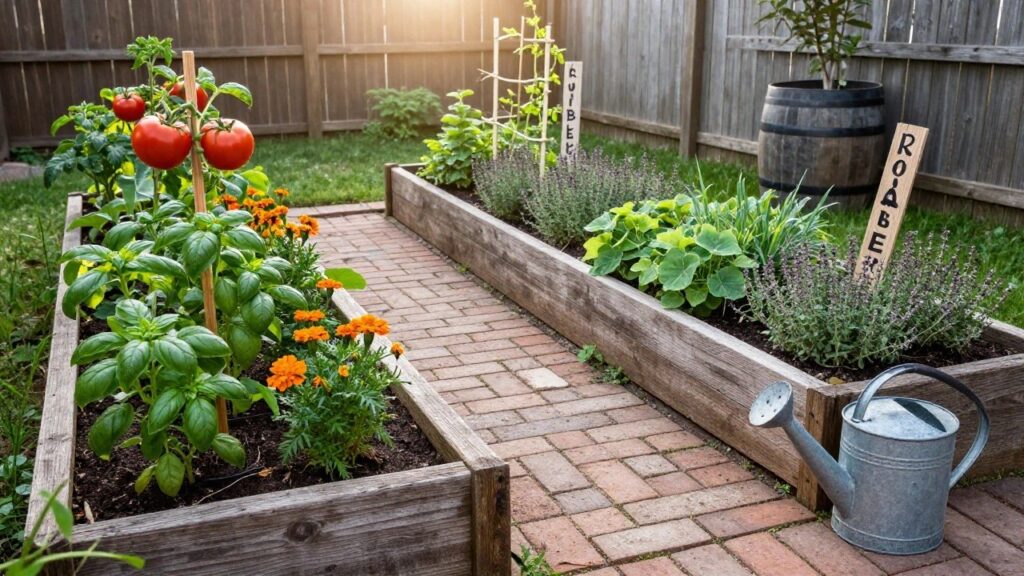
I’ve spent enough time fussing over my garden beds to know that a good layout keeps plants thriving without constant intervention.
Companion planting makes that happen by grouping veggies, herbs, and flowers in ways that fend off pests and enrich the soil naturally.
Folks walking through first spot the balanced growth and tidy edges when beds flow like that, rather than crowded chaos.
I noted one setup with beans climbing corn stalks that held up through a wet summer in my yard.
A few of these patterns are worth sketching out for your own space next planting season.
Companion Planting Tomatoes with Basil and Marigolds
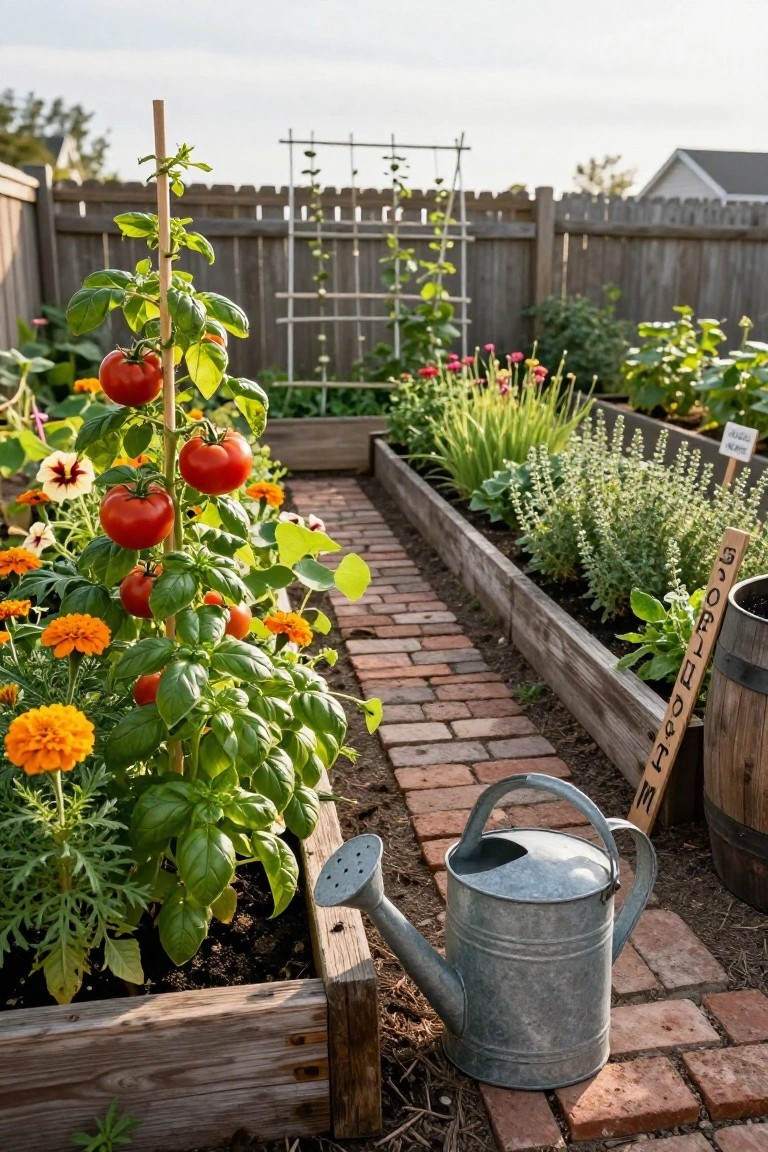
Tomatoes do well when you plant basil and marigolds right alongside them in the same bed. The basil keeps away hornworms and other tomato pests. Marigolds deter soil nematodes and aphids too. Together they make plants stronger and yields better. No need for sprays when companions handle the work.
Set this up in raised beds where you can control the soil. Stake tomatoes high with bamboo poles. Tuck basil plants close to the stems. Ring the edges with marigolds for color and protection. Fits any sunny backyard spot. Just watch watering so nobody drowns.
Tiered Terracotta Herb Planters
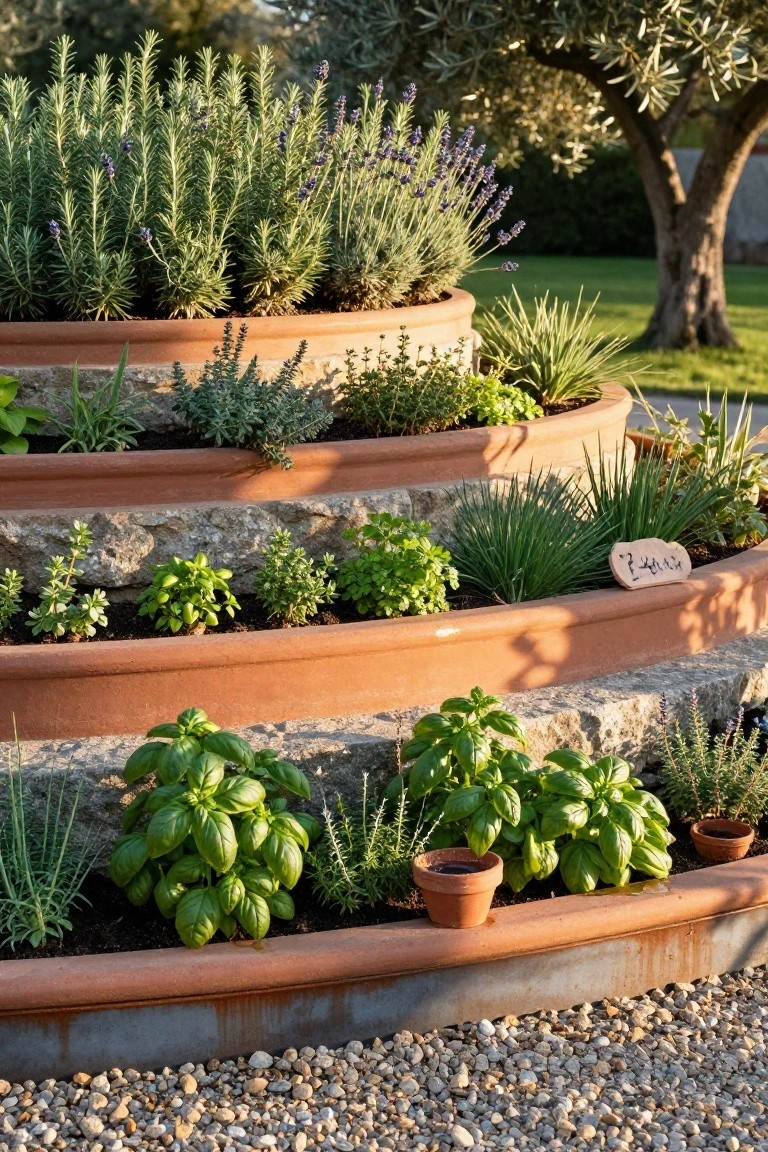
One smart way to set up companion planting is with tiered terracotta planters like these. The levels let you group herbs that get along well, such as rosemary and lavender on the upper tiers, basil and thyme lower down. Rosemary keeps bugs away from the basil, and the setup makes good use of vertical space. It looks tidy too, especially with the stone steps holding everything in place.
This works best in a sunny spot with good drainage, like a slope or next to a path. Start with larger pots at the base for stability, and pick herbs that share similar sun and water needs. It’s practical for small yards… just watch that terracotta dries out fast in hot weather.
Raised Bed Companion Planting with Trellises

This setup uses a simple raised brick bed to mix climbing beans on bamboo trellises with marigolds and other veggies. The flowers help keep pests away from the crops, while the vertical supports save ground space and let plants get more sun. It keeps everything healthy and productive without much fuss.
Try this along a walkway or fence where you have a narrow strip. It works great for small yards or community plots. Just space the trellises a foot or so apart, and plant the flowers right at the edges… they’ll fill in nicely.
Curved Raised Beds for Companion Planting
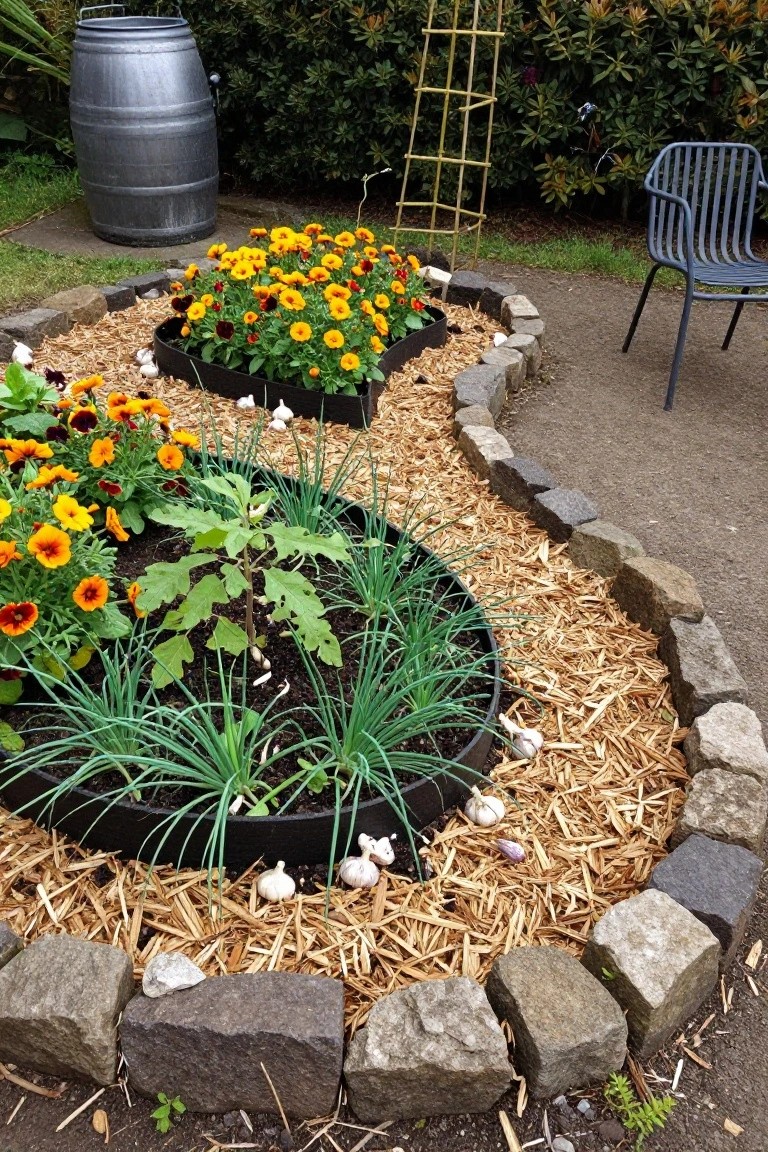
These wavy raised beds follow an S-shape that lets you tuck companion plants right where they help each other most. Marigolds line the edges to fend off bugs, while garlic and onions grow alongside young veggies in the center. The stone edging keeps everything neat, and mulch paths make it simple to reach around the curves without compacting soil.
Set this up in a sunny backyard spot with decent drainage. Black liners work fine for the beds, and you can source stones from a local quarry or reuse what you have. It suits smaller yards especially well, since the curves add interest without taking much room. Just space plants tight enough for companions to do their job.
Companion Planting Beds Along a Gravel Path

A gravel path running straight through the center of raised beds keeps everything organized and easy to tend. You can spot companions at work here, like tall blue delphiniums and pink salvia near beans and squash. The yellow grasses hugging the path’s edge soften the look while filling space without crowding the edibles. It’s a practical way to fit more plants into a tight area.
This setup shines in backyard gardens where space is limited but you want steady harvests. Lay down landscape fabric under the gravel to cut weeds, and use drip lines along the beds for even watering. Skip it if your soil drains poorly, since raised beds handle that better anyway.
Companion Planting with Marigold Borders
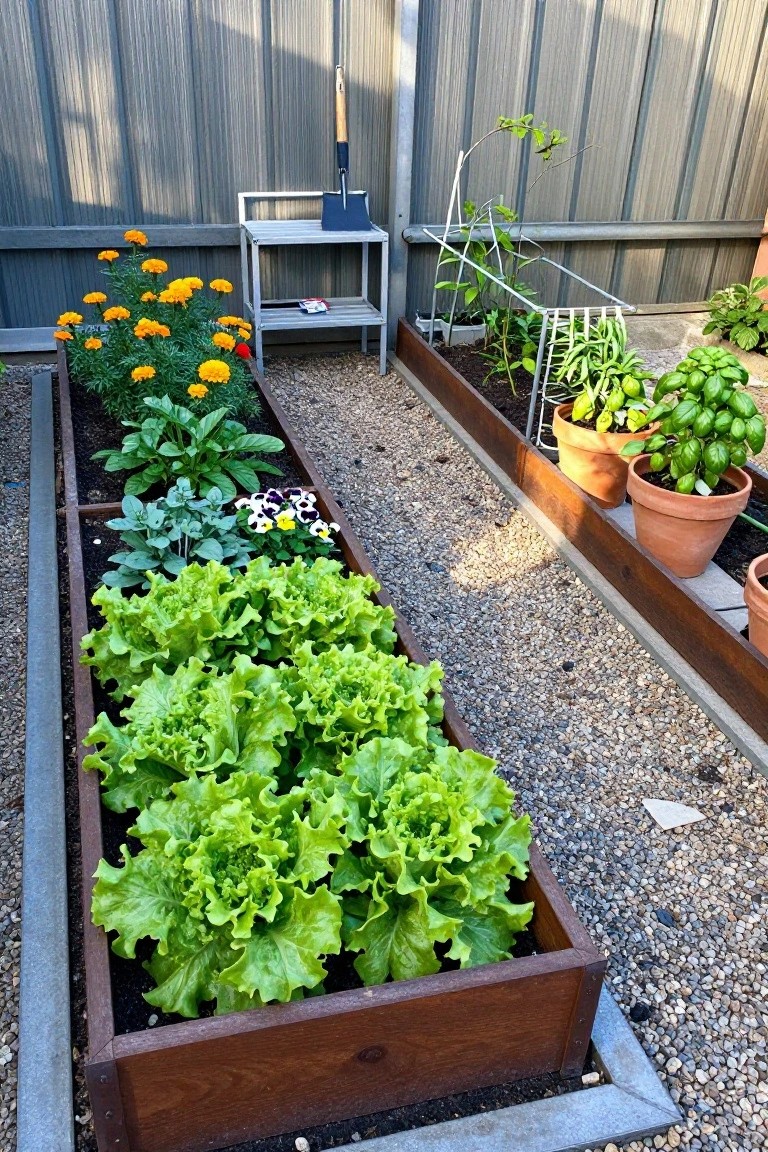
One straightforward way to boost your garden is planting marigolds right along the edges of your veggie beds. In this setup, the bright orange marigolds frame lush heads of lettuce in wooden raised beds. They act as a natural pest repellent, keeping bugs away from the tender greens without any chemicals. It’s a classic combo that just works.
You can copy this in a narrow side yard or along a fence like here, where the gravel path keeps things tidy. Stick to straight beds for easy access, and add potted basil nearby for extra pest control and fresh picking. It suits beginners since the plants do most of the work together.
Companion Planting in Curved Beds

This setup shows a smart way to grow corn with squash and pumpkins underneath, plus marigolds around the edges. The tall corn gives shade and support, while the sprawling vines cover the ground to keep weeds down. Those bright orange flowers help fend off pests naturally. It’s a classic combo that makes plants healthier without much extra work.
You can try this in a small backyard spot or along a fence line. Just mound up soil into a gentle curve or spiral shape, plant corn first, then add the vines and flowers once it’s up a bit. Drip lines like the ones here keep everything watered evenly. Works great for beginners… saves space and boosts your harvest.
Layered Fern and Hosta Beds Along a Path
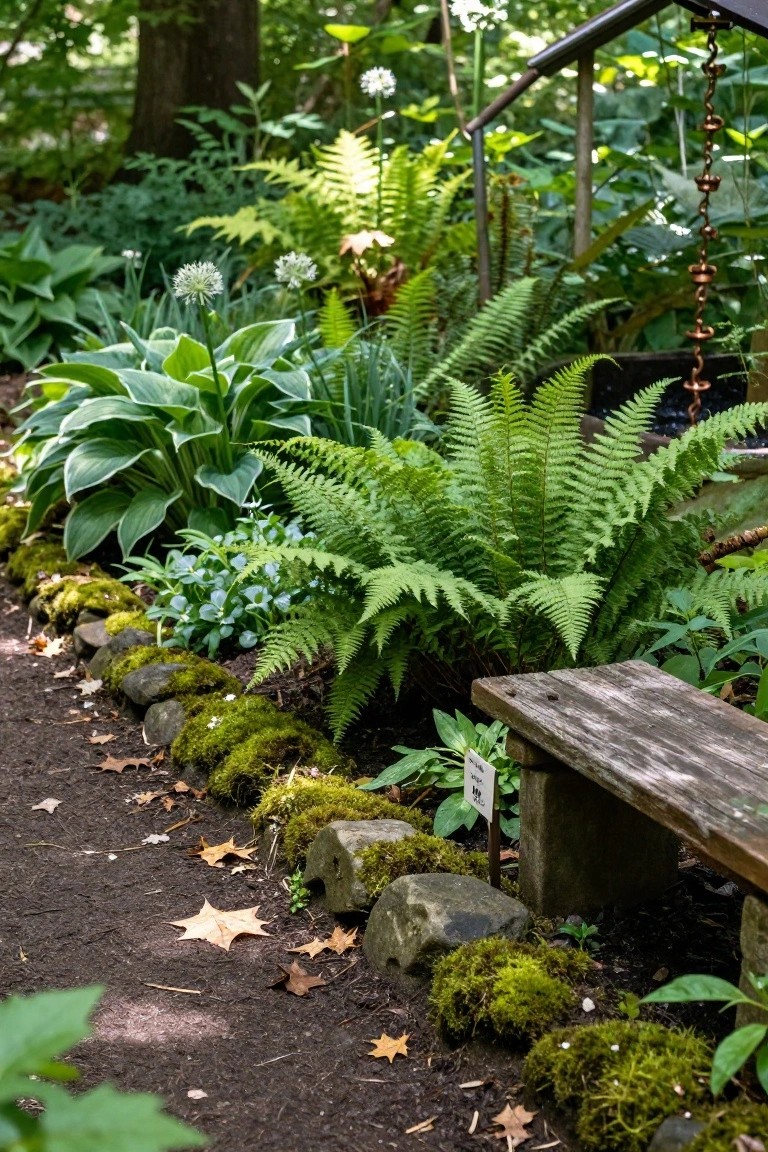
One straightforward companion planting idea here is layering tall ferns with broad hosta leaves, plus a few allium blooms for interest. The ferns provide height and light shade, while hostas fill in below and help keep soil cool and moist. Together they create fuller beds that crowd out weeds and stay healthy longer, especially in shadier spots.
Try this layout along a winding path in a backyard garden or woodland edge. Use mossy rocks for simple edging to hold everything in place without much upkeep. A plain wooden bench nearby makes it a spot to sit and enjoy. Works best where sun is dappled. Skip it in full sun though.
Rosemary Hedge as Companion Planting Border

A rosemary hedge makes a solid, no-fuss edge for companion planting beds. It grows upright and dense, holding back soil while chasing off pests like beetles and cabbage moths. Mix in marigolds right alongside, since they team up to deter nematodes and aphids. That’s why tomatoes in pots nearby look so happy and healthy.
Set this up against a sunny house wall or fence where drainage is good. Gravel on the ground keeps weeds down without much work. It’s perfect for narrow side yards or entry paths… suits herb lovers who want veggies too. Just trim the rosemary now and then to keep it tidy.
Companion Planting in a Linear Raised Bed
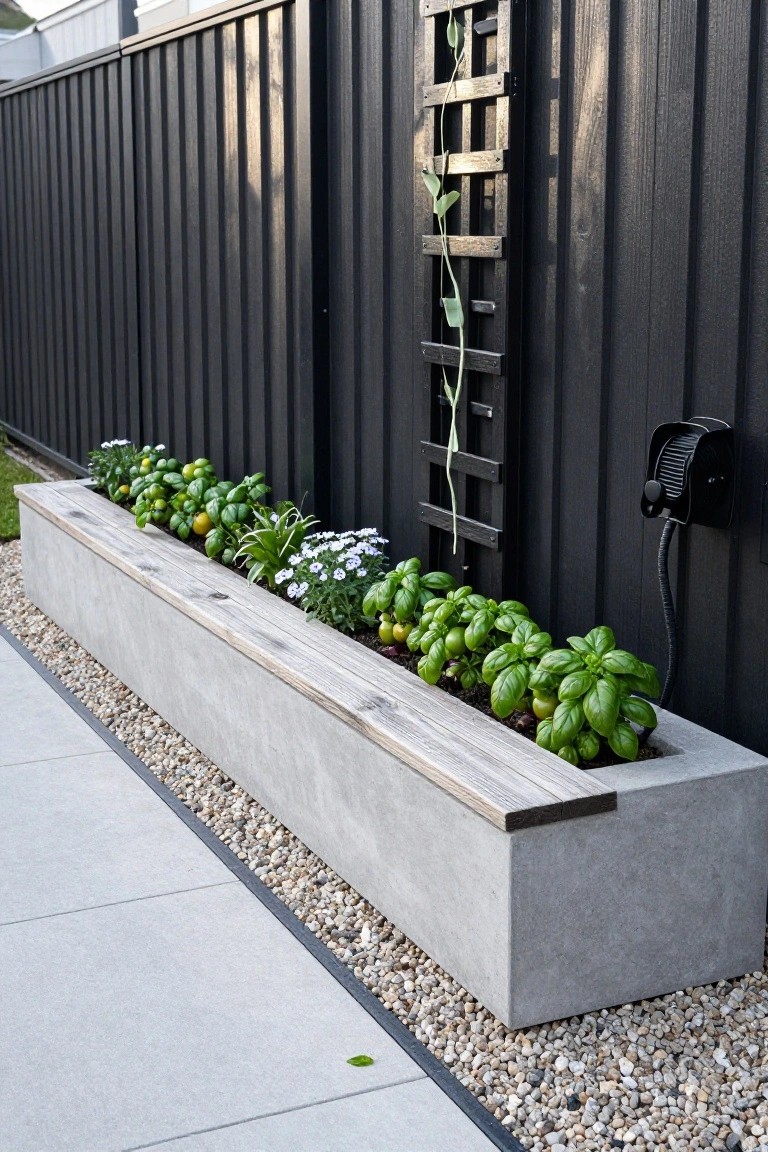
This setup uses a long, narrow concrete raised bed right along the fence to mix basil with small fruiting plants and flowers. The basil fills in thick around green lemons or tomatoes, while daisies add pollinator spots. It keeps everything compact and healthy, since basil repels pests from the fruits and the flowers draw in good bugs. That fence line turns into a productive row without taking up yard space.
Stick this in skinny side yards or back boundaries where ground space is tight. Go for concrete or stone for clean lines that last, add a wood cap for sitting if you want. Just make sure it drains well so roots don’t rot. Works great on modern or simple homes, keeps maintenance low once established.
Companion Planting with Varied Heights

One smart way to build healthier garden beds is layering plants by height, like the tall sunflowers rising behind shorter phlox and alliums in this border. The sunflowers offer some afternoon shade to the perennials below, while the alliums and phlox draw in pollinators that help everything thrive. A simple birdhouse on a post adds birds to control pests naturally.
This layout fits nicely along a walkway or house foundation where you want color without overwhelming the space. Plant the tallest at the back or center, then fill forward with midsize and low growers that play well together. Keep the brick edging for neatness, and label as you go to remember what works year after year.
Balcony Raised Bed Companion Planting
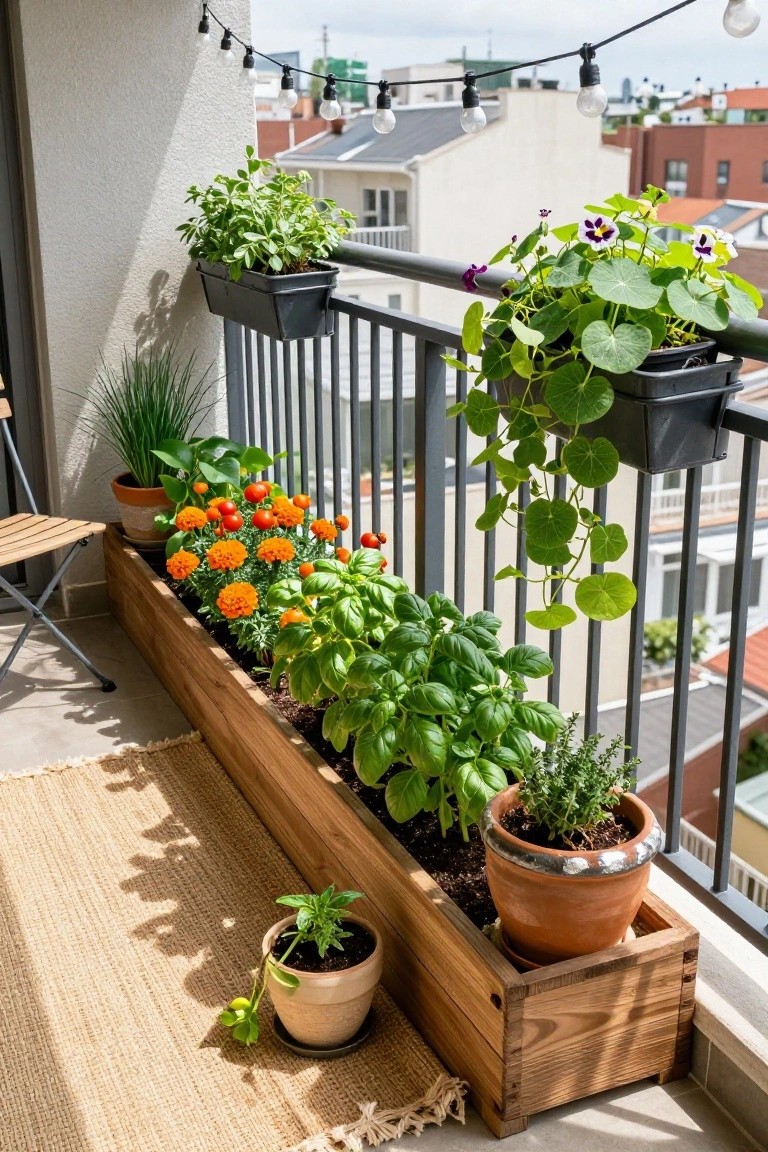
One smart way to fit companion planting into a small space is this long wooden raised bed along a balcony rail. It mixes tomatoes with basil and marigolds in a simple row. The marigolds help keep bugs away from the tomatoes while basil boosts their flavor and growth. It’s practical for apartments or tight spots where you want fresh herbs and veggies without much ground space.
Set this up on a sunny balcony facing south if you can. Use a sturdy wood box about 8 to 10 feet long and fill it with good soil. Plant taller tomatoes in the back, bushy basil next to them, and low marigolds at the ends. Add chives or thyme for extra pest protection. Water regularly but let it drain well to avoid root rot. This works great for renters too since it’s easy to build or buy ready-made.
Parterre Garden Beds for Companion Planting
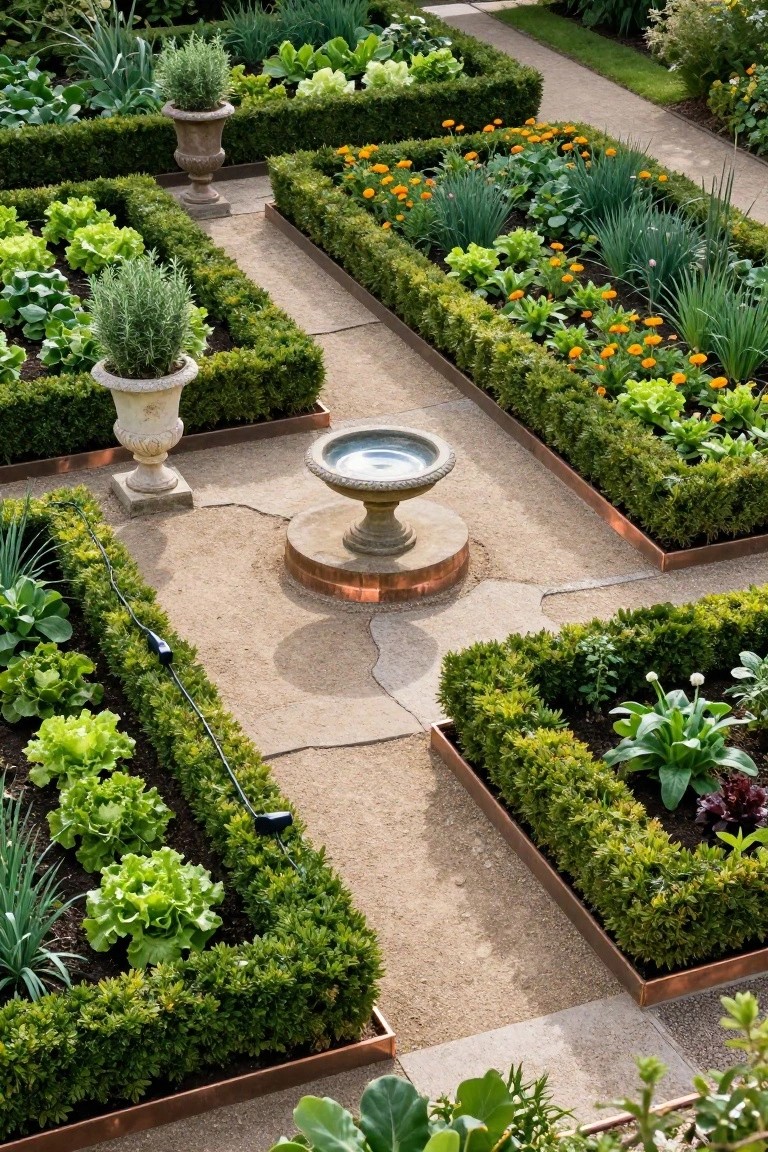
This setup uses a classic parterre layout with raised beds shaped into neat geometric patterns. Boxwood hedges outline the beds, and copper edging keeps everything crisp. Inside, veggies like lettuce and leeks grow alongside marigolds and herbs. That mix isn’t just pretty. Marigolds help keep pests away from the crops, making the garden healthier overall without much fuss.
You can pull this off in a smaller backyard or even a side yard. Start with simple raised frames, maybe 4 feet square, and plant companions that play nice together. Keep paths wide enough to walk. It takes some trimming on those hedges, but the structure makes weeding and harvesting straightforward. Works best where you want order without losing that homey feel.
Lavender Companions in a Curved Brick Bed
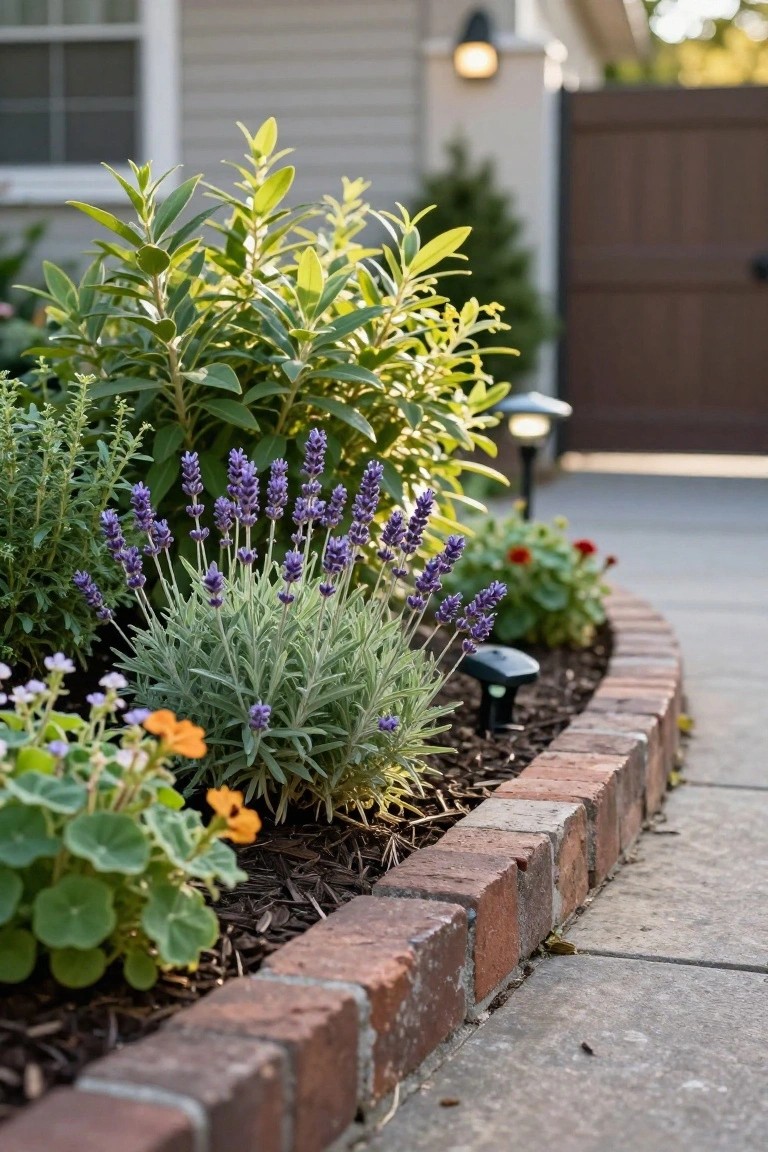
This garden bed curves along the path with tall lavender spikes mixed in with rosemary bushes and little orange flowers. The brick edging keeps everything neat, and the companions help each other out. Lavender draws pollinators while the herbs fend off bugs, so plants stay stronger without much fuss.
Set one up next to your driveway or walkway where you see it every day. It suits a sunny spot with average soil. Just keep the edging low enough to step over, and add mulch like they did here to hold in moisture. Works well for smaller yards too.
Companion Planting in a Raised Stone Bed
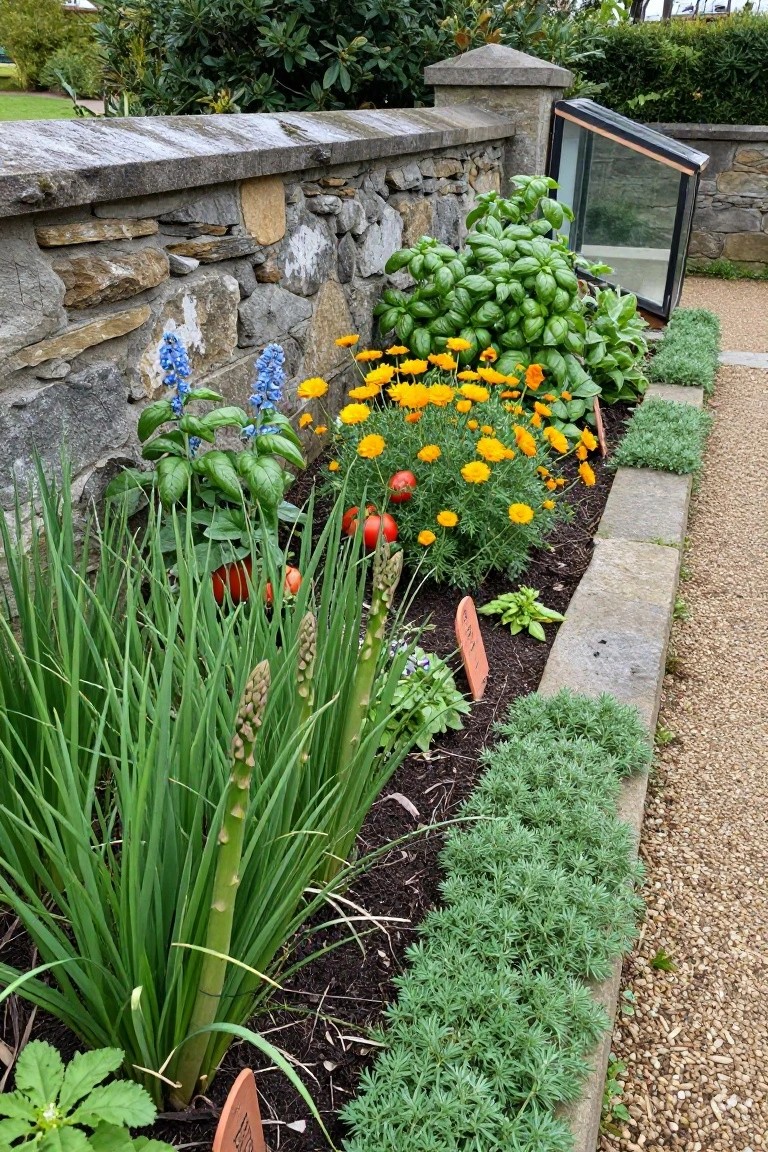
One simple way to boost your garden is planting companions together in a neat raised bed like this. Tomatoes sit happily with basil and marigolds close by. Those bright marigolds ward off pests from the veggies, while basil adds flavor and repels some bugs too. The stone edging keeps everything tidy against the wall.
This layout works great along a sunny fence or house side, especially in smaller yards. Put taller plants like asparagus at the back, then medium ones, and low herbs up front. Stone or brick borders hold soil in place and suit older homes… just watch for good drainage.
Raised Beds with Layered Companion Planting
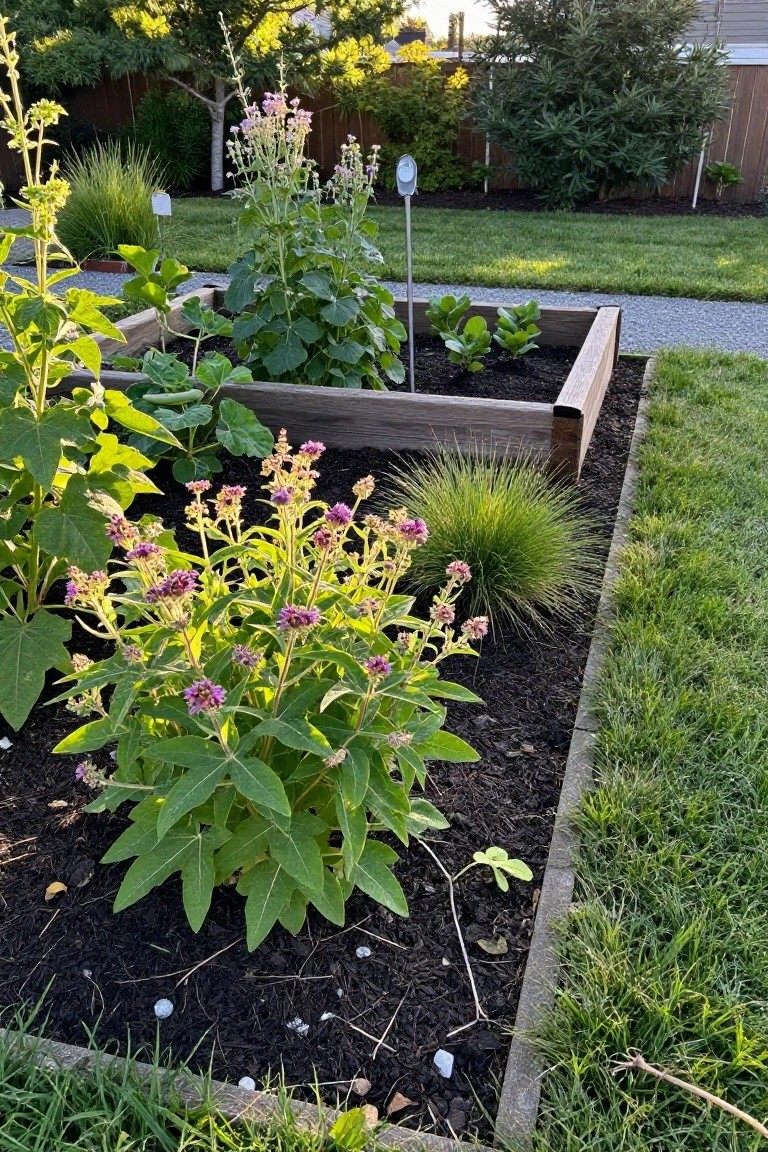
One smart way to boost your garden is layering plants by height in raised beds. Here tall okra stalks rise up behind mid-level purple flowers and lower beans or greens. Those flowers, probably agastache, draw in bees while keeping bugs away from veggies. It makes the bed productive and pretty without much fuss.
Set this up in a sunny spot with good soil. Wooden frames like these hold everything neat, and mulch keeps weeds down. Works best in smaller yards… just pick companions that play nice together, like pest-repelling flowers near edibles. Watch the spacing so nothing crowds out the rest.
Fruit Trees with Marigold Companions
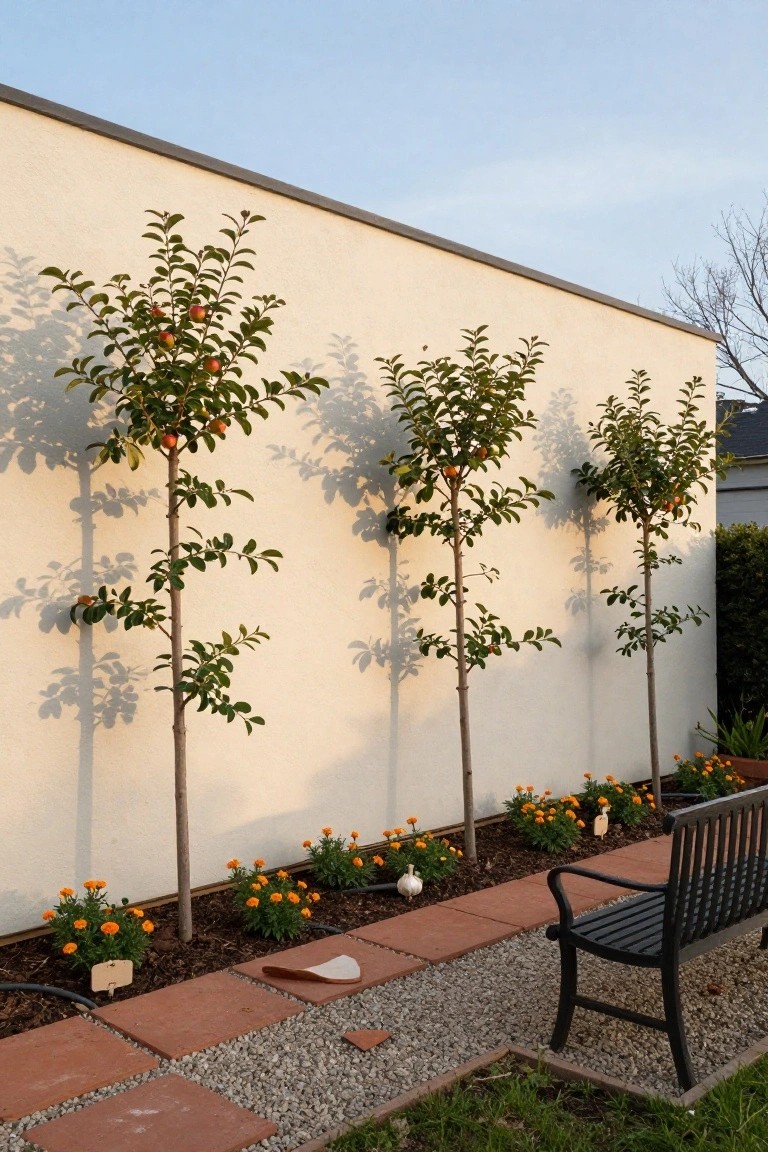
Young fruit trees like these, lined up straight against a plain wall, get a real boost from marigolds planted tight at the base. The marigolds ward off soil pests and nematodes that bother tree roots. Plus they add bright color without crowding the space. It’s a simple way to keep fruit healthy as it grows.
This layout fits skinny beds next to a house or garage where you want structure but not much width. Space trees about four feet apart, fill gaps with marigolds or onions for extra protection, mulch to hold moisture, and run drip lines underneath. Sunny spots work best. Keeps things tidy and productive.
Strawberries Supported by Wire Fencing
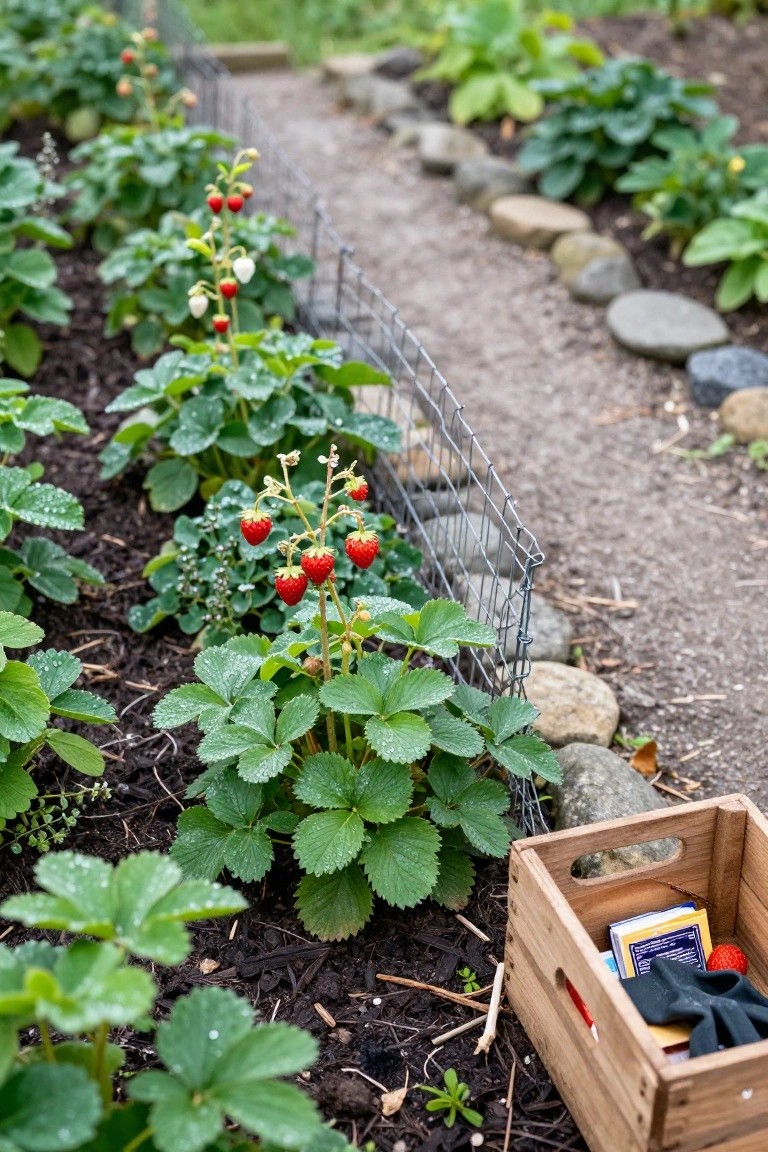
Growing strawberries up a wire fence gives you vertical space in tight garden beds. The plants send runners along the mesh, keeping berries up off the damp ground where they ripen cleaner and get more sun. It leaves room below for companion plants that help fight off slugs or boost growth, like the low greens tucked in here.
Set this up along a path or yard edge where you have a narrow strip to work with. Sink the fence into the soil, mulch heavy to hold moisture, and plant strawberries close to the base. It fits small home gardens best. Keep an eye on watering since things dry out faster up top.
Raised Bed Companion Planting with Edible Greens and Flowers
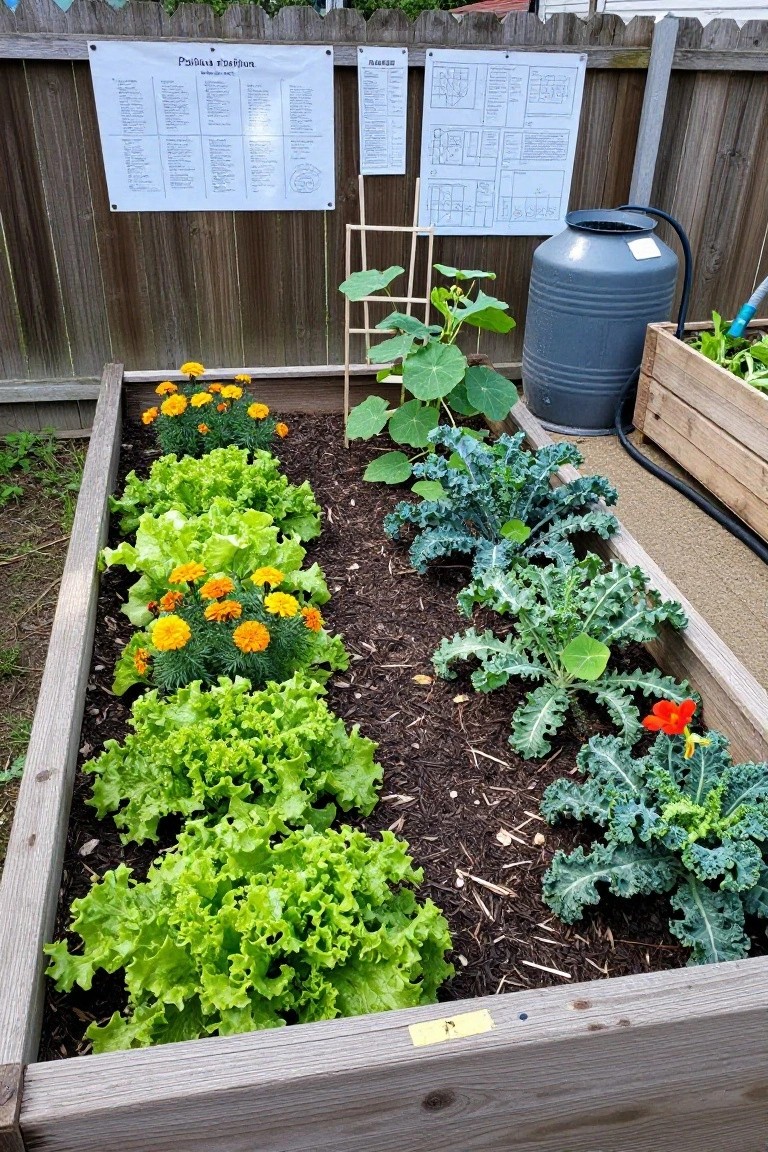
This garden bed lays out lettuce, kale, and marigolds in neat rows, with squash climbing a trellis nearby. The marigolds act as a natural pest barrier for the greens, which is a classic companion trick that boosts health without sprays. It keeps everything looking tidy too, even as plants grow.
Set this up in a sunny spot with good soil drainage. The raised wood frame makes it easy to reach, perfect for small yards or community plots. Watch spacing so bushy kale doesn’t crowd the lettuce… and harvest often to keep air moving.
Lavender Borders for Garden Paths
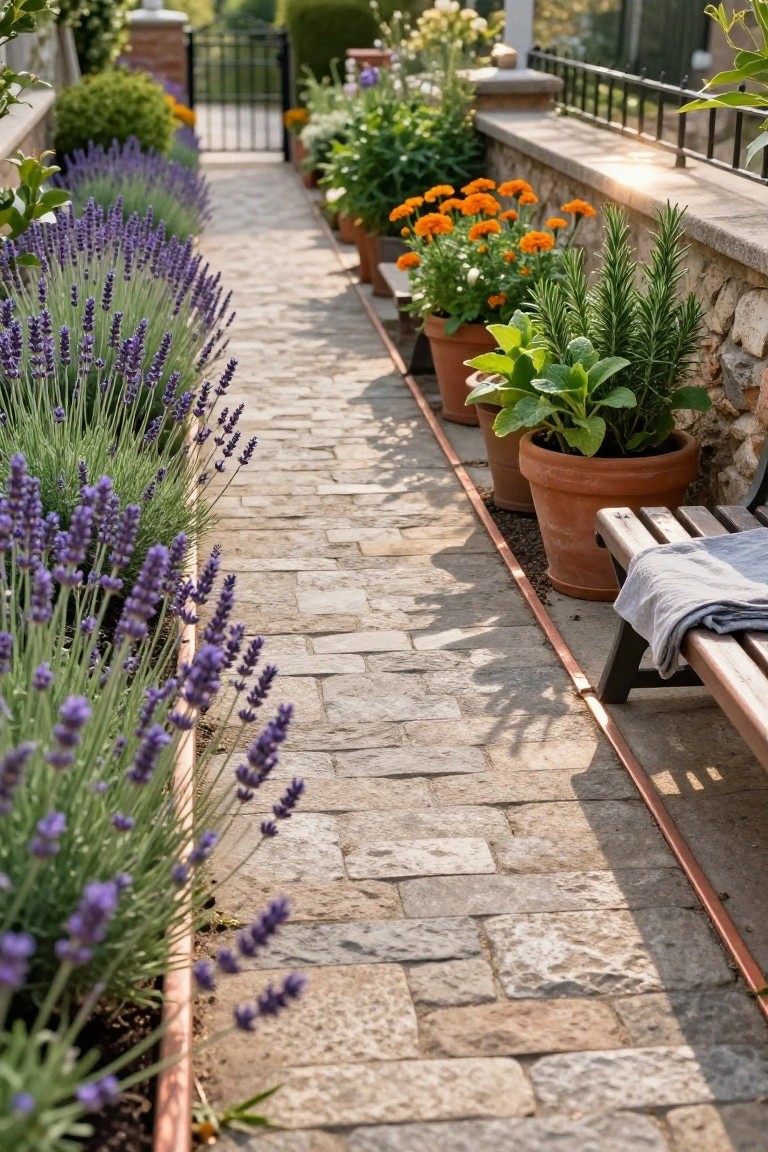
Lavender works so well as a simple border along garden paths. You see it here lining one side of this stone walkway, forming a tidy purple edge that smells great when you brush past. It pairs nicely with companions like marigolds and rosemary in pots on the other side. Those plants help each other out, with lavender repelling pests and the marigolds adding bright color plus their own bug-fighting tricks.
Try this in a sunny spot where you want low upkeep and some structure. It fits cottage gardens or narrow side paths best, keeping things neat without much trimming. Just make sure the soil drains well, or the lavender might struggle.
Lavender Paired with Silver Foliage in Beds
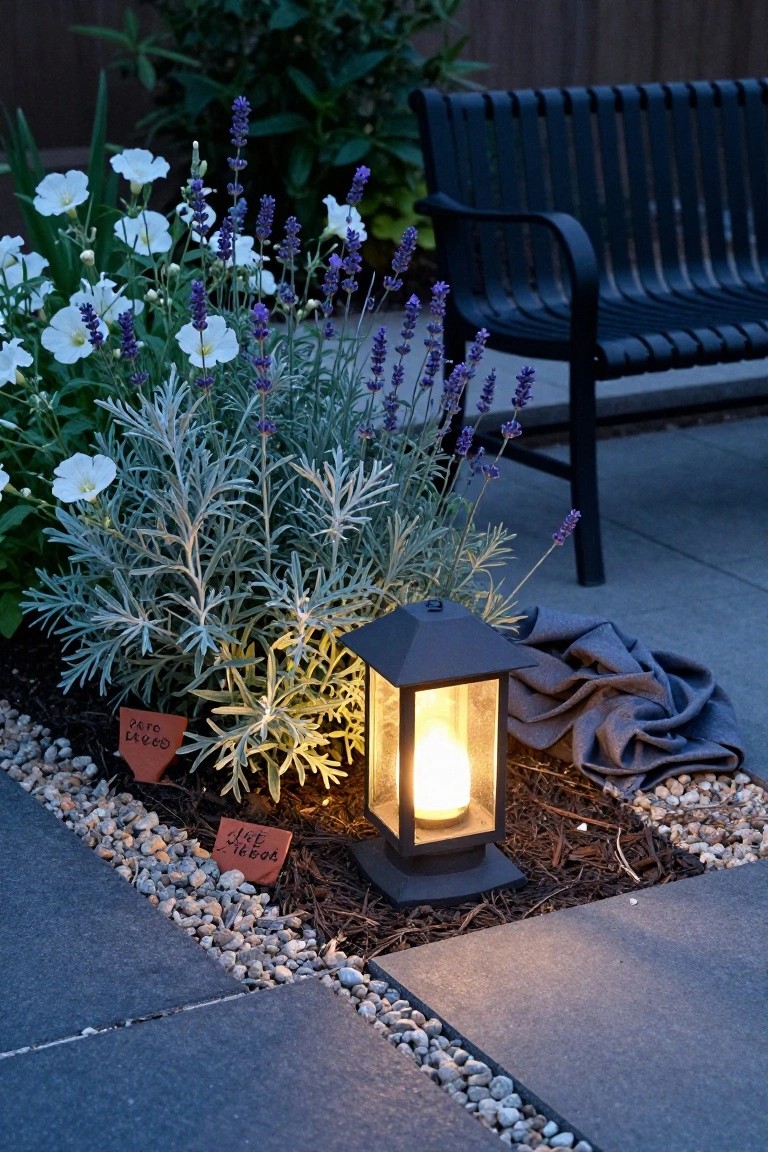
One simple way to build healthier garden beds is planting lavender right next to silver-leafed artemisia. The lavender keeps bugs away from both plants while the silvery leaves pick up the purple blooms and white flowers mixed in. That contrast makes the bed pop without much fuss and the plants support each other through drier soil conditions.
Try this along a walkway or patio edge where you want low upkeep. It fits cottage-style yards or modern setups with clean pavers. Just space the lavender about 18 inches apart and tuck artemisia in front for that layered look. Watch the water though. Both like it on the dry side.
Seaside Raised Bed Companion Planting
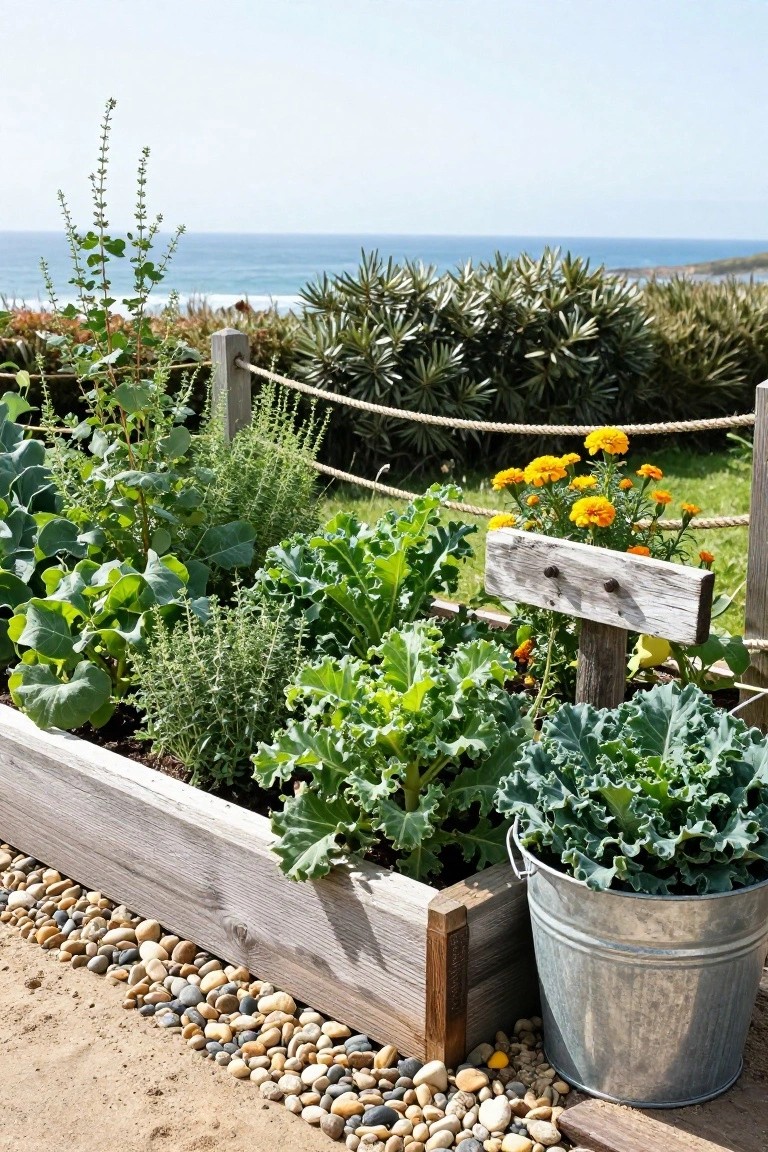
This raised bed setup works well for mixing kale, herbs like thyme, and marigolds together right along the coast. The leafy greens get some pest protection from the flowers and herbs, while everything grows stronger in the shared space. It keeps the garden productive without much fuss, and that ocean backdrop makes it feel even more relaxed.
Try this in a sunny spot near your patio or fence, especially if you have sandy soil. Use untreated wood for the bed, line the bottom with rocks for drainage, and plant the taller herbs toward the back. It suits small coastal yards perfectly, but watch for salt spray on the leaves.
Frequently Asked Questions
Q: I’m new to this. Which layout should I try first?
A: Grab the classic Three Sisters setup with corn, beans, and squash. The corn acts as a natural pole for beans, squash shades the soil, and they all share nutrients. You’ll see quick results even in average soil.
Q: What if my garden beds get partial shade?
A: Choose combos like lettuce under tall beans or spinach near potatoes. The taller plants provide dappled cover while the low growers fill in below. Your veggies still produce without full sun.
Q: Do I need to redo these layouts every season?
A: Rotate plants to different beds each year. Pests and diseases won’t build up that way. Fresh soil keeps everything vigorous.
Q: Can I adapt these for raised beds or containers?
A: Scale them down and they work great. Stick to 2-3 companions per bed, like tomatoes with basil and onions. Good drainage makes them even healthier.
