

I’ve noticed that patios often sit underused until someone adds vegetables that draw you outside every day for a quick harvest. Those cozy corners shine when plants frame a chair or table without crowding the space, turning a forgotten spot into something you actually linger in. In my own yard, I learned the hard way that raised beds along the edges keep pathways clear and make tending easier on busy evenings. Vegetable gardens fit patios best when they blend right into the seating flow. A few of these setups are the kind worth sketching out for your own corner next season.
Tiered Shelves for Balcony Veggies

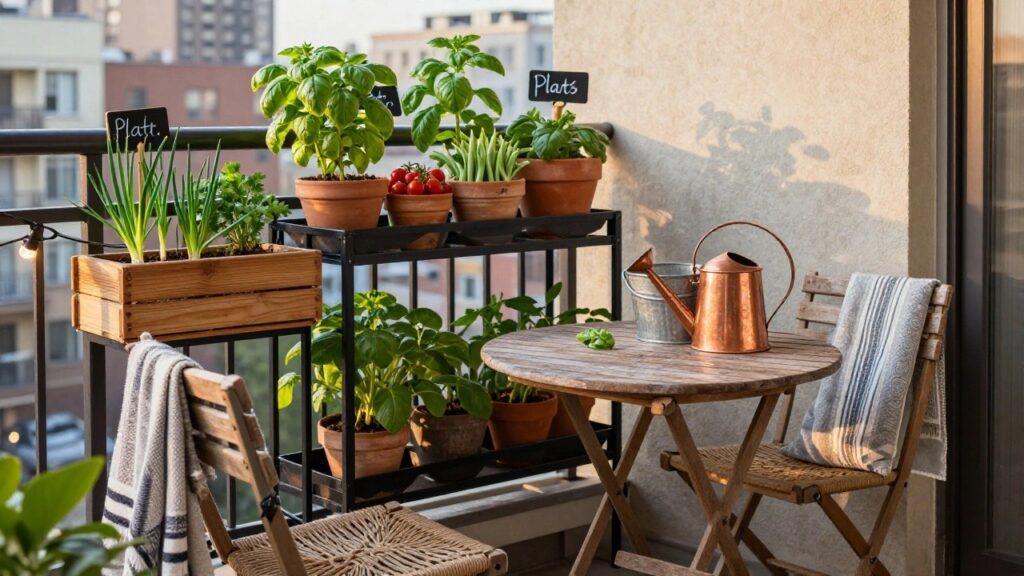
A tall black metal shelf unit holds pots of tomatoes, basil, beans, and green herbs right along the balcony edge. This stacks plants up high to fit more into a tight space without crowding the floor. It turns a plain balcony corner into something useful and green. Fresh picks just steps from your door.
Set one of these shelves in a sunny spot facing south if you can. Add a small table and chairs nearby to sit with your coffee while the plants grow. Sturdy metal holds the weight fine… watch for wind though on higher floors. Good for renters too since it’s easy to move.
Raised Wooden Beds for Patio Veggies
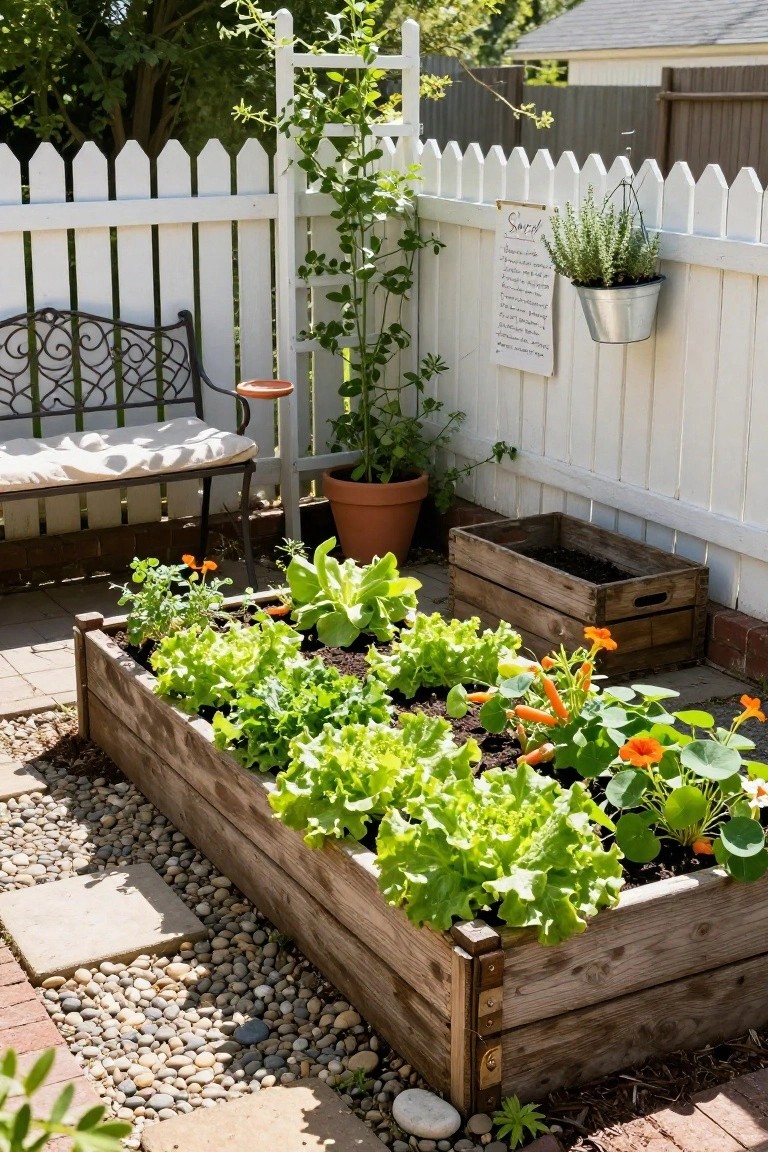
A basic wooden raised bed like this one fits right into a small patio corner and lets you grow your own lettuce, carrots, and even edible flowers such as nasturtiums. It’s practical because everything’s at waist height, no bending or kneeling needed, and the rustic wood blends with the gravel path and white picket fence for a homey feel. Folks like it for turning unused space into something useful without much fuss.
This works best in tight spots like side yards or apartment patios where ground planting isn’t an option. Start with untreated cedar or reclaimed crates to keep costs down and avoid chemicals leaching into the soil. Pair it with a simple bench nearby for picking time, and watch for good drainage to prevent root rot. Suits beginners or anyone short on yard room.
Line Your Patio with Galvanized Trough Planters
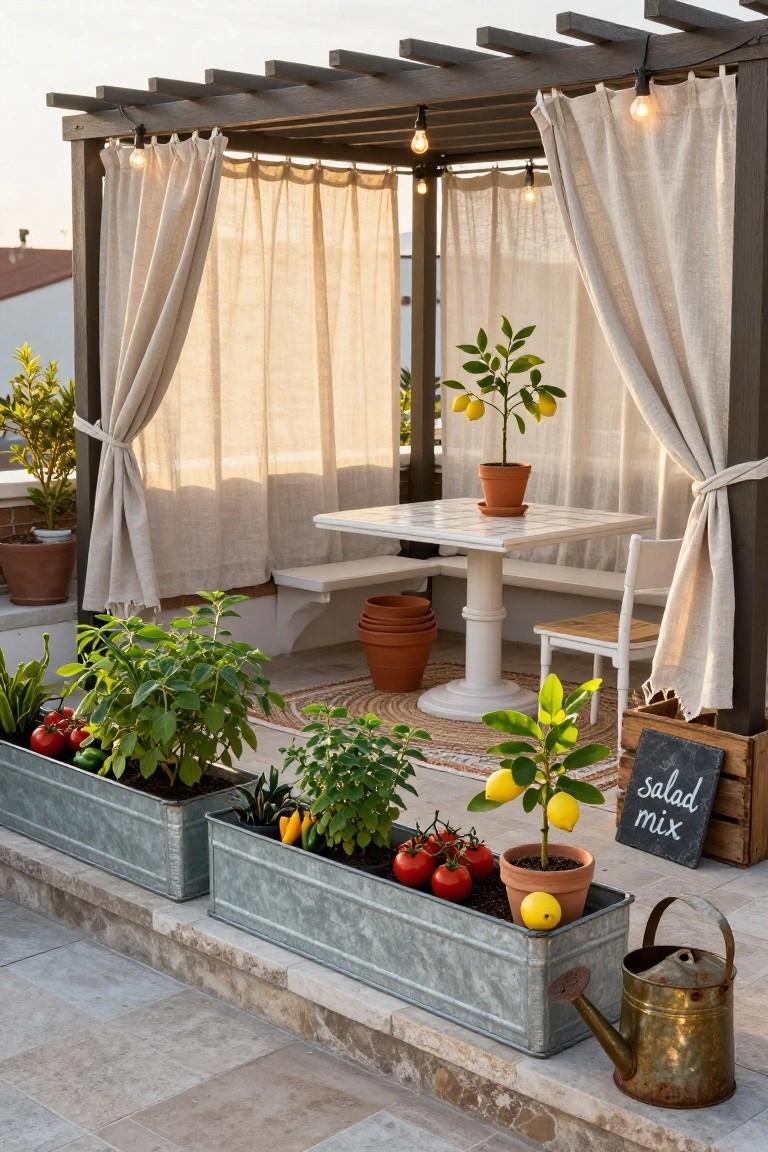
One smart way to turn a plain patio corner into a working vegetable garden is lining the edges with long galvanized metal troughs. You see tomatoes, peppers, herbs, and salad greens growing right there, close enough to grab for a meal. It keeps the plants off the floor and makes harvesting simple from your seating spot. Plus, the metal gives a rustic look that fits relaxed outdoor spots.
These troughs work best on terraces or rooftops where you can’t dig into the ground. Fill them deep with soil for root veggies, set them along low walls or steps near a table, and water easily with a can nearby. They suit sunny, breezy areas under a pergola for some shade. Just check drainage to avoid soggy roots.
Wall Trellis for Climbing Veggies

A simple wooden trellis mounted right on the patio wall lets climbing plants like squash or beans grow up instead of out. You see those big green leaves twisting around the slats here, making good use of vertical space in a tight corner. It keeps the ground clear for a bench or pots, and adds some real green coverage without crowding the area.
This setup works best in small patios or against a plain wall where you want privacy or just more growing room. Pick a sturdy trellis that matches your style, maybe reclaimed wood like this one, and train young vines up it early. Add shelves for jars of herbs to fill out the look. Watch for too much weight on the brackets, though.
Vegetables Hanging Over a Cozy Bench
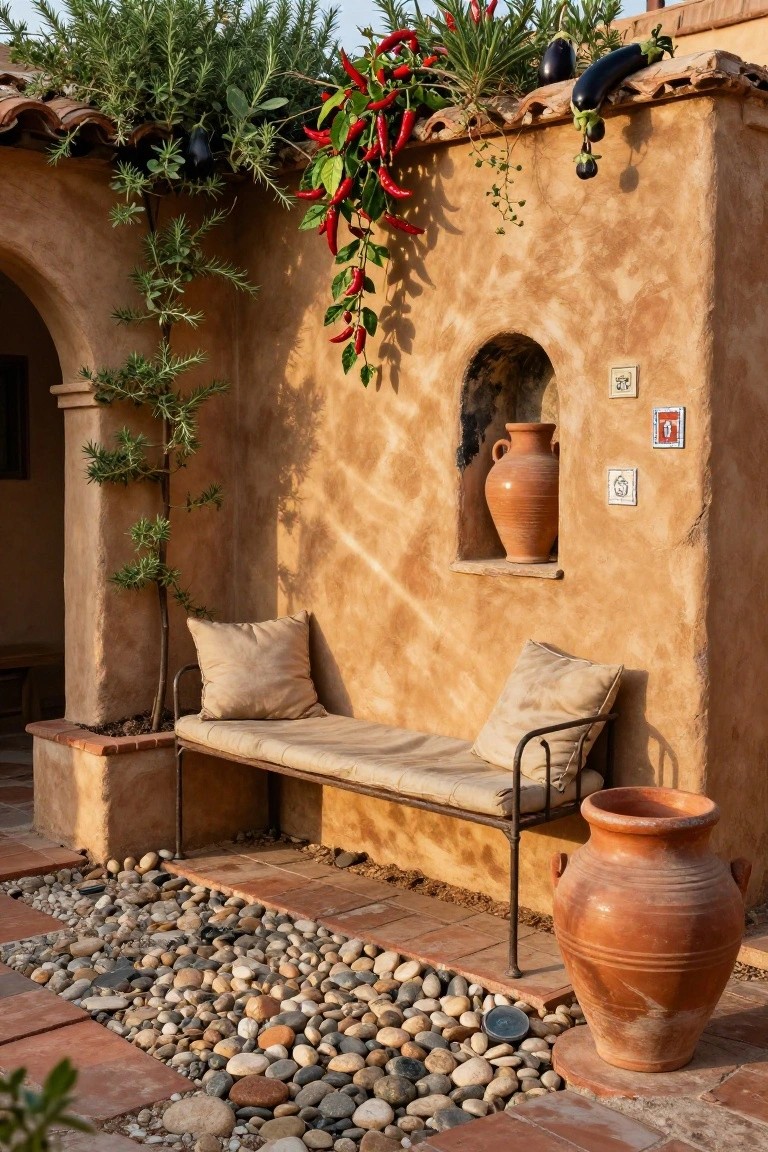
Tuck a simple bench against a plain wall and let vegetables trail down from the roof edge. Chilies and eggplants dangle right overhead here, mixed with rosemary for green cover. It turns a bare corner into something useful and shaded. No big planters needed on the ground.
This works best in warm spots with adobe or stucco walls. Plant in roof boxes or shallow ledges, then add cushions and a pot or two nearby. Keep it to edibles you like fresh. Suits small patios off the kitchen door.
Pallet Shelf Vegetable Garden

One simple way to fit more veggies into a tight patio spot is stacking them up on a wooden pallet shelf. This setup turns a basic pallet into a sturdy rack that holds pots at different heights, so you can grow lettuce, herbs, and greens without taking up floor space. It keeps everything handy for watering and picking right outside your door.
Set this up against a fence or wall in a sunny corner, using fabric pots for good drainage. It’s great for renters or small urban yards… just make sure the pallet is treated or sealed against weather. Add a watering can and gloves nearby, and you’ve got a practical little harvest station.
Vertical Tomato Towers Beside Patio Seating
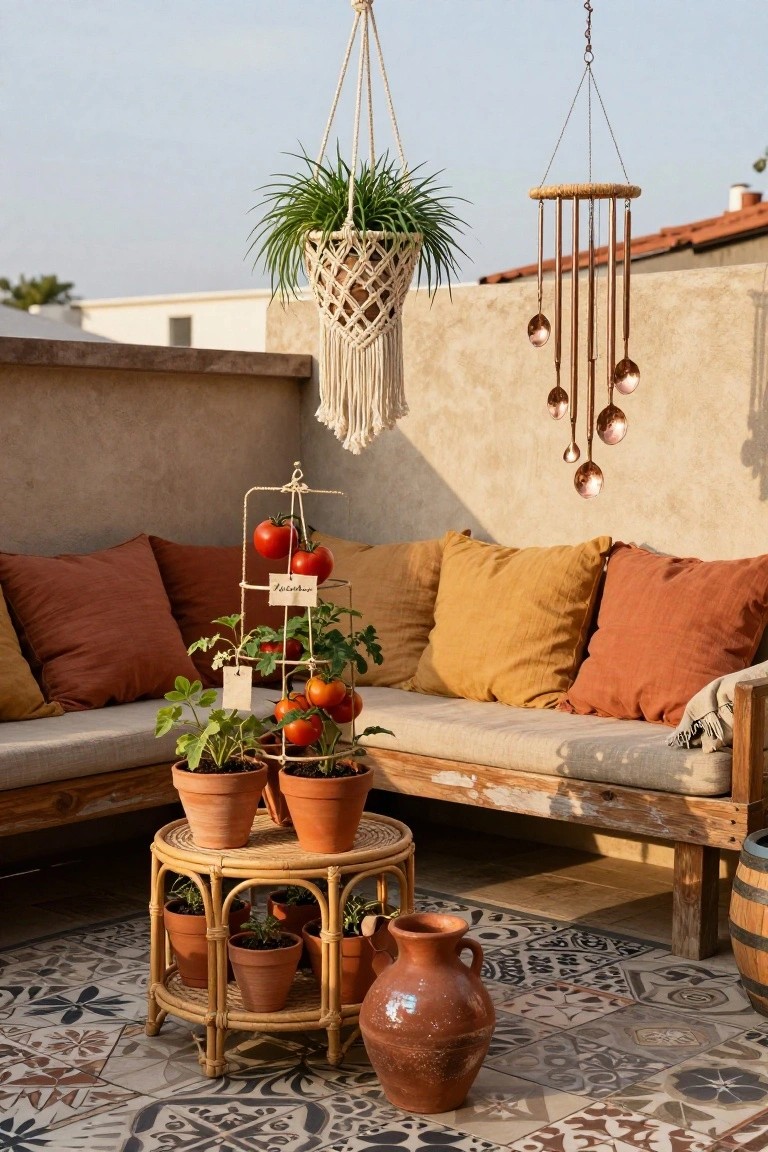
A tall metal tower lets you grow tomatoes right next to your outdoor bench. The plants climb up the frame, with ripe fruits hanging at eye level. It keeps the patio feeling open while bringing fresh produce close. No big garden needed.
This works best on sunny balconies or small terraces. Pick a simple wire tower, add stakes for support, and label the plants if you like. Pair it with cushions for lounging. Just trim regularly to avoid crowding the seating.
Raised Planter Beds for Patio Veggies

A raised planter bed like this one makes it simple to grow your own greens right on the patio. The long gray box holds kale, chard, and beets at a good height, so you can tend them without much bending. An outdoor faucet nearby keeps watering easy, and labels on wooden tags help track what’s what.
This works best in cozy corners or small decks where ground space is tight. It suits modern patios with clean lines… just add a bench for sitting nearby. Watch the drainage though, raised beds need good holes to avoid soggy roots.
Rustic Barrel Planters for Patio Veggies
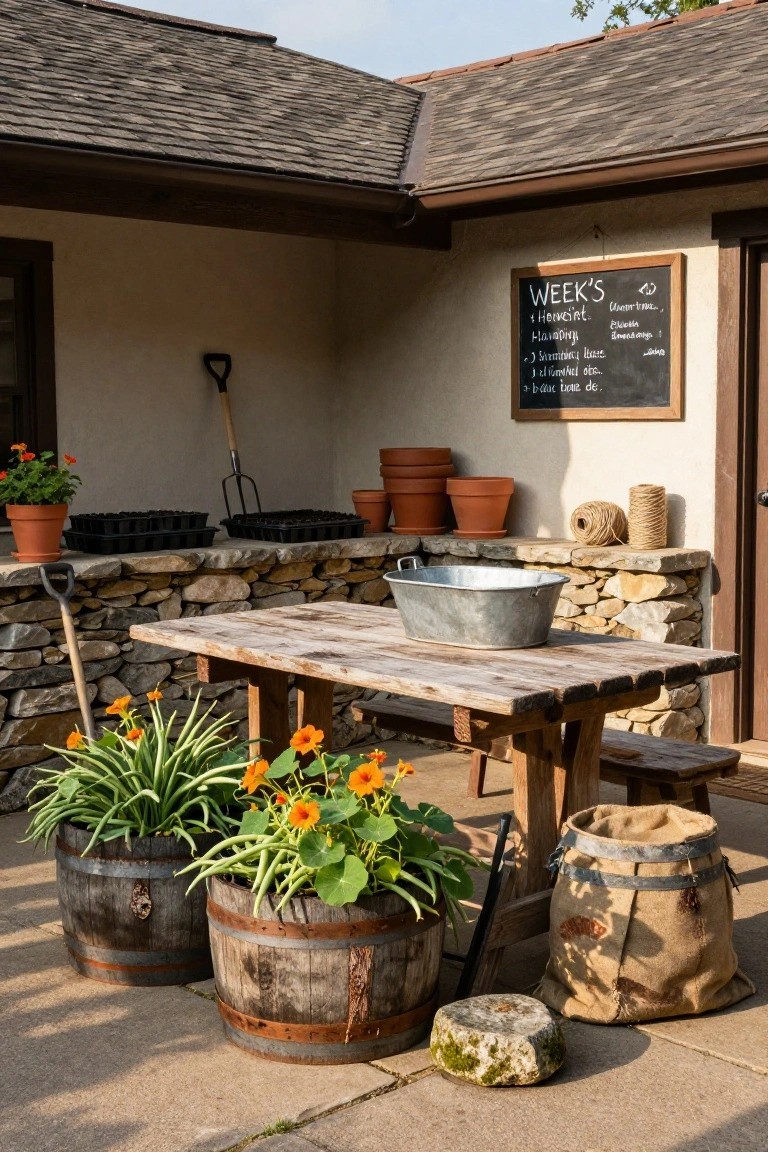
Old wooden barrels work so well as planters in a patio garden setup. They give you room for deeper roots, perfect for tomatoes or herbs that need space to grow. Around that rough wooden table, they create a spot that feels like a little farm corner right outside your door. The galvanized buckets and chalkboard sign add to the practical vibe without much fuss.
Set a couple barrels in a sunny patio edge, near enough to the house for easy picking. Drill holes in the bottom for drainage, line with gravel if you want, then pack in good soil. This idea suits smaller yards or townhomes…keeps things contained and easy to manage. Just watch they don’t dry out too fast in full sun.
Compact Patio Greenhouse for Veggies

A small greenhouse tucked into a patio corner gives you a protected spot to start seeds and grow peppers, tomatoes, and herbs right outside your door. The glass walls let in light while keeping out the chill, and wooden shelves inside make use of every inch for trays of seedlings. It’s a practical way to extend your growing season without taking up much space.
This setup works best in cozy outdoor spots near the house, where you can pop in easily to water or check on plants. Pair it with a simple chair nearby for sitting and tending, and use bricks or pavers for a stable base. Just make sure it’s anchored well against wind, and vent it on warmer days to avoid cooking your greens.
Porchside Raised Bed Vegetable Garden
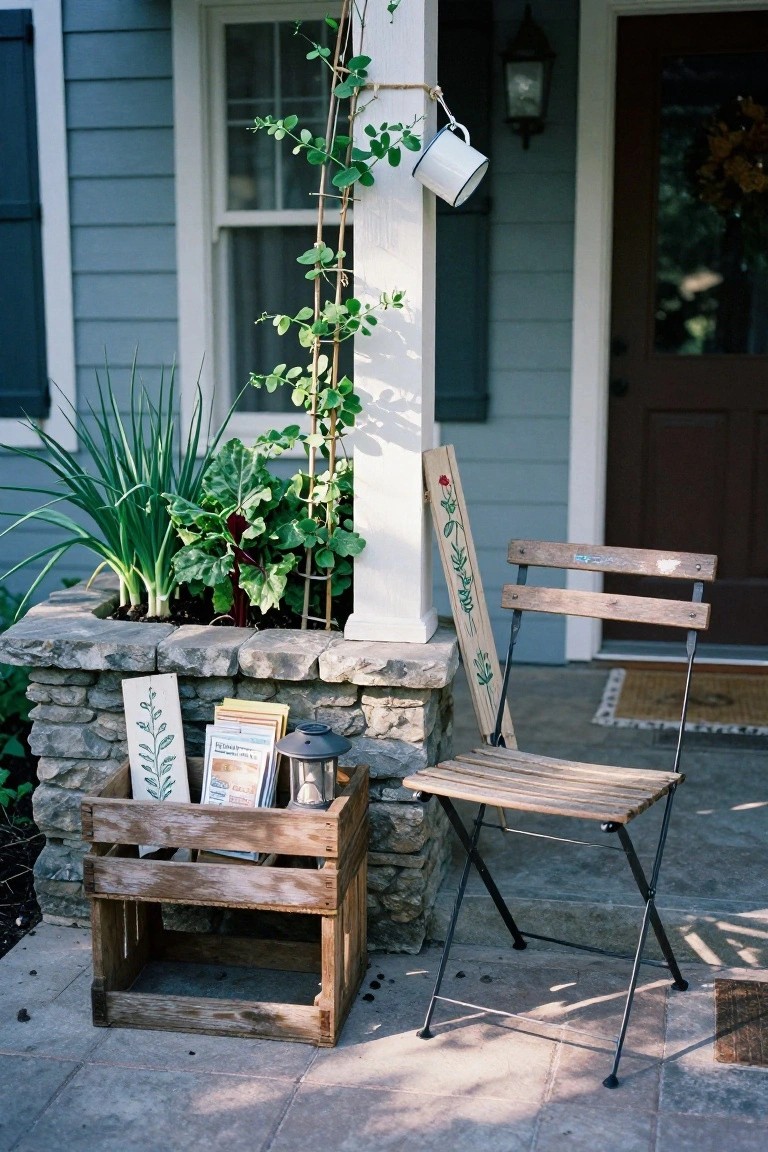
One easy way to fit a vegetable garden into a tight outdoor spot is to build a low raised bed right against your porch foundation. Here you see chives, beets, and greens tucked into a simple stone planter that hugs the house wall. It keeps everything contained and close at hand. Plus, that rustic touch blends right in with the porch steps and makes tending the plants feel like part of relaxing outside.
This works best on smaller patios or entry porches where you want fresh picks without taking up seating room. Stack stones or bricks for the bed to match your home’s siding, then plant shallow-root veggies nearby. Set a folding chair and old crate for books or tools. Watch the scale though. Keep it low so it doesn’t block the door.
Brick Nook Vegetable Garden

This setup turns a simple curved brick bench into the heart of a patio veggie patch. The semicircular shape fits right into a tight corner, with pots of peppers and herbs tucked along the edges and shelves. Vines overhead add shade, and it all feels tucked away but useful. It’s practical for small spaces where you want to grow food without taking up much room.
You can build something like this against a fence or wall in any backyard patio. Use reclaimed bricks for that rustic look, then fill in with easy veggies like peppers or herbs that don’t need much space. Keep a bin inside for tools or harvest. It works best in sunny spots, but watch for drainage so the bench stays dry. Great for city yards or cozy rentals.
Vegetable Planters Around the Dining Table
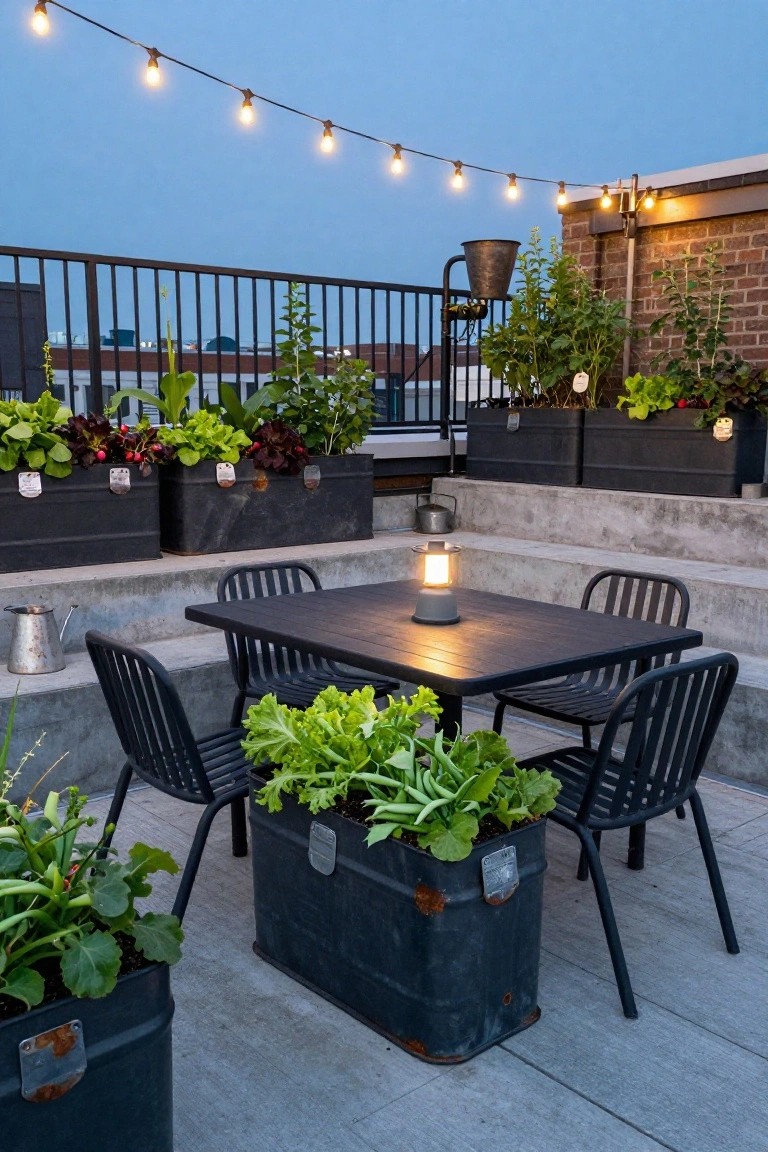
One easy way to make a patio feel like a real garden is to tuck vegetable planters right up against your dining table. Here, big black metal tubs hold lettuce, beets, and greens, creating a fresh border around a simple square table and chairs. It keeps the eating area open but makes harvesting as simple as reaching over. Plus, those plants add a bit of privacy on a rooftop spot like this.
This works best on smaller patios or balconies where space is tight. Pick tall containers that won’t tip, fill them with salad crops or beans for quick results. Black or galvanized metal fits most setups without clashing. Watch for good drainage though… wet roots mean trouble. String lights overhead help stretch the evenings.
Stone Raised Beds for Patio Veggies

A simple raised bed like this one uses natural stone walls to hold in soil for tomatoes, basil, and lettuce right along the edge of a patio area. It curves gently to fit the space and sits close to a small bistro table and chairs. What makes it smart is how it turns a narrow strip of yard into something useful. You get fresh picks steps from your seat, without sprawling plants taking over the whole spot.
Try this in tight corners or beside seating under a pergola. Stack local stones for walls about a foot high, fill with good garden soil, and plant compact veggies that like sun. It suits average backyards best. Watch for drainage so roots don’t drown after rain.
Raised Wooden Planter for Balcony Herbs
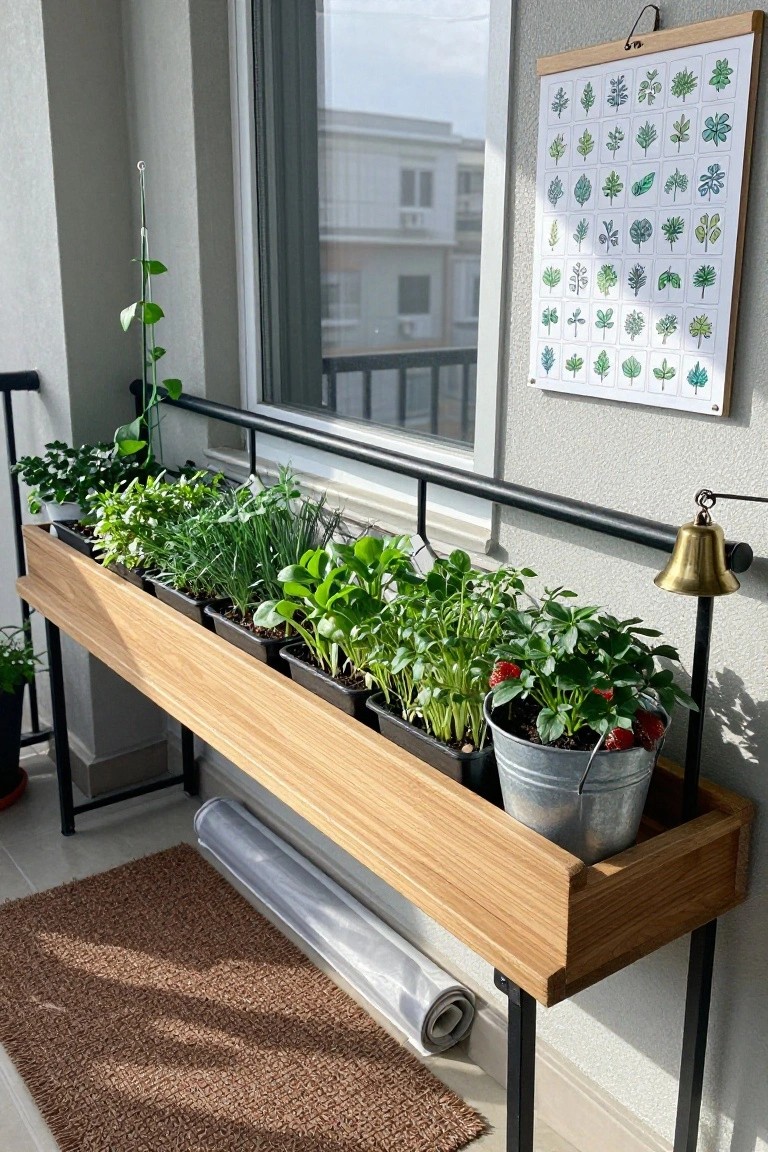
A legged wooden trough like this fits right along a balcony rail and holds a mix of herb pots and strawberry plants. It keeps everything off the floor so you can still move around easily. The oak finish looks natural against metal rails and adds a bit of warmth to the spot.
This works best on sunny balconies or small patios where space is tight. Pick a sturdy wood, add drainage holes or use pots inside, and group plants by water needs. Herbs thrive here… fresh snips for cooking just steps away.
Raised Planters Along the Patio
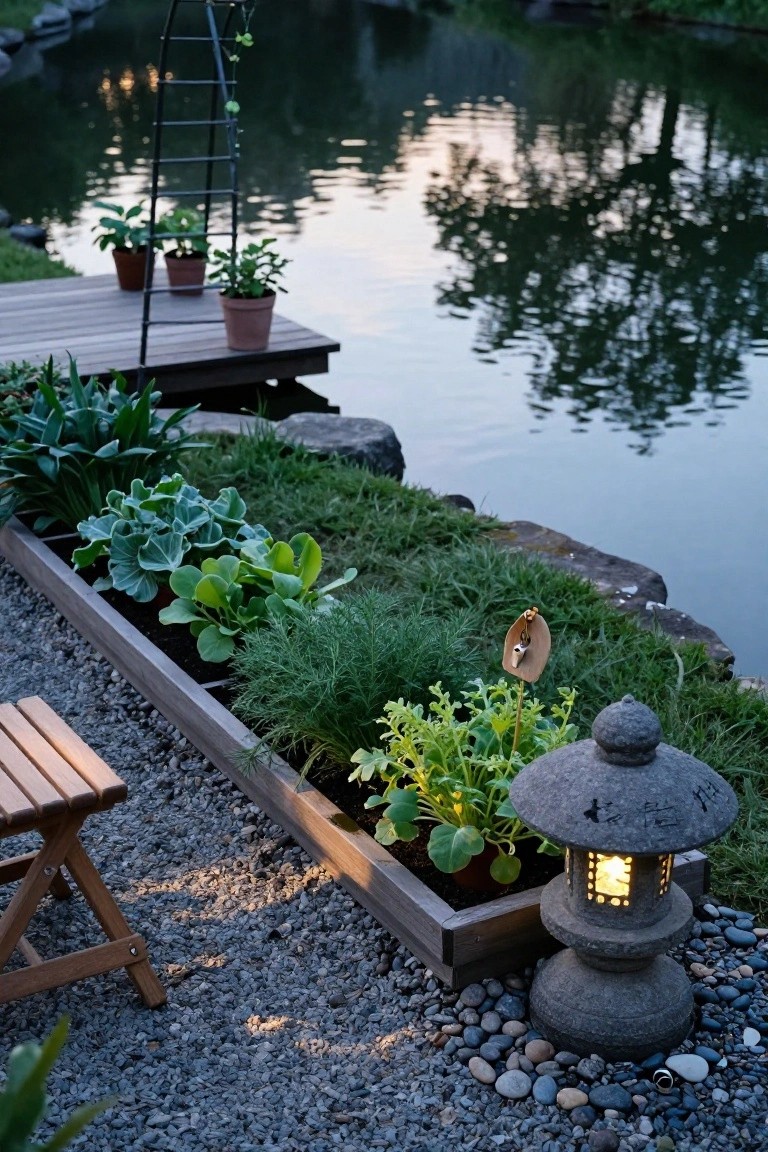
A simple wooden raised planter runs right along the edge of this gravel patio, packed with greens like pak choi and herbs. It turns unused space into a productive veggie patch without crowding the open area. That stone lantern nearby adds a quiet Japanese touch that keeps things calm and contained.
This works best on narrow patios or spots next to water where you want growing space but not a full garden takeover. Pick rot-resistant wood and stick to shallow-rooted plants. It’s practical for casual outdoor corners, easy to tend from a stool or the deck.
Veggie Trough on a Patio Bench
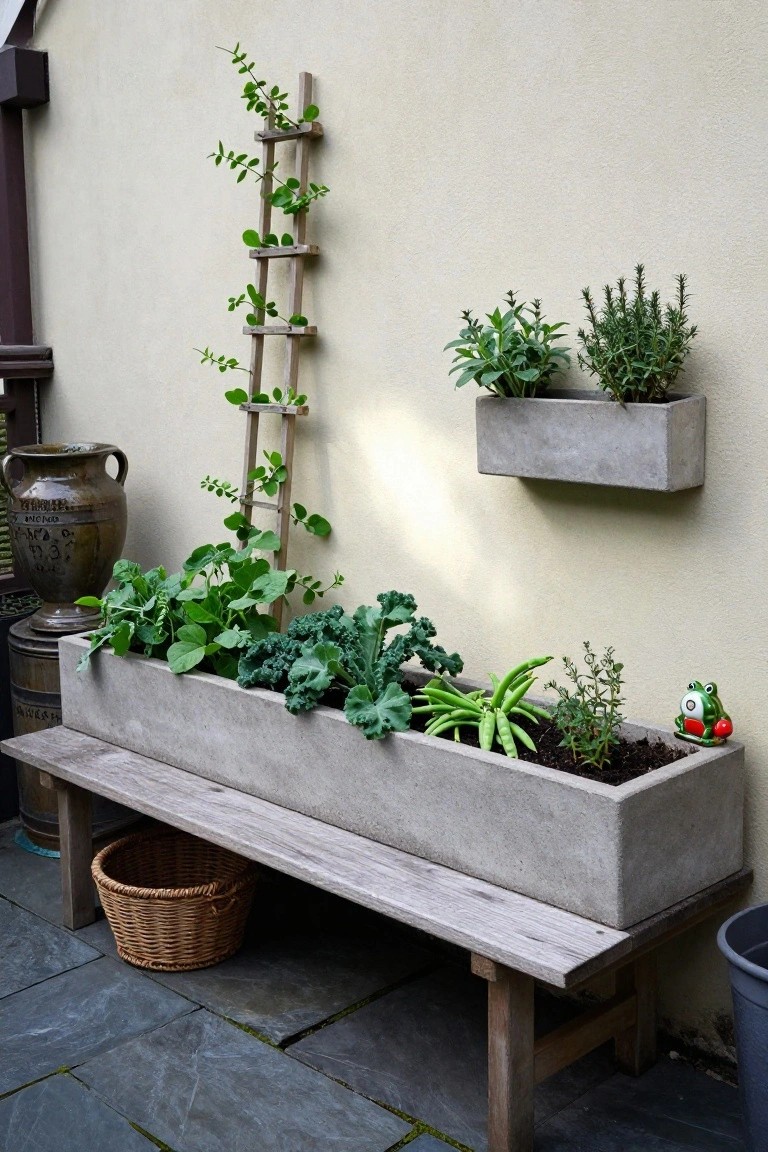
One easy way to turn a plain patio corner into a growing spot is to set a long concrete trough right on an outdoor bench. It keeps everything at waist height so you don’t have to bend over much. In this setup, the trough overflows with kale, beans, and greens, while a simple trellis nearby lets climbers like beans reach up the wall. It feels practical and full without taking up floor space.
This works best in tight spots like city patios or small backyards where ground space is limited. Pick a sturdy bench that can handle the weight when soil is wet, and go for concrete or stone troughs that won’t rot. Add a few herbs in wall pockets for variety. Just make sure good drainage holes are there to avoid root rot.
Frequently Asked Questions
Q: My patio only gets morning sun. Can I grow veggies there anyway?
A: You can! Stick to shade-loving crops like lettuce, spinach, and herbs such as mint or parsley. They thrive with just a few hours of gentle light and add fresh picks to your meals all season.
Q: What pots work best for a small patio setup?
A: Go for lightweight fabric pots or terracotta ones with drainage holes. They keep roots happy without weighing down your space. Size them to your plants, like 5-gallon for tomatoes.
Q: How do I stop pests from munching my veggies?
A: Plant marigolds nearby, they naturally repel bugs. Check leaves daily and squish any aphids you spot, then rinse with water. Healthy plants fight off invaders better.
Q: Won’t container gardening dry out too fast?
A: It can, so mulch the top with straw or bark to hold moisture. Water deeply in the morning. Your patio harvest stays juicy that way.
