

When I laid out my first garden beds, the vertical element made a bigger difference than I expected because it kept the ground level open for walking through and tending other plants.
Raised beds with trellis supports let crops grow upward instead of spreading out, which helps shape a tighter overall layout that still feels practical season after season.
I have noticed that the structure holds up better when the trellis is anchored directly to the bed frame rather than added later as an afterthought.
Trying one or two of these designs in a corner of my yard first showed me how the height affects both sun exposure and how the whole area reads from the house.
Some versions work well even in narrow side yards where a standard flat bed would have felt cramped.
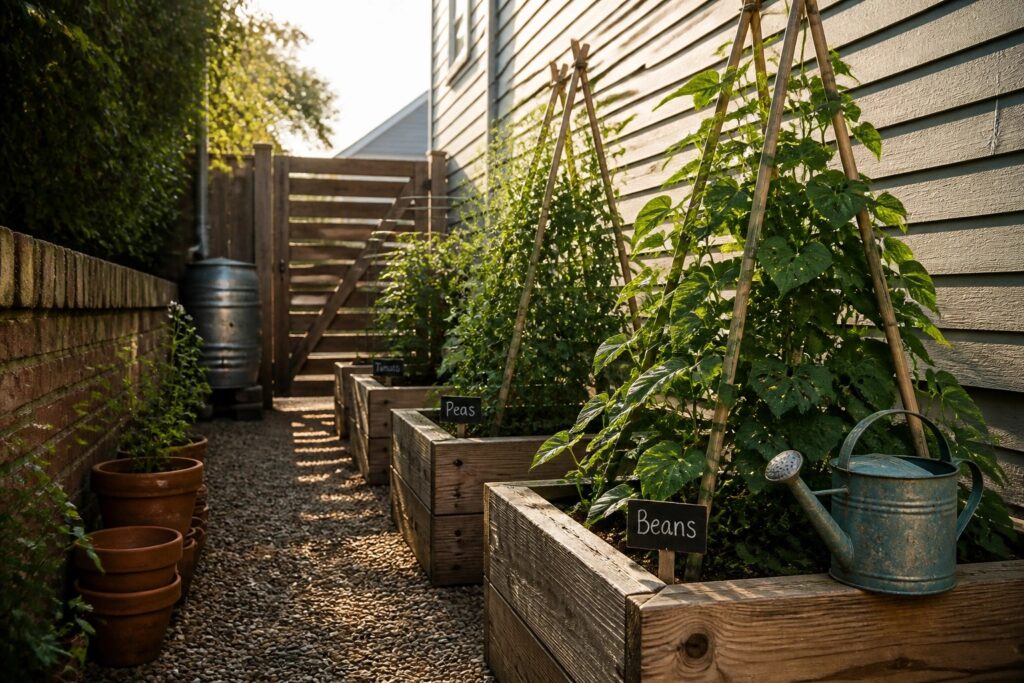
Raised Beds With Wooden Pole Trellis Frames

Raised beds paired with simple trellis structures let you grow more in a small area by sending plants upward instead of outward. The wooden frames keep soil contained while the poles give beans, peas, and tomatoes something to climb, which keeps the beds from looking crowded.
This setup works especially well along narrow paths or against a wall where space is limited. Just make sure the trellis is sturdy enough for the crop you choose and angled slightly away from the bed so plants get good light and air flow.
Raised Beds For Rooftops And Balconies With Trellis Panels
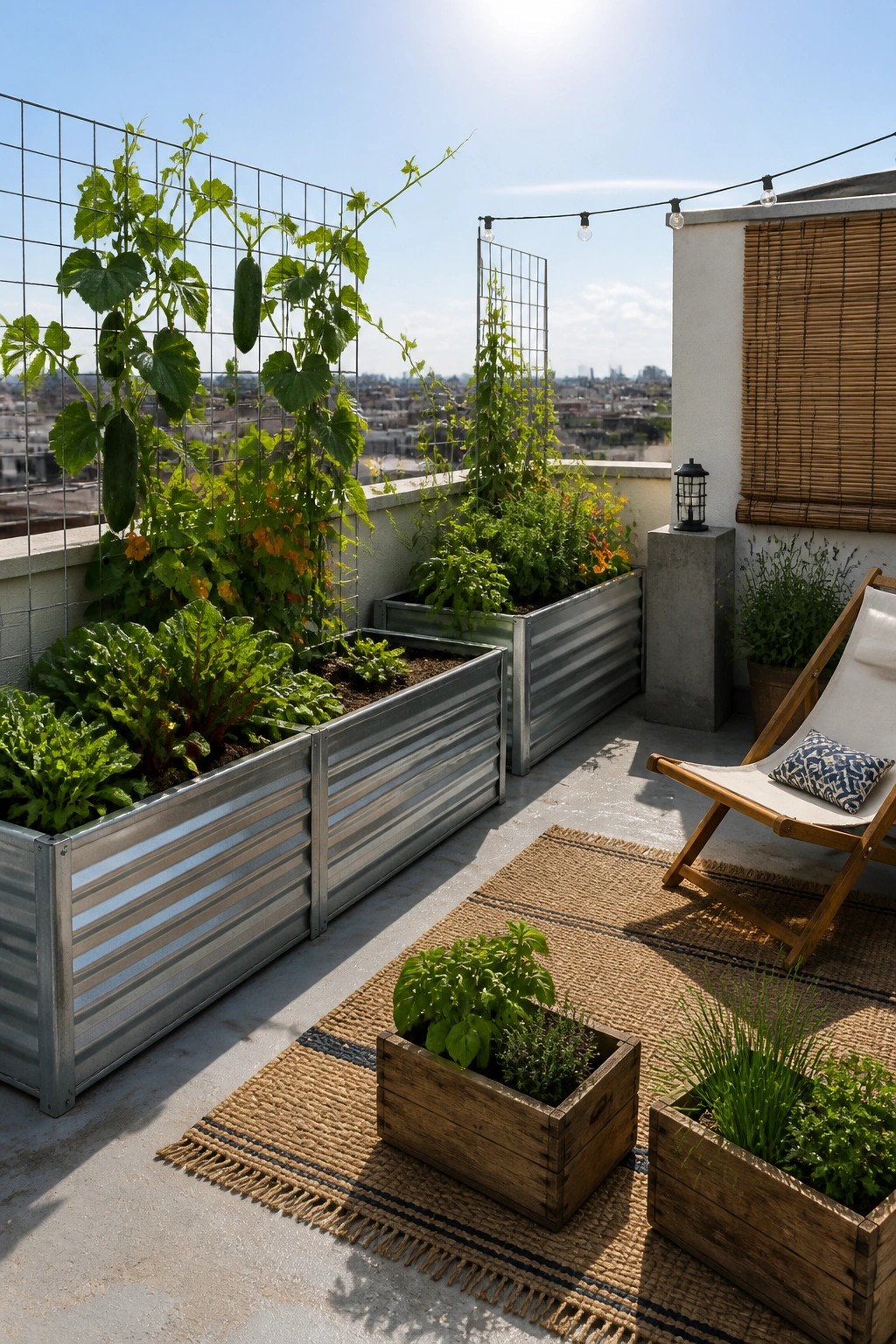
Raised beds that include a simple trellis panel make it easy to grow vining crops without taking up extra ground space. The vertical support lets plants like cucumbers climb instead of sprawl, which keeps the bed tidy and increases the yield in a small area.
This setup works well on rooftops, balconies, or narrow patios where floor space is limited. Secure the trellis to the back or side of the bed and choose a sturdy material that can handle the weight of mature vines.
Raised Beds With Built In Trellis Supports

Adding trellis supports directly to raised beds is a simple way to grow more without needing extra ground space. Vertical crops like tomatoes stay off the soil, get better air flow, and stay easier to pick.
Stone beds hold the weight well and keep the whole setup sturdy through the season. This approach works best in smaller yards or along paths where you want productive planting without crowding the walkway.
Raised Beds Along The Railing
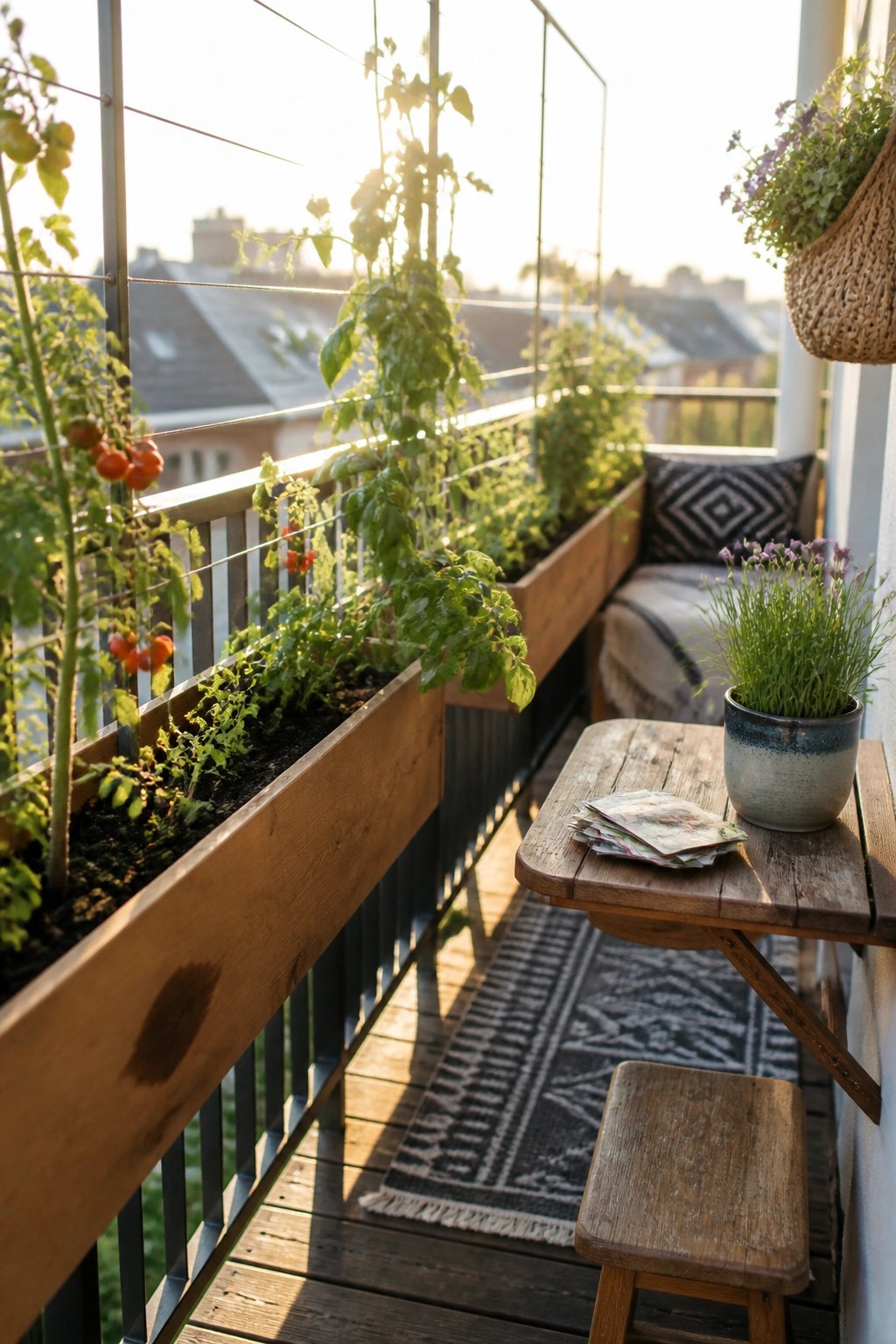
Many balconies stay underused because there is little floor space for normal pots or beds. Mounting raised beds right along the railing solves that by keeping the growing area off the deck while still giving plants room to spread upward.
This approach suits apartments and small outdoor spaces where people want fresh produce without crowding the seating area. Secure the beds well to the railing and use lightweight soil so the structure stays safe over time.
Raised Beds With Built-In Trellis Support
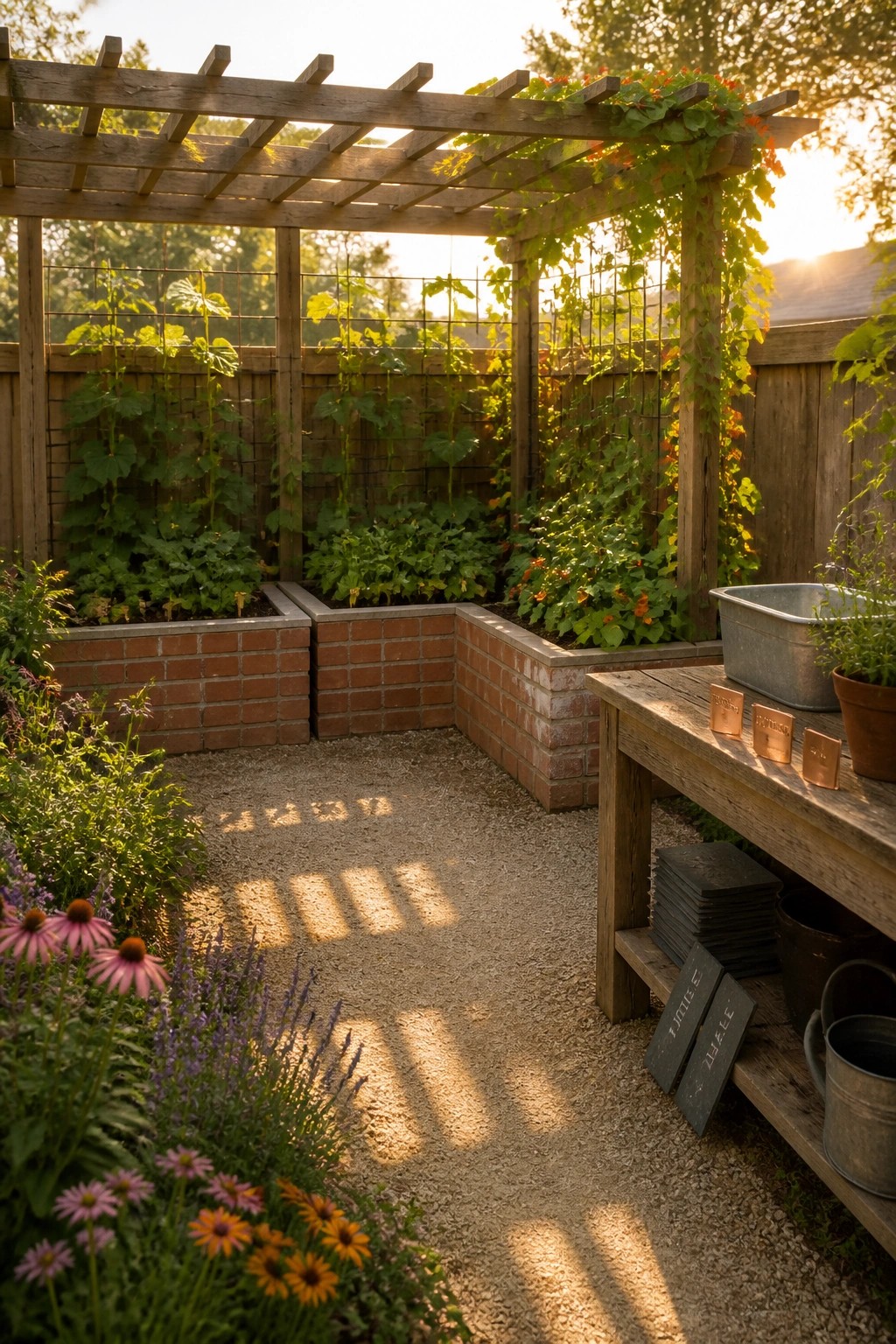
Raised beds paired with trellis panels make it easy to grow vertical crops without taking up extra ground space. The beds keep soil contained and at a comfortable height while the attached grids give vines and climbing plants a place to grow upward along a fence or wall.
This approach works best in smaller yards or along property edges where horizontal room is tight. Brick or wood bases hold the soil steady, and the simple grid panels let plants like cucumbers or beans reach for light without crowding the path below.
Rope Handles That Double As Trellis Supports

Raised beds with thick rope handles offer a simple way to add vertical support without extra structures. The ropes give climbing crops a place to grow upward, which keeps the planting area compact and easy to reach.
This approach works best in small yards or coastal spots where space is limited. Use sturdy rope that can handle weather, and plant vining crops like beans or peas so they can grab onto the curves naturally.
Raised Beds With Trellis Support For Vertical Crops
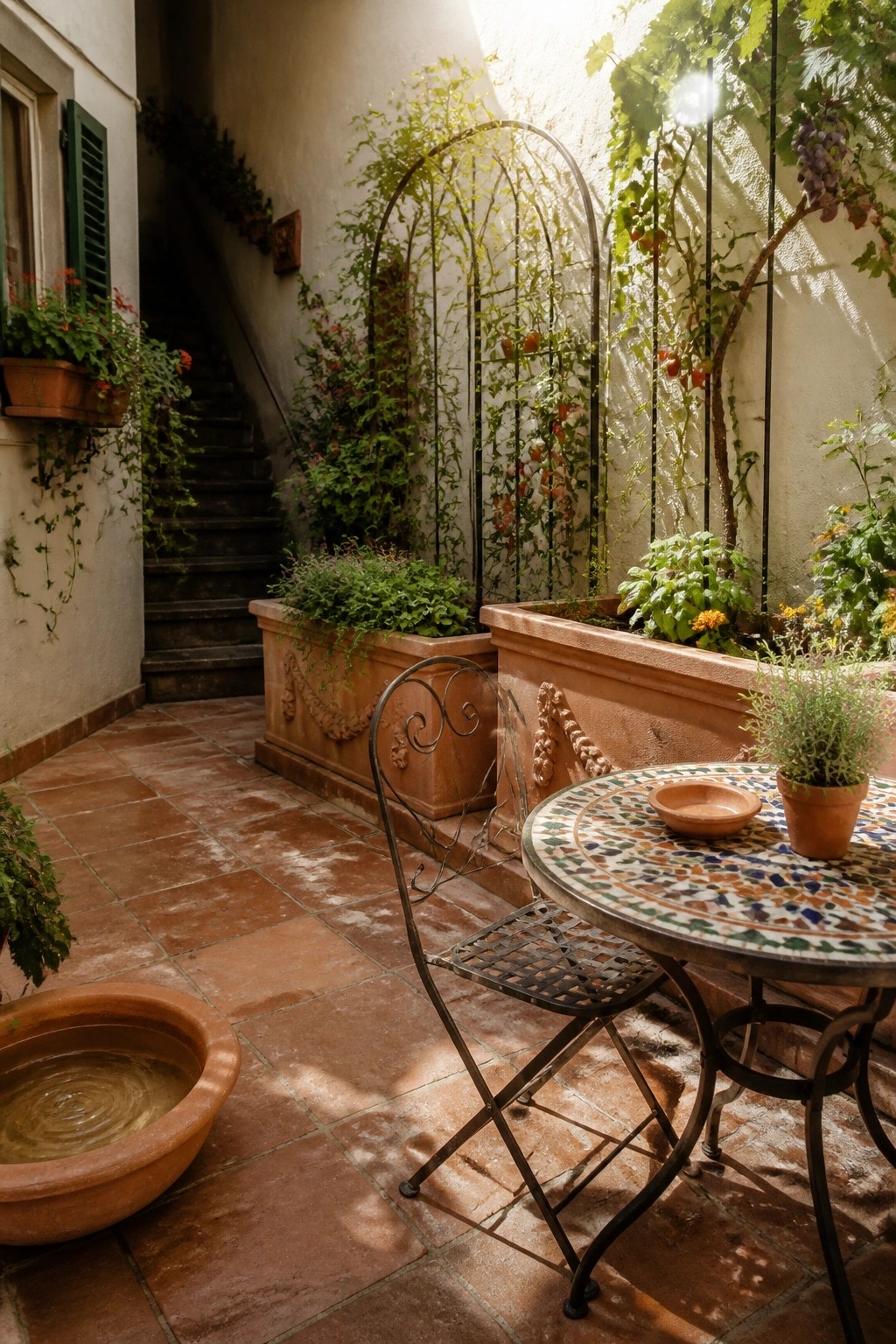
Raised beds paired with simple trellis panels let you grow tomatoes, beans, and other climbers without taking up much floor space. The terracotta boxes in this courtyard sit right against the wall, and the metal arches give the vines something to climb while keeping the plants off the ground.
This setup works well on patios or small side yards where flat ground is limited. Place the beds along a sunny wall, add a basic arched trellis, and you can harvest from above without crowding the seating area. Just make sure the boxes are deep enough for roots and the trellis is anchored so it does not tip when the plants get heavy.
Raised Beds With Trellis Supports On Slopes

Raised beds paired with simple trellises work especially well on sloped ground. They turn awkward hillside space into productive growing areas while keeping everything easy to reach and maintain. The vertical supports let vines climb without spreading out sideways, which is useful when flat land is limited.
This setup suits homes with uneven yards or terraced sections. Use sturdy wood for the beds and wire or wood frames for the trellises so plants like beans or peas have room to grow upward. Make sure the beds are level on each tier and leave enough room between them for walking and watering.
Raised Beds With Trellis Support At The Entry
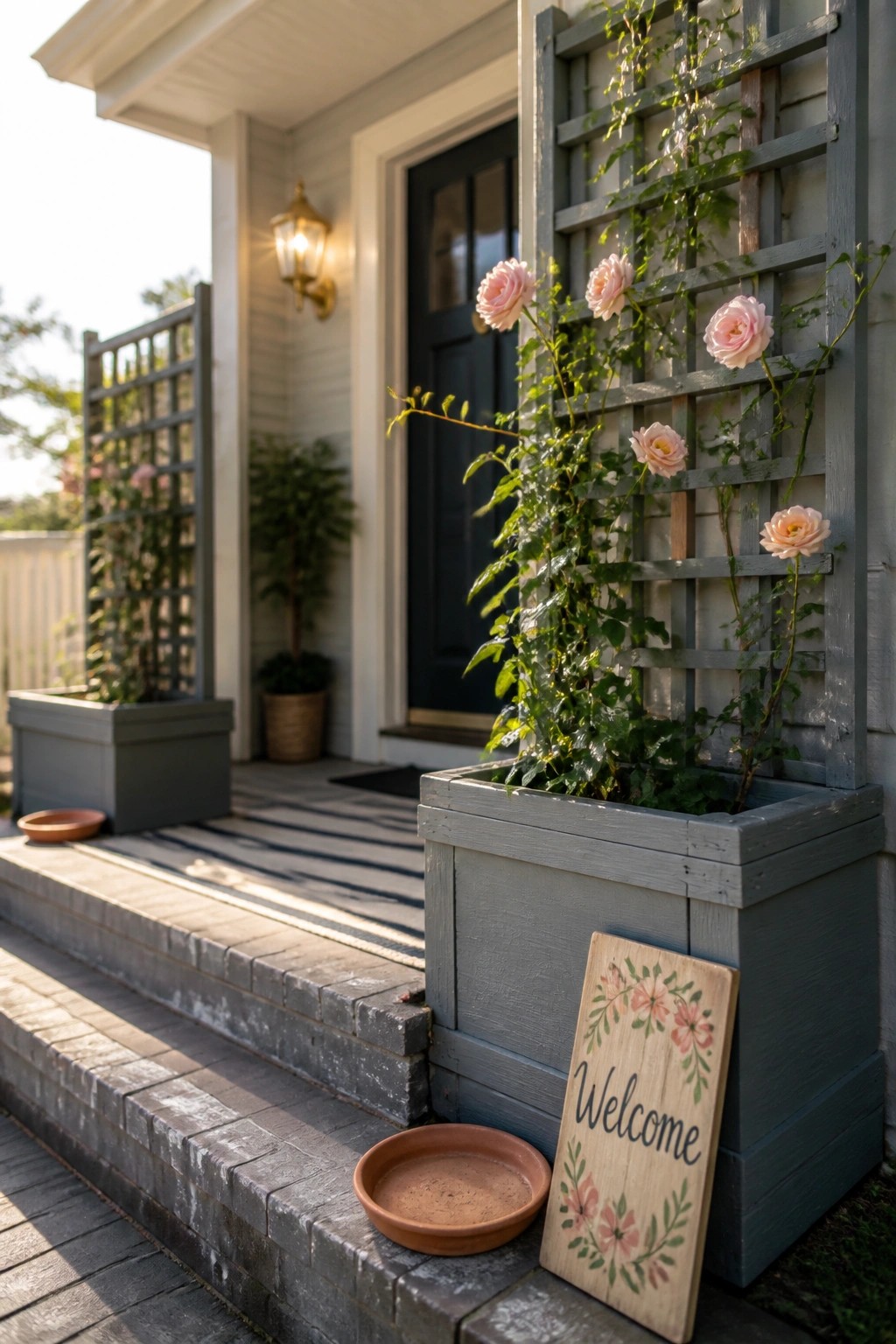
Placing a raised bed with an attached trellis right by the front steps gives climbing plants room to grow upward without spreading out across the ground. It keeps the planting area neat and contained while adding height right where people enter the house.
This works best on smaller lots or homes where side space is tight. Use a sturdy box and secure the trellis well so it can handle the weight of mature vines.
Raised Beds With Trellis Support In Tight Spaces
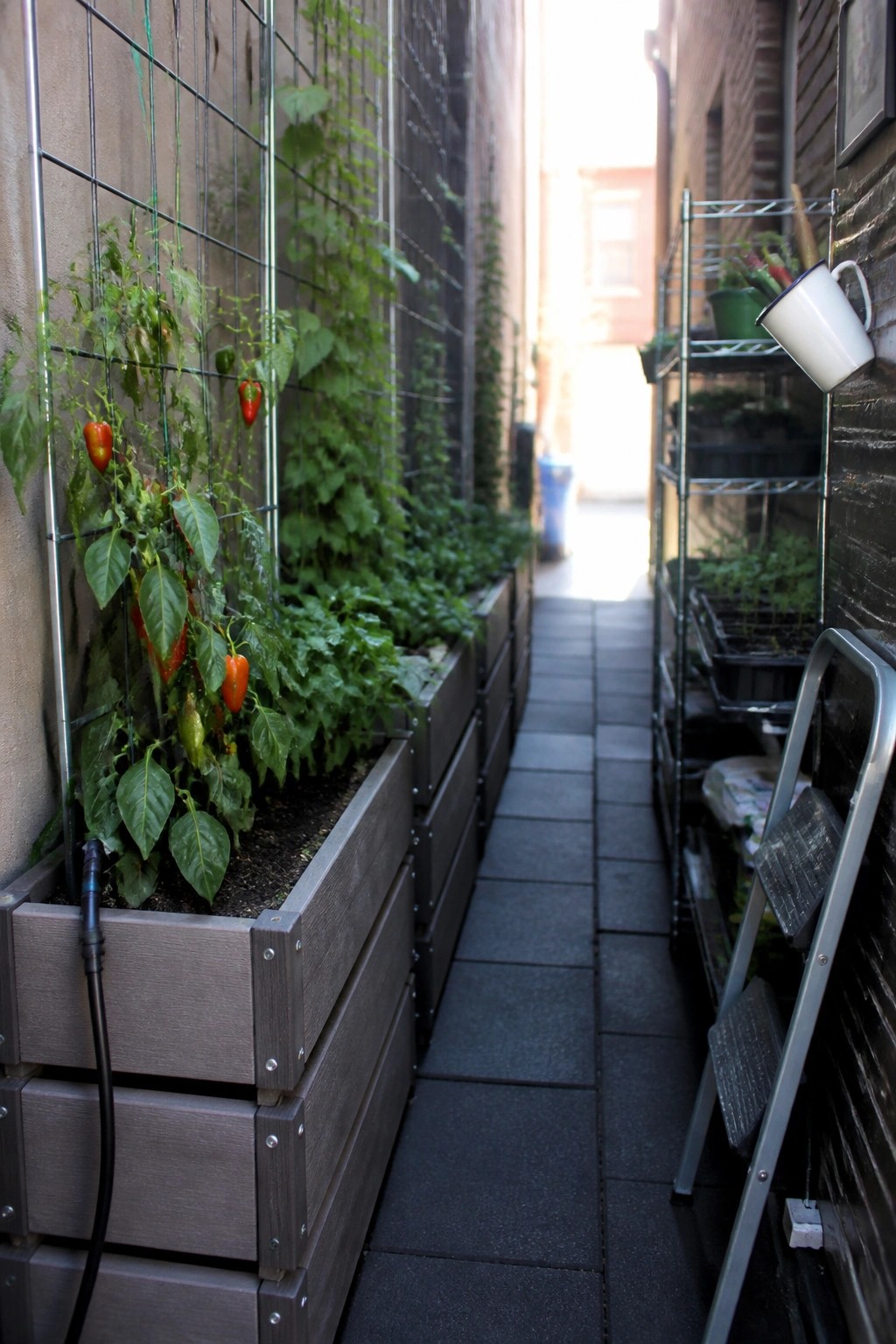
Attaching a wire trellis directly to the back of a raised bed is a simple way to grow peppers and other vining crops upward instead of letting them sprawl. It keeps the planting area productive even when the ground space is only a few feet wide.
This setup works best along a fence or wall in an alley or small yard. Secure the trellis well so it can handle the weight as the plants fill in, and choose a bed height that makes harvesting easy without much bending.
Concrete Block Raised Beds With Trellis
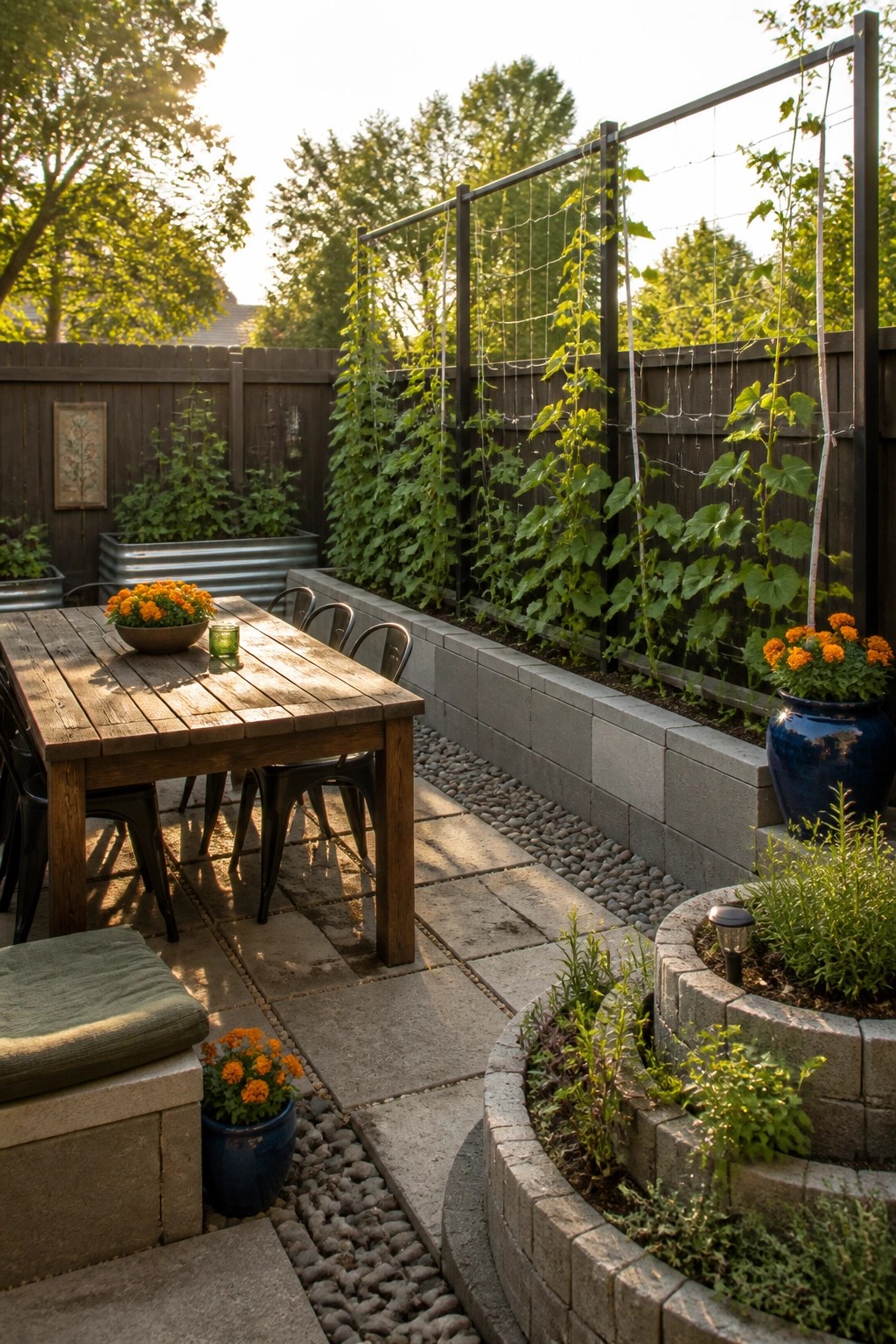
Raised beds paired with a simple trellis give you more growing room without taking over the whole yard. The vertical support lets vines climb instead of sprawl, so you can fit tomatoes, cucumbers, or beans in a narrow strip along a fence or patio edge. Concrete block beds like these also keep the soil contained and make weeding easier.
This setup works well in smaller yards or along the back of a patio where flat space is limited. Build the trellis right into the back wall of the bed so the plants stay upright and the walkway stays clear. Just make sure the structure gets enough sun and the bed depth suits the crops you want to grow.
Portable Raised Beds With Trellis Frames

Many gardeners add a simple trellis frame right to a raised bed so climbing crops can grow straight up. This keeps the plants off the ground and frees up space for other things nearby.
It works best in smaller yards where every foot counts. Wood frames like these hold up well and can be moved or stored when the season ends.
Raised Beds In A Greenhouse

Many gardeners turn to a greenhouse when they want to grow more in a small area. Raised beds fit neatly along the walls and leave room for walking between them. The metal frames around each bed add stability and give vines something to climb.
This setup works best for people with limited yard space or cooler climates. Place the beds where they get steady sun and add a small fan for airflow during warm months. Keep the beds narrow enough to reach across easily.
Brick Raised Beds With Overhead Trellis
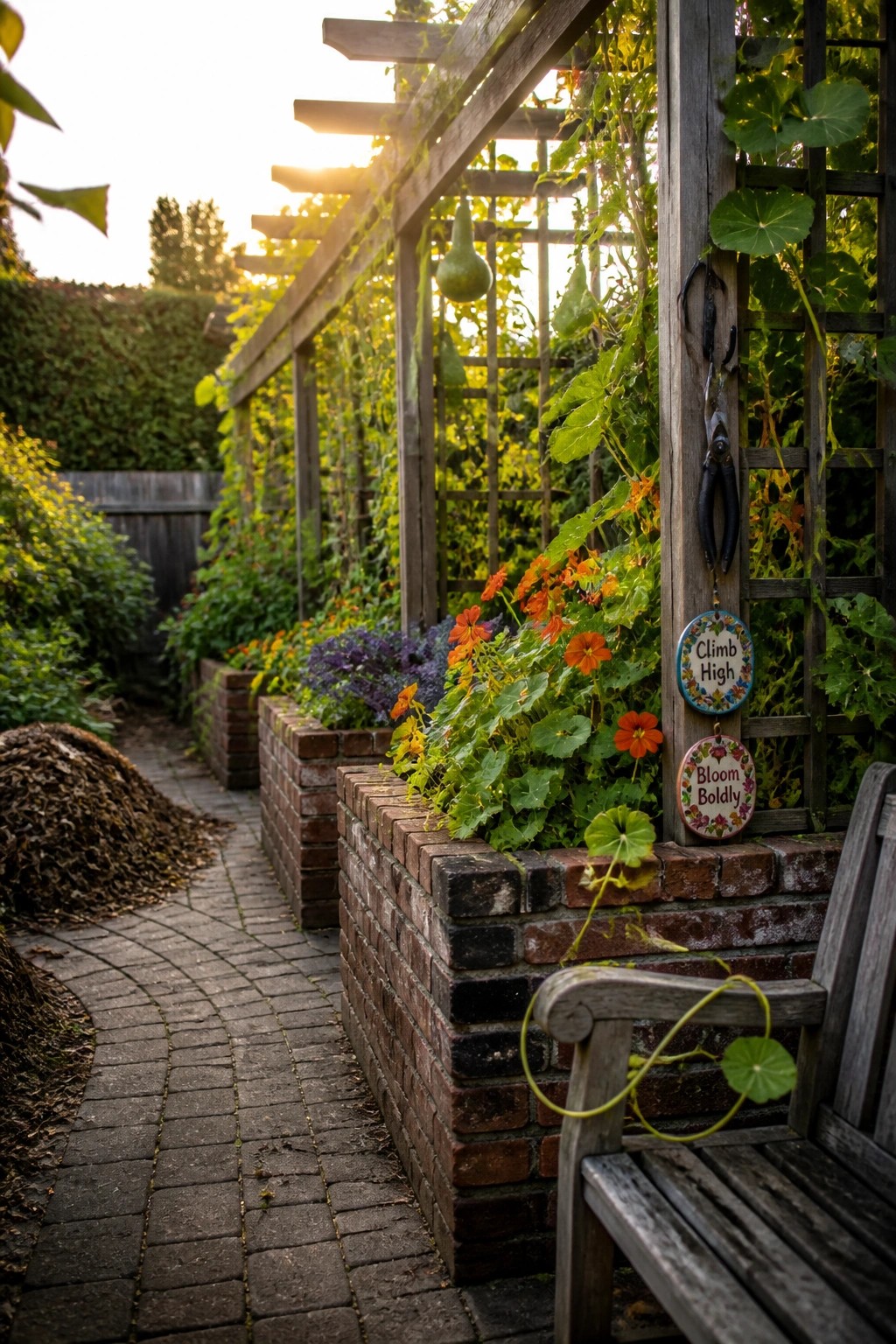
Raised beds gain a lot when you add a simple trellis right on top. The vertical support lets vines grow upward, which keeps the ground clear and makes the most of a small area. Brick sides hold everything steady while the wood frame gives plants something to climb.
This works best in a narrow side yard or along a walkway where space is tight. Choose strong posts and give the trellis enough height for the crops you want to grow. Keep the beds narrow enough to reach across easily for harvest and pruning.
Raised Beds With Trellis Supports For Vertical Crops

Raised beds that include a simple wire grid right behind them let you grow climbing plants without taking up extra ground space. The concrete block construction holds the soil well and gives the trellis something solid to attach to, which works especially well for beans, peas, or flowering vines that need to go upward.
This setup fits best in narrow side yards or along fences where flat garden space is limited. Just make sure the trellis is tall enough for the crop you want to grow and secure it firmly so it does not lean once the plants get heavy.
Raised Beds With Integrated Trellis Frames

Raised beds that include a trellis from the start make it easy to grow vertical crops without taking up extra ground space. The structure keeps vines off the soil and helps the plants get better air flow and light.
This approach suits smaller yards or narrow side gardens where horizontal room is limited. Use a sturdy frame so the trellis can handle the weight once the plants mature.
Raised Beds Built With Brick And Trellis Arches

Brick makes a solid base for a raised bed because it holds the soil in place and blends with many outdoor surfaces. Adding a simple arched trellis on top turns the same bed into a vertical growing spot without spreading out across the deck.
This approach suits small patios or side decks where floor space is limited. Keep the bed height low so it does not block views, and make sure the trellis is anchored firmly into the brick so it stays stable once plants start to climb.
Raised Beds Along House Walls With Trellis
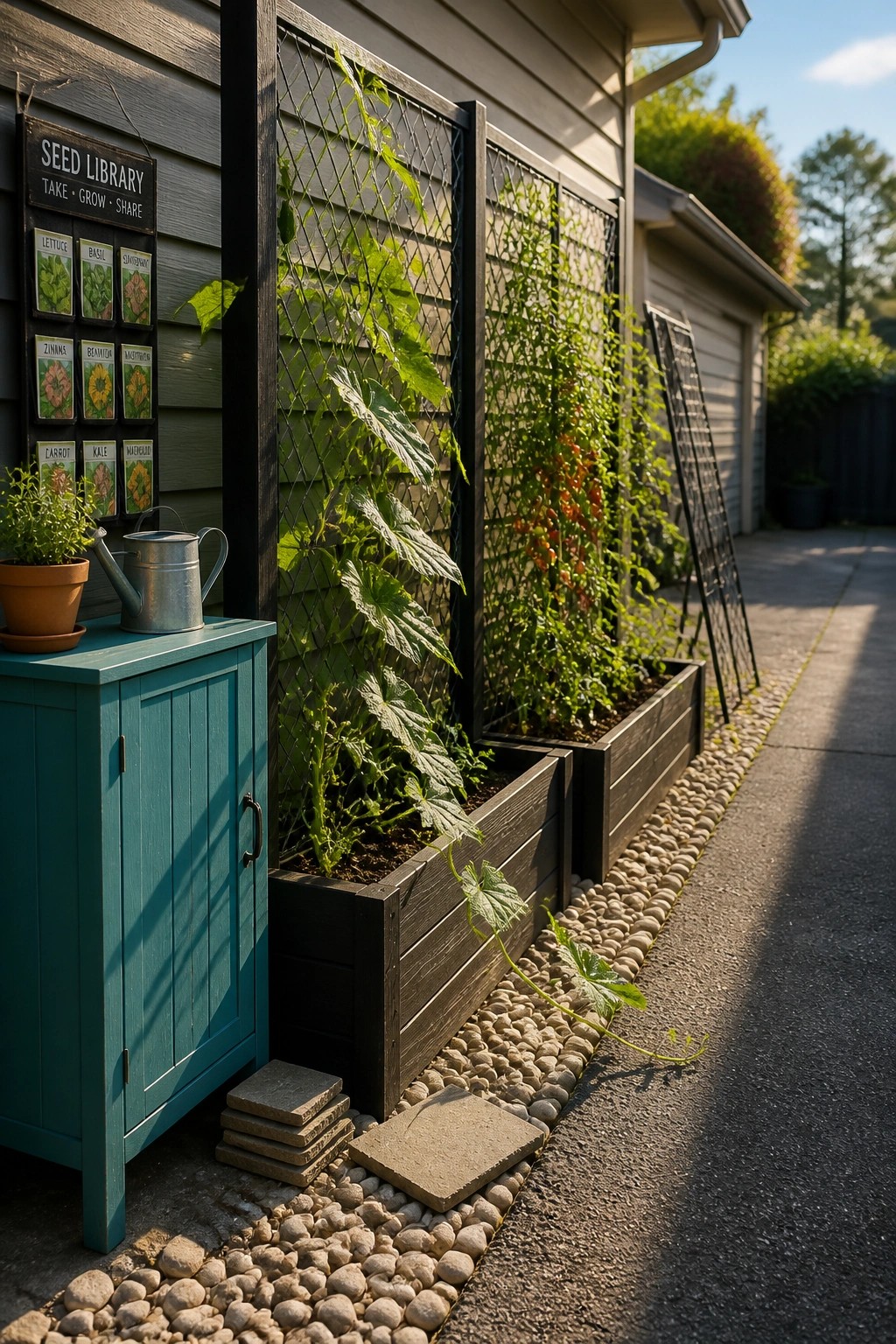
Adding a trellis to a raised bed turns a small planting area into a productive vertical garden. Vines can climb instead of spreading across the ground, which helps when space is tight along a house wall or narrow walkway.
This approach suits homes with limited yard room but good sun exposure on one side of the building. Secure the trellis firmly to the bed frame so it can handle the weight of full vines, and keep the beds narrow enough for easy reach from one side.
Raised Beds With Side Mounted Trellis Panels
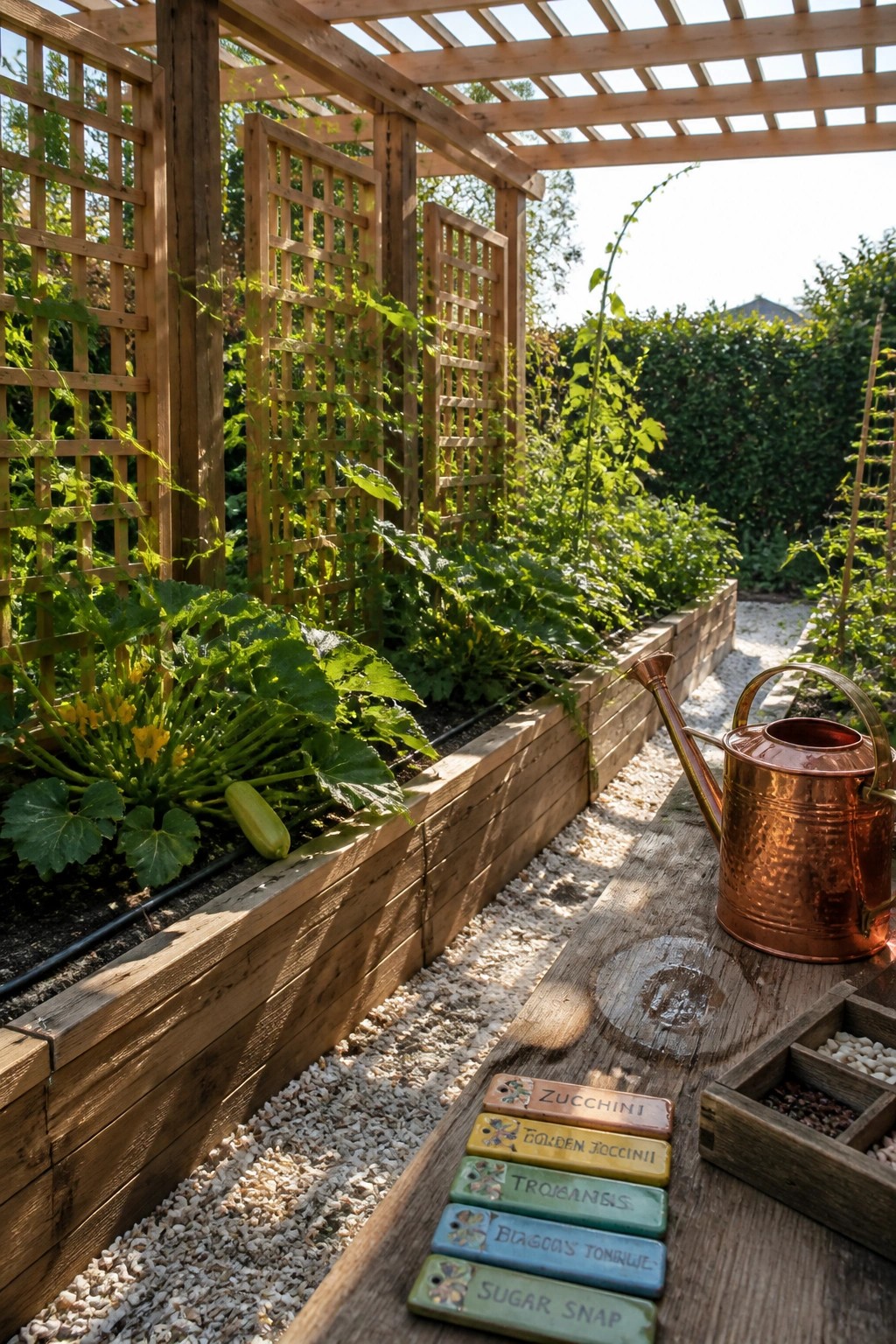
Raised beds gain a lot when you add trellis panels directly to the back or sides. The vertical surface lets crops like beans and cucumbers climb instead of sprawling across the ground, so you can fit more plants into a small area.
This approach works best along a sunny fence or wall where the bed gets good light. Keep the trellis material sturdy and the bed width narrow enough to reach across easily when harvesting.
Frequently Asked Questions
Q: Do I need to anchor the trellis into the ground or is the bed enough? A: The bed frame holds most trellises fine if you bolt them securely to the sides. Sink posts only if you live in a windy spot. This setup stays put through the season.
Q: What’s a good spacing for the vertical plants so they don’t shade each other? A: Space plants about eight inches apart along the base of the trellis. This gives each vine room to climb without crowding. You will get better air flow and fewer disease problems.
Q: How do I prevent the raised bed from tipping when the vines get full? A: Build the bed with wide feet or place it against a fence for extra balance. Heavy vines can pull things forward otherwise.
