


I have found that raised beds change how a garden actually works day to day, especially when the plants need regular picking and the soil needs steady drainage.
When strawberries grow low to the ground they often hide under leaves or sit in damp spots that invite rot.
Lifting the beds and adding simple edging keeps the rows accessible and gives the pathways a cleaner line so I can move through the space without compacting the soil.
One layout I keep returning to uses a slight slope on the front edge so the fruit hangs just over the side.
I want to try that shape first in my own yard before committing to anything more involved.
Raised Beds Along a Garden Path

Raised beds work well when you set them right beside a path. The height lets you reach the strawberries without stepping into the soil or bending over too much, and the path keeps things tidy even after rain.
This layout suits side yards or narrow garden spaces where you want easy access. Keep the beds no more than three feet wide so you can pick from both sides, and use a simple path material that stays level underfoot.
Raised Beds With Screening Panels

Raised beds with tall metal screens behind them work well for strawberries because the panels give the plants something to lean against while keeping the fruit off the ground. The screens also help mark the edge of the garden area without blocking light.
This setup suits a side yard or narrow garden strip where you want a clean line but still need room to walk and pick. Keep the beds at a comfortable height and choose screens with enough open space so air can move through.
Use Raised Beds at Different Heights

Raised beds built at more than one height let you reach strawberries without much bending or stretching. The lower beds handle plants that need less attention while the taller ones bring fruit right up to a comfortable picking level. This setup works especially well in tight side yards where space is limited.
It suits homes with narrow walkways or fences already in place. Keep the tallest beds under about thirty inches so you can still reach across them easily. Just make sure the different heights still line up with your path so you do not create awkward steps while you work.
Create Terraced Raised Beds

Raised beds built into different levels work well when the yard has some slope. The stone walls hold the soil while the steps keep everything reachable without much bending. Strawberries do especially well in these spots because you can stand on the path or lower step and pick without kneeling.
This setup suits homes with gentle hills or split-level yards. Keep the beds no deeper than your arm can reach from the edge, and use the same material for the walls and steps so the whole area feels connected. Avoid crowding the beds too close to the steps or you will lose walking room.
Raised Beds Make Strawberry Picking Easier

Raised beds lift the plants up so you can reach the strawberries without kneeling or bending over for long. This setup works especially well when the beds sit at a comfortable working height and the soil is topped with straw to keep the fruit clean.
The approach suits smaller yards or anyone who wants to garden without extra strain on their back or knees. Keep the beds narrow enough to reach across and leave a path wide enough for a wheelbarrow or kneeling pad when needed.
Railing Planters Keep Strawberries Easy to Pick

Mounting raised beds right on the railing turns a small balcony into a practical spot for growing strawberries. You can reach the fruit without bending or stretching, which makes daily picking feel much simpler. The setup also leaves the floor clear for chairs and tables.
This approach works best on balconies or narrow patios where ground space is limited. Choose sturdy metal or wood troughs that can handle the weight of soil and water, and check that the railing can support them safely. Good drainage helps prevent mess on the surface below.
Line Paths With Raised Pots For Easier Harvesting

Large pots set right along a walkway let you reach the strawberries without much bending. The height of the containers does most of the work, and the path keeps the beds from taking over the whole garden.
This setup works well on a side yard, courtyard, or narrow lot where space is limited. Just make sure the pots are deep enough for roots and placed where they will not block foot traffic.
Raised Wooden Beds For Easier Strawberry Picking

Raised beds built from wood let you grow strawberries at a comfortable height. You avoid a lot of bending when it comes time to pick the fruit, and the plants stay cleaner too.
This works well in smaller yards or along a path where space is tight. Just make sure the wood is sealed for outdoor use so the beds hold up over time.
Circular Raised Beds Simplify Strawberry Harvests
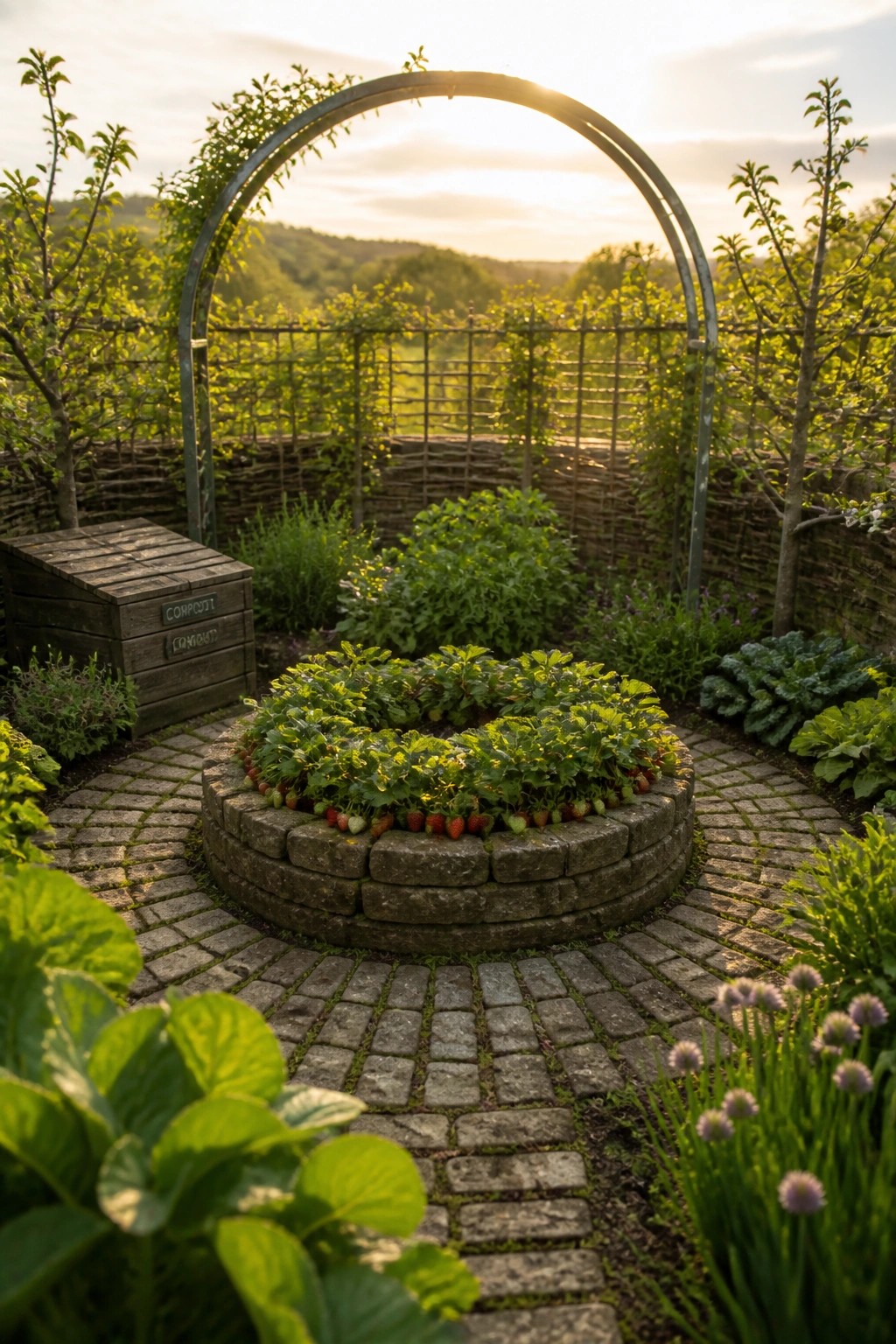
A round shape lets you reach every plant without stepping into the bed or stretching far. Strawberries ripen along the outer edge where they stay visible and easy to pick at a comfortable height.
Stone blocks create a firm edge that holds the soil and lasts for years with little upkeep. Set one in a sunny open spot with a path around it so you can walk the full circle during harvest.
Labeled Raised Beds Make Harvesting Easier

Raised beds work better when you can tell at a glance what is planted in each one. Chalkboard labels let you name the crops clearly and change them when you rotate plants or start new ones.
This setup suits a small backyard where space is tight and you want quick access to everything. Place the beds along a simple path so you can reach the strawberries without stepping on the soil.
Stone Terraces Create Accessible Garden Beds

Terracing a slope with stone walls turns a difficult hillside into a series of flat, easy-to-reach beds. The stacked stones hold the soil in place and bring the planting surface up to a height that reduces bending, which helps when you need to check and pick strawberries without much effort.
This approach works best on properties with noticeable grade changes where a single flat bed would not fit. Keep the walls low enough to step over if needed, and use the same local stone for steps so the whole area stays practical and simple to maintain over time.
Raised Beds Behind Bench Seating

Placing a raised bed right behind a bench turns picking into an easy task. You can sit down and reach the plants without bending over or kneeling on the ground.
This works best on decks and rooftops where space is tight. Keep the bed at a comfortable height so the plants stay within arm’s reach while the bench stays clear for sitting.
Stone Raised Beds Keep Harvesting Simple

Stacked stone makes a sturdy frame for raised beds that hold up well over the seasons. The low walls let you reach in and pick strawberries without kneeling or stretching far, which matters when the plants need checking every few days.
This style suits side yards or garden edges where you want the beds to follow the natural slope of the ground. Set the stones on a level base and keep the soil mix light so water drains freely through the joints.
Curved Brick Beds Next to the Path

Raised beds placed right along a walkway make strawberry picking simpler because you can reach the plants without stepping into the soil. The curve follows the natural line of the path so every section stays easy to reach from one side.
This layout works best in smaller front yards where a straight bed would feel too wide. Brick edging keeps the soil contained and gives the beds a finished look that blends with most older homes. Keep the inner curve wide enough to walk around without crowding the plants.
Log Edging For Raised Beds
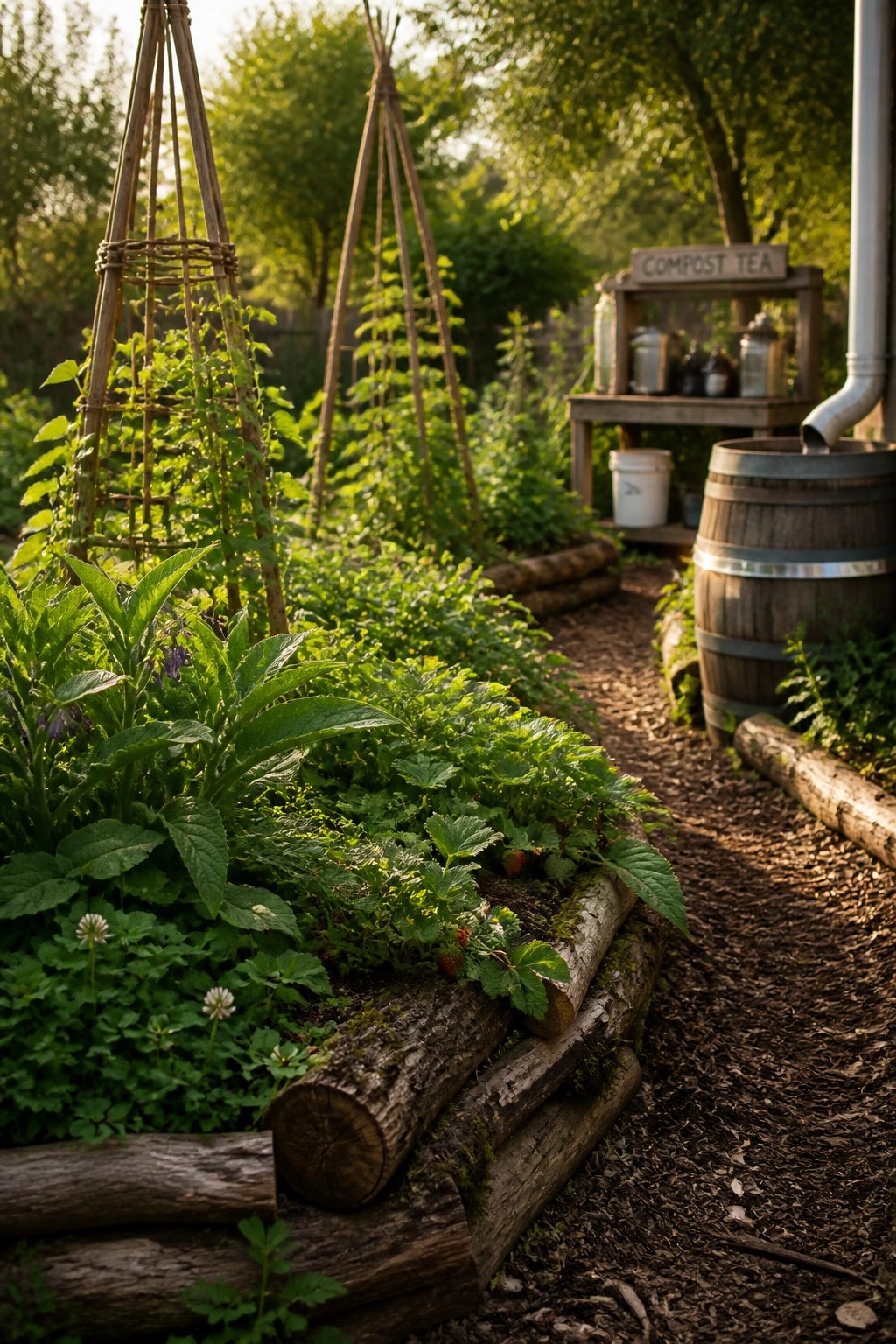
Logs stacked along the edges create simple raised beds that keep soil contained while making plants easier to reach. This approach works well for strawberries because the height reduces bending and the natural material blends into the surrounding garden without looking too formal.
It suits smaller home gardens or vegetable patches where you want something sturdy but low cost. Use rot resistant wood and stack the logs two or three high so the beds stay defined even after a few seasons of rain and foot traffic.
Wall-Mounted Beds Keep Strawberries Within Reach

Mounting raised beds on an exterior wall gives you a simple way to grow strawberries without using up ground space. The beds sit at different heights so you can reach the fruit without bending or kneeling, which makes regular picking much easier.
This setup works best on a sunny side of the house where the wall can support the weight. Use strong brackets and metal troughs that hold enough soil, and check drainage so water does not run down the siding.
Raised Beds With Paths Between Them

One simple way to make strawberry picking easier is to build your raised beds with clear paths running between them. Gravel walkways let you get close to every plant without stepping on soil or stretching over the edges.
This layout works best in gardens that have room for a few beds side by side. Keep the paths at least two feet wide so you can move a basket or small cart through without trouble.
Add Clear Labels To Your Raised Beds

Raised beds work best when you can tell at a glance what is growing in each one. Simple wooden signs make it easy to keep track of different plants without guessing or mixing things up during the season.
You can make the signs yourself from scrap wood and paint, then place them at the end of each bed. This setup works especially well in small gardens or shared spaces where several people help with the work.
Raised Beds Along a Gravel Path

Raised beds work well when you place them next to a wide, stable path. The height lets you reach the plants without much bending, and the path keeps the area dry and easy to walk on even after rain. This setup is especially useful for strawberries since the fruit hangs over the edges and stays cleaner.
Gravel paths also help with drainage and give you room to move a cart or kneeling pad close to the beds. Dark wood edging like the boxes in the photo holds the soil in place and keeps a tidy line between the path and the plants. Just make sure the path is at least two feet wide so you can reach both sides without stepping into the beds.
Raised Beds With Integrated Seating

Raised beds that sit at bench height make it much easier to tend and pick strawberries without constant bending. The built-in cushions turn the edge of the bed into a place to sit while you work, which helps on longer harvest days. The arched covers keep birds and pests out while still letting you reach the plants comfortably.
This setup works well in smaller yards or along a fence line where space is tight. It suits homes that want a garden without giving up seating, though you will need to choose covers that lift easily for regular picking.
Raised Beds Along The Balcony Railing

Many people with limited outdoor space like the idea of mounting raised beds right along a balcony railing. The long troughs sit at a comfortable height so strawberry plants get plenty of sun and the fruit hangs over the edge for simple picking.
This approach suits urban balconies and narrow terraces where floor room is tight. Secure the beds well to the railing and check the weight load before filling them with soil.
Raised Stone Beds Along Paths

Stone edging lifts the soil just enough to make strawberry plants easier to reach without much bending. The low walls keep everything contained while letting you walk right alongside the bed on a simple path.
This setup works best in smaller gardens or along the edge of a lawn where you want quick access for picking. Use local stone if you can so it blends in and lasts through the seasons without extra work.
Raised Beds With Built In Lighting

Adding lights along the base of a raised bed makes it easier to check on strawberries in the evening without needing a separate lamp. The glow also helps you spot ripe fruit faster and keeps the bed from disappearing into the dark.
This setup works best along a path or near a seating area where you pass by often. Stone blocks give the bed a solid edge to lean against while picking, and the low lights stay protected from most weather.
Raised Beds Built On Slopes

Raised beds on a slope solve a common problem for strawberry growers. They turn an uneven hillside into usable growing space while keeping the soil contained and the plants easier to reach. The steps between the beds make it simple to move up and down without compacting the soil or losing your balance.
This approach works best on properties that already have a noticeable grade. Keep the beds narrow enough to reach across and use the steps as both access and a way to separate different plantings. It keeps maintenance straightforward and picking much less tiring.
Frequently Asked Questions
Q: How deep does the soil need to be for strawberries in a raised bed? A: Aim for at least eight inches so the roots have room to spread. Mix in plenty of compost when you fill the bed to keep nutrients high. This helps the plants stay productive without extra feeding later.
Q: What is the easiest way to stop slugs from eating the berries? A: Sprinkle crushed eggshells around the base of the plants. The sharp edges keep slugs from crossing and they break down into the soil over time. Check under the leaves once a week so you spot any that still get through.
Q: Can these beds work on a balcony with limited sun? A: Pick a spot that gets at least six hours of direct light each day. If the area is shady in the afternoon move the whole bed on wheels to follow the sun. Strawberries still produce well when you give them that steady light.
