


I found that placing raised beds close to the kitchen door changed how often I actually stepped outside to grab herbs during meal prep.
Soil control and better drainage in these setups keep plants healthier through wet seasons without constant intervention.
Path layout around the beds determines whether the space stays practical once the plants fill in.
Trying a simple L shape first helped me see which herbs I reach for most without walking the whole yard.
Over time the edging choices make the biggest difference in keeping soil contained and the garden looking tended rather than overgrown.
Labeled Raised Beds Keep Herbs Easy To Find

Labels on raised beds help you keep track of what is growing without having to guess or bend down close every time. This setup works well when you grow several herbs that look similar at first glance, especially in a kitchen garden right outside the door.
Wooden stakes with handwritten names are simple and cheap to add. They suit smaller yards where beds sit along a path, and they make daily harvesting faster once the plants fill in.
Metal Raised Beds For Everyday Herbs
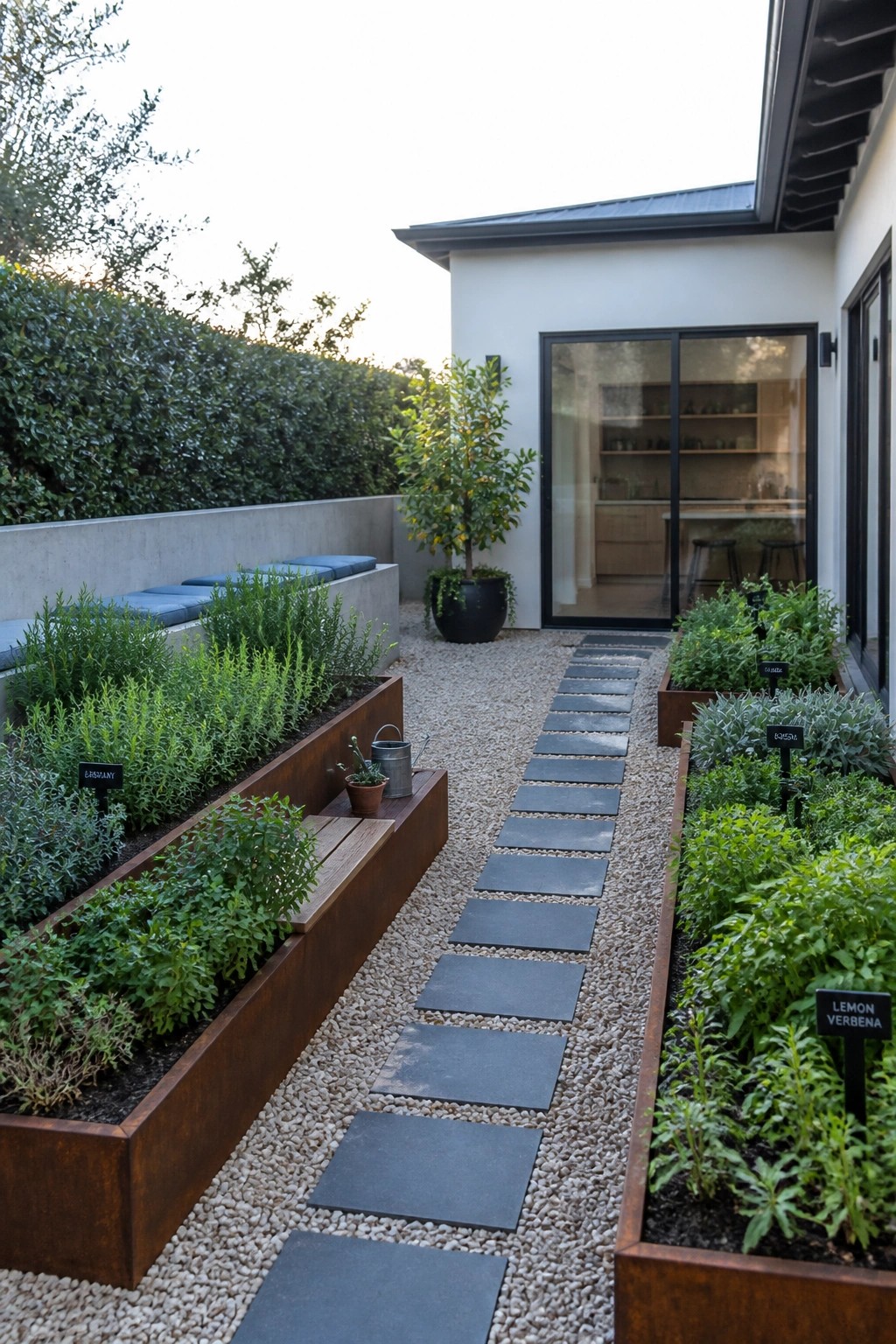
Metal raised beds give herbs a clean edge that holds up well over time. They warm the soil quicker than wood in cooler months and keep the planting area neat even when the garden gets a lot of use.
Place them along a main path so picking rosemary or lemon verbena stays simple during cooking. They work best in smaller yards or modern homes where you want low maintenance and clear lines without constant upkeep.
Use A Chalkboard For Plant Tracking

A chalkboard placed right by the beds gives you a quick way to note what is growing and when it went in. It keeps the kitchen garden organized without needing extra notebooks or apps, especially when you rotate herbs through the season.
This setup works best in a compact yard where space is shared between growing and sitting areas. Check the board each time you harvest so the list stays current and you avoid planting the same thing twice in one bed.
Raised Beds Make Herb Picking Simple
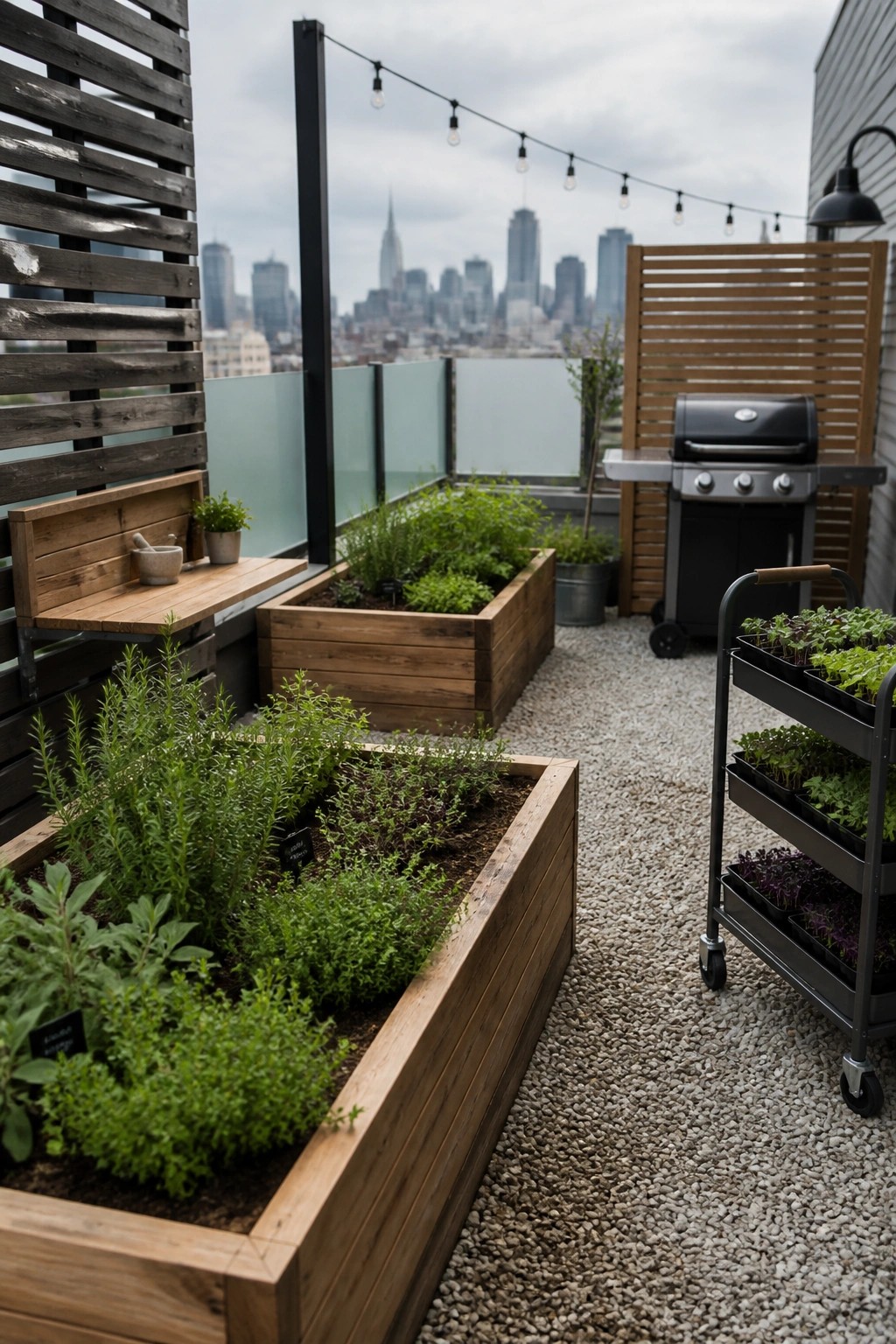
Raised beds give you a clean way to grow cooking herbs without fighting weeds or poor ground soil. They also let you control the mix so the plants stay productive through the season.
Place them on a flat gravel surface where you can walk around all sides. Keep each bed no wider than about four feet so you can reach the middle without stepping in. This setup works on rooftops, patios, or any small outdoor spot near the kitchen.
Labeled Raised Beds Help Keep Herbs Organized

Raised beds built from simple stone blocks give herbs their own space and make them easy to reach from the kitchen. Adding small labels for each plant turns the beds into a working garden rather than just a pretty patch.
This idea fits best in a small yard or side area right outside the back door. Keep the beds close to a utility sink so you can water, harvest, and clean up in one spot without tracking dirt inside.
Simple Labels For Herb Raised Beds

Labels on raised beds make it easier to keep track of what is growing where, especially when you have several similar looking herbs side by side. A small tag on a stake lets you spot lemon thyme or chives at a glance without having to bend down and check the leaves every time.
This approach works best in a kitchen garden that gets regular use. It keeps things practical without adding much cost, and it helps when you are rotating crops or showing the space to someone else who helps with the watering.
Raised Beds Right by the Kitchen Door

Placing raised beds along a path that leads straight to the kitchen makes harvesting herbs much easier. The beds sit low enough to reach without bending far, and the layout keeps everything within a few steps of the door. This setup works especially well when the garden path doubles as a walkway between the house and the rest of the yard.
Clay or terracotta beds hold up in sun and add a simple, natural look that fits most older homes. Keep the beds narrow so you can tend plants from both sides, and line the path with durable tiles to handle foot traffic and water runoff. This approach suits small yards where space is tight and daily kitchen use matters most.
Raised Beds Along The Front Path
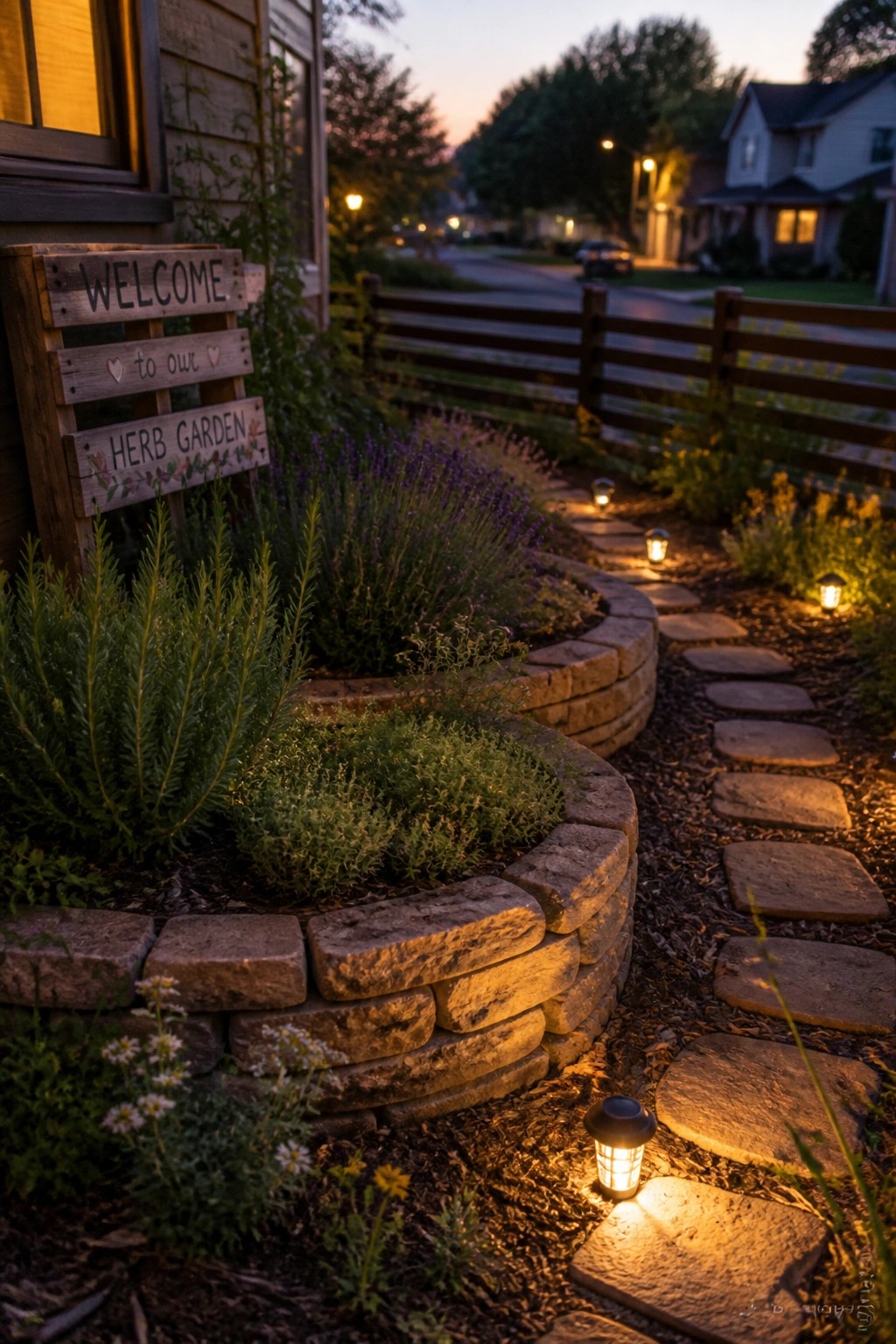
Raised beds built right next to a walkway make it easy to reach herbs without stepping into the yard. The stone construction keeps the soil contained and gives the beds a solid edge that holds up over time.
This setup works well on homes with a side or front path that passes a planting area. Keep the bed height low enough to reach across and choose a curve that follows the path so the garden feels like part of the walk rather than something separate.
Railing Mounted Raised Beds

Mounting raised beds right on the railing keeps the floor clear on a small balcony while still giving herbs plenty of room to grow. Metal troughs work especially well here because they are sturdy, drain properly, and can be fixed securely without taking up walking space. This setup turns an otherwise narrow area into a productive spot for basil, mint, and other kitchen herbs.
It suits apartment balconies or any tight outdoor spot where ground beds are not possible. Keep the beds at a comfortable height for watering and harvesting, and choose lightweight soil mixes so the railing is not overloaded. Check the railing strength first and make sure the mounts can handle the weight once the beds are full.
Concrete Raised Beds Keep Herbs Organized
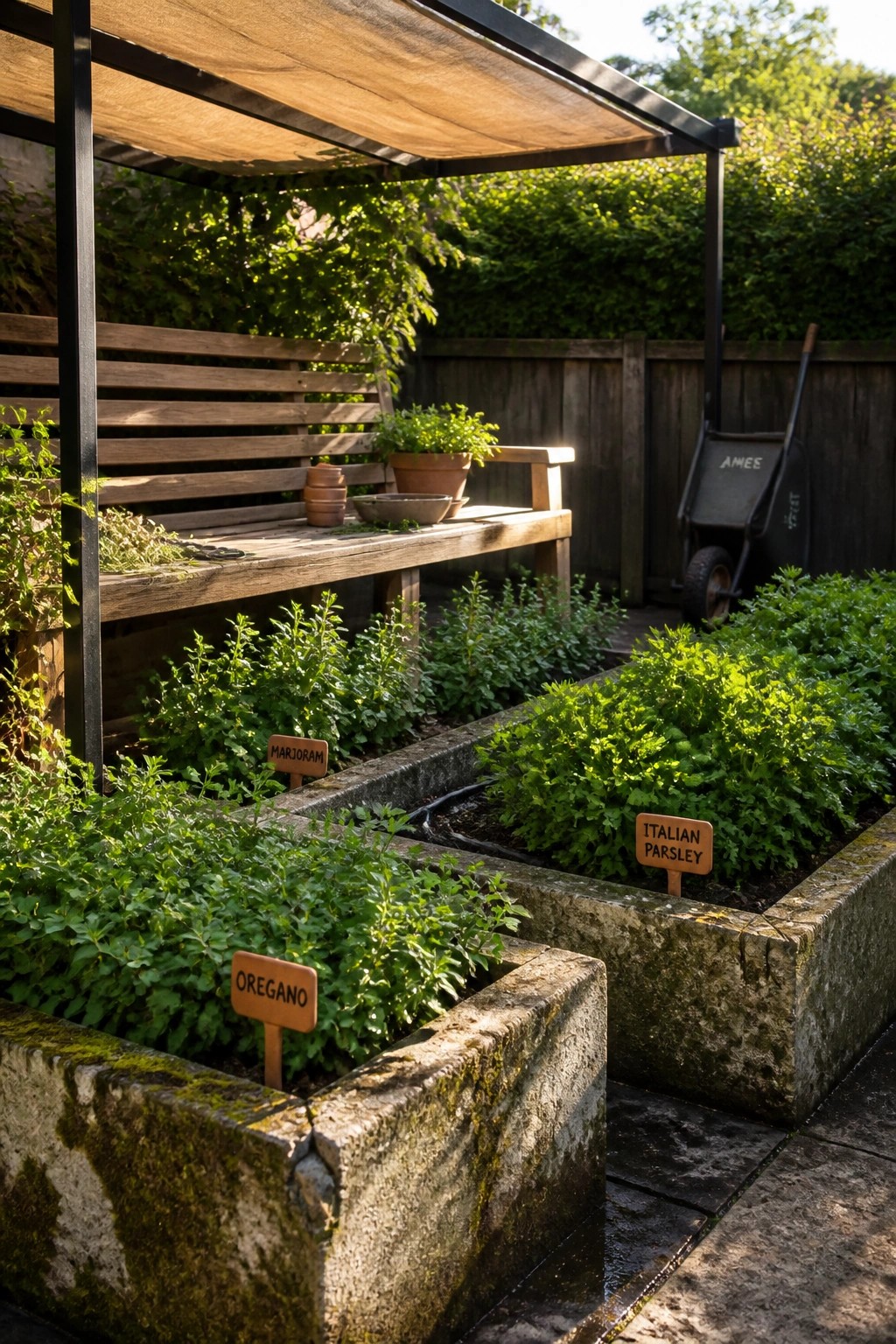
Raised concrete beds give herbs a solid structure that stays neat over time. The material holds soil well and creates clear edges so plants do not spill into paths or each other.
Labels on each bed make it simple to find what you need while cooking. This works best in a sunny backyard spot where you can reach the herbs easily from a nearby seat.
Raised Beds Simplify Herb Harvesting

Raised beds bring herbs up to a workable height so you can pick what you need without kneeling or stretching. They also warm the soil faster and keep plants separated, which helps everything stay tidy and productive through the season.
A small sign listing what is ready to harvest turns the bed into a quick reference for cooking. This approach works best right outside the kitchen door on a gravel or paved area where drainage is good.
Raised Beds Lined Up Along a Garden Path
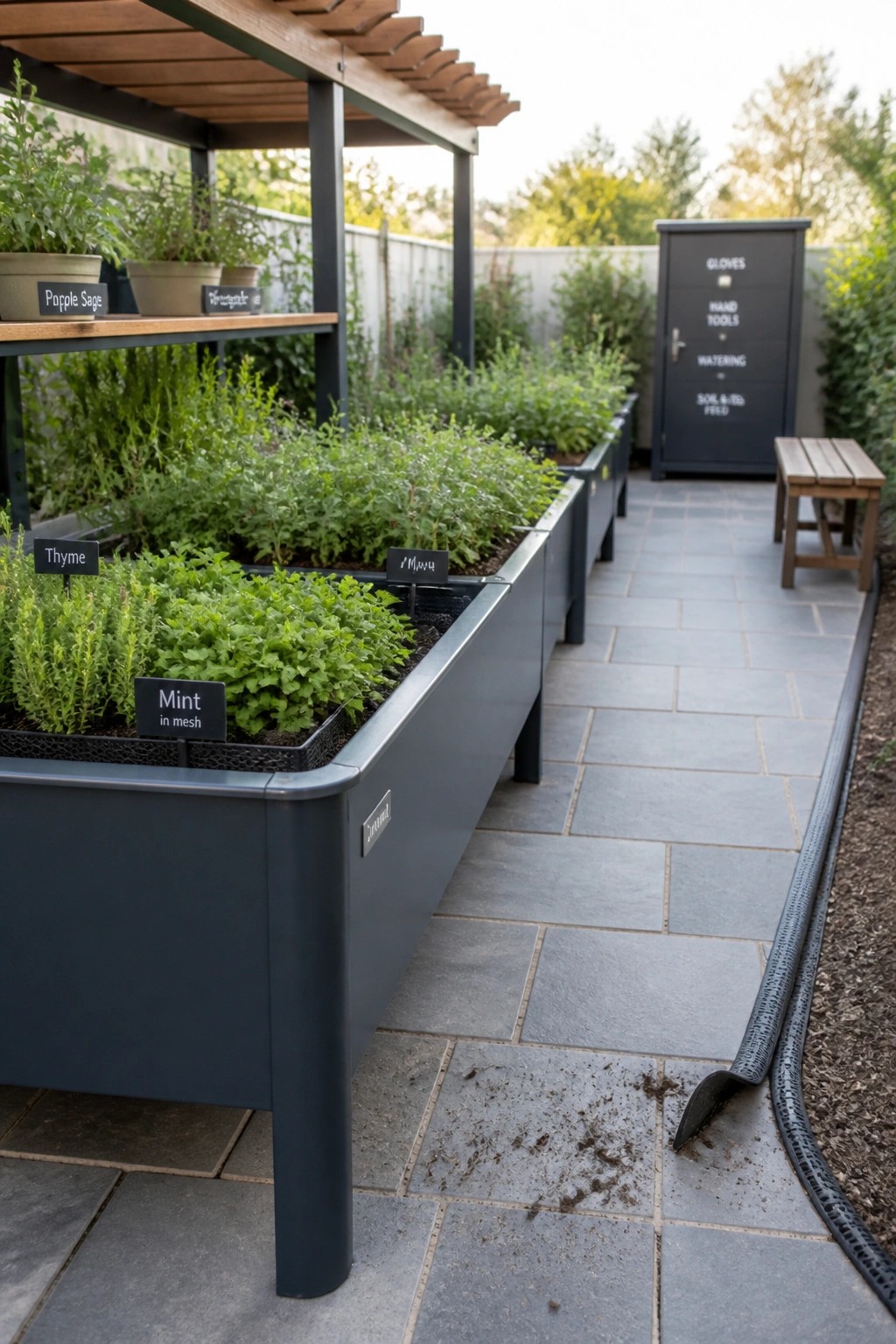
Placing raised beds in a straight row next to a paved path keeps the whole setup easy to reach and simple to maintain. It turns the garden into a working space where you can walk down the line and pick what you need without stepping into the soil.
This layout suits smaller yards or narrow side areas where space is tight but you still want several beds. Keep the path clear and wide enough for a cart, and add labels so you know what is growing where at a glance.
Raised Beds Help Keep Herbs Within Reach

Raised beds give each herb its own patch of soil and make it easy to reach what you need without trampling anything. Brick borders hold everything in place and create clear lines that keep the garden looking tidy even when the plants grow full.
This setup works best in a sunny spot near the kitchen so you can step out and grab what you need for cooking. Leave wide enough paths between the beds for a wheelbarrow or just comfortable walking room when you water and harvest.
Tiered Raised Beds On A Slope

Wooden raised beds work well when they follow the natural slope of a yard instead of fighting it. The stepped layout keeps each bed at a comfortable height for planting and harvesting while creating a clear path through the garden. This setup suits homes with uneven ground that still want a productive kitchen herb area.
Build the frames from sturdy lumber and stack them in short tiers so water drains properly and roots have room to grow. It works best near the kitchen door or along a walkway so you can grab what you need without extra steps. Keep the beds narrow enough to reach across easily.
Wooden Plant Markers Keep Herb Beds

Many herb gardens get messy fast once the plants fill in. Small wooden markers placed right at the edge of each bed solve that by showing exactly what is growing where.
This setup works best in a kitchen garden that gets regular use. Keep the labels simple and facing forward so they stay readable even after the foliage spreads.
Raised Beds Built With Salvaged Wood

Raised beds made from old wooden panels give an herb garden a settled look without much effort. The wood already has age and texture, so the beds feel like they belong instead of looking brand new. This approach also keeps the plants at a comfortable height for picking.
It works best in small yards or on patios where space is tight. Place the beds near the kitchen door so herbs stay handy for cooking. Just check that the wood is sealed on the inside to help it last longer through wet seasons.
Raised Beds For Rooftop Herb Gardens

Raised beds are a practical choice when you want to grow herbs on a terrace or rooftop. They lift the plants off the hard surface, improve drainage, and let you control the soil so the herbs stay healthy even in an urban spot.
Place a few beds along the edges or near a seating area so you can grab what you need while cooking outside. Keep the layout simple and leave walking space between them, since tight spots make watering and harvesting harder over time.
Frequently Asked Questions
Q: Which herbs grow quickest in raised beds for daily kitchen use? A: Start with basil, mint, and chives since they fill out fast and handle regular picking. Place them in the sunniest section of your beds so they keep producing through the season. Water when the top soil feels dry to the touch.
Q: How do I stop raised beds from drying out too fast in summer? A: Add a layer of mulch right after planting to hold moisture longer. Check the beds in the morning and evening during heat waves, then water deeply only when needed. This keeps herbs from wilting without extra work.
Q: Can these bed ideas work on a shady balcony? A: Choose shade-tolerant herbs like parsley and cilantro for those spots. Raise the beds a bit higher to catch any available light and improve airflow around the plants. You will still get steady harvests with a little extra care on positioning.
Q: What’s the easiest way to keep bugs off the herbs? A: Handpick any visible pests in the early morning when they move slow. Companion plant with marigolds along the edges to naturally deter them. This approach keeps your kitchen herbs clean without sprays.
