

When I look at my own small backyard the main issue is always how to fit productive vegetable beds without making the whole space feel cramped or hard to walk through.
Raised beds help define the layout clearly so paths stay open and the soil stays contained even in tight quarters.
I have found that the way beds are arranged against fences or along edges often decides whether the garden feels orderly or just crowded after a few months of growth.
Some setups hold up better once you start planting and watering on a regular schedule.
I usually test the simplest rectangular shapes first before trying anything more complicated.
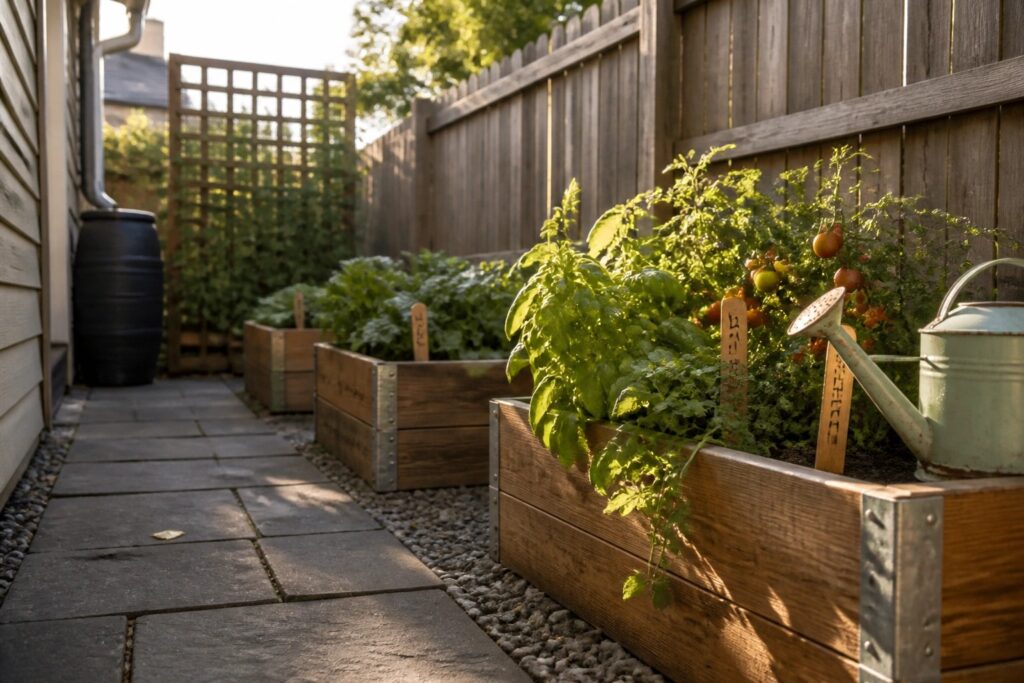
Raised Beds Along a Narrow Path

Raised beds work especially well when you line them up along one side of a path. This keeps the growing space contained and leaves room to walk through even in a small backyard.
Wooden boxes with metal brackets hold the soil in place and make it simple to reach the plants. A gravel strip next to the beds helps with drainage and keeps the path from getting muddy after rain.
Raised Beds With Paths Between Them
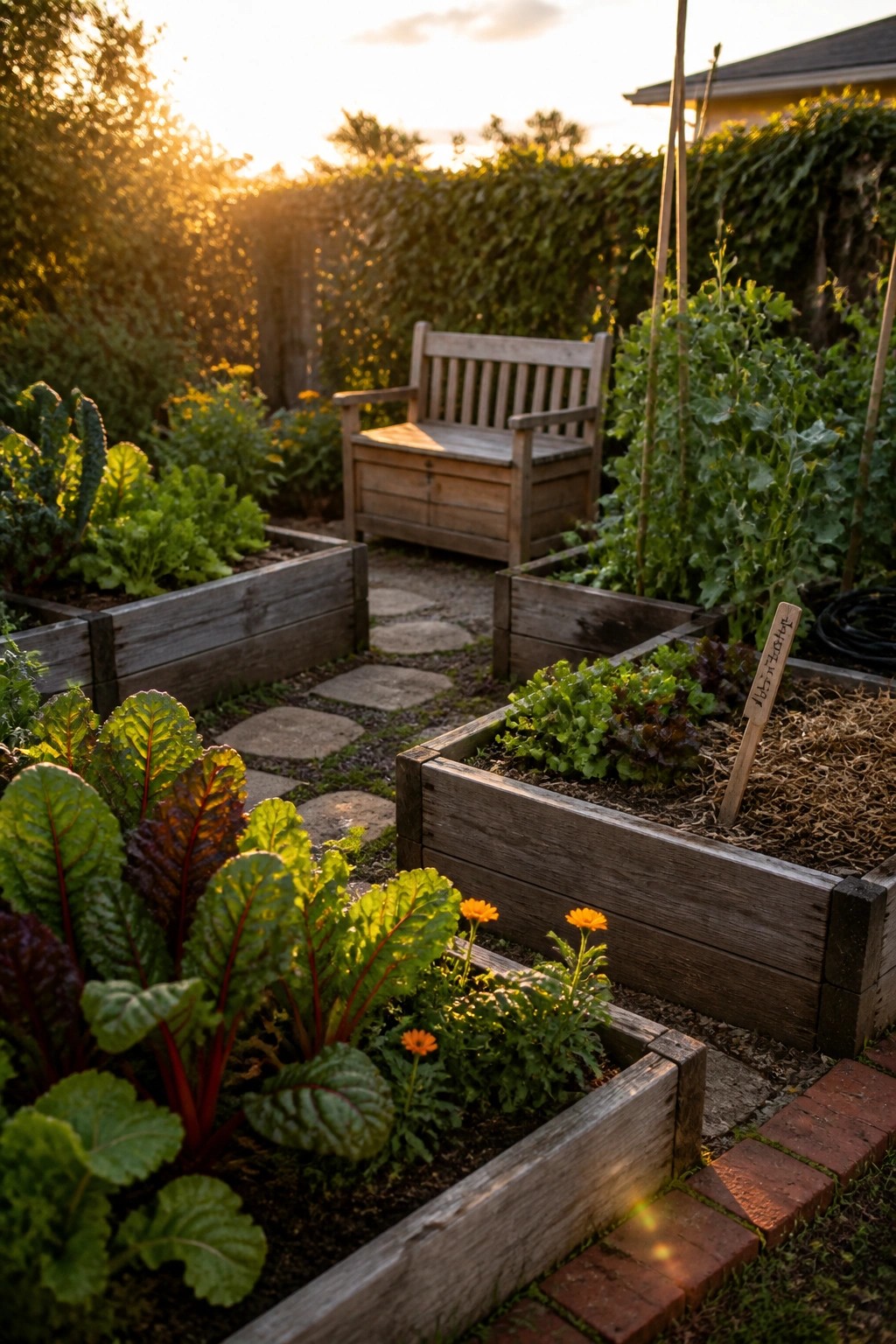
Raised beds work best when you can actually reach everything without stepping on the soil. Putting a simple path between the beds keeps the whole setup practical and makes daily care much easier in a small backyard.
This layout suits compact yards especially well because it turns limited space into productive rows without crowding the plants. Just keep the paths wide enough for a wheelbarrow or kneeling pad and use the same bed height all around so everything feels consistent.
Raised Beds Along a Garden Path

Many compact backyards work better when the raised beds are set in straight lines next to a clear path. This layout keeps the plants easy to reach for watering and harvesting while leaving room to move around without crowding the beds.
It suits narrow side yards or small rear gardens where every foot of space counts. Stick with matching bed materials and keep the path simple so the focus stays on the vegetables rather than extra features.
Concrete Blocks Make Solid Raised Beds
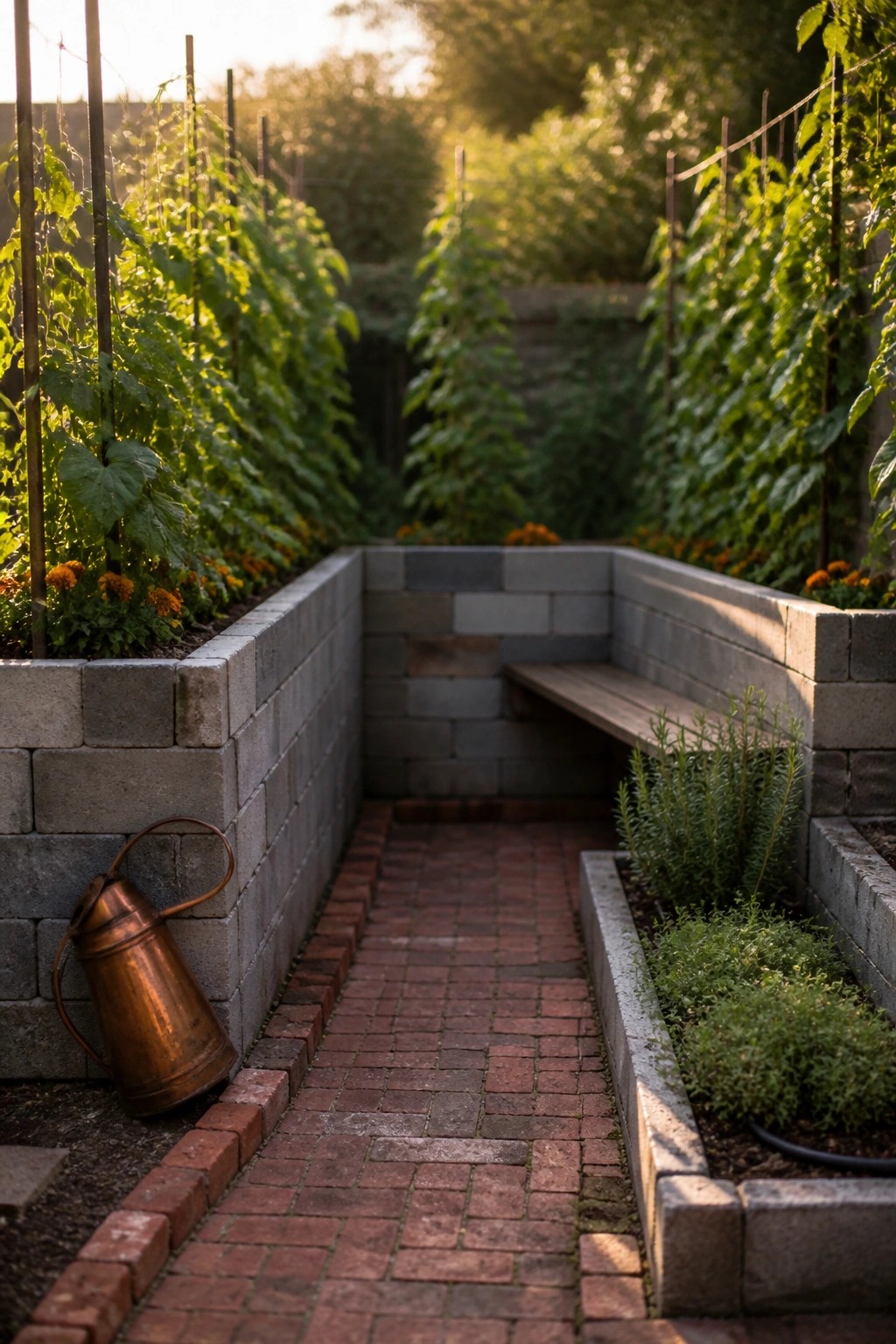
Concrete blocks give raised beds a clean edge that holds up over time without much fuss. They stack easily into straight walls, which helps keep the soil contained and makes weeding simpler in a tight backyard. The blocks also stay cool enough that roots do not overheat on hot days.
This approach works best in small yards where you want clear paths between beds and room to add simple trellises. Set the blocks on a level base, keep the beds no wider than four feet so you can reach the middle, and leave enough space between them for a brick or gravel walkway.
Raised Beds Built Against Stone Walls
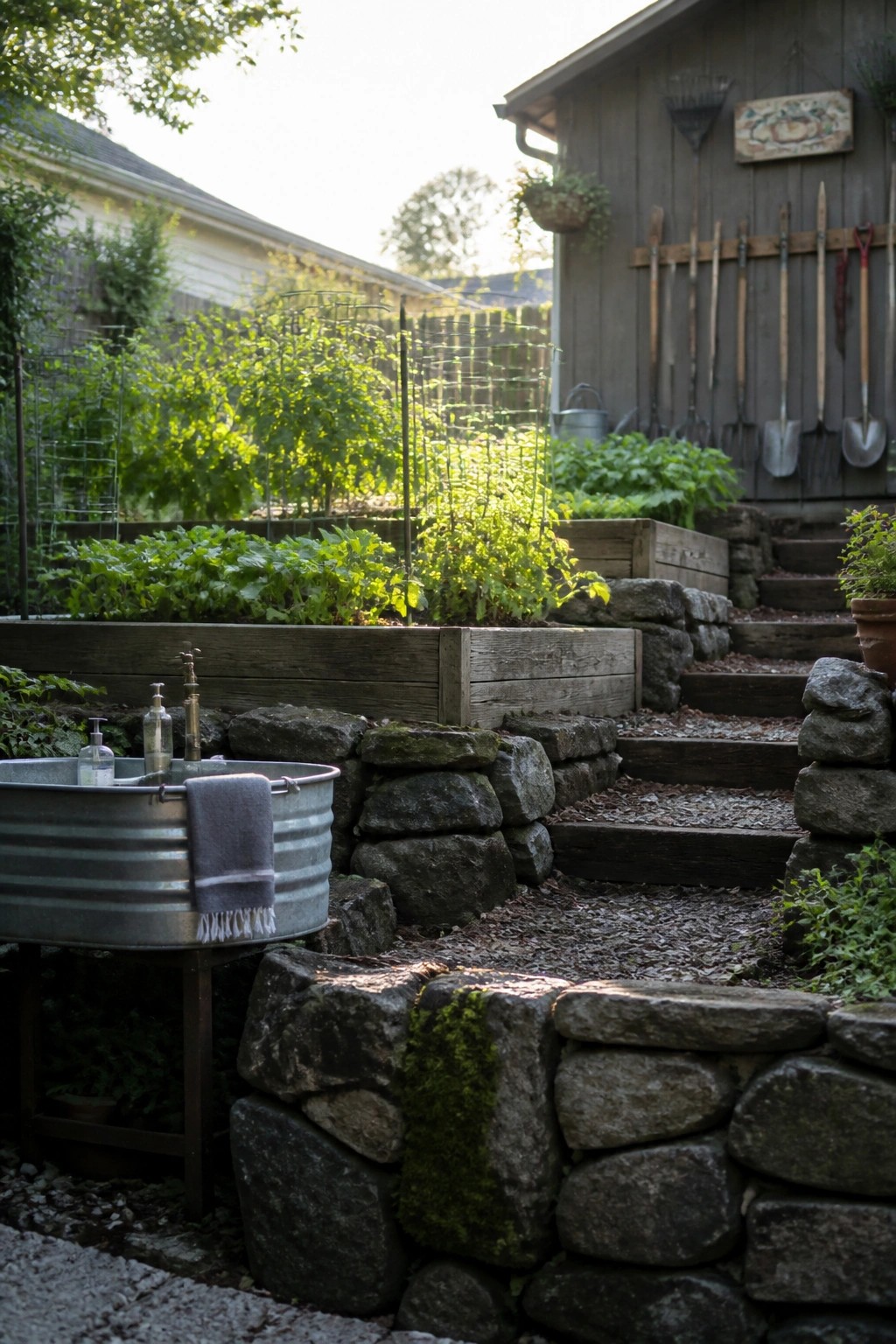
Many compact backyards have slopes or uneven ground that make flat gardening difficult. Raised beds placed directly against stone retaining walls solve this by creating level planting areas while using the existing structure for support.
This approach works best on properties with natural changes in elevation or older homes that already have stonework in place. The stone helps with drainage and holds heat, which can extend the growing season for vegetables without taking up extra ground space.
Raised Beds With Built In Seating
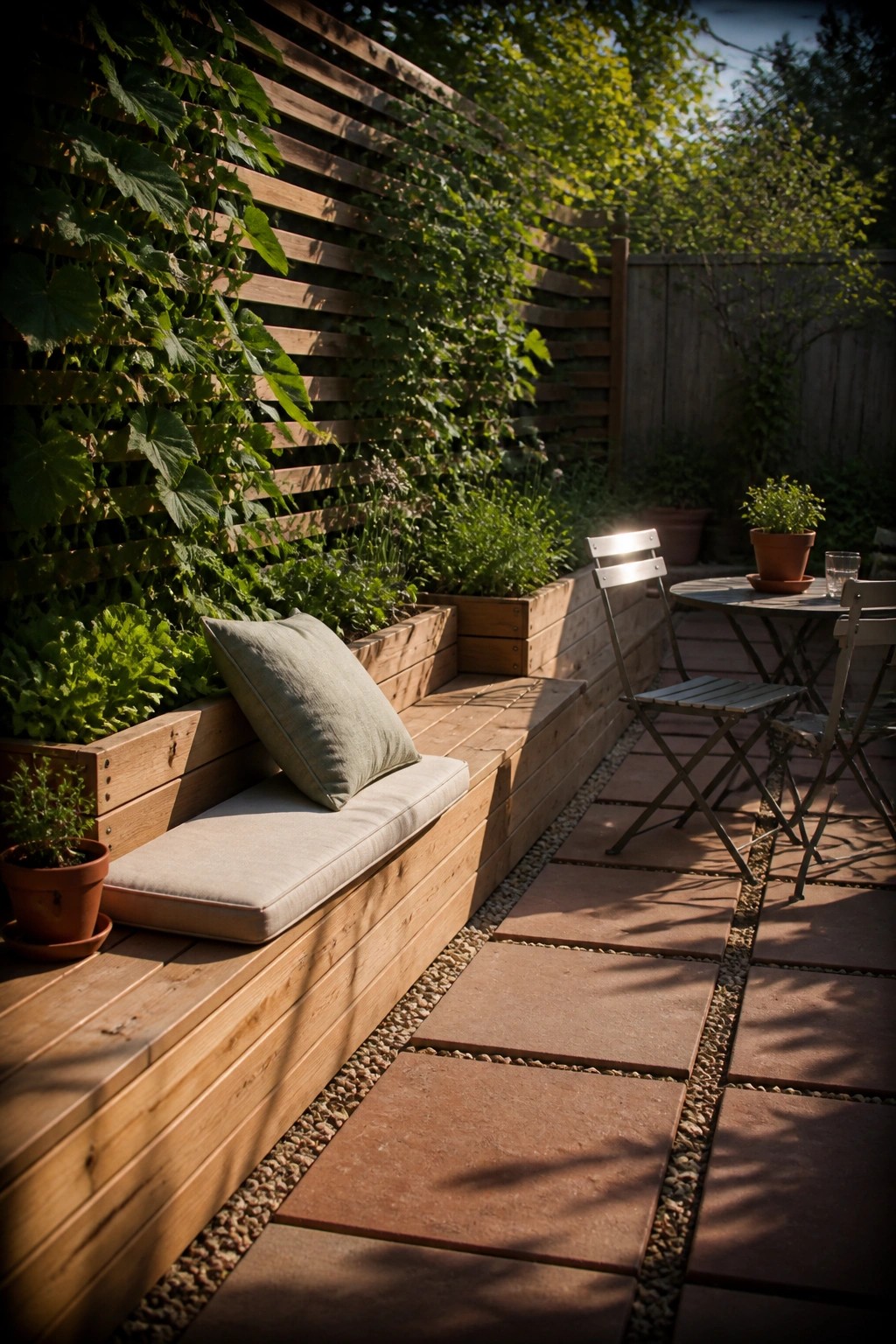
Raised beds that include a bench seat give you growing space without losing room for sitting. In a small backyard this setup keeps everything in one line along the fence so the rest of the yard stays open for other uses. The wood construction holds up well and the plants stay at a comfortable height for tending.
Place the bed where it gets good sun and leave enough path width in front for easy access. This works best in narrow side yards or along a back fence where you need both vegetables and a place to rest. Keep the soil depth right for what you plan to grow and choose cushion covers that can handle outdoor weather.
Log Edged Raised Beds For Narrow Yards
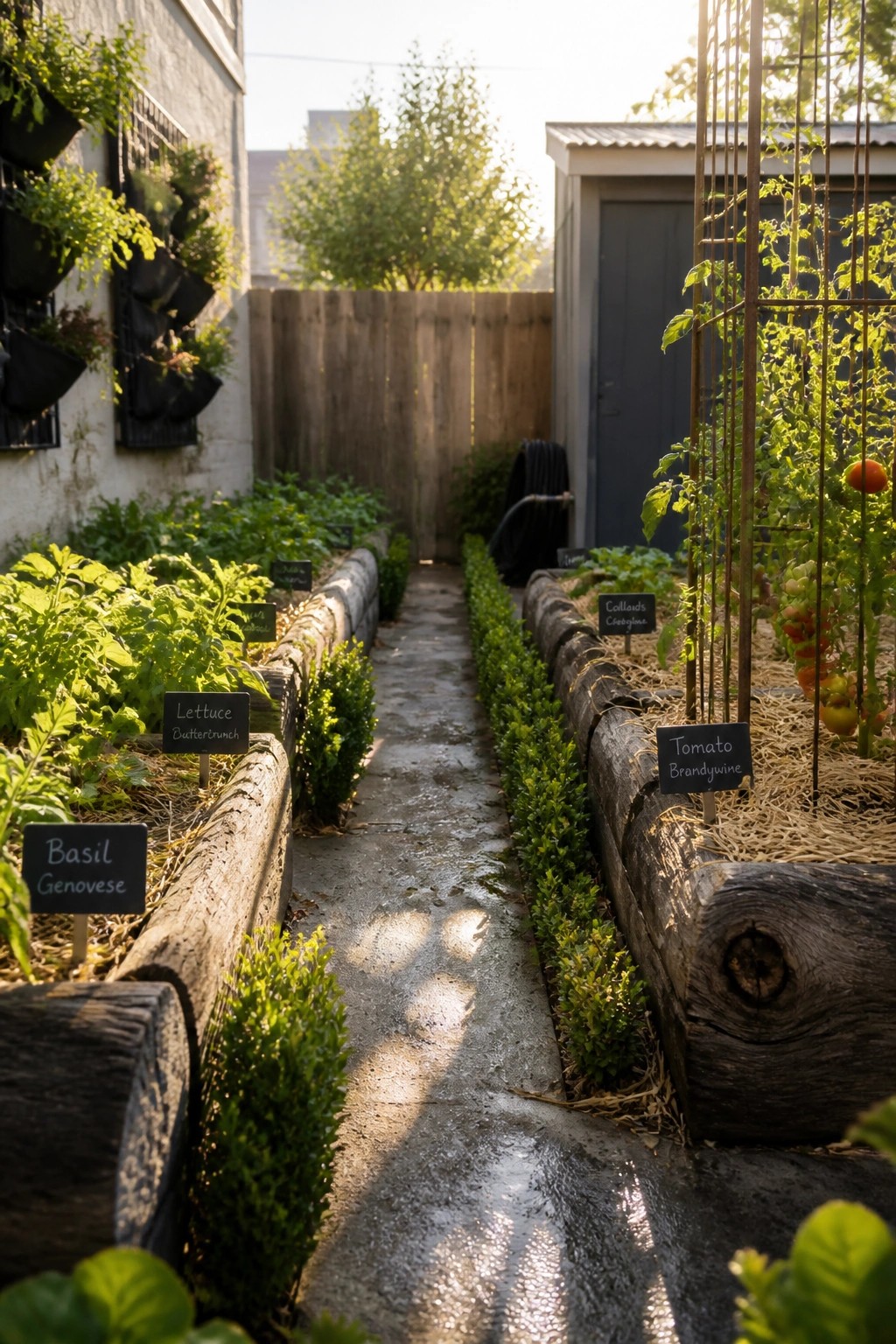
Many people turn to logs or heavy timber when they want raised beds that feel sturdy and blend into a small backyard. The logs create clear borders that keep soil in place while still letting you pack in a good mix of vegetables along both sides of a path.
This setup works especially well in long, tight spaces where you need to keep a walkway open. Place the beds parallel with enough room between them for easy access, and choose logs that can handle moisture so they hold up over time.
Raised Beds With A Simple Water Feature
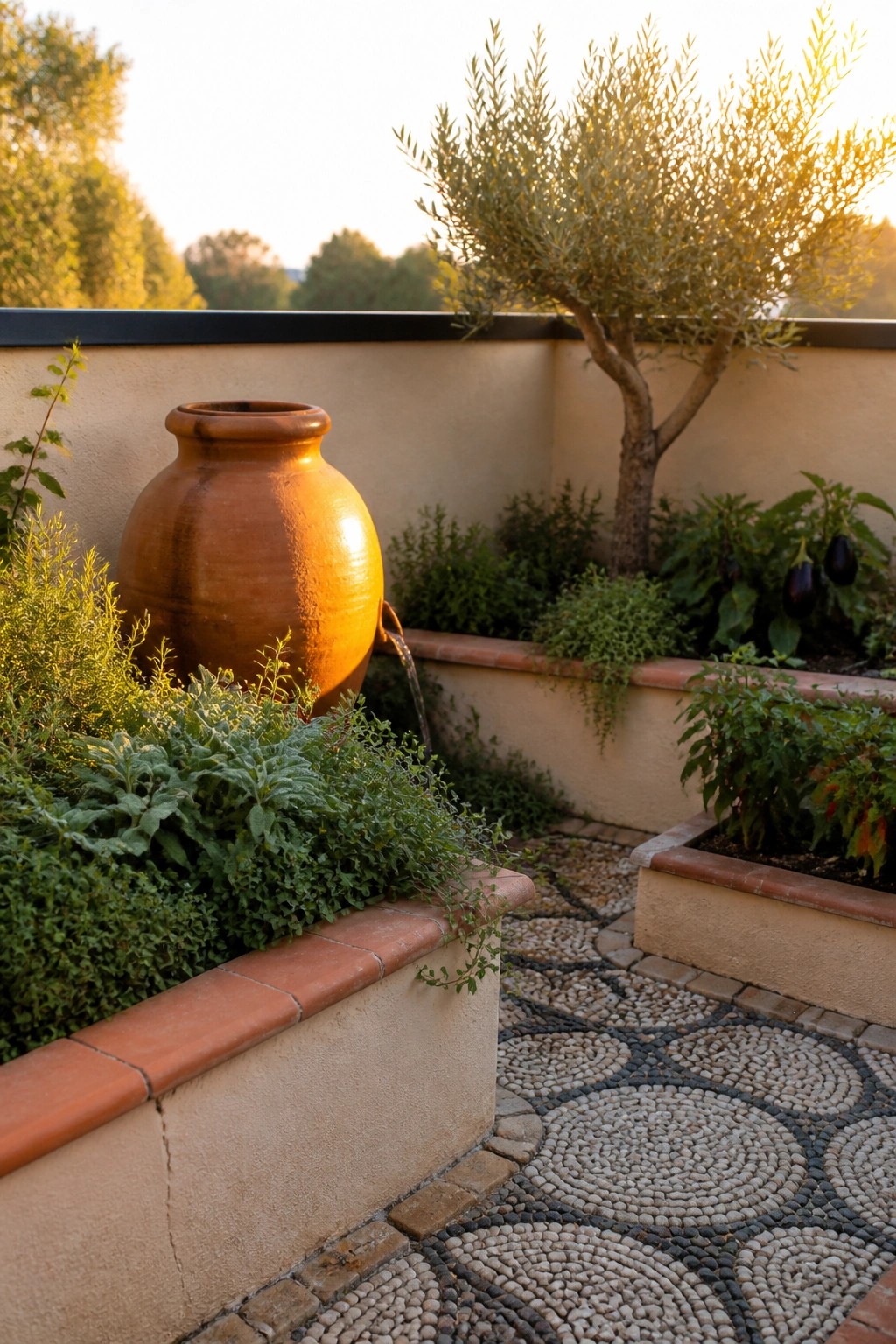
Many compact backyards benefit from raised beds that include a small water source right in the planting area. The steady moisture helps vegetables like eggplants and peppers stay productive without constant hand watering, and the setup keeps everything contained in a tidy footprint.
This approach works especially well along walls or in corner spaces where a standard in-ground garden would feel cramped. Keep the water flow gentle so it supplements rainfall rather than flooding the soil, and use durable edging like tile or stone to hold the shape over multiple seasons.
Raised Beds With Gravel Paths Between Them
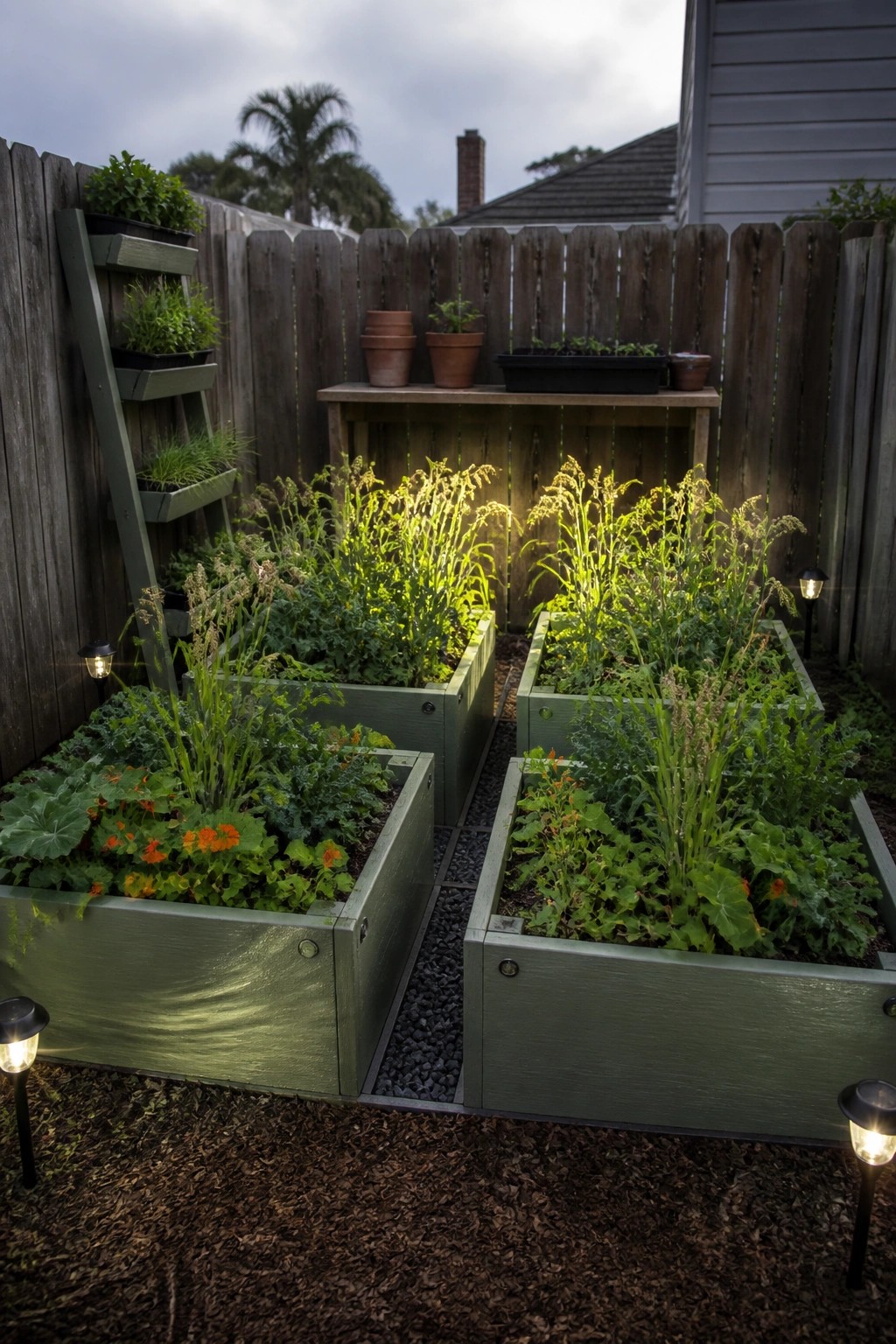
Many people get more vegetables out of a small yard by placing several raised beds close together. The narrow gravel path running between them keeps the soil from getting compacted and makes it simple to reach every plant for watering or harvesting.
This layout suits compact backyards where you still need room to walk and work without wasting space. Keep the beds no wider than you can reach across from the path so everything stays easy to maintain.
Concrete Raised Beds With A Gravel Path
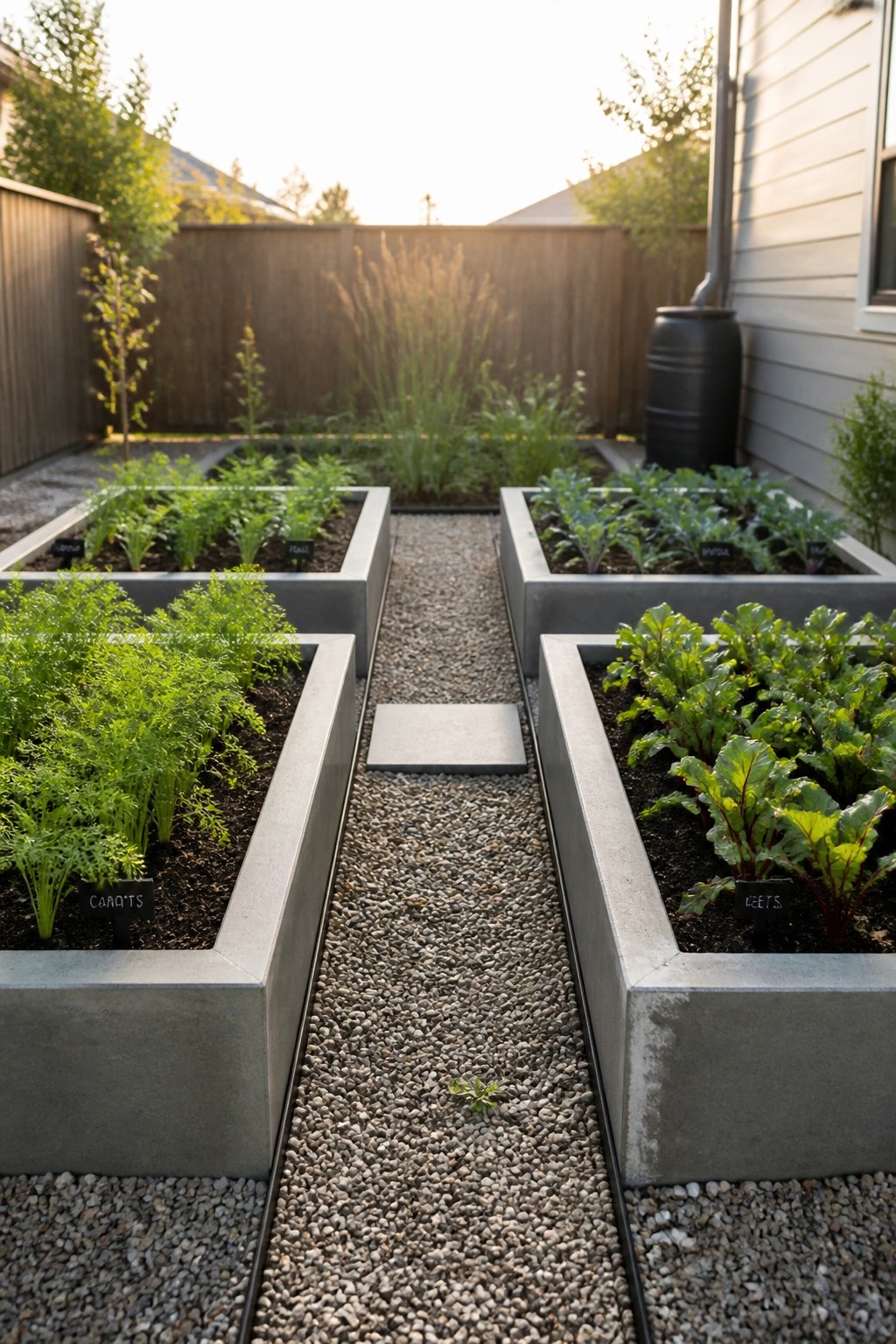
These narrow concrete beds keep the planting area organized and make it simple to reach every plant without compacting the soil. The gravel path running between them stays clear and dry, which helps with daily watering and harvesting.
This layout suits compact backyards where you want several vegetable beds but still need easy access. The beds can be built in matching sizes so the space feels balanced, and the concrete lasts for years with little upkeep.
Raised Beds With Built-In Cold Frames
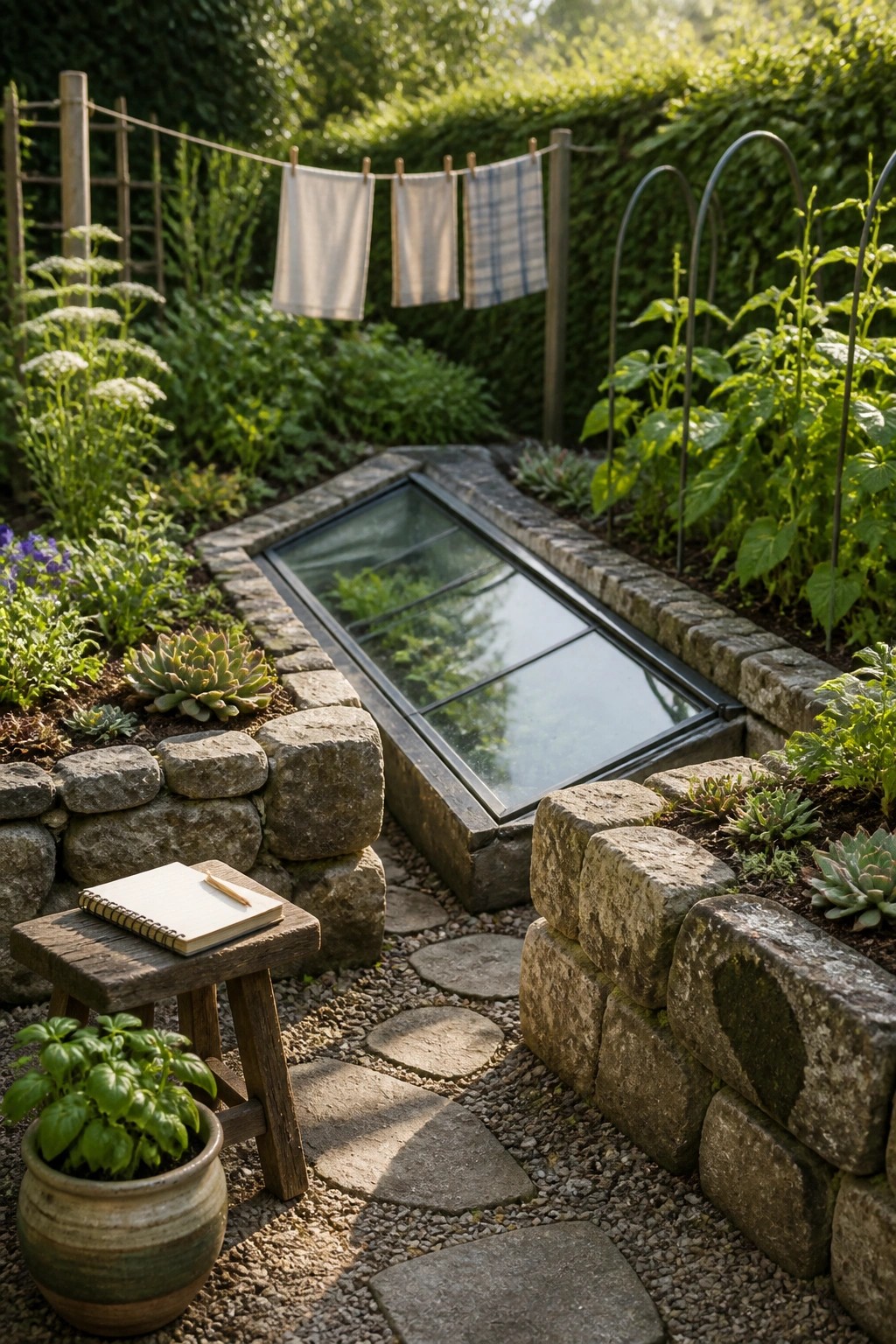
Many gardeners like adding a glass cover to a raised bed because it turns one small space into a spot that can grow vegetables earlier and later in the season. The stone sides hold heat well and the slanted lid lets light in while protecting plants from cold nights.
This works best in compact yards where you need the bed to do more than one job. Keep the frame low enough to reach across easily and make the lid open on hinges so you can vent it on warmer days.
Gravel Paths Between Raised Beds
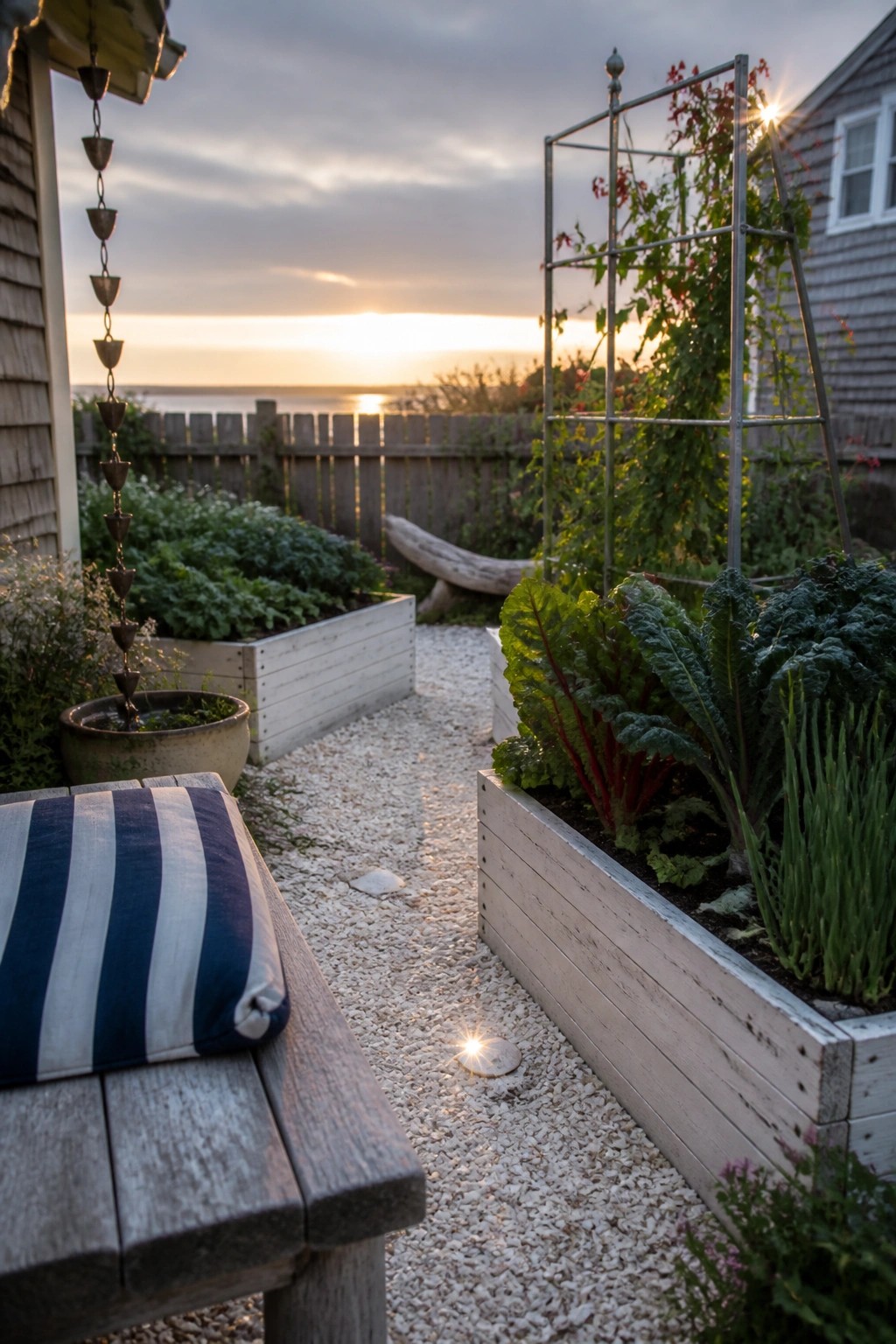
Raised beds work well when they sit beside a simple gravel path. The path keeps the soil contained, gives you a dry place to stand while you work, and makes it easy to reach every side of the beds without stepping on the plants. In smaller yards this layout keeps things tidy and prevents the whole area from turning into mud after rain.
This setup suits compact backyards that still need room for vegetables. Keep the beds narrow enough to reach across and space the paths just wide enough for a wheelbarrow. White painted wood and light gravel reflect what light is available, which helps in shady spots near the house.
Raised Beds With A Gravel Path

Many small backyards gain a lot from placing raised beds on either side of a simple gravel path. The path keeps the middle open so you can reach both beds easily for planting, watering, and picking without compacting the soil.
This layout suits narrow yards or side gardens best. Keep the beds no wider than four feet and leave the path at least two feet across so a wheelbarrow can pass through.
Curved Metal Beds Fit More Vegetables Into Small Yards
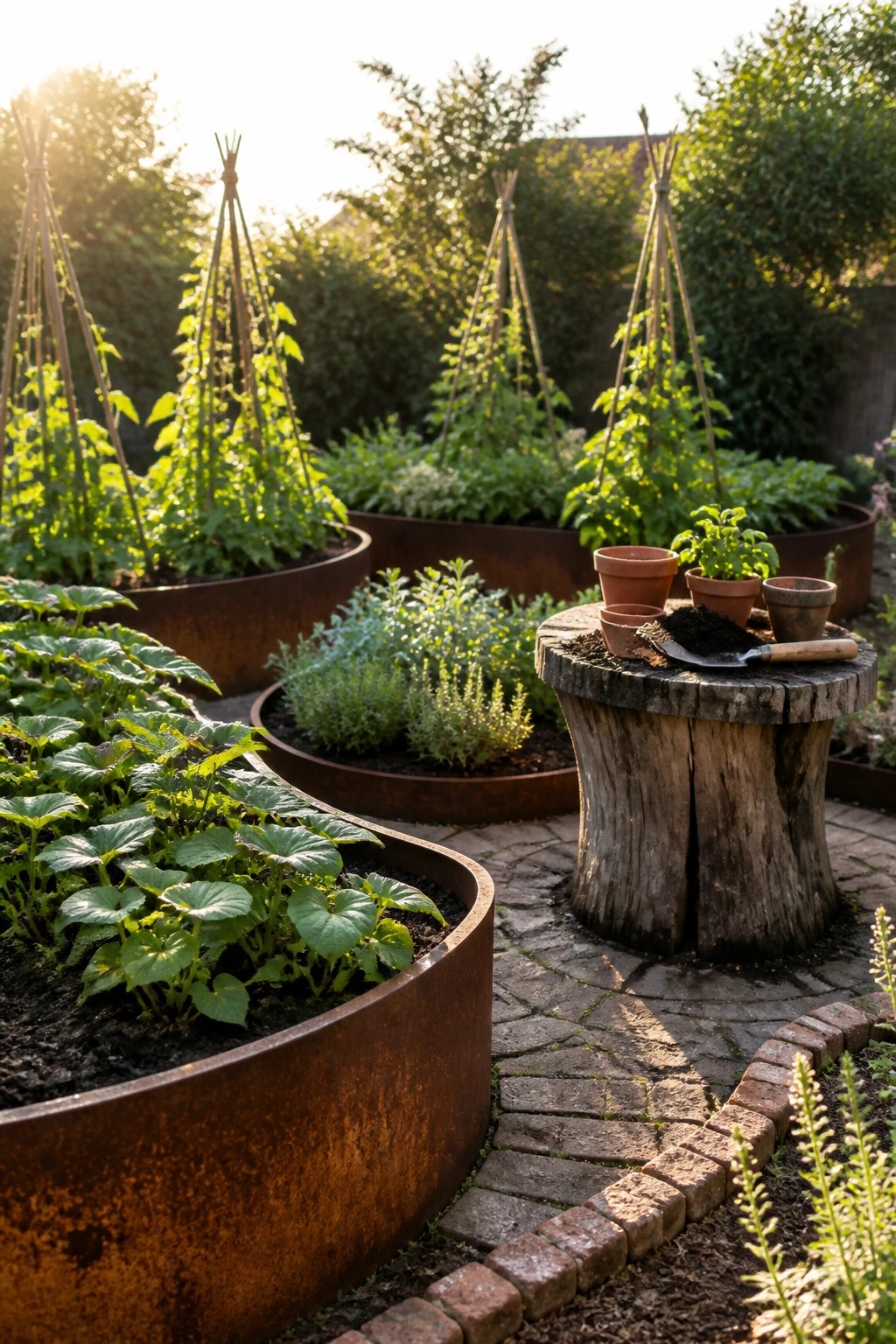
Curved raised beds let you pack more plants into a limited backyard without crowding the space. The rounded shapes create natural pathways and give you access to every plant from the sides, which helps when you need to water or harvest often.
This layout works best in compact yards where straight rectangular beds would leave awkward corners. A simple path between the beds keeps the area easy to walk through and prevents soil compaction around the roots.
Raised Beds on Wheels

Wheeled raised beds make sense in small backyards because you can move them as the light shifts or when you want to rearrange the layout. The metal tubs roll easily on a hard surface, so you are not stuck with one fixed arrangement all season.
They work best on patios or paved areas where the wheels can turn without sinking. Keep the beds narrow enough to reach across and check that the wheels lock if you need them to stay put once positioned.
Vertical Planters Along A Wall
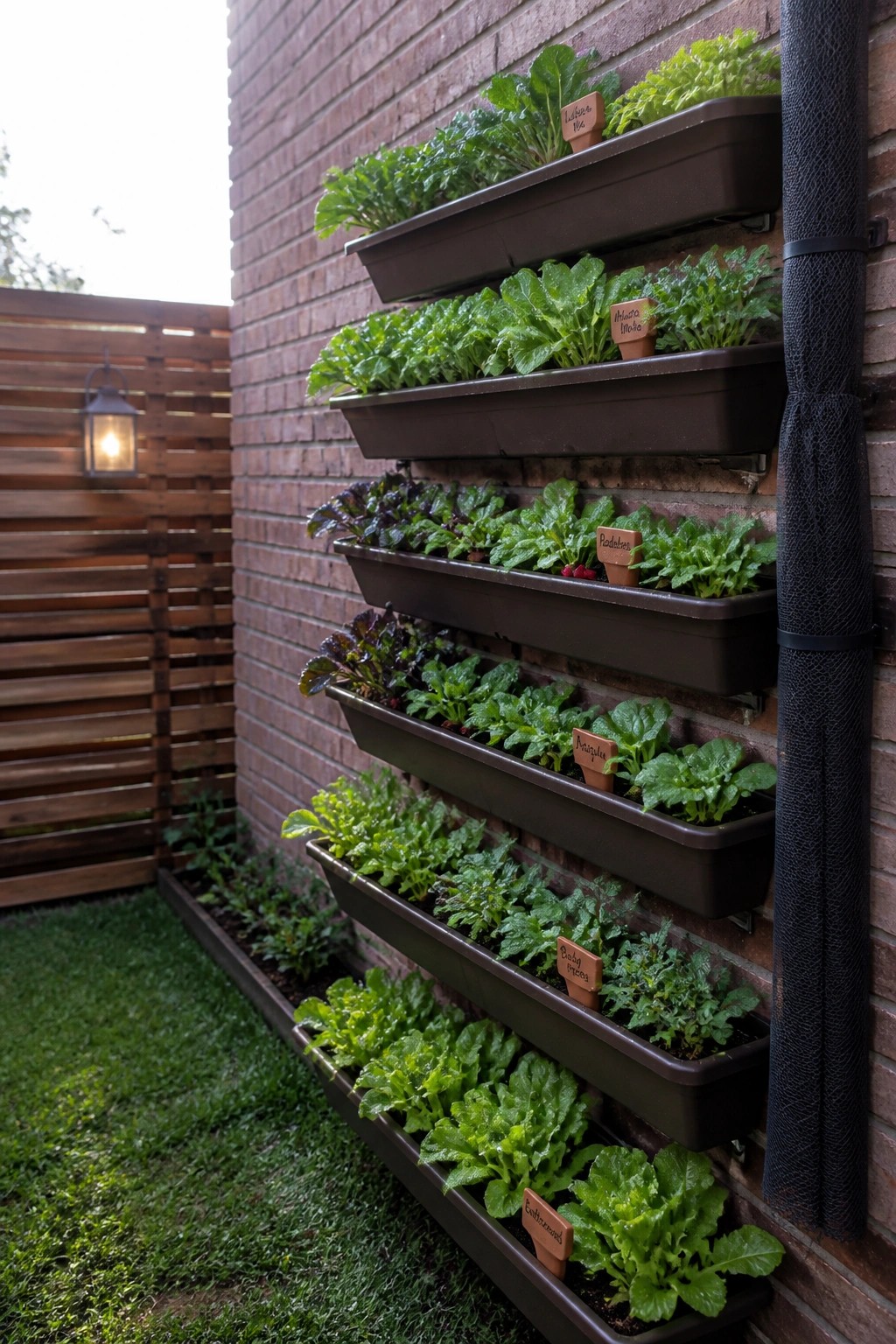
Mounting several long planters in rows on a wall turns a narrow strip of space into a productive vegetable garden. This setup keeps the beds off the ground and uses height instead of width, which helps a lot when the backyard is small. The plants still get good light and stay easy to reach for watering or picking.
It works best against a solid wall that gets several hours of sun each day. Make sure the planters have drainage holes and that the wall can handle the weight once they are filled with soil. Many people add labels on the front edges so they can keep track of what is growing where.
Raised Beds Along the Wall

Many compact backyards gain growing space by running raised beds straight along the property wall. This layout leaves the middle of the yard open while still fitting in several rows of vegetables.
The approach works best in narrow side yards or small lots where floor space is limited. Keep the beds at a comfortable width so you can reach across from the path without straining.
Raised Beds With Trellises For Vertical Growth

Raised beds work well when you add simple trellises right into the design. They let tomatoes and beans grow upward instead of sprawling across the ground, which saves space in a small backyard. The beds stay neat, and you can reach everything without stepping on the soil.
This setup suits compact yards that still need to produce a good amount of vegetables. Place the beds along a path so you can walk between them easily, and choose sturdy supports that match the bed height. Keep the soil deep and the beds narrow enough to reach across without strain.
Raised Beds With Built-In Trellises

Many gardeners attach a simple wire trellis to the side of a raised bed. This lets plants climb instead of sprawling across the soil, which keeps the bed productive in a small yard. It also makes harvesting easier since the produce stays off the ground.
A basic panel works fine on most wooden beds. Place it on the north side so it does not shade the rest of the plants. This setup suits narrow side yards or any compact space where ground room is limited.
Brick Edged Raised Beds Organize Vegetable Gardens
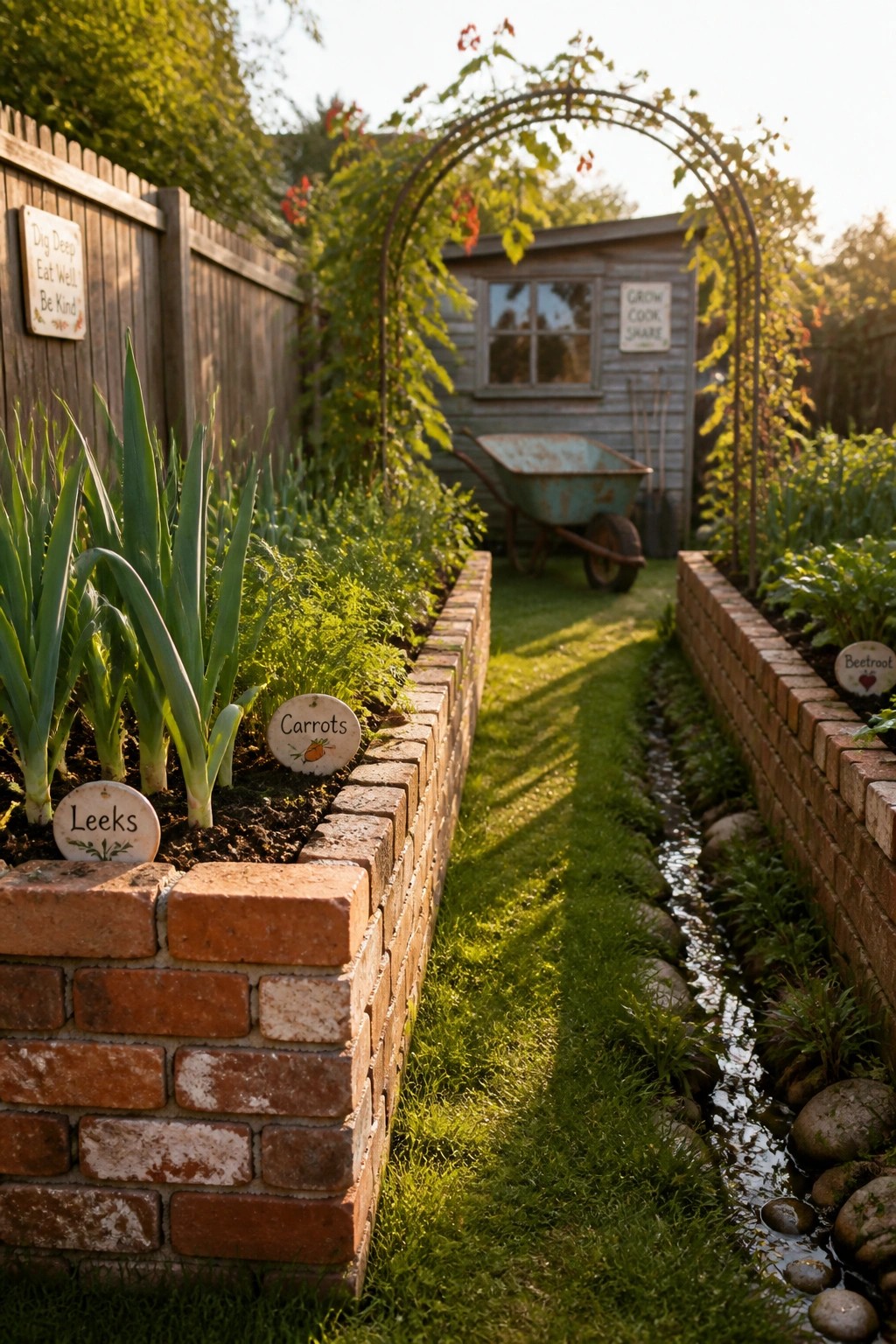
Brick edging gives raised beds a firm border that holds soil in place and keeps the layout clean. Many gardeners use this method because it turns a small patch of ground into clearly defined growing space without needing fancy materials.
This style suits compact backyards where beds sit side by side. Place simple plant markers in each section so you can rotate crops easily and keep the beds productive year after year.
Raised Beds Along a Stone Path
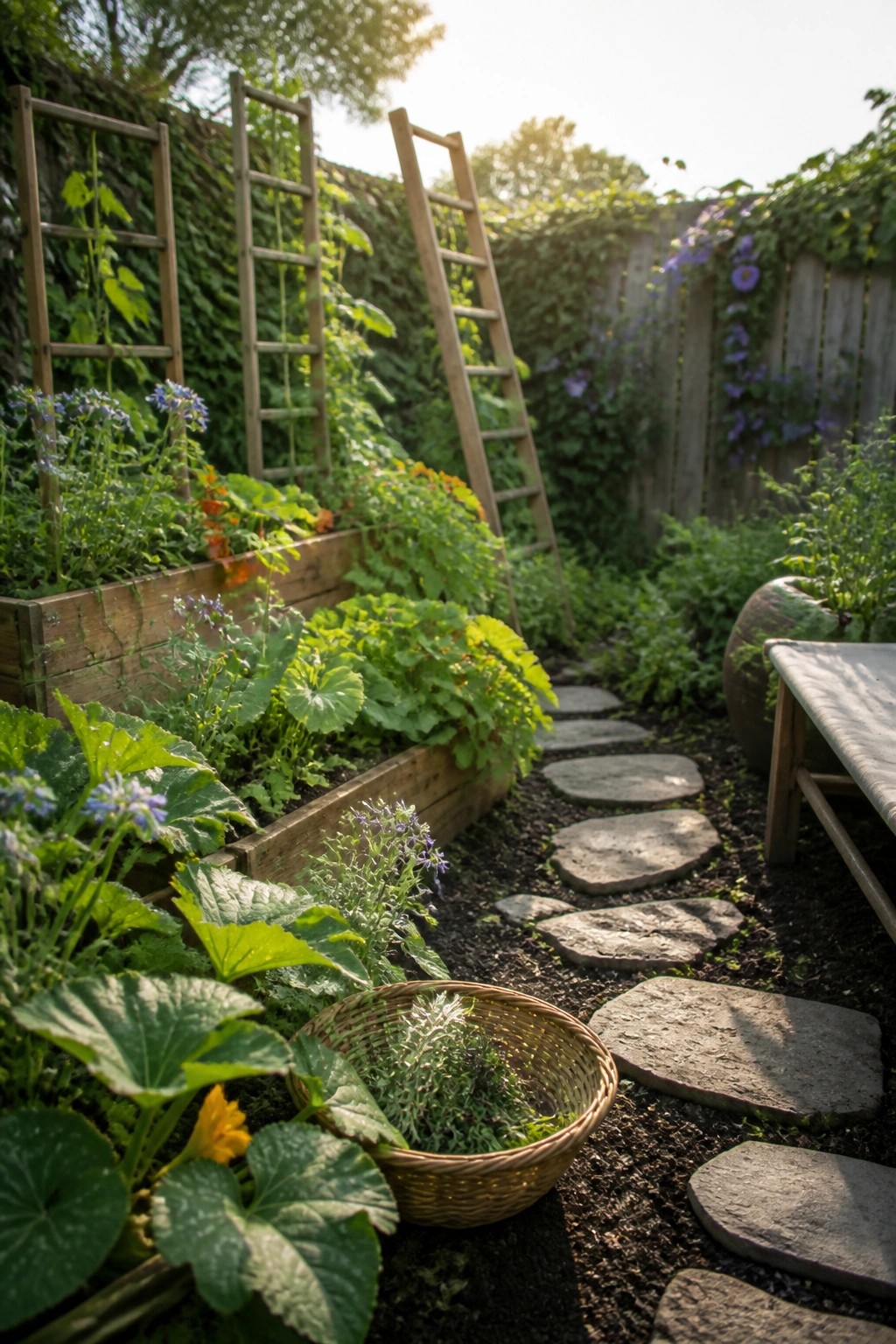
Raised beds gain a lot from a simple path running beside them. The layout keeps everything reachable, so you can water, harvest, and weed without compacting the soil. In a small backyard this arrangement packs in more growing space while still leaving room to walk through comfortably.
A path of flat stones works especially well because it drains quickly and stays low to the ground. Place the beds on one side only if the yard is narrow, or stagger them if you have a bit more width. Either way, the beds stay productive and the path keeps daily tasks easy.
Frequently Asked Questions
Q: How deep do raised beds need to be for growing vegetables? A: Aim for twelve inches minimum. That gives roots enough room without making the whole setup too heavy for a small yard.
Q: What works best for watering when space is tight? A: Run a drip line through each bed. It cuts down on evaporation and keeps leaves dry to avoid disease.
Q: Should I line the bottom of the beds? A: Skip the liner if your soil drains well already. But add landscape fabric if you want to block weeds from below.
