


I still recall how my first vegetable garden patch in the backyard looked chaotic until I added simple raised beds and gravel paths to guide everything.
Those basic structures not only keep soil in check but also let plants mature without me fighting weeds every weekend.
Folks walking by always notice the clean lines and repeating rows first, the kind that turn a blank yard into something productive over just one season.
I’ve tested a few edging tricks from similar setups, and they quietly hold the whole layout together through rain and growth spurts.
Pathways matter most.
Raised Beds for Easy Veggie Growing

Raised beds take the hassle out of starting a vegetable garden. These wooden ones sit right on the patio bricks, holding basil, tomatoes, and potatoes without messing up the ground below. The soil stays warmer and drains better, which helps plants grow strong even if your yard isn’t perfect. No digging deep holes or fighting weeds in rows.
Put them in a sunny spot near the house, like this setup by the fence. Use cedar or untreated pine for the frames, about knee-high for less bending. They’re ideal for renters or small backyards… just fill with good dirt and go. Watch for rot over time, though, and refresh the wood every few years.
Vertical Ladder Planters for Vegetables

A tall bamboo ladder shelf leans against the house wall here, loaded with mason jars growing cucumbers and herbs. It’s a smart way to start veggie gardening without taking up ground space. The plants get good light near the door, and you can see them thriving in those simple jars.
This works best in small backyards or by an entryway where sun hits part of the day. Grab a basic ladder frame, wire baskets or jars, and easy plants like cukes or basil. Water from a can right there… keeps it practical for beginners.
Raised Beds Keep Veggies Neat and Simple

Raised beds like these black metal ones make vegetable gardening straightforward for beginners. You get a clean setup with room for different plants in rows, such as colorful kale, lettuce, and radishes popping up together. The dark frames blend into the yard without drawing too much attention, letting the greens stand out. It’s a tidy way to grow food right outside your back door.
Put them along a fence or wall with a gravel path in between for easy access. They work great in small backyards, especially near a seating spot like that bench under shade. Go for sturdy metal to last years… just make sure to line the bottom if drainage is an issue. Perfect for modern homes wanting fresh produce without the mess.
Backyard Greenhouse for Veggies

A backyard greenhouse like this one gives beginners a head start on their vegetable garden. It keeps tender plants safe from cool nights and pests, letting you grow lettuce, greens, and seedlings right through the seasons. The clear panels let in plenty of light, and the raised bed inside makes everything easy to reach without bending over much.
Set one up in a sunny spot near your house for quick access. Go for a compact size if space is tight, about 6×8 feet works fine, and add simple wood shelves for pots and trays. It suits most yards, even smaller ones, but watch for strong winds, so anchor it well. Pair it with a water barrel nearby to stay organized.
Vertical Crate Planters for Small Yards

Stacking wooden crates into a vertical garden like this one turns a plain fence into a productive veggie patch. It’s a smart way for beginners to grow strawberries, beans, herbs, and greens without needing much ground space. The rustic wood fits right into a backyard setting, and those hanging pods of beans and berries make it feel abundant.
Nail or screw the crates together securely, add drainage holes or line them with fabric, then plant in good potting soil. It works great against a fence or shed in full sun. Keep soil moist but not soggy… easy to reach everything from ground level.
Terracotta Pots for Easy Veggie Growing
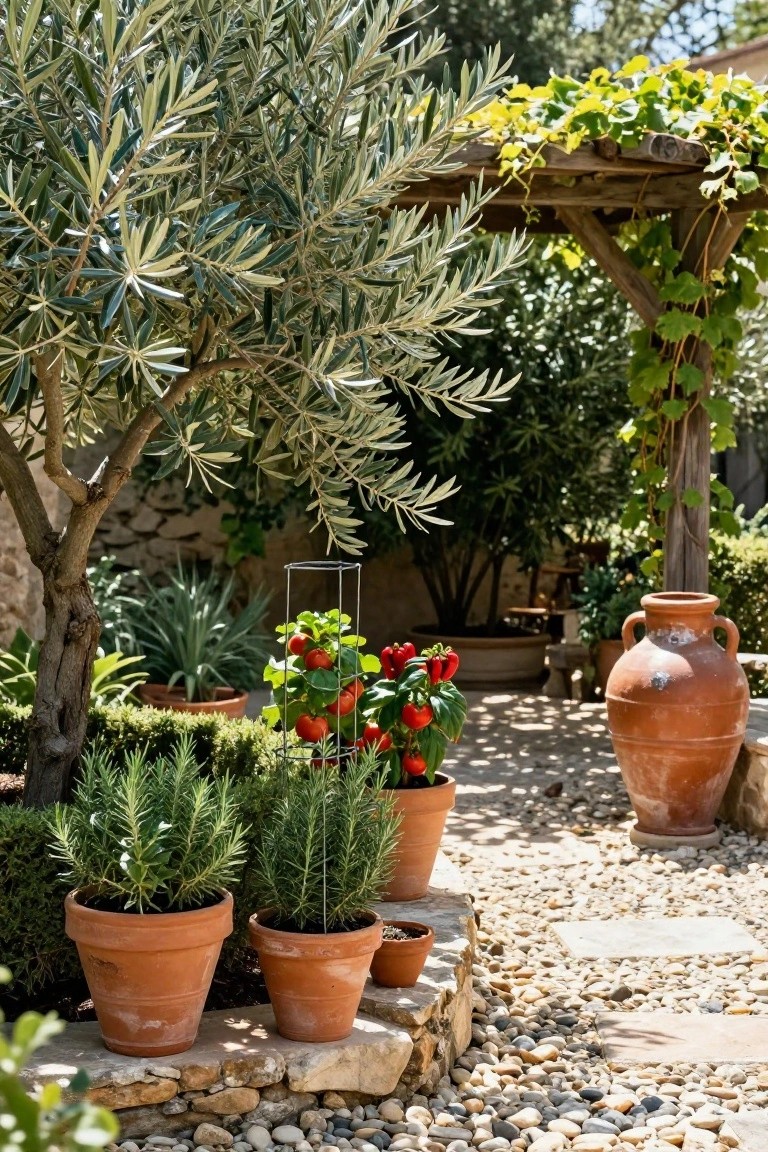
One straightforward way to start a backyard veggie garden is filling terracotta pots with things like tomatoes, rosemary, and strawberries. These pots show up great here along a gravel path, with tomatoes staked up on metal frames and herbs tucked in close. It’s practical for beginners because the pots warm the soil nicely for better growth, and they fit right into a casual garden setup without much fuss.
Put them on stone edges or paths like this where you walk by every day. They work best in sunny spots with good drainage, perfect for small yards or patios. Just watch for drying out in hot weather… water regularly and group pots together for easier care.
Grass-Edged Veggie Beds

One easy way to start a backyard vegetable garden is with simple grass borders around your planting beds. Like the mowed curves here that frame beans climbing a trellis and low greens, it keeps things tidy without bricks or stone. The grass paths separate veggies from lawn naturally, making the yard feel put-together even for beginners.
Mark your bed shapes with string or a hose line, plant up the soil inside, and just mow along the edges weekly. This fits small backyards near a shed or fence, where you want low upkeep and room to walk. Keep the mower sharp… crisp lines make all the difference.
Raised Brick Vegetable Beds

Raised beds like this one made from simple bricks make vegetable gardening straightforward for beginners. You get good drainage and soil control without much digging. Beets and chard grow happily here, right next to each other, and the low walls keep everything neat.
Put these in a sunny backyard spot, maybe against a fence for support. Stack bricks two or three high on level ground, fill with decent soil, and plant easy veggies. They suit small yards… watch for weeds creeping in from the edges.
Balcony Rail Trough Planters for Fresh Herbs

One smart way to start a vegetable garden without much space is lining your balcony rail with long metal trough planters. You see plenty of basil here, along with tomatoes and peppers poking up nicely. It keeps everything handy for picking, and the setup looks tidy against the rail. Beginners like this because it’s straightforward. No big yard needed.
Just grab some galvanized troughs that fit your rail length, add good soil and drainage holes, then plant easy growers like basil or cherry tomatoes. It works great on apartment balconies or small patios facing sun. Keep an eye on watering since pots dry out faster up high. A bamboo screen like this one adds privacy too.
Raised Bed Vegetable Garden with Straw Mulch
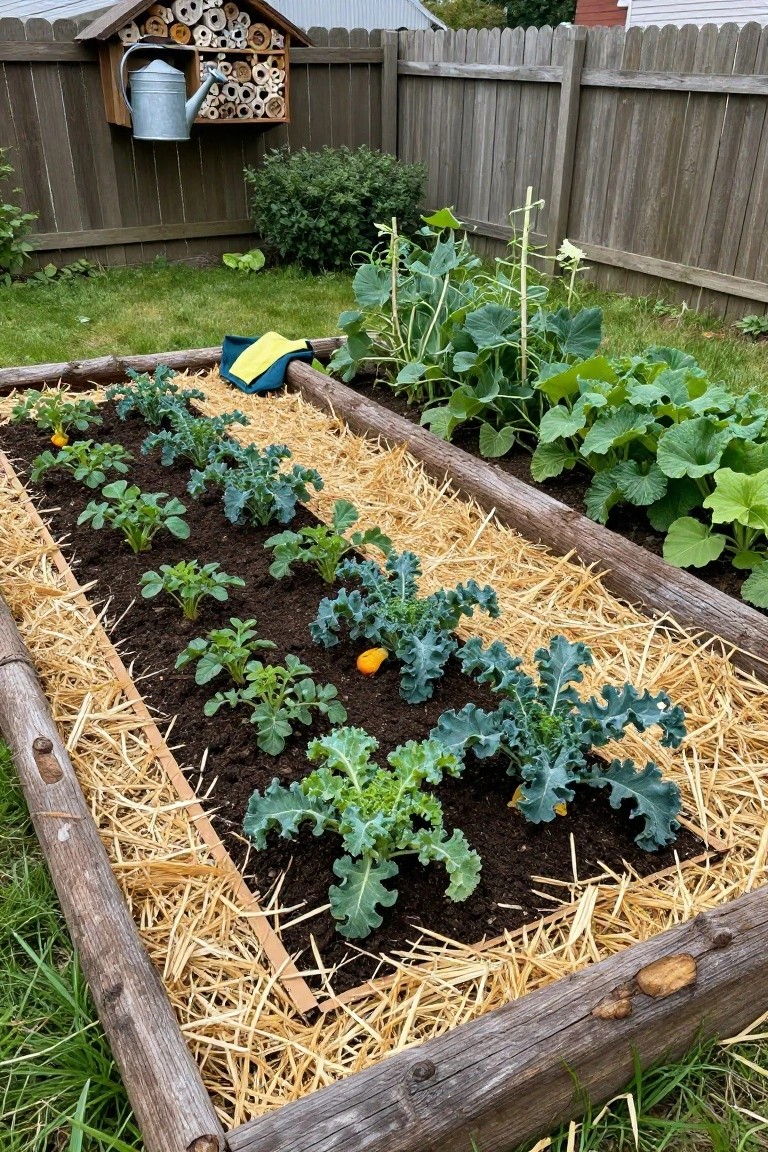
Raised beds like this one make vegetable gardening straightforward for beginners. The wooden frames hold everything in place, and that thick layer of straw mulch keeps weeds at bay while holding in moisture. You see rows of young kale, beans, and potatoes thriving there, with pumpkins spilling over the edge. It just looks practical and productive without much fuss.
Set this up in a sunny backyard spot near a fence for easy access. Use untreated lumber to avoid chemicals leaching into the soil, fill with a mix of topsoil and compost, then plant in neat rows. Straw is cheap and breaks down over time to feed the plants. Skip it in super wet areas though, or it might get too soggy.
Raised Beds with Stone Edging

Raised beds like these keep your vegetable garden neat and easy to reach. The natural stone edges give it a sturdy, finished look that holds up year after year. Mixing in tall grasses adds some height without much work, and it softens the rows of herbs and veggies. It’s a simple way to make a backyard patch feel put together right from the start.
These beds work great in small yards or where soil isn’t ideal. Build them about knee-high with wood or blocks, then top the edges with local stone for that grounded feel. Plant quick growers like herbs along the front and grasses in back. Just make sure there’s good drainage so roots don’t sit wet. Beginners love how it cuts down on bending and weeding.
Outdoor Herb Sink Garden
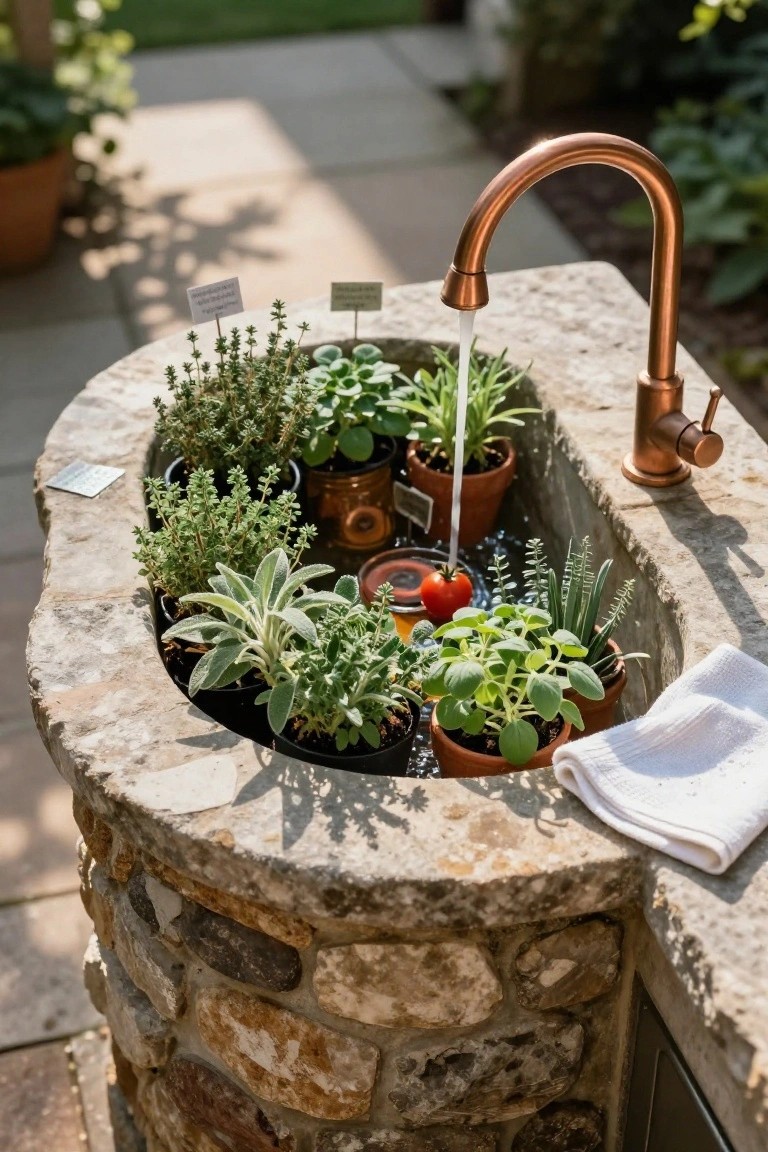
One smart way to start a backyard herb garden is by planting right in an old sink basin outdoors. You see pots of thyme, basil, and others tucked into this stone sink, with a copper faucet running water to keep everything fresh and watered. It’s a simple spot for harvesting and rinsing without tracking dirt inside, and that little tomato adds a fun veggie touch for beginners.
Set this up on a patio or near your kitchen door where you can reach it easily. Use a sturdy basin with good drainage, group sun-loving herbs together, and run the water gently to mimic rain. It works best in mild climates, but watch for freezing in winter… just cover or move the pots indoors.
Tidy Berry Cordons on Simple Posts

One straightforward idea for beginner gardeners is training currants or other soft fruit bushes onto vertical supports. Here, the bushes climb neat metal posts linked by wires, forming easy-to-pick rows along a gravel path. It saves ground space, keeps fruit off the soil, and makes harvesting simple without bending over much.
Set this up in a sunny backyard bed where you walk by often. Use galvanized posts about six feet tall, string wires every foot or so, and tie the plants loosely as they grow. Prune to a few strong stems each year… suits small yards perfectly, and even a novice can manage it with basic tools.
Build a Pollinator Corner for Better Vegetable Yields

One easy way to help your backyard veggies thrive is by setting aside a small corner for pollinators. Bees and birds do a lot of the work pollinating tomatoes, beans, and squash, so giving them a spot nearby keeps everything productive without much extra effort. In this setup, a simple wooden bee hotel on a post draws in solitary bees, while a tiny birdhouse and repurposed galvanized bucket offer shelter and food right next to young plants.
Put it near your main veggie beds, using stuff you might already have around like scrap wood or an old bucket. Rocks and a bit of standing water make a quick bath area, and ground covers like clover keep weeds down while feeding the bugs. It’s perfect for beginners since it takes little space and pays off all season. Just check it now and then to make sure it’s not overgrown.
Frequently Asked Questions
Q: Can I use these ideas in pots if my backyard is tiny?
A: Pick deep containers with good drainage for roots to stretch. Load them with veggie potting mix and plant bushy types like bush beans or peppers. They’ll pump out food all season without needing much ground space.
Q: What’s the quickest veggie to grow for a beginner win?
A: Radishes pop up in three weeks. Sow seeds every week for steady picks. One row gives you bragging rights fast.
Q: How do I know if I’m watering right?
A: Stick your finger in the soil an inch deep. Water only if it feels dry there. Do it in the morning so plants dry off by night.
Q: My plants look yellow. What gives?
A: They probably crave more sun or better dirt. Shift them to six hours of light and stir in compost. Watch them green up quick.
