

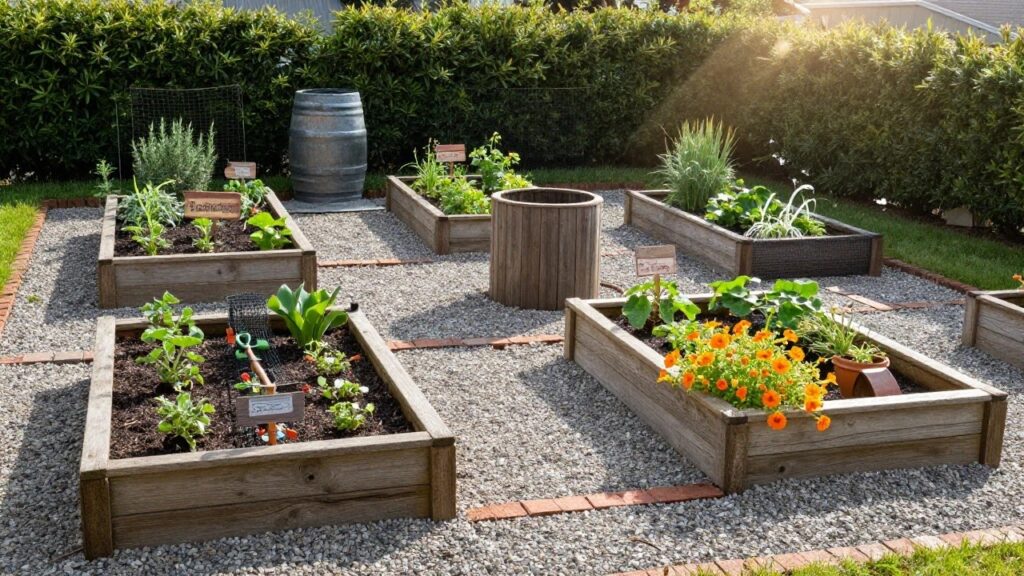
I’ve tinkered with vegetable garden layouts in my backyard for a while now, and clear organization always separates the easy harvests from the frustrating ones.
What catches your eye first in a well-planned plot are the winding paths that keep your feet out of the soil and the beds shaped to fit the space without crowding.
Planting structures like raised frames or tiered rows hold up best as veggies grow tall and bushy through the summer.
A few of these setups have me eyeing my own yard, wondering how to shift things for better access to what we pick most.
They make adapting for next season feel straightforward.
Terraced Raised Beds for Sloped Yards
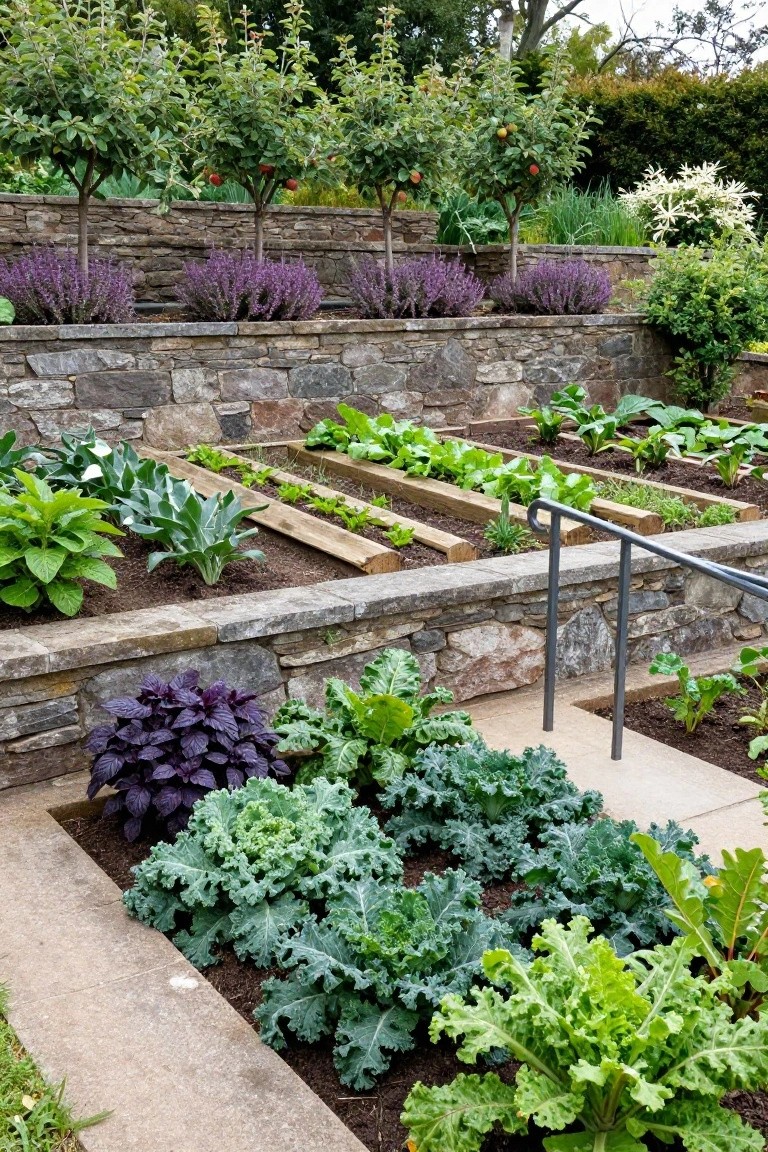
One smart way to handle a sloped yard for vegetables is building terraces with stone retaining walls and wooden raised beds. You see the beds holding neat rows of greens like kale and beets, all stepped down the hill. It keeps soil from washing away in rain. Plus the layout makes harvesting easy, no bending over steep drops.
This works best in backyards with a good incline but not too rocky to dig. Start with low walls of stacked stone or concrete blocks, then add simple wooden frames inside for the beds. Edge the top with low plants like lavender to soften things. Watch the drainage though. Make sure each level has spots for water to escape.
Stacked Galvanized Buckets for Balcony Veggies
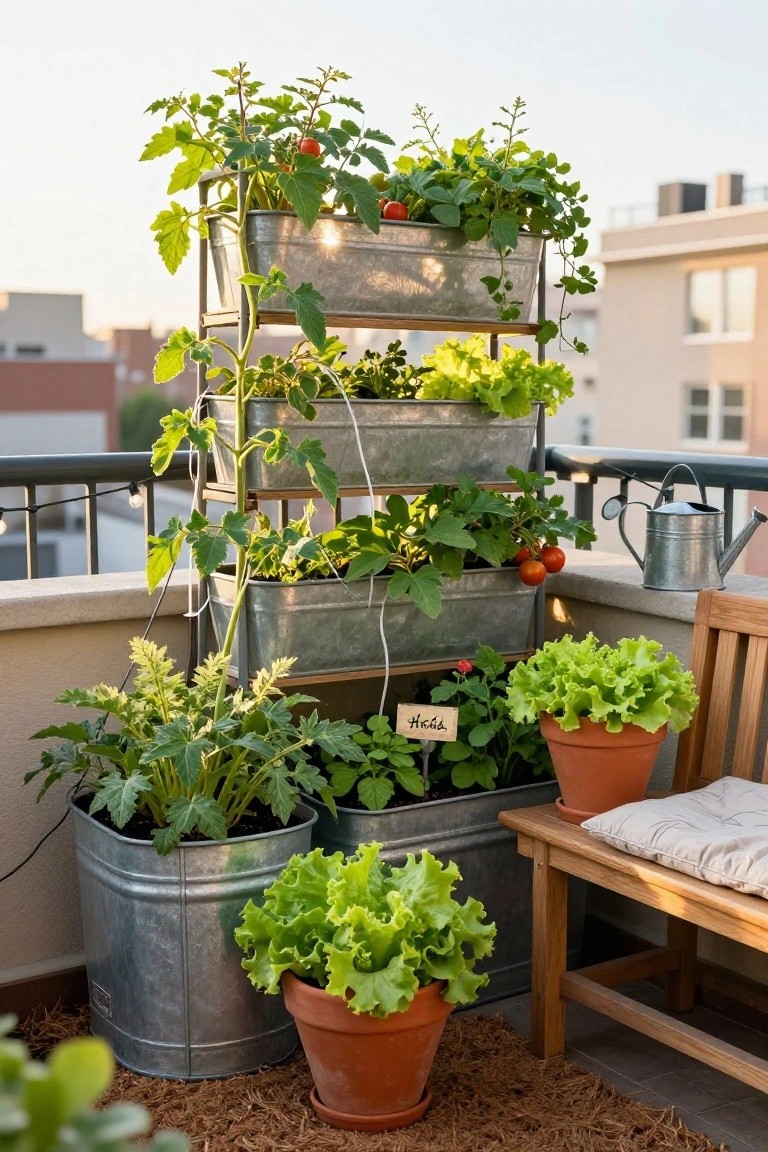
If you have a small balcony but want fresh veggies, try stacking old galvanized buckets into a tall planter. This setup grows tomatoes, lettuce, and greens all in one spot. It saves floor space and gives plants good sun and air. The metal adds a simple rustic touch that fits outdoor spots without much fuss.
Put it near a railing or wall for support, and use trailing plants on top tiers. It works best on sunny balconies in apartments or townhomes. Watch drainage so roots don’t rot. Add a bench nearby like this one for easy picking.
Raised Brick Beds for Easy Veggie Harvests
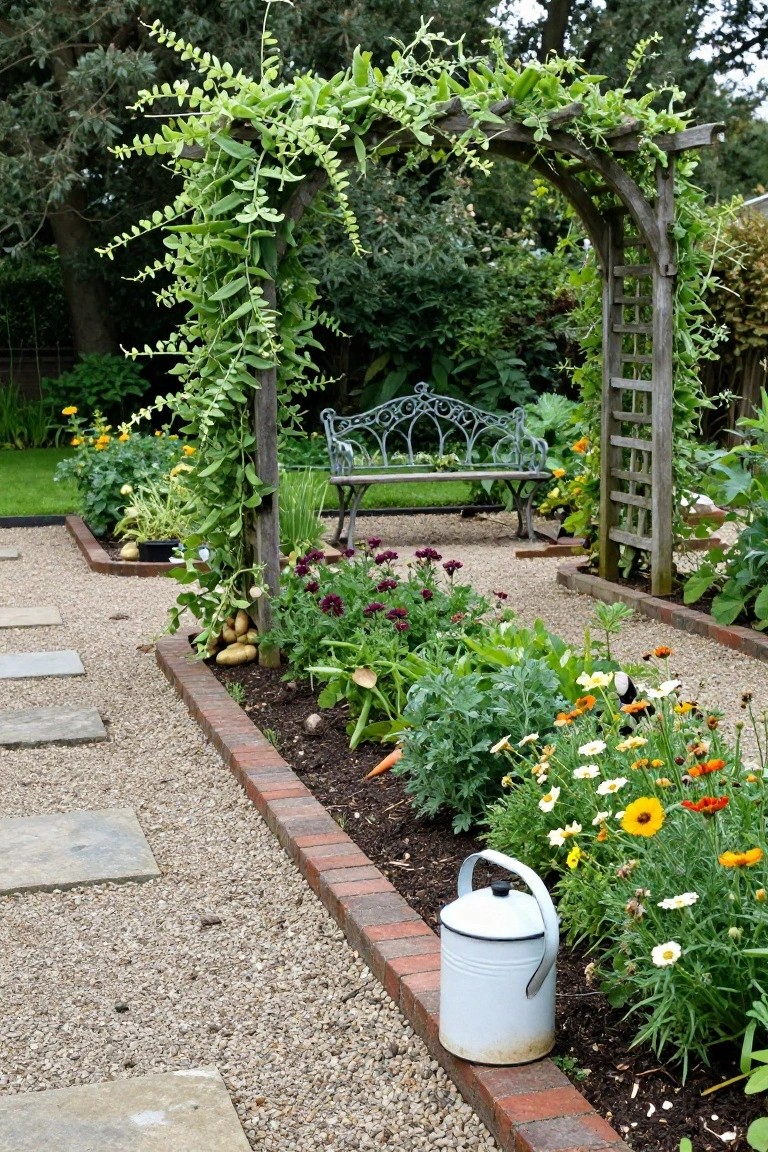
One straightforward way to keep a vegetable garden organized is with raised beds edged in brick. They hold soil in place and let you plant in neat rows, like the potatoes and carrots tucked along the path here. The gravel walkway in between makes it simple to reach everything without compacting the dirt, and a few flowers mixed in keep bugs away while adding color.
This setup works great in smaller backyards where you want maximum yield without mess. Line up three or four beds along a straight path, maybe add a bench at the end for resting. Just make sure the bricks drain well so roots don’t stay too wet. It’s practical year after year.
Linear Raised Beds Along a Gravel Path
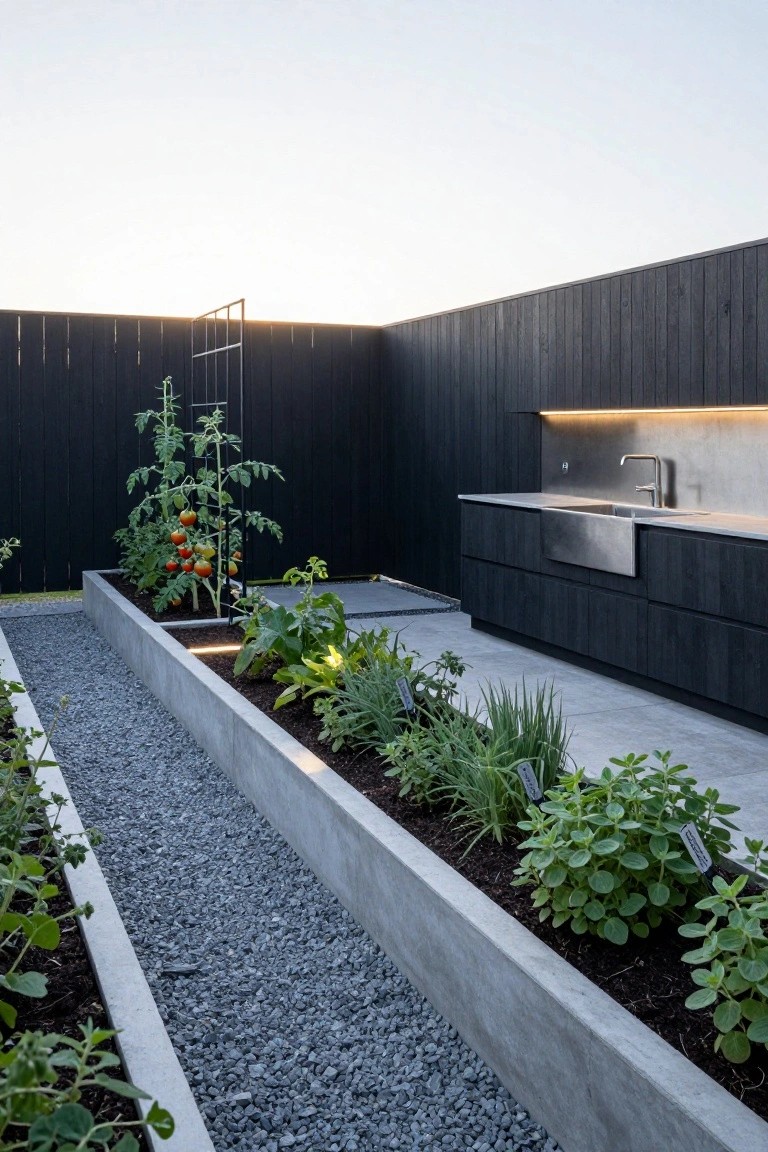
One straightforward way to organize a vegetable garden is with long concrete raised beds running parallel to a simple gravel path. You walk right between them to reach tomatoes on a trellis or herbs tucked in at the ends. It keeps soil off your shoes and plants easy to tend without crowding.
This layout works best in narrow side yards or along a fence line where space is tight. Go for concrete blocks if you want something durable and low upkeep. Just make sure the gravel drains well so water does not pool after rain.
Winding Water Channel in Veggie Beds
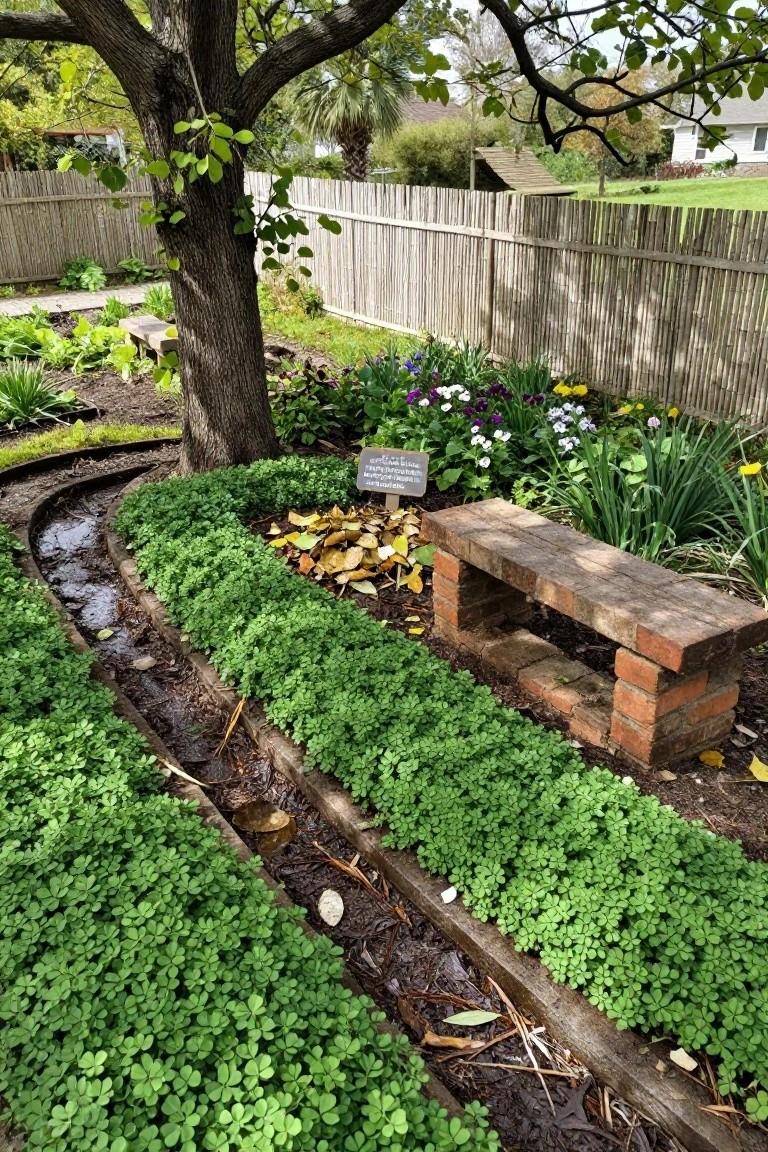
A narrow stream winds through curved planting beds, neatly dividing the space for veggies while keeping everything feeling connected. The lush green groundcover along the edges holds it all in place, and that simple brick bench right in the middle makes it a spot to rest after picking. It turns a basic garden into something more peaceful without much fuss.
This setup works great in smaller yards where you want organization plus a bit of calm. Line the channel with flexible material and a small pump, fill beds with easy crops like greens or herbs, and let low plants spill over the sides. Skip it if your spot floods easy, but otherwise it keeps rows tidy for better harvest.
Greenhouse Raised Beds with Central Path
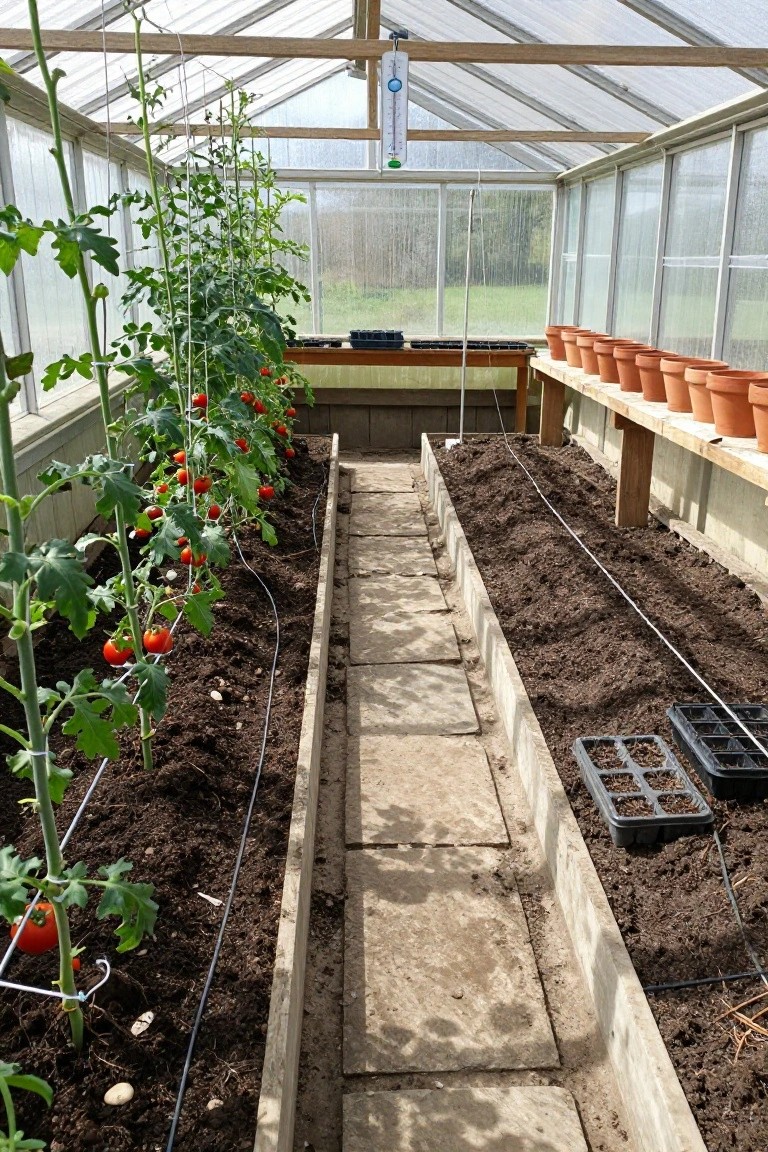
One smart way to keep a vegetable garden harvest organized is lining up raised beds along a straight walkway, like this greenhouse setup. The wooden beds hold tomato plants trained up strings for vertical growth, and drip lines run right along the soil. That central stone path lets you reach every plant without trampling beds or mud on your shoes. It’s practical. No fuss.
You can copy this in any backyard greenhouse or even outdoors with hoops for frost protection. Keep beds narrow, around three feet wide max, so you can tend both sides from the path. Suits beginners or anyone short on space. Just ensure good airflow to avoid plant diseases.
Raised Bed Vegetable Garden with Gravel Paths
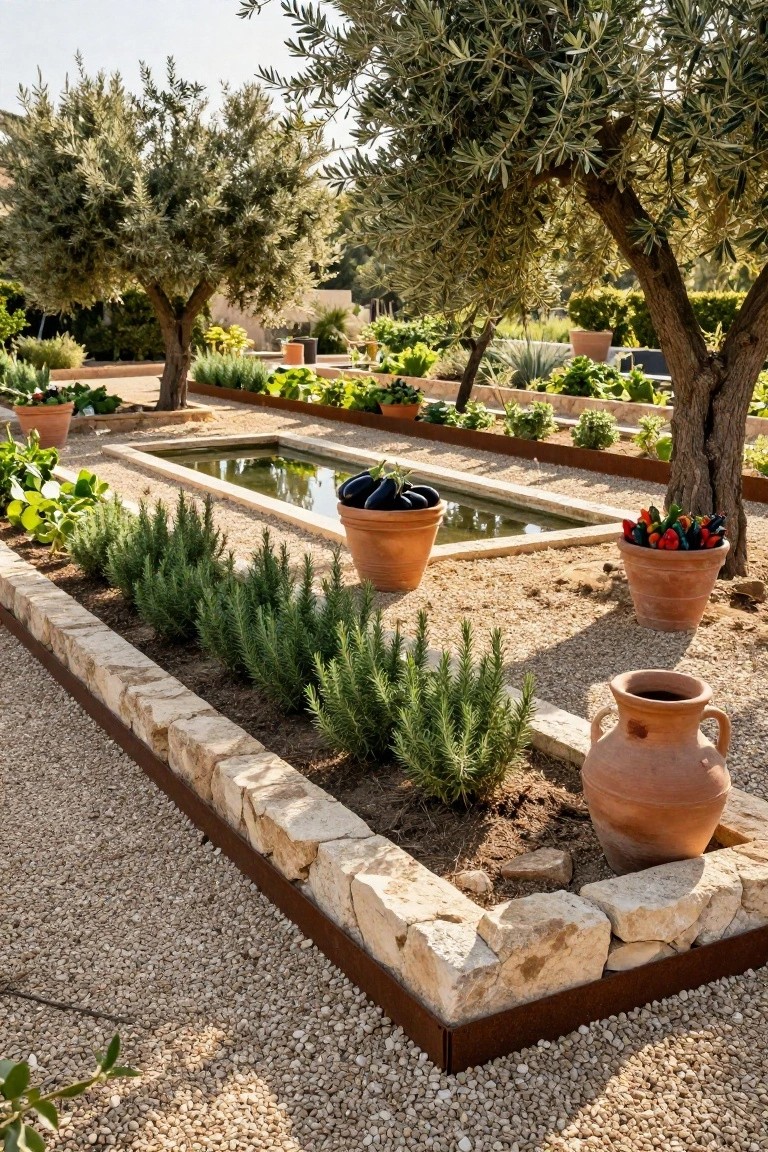
This vegetable garden layout keeps things super organized using raised beds edged in stone and slim metal borders. Gravel paths run right between the beds so you can reach every plant without stepping in the soil. Rosemary lines the edges, and terracotta pots hold peppers and eggplants nearby. A simple water basin in the center holds more eggplants. It makes harvesting straightforward, no mess.
Try this in a sunny side yard or courtyard where space is tight. It works best in warmer spots like the Mediterranean, with drought-tolerant plants. Just keep the gravel topped up, and watch for weeds sneaking in. Suits a casual home vibe… practical and pretty.
Raised Bed Veggie Garden Under Pergola
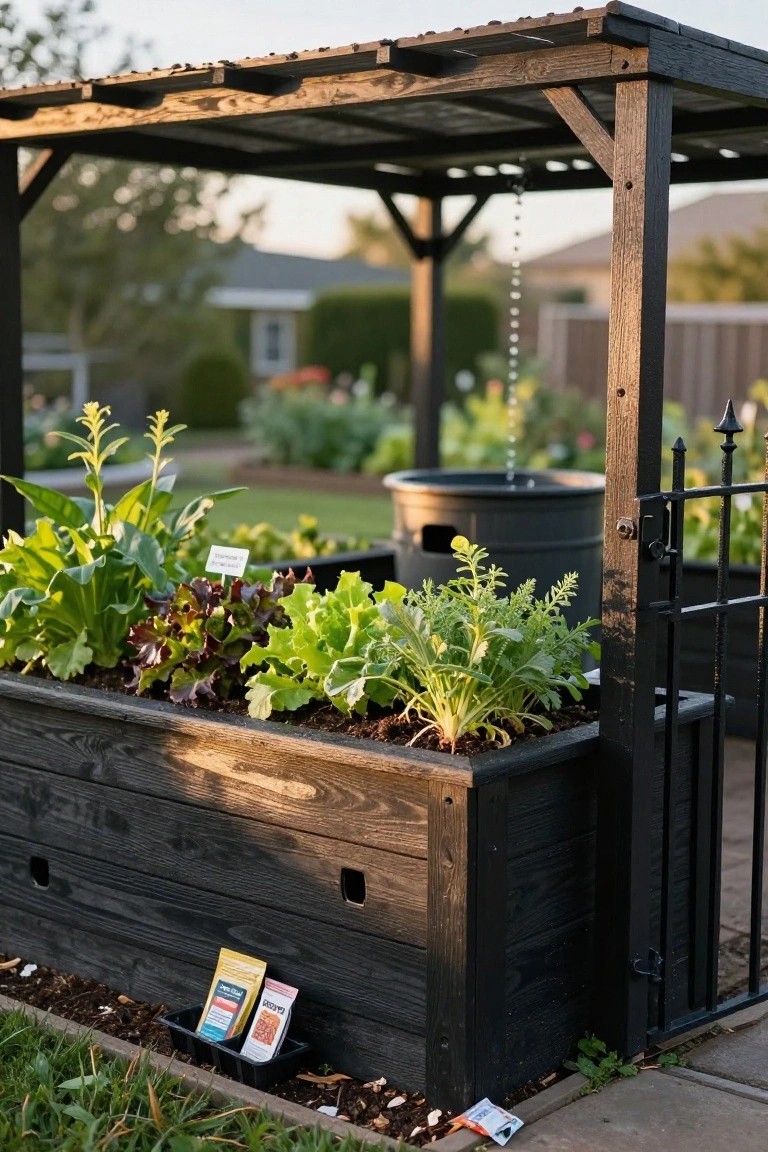
A raised bed like this one keeps your vegetable patch organized and right at picking height. Filled with lettuces, greens, and herbs, it sits under a simple pergola that adds shade on hot days. The dark wood and black metal gate make it feel like a tidy backyard spot, not just a random planting area.
This works well in average yards where you want fresh produce without bending over much. Place it near a patio or fence for protection, and use the edges for seed packets or tools. Just make sure the bed drains well, or roots can rot after rain.
Terraced Raised Beds with Stone Steps
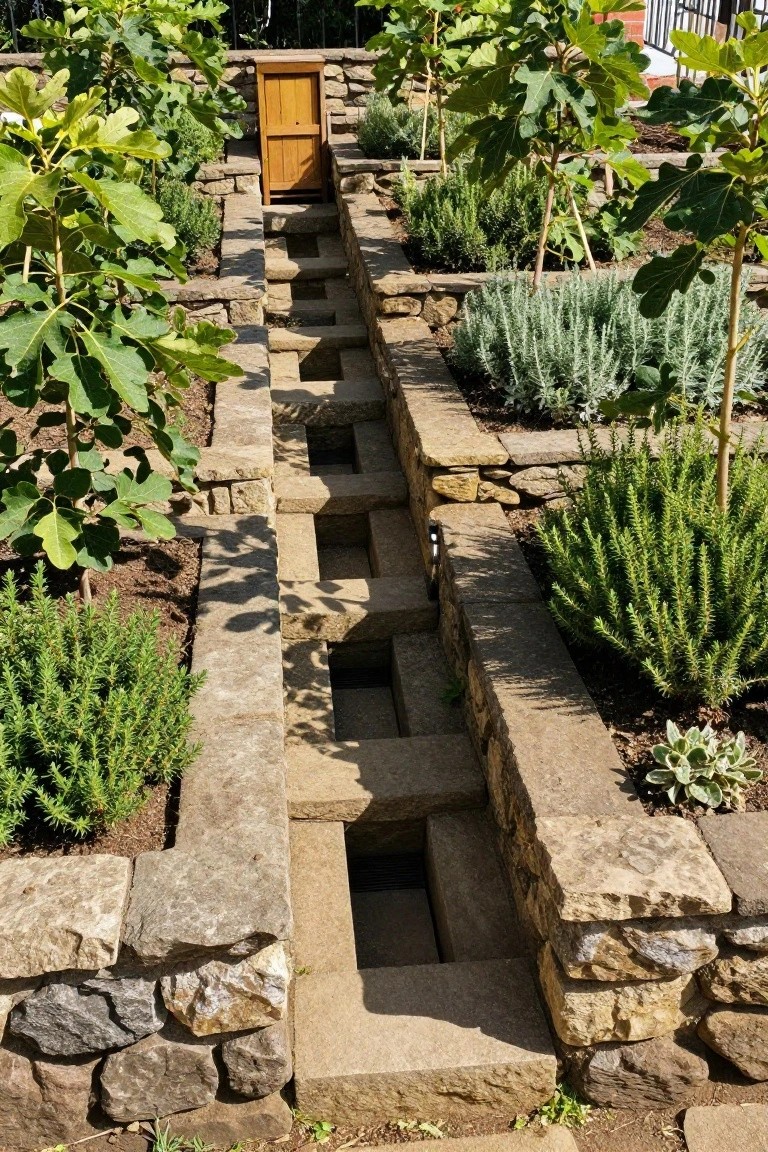
One smart way to handle a sloped yard for vegetables is building terraced raised beds with a central stone staircase right down the middle. It keeps everything neat and reachable. Plants like rosemary, lavender, and young fig trees fill the beds on each level, making good use of the space without crowding. The stone walls hold soil in place and give a sturdy, natural look that fits right into a garden setting.
This setup works best in yards with some drop in elevation, where flat ground just isn’t an option. You can plant herbs low and veggies higher up for easier picking. Start with wide enough steps for walking, and add gravel drains to avoid water buildup. It’s practical for smaller properties too… keeps the harvest organized without taking over the whole yard.
Sandbox Vegetable Garden Layout
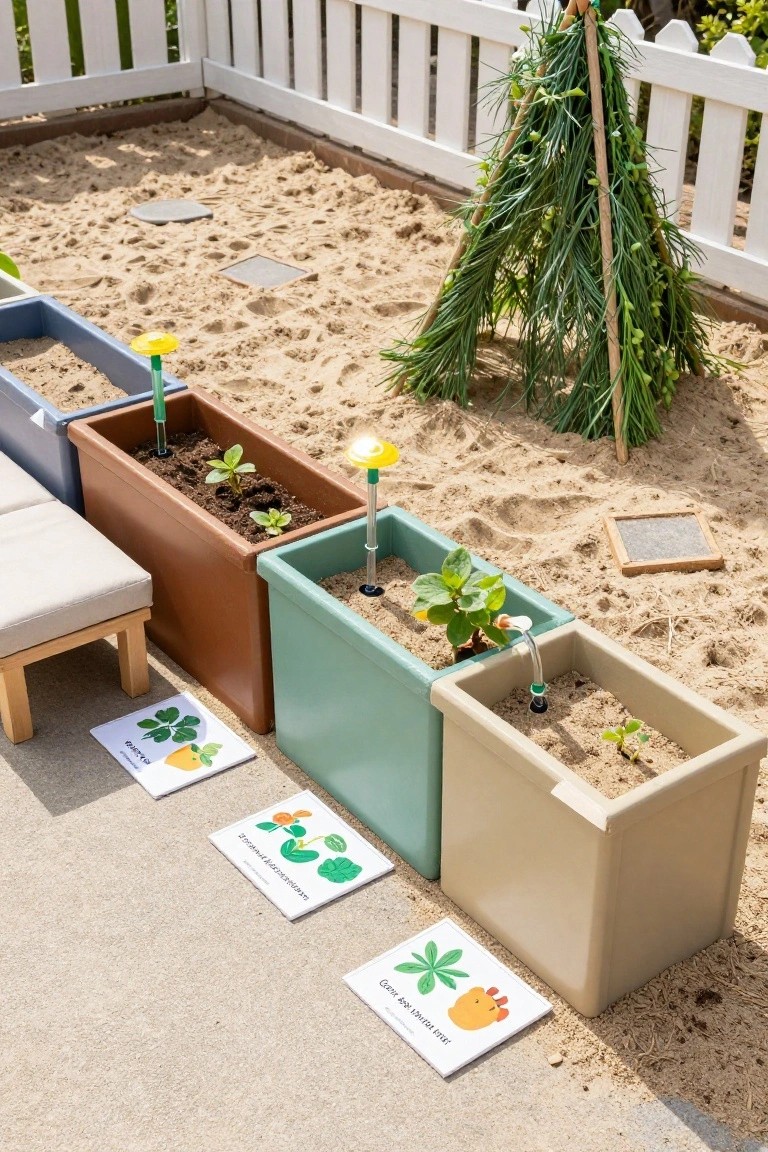
This idea takes a basic sandbox and fills it with raised planters for growing veggies right in the sand. The colorful boxes hold young plants like beans and peppers, arranged neatly with drip tubes for watering and cards labeling each type. It keeps everything contained and organized, turning play space into a real harvest spot without mess spreading out.
Set this up in a kid-friendly yard or small patio where space is tight. Line up four or five planters in a loose grid, add a simple teepee trellis in the middle for climbers, and surround with sand for digging around plants. Works best for beginners or families, just watch that kids don’t overwater.
Integrated Planter Bench for Rooftop Veggies
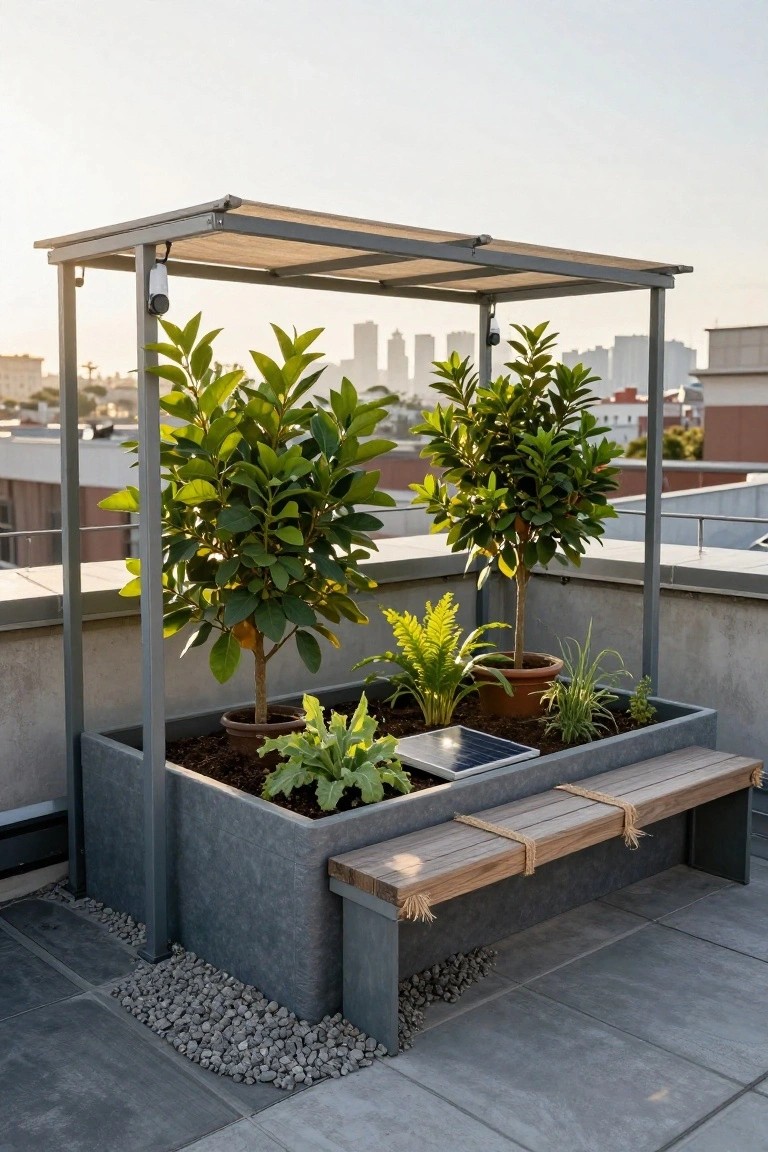
A raised planter box that pulls double duty as a bench makes perfect sense for rooftop gardens. You plant your veggies and herbs right in the box, then sit on the edge to harvest or just relax. Here, the gray metal frame holds everything steady, with greens and small trees tucked in for that organized look. It keeps the space tidy and turns a simple terrace into a real growing spot.
This works great on urban balconies or flat roofs where room is tight. Use weatherproof materials like corten steel or treated wood, and anchor it well. Go for shallow-rooted crops that thrive in containers. One thing to watch: pick plants that won’t get too bushy and crowd the seat.
Symmetrical Boxwood Vegetable Garden
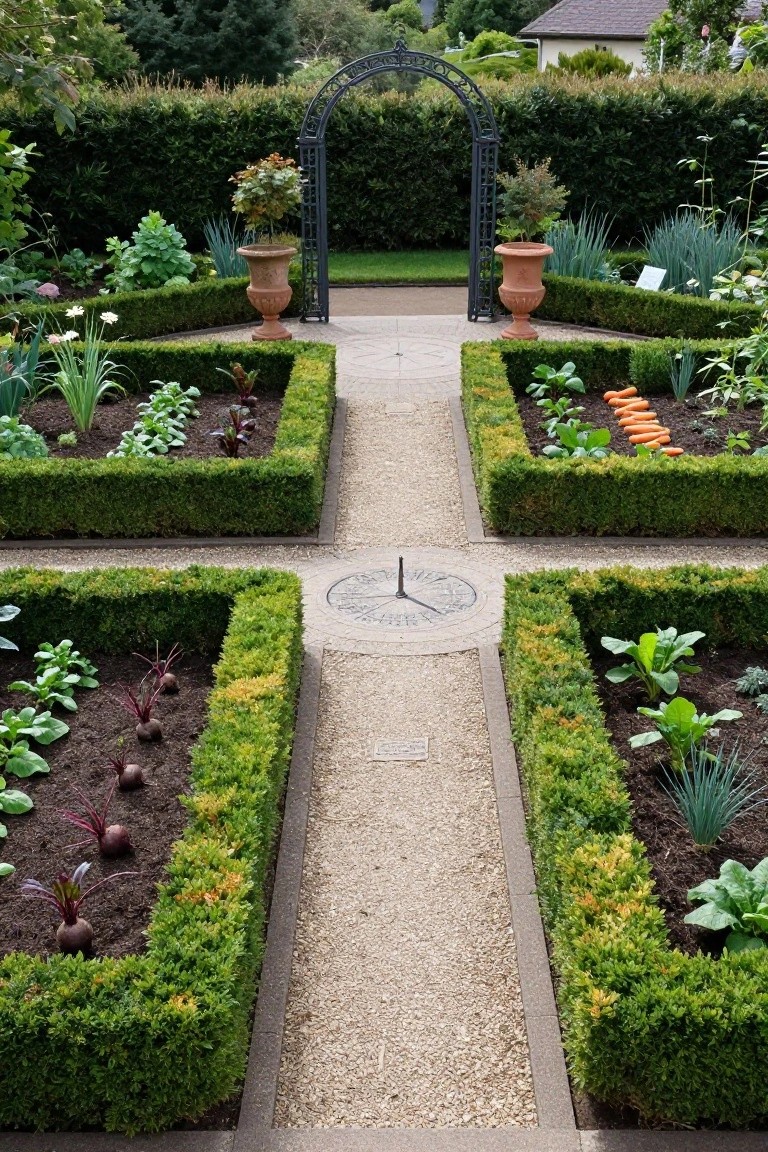
Boxwood hedges make a simple frame for raised vegetable beds. Here they form four neat squares around a gravel crossroads with a sundial right in the center. That setup keeps everything organized and gives the garden a tidy, old-world look. It’s practical too. Paths stay clean for walking, and the plants get good air and sun.
This works best in a flat, sunny yard spot maybe 20 by 20 feet. Trim the boxwoods once or twice a year to hold the shape. Fill the beds with root veggies like beets and carrots, or greens. It suits a cottage style home… keeps the harvest coming without the mess.
Raised Beds Using Galvanized Tubs
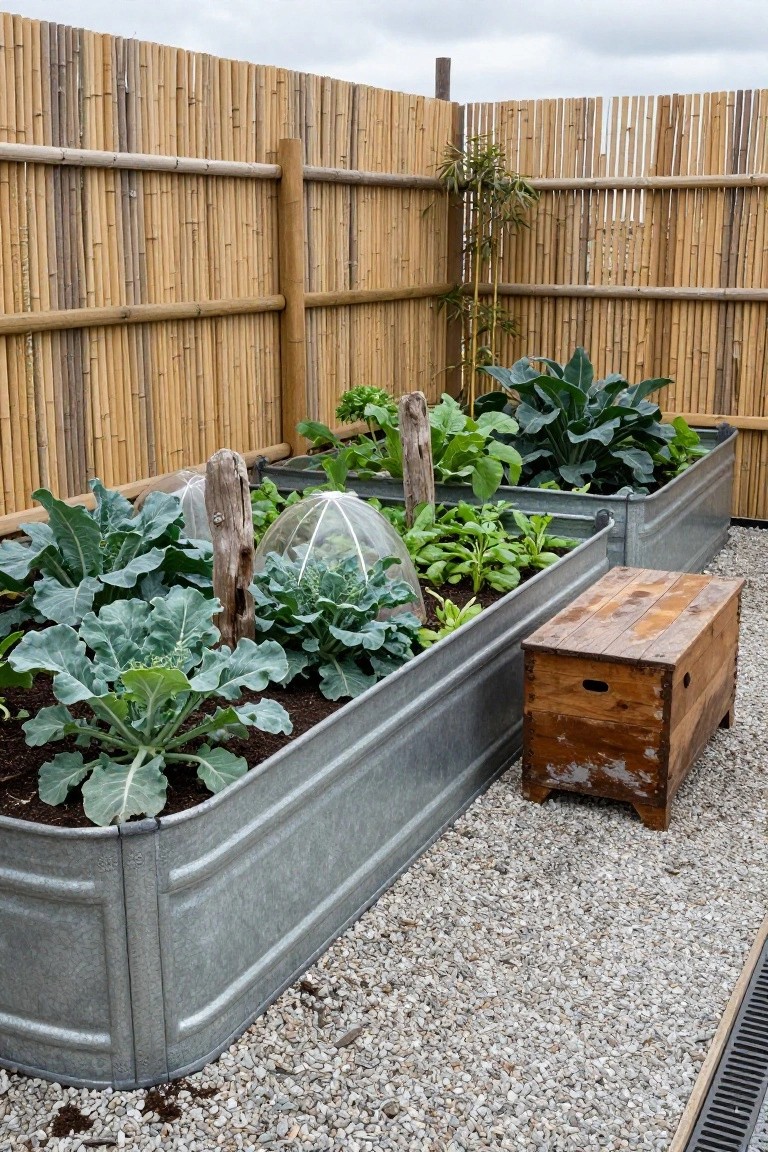
Galvanized tubs make for straightforward raised beds that keep your vegetable garden organized and off the dirt. They hold soil well and lift plants up where you can tend them without much stooping. Here they’re growing leafy greens like kale, with clear domes over some for extra protection.
Line a few up against a fence in a sunny gravel spot, and you’ve got a compact harvest zone that suits small yards. Fill with quality soil mix for drainage. One thing… metal heats up fast, so shade cloth helps on hot days. Add a wooden crate for tools right there.
Multi-Level Shelving in a Small Greenhouse
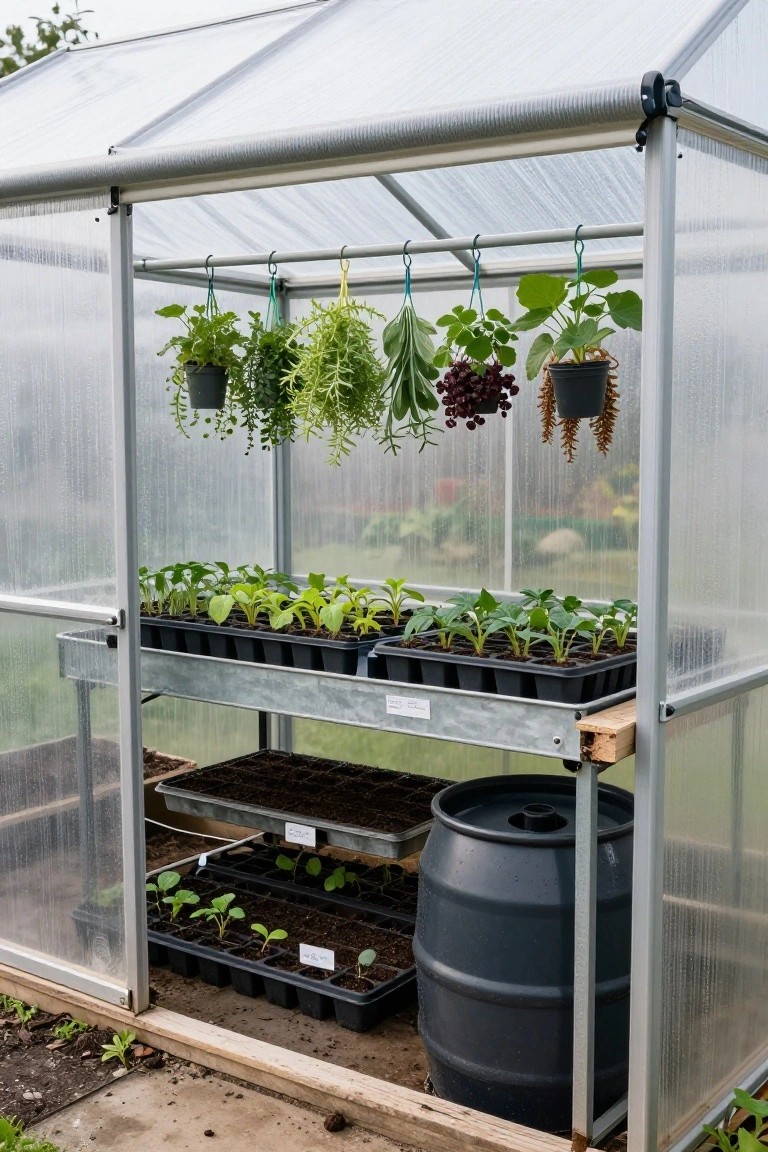
A compact greenhouse like this makes great use of vertical space with simple metal shelves stacked two or three high. Trays of seedlings sit neatly on the levels below hanging baskets of herbs, grapes, and trailing plants. It keeps young veggies protected and organized, turning a tight spot into a productive starter zone without crowding the floor.
This layout works best in small backyards where you want to kick off the season early. Set it up on a solid base near a path for quick checks, and add a water barrel for easy access. Watch for good ventilation though, or things can get too humid fast.
Courtyard Raised Bed Vegetable Garden
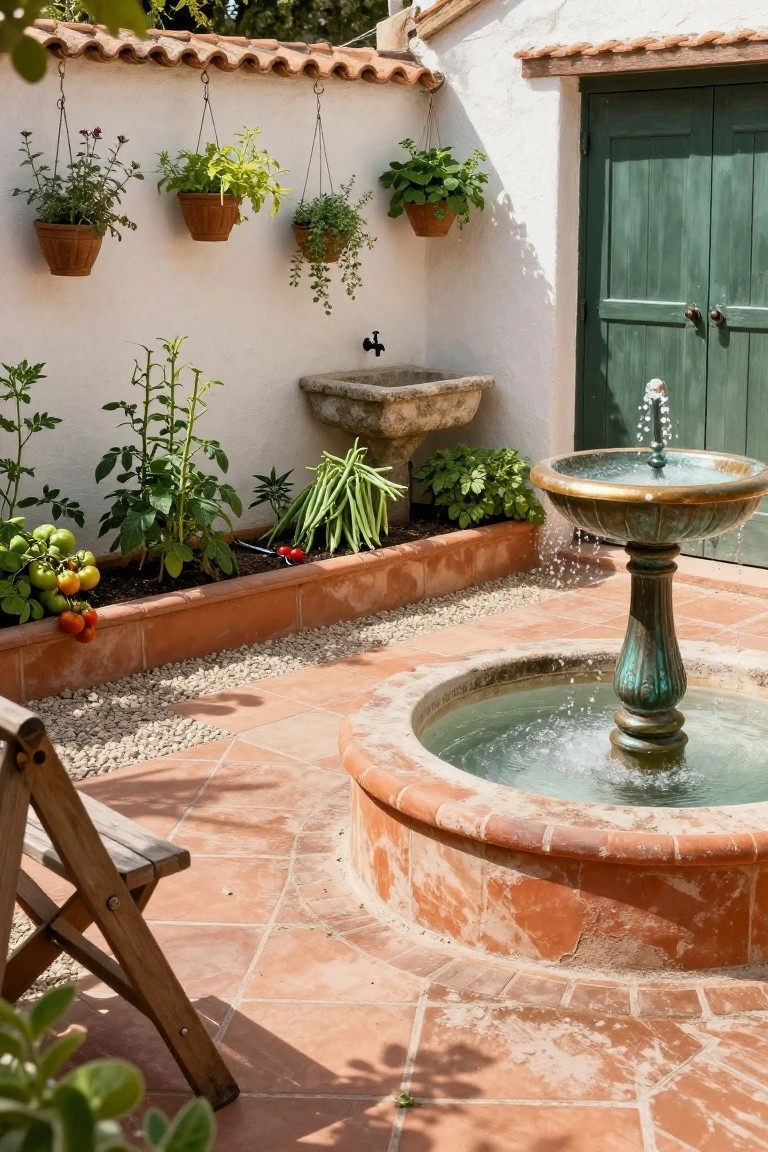
This little courtyard garden packs a lot into a tight space. Raised brick beds run right along the white wall, loaded with tomatoes, beans, and greens that are easy to reach. Hanging clay pots overhead hold herbs, making use of vertical room without crowding the ground. A simple fountain sits in the middle, turning the whole spot into more than just a grow area.
It works best in sunny, enclosed patios or against a house wall where you want fresh produce close by. Build beds low enough to tend without bending too much, and choose heat-loving plants like these for warm spots. Skip fancy extras if space is really small. Just focus on the beds and pots for steady harvests.
Linear Raised Beds for Easy Garden Access
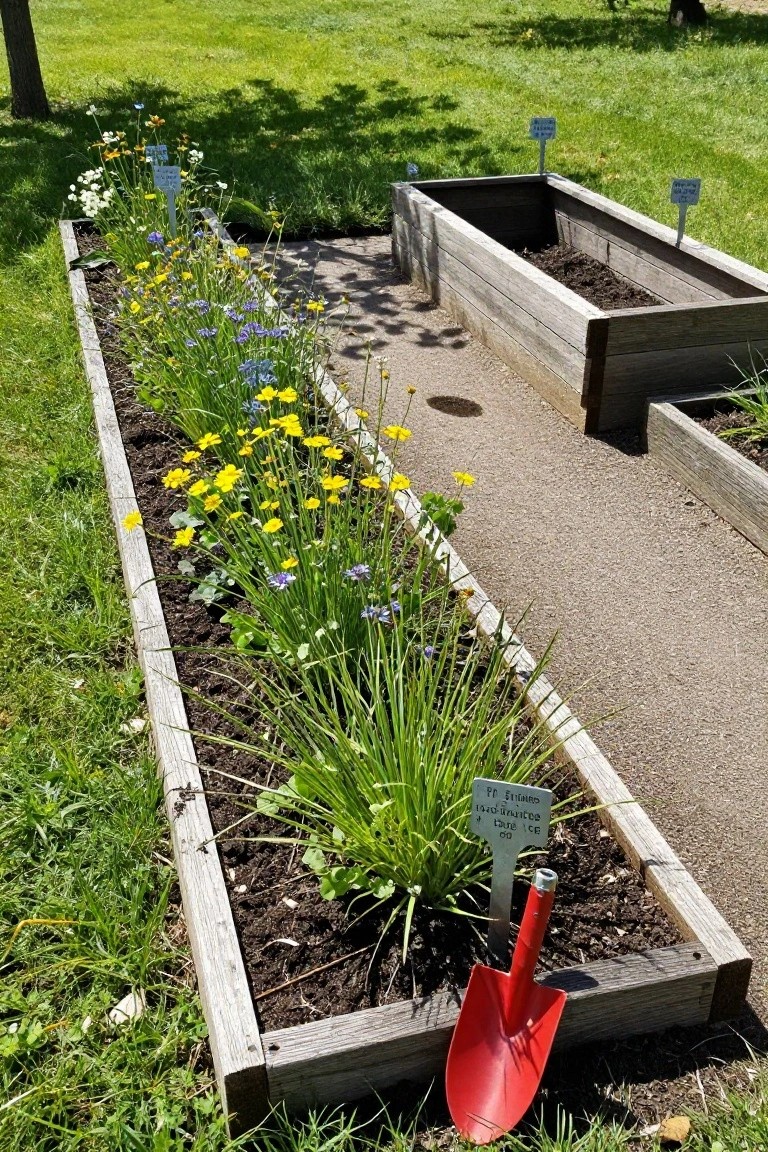
Long narrow raised beds like these make vegetable gardening straightforward. Positioned right along a walkway, they let you tend plants without trampling soil. A mix of flowers and veggies, like leeks at one end, fills the space neatly. Labels on stakes help remember what’s where. Keeps everything organized for harvest time.
Build these with simple wooden frames in a sunny spot. They’re ideal for small backyards or shared plots. Space beds about two feet wide for reaching across. Add gravel paths between for clean footing. Watch the wood for rot. Start small if you’re new to it.
Cozy Gravel Nook in the Veggie Garden
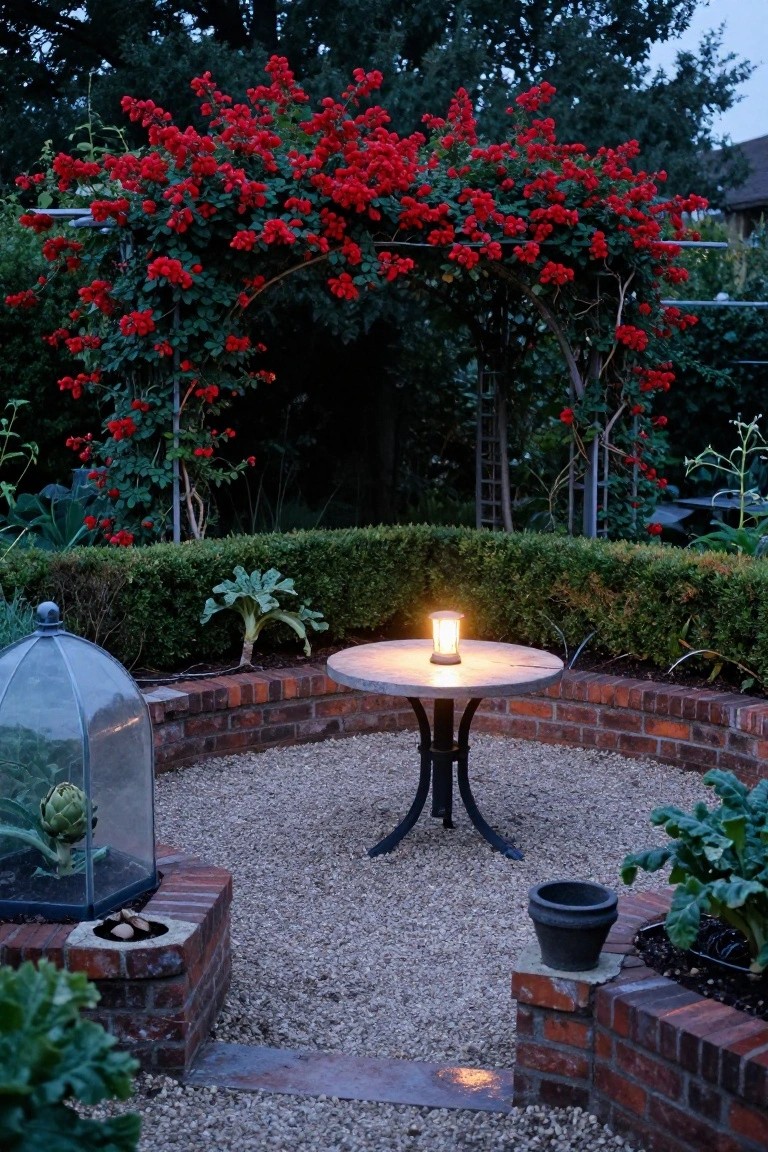
This little gravel circle edged in brick makes a perfect spot to pause right among your growing veggies. With a simple round table and lantern at the center, it turns a working garden into a place you actually want to hang out. The curve softens everything, and the low boxwood hedges plus nearby edibles like artichokes under a cloche keep it practical and pretty.
Set one up in a small side yard or tucked against the house where space is tight. Use gravel for easy drainage and weeding, and keep the brick low so plants stay the focus. It works best in cottage-style setups… just make sure the surface stays level so your table doesn’t wobble.
Curved Stone Path Along Veggie Beds
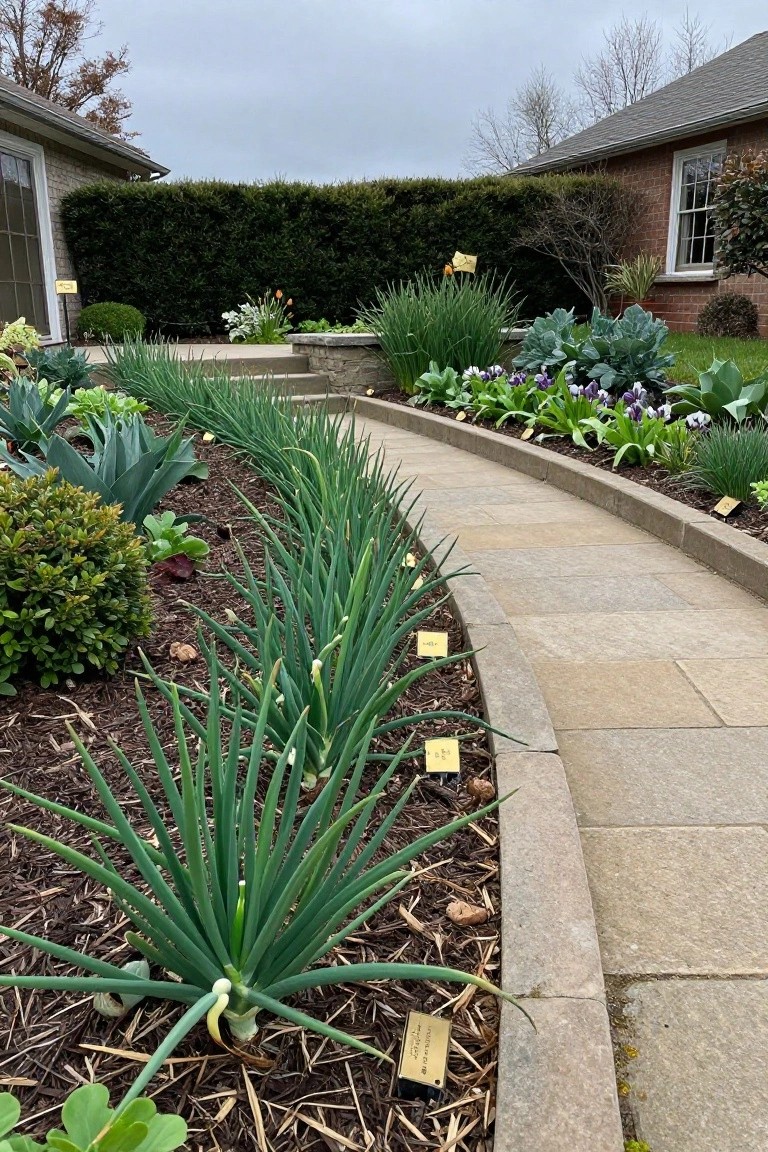
A simple curving path like this makes a vegetable garden feel put together and easy to tend. It runs right beside the house, edged with mulch and planted thick with edibles such as green onions and kale. The stone keeps your feet clean and dry, even after rain. No more stepping over plants to grab what you need.
This works best in side yards or narrow spaces where you want access without wasting room. Lay flat stones or pavers for the curve, then fill beds with what grows well locally. Add labels on sticks if you’re mixing varieties… helps at harvest time. Suits any home with a bit of sun.
Tiered Vertical Vegetable Garden
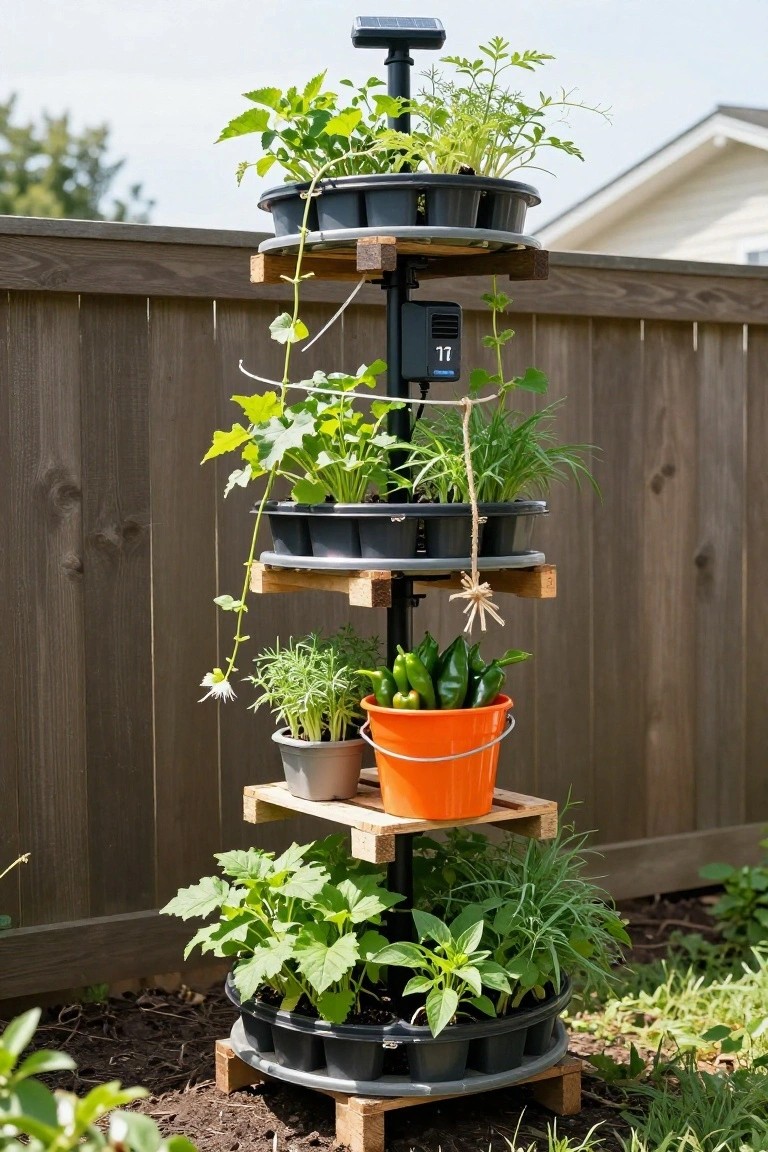
A simple way to grow more veggies without taking up yard space is this tiered tower setup. Black plastic planters stack around a central black pole on wooden shelves, holding peppers, herbs like rosemary, and vining plants that climb up. The solar panel on top powers a small fan, keeping air moving on hot days. It organizes plants by height so you pick lower ones first and reach up for the rest.
Put one like this in a sunny corner of a small backyard or patio. It works well near a fence for support. Start with easy growers like basil or chilies, and watch watering since upper pots dry faster. Keeps harvests neat without sprawl.
Frequently Asked Questions
Q: How do I pick a layout that fits my small backyard?
A: Eyeball your space and grab graph paper to sketch a few ideas scaled down.
Stick to compact blocks like the 4×4 grid.
You harvest more when plants aren’t crowded.
Q: Can I use these layouts with raised beds?
A: Raised beds snap right into these plans.
Shape beds to match the design, fill with soil mix, and plant away.
Drainage stays sharp that way.
Q: What’s a simple way to rotate crops in an organized garden?
A: Group plants by family in blocks from the start.
Shift those blocks around next season.
Soil bounces back stronger.
Q: How do I keep weeds out without messing up the look?
And… mulch everything thick with straw or leaves after you plant.
