

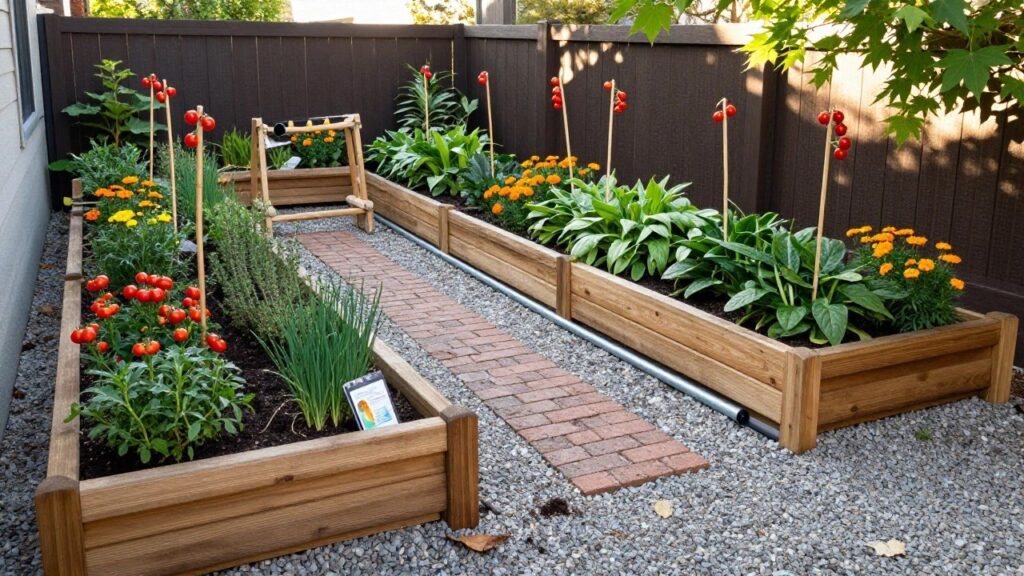
I’ve spent the last few summers reshaping my own backyard into a working farm plot, and it has taught me how much the starting layout affects everything that follows. A thoughtful planting structure with defined pathways keeps the space from feeling chaotic as plants grow and spread over time. Homeowners usually spot first those clean edges around beds that separate edibles from lawn without constant upkeep. Poor setups fail fast when overcrowding blocks access or invites pests, but solid ones build productivity year after year. A few ideas here, like simple trellises for climbers, strike me as practical tests for any yard ready for real sustainability.
Raised Beds for Backyard Veggies
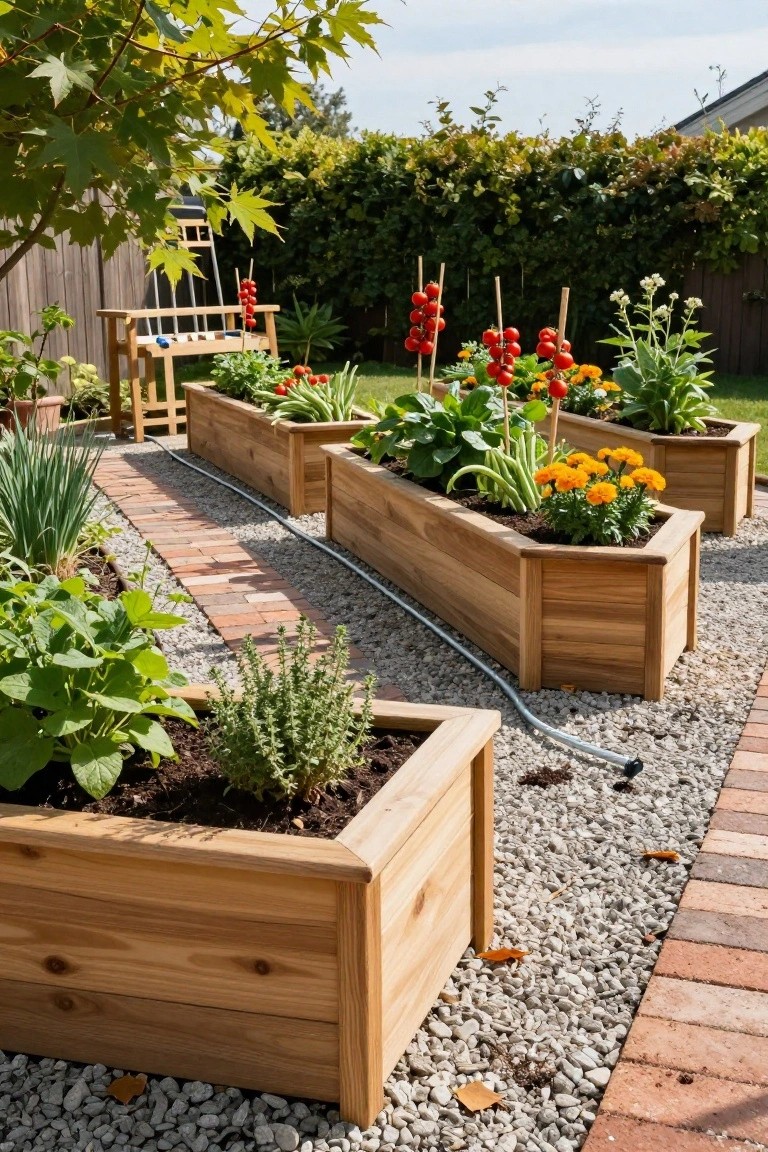
Raised wooden beds like these make it simple to grow your own tomatoes, peppers, and herbs without bending over much. They’re lined up neatly with gravel paths in between, which keeps mud off your shoes and gives everything a clean look. That setup turns a plain yard spot into real food production.
You can build them from cedar boards to hold up year after year, filling with good soil for healthy plants. They fit best in sunny side yards or along fences, where space is tight but you want fresh produce close to the kitchen. Just space them for easy reaching, and add stakes for taller stuff like those tomatoes.
Vertical Fence Planters for Small-Space Growing

One smart way to fit more plants into a tight backyard is to use the fence itself. These wall-mounted planters stack up nicely, holding strawberries, basil, lettuce, and other edibles right where you can reach them. It turns empty vertical space into a productive patch without taking up ground area. Folks with small lots love this because it keeps things tidy and close to the house.
Hang similar planters on any sturdy fence facing south for good sun. Start with trailing plants like strawberries up top so fruit hangs down, and bushier herbs below. Make sure each one drains well to avoid root rot. This setup works great in urban yards or rentals where you can’t dig much. Just check the chains and brackets stay secure over time.
Grow Lettuce in a Garden Pond
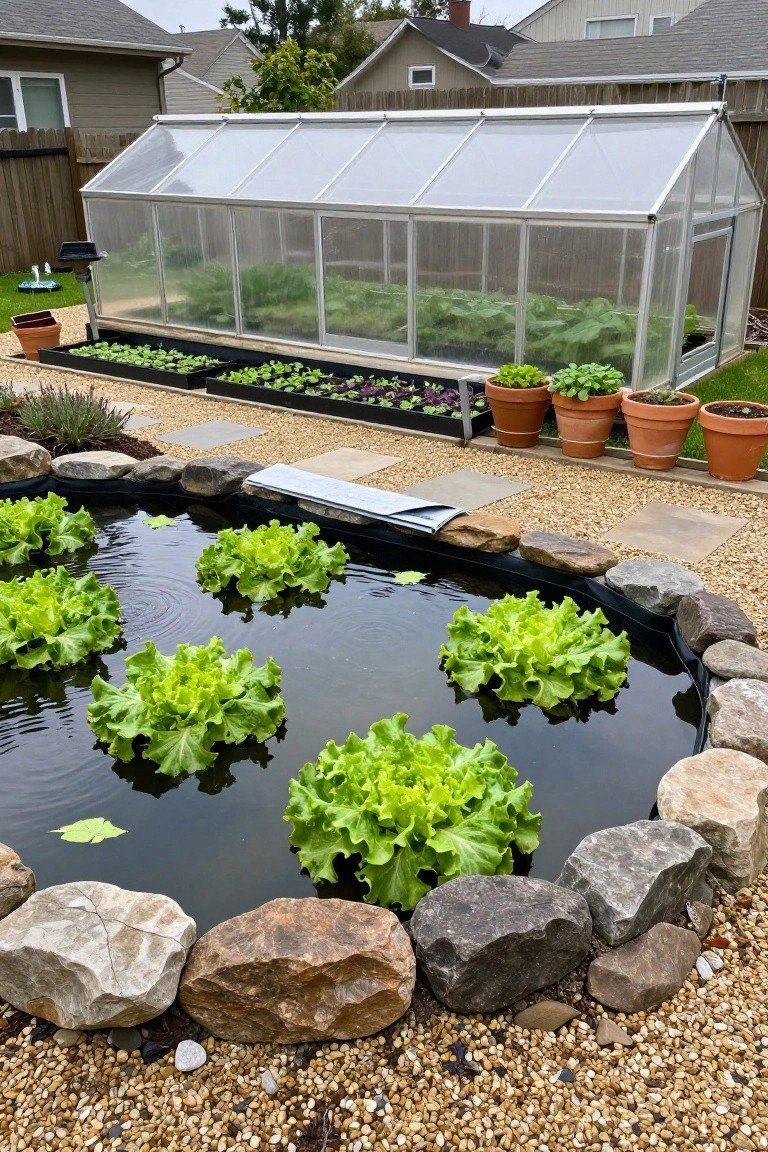
One neat trick for backyard farming is planting lettuce heads right in a pond. You see the big green leaves floating there, happy in the water with just a liner holding it all together. It saves space and soil, turns a simple water feature into fresh greens all season. Plus it fits right into a sustainable setup, especially near a greenhouse like this one.
This works best in yards with room for a small pond, maybe 6 to 10 feet across. Line it with pond liner, float the lettuce starts, and keep the water moving a bit. It suits mild climates where greens grow year-round. Watch the water depth though, too shallow and roots dry out. Pair it with nearby raised beds for more veggies.
Train Grapevines into Compact Trees
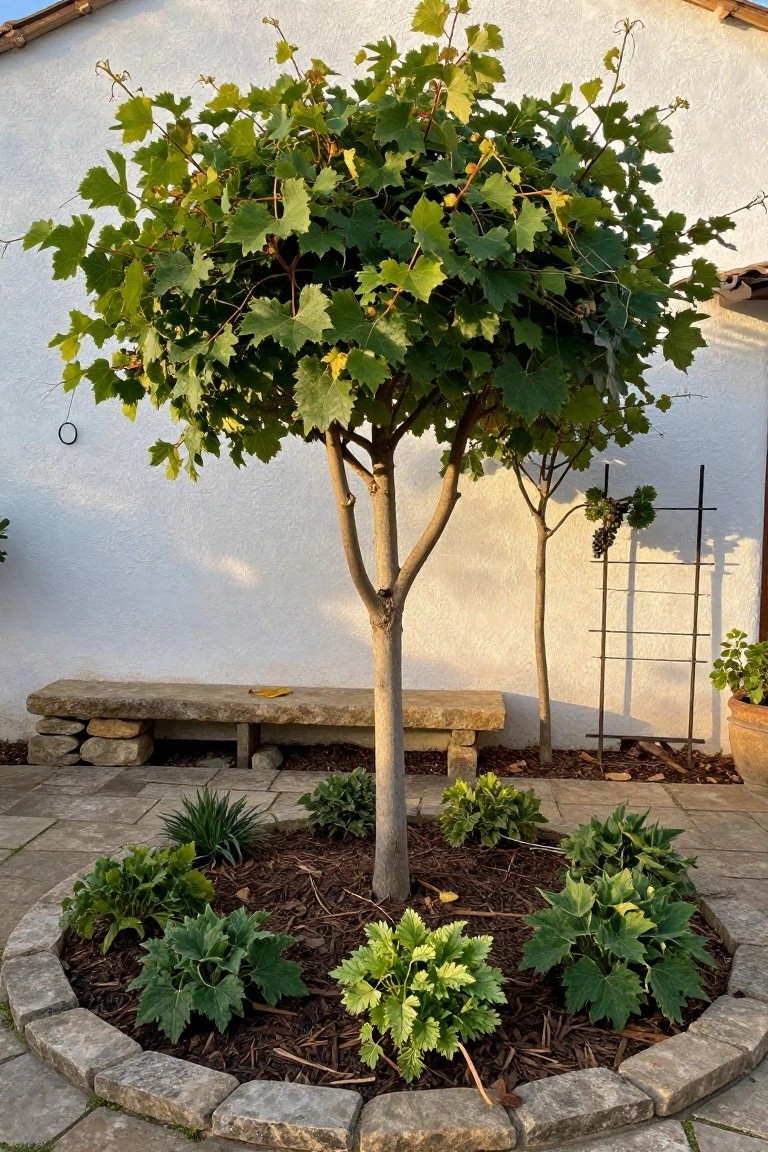
One simple way to add homegrown grapes to your backyard is training a vine into a small tree shape. You see it here with a single trunk topped by a full round canopy, set in a tidy circular bed. This keeps things productive without sprawling everywhere. It fits right next to the house wall and even pairs with a bench for picking grapes on the go.
Pick a sunny spot with good drainage. Start with a young vine, stake the trunk straight, and prune side shoots to build that lollipop look. Mulch the bed heavy, tuck in low plants like hostas underneath to hold soil and cut weeds. Great for average yards… yields bunches by summer if you stay on top of pruning.
Stone-Walled Raised Beds for Backyard Veggies
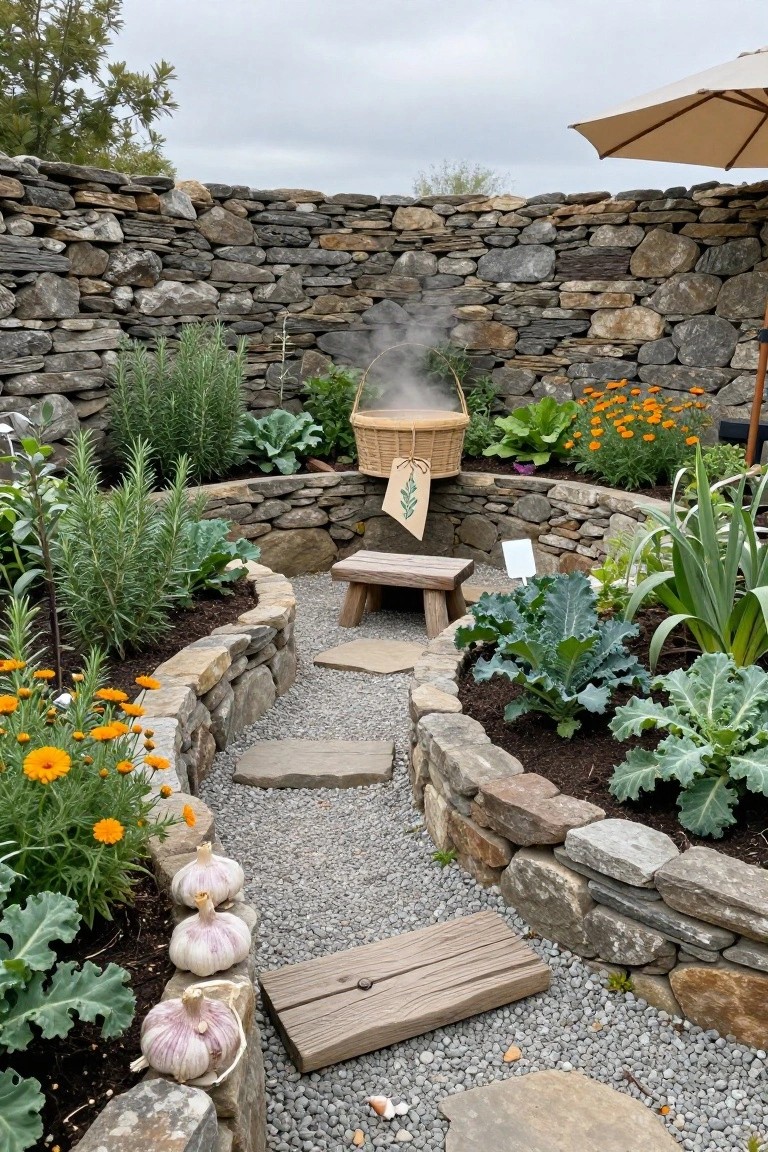
One smart way to start backyard farming is with raised beds built from local stone. These keep soil in place, improve drainage, and make it easy to tend plants without bending too much. In this setup, the curving walls create little pockets for herbs like rosemary and veggies such as kale, all neat and reachable from a gravel path.
You can copy this in any sunny yard spot, even a tight corner. Stack stones without mortar for that natural look, fill with good dirt, and plant what grows well nearby. Watch the height though. Two feet is plenty for most folks… keeps weeding simple.
Terraced Raised Beds with Built-In Steps
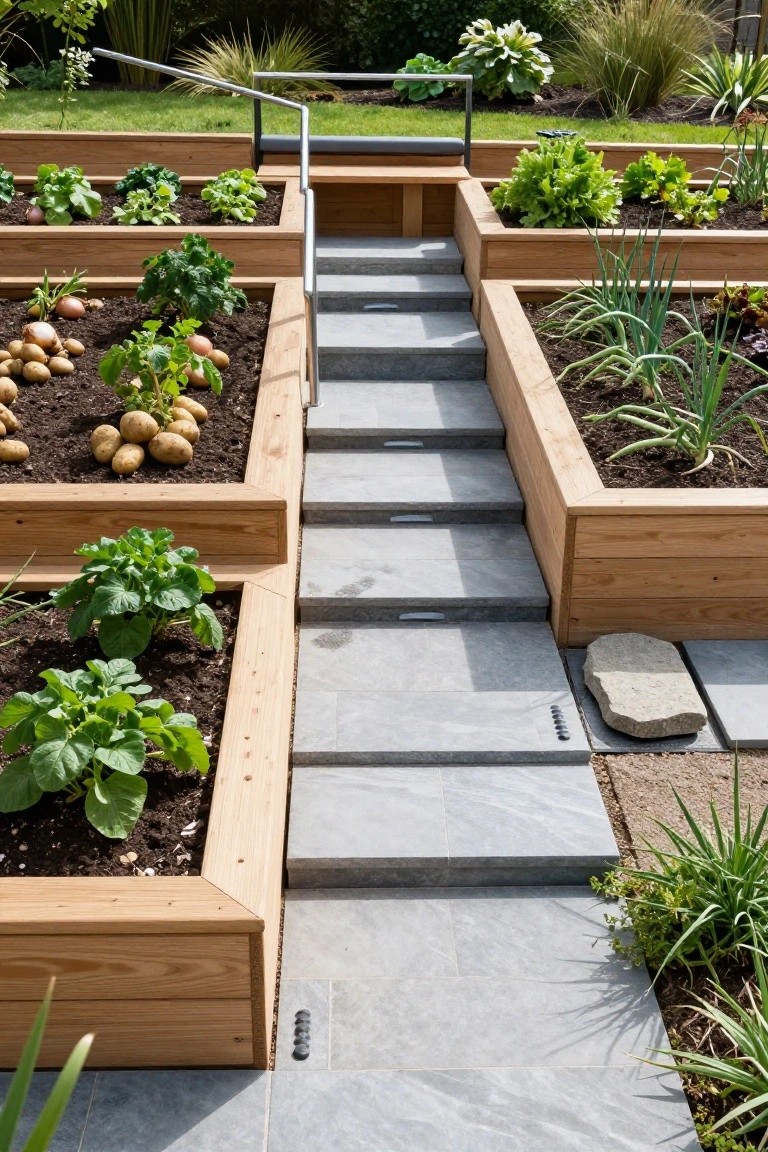
Sloped backyards can be tricky for planting. But these terraced raised beds solve that nicely. Wooden frames hold soil for potatoes, greens, and herbs, stacked up with concrete steps running right through the middle. It turns a hill into flat growing space. No more slipping around or wasted ground.
This works best on moderate slopes where you want easy access without big earthmoving. Build beds about two feet high, space steps for comfort, and line them with breathable fabric for drainage. Suits small veggie farms or anyone after fresh produce without much flat yard. Just check local wood treatments to keep it food-safe.
Growing Mushrooms Under a Garden Bench
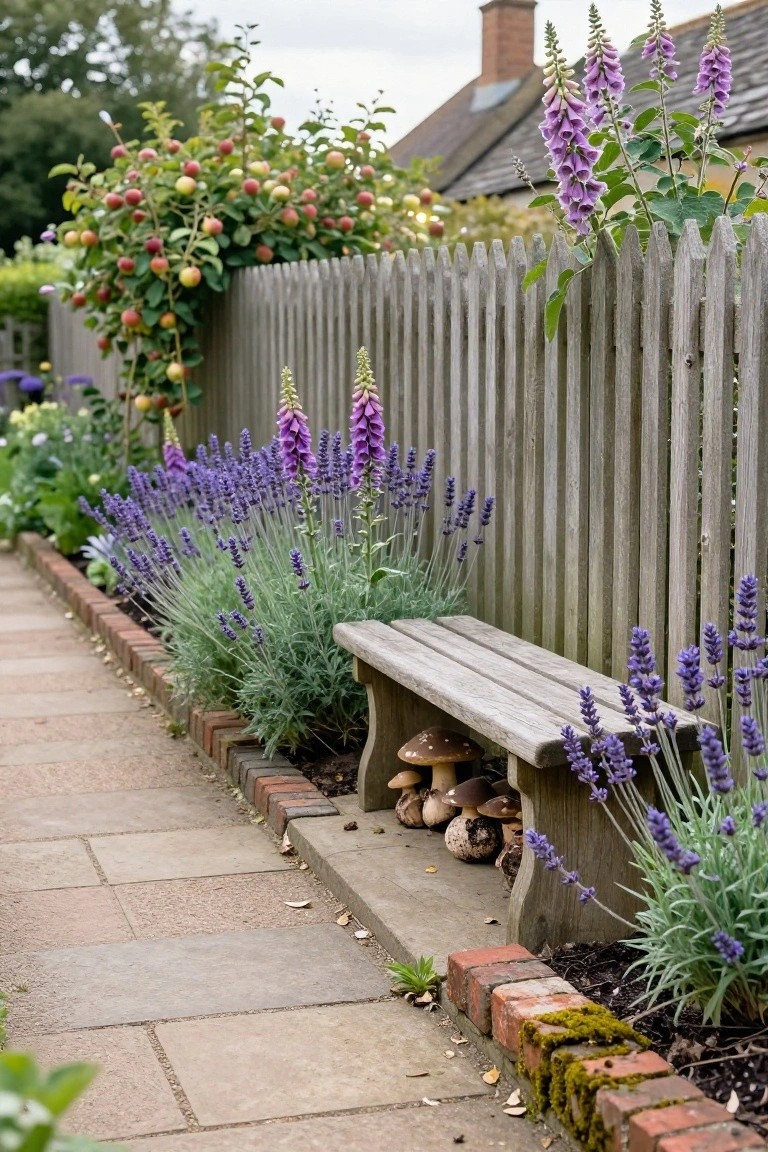
One smart way to add a bit of backyard farming without taking up extra space is to grow mushrooms right under your garden bench. In this setup, clusters of mushrooms pop up naturally in the shaded, moist spot beneath the wooden seat, tucked into a bed of lavender. It’s low effort and turns a simple resting area into something productive, especially if you pick edible varieties like oyster or shiitake instead of the wild ones shown here.
This works best in a damp, shaded corner along a path or near plants that hold moisture, like herbs or ferns. Start by drilling holes in a log or using mushroom spawn in straw under the bench legs. Keep it mulched and watered lightly. It suits small yards chasing sustainability, but check what grows locally and avoid toxic types. A quick harvest now and then makes garden breaks more rewarding.
Backyard Hoop House Greenhouse
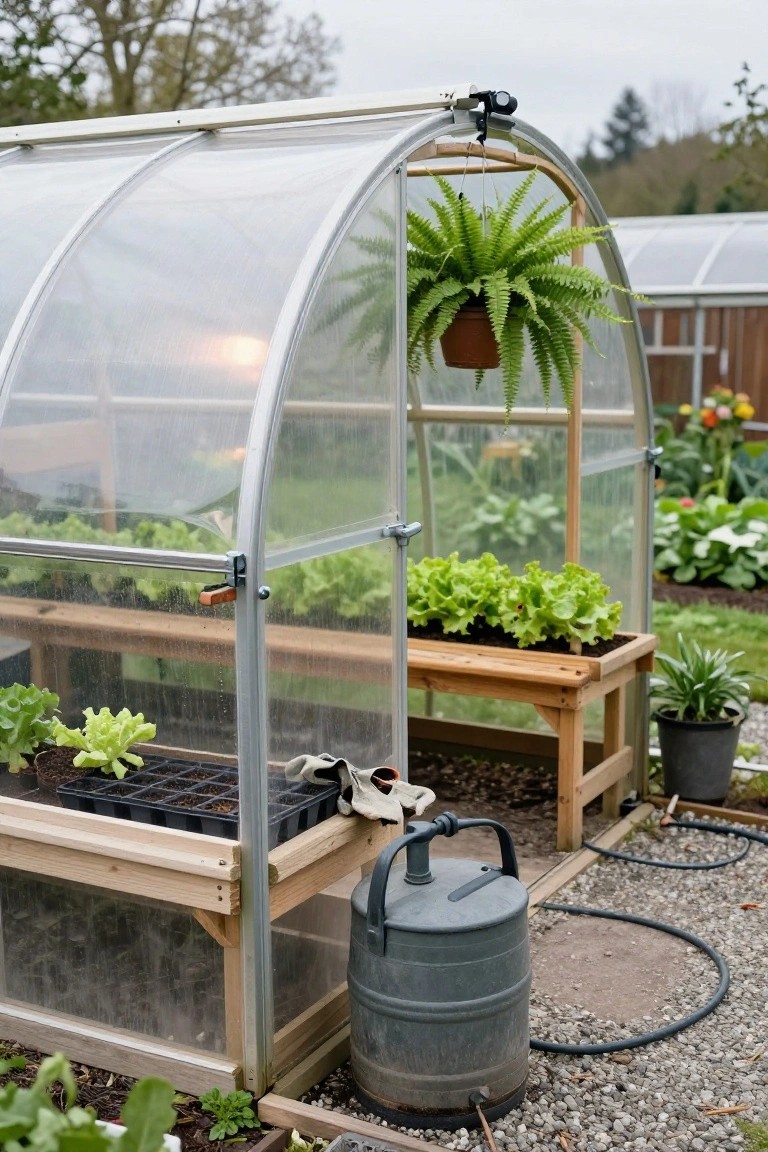
A hoop house like this makes backyard farming simple and effective. The clear plastic cover traps warmth to grow lettuce and seedlings through cooler months. Raised wooden beds keep soil tidy and easy to reach. It’s a straightforward way to bump up your home harvest without big costs.
Put one in a sunny spot on gravel for good drainage. Add benches for tending plants and a hanging spot for ferns or herbs. This fits small yards chasing fresh food year-round. Watch for ventilation though, or it gets too steamy inside.
Rooftop Raised Beds for Easy Veggies
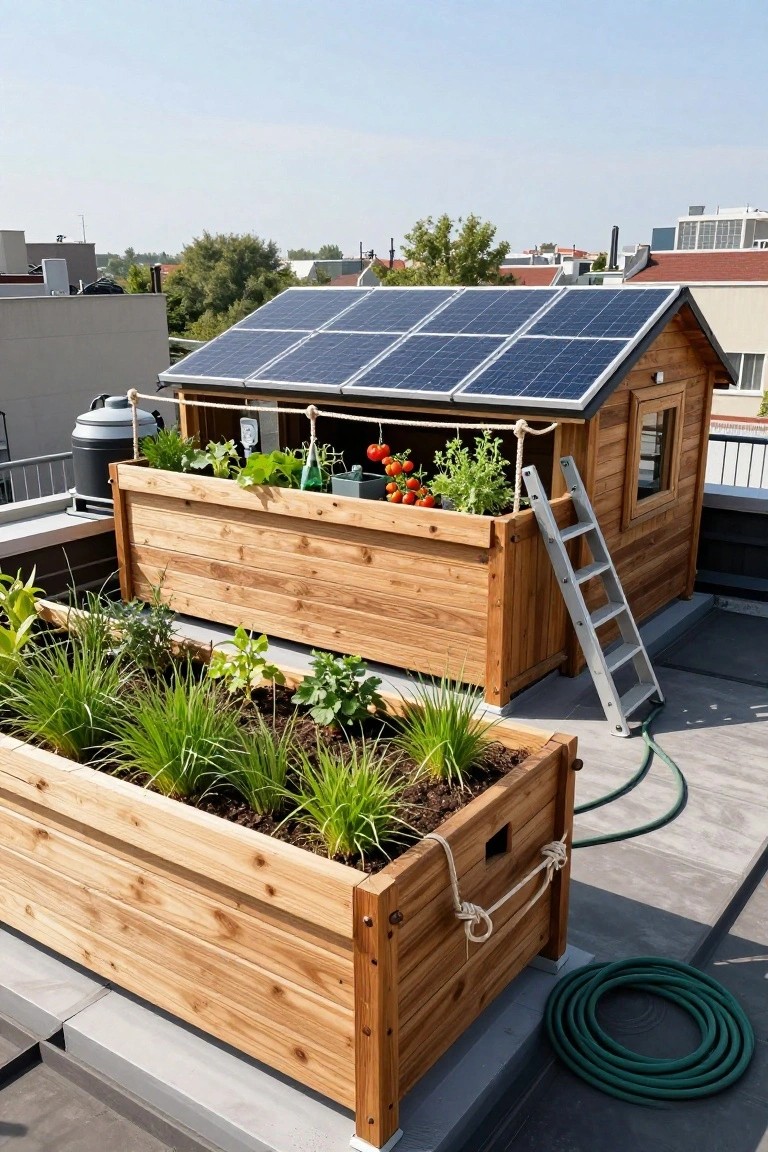
Rooftop space often goes to waste, but these wooden raised beds turn it into a real veggie patch. Filled with tomatoes, herbs, and greens, they sit right on the flat roof and catch plenty of sun. It’s a smart way to grow fresh produce without needing a yard.
They’re ideal for apartments or urban homes with roof access. Use rot-resistant wood like cedar, keep beds about two feet high for easy reach, and group a few together for variety. Watch the weight on the structure, and run a hose up for watering. A nearby shed adds storage too.
Upcycled Barrels as a Produce Wash Station
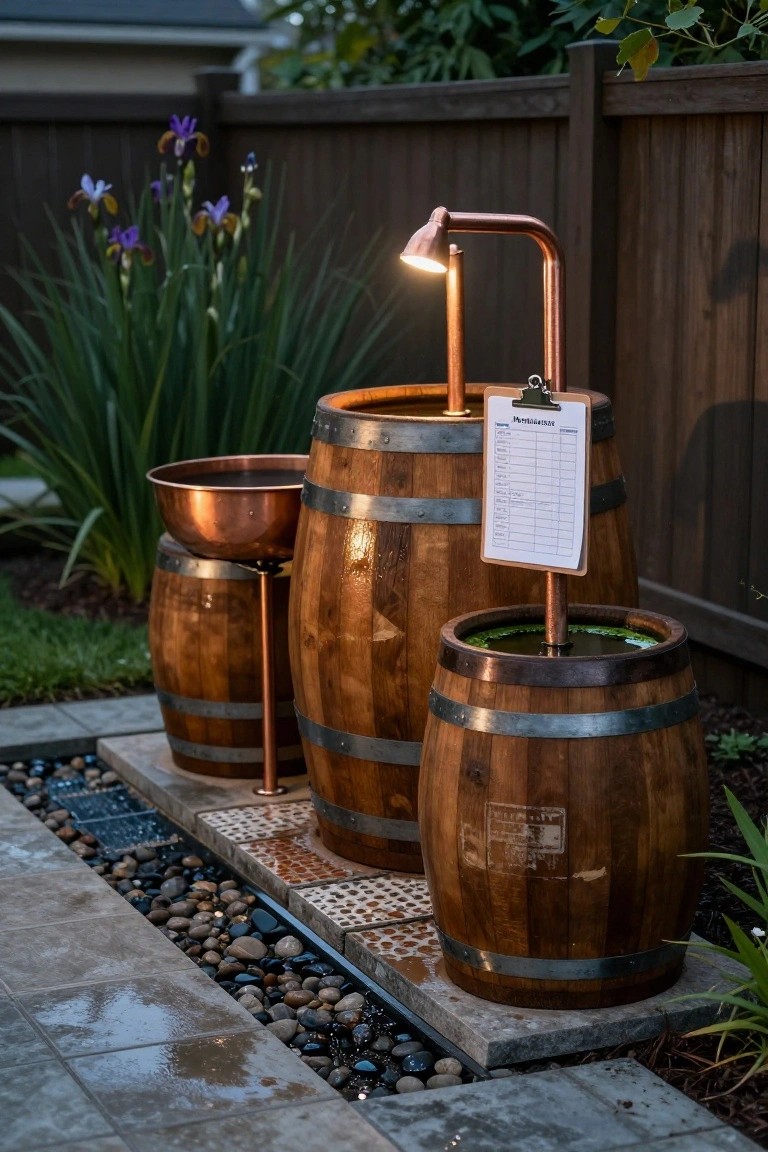
Old whiskey barrels make a sturdy base for an outdoor sink perfect for rinsing garden veggies right where you harvest them. This setup keeps dirt out of the house and gives your backyard a bit of rustic character that fits right in with sustainable living. The copper basin and simple stand handle the job without fuss, and that fermentation log on the side barrel keeps track of your preserving efforts.
Set one barrel on a stable stone or gravel pad near your garden beds so you can wash and prep produce on the spot. Add a gooseneck faucet if you want running water from a rain barrel or hose hookup. It works best in casual backyards with some country style. Just seal the barrels well to avoid leaks, and keep them shaded to prevent algae buildup.
Barrel Tower for Backyard Hydroponics
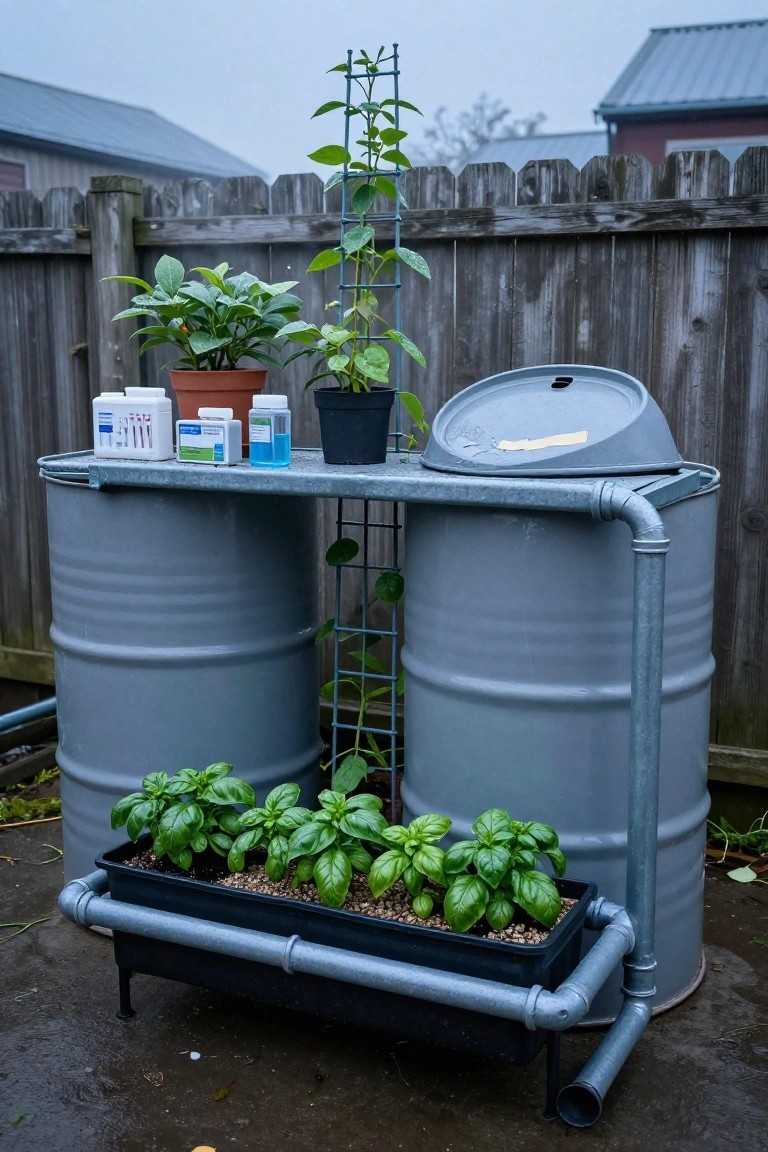
One smart way to grow fresh herbs right in your yard is turning old 55-gallon barrels into a vertical hydroponic setup. These gray drums get stacked and connected with pipes and a metal frame, so water and nutrients flow from top to bottom. Basil thrives in the bottom tray, while climbing plants and pots fill the shelves up high. It saves space and keeps plants watered without daily fuss.
This works great in small backyards or patios where ground space is tight. Source clean used barrels, add PVC pipes for circulation, and set it near a fence for support. Pair it with basic nutrients like the bottles shown. Just check local water rules if you’re tapping rain. Keeps things sustainable without much upkeep.
Rustic Garden Compost Station
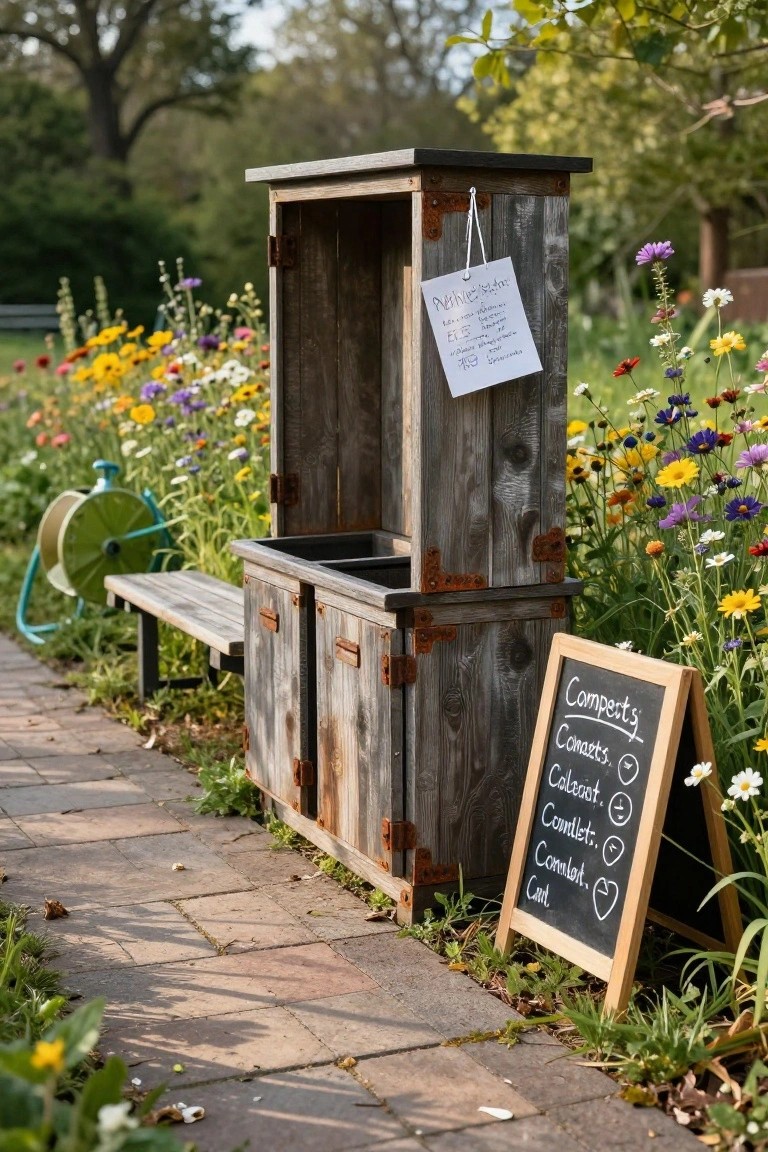
A wooden cabinet like this makes a perfect spot for backyard composting. Built from weathered boards with open bins on top and doors below, it sits right in the flower garden and handles kitchen scraps easily. The faded wood matches the natural setting, and that chalkboard sign keeps things organized for what goes where.
Set one up along a path or near your planting beds where it’s handy but out of the way. Source cheap reclaimed lumber, add simple hinges, and label the sections for greens, browns, or finished compost. It suits any size yard chasing sustainability, just make sure it’s shaded a bit to keep it from drying out.
Vertical Trellises Boost Small Space Yields
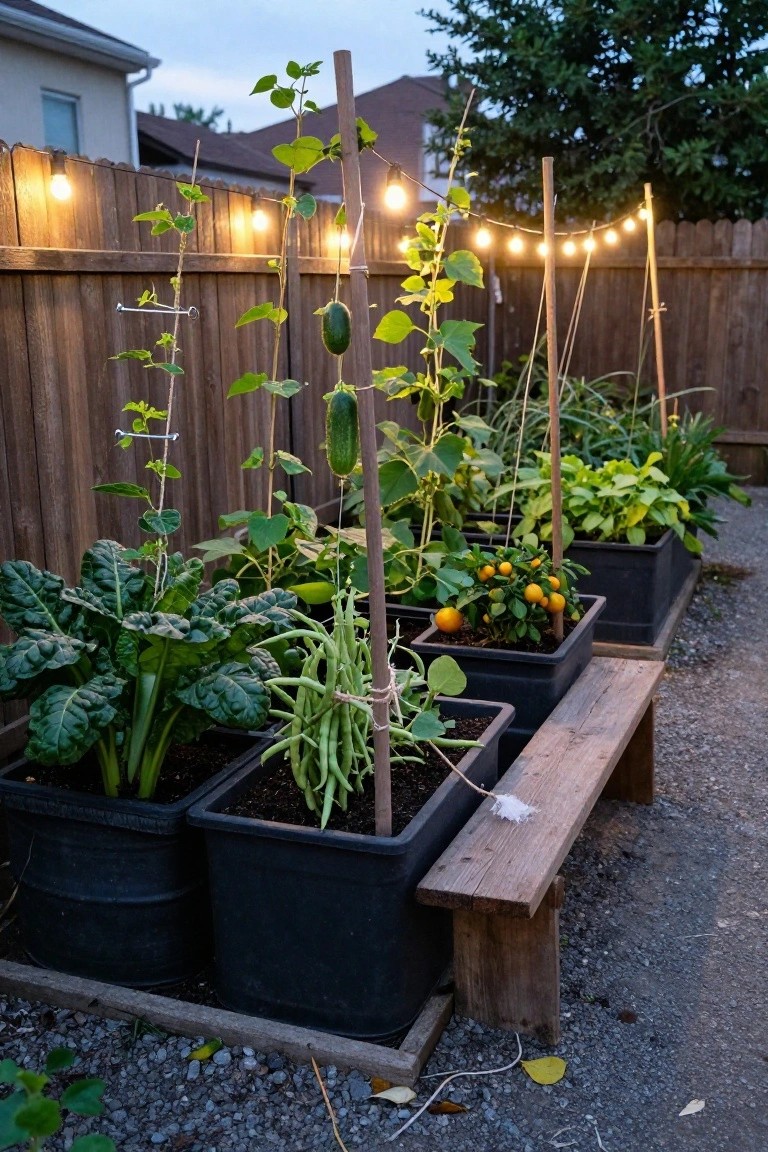
Growing veggies vertically in containers is a smart way to make the most of a tight backyard. Here you see cucumbers dangling from poles and beans climbing up simple bamboo supports, all in sturdy black pots lined up along the fence. It keeps plants off the ground, saves space, and makes harvesting easy without bending over much. Plus those string lights add a nice touch for evening checks on your crop.
This setup works great in any average backyard or even a side yard with decent sun. Start with deep pots for roots, add tall poles or trellises tied securely, and pick climbers like beans, peas, or cukes. Keep soil rich and water regularly. It’s low fuss for beginners and fits right into sustainable living without needing a big plot.
Raised Stone Beds for Backyard Herbs
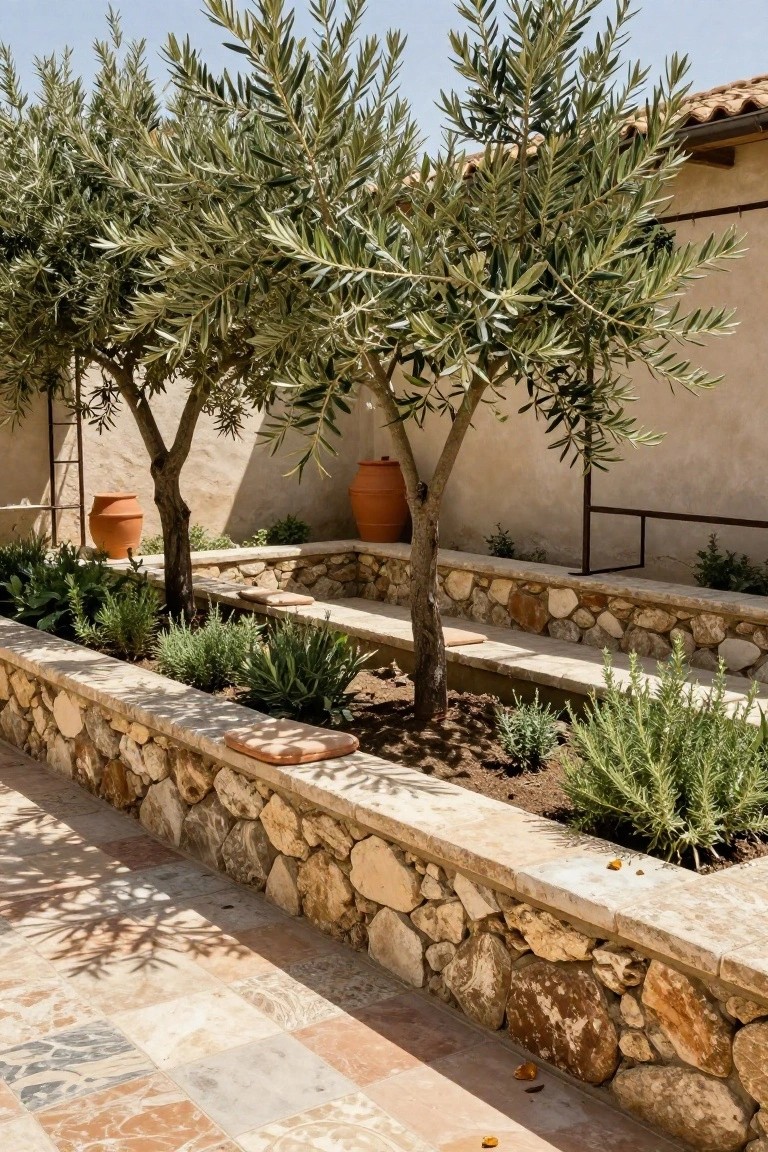
Raised beds built from rough natural stone make a solid setup for herbs and small fruit trees right in your yard. You see olive trees thriving here alongside rosemary and lavender, all in neat walled-off sections that keep soil in place and weeds out. The stone pulls from the local look, so it feels like it belongs, and it drains fast to suit dry-loving plants.
These work best in sunny backyards where you want low-water growing without much fuss. Stack stones without mortar for that easy rustic style, aim for 18 inches deep or more for roots, and mix in gravel at the bottom. Skip it if your ground floods, though. Fits most any size lot aiming for fresh picks year-round.
Raised Herb Garden with Built-In Sink
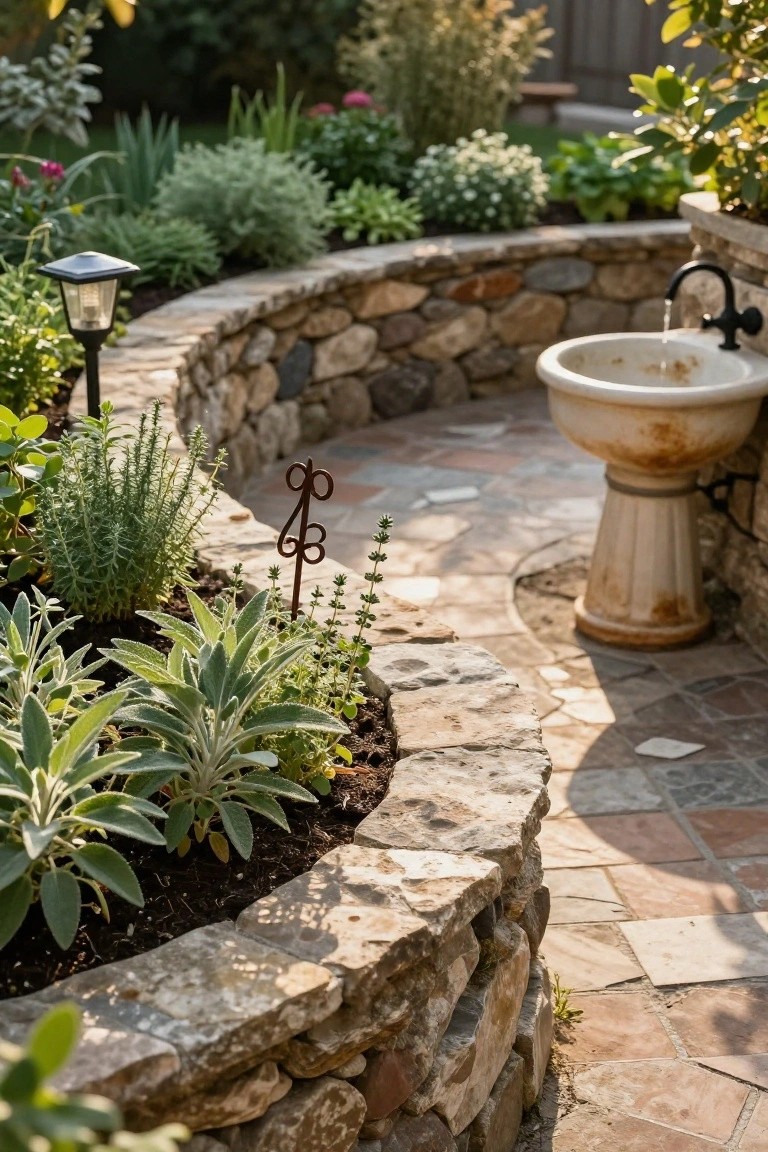
One smart way to make backyard farming easier is building raised herb beds right into a curved stone wall. You see herbs like silvery sage, rosemary, and thyme tucked into the soil along the wall. But what makes it really practical is that vintage sink set into the edge, with a faucet running fresh water. No more trekking inside to rinse your harvest. It keeps everything handy and turns gardening into a quick daily chore.
This works best in a sunny spot near your kitchen door, maybe along a path you use often. Stack local stones for the wall without mortar if you want that natural look, then drop in a salvaged pedestal sink and hook up a hose or simple plumbing. Stick to low-water herbs that thrive in raised beds. It’s perfect for small yards chasing that sustainable edge… less waste, more fresh eating right from your own patch.
Edible Plants Line a Garden Path
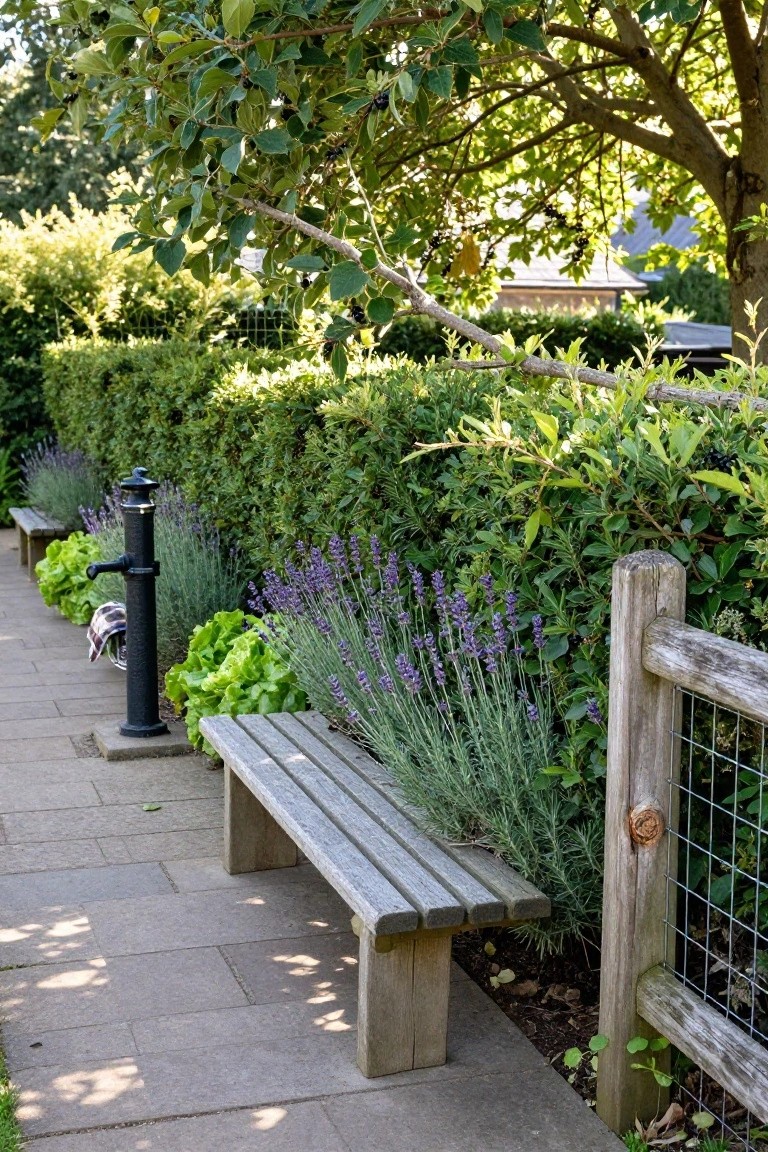
A narrow stone path like this makes harvesting easy in a backyard farm setup. Lavender and leafy greens grow right along the edge, close enough to pick without bending too far. That old-style hand pump sits there ready for watering, no hoses or electricity needed. It’s a practical way to mix beauty with food production, keeping things sustainable and low fuss.
This works best in side yards or along fences where space is tight. Plant tough herbs like lavender up front for year-round green, then tuck in greens or veggies behind them. Drop a simple bench nearby so you can sit and check on things. Just keep the path clear and the pump working, and you’ll have fresh picks steps from your door.
Wheeled Seed Starting Station
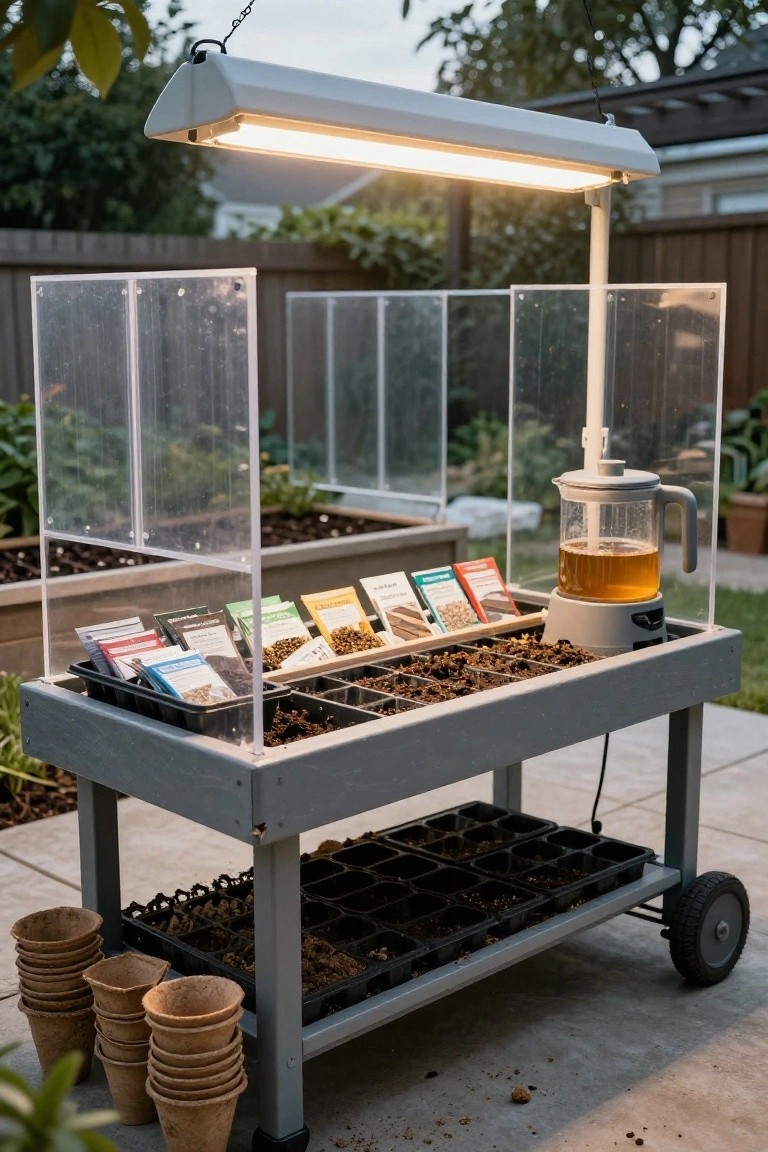
This setup turns a simple rolling cart into a dedicated spot for starting seeds right in the backyard. With clear plastic panels creating a mini greenhouse effect, a hanging grow light overhead, and trays full of soil and seed packets, it keeps everything organized and protected from the elements. It’s a smart way to get a jump on the growing season without needing a full greenhouse.
Wheel it into a sunny corner or under cover as needed, and it works great for small yards or apartments with patios. Fill the lower shelves with pots and extras like that tea brewer for compost brew. Just make sure the cart is sturdy enough for the weight, and check that the light gives even coverage… keeps seedlings happy and strong.
Raised Planters Next to Outdoor Kitchens
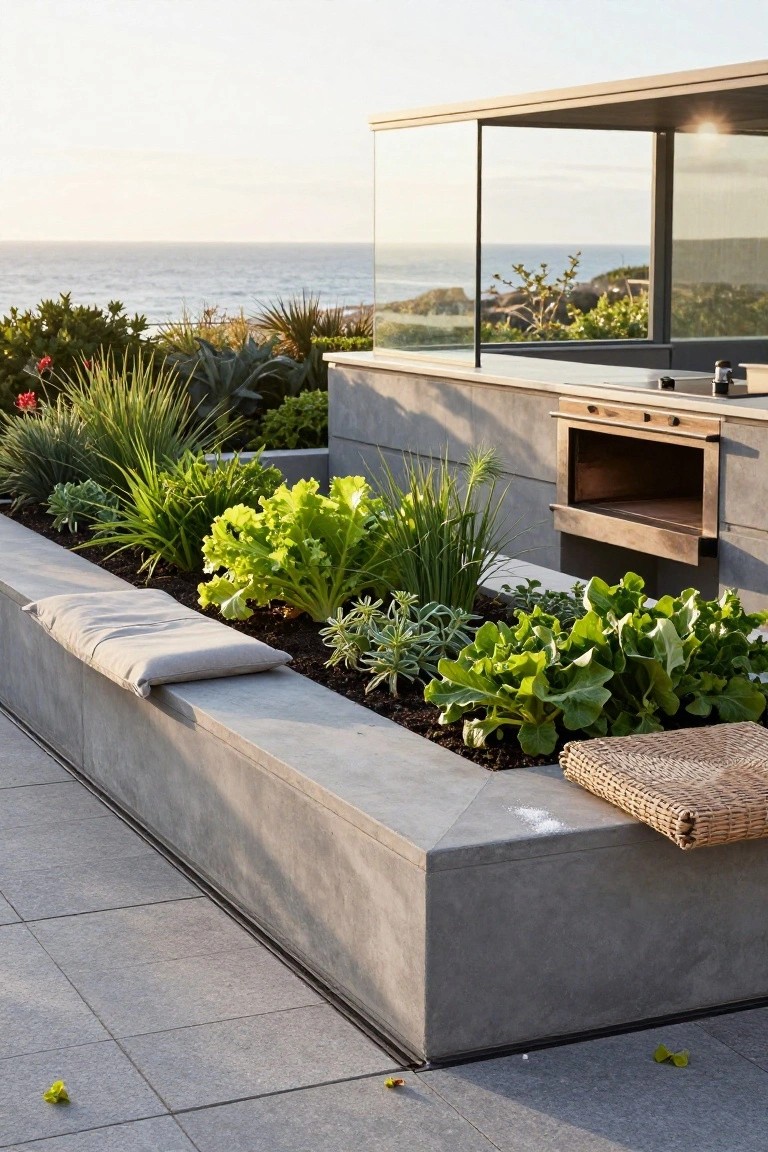
One smart way to farm in your backyard is to build raised planters right along your outdoor kitchen counter. Here you see concrete beds packed with lettuce, herbs, and tough succulents, just inches from the wood-fired oven and grill. It puts fresh greens where you need them most, when you’re cooking outside. No walking across the yard. Just snip and use.
This idea fits patios or terraces on modern homes, especially with a view like the ocean backdrop. Go for concrete to hold up in weather. Stick to edibles that don’t need deep roots. Keeps your space tidy and practical. Watch the soil drainage though, or roots might rot.
Garden Swale with Wooden Footbridge
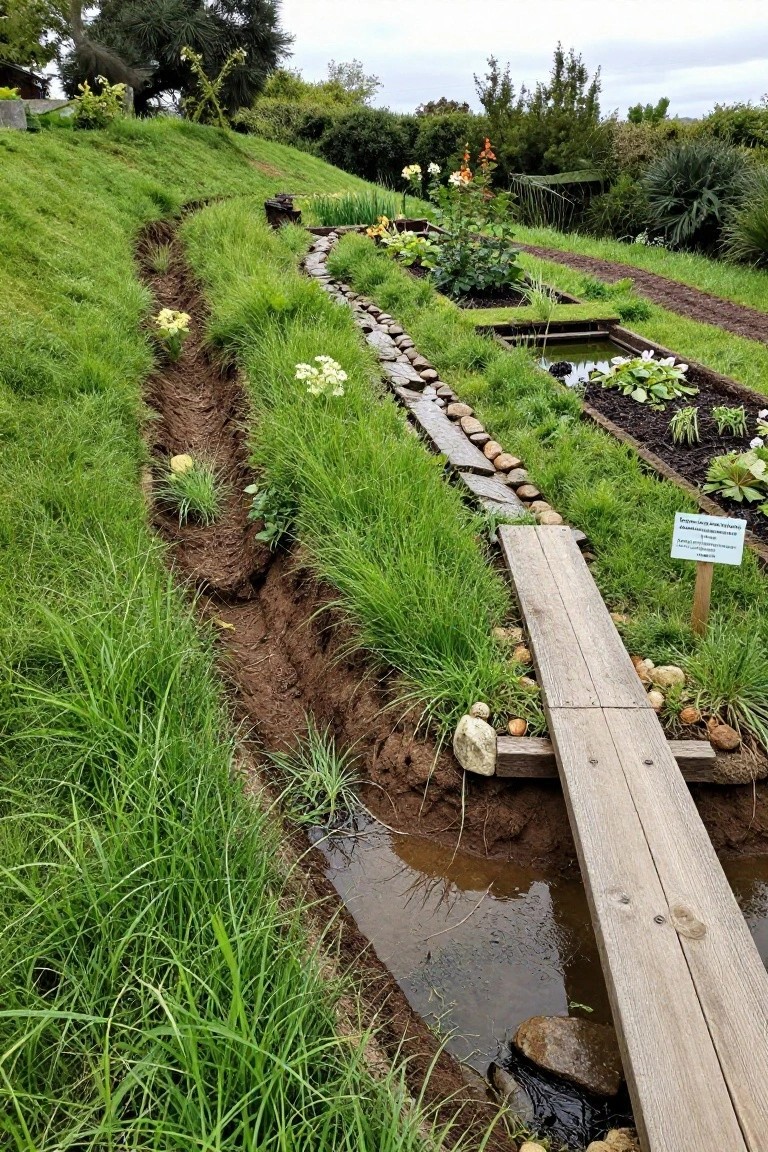
A swale like this one catches rainwater right where your plants need it. It’s just a gentle ditch dug on contour across a slope, lined with rocks and grass to slow the flow and let water soak in. That wooden bridge keeps things practical, so you can step over to tend the raised beds without muddy shoes. Folks with sloped yards love how it turns runoff into a garden helper.
To try it, mark your contour line with stakes and a hose, then dig shallow – maybe a foot deep and wide. Add stepping stones or that easy bridge from rough lumber. It fits backyard farms best, especially with veggies in those beds nearby. Watch the soil type though; clay holds water longer than sand.
Frequently Asked Questions
Q: My yard is tiny. Which ideas actually fit?
A: Turn to vertical gardening and container setups. Grow herbs, strawberries, or lettuce on wall-mounted planters or stacked pots. You stack space smartly and harvest plenty without sprawling beds.
Q: How much time do these take each week?
A: Plan for 30 minutes a day at first, mostly watering and checking plants. Weeding and harvesting add up to a couple hours weekly once things grow. Pick low-maintenance ideas like perennials or drip irrigation to cut that down.
Q: Pests keep ruining my plants. Any easy fixes?
A: Scatter companion plants like basil near tomatoes to confuse bugs naturally. Hand-pick larger pests in the evening and drop them in soapy water. This beats sprays and keeps your harvest clean.
Q: What’s the best first crop for total newbies?
And go with salad greens. Scatter seeds in a shallow tray or bed, keep soil moist, and cut outer leaves when they hit 4 inches. You’ll eat fresh in a month.
