


I’ve spent the last few years nudging my own place toward more self-reliance, one practical tweak at a time. What surprises people most is how these homestead setups quietly shift your daily flow, from reliable water on tap to food that grows steps from the door. They work best when they fit the lay of your land and home without forcing it, avoiding that patched-together look. I started with a rainwater system that proved how small captures add up during dry spells we all face. Test a few that match your setup.
Raised Garden Beds for Fresh Veggies
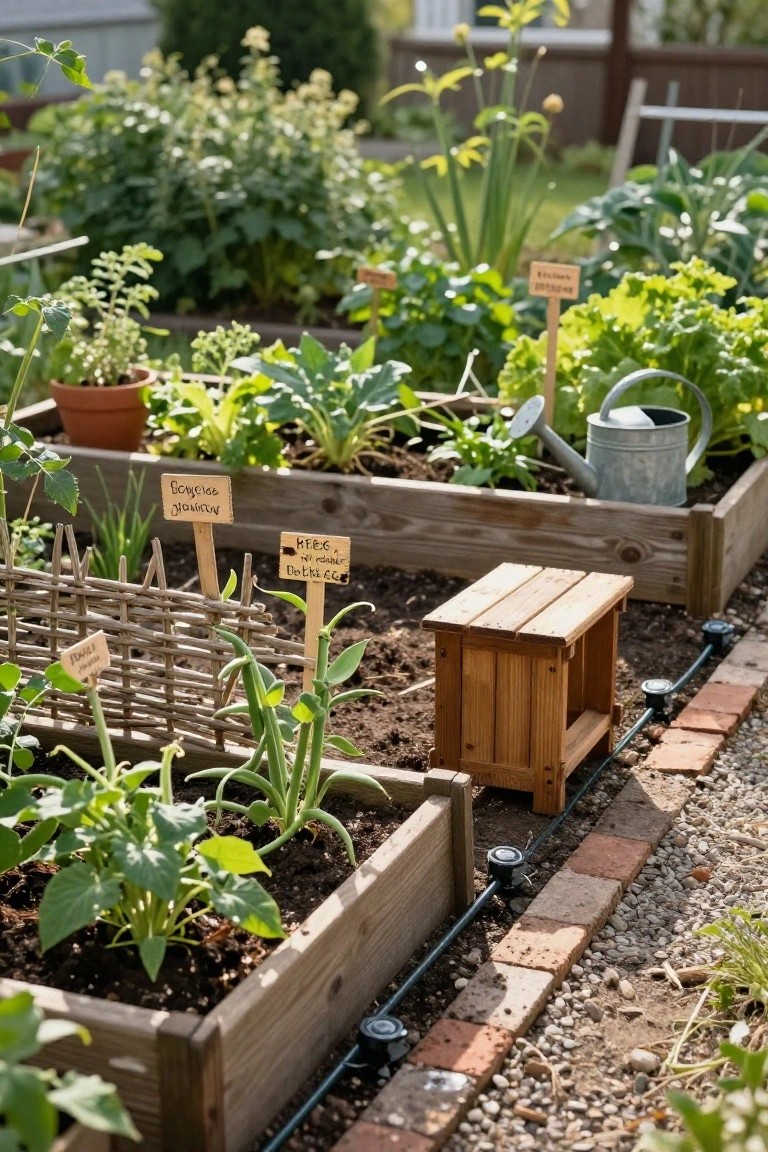
Raised garden beds are a straightforward way to start growing your own food at home. These wooden ones keep soil contained and at a good height for easy tending, no bending over too much. You can label the plants right there, like the dill and leeks in this setup, so you always know what’s coming up.
They’re perfect for yards with bad dirt or limited space. Build them cheap with scrap wood or affordable lumber, add some drip lines for watering, and you’re set for steady harvests. Works well in any sunny spot near the house.
DIY Stone Spiral Garden Feature
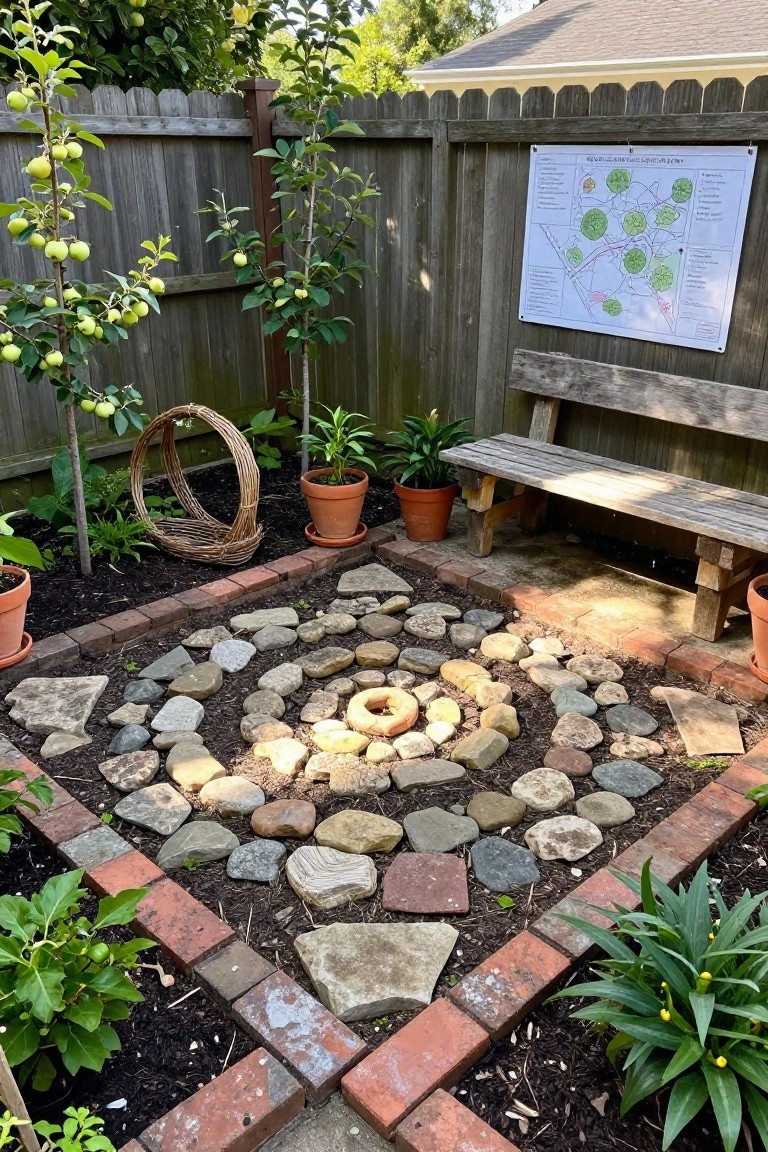
A simple stone spiral like this pulls the garden together without much cost or work. You just gather rocks from around your yard or nearby, sort them by size, and lay them out in widening circles around a central stone. It stands out as a quiet spot to sit and think, especially with a bench nearby and young trees shading it. Folks on homesteads love these because they use what you have on hand and add some calm to busy days.
To make one, start with a flat mulched bed edged in bricks or logs for definition. Keep it small, say four feet across, so it fits tight corners. It works best in backyards with some sun and fits any style from veggie patches to flower beds. Watch the scale though, too big and it overwhelms.
Simple Stone Edging for Garden Beds

One easy way to tidy up your yard is with natural stone borders around planting beds. Like the ones here using rough fieldstones along a walkway, they keep soil in place and stop grass from creeping over. These edges give a clean look without much work, and they fit right into a homestead setup where you want things practical.
To try this, dig a shallow trench where you want the bed, drop in stones of different sizes for a natural feel, and backfill with dirt. It works great along driveways or streetsides, especially with tough grasses that don’t need much water. Just pick local rocks to keep costs down, and you’ll have low-maintenance curb appeal that lasts.
Garden Pathway with Trellis Climbers
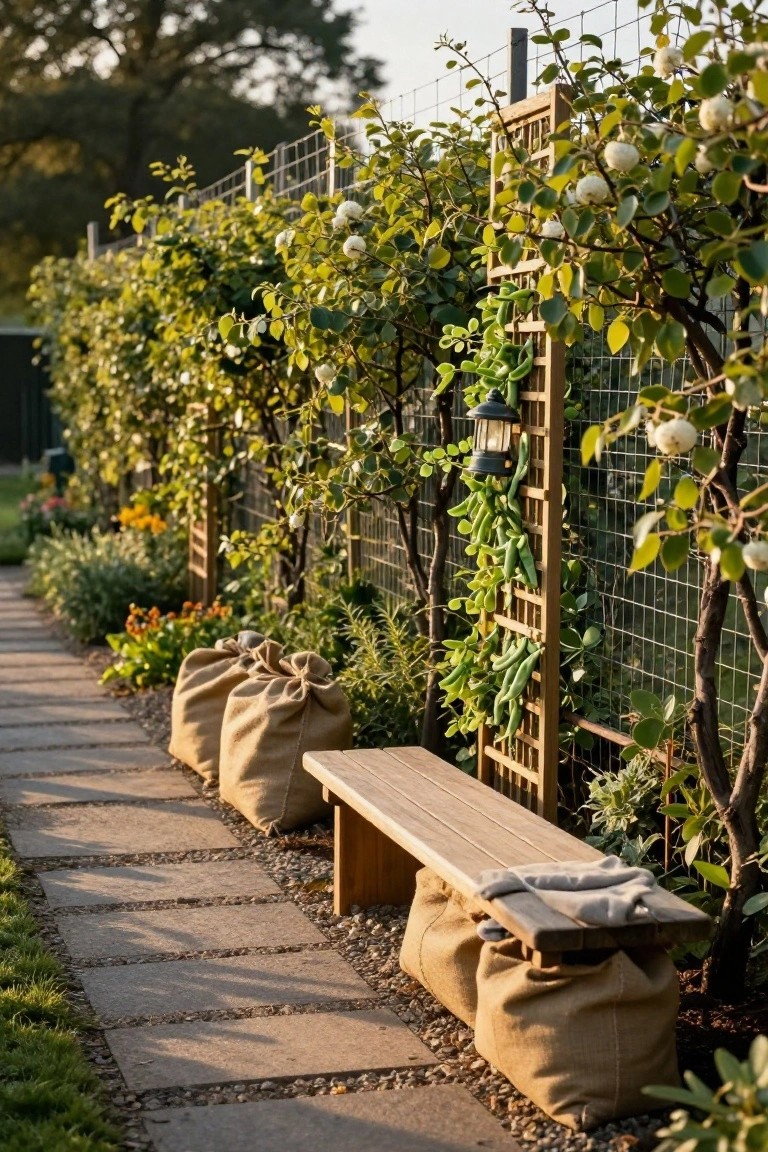
One easy way to get more from your yard is lining a walkway with a simple trellis for growing beans or peas. Here the wooden trellis holds long strings of green pods right next to the path, making it simple to pick what you need. Those white berries on the fence plants add some color too, and it all turns a plain walk into something useful for fresh eating.
Set this up along any fence or wall in your backyard. Use scrap wood for the frame, wire mesh for support, and climbers that grab on easy. Throw in a basic bench nearby so you can sit while harvesting. It fits small spaces best… just keep the path clear and watch for heavy vines pulling things down.
Build a Simple Backyard Greenhouse
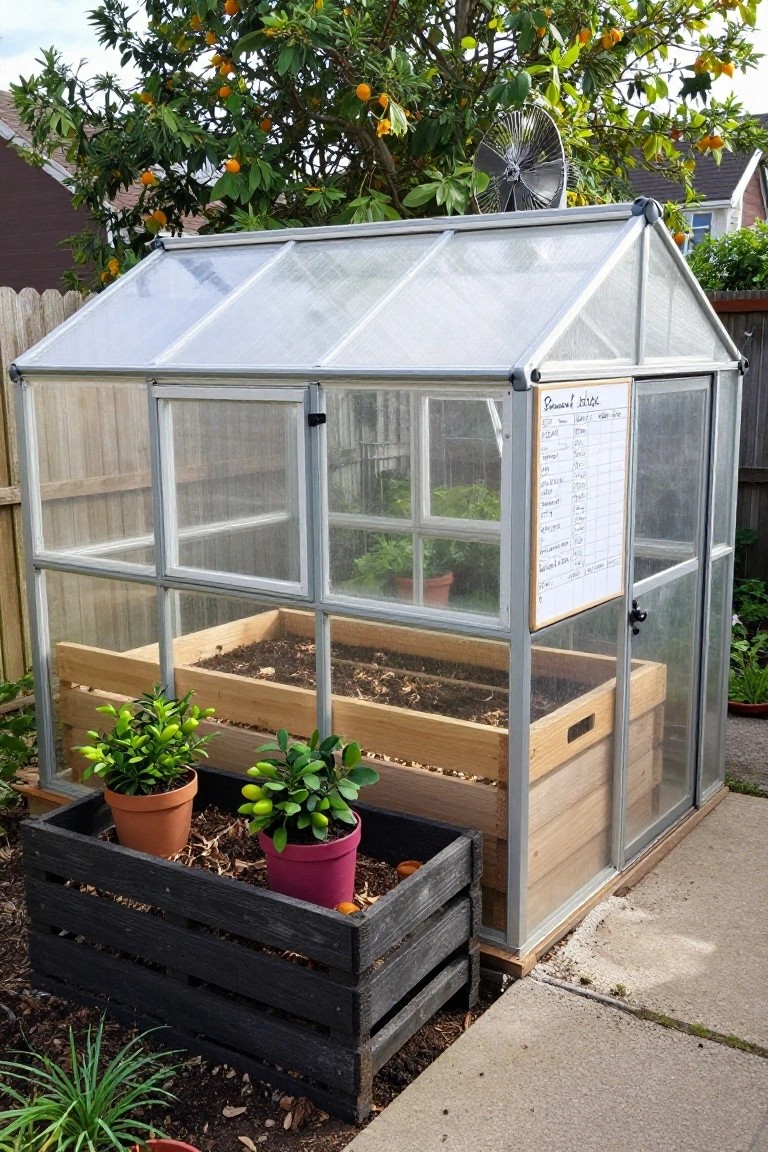
A backyard greenhouse like this one gives you a head start on growing food and herbs no matter the weather. It’s just a basic frame with clear panels over a raised bed, and you can see pots of citrus right outside keeping things going too. Folks like it because it’s cheap to put together with off-the-shelf parts, and it turns a small patch of yard into your own little farm. Plus that whiteboard inside for tracking plants keeps everything organized without much fuss.
Put one in a sunny corner near the fence if your space is tight. It works best for beginners wanting fresh greens or starting seeds early. Go for a kit around six by eight feet to keep costs under a few hundred bucks, and anchor it well against wind. Watch for too much heat buildup though, so add a vent fan like the one on top here.
Raised Beds for Growing Berries
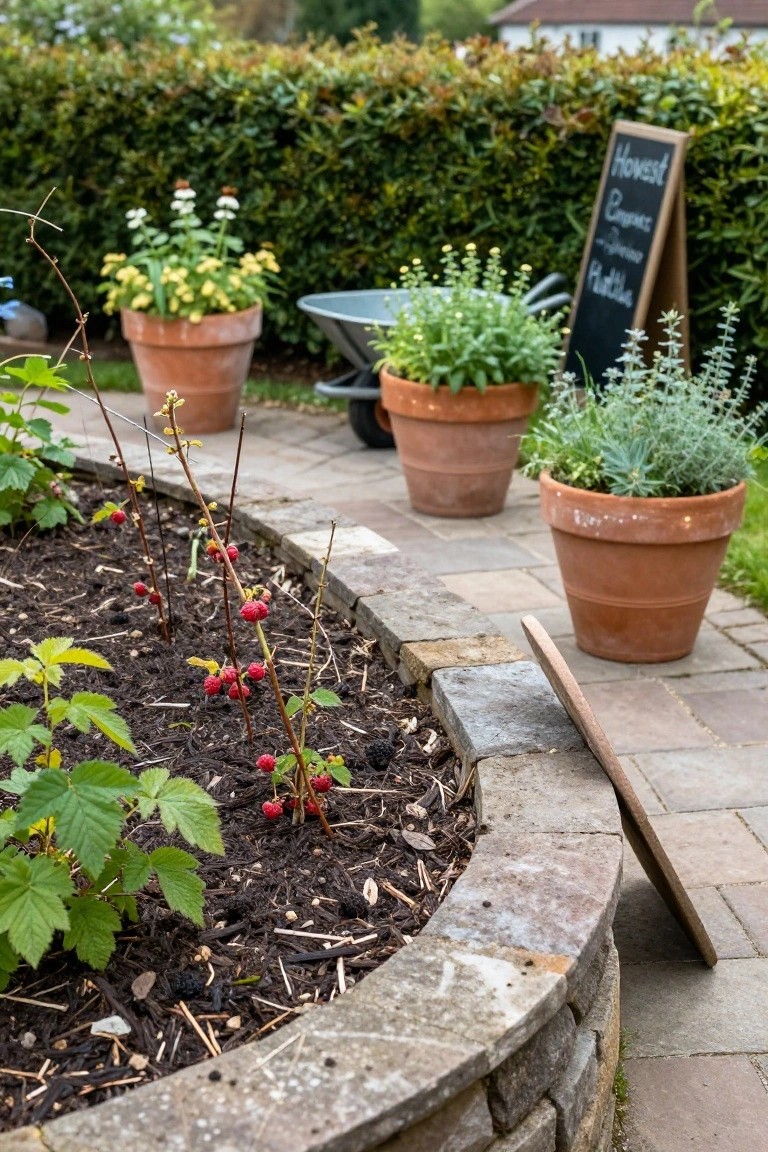
One straightforward way to get more self-sufficient is to set up raised garden beds like this one for berries. The curved stone edging keeps soil in place and makes it simple to reach the plants without bending over much. You see the raspberries already loaded with red fruit, popping up from the dark soil. It turns a plain yard edge into something that produces food all season.
These beds work great along paths or fences where space is tight. Use local stone or bricks for the sides if you want it cheap and sturdy. Plant berries like raspberries or currants that come back year after year. Pair with pots of herbs nearby for easy picking. Just keep the bed weeded and mulched to hold moisture.
DIY Cinder Block Grill Station

A basic grill station like this one starts with stacking cinder blocks for the sturdy base, then tops it with a simple wood counter. Drop in your grill, and you have a spot for outdoor cooking that feels built to last. Folks like it because the blocks are cheap and heavy-duty, while the wood keeps things practical for prep work. No fancy skills needed.
Put it right in your backyard gravel or patio area, maybe under a pergola for some cover. It suits smaller yards or homestead setups where you want self-sufficient cooking without big spending. Watch the blocks for stability… level them well at the start. Add a couple plants nearby, and it blends right in.
Cold Frames Extend Your Growing Season
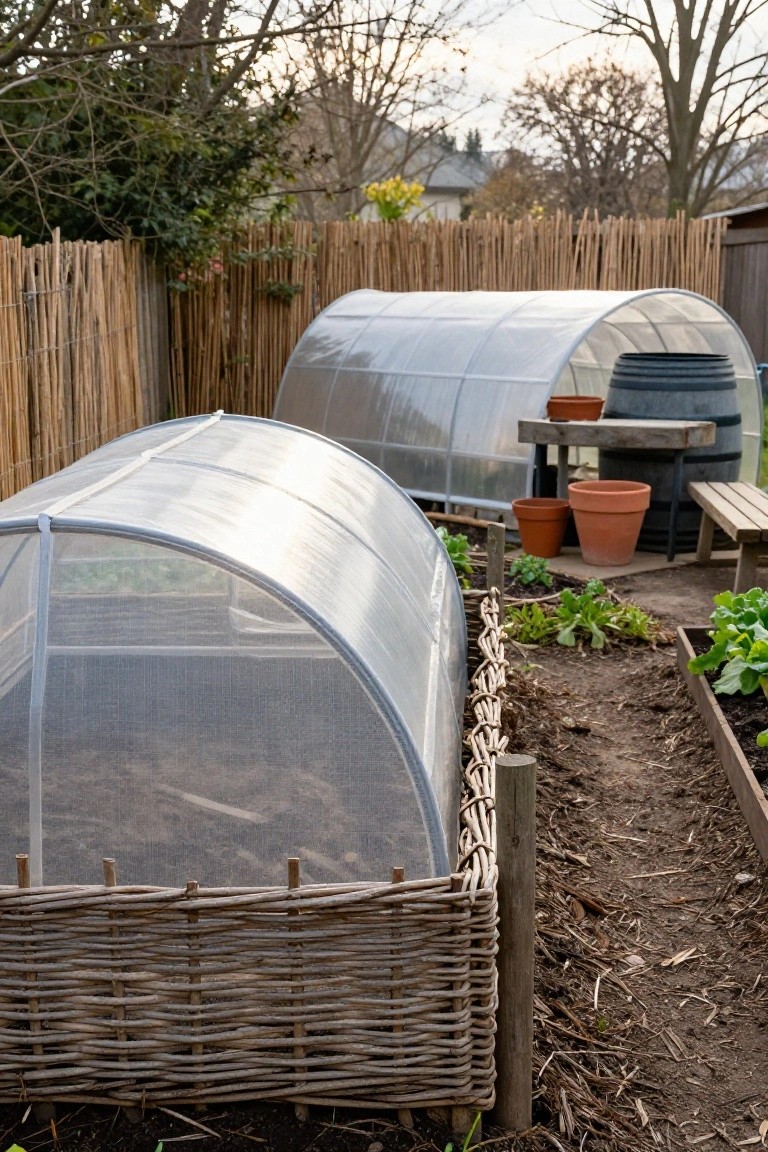
Cold frames like these arched ones covered in clear plastic give plants a head start in spring and keep them going later into fall. They’re a smart homestead move because they trap warmth without much cost or space. You see them here shielding young greens in raised beds, right next to pots and barrels for easy watering.
Set them up over any veggie bed in your yard. Use PVC pipes bent into hoops, wire or wood for the base, and greenhouse film to cover. They’re perfect for town lots or small gardens where you want fresh produce year-round. Just prop the lid open on warm days to avoid cooking the plants inside.
DIY Mulched Bed Around a Young Fruit Tree

One straightforward way to start a homestead garden is with a mulched bed centered on a young fruit tree like this crabapple. The black mulch keeps weeds down and holds in moisture, while the drip line waters right at the roots without waste. Marigolds and grasses fill in around it for color and to draw pollinators, making the spot both pretty and productive on a budget.
You can set this up in any sunny backyard corner with some landscape timbers for edging, a few bags of mulch, and budget plants from a nursery. It works great for small lots since everything stays contained. Just pick disease-resistant trees and keep the bed about four feet across to reach everything easily.
DIY Raised Beds from Pallets
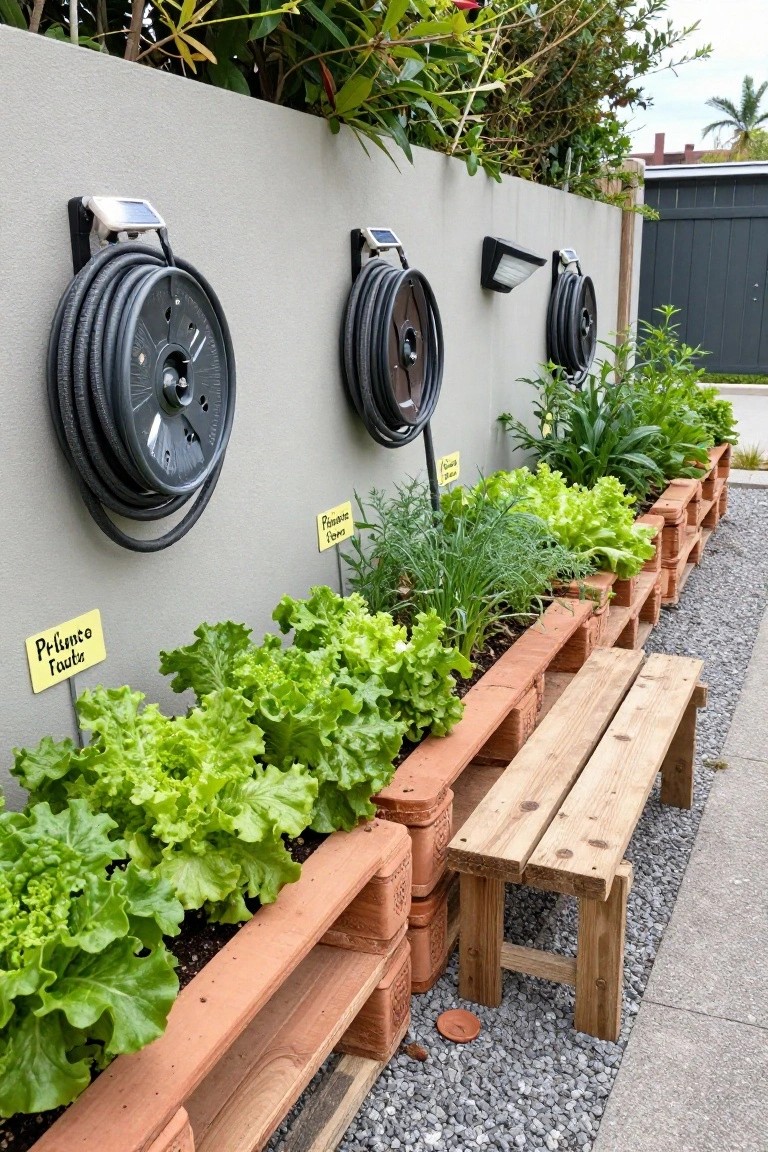
One simple way to grow your own food starts with old pallets. Stack them into low raised beds right along a fence or wall, like these ones holding lettuce, herbs, and greens. The setup keeps everything tidy and close to the house. You get fresh produce without taking up much yard space. Plus, pallets are cheap or free if you watch for them at stores.
Put these beds where you walk by often, maybe near the back door for easy picking. They suit small lots or rentals since they’re easy to take apart. Fill with good soil, label the plants to remember what’s what, and add gravel around for clean paths. Watch for rot in wet spots, though. Treat the wood first if you can.
Wheeled Raised Beds for Balcony Gardening
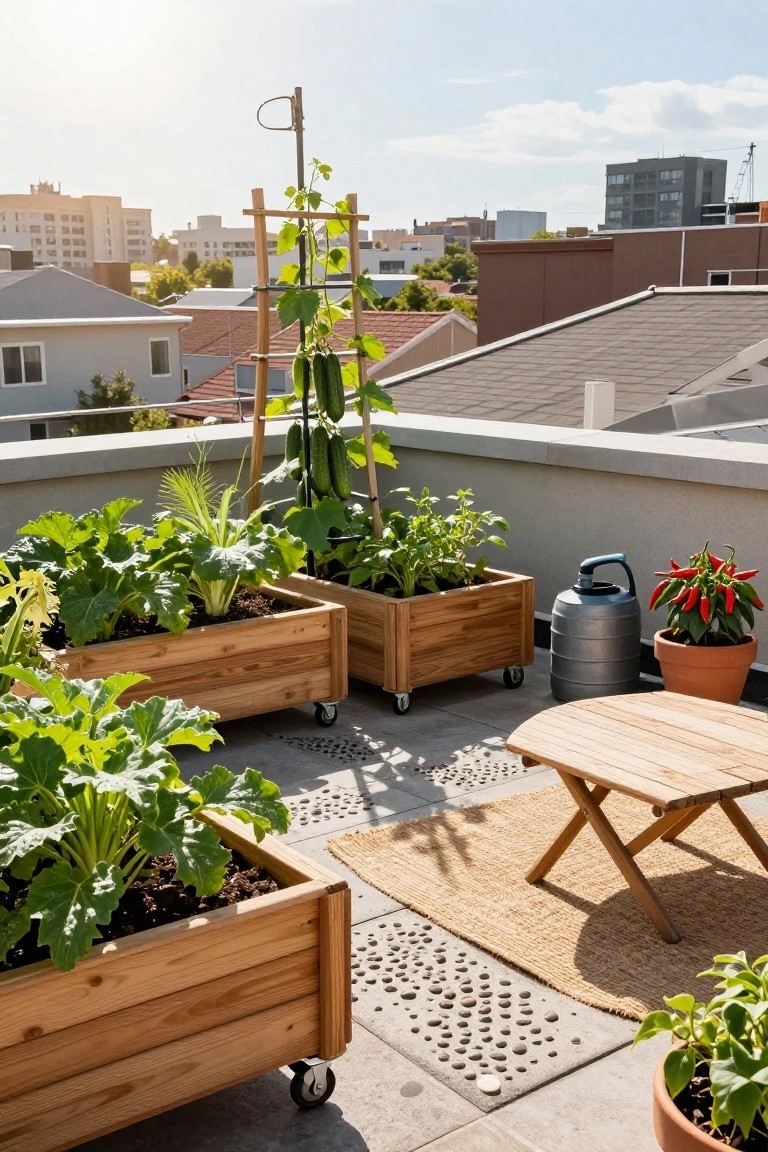
These rolling wooden planters make it simple to grow your own veggies right on a balcony or rooftop. You can shift them around for better sun or to water easily, which is perfect when space is tight. In the photo, they’re packed with greens, cukes climbing a trellis, and herbs, turning a plain terrace into a little food garden without much fuss.
Build them from affordable cedar boards with basic casters underneath, size them to fit your spot, and line with plastic to hold soil. They work great for apartments or small patios where you want fresh produce but can’t dig in. Just treat the wood against weather, and start with easy growers like lettuce or peppers.
DIY Raised Garden Beds for Homegrown Food

Raised garden beds like these make it simple to grow your own veggies right at home. Using basic wood timbers for the borders keeps everything neat and contained. No more bending over too far or dealing with weedy rows. The central path between beds lets you walk right up to harvest without stepping on plants. Plus it’s all DIY friendly and fits a homestead budget.
Stack up scrap wood or affordable timbers two or three high for beds about knee tall. Fill with good soil mix and add drip lines if you want steady watering. This setup works great in small backyards or along a fence line. Just make sure the wood is untreated so it lasts, and level the ground first to avoid pooling water.
Create a Winding Brick Garden Path

A winding brick path like this one pulls you right through the garden without feeling too rigid. It curves gently around fruit trees heavy with berries and beds of herbs and veggies, making the whole yard feel bigger and more alive. Folks love how it turns a plain backyard into something you actually want to wander, especially when you’re picking what you grow.
To pull this off affordably, grab old bricks or pavers from a salvage yard and lay them in a soft curve following your natural planting lines. It works great in smaller homestead spaces where straight paths would box things in. Just make sure the base drains well so you don’t end up with puddles after rain.
Build a Simple Greenhouse

A basic greenhouse like this one hugs right up to the house side. It’s made from a metal frame and clear panels, cheap to put together with off-the-shelf parts. What stands out is how it turns a small spot into a growing space that beats the weather. You get veggies and herbs going earlier in spring and lasting later into fall. Perfect for homestead folks wanting fresh food without much spend.
Stick it against a south-facing wall for max sun. Inside, use raised beds covered with row fabric on cold nights, like these two. Add shelves for starts and tools. Rocks around the base keep things tidy and drained. Works great in mild climates or where winters aren’t too harsh. Just vent it on warm days to avoid cooking your plants.
Succulent Borders for Low-Water Yards

One simple way to cut down on yard work and water bills is planting big succulents along your walkway or curb. These fat green rosettes, like the ones lining this curved bed, fill space fast without much fuss. They mix well with gravel mulch and a few rocks for that clean, natural look. Folks in dry areas love this because it stays pretty year-round and handles neglect okay.
To try it yourself, dig a shallow trench for the curve, line up medium-sized succulents about a foot apart, then fill gaps with pebbles or small stones. It works best on sunny edges near the street or house front, especially if you’re aiming for self-sufficient landscaping. Skip overwatering… these plants store their own moisture. Just add some tough grasses nearby for texture if you want.
Garden Potting Bench with Storage
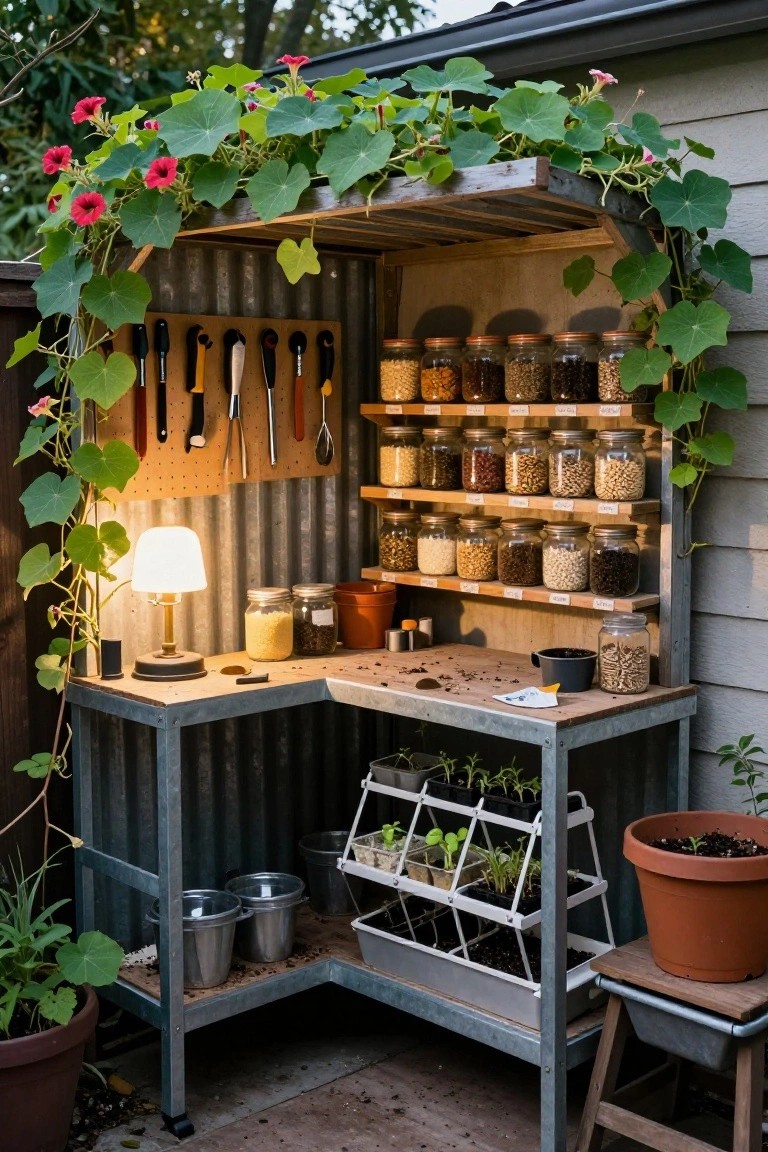
A good potting bench like this one gives you a dedicated spot outdoors for starting seeds, organizing tools, and keeping everything handy. It’s built from simple corrugated metal panels that hold up well in the weather, with shelves full of jars for seeds and grains plus a pegboard for hanging tools and utensils. The vines growing over the top add some natural shade and tie it right into the garden feel.
You can put one in a corner near your back door or along a fence where you already do some gardening. Use scrap metal or wood for the frame to keep costs down, and add a small lamp for evening work. It works best in mild climates, but cover it during heavy rain. Just make sure the surface is sturdy enough for pots and dirt.
Build a Simple DIY Seedling Greenhouse

This setup shows a straightforward way to protect young plants from pests and weather. It’s just a metal frame with mesh sides and a sloped roof, holding trays of seedlings in terracotta pots. Those little tomatoes hanging inside prove it works for starting food crops early. On a homestead budget, it’s perfect for growing more of your own veggies without fancy gear.
Put it in a sunny backyard spot near a fence for wind protection. Use cheap hardware cloth for the screens and stack pots on basic shelves. It suits small yards or patios where space is tight. Watch for rust on the frame, though… a quick paint job helps it last years.
Frequently Asked Questions
Q: Can I pull off these ideas without a huge yard or land?
A: You bet, tons of them fit small spaces like patios or balconies. Go for vertical planters or container gardens first. They crank out fresh produce without eating up room.
Q: What’s a dead-simple project for total newbies?
A: Build a compost bin from scrap wood or wire mesh. Toss in kitchen scraps and yard waste, then stir it weekly. Fresh soil shows up in a couple months.
Q: How do I source materials on the cheap?
A: Check local buy-nothing groups or curbside pickups for pallets and buckets. Ask neighbors for extras like old gutters. You dodge stores that way.
Q: And do these setups last through winter?
A: Pick hardy plants or insulate barrels with straw. Cover garden beds with row fabric to trap heat. They bounce back strong come spring.
