


When I started carving out my first organic garden bed on our homestead, I saw right away how the initial layout sets the tone for years of easy harvests. Healthy soil and thoughtful companion planting turned what could have been a weedy mess into a thriving space that actually feeds us. I wasted a season on straight rows before switching to curved beds with mulched paths, and that small shift made weeding feel less like a chore. People usually spot the vigor in the plants first, but it’s the underlying structure of beds, edges, and rotations that keeps things going strong. A few of these basics are the ones I still revisit every spring.
Raised Beds Make Gardening Easier

Raised beds are a straightforward way to start an organic veggie patch. These wooden ones hold kale, pak choi, and marigolds neatly, keeping plants off the ground where weeds and pests stay put. Soil stays warmer and drains better too. No more struggling with tough yard dirt.
They’re perfect for beginners with small yards or bad soil. Build them from untreated cedar planks about a foot high, fill with compost-rich mix, and set them in full sun. Add a gravel path around for easy access. Watch the wood doesn’t rot too fast… treat if needed.
Curved Brick Paths Guide Small Garden Flow
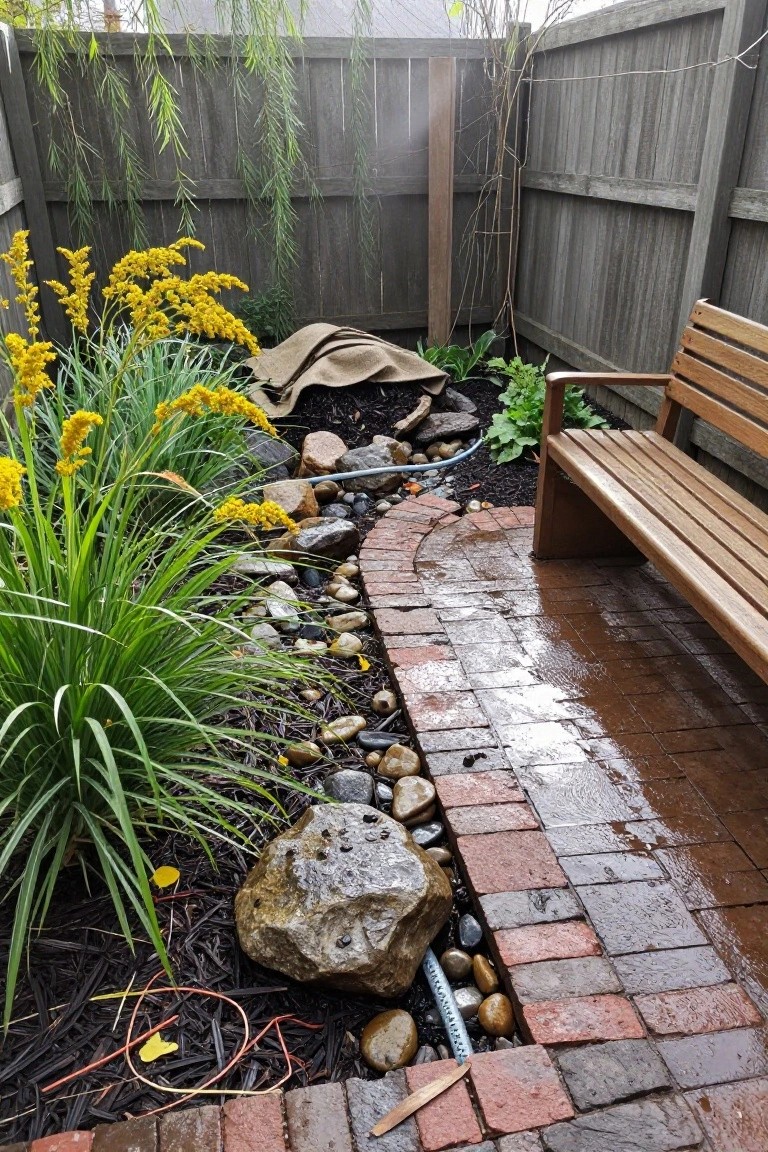
A simple curved brick path like this one works wonders in a snug backyard. It winds gently through yellow flower clusters and rock-edged beds, leading right to a wooden bench. The curve feels natural, not forced. It keeps feet out of the mulch and draws your eye through the plantings without taking over.
Start with old bricks or pavers laid loose on sand for good drainage. Border them with smooth river rocks and fill beds with mulch. Tuck in tough perennials or grasses along the edges. This setup suits beginner homesteaders with limited space. It stays low-maintenance and organic. Just watch for weeds creeping into the cracks.
Backyard Greenhouse for Seed Starting

A small greenhouse like this one makes it easy to get a jump on the growing season. You see young plants tucked inside those raised beds, safe from cool nights or heavy rain. It’s a simple way for beginners to focus on organic veggies without much fuss. The whole setup fits right into a regular backyard, keeping things productive and close to the house.
Put yours in a sunny corner with good airflow, maybe near raised beds outside for more space. Wood frames hold up well and blend in. Hook up a rain barrel for free water, and you’ll have fresh greens sooner. Great for town lots or first-time homesteaders. Just vent it on warm days to avoid cooking the starts.
Raised Beds Made from Natural Stone

Raised beds like these make organic gardening so much easier for beginners. You build them right into the landscape with local stone for the walls, then fill with good soil and mulch. That apple tree growing nearby shows how you can mix in fruit production without extra space. The stone keeps everything sturdy and lets roots drain well, cutting down on weeds and back strain.
Put them along a simple gravel path for easy access, especially in a backyard setup like this. They work best in sunny spots with average soil. Start small, maybe two or three feet high, and watch what grows. Just avoid spots that flood, or add more drainage at the bottom.
Raised Beds with Marked Paths

Raised beds like these keep your organic garden organized and simple to tend. You see neat rows of cabbage on one side and beans on the other, with white lines marking straight paths right down the middle. That setup stops you from trampling plants while weeding or picking, and it makes the whole plot feel less chaotic. Perfect for beginners starting a homestead veggie patch.
Build the beds from scrap wood or buy kits, then sketch paths with string before sprinkling flour or lime to outline them. Plant dense rows inside the beds but leave those paths at least a foot wide. This works great in backyards with decent sun… just refresh the path lines after rain. Keeps mud off your shoes too.
Rock Edging Along Gravel Paths

One easy way to keep your garden looking tidy is edging paths with simple rocks. You see it here with a gravel walkway snaking through the plants, bordered by rounded stones that hold back the soil and grasses. It gives a natural look that fits right into organic gardening. No need for plastic barriers or chemicals. The rocks let water drain well and stop weeds from creeping in.
This works great on slopes or around your homestead veggie beds. Just dig a shallow trench, lay in larger stones for the base, then fill gaps with smaller ones. Add tough grasses or succulents along the edge like they did. It suits beginners because it’s cheap and forgiving. Watch the path slope a bit for runoff, though… keeps mud off your boots.
Build a Simple Layered Compost Bin

One easy way to get into organic gardening is putting together a vertical compost bin like this one made from wooden drawers. It stacks layers of soil, greens, straw, and kitchen scraps right in your backyard. The pull-out sections make it simple to check on things and turn the pile without much hassle. Folks starting out love how it turns waste into rich soil fast, especially with eggshells added for the worms.
Set it up in a shady spot near your garden beds, where it fits even in small yards. Layer browns on the bottom, then greens and scraps higher up, keeping it moist but not soggy. Track temps on a little sign to know when it’s ready, usually around 3-4 weeks per layer. It works great for homesteaders who want steady compost without buying fancy bins.
Border Raised Beds with Lavender

One simple way to keep your organic garden looking sharp and bug-free is to line the edges of raised beds with lavender. In this setup, the purple blooms hug a wooden bed full of greens, acting as a natural barrier. Lavender repels pests like moths and fleas without any chemicals, and it adds that nice touch of color and scent.
It’s perfect for beginner homesteaders with small spaces. Plant the lavender along the wooden borders where it gets full sun, and pair it with veggies like lettuce or garlic. Keep the paths mulched to make it even lower maintenance. Just trim it back once a year.
Vertical Gardening with Pallet Shelves

If space is tight in your backyard or on a patio, try stacking plants on simple wooden shelves made from pallets. This setup turns a blank fence into a wall of greens, letting you grow a bunch of veggies and herbs without taking up ground space. It’s practical for beginners, uses cheap recycled wood, and keeps everything organized and off the dirt.
Build the shelves sturdy with cross braces, then fill them with pots of lettuces, herbs, or small veggies like in this patio example. It suits sunny spots near the house where you can water easily. Just make sure the whole thing is level and not too heavy, or it might tip on soft ground.
Outdoor Brick Pizza Oven for Garden Baking

Nothing beats pulling veggies straight from your garden and baking them in a wood-fired oven right there in the yard. This brick pizza oven setup keeps things simple and practical for beginners. You see fresh radishes on the nearby wooden table, ready to go in. It turns your harvest into meals without much fuss, and that rustic brick look fits right into an organic garden.
Put one near a prep table on a patio or gravel area, close to your raised beds. It works best in backyards with decent sun and some wind protection from hedges. Start small with a basic kit or DIY bricks if you’re handy. Just make sure it’s on a stable base… and keep kids away when it’s hot.
Build Raised Beds with Logs

One straightforward way to start organic gardening is stacking logs into raised beds. These hold soil nicely and let roots breathe with good drainage. You see pumpkins and squash thriving here, along with some pulled roots showing healthy growth. It’s a natural look that fits right into a backyard without much fuss.
Stack short logs or wood slices two or three high for beds about a foot tall. Fill with good garden soil and plant veggies like zucchini or pumpkins that need space. Works best in sunny spots on flat ground. Keep an eye on rot over time… just refresh the logs every few years if needed. Great for beginners wanting low-cost homesteading basics.
Start Seeds in a Small Greenhouse

A compact greenhouse like this one makes seed starting easy for beginners. It has simple shelves loaded with trays of young plants, plus a grow light overhead to keep things going even on cloudy days. The setup keeps seedlings safe from wind and pests while letting you organize tools and fertilizer right there on the wall. No big space needed.
Put one in a sunny backyard corner or near the house for quick checks. Use metal frames with clear panels, black trays for good root growth, and basic organic soil mix. Label pots with plant names and dates. It suits small homesteads best, and watch for overwatering those tender starts.
Raised Stone Beds for Front Yard Gardens

One straightforward way to start organic gardening is with raised beds built right into a stone retaining wall. Like the one running along this sidewalk, it keeps soil in place and makes planting veggies, herbs, and flowers a lot easier. No bending over much. The natural stone gives an organic feel that fits right with homesteading, and it edges the path neatly without looking fussy.
Put these beds where you walk by them every day, like along the driveway or front walk. They’re great for beginners because good drainage comes built-in, and you can reach everything without steps or ladders. Pick stones from local spots if you can, to keep costs down. Just watch the height, nothing over two feet or it gets hard to build steady.
Frequently Asked Questions
Q: What if my seeds won’t germinate after planting? A: Test the soil temperature first, since most veggies need at least 60 degrees to wake up. Warm them gently under a cloche or on a sunny windowsill. Patience pays off here, usually in 7-14 days.
Q: How do I fight pests without harsh sprays? A: Plant marigolds or nasturtiums nearby to confuse bugs with their scent. Knock aphids off with a strong water spray every morning. Ladybugs show up naturally and gobble them up.
Q: Can I skip compost and use store-bought soil? A: Fresh bagged soil works fine to start. Mix in your own kitchen scraps or grass clippings to build microbes over time. Skip it, and roots struggle to spread.
Q: My tomatoes look yellow – quick fix? A: Water deeply once a week instead of daily sprinkles. Add crushed eggshells around the base for calcium. They green up fast.
