

I have found that adding a greenhouse to a small yard works best when it fits the existing layout rather than fighting against it.
In my own side garden I learned the hard way that poor placement can block light and make the whole area feel cramped.
Size matters more than style here.
People often overlook how a simple lean-to design can turn an unused strip of land into something productive without eating up precious space.
Testing a few of these scaled-down options has shown me which ones actually hold up through the seasons.
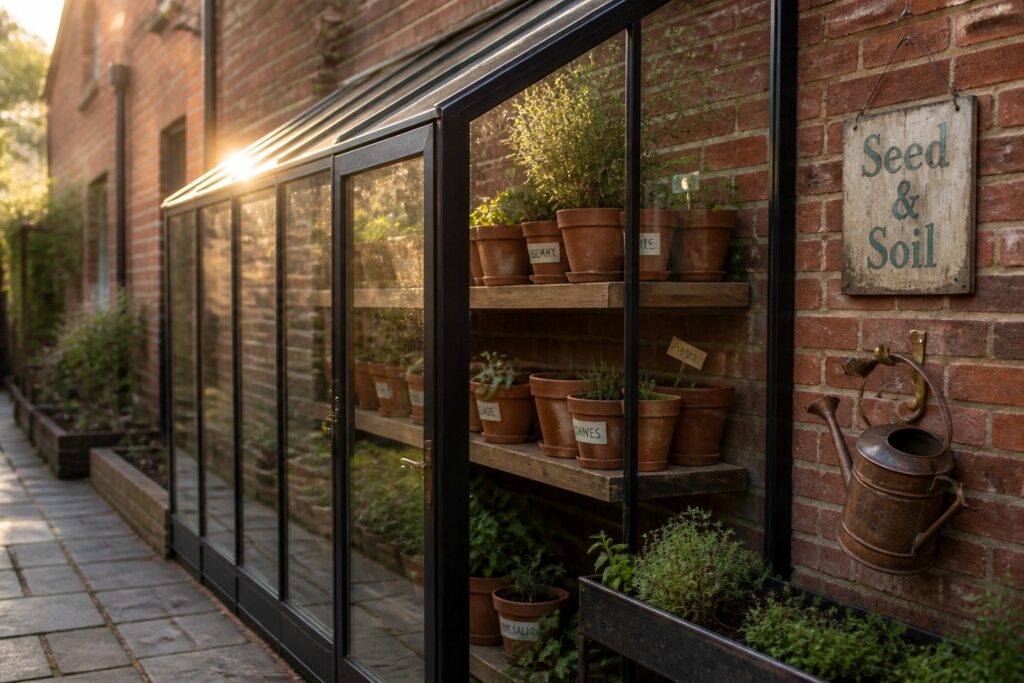
Lean-To Greenhouse With Wooden Shelves

A lean-to greenhouse works well when you add wooden shelves inside. The shelves turn the narrow space into several levels for plants, which helps in small yards where floor room is limited.
This setup fits best against a solid wall like brick, where the structure can lean for support. Make sure the shelves are sturdy enough for pots and leave enough room between levels so plants get light and air.
Add a Sink Inside a Small Greenhouse
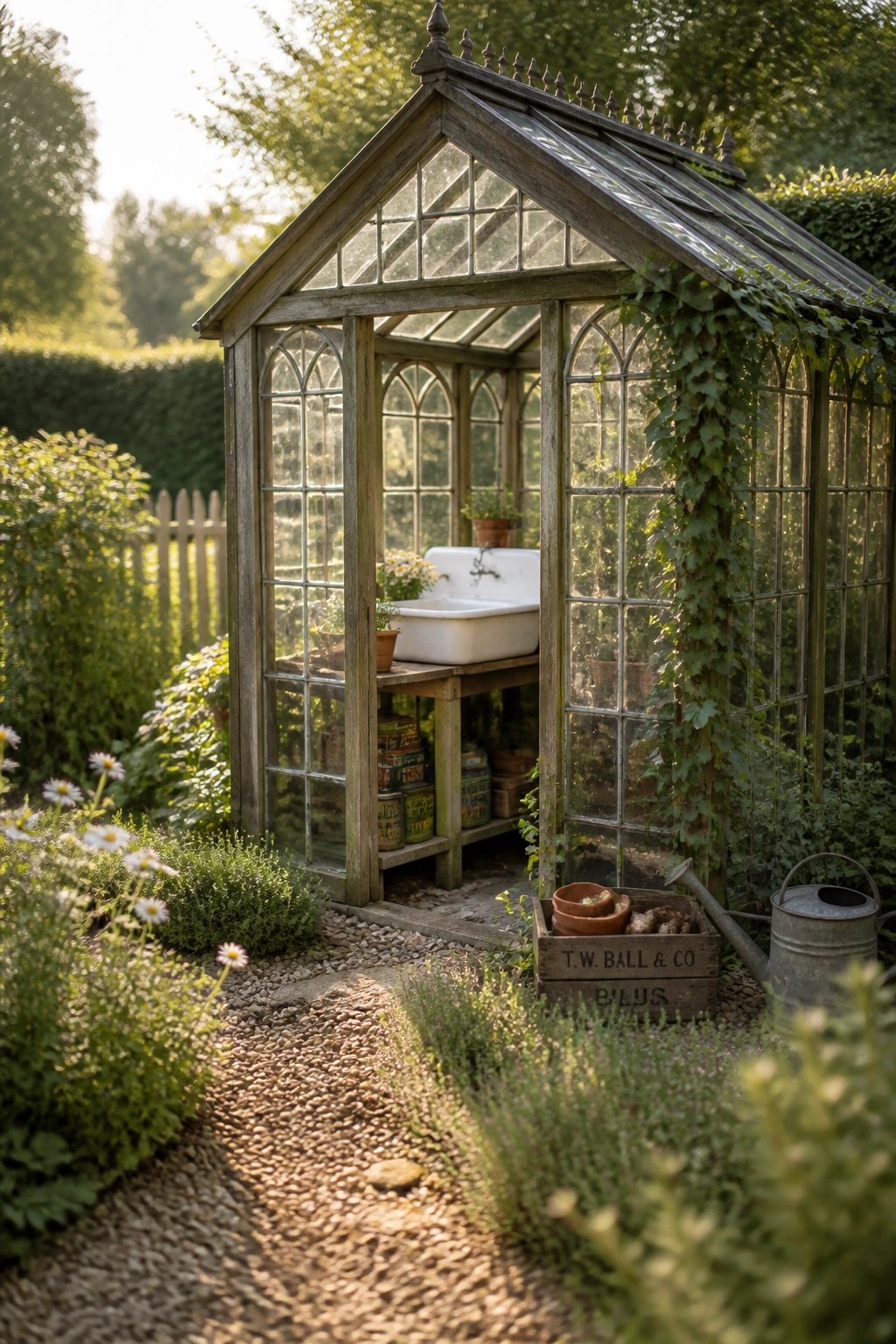
A sink changes how a greenhouse gets used day to day. Instead of hauling water or running back to the house, you can rinse pots, mix soil, and water plants right where the work happens. It turns the space into a real work area rather than just a place to store trays.
This idea suits compact yards and side gardens best, where every square foot needs to earn its keep. Keep the sink simple, make sure the floor can handle spills, and place the greenhouse near an outdoor tap so the plumbing stays easy.
Tall Greenhouse Cabinets Fit Tight Yards

A tall cabinet greenhouse lets you grow more without spreading out across the ground. The vertical layout with multiple shelves turns a small footprint into usable growing space for herbs, seedlings, and leafy greens. It keeps plants protected while still allowing light in through the glass sides.
This style works best tucked against a fence or wall in a side garden or compact yard. Set it on gravel or a simple base so water drains away and the unit stays level. Make sure the spot gets steady sun and leave enough room in front for easy access to the shelves.
Raised Beds With Hinged Glass Tops
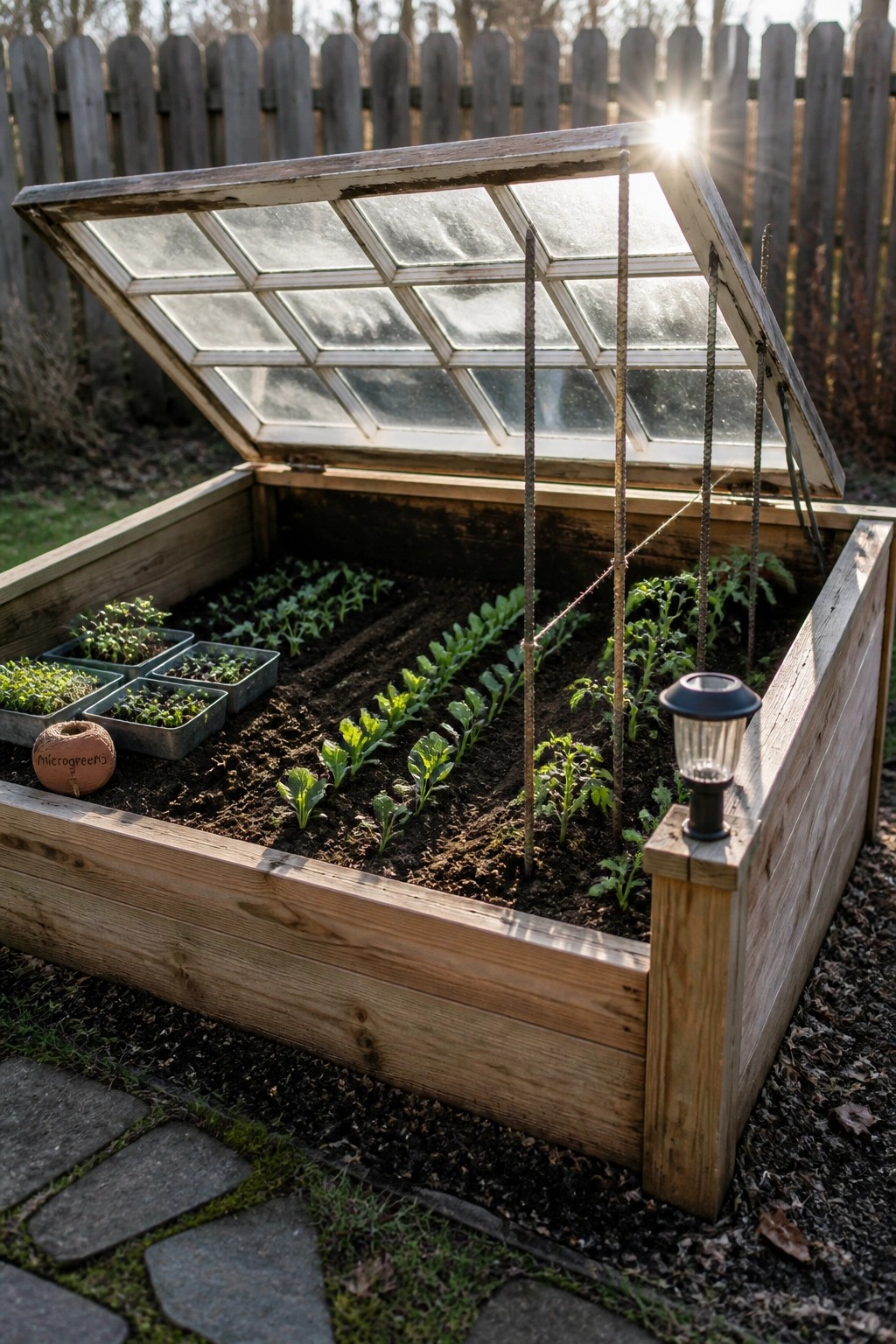
A hinged glass lid on a raised bed gives you a simple cold frame that helps start plants earlier without needing a full greenhouse. The lid traps warmth during cooler days while still letting in plenty of light, which is useful in smaller yards where space is tight.
This setup works well along fences or in side gardens where you need something compact. Prop the lid open during mild weather so the plants do not overheat, and close it at night to hold in the heat. Old windows make an easy lid if they are still in good shape.
Tunnel Greenhouses Fit Neatly Into Compact Yards

A tunnel greenhouse gives you a protected growing area without needing a big structure or permanent foundation. It covers your beds closely and still leaves room to walk through, which makes it practical for side yards or narrow lots where space is tight.
Set it up over existing raised beds and keep the center path clear for easy access. The simple hoop shape works well in most climates and can be taken down or moved if your layout changes later.
Add A Fold Down Bench To Your Greenhouse Wall
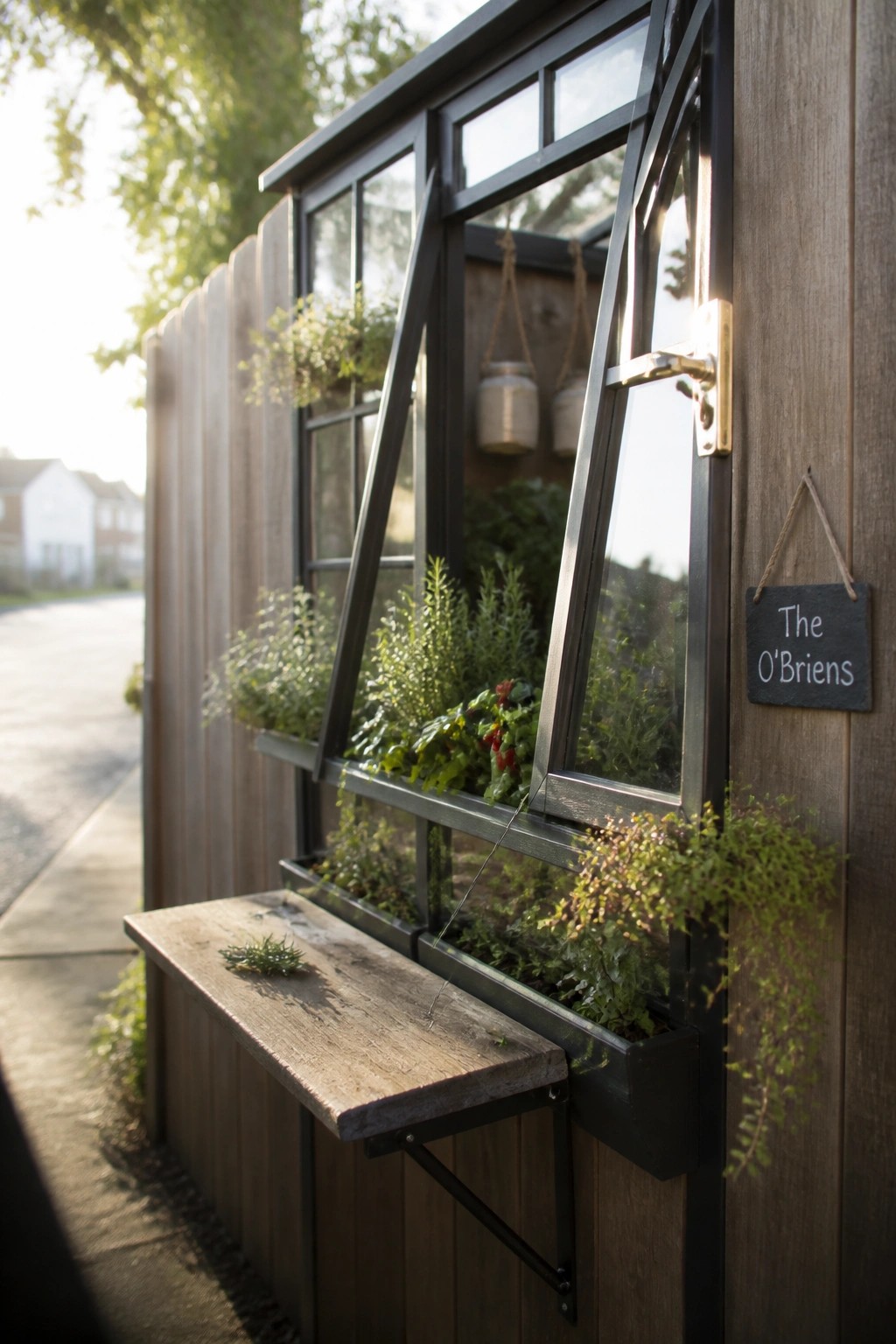
A drop down bench next to a lean-to greenhouse keeps the walkway clear while giving you a spot to pot plants or rest tools. It works especially well in narrow side yards where a fixed seat would get in the way most of the time.
Build it with simple brackets so the bench can stay up when you need the path open. This idea fits older sheds or fence lines that already have some vertical growing space. Just check that the wood can handle weather and the hinges stay tight after a season or two.
Build a Bench Greenhouse for Small Yards
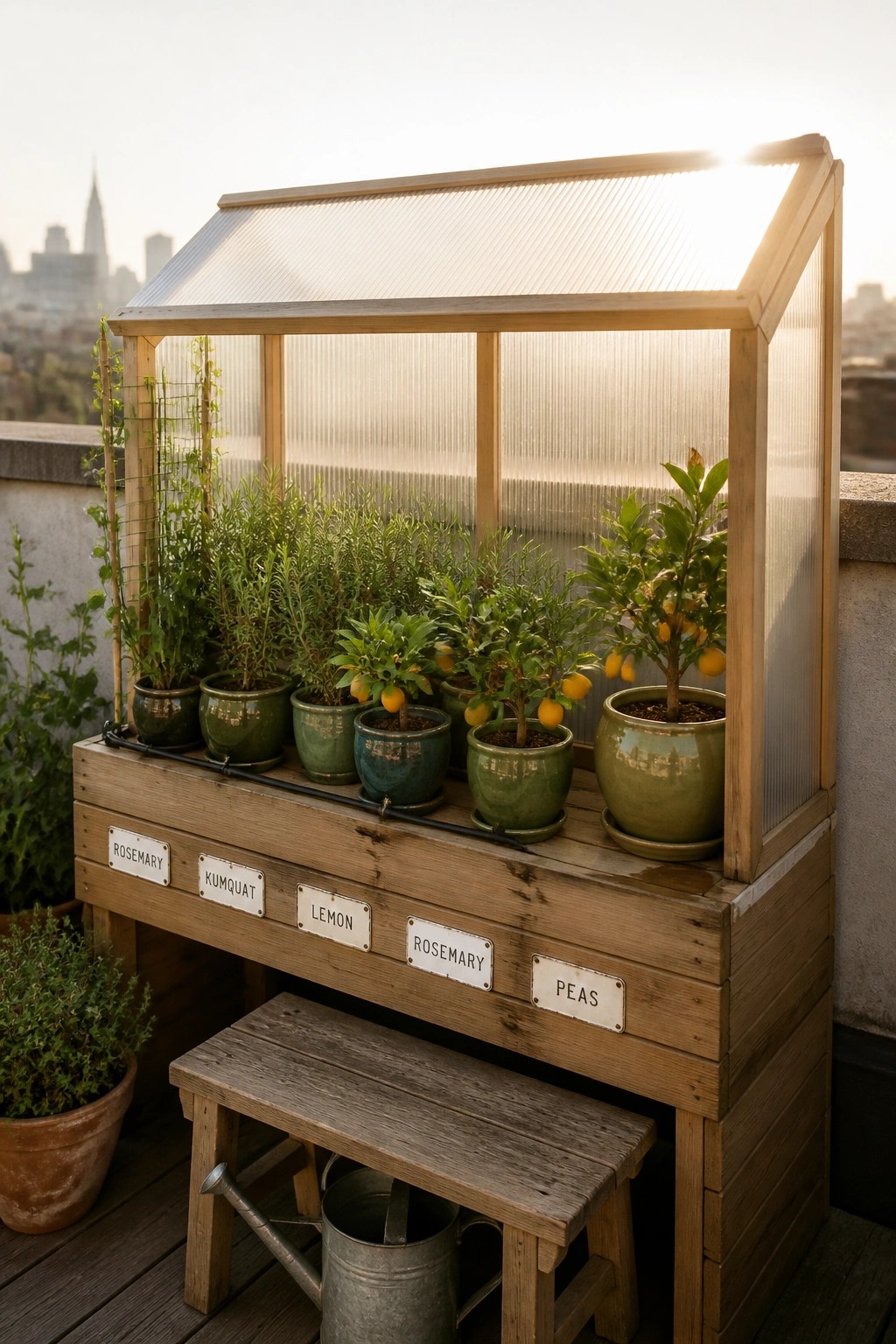
A bench greenhouse keeps plants at a comfortable height while fitting neatly into a narrow deck or side garden. The wooden base doubles as both support and extra surface, which makes watering and harvesting easier without needing to bend down much.
This setup works well on balconies, rooftops, or compact yards where a full-size greenhouse would take up too much room. Keep the structure simple, use clear panels for light, and add labels so you can track what is growing. Just make sure the bench is sturdy enough to handle the weight of the soil and pots.
Add A Potting Bench To Your Greenhouse

A small greenhouse feels more useful once you add a simple work table. It gives you a steady spot to repot plants and handle seedlings without crowding the floor space.
Keep the area under the bench open for stacking empty pots and bins. This works well in side gardens or compact yards where the greenhouse has to handle both growing and daily tasks.
Mount Seed Packets Above A Greenhouse Bench

A bench along one wall turns a narrow greenhouse into a place where you can actually sit and sort through what you want to plant. Pairing it with a simple board for seed packets keeps everything visible and within reach without taking up floor space.
This setup works well in side yard greenhouses or compact builds where every inch counts. Use a basic wooden bench and clip packets to a board or strip of wood so you can swap them out each season. Just make sure the board stays out of the way of the main path.
Fit a Greenhouse Into a Small Side Garden

A greenhouse gives you a dedicated spot to grow plants even when the rest of the yard is tight on space. It keeps seedlings and tender flowers protected while still leaving room for paths and other garden beds around it.
This setup works best tucked along a fence or wall where the structure can sit without crowding the rest of the yard. A simple brick path makes it easy to roll a cart or carry pots in and out, and the glass lets in light from all sides so plants stay healthy through cooler months.
Benchtop Greenhouse Cabinets

A small glass cabinet sitting on a potting bench gives you a protected spot to start seedlings without taking up much ground space. It keeps plants warmer and shields them from wind and late frosts, which makes it useful in smaller yards where a full greenhouse would not fit.
Place the cabinet on a sturdy workbench near a water source and use the shelves below for trays and tools. This setup works well on a side porch, against a fence, or along the edge of a patio, and it can be moved if needed.
Fabric Pockets Add Vertical Growing Space
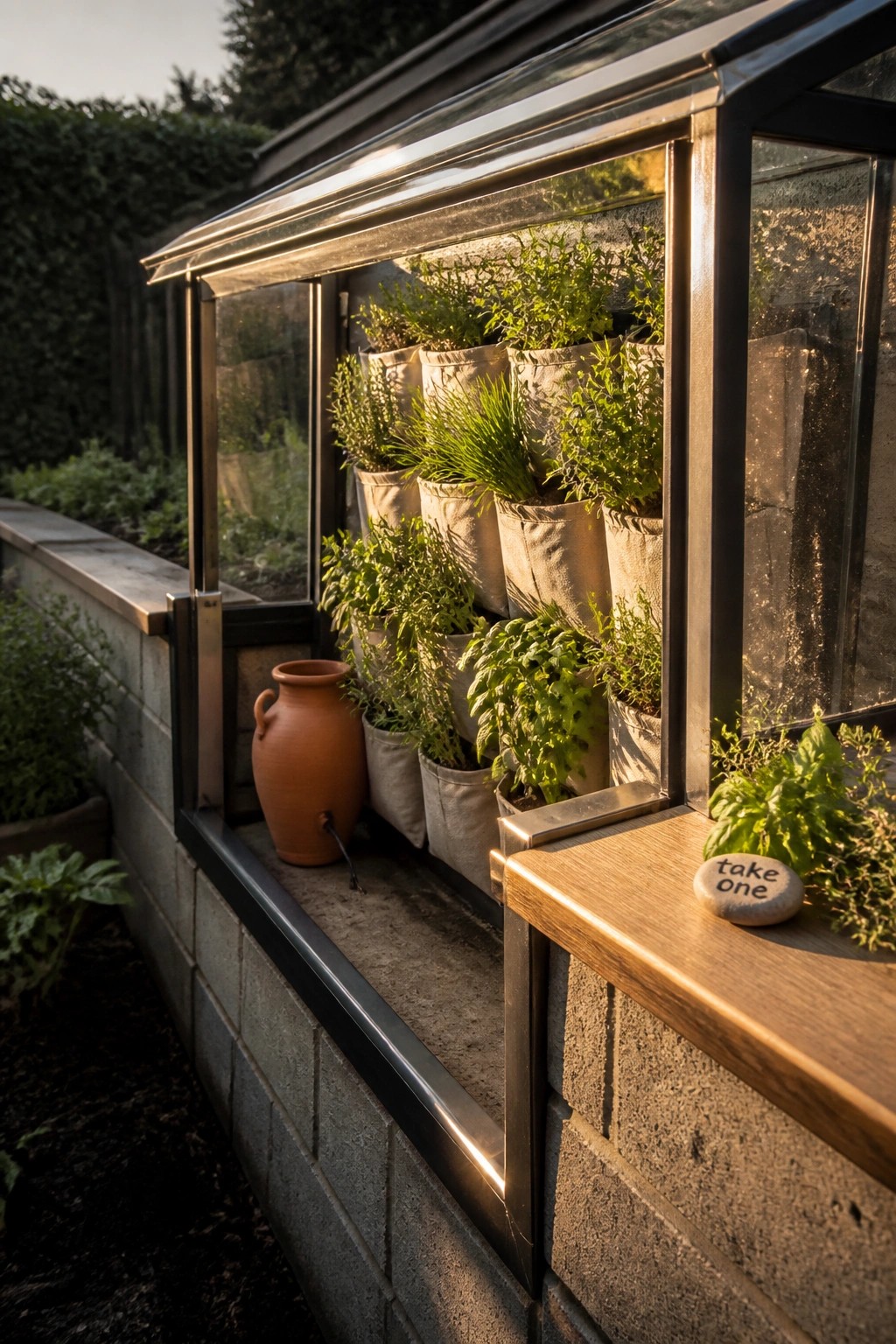
One easy way to fit more plants into a small greenhouse is to use fabric pockets on the back wall. These simple planters turn an empty vertical surface into growing space without taking up floor room or needing extra shelves.
They suit side gardens and compact yards where every inch counts. Hang them where they catch good light, and check that water drains well so the plants do not sit wet.
Line the Side with Large Terracotta Pots
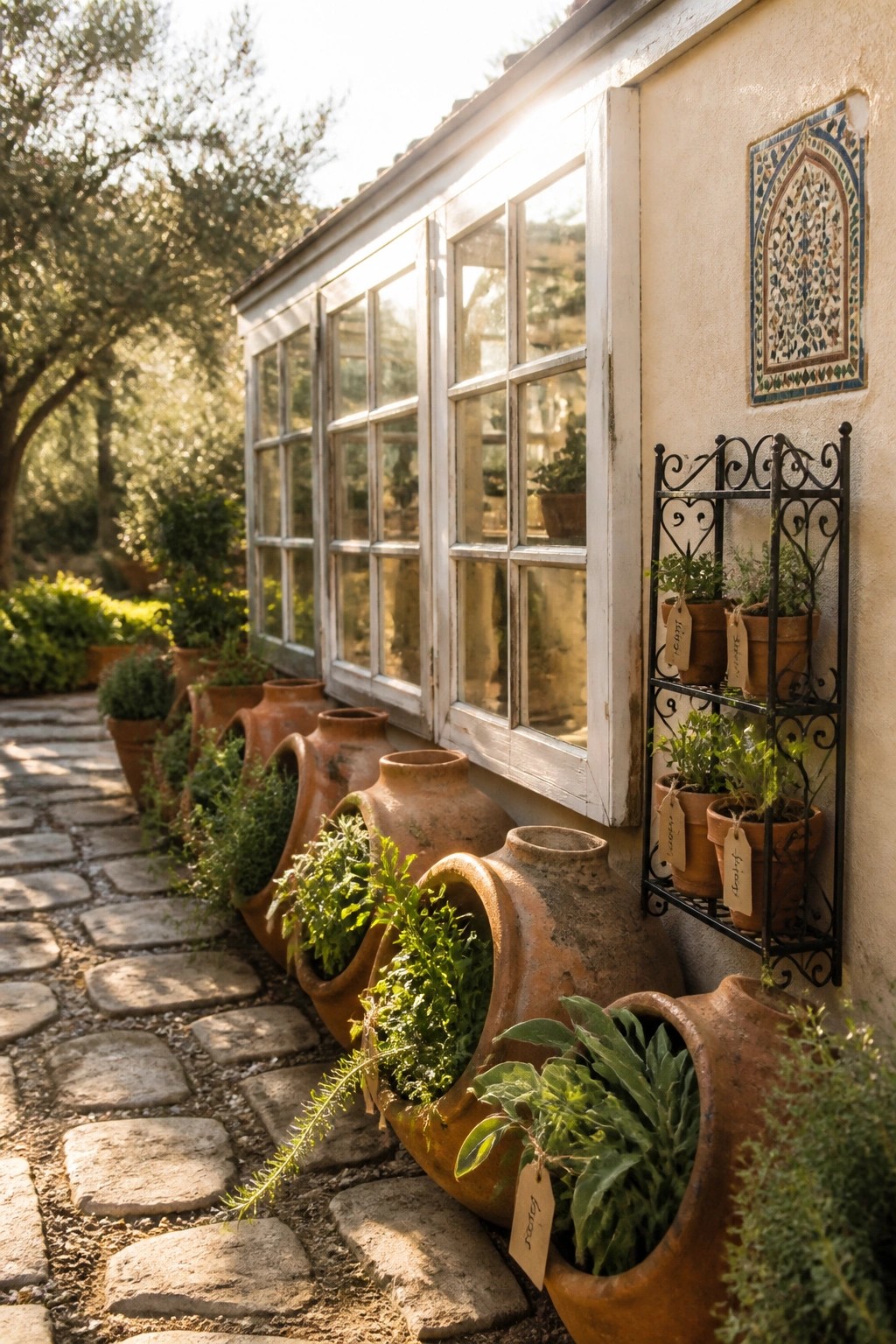
Large clay pots set directly against a greenhouse wall turn a narrow strip into useful growing space. This setup keeps plants close to the structure for warmth and easy access while leaving the path clear.
It suits side gardens or compact yards where beds would feel cramped. Use pots of similar size and material so the row looks intentional, and leave enough room between them for watering and harvesting.
Add Shelving Inside a Small Greenhouse

Tiered shelving turns even a compact greenhouse into a productive space. Instead of spreading plants across the floor, you can stack trays at different heights and fit far more seedlings without enlarging the structure itself.
Metal racks work especially well because they hold weight, resist moisture, and let air move freely around the plants. This approach suits narrow side yards or small back gardens where floor space is limited. Just leave enough room between shelves for easy access and watering.
Add a Greenhouse Cabinet to a Narrow Side Yard
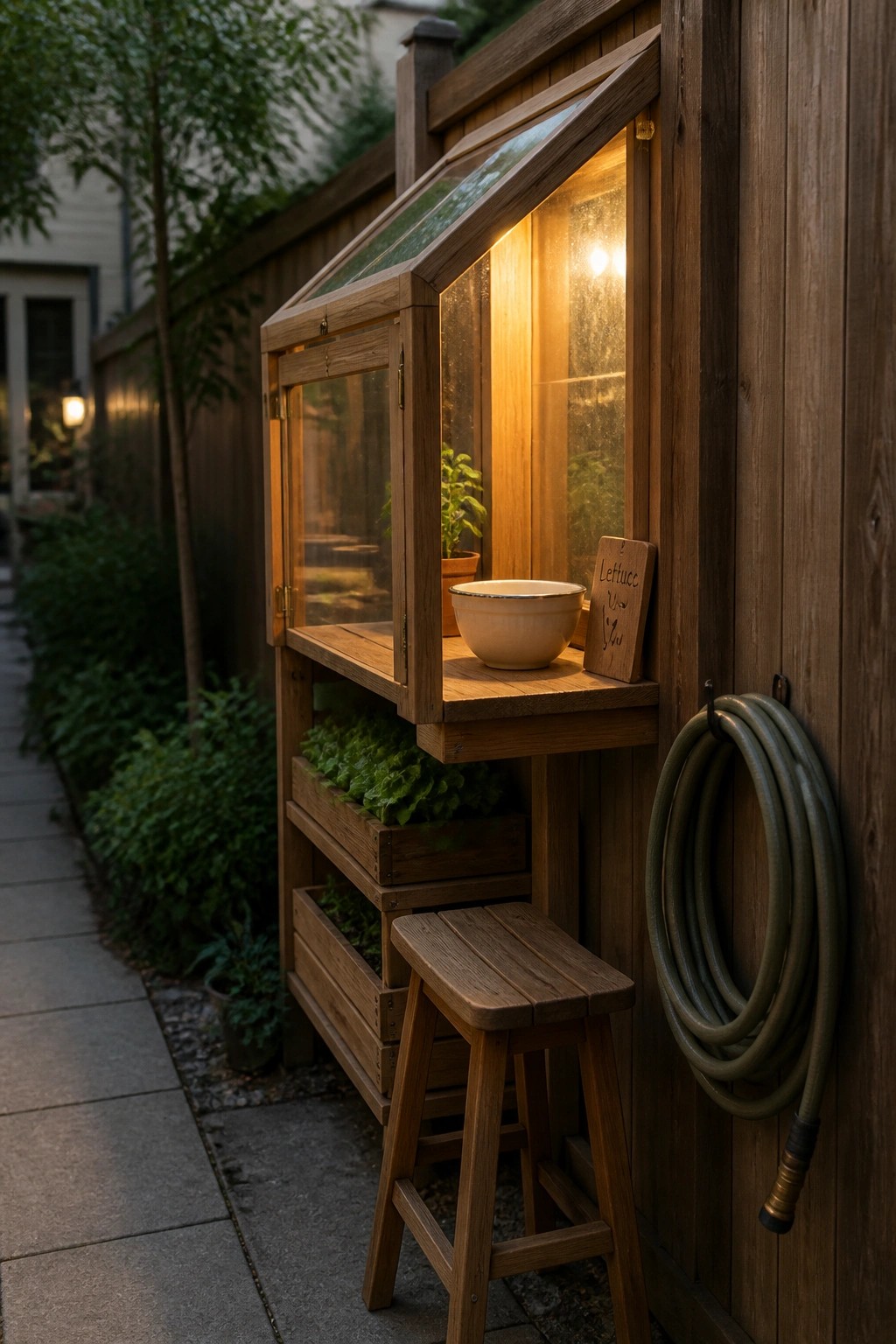
A tall cabinet style greenhouse works well when space is tight along a fence or wall. It gives you vertical growing room without taking up much ground, and the enclosed design helps protect plants from wind and temperature swings. Many people like the built in light because it extends the growing season even in shaded side yards.
Place the cabinet where it gets some sun but stays out of the main walkway. The style shown here uses wood that matches the fence, so it blends in instead of standing out. Keep the front clear for a small stool or step if you need to reach the upper shelves.
Attach the Greenhouse to a Wall
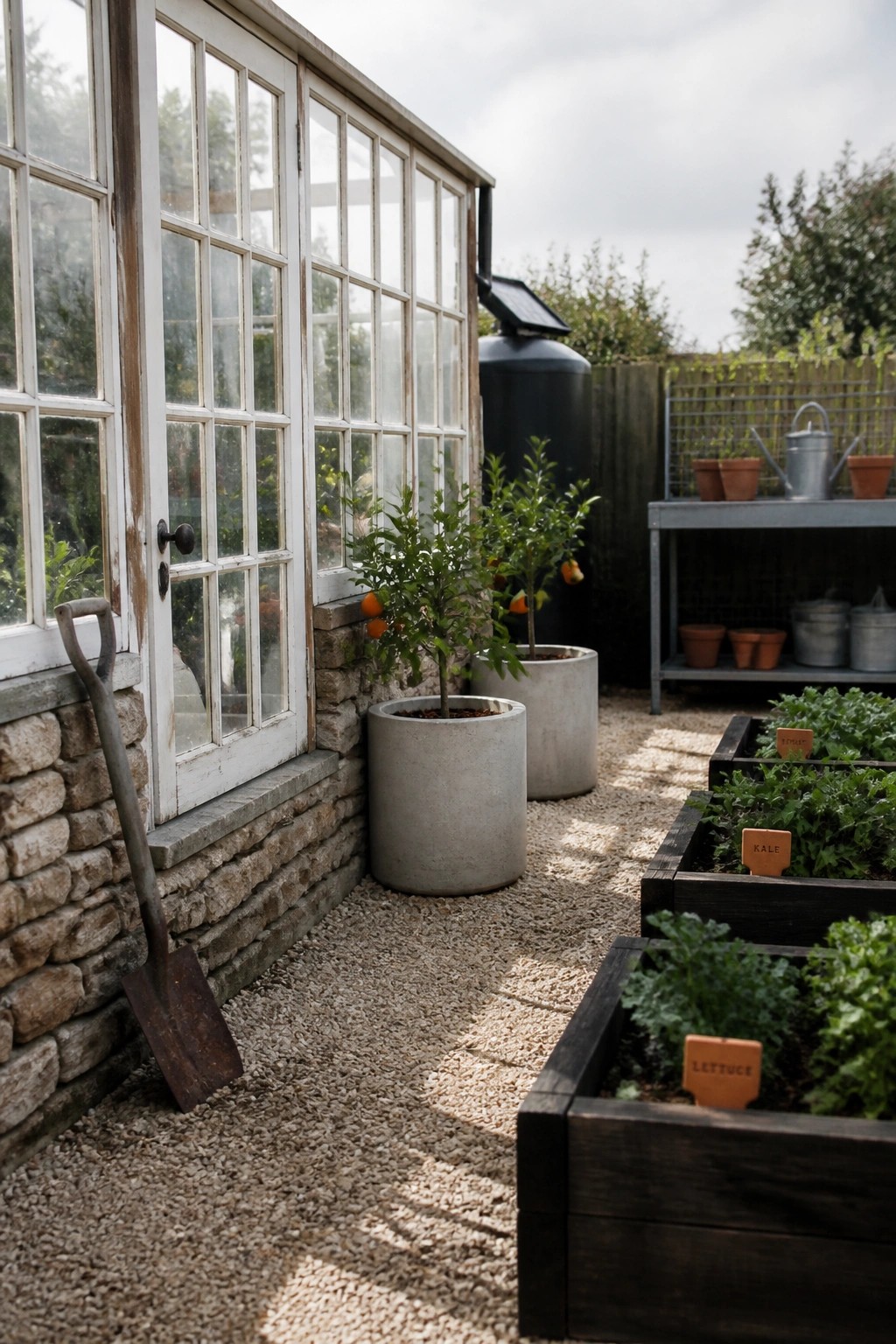
Attaching a greenhouse straight to an existing wall turns a narrow strip of yard into usable growing space. The structure borrows stability from the wall, needs less framing, and leaves the rest of the garden open for paths and beds. Gravel underfoot keeps the area dry and simple to walk on even after rain.
This setup works best along the side of a house or shed where sun reaches most of the day. Keep the beds low and the path wide enough for a wheelbarrow so the space stays practical rather than cramped. Watch that the wall itself can handle the extra moisture before you build.
A Narrow Greenhouse Cabinet Saves Space in Small Yards

Many people turn to a tall cabinet greenhouse when they only have a narrow strip of yard or a tight side garden. It grows plants on multiple shelves while taking up very little ground space and can sit right against a fence or house wall.
This works well for anyone who wants room to start seeds and store pots without building a full shed. Place it where it gets good light and keep the lower section open for extra supplies so the cabinet stays practical year-round.
Add a Lean-To Greenhouse to Your Side Wall

A lean-to greenhouse works well when space is tight because it uses the house wall for support and shelter. This setup keeps the structure smaller and simpler to heat than a freestanding model while still giving plants a protected spot to grow.
It suits older homes or cottages with a clear side or back wall that gets decent light. Keep the area around the base open enough for access and add a simple path so you can reach the plants without stepping on beds.
Include a Built-In Workbench With Storage Above

One practical way to handle a small greenhouse is to add a tall cabinet that holds open shelves above a fold-down work surface. The shelves keep seed jars and tools easy to see and grab, while the counter gives you a spot to work without taking up floor space when it is not needed.
This kind of setup fits well along the side wall of a narrow yard or side garden. You can add a simple faucet for rinsing pots and keep the doors closed to protect supplies when the weather turns.
Add A Greenhouse To Your Balcony

A balcony greenhouse lets you grow plants even when you have no yard at all. The structure keeps things protected while still using the open air and natural light that most balconies already get.
A drop-down table attached to the front gives you a spot to trim and repot without crowding the walkway. This setup works best on wider balconies in apartments or townhomes where space is tight but sunlight is decent.
Lean-To Greenhouse Along a Narrow Path
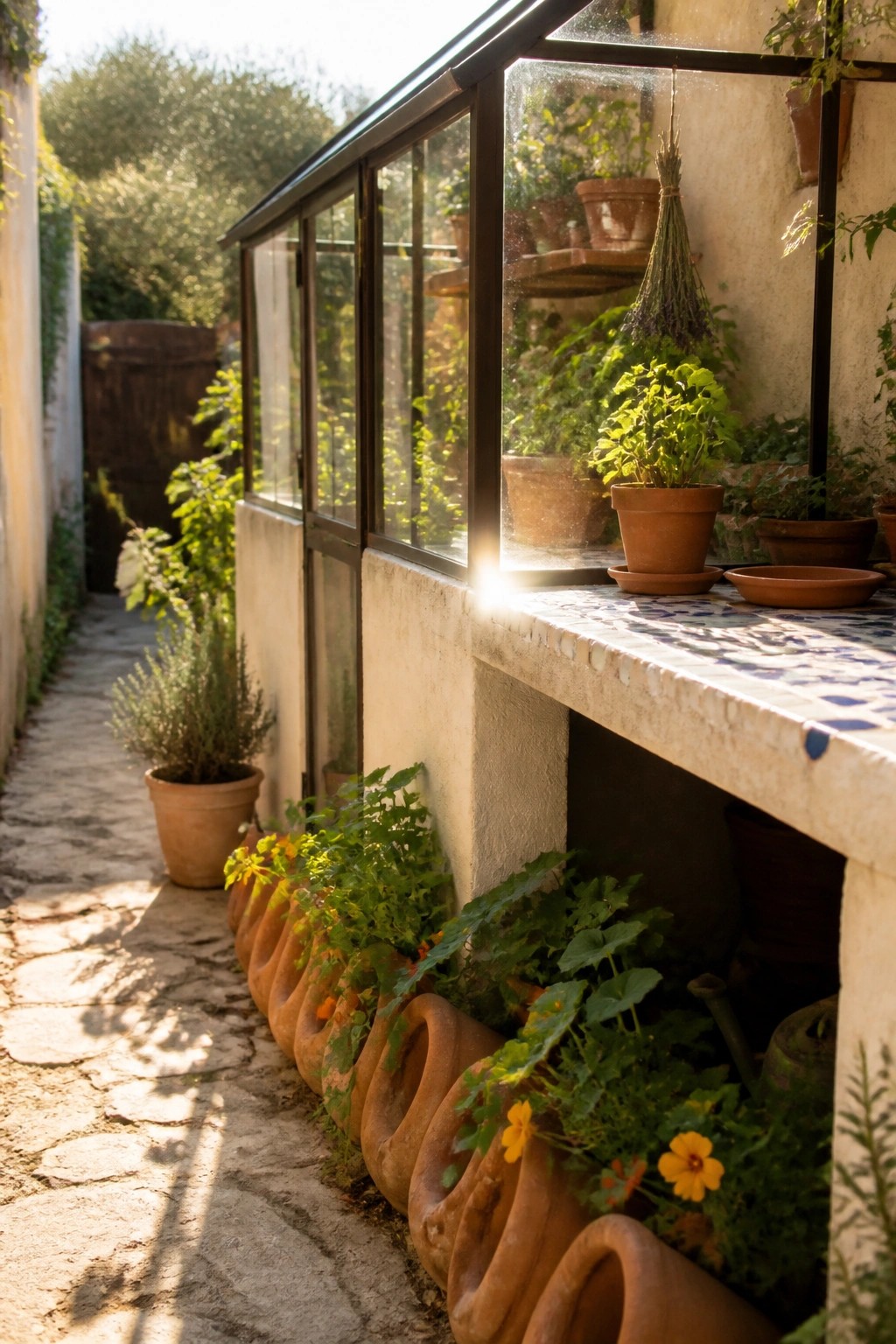
A lean-to greenhouse works well in tight side yards because it uses the house wall as one side and leaves room for a simple path. It turns a strip that often goes unused into a place for growing without crowding the rest of the yard.
Run the greenhouse along the wall and keep the base open for extra pots or low planting. A stone path beside it makes it easy to reach everything, and the setup suits homes where the side garden is long but narrow.
Lay a Gravel Path With Stepping Stones

A gravel path with stepping stones gives a small greenhouse a clear route without eating up much ground. It keeps the area practical for walking even after rain and helps the structure feel settled into the garden instead of stuck off to the side.
This setup works well in narrow side yards or compact back corners where a full walkway would feel too wide. Keep the stones slightly uneven so water drains and the gravel stays in place. A few low plants along the edges soften the look without blocking access.
Frequently Asked Questions
Q: Can I really fit a greenhouse along a narrow side yard without blocking the path? A: Measure your available width first and go with a lean to style that hugs the fence or wall. This keeps the walkway clear while still capturing good sun. Position the door at the end so you step straight in without turning sideways.
Q: How do I stop the inside from overheating on hot afternoons? A: Open the vents or roll up the side panels early in the day. Add a shade cloth over the top during peak summer heat. Water the floor lightly in the morning to cool the air naturally as it evaporates.
Q: What should I grow first if I am new to small greenhouses? A: Start with leafy greens and herbs that thrive in tight spaces. They mature fast and give you quick wins while you learn the temperature swings. Expand to tomatoes once you have a season under your belt.
Q: Will winter cold ruin the plants in these compact setups? A: Insulate the north wall with bubble wrap or old blankets at night. Move pots closer together so they share warmth. A simple heat mat under seedlings handles the worst freezes without much extra cost.
