

I have found that greenhouses in backyards often succeed or fail based on how well they connect to daily routines like watering and harvesting.
Placing them too far from the house can make regular care feel like a chore after a while.
Ventilation choices matter more than most people expect at the start.
I would test a lean-to style against my fence before committing to a freestanding model in my own yard.
The ideas that focus on practical growing zones tend to hold up better once the weather turns.
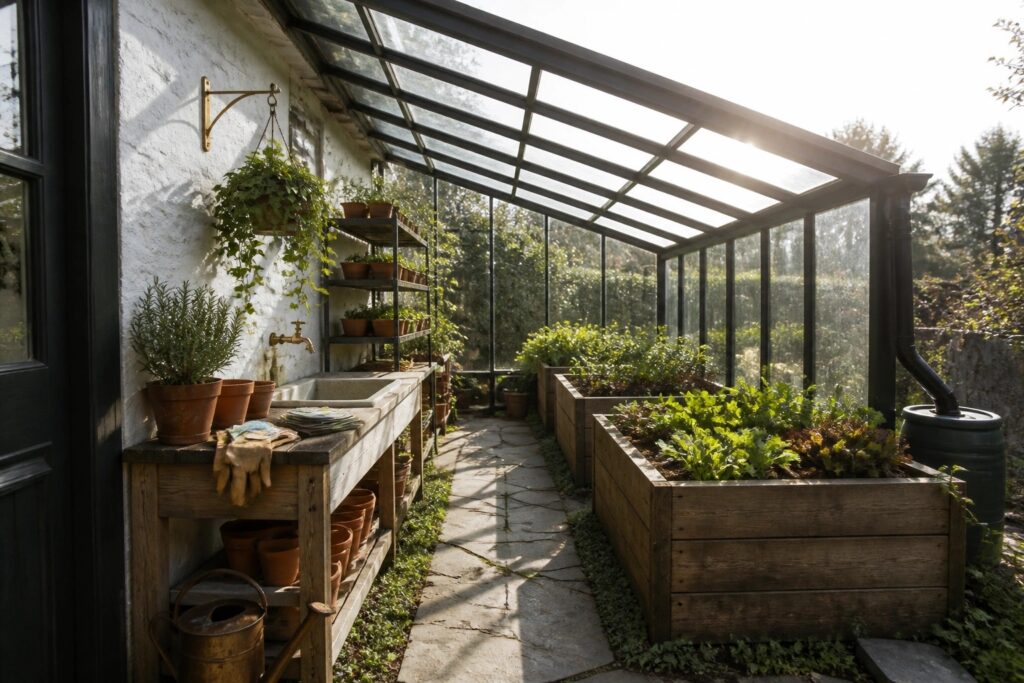
Lean-To Greenhouse With Attached Potting Space

A lean-to greenhouse built against the house wall gives you growing room without taking over the whole yard. Placing a solid potting bench right at the door makes the whole setup more practical, since you can prep trays and move plants in just a few steps.
This layout works well on smaller properties or along a side of the house that gets good light. Keep the bench stocked with basic tools and soil so you are not hauling things back and forth across the yard. Make sure the roof angle lets in enough sun and that the bench height matches how you like to work.
Add Climbing Roses Around The Greenhouse

Climbing roses make a greenhouse feel more settled in the garden. They soften the glass and frame the entry without taking up much ground space, and they bring a bit of color and scent right where you walk in and out every day.
Place them on both sides of the doors so they can grow up the frame over time. This works well on most backyard greenhouses, especially ones with simple trellis panels or brick bases. Just keep the lower stems trimmed so air can still move through the base.
Vertical Shelving For More Growing Room
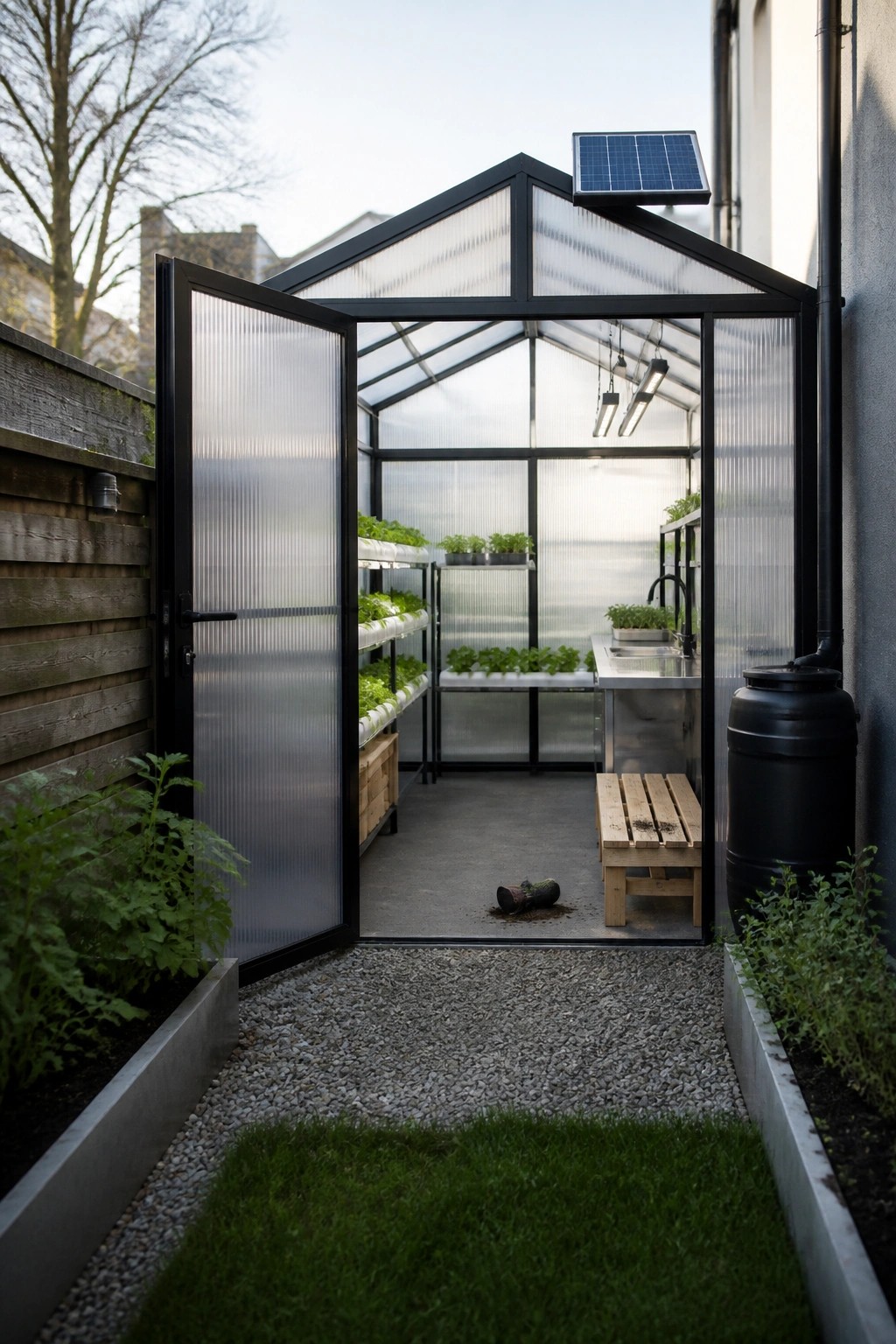
Vertical shelving makes a small greenhouse far more productive without needing extra floor space. The racks let plants get good light from multiple levels, so you can grow herbs, greens, and seedlings in the same footprint that would otherwise hold just a few pots on the ground. Many people like this setup because it turns the structure into a real working garden instead of just a place to store plants.
This approach works best in backyards where space is tight but you still want steady harvests. Keep the bottom level clear for larger pots or a work table, and use the upper shelves for lighter trays. Just watch the weight on the frame and make sure everything stays easy to reach for watering and harvesting.
Line Up Multiple Hoop Greenhouses

Many backyard growers find that placing several hoop greenhouses side by side makes daily care much simpler. You can keep different crops separate, start seedlings in one while another holds mature plants, and move between them without extra steps.
This works best on a level spot with a straight path running alongside. Wood bases help the structures sit steady, and a simple gravel or paver path keeps the area usable in any weather.
Greenhouses With Double Doors That Open Wide

Double doors make a greenhouse feel more connected to the rest of the yard. They let you move trays and tools in and out without hassle, and they turn the structure into an easy stop while you work outside. The open doorway also pulls air through on warm days, which helps with ventilation.
This setup works best in smaller backyards where the greenhouse sits close to paths or beds. Keep the doors simple and functional so they stay easy to open even when your hands are full. A gravel path leading right up to the threshold helps keep things practical.
Add a Potting Bench Next to Your Greenhouse

A potting bench right outside the greenhouse door keeps the workflow simple. You can move plants in and out quickly, sort seedlings, and store tools without extra trips across the yard.
This setup works best in a backyard where the greenhouse sees regular use. Build the bench at a comfortable standing height, add open shelves underneath for bins and crates, and keep the surface clear enough for daily tasks.
Rolling Racks Keep Greenhouse Work Simple

Rolling plant racks are one of the easiest ways to keep a greenhouse productive without constant rearranging. They let you move seedlings in and out of sun or shade as needed, and they make watering and harvesting faster since nothing is fixed in place. The carts also free up floor space when you need room for larger pots or cleanup.
This setup works best in a backyard greenhouse where you grow a mix of starts and mature plants at the same time. Add a storage bin nearby for root crops and a sink for quick rinsing, and the space stays organized through the whole season. Just make sure the floor is level so the wheels roll smoothly.
Raised Beds Around a Greenhouse

Placing raised beds right next to a greenhouse keeps everything close and easy to manage. You can move plants in and out without much effort, and the beds give you extra growing space for crops that do not need the protected environment inside. The dark wood beds in this setup match the greenhouse and help define the space without taking over the yard.
This works best in smaller backyards where you want both controlled growing and open beds. Keep the beds narrow enough to reach across, and leave a clear path so you can wheel a cart through without stepping on plants. Avoid crowding the beds too close to the greenhouse doors if you need room to open them fully.
Add a Central Potting Table for Daily Use
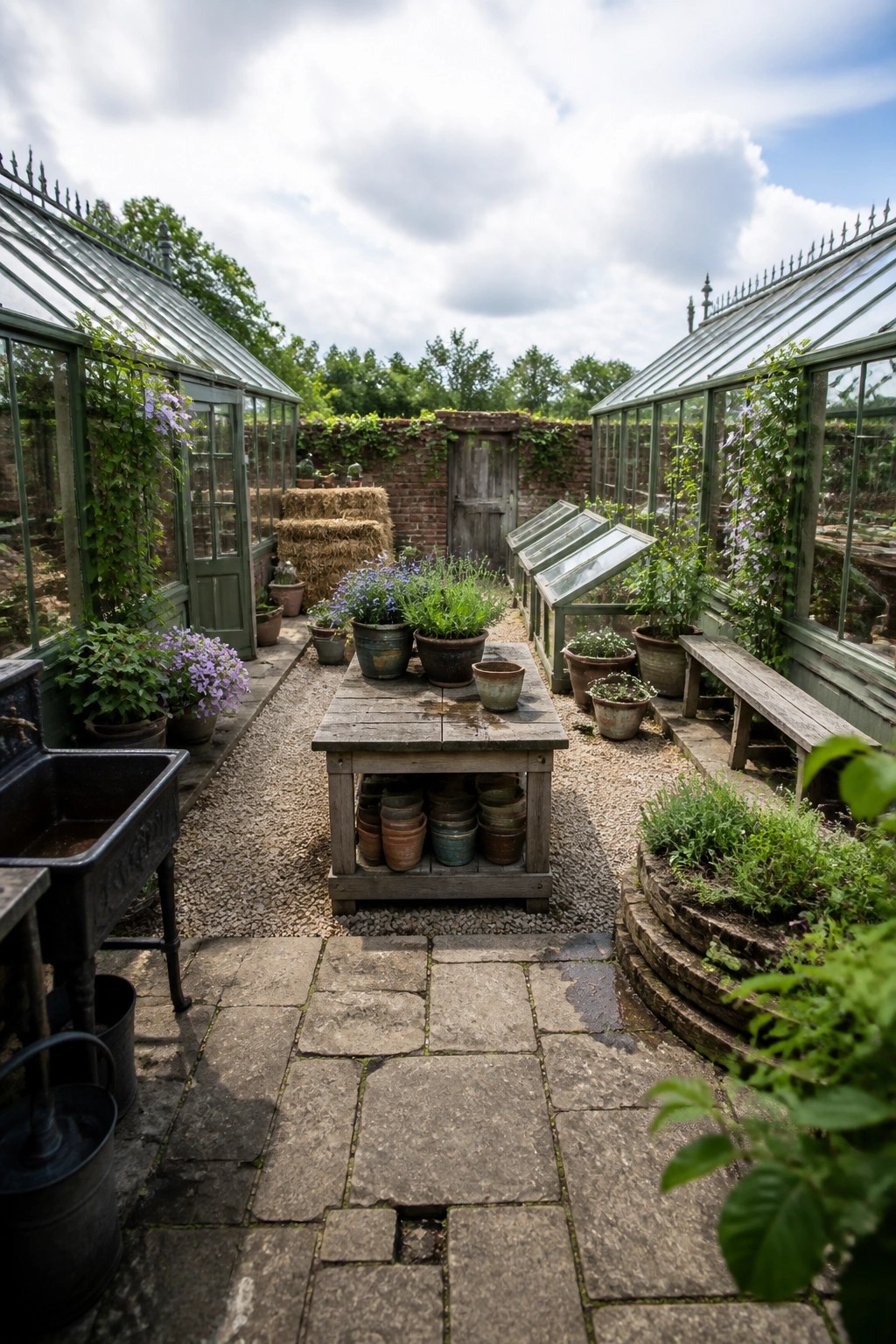
A potting table placed right in the middle of the path keeps tools and plants within easy reach while you move through the space. It turns the walkway into a working area instead of just a route between beds, which makes regular tasks like watering and repotting feel less scattered.
Gravel underfoot handles spills and drainage without much upkeep, and the open shelf below the table holds stacks of empty pots so they stay dry and sorted. This setup works well in a long narrow greenhouse or along a side yard where you need quick access but do not want built-in benches taking up bed space.
Attach Your Greenhouse to a Deck
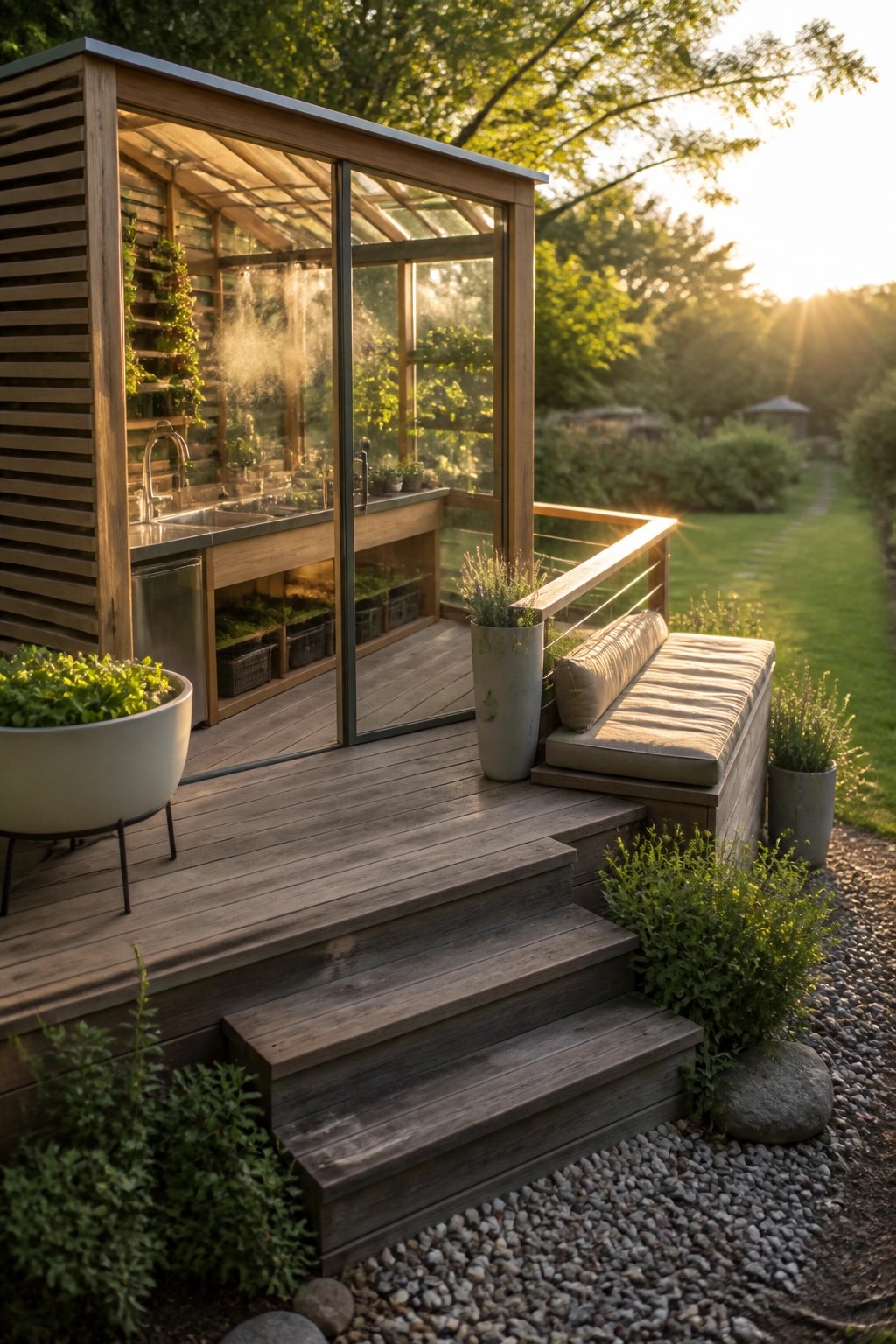
Many people find it useful to place a greenhouse right against a deck. It turns the space into something you can step into easily during the day, without needing to cross the yard first. The glass doors make it simple to move trays or tools back and forth.
This works best on homes that already have a deck or patio in place. Keep the connection level so the doors open without a step, and use the deck surface for extra staging area when you are potting or harvesting.
Add Long Benches for Seed Starting

A long bench along one wall gives you a solid surface for rows of seed trays without crowding the floor. It keeps everything at a workable height so you can check moisture and move plants around without constant bending.
This layout suits smaller or narrow greenhouses because it leaves a clear path down the middle. You can store empty trays and supplies underneath while still having room to walk through with a watering can.
Raised Beds Around a Greenhouse
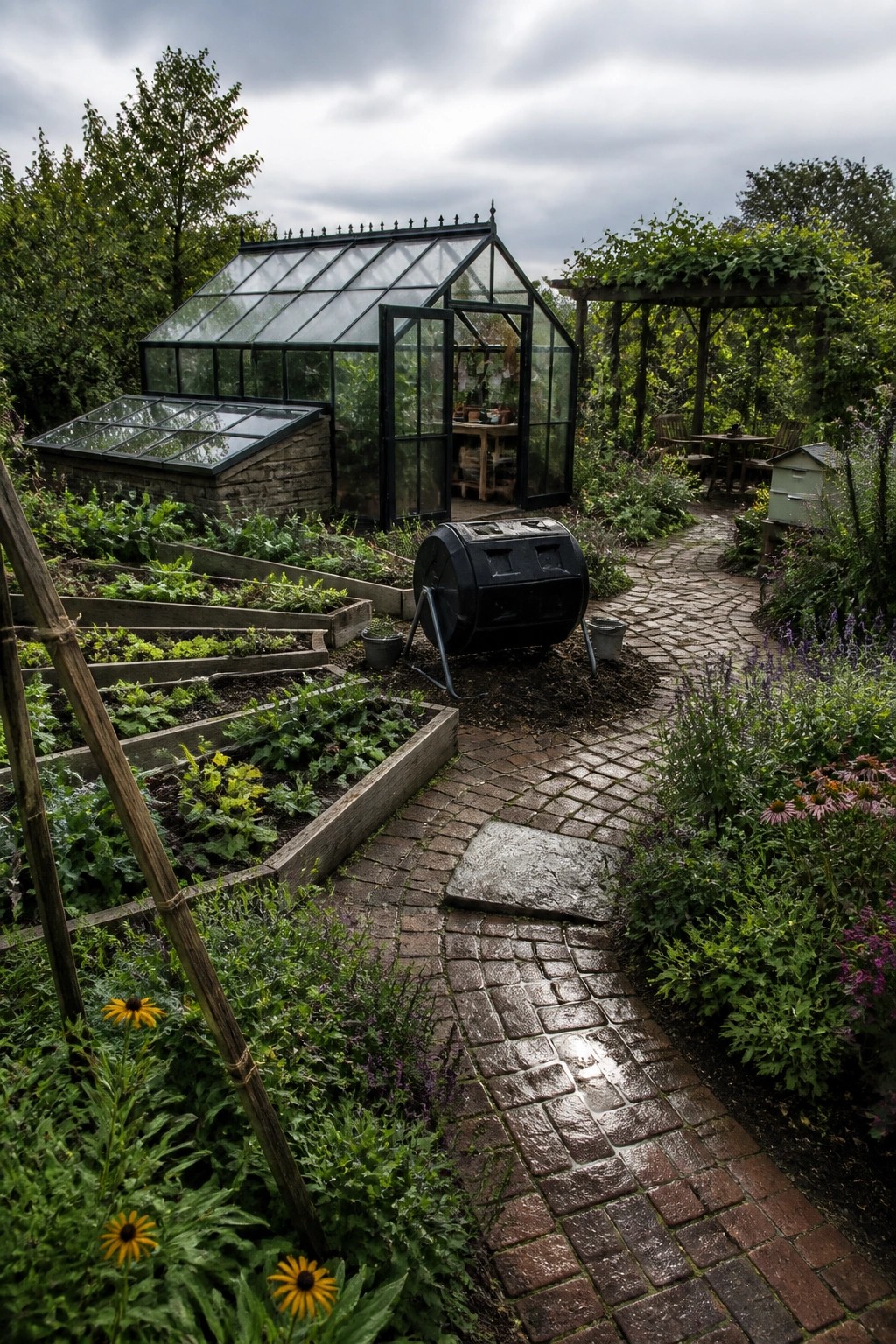
Placing raised beds right next to a greenhouse helps keep the whole growing area organized. You can move seedlings in and out easily, and the beds stay contained so the space does not turn into a muddy mess after rain.
This layout suits smaller backyards where every bit of ground needs to work hard. Keep the beds low enough that they do not block light or door access, and use a simple path between them so you can wheel a cart through without trouble.
Add a Rain Barrel Inside the Greenhouse
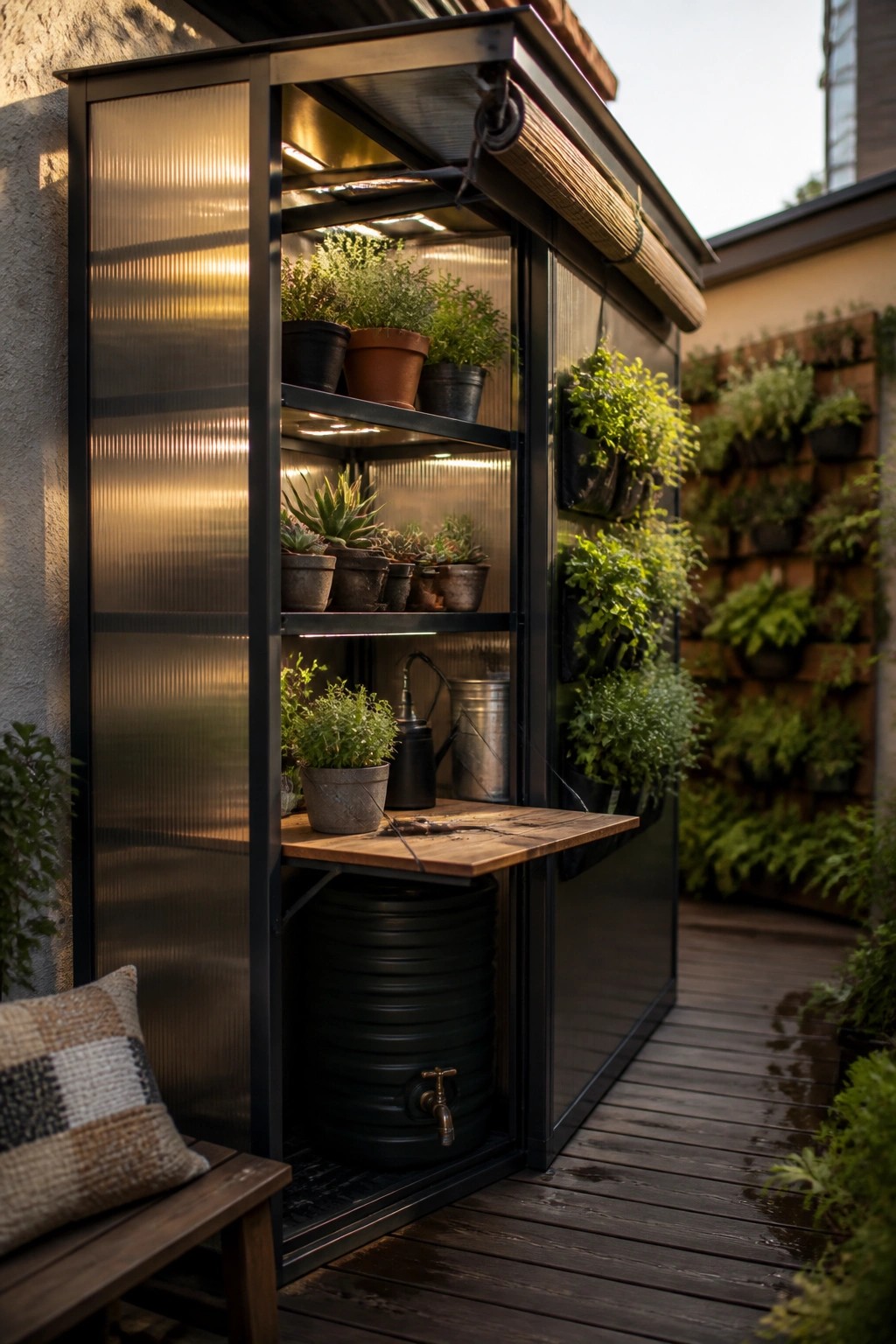
A rain barrel tucked right into the greenhouse keeps water handy without needing extra space or extra trips outside. It turns a basic structure into something more practical for daily watering, especially when the greenhouse sits on a deck or patio where running a hose can be awkward.
This works best in smaller backyards where the greenhouse needs to handle both growing and simple chores in one spot. Place the barrel near the door so it fills easily from a downspout and leaves room for a small work surface in front of it.
Keep a Chalkboard for Planting Notes
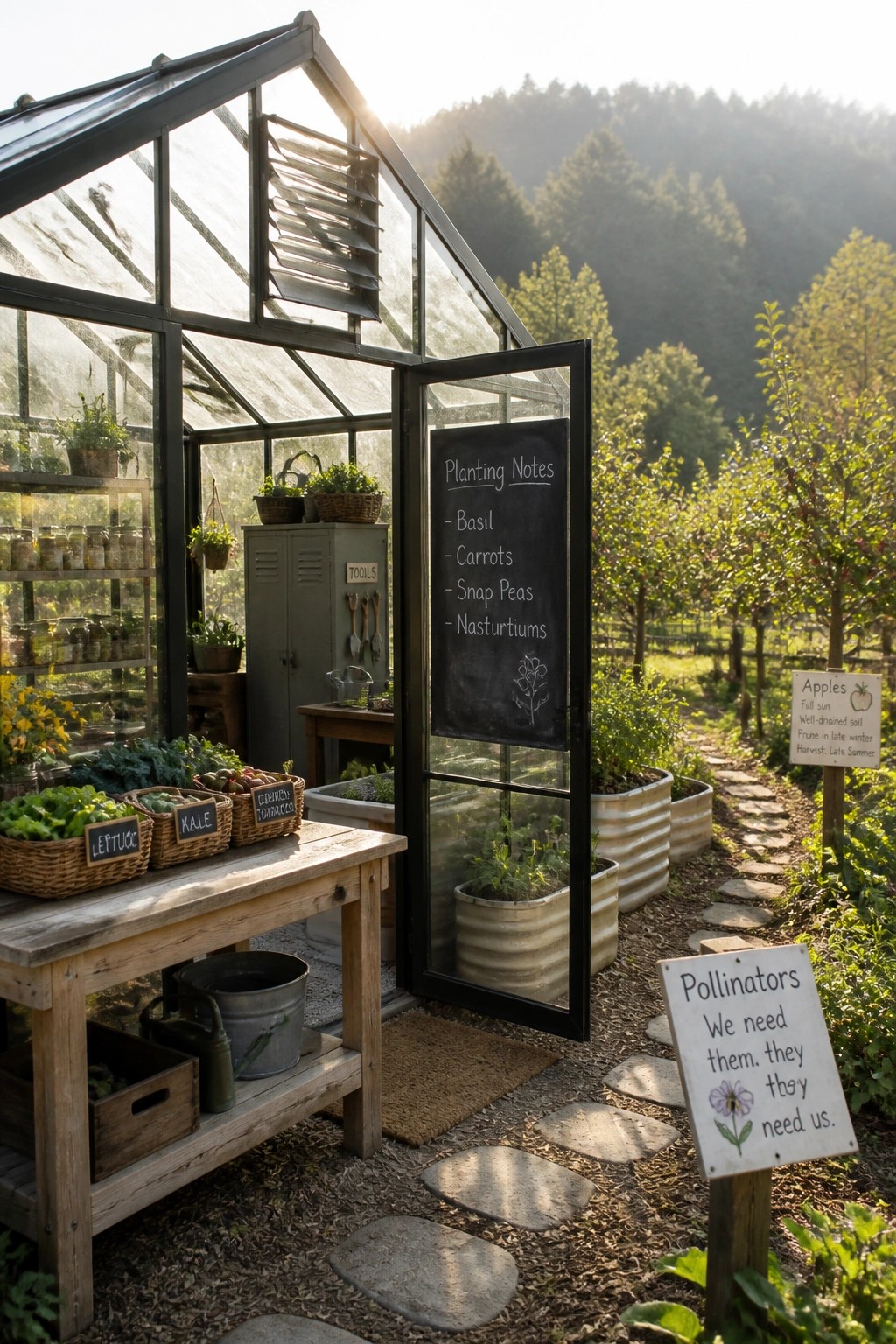
A chalkboard mounted near the greenhouse door gives you a quick place to track what is growing and what comes next. It keeps basic crop details visible every time you step inside without needing extra paper or a phone.
Place it where you can reach it easily and update it as you sow or harvest. This setup suits smaller backyard greenhouses that grow a range of vegetables and herbs through the season.
Add An Outdoor Work Island Next To The Greenhouse

An outdoor island gives you a solid place to handle daily tasks like potting seedlings, trimming plants, or sorting the harvest. It keeps the mess outside and makes the whole process feel more practical, especially when you are moving back and forth between the greenhouse and the yard.
This works best in smaller spaces where you want everything close together. Use a material that can take water and dirt, and keep a few stools nearby so you can sit during longer jobs. Just leave enough room around the edges for easy access to the greenhouse doors.
Greenhouse Placement Along a Garden Path
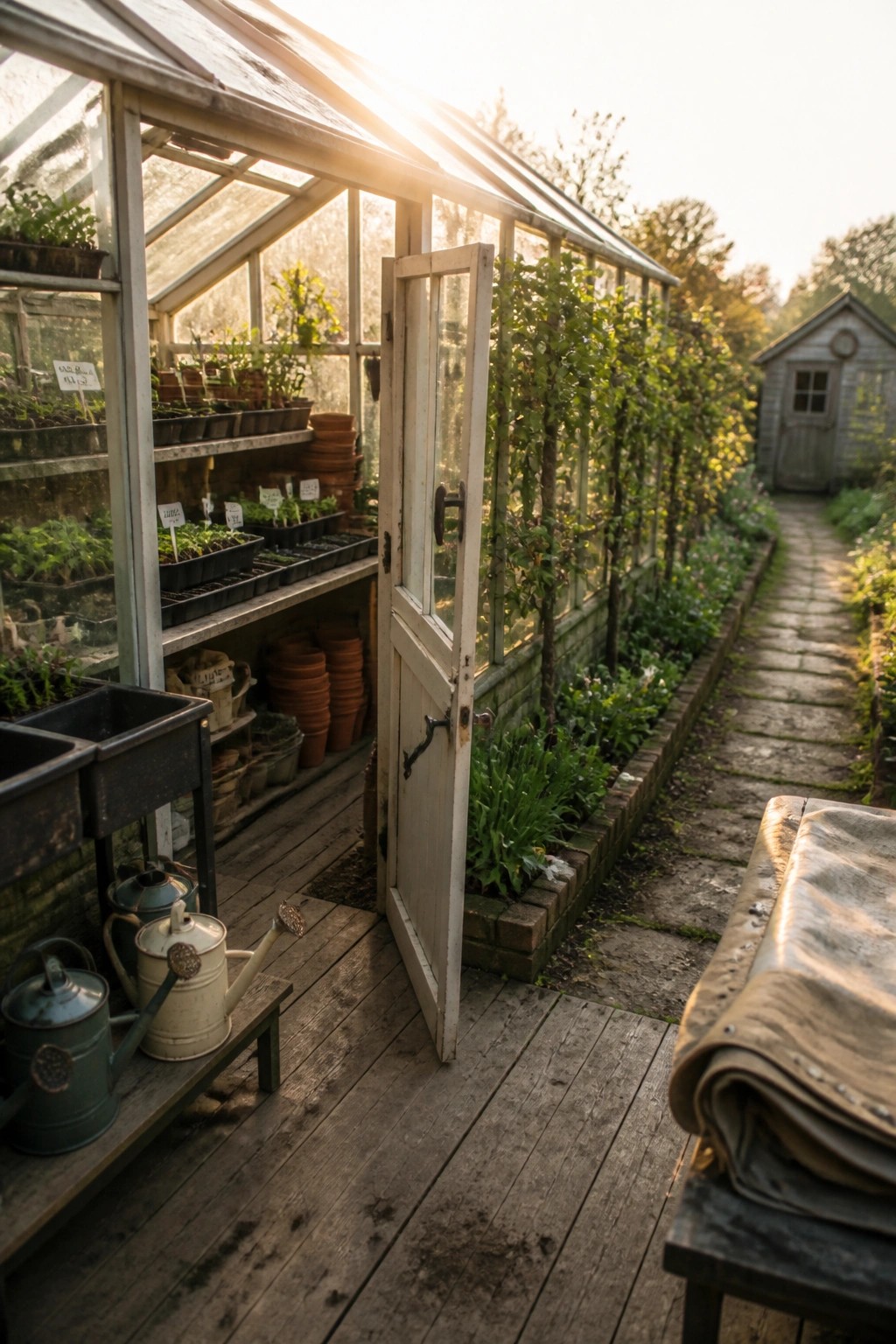
A greenhouse works best when it sits right next to a main garden path. This layout makes it simple to step inside for watering or checking seedlings and then continue straight out to the beds outside. The open door in the image shows how that connection turns the greenhouse into part of the daily route instead of a separate building you have to detour toward.
Put the structure on one side of an existing path so the door opens directly onto it. Stone or gravel works well because it handles wet feet and wheelbarrows without turning muddy. This setup suits smaller backyards where every step should lead to something productive.
Install A Potting Bench With Open Storage

A potting bench makes daily greenhouse work much easier. It gives you a sturdy surface for repotting and seeding while keeping tools and supplies close at hand instead of scattered around the floor.
Place the bench along a wall with good light and leave the area below open. Bins and crates fit neatly underneath for soil, labels, and harvested herbs so you can reach what you need without extra steps.
Add A Kitchen Counter In The Greenhouse
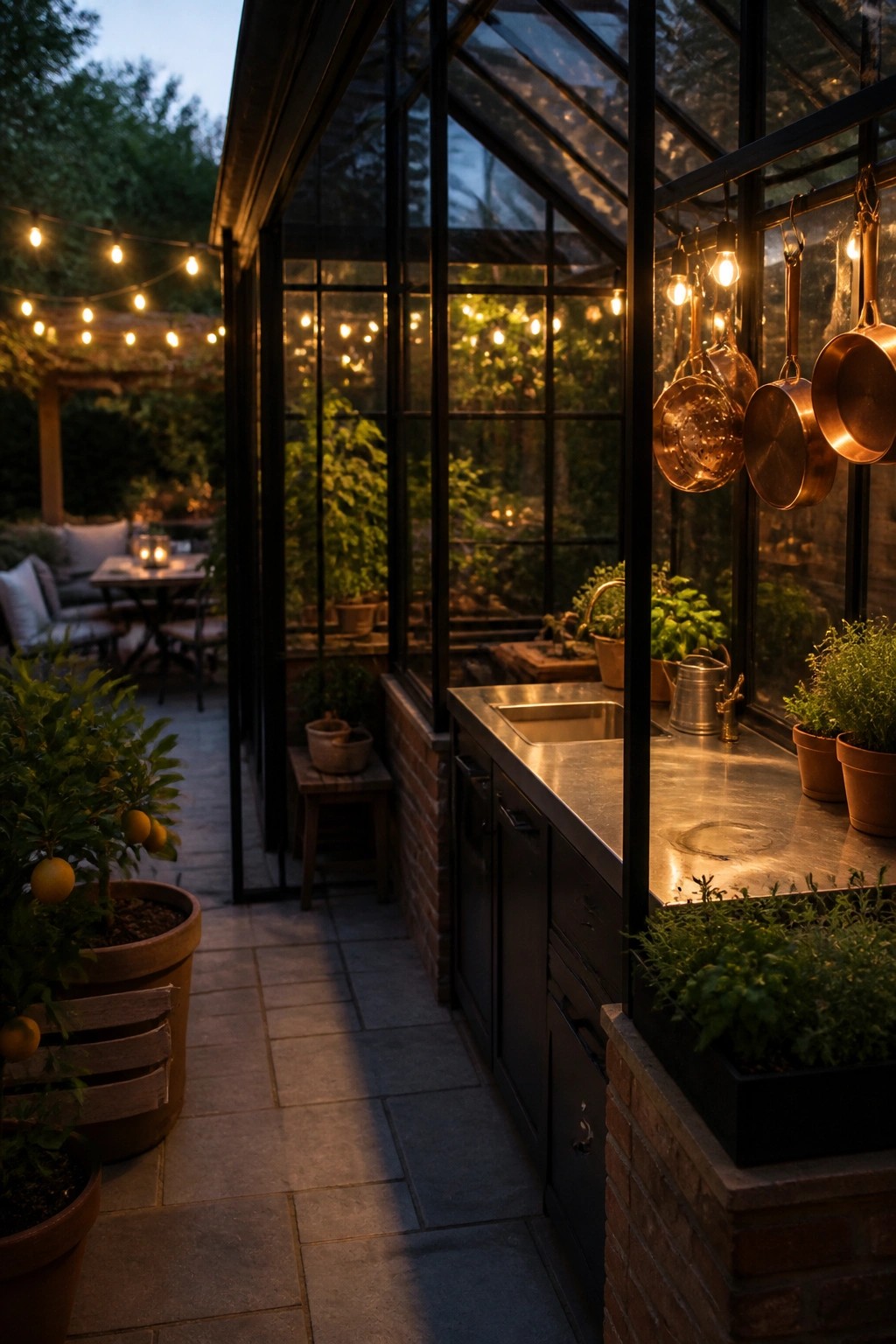
A counter and sink inside the greenhouse makes the space more useful day to day. You can rinse vegetables, pot plants, or prep meals without running back to the house. The setup keeps everything in one spot and cuts down on extra trips.
This works best in a greenhouse that already gets regular use. Keep the counter simple and near a water line if possible. Make sure the surface can handle moisture and soil so it stays practical over time.
Edge Greenhouse Beds With Log Borders
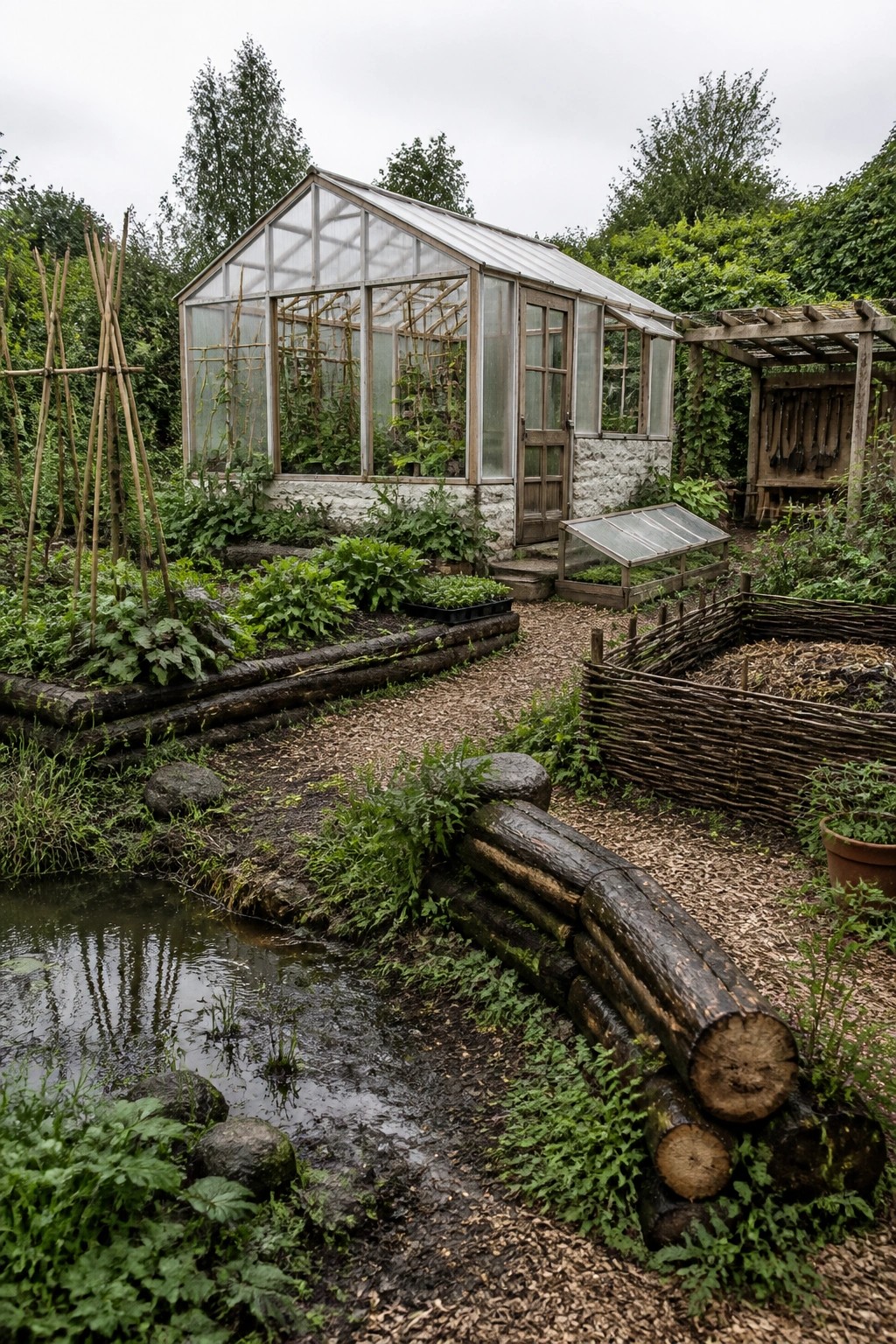
Log edging gives greenhouse beds a clear shape while keeping the whole garden feeling natural. It holds the soil in place and creates easy paths between growing areas, which helps when you are moving plants or harvesting.
This approach works best in productive backyard spaces where you want simple, low-cost structure. Stack the logs two or three high, tuck them into the ground a bit for stability, and plant right up to the edge. It suits smaller plots that already lean toward a rustic style.
Position a Greenhouse Along a Garden Path

A greenhouse gains a lot when it sits right on a path instead of tucked off to the side. The path makes the structure feel like part of the daily garden route rather than a separate building you only visit when needed. It also keeps the ground around the greenhouse from turning into a muddy mess during wet seasons.
This layout works best in a backyard that already has defined beds and walking routes. Keep the path simple, use the same material on both sides of the greenhouse, and let plants spill a little onto the edges. That way the greenhouse reads as another garden room instead of an added structure.
Add Built-In Irrigation Controls

A manifold station mounted right on the greenhouse makes daily watering much simpler. Instead of running separate hoses or timers across the space, everything routes through one accessible panel. The setup also leaves room for a small fridge underneath, which comes in handy for storing seeds or keeping drinks cold during long work sessions.
This works best on a greenhouse that gets regular use. Place the panel near the main door so you can check and adjust valves without stepping all the way inside. Just make sure the area stays protected from direct rain and that the lines are clearly labeled from the start.
Greenhouse Doors That Open Onto the Garden
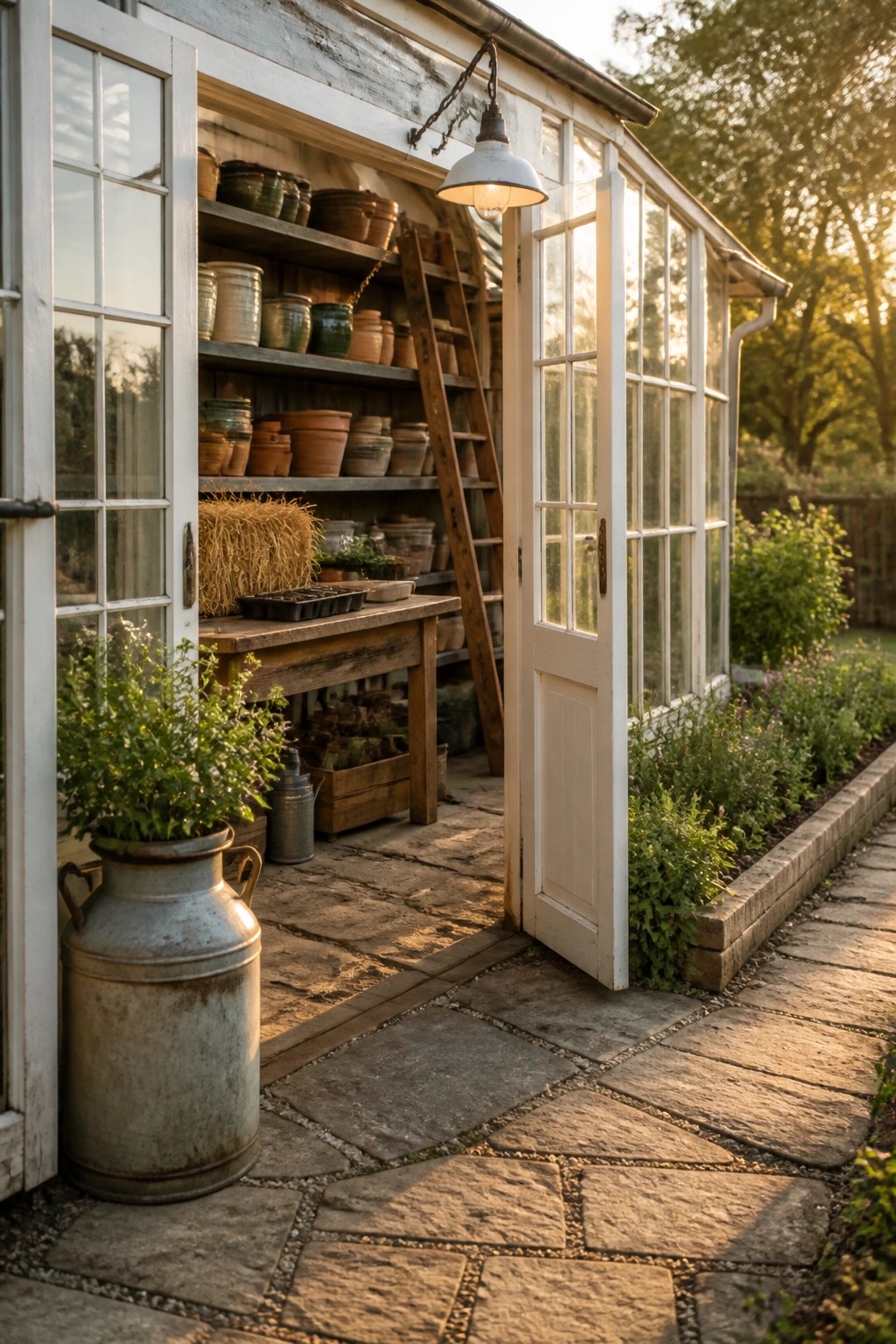
One useful way to make a greenhouse more practical is to keep the doors wide open during the day. This setup lets you move pots, tools, and seedlings in and out without extra steps, and it keeps the space from feeling closed off from the rest of the garden.
It works especially well in smaller yards where the greenhouse sits right beside the beds. A simple stone path helps here too, since it gives you a solid surface underfoot and keeps things from getting muddy when you are carrying trays back and forth.
Frequently Asked Questions
Q: How much space do I really need for one of these greenhouses? A: Start with a 6 by 8 foot structure if your yard feels tight. That size fits a couple of raised beds plus shelves without crowding the rest of your space. You can always add on once you get the hang of it.
Q: Will a greenhouse still work if my yard gets only partial sun? A: Place it where it catches at least six hours of direct light each day. Trim any low branches that block the morning sun and the plants will thank you. South or southeast exposure usually gives the steadiest results.
Q: What is the simplest way to water everything inside? A: Run a soaker hose from your outdoor spigot and lay it along the beds. Turn it on low a few times a week and the soil stays evenly moist. Checking the plants by hand now and then keeps you in touch with how they are doing.
Q: How do I stop pests from moving in? A: Screen the vents with fine mesh and keep the door closed when you are not using it. Remove any yellowing leaves right away so bugs have fewer places to hide.
