


When I look at my own backyard I realize that the spaces I enjoy most are the ones shaped gradually with projects I could do myself.
It is easy to overlook how a few well placed handmade elements can guide the eye and make the whole layout feel more settled.
I usually start with the simplest builds to see how they hold up before adding more.
In practice the gardens that last are the ones where the materials age naturally and the plants have room to settle into the design.
Testing one or two of these approaches in a corner of the yard often shows whether they will work for the rest of the space over time.
Tiered Raised Garden Beds

Nothing beats these stacked wooden beds for a simple veggie garden. They use yard space smartly, with plants like full heads of lettuce right at picking height. The rough, aged wood keeps everything looking casual and built to last through seasons.
Stack a few levels on uneven ground, maybe with rocks for stability underneath. Go for untreated cedar or old fence boards to avoid chemicals around food crops. Works great in average backyards, even shady spots if you pick the right greens. Keep soil fresh each year.
Mosaic Garden Path

A garden path pieced together from colorful broken tiles, stones, and glass bits gives your yard that one-of-a-kind handmade feel. Set right into concrete, it turns a simple walkway into something fun and personal. Here, the mix of blues, reds, and earthy tones stands out nicely against the lavender borders and green grass.
You can put one together pretty easily. Collect old plates, tiles, or pebbles, smash them into rough shapes, then press into fresh concrete along your desired route. It suits smaller gardens or paths to a patio or side door best…keeps mud off your shoes too. Make sure pieces aren’t too sharp, and let it cure well before heavy use.
Build a Simple Concrete Block Bench

One easy way to add seating to a backyard patio is stacking concrete blocks into a bench. It’s sturdy enough for everyday use and gives that handmade feel without much fuss. In this setup, a cushioned top and pillows make it comfy, and it sits right against the wall next to some plants.
This works best in smaller yards or cozy patios where you want low-maintenance spots to sit. Stack the blocks two high, add a wood or foam seat, and tuck it near a fence or wall. Go for neutral cushions that weather well. Skip it if your space gets heavy foot traffic, though. Keeps things casual and practical.
Wheelbarrow Planter Display

An old wheelbarrow makes a perfect casual planter for the garden. Park it in a corner and fill the bed with soil for herbs or pack it with smaller pots of flowers like petunias and basil. The rusty galvanized metal gives it that worn-in look people love, especially when stacked with crates and buckets nearby.
This idea fits right into side yards or patios where space is tight. Grab one from a garage sale, clean it a bit, and let plants spill over the edges. It holds up outdoors year after year… just drain it in winter. Works for any casual garden style.
Narrow Garden Water Channel

A long narrow water channel like this makes a quiet focal point right in your garden path. Stone edging holds it together, with tall reeds poking up from the water and low plants along the sides. That old wooden barrel at the end spills water in gently. It’s got that handmade charm without looking fussy, and the reflection adds a bit of calm to the yard.
You can build one along a walkway or yard border using basic stone or concrete blocks. Pick tough grasses or sedges that handle wet feet, and source a barrel from a salvage spot. Works best in smaller spaces or cottage-style gardens. Just keep the depth shallow, say a foot, so it’s easy to clean and won’t drown critters.
Vertical Succulent Planters on Balcony Rails

Balcony space is tight. But these wooden planter boxes hung right on the rail pack in lots of succulents without taking up the floor. The slatted wood and little name tags make it look handmade and personal. String lights nearby add a soft glow at dusk.
Build your own with scrap wood or old crates. Bolt them securely to the rail and drill drainage holes. Go for tough succulents like echeveria or aloe. It works great on urban balconies or small patios. Just check the weight so nothing sags.
Fairy Garden in a Tree Stump

Nothing beats turning an old tree stump into a fairy garden. It gives your yard that handmade charm with just moss, succulents, and a few tiny details like a little blue door. These setups feel playful and alive, drawing the eye without taking up much room.
Grab a stump from your yard or a log slice. Layer on moss for the base, tuck succulents into cracks or old teacups, and add a pebble path. It works great in shady corners or along a walkway. Succulents keep it easy to care for… just water now and then.
Potted Lemon Trees Along a Walkway
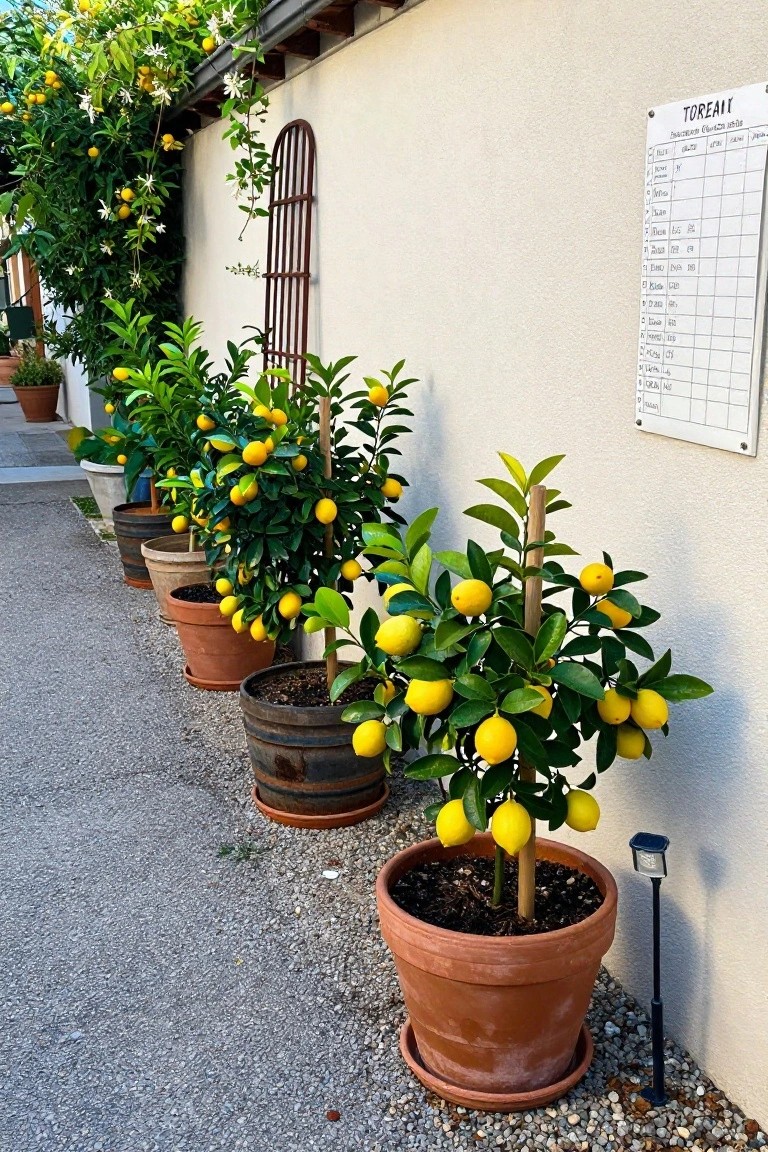
A row of lemon trees in pots makes a garden feel alive and welcoming right away. The bright yellow fruit pops against green leaves, and it gives that fresh, homemade look without much fuss. It’s especially nice how they hug a simple path, adding color and a bit of scent on warm days.
Pick dwarf varieties that stay manageable, and use whatever pots you have like terracotta or old barrels for that rustic touch. Set them in full sun along a side path or wall, spacing them a couple feet apart. They suit small spaces or rentals since you can shift them around, just keep the soil moist and fertilize through summer.
Simple DIY Garden Pond

A raised pond like this one brings a bit of calm right into your backyard. It’s built with a metal liner tucked into stacked stones, then filled with water plants like lilies and reeds around the edges. Drop in a plain terracotta pot as a fountain, and you get gentle ripples without fancy pumps. Folks love how it draws birds and butterflies, turning a plain corner into something alive and soothing.
To pull this off at home, start with an old stock tank or liner that fits your spot, edge it with flat rocks from a local quarry, and plant easy growers like iris or ferns nearby. It works great in small yards or beside a deck, keeping maintenance low if you skip fish. Just watch the water level in dry spells… and maybe add gravel paths to wander around it.
Espalier Fruit Trees on a Garden Fence

Flat-trained fruit trees like these pears make great use of a plain fence. They grow up instead of out, so you get fruit without taking garden bed space. The wires keep branches in place as they fill out, and it gives a neat, handmade look that fits right into a backyard setup.
Pick young trees from a nursery, tie them to wires stretched across the fence, and prune back side shoots each year. It works best along side yards or boundaries in small lots. Just watch for strong sun on the fence side… shade cloth helps new ones settle in.
Rustic Stone Herb Planter
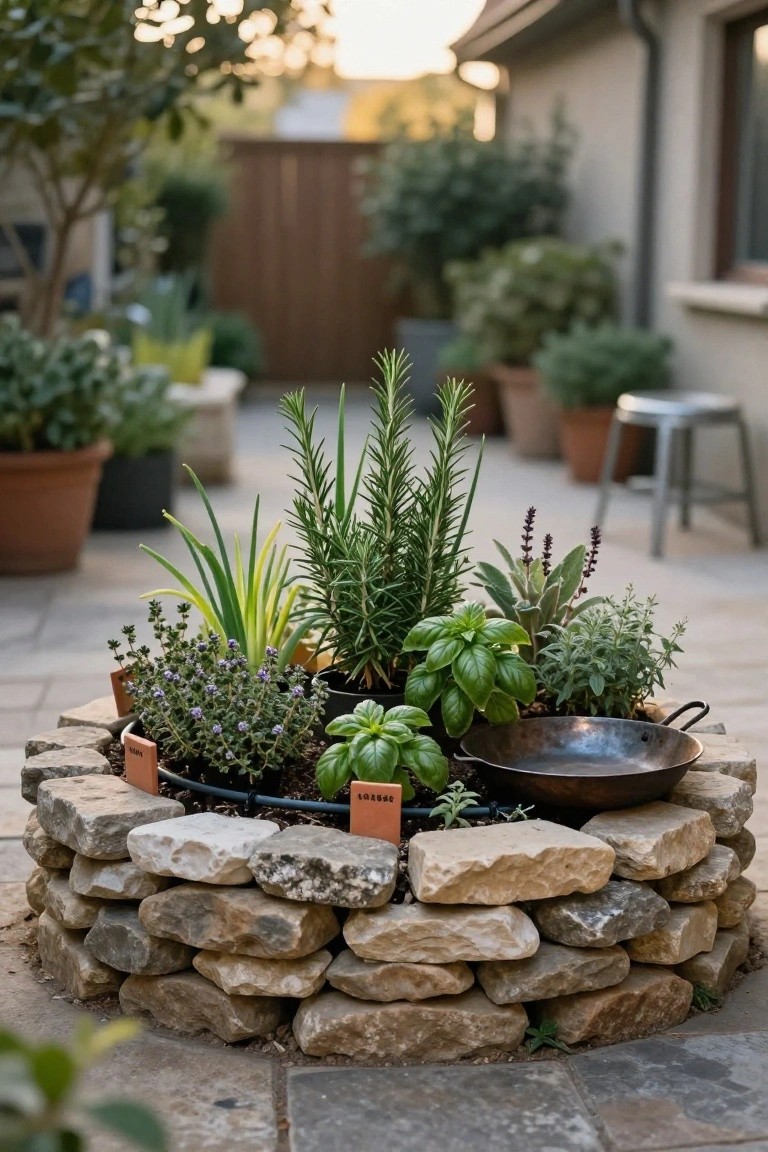
One simple way to add fresh herbs right where you need them is with a stacked stone planter like this. It uses natural fieldstones to form a low circular wall around a soil bed packed with rosemary, basil, thyme, and a few others. The handmade look fits any backyard patio or walkway, and it keeps things practical since you can snip what you need for cooking without wandering far.
Set it up in a sunny spot near the kitchen door or outdoor seating area. Stack the stones without mortar for that easy rustic feel, then plant herbs that like similar conditions. It works best in milder climates, and just top up the soil now and then to keep it going.
Wavy Pebble Paths for Garden Interest

Garden paths don’t have to be straight and boring. Lay down black and white pebbles in flowing wave shapes to add real movement through your yard. This kind of path catches the eye right away. It fits that handmade look without much fuss.
Try it leading to a shed or back gate where you walk often. Dig a shallow trench, line it with landscape fabric, then place larger black stones for the waves and fill with whites. Tall grasses on the sides keep it soft… suits most any backyard size.
DIY Pallet Dining Table
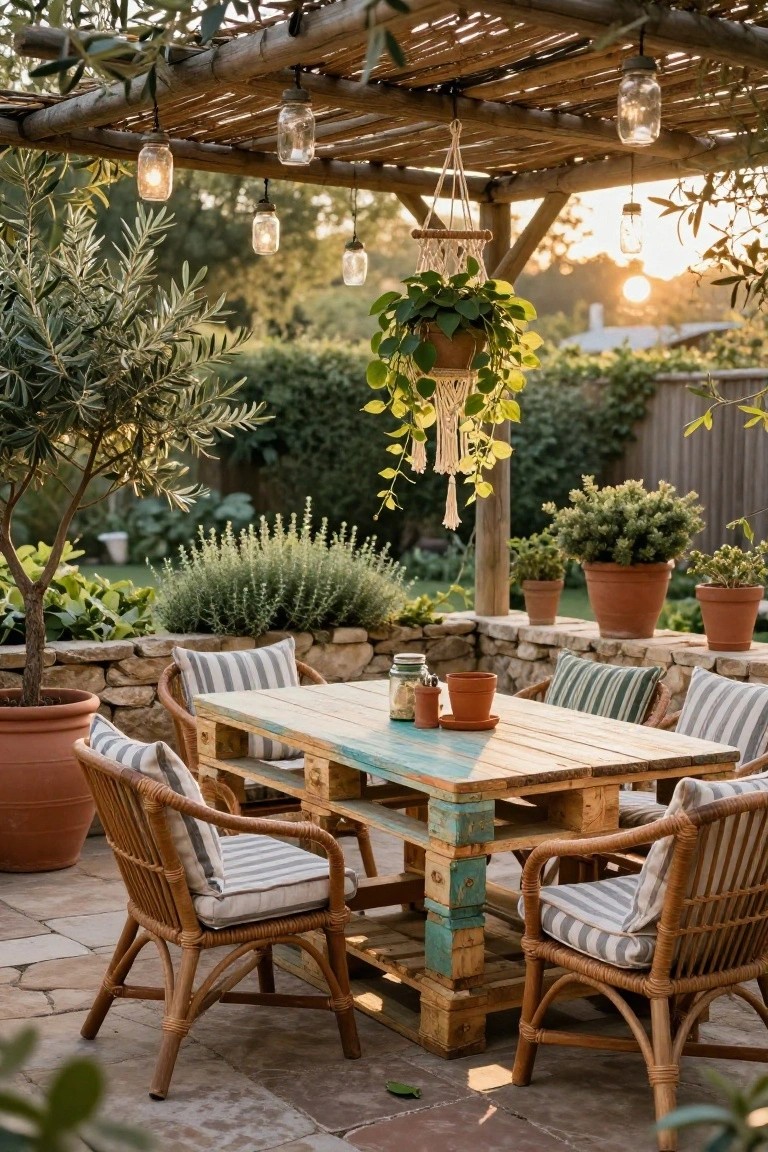
Nothing beats a sturdy table you build yourself for garden get-togethers. Here, old pallets get turned into a big dining surface with a bit of blue paint on the edges for that worn-in feel. It sits right under the pergola, pulling the whole patio together without looking fussy. Folks love how it mixes rough wood with softer plants nearby.
To pull this off, grab four or five pallets, sand them smooth, and screw them into a frame. Add rattan chairs like these for comfort. It suits small backyards or sunny terraces best… just seal the wood against weather. Keeps meals casual and cheap.
Build a Circular Stone Fire Pit
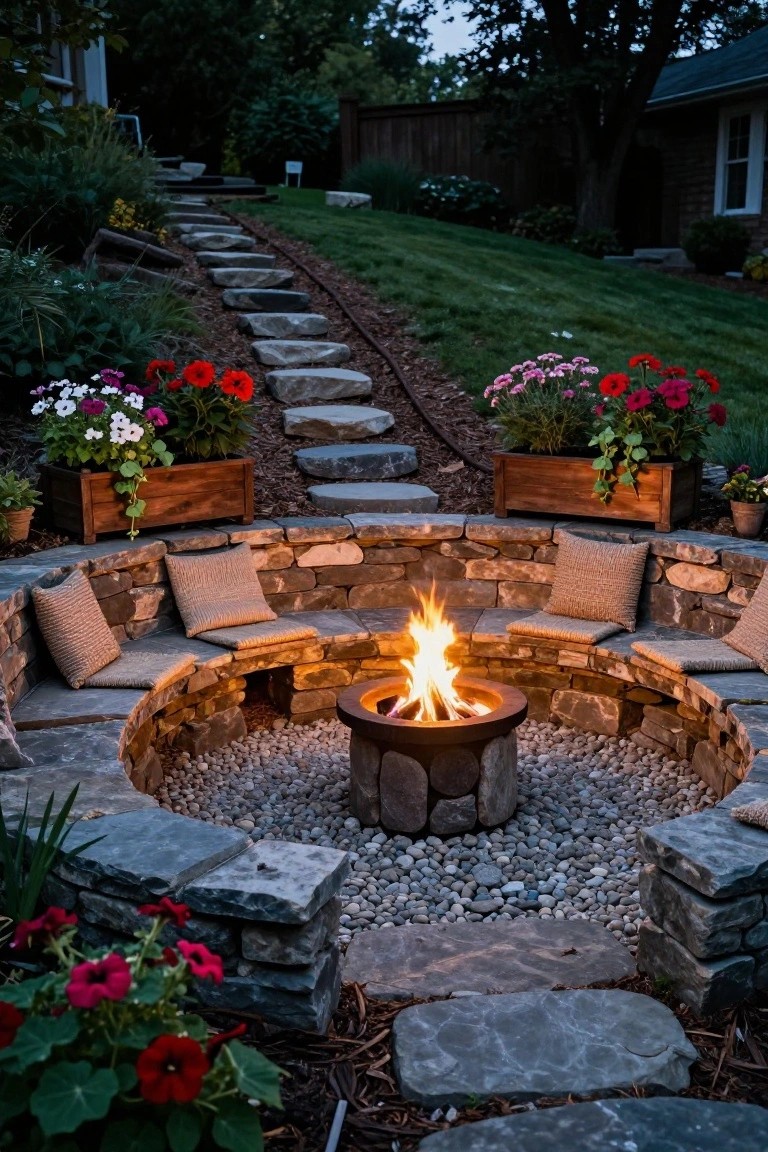
A fire pit set inside a low stone circle gives any yard a natural spot to gather without much fuss. The rough texture of the stone blends right into the garden and makes the whole area feel like it belongs there instead of being added on later. People tend to stay longer when the seating is built right into the structure.
This works best in a medium to large backyard where you can leave a bit of open ground around it. Use the same local stone for the path leading up to the pit so everything feels connected, and keep the inside filled with gravel for easy drainage. Just check local fire rules before you start building.
Edge Garden Paths With Collected Shells
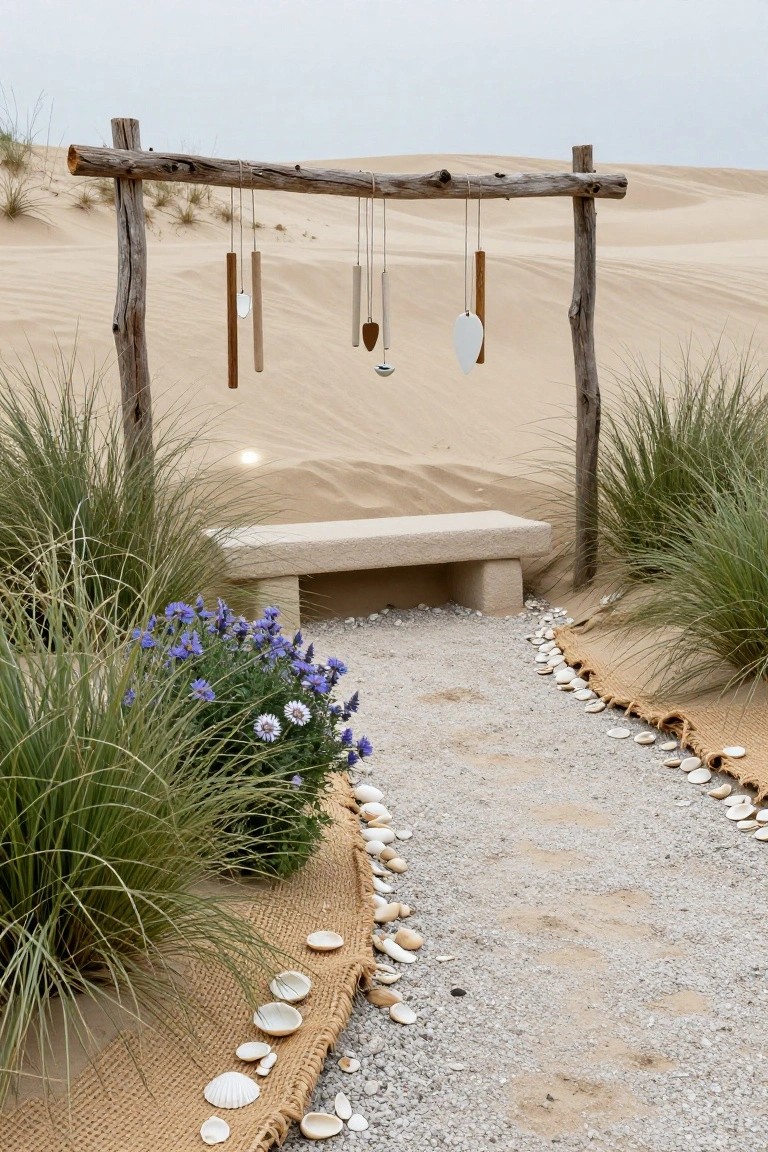
A border of shells along a simple gravel path gives the garden a collected, personal feel that looks like it was built slowly over time. It softens the edges without needing fancy materials and works especially well in open, sunny spots where you want a light, natural touch.
This idea suits smaller gardens or side areas where you already have gravel or sand underfoot. Lay down burlap or a similar fabric first to hold the shells in place, then add them a few inches deep along both sides. It stays low maintenance as long as you refresh the shells now and then after heavy rain.
Repurpose Old Windows for a Seed Starting Station

A simple frame made from old windows gives you a protected spot to start seeds early in the season. It keeps the soil warmer and shields young plants from wind and cool nights without taking up much room in the garden.
Set the frame on a low bench or directly on the ground in a sunny area. Use trays for small starts and tuck in a few recycled bottles to hold extras. This kind of setup suits small yards or anyone who likes to grow from seed each spring.
Mix Wood And Stone For A Simple Garden Path

This kind of path uses flat stones and thick wood rounds together to edge a pond or bed. The mix keeps things from looking too neat and gives the garden a relaxed, built-by-hand feel that still stays practical underfoot.
It works best in smaller yards or along water where you want a clear route without pouring concrete. Cut rounds from a fallen tree or source them cheaply, then set them with stones so the wood does not shift. Treat the wood first if you want it to hold up for more than a season or two.
Use Metal Edging for Clean Gravel Beds

Metal edging gives a gravel garden a finished look while holding everything in place. It creates a simple border that keeps the stones from spilling into planting areas or onto paths, and it pairs well with tough, spiky plants that need little care.
Install it around beds or along the edge of a seating area like a concrete bench. It works in most yards, especially those with dry soil or full sun, and stays low enough not to draw attention while still doing its job.
Frequently Asked Questions
Q: What kinds of recycled items work best for these projects?
A: Old wooden crates make great planters once you line them with plastic. You can also turn glass jars into hanging lights if you add some wire. Just clean everything well before you start so nothing rots or rusts.
Q: How do I keep my DIY garden features from falling apart after a few weeks?
A: Use outdoor glue or screws instead of tape for anything that sits outside. Check the joints every month or so and tighten them up. A quick coat of sealant helps wood last through the seasons.
Q: Do these ideas work in a small balcony garden?
A: Scale down the projects to fit your space. Try hanging versions of the planters or use vertical trellises on the railings. Focus on lightweight materials so nothing gets too heavy up there.
