

I have spent years watching plants struggle along the back fence until I realized a few targeted adjustments could keep them healthier without constant extra work.
Those changes often end up reshaping how the beds hold together over a full season and how much time I actually spend fixing problems instead of enjoying the yard.
I tend to try new approaches first along the side paths where any setbacks stay contained and do not affect the main planting areas.
Gardeners usually spot right away when something as basic as improved spacing helps everything look more established instead of patchy and uneven.
It pays to test a few in your own beds.
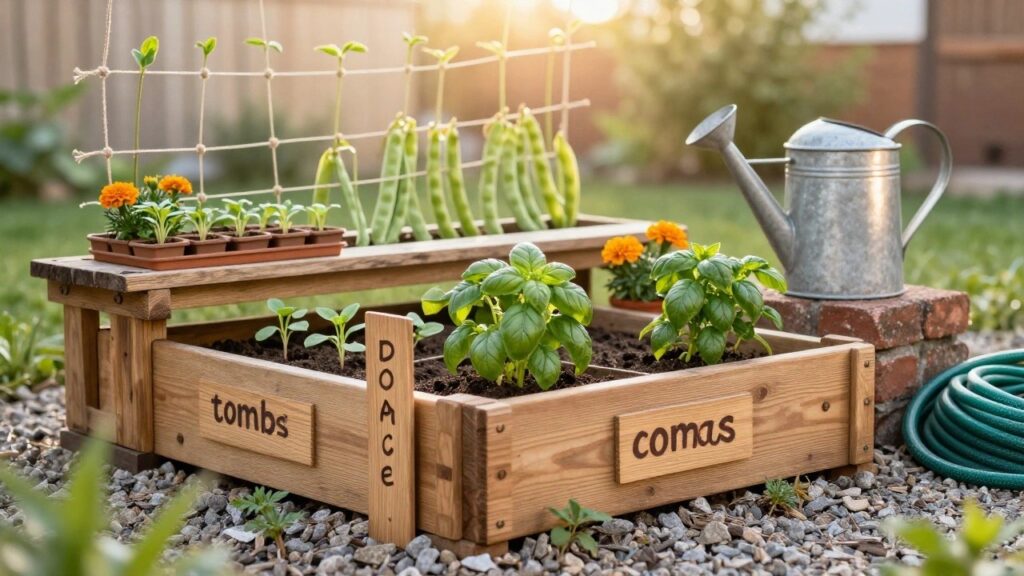
Raised Bed Trellis for Vertical Veggies

One smart way to grow more in less space is a raised wooden bed with a built-in trellis. Here beans climb up the netting while basil fills the base. It keeps everything tidy, makes harvesting easy, and protects plants from ground pests.
Put this in a sunny corner of the yard or even on a patio. Use untreated wood to avoid chemicals leaching into the soil. Start with bush beans at the bottom if you want variety… it all works together without crowding.
Tiered Shelves for Balcony Herbs
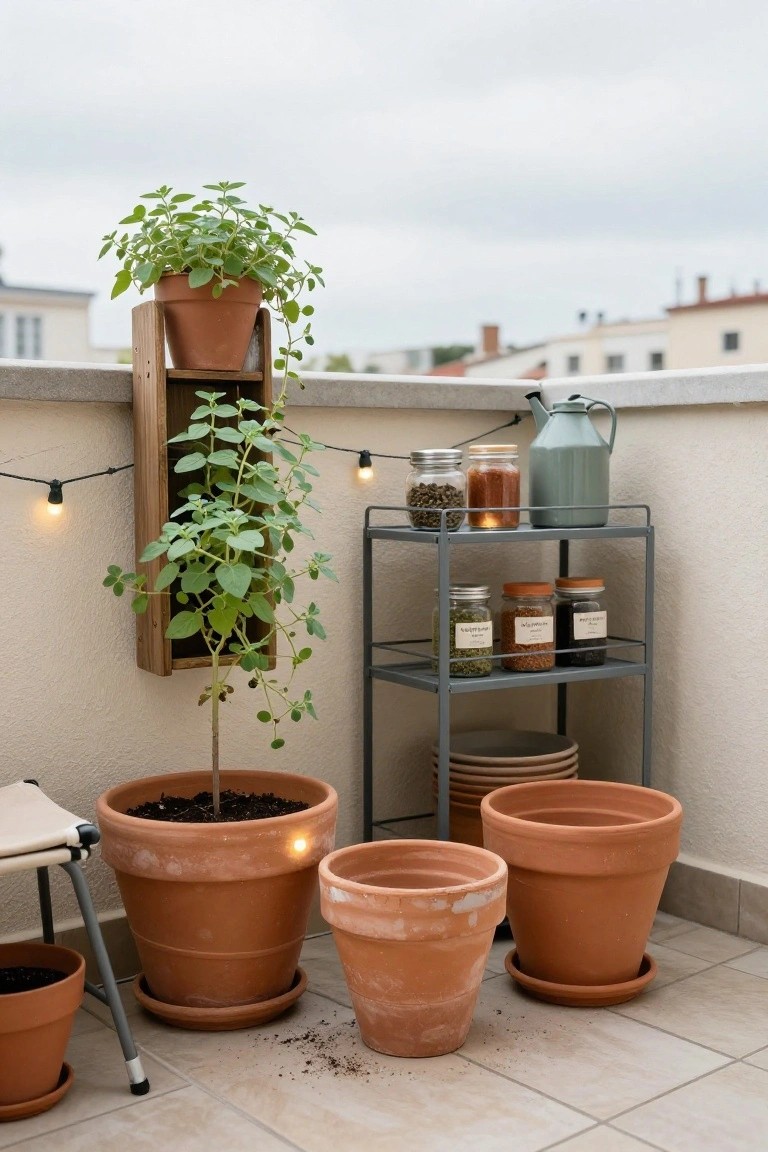
One simple way to fit more plants into a tight balcony spot is stacking them on basic metal shelves. You see it here with jars of dried herbs and spices right next to fresh pots, plus a wall-mounted planter for trailing greens. It keeps everything handy for cooking or watering, without crowding the floor.
This setup works best on sunny balconies or patios under 10 feet wide. Grab a narrow rack, group terracotta pots by size, and add hooks for tools. Watch the weight though, especially up high. It turns a plain ledge into a real growing station fast.
Tall Raised Planters for Easy Veggie Growing
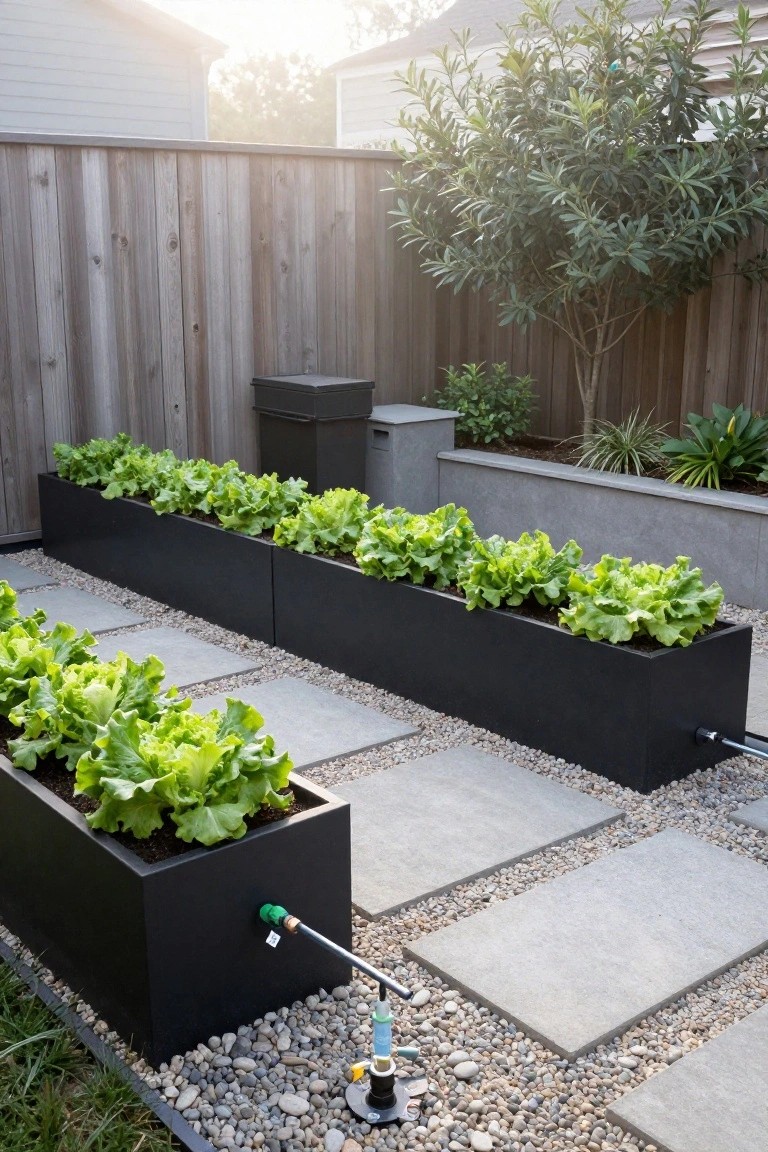
These tall black planters lined up along the backyard fence make growing lettuce and other greens simple. No more bending over or kneeling in the dirt. The height puts everything at waist level so you can plant, water, and harvest standing up. Plus they look clean and modern against the wood fence.
They’re ideal for small yards or patios where space is tight. Set them right against a fence or wall, fill with soil, and add drip lines like the ones hooked up here. Great for quick crops like salad greens. Just watch the drainage to keep roots happy.
Bench Tucked into the Garden Path

A straightforward garden hack is placing a bench right along your main path, nestled among the plants. That weathered green bench sits pretty between lavender spikes and clusters of black-eyed Susans, making it simple to stop and check on your blooms up close. It keeps foot traffic off the beds too.
Lay out flat stones for the path so you can wheel a cart through without trouble. Go for a basic wooden bench that won’t overpower the flowers. This setup shines in side yards or narrow spaces, giving you a spot to rest while weeding or just soaking in the garden.
Stone Edging for Tree Beds

One easy hack for tidier gardens is edging beds around trees with stone blocks. It holds back the mulch and plants just where you want them. Keeps everything looking sharp without much upkeep. You see it here with a pear tree, gravel mulch inside, and low shrubs hugging the curve.
Stack the blocks low, maybe two high, and curve them to match the tree’s drip line. Limestone or sandstone works fine if it’s local and cheap. Fits right next to walls or paths like this one. Just level the ground first… or it shifts over time.
Set Up a Potting Bench in Your Greenhouse

A basic metal shelf turned into a potting bench gives you room for soil, pots, and trays all in one spot. Notice the white enamel basin right on the lower shelf, holding potting mix where you can work without mess spreading everywhere. The upper shelf holds seed trays under a simple grow light, keeping seedlings close while you pot them up. It keeps everything organized in a small space like this greenhouse.
This works best in any backyard greenhouse or even a corner of a shed. Bolt the shelf to the wall for stability if needed, and add a light strip for year-round starts. Skip fancy units; a plain metal rack from the hardware store does the job and lets you adjust heights as plants grow. Just keep it level so the basin doesn’t tip.
Raised Brick Garden Beds

Raised beds edged with bricks like these make vegetable gardening so much simpler. They hold the soil right where you want it, warm up faster in spring, and let you skip a lot of the digging and weeding hassle. Strawberries and onions grow happily without spilling over, and that central path keeps everything easy to reach.
Stack old bricks or pavers around your plot, no mortar needed if you don’t want it permanent. Works best in sunny spots with decent soil underneath. Just watch the height, two or three layers is plenty for most folks… keeps your back happy too.
Gravel Paths Edged by Boulders
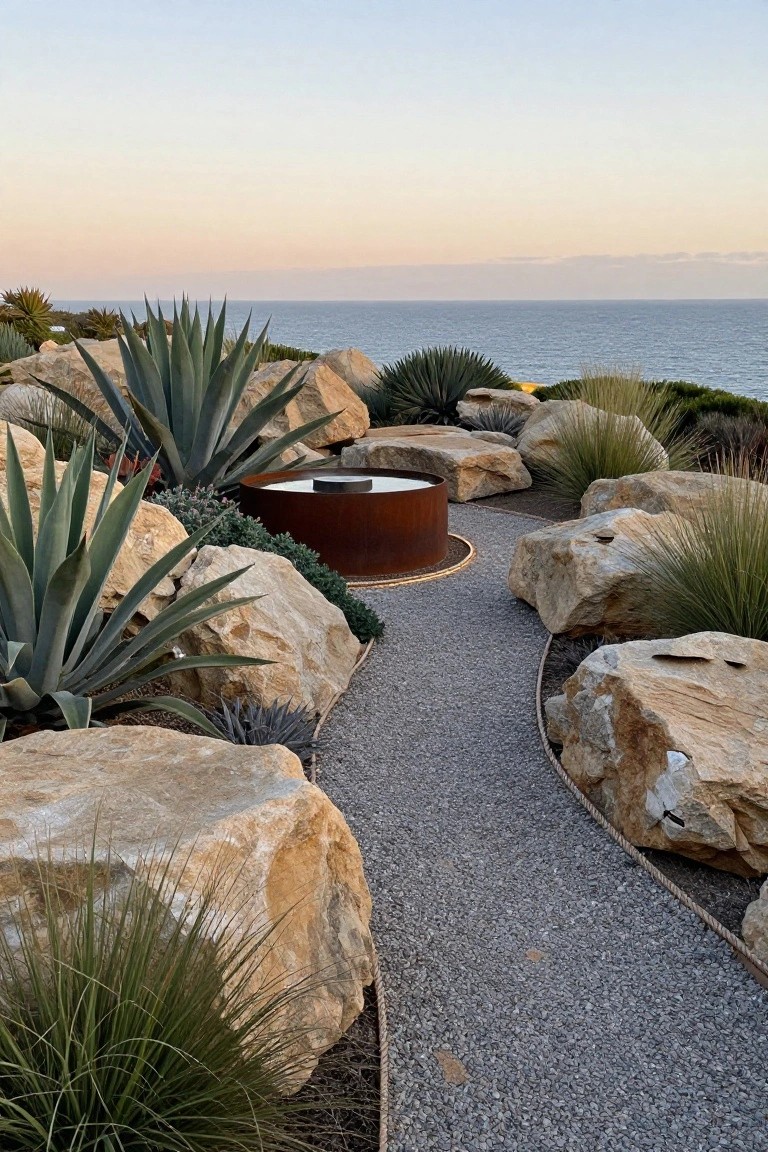
One straightforward way to handle garden paths without constant upkeep is to lay gravel and line it with big boulders. You see it here with a smooth curve of pea gravel set between hefty tan rocks, mixed in with tough agaves and grasses. It gives a rugged, natural look that fits right into coastal spots or dry yards. The boulders hold everything in place, keep weeds from creeping over, and mean no more edging tools or trimmers every week.
This works best in sloped areas or where water drains quick, like near the ocean. Start with landscape fabric under the gravel to block most weeds, drop in rocks of different sizes for interest, and tuck in low-water plants around them. Skip it on flat, wet lawns though, gravel shifts too easy there. Keeps walking easy and plants happy with less work.
Ladder Trellis for Easy Vertical Growing
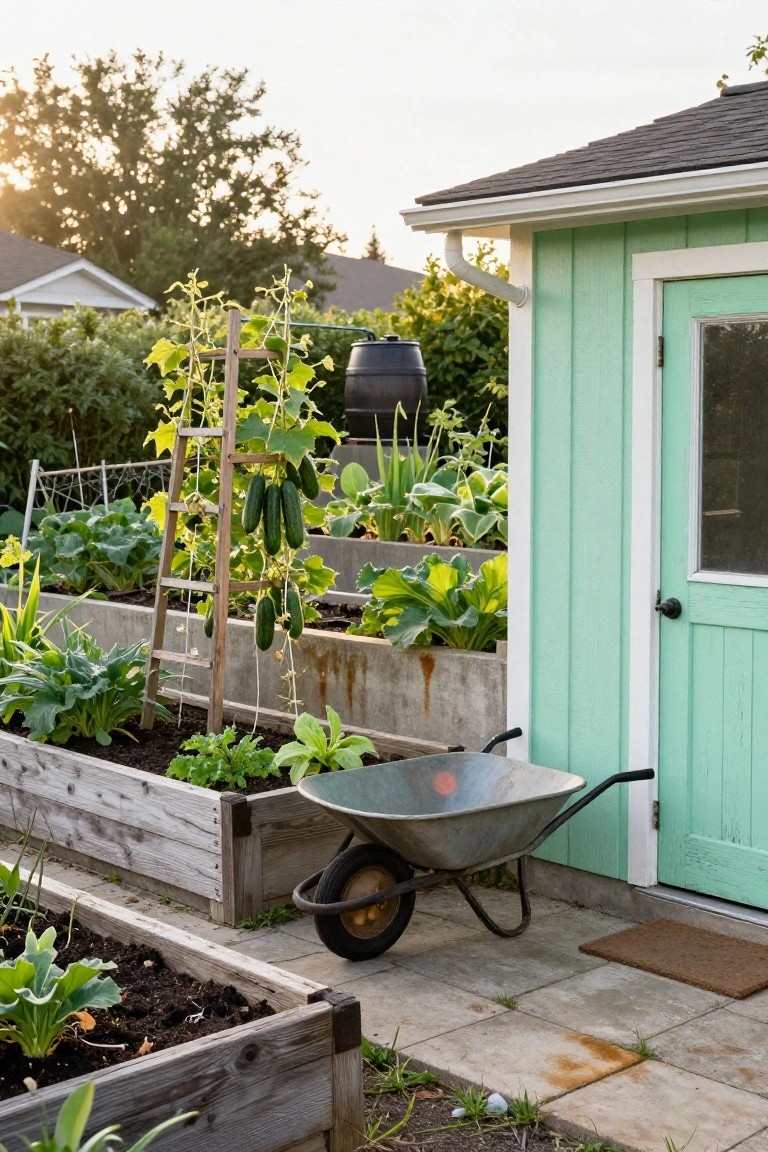
One smart way to make more room in a small garden is to use an old wooden ladder as a trellis. Those cucumber vines climbing up the rungs keep the plants off the ground. It lets air flow better and makes picking easier too. Plus it has that simple backyard charm without much cost.
Set one up in a sunny spot near raised beds or against a fence. Tie the vines loosely at first so they grab on. Works great for cukes beans or peas in any veggie patch. Just check the ladder stays steady as plants get heavy.
Gravel Paths with Metal Edging
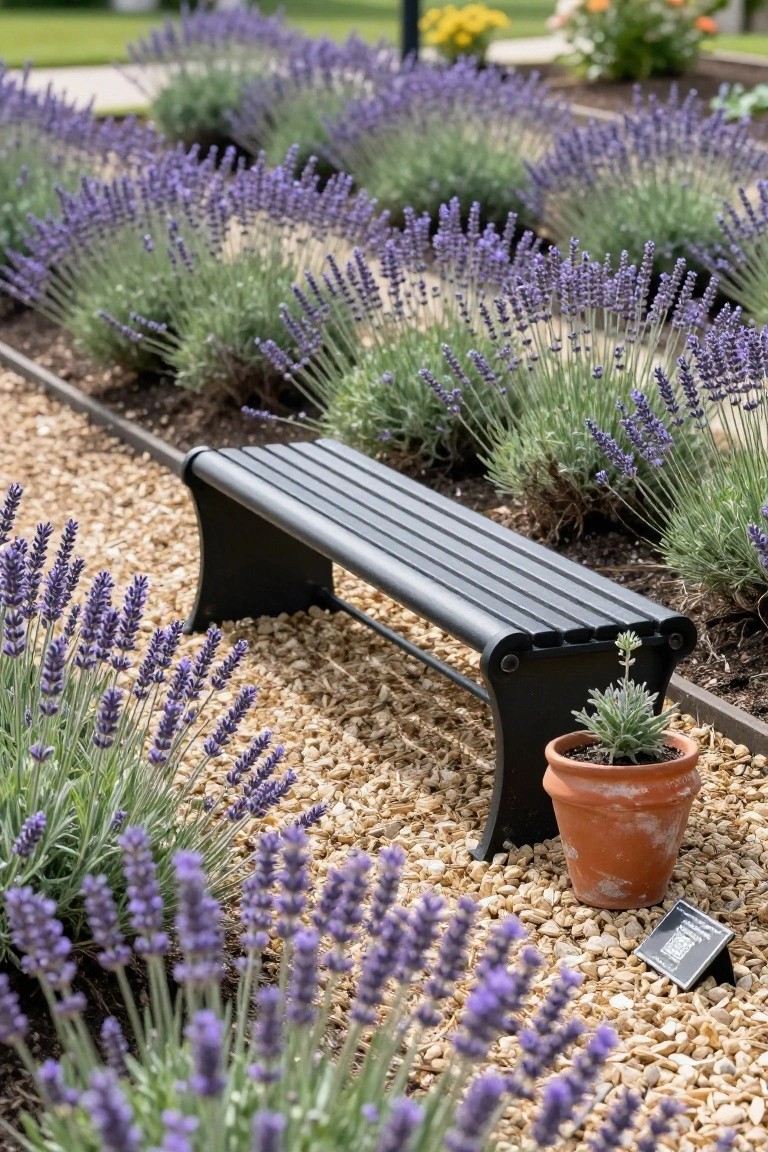
Gravel paths like this one make walking through a garden simple and clean. The black metal edging keeps the stones from spilling into the lavender beds, so you get neat lines without much work. Rows of the same plant create a calm rhythm that draws your eye along the path to that bench at the end.
This idea fits smaller yards or herb gardens where you want low upkeep. Pick gravel for good drainage, and use edging that’s sturdy enough for foot traffic. Lavender does best in full sun, so plant it along sunny paths. Just sweep the gravel now and then to keep it looking sharp.
Grow Citrus Trees in Containers on Small Balconies

One smart gardening hack is planting dwarf citrus trees right in large containers on your balcony or rooftop. In this setup, a young lemon tree is thriving in a simple gray rectangular planter, already covered in green and yellow fruit. It brings fresh produce to tight urban spots where ground soil just isn’t an option. The whole area feels productive without taking up much room.
Pick sturdy, deep pots at least 24 inches wide to support the tree’s roots and keep it stable in wind. Go for dwarf varieties that stay under 10 feet, and site them in full sun near your seating spot, like this wooden bench. It’s perfect for apartments or terraces… just watch watering needs go up in summer heat.
Grow Veggies in Old Enamel Pots

Those big white enamel basins you might find at flea markets or thrift stores make perfect planters for salad greens and quick veggies. They’re deep enough for roots, lightweight to move around, and that blue rim gives a pop of color without trying too hard. Pair them with gravel mulch like in this setup, and you’ve got good drainage that keeps soil from getting soggy.
Set them in a sunny corner along a path or fence, close to the kitchen door for easy picking. They work great in small yards or even on patios where you lack garden beds. Just label the plants to remember what you sowed, and water from the bottom to avoid wet leaves. Sturdy stuff that lasts seasons.
Use a Ladder to Support Young Fruit Trees

One smart way to handle young fruit trees is propping them up with a sturdy wooden ladder. It keeps the branches at a good height for pruning and picking later on. No more stretching or using extra gear. The ladder ties right into the trunk, and with gravel around the base for drainage, the roots stay happy without much weeding.
This setup works great in small gardens or along a fence line. Pick a ladder that won’t rot too fast, secure it well, and plant in a raised bed like this one with stone edges. It’s low fuss… just watch for strong winds early on. Suits beginners with limited space.
Hang Herbs in Net Planters for Vertical Space

One smart way to grow more plants without crowding your patio floor is to suspend them in net planters from overhead beams. You see herbs like basil and greens dangling in simple rope nets here, right over the table and hot tub area. It keeps everything reachable for snipping fresh leaves, and the setup adds a nice green layer without taking up ground space.
This works best in covered outdoor spots like pergolas or porches where you get some shade. Thread pots into the nets, make sure they have good drainage, and choose trailing or bushy plants that won’t get too heavy. It’s perfect for renters or small yards… just check the hooks hold steady.
Garden Stream Along a Walkway
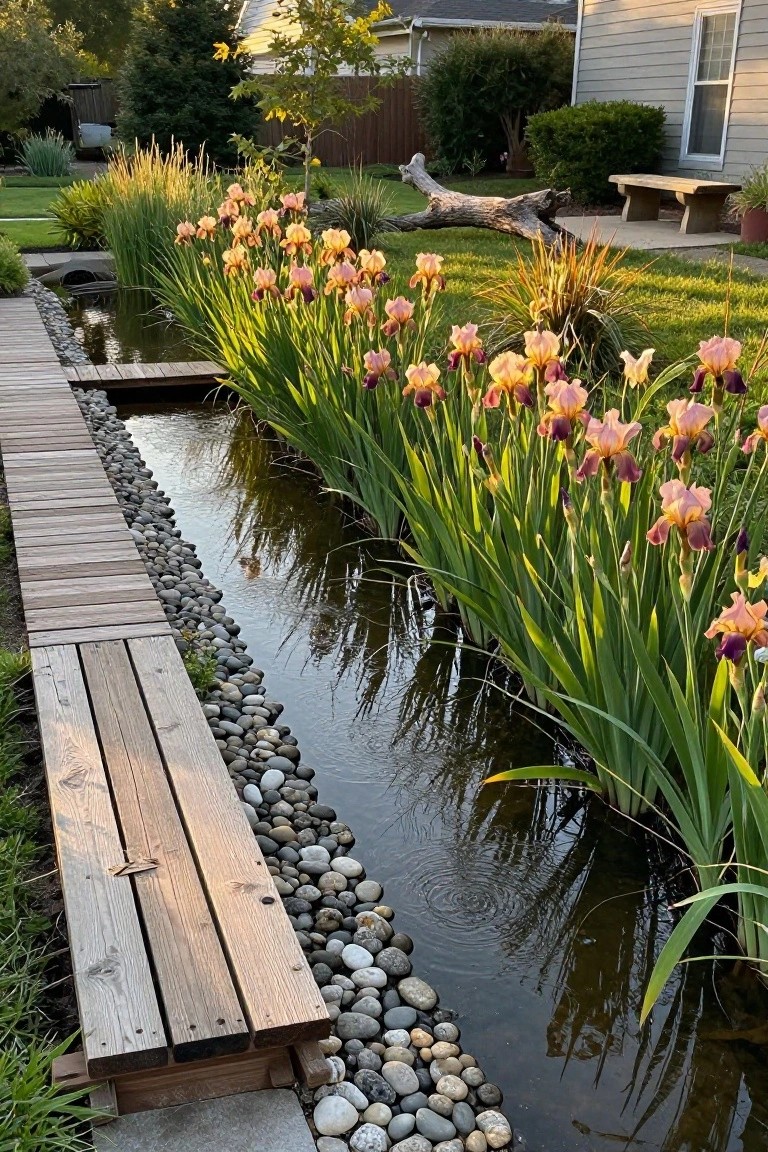
A narrow water channel like this one adds life to a plain path without taking up much space. Pebbles line the bottom for easy flow, and tall iris plants grow right from the edges, their roots in the water. It pulls in pollinators and gives that soothing trickle sound on a budget.
Set it up in skinny side yards or next to fences where grass struggles. Line a shallow trench with pond liner, drop in river rocks, recirculate water with a small pump if you want. Iris and reeds handle wet feet fine, so low fuss once planted. Just watch for algae in full sun.
Set Up a Compact Potting Station

A good potting station like this pulls all your gardening basics into one spot. You’ve got a sturdy concrete counter for working space, a big sink for rinsing roots or mixing soil, and tools hanging handy on a pegboard. Jars of seeds line the shelves so you grab what you need without hunting. It keeps mess contained and makes starting plants a quick chore instead of a hassle.
This works best in a garage corner, laundry room, or even a spare closet with plumbing nearby. For apartments, adapt it on a countertop with a utility sink. Add labels to jars and stack trays under the bench. Watch the dirt buildup though. Wipe down often or it turns into a mud pit fast.
Tiered Shelves for Starting Seedlings

A basic metal shelf like this turns any spot in the yard into a seedling station. Stack trays of young plants under simple LED grow lights and add a couple fans for air flow. It keeps everything organized and gives starts the light they need without taking up garden bed space right away.
Set one up near a fence or wall where it gets some shelter. Use black plastic trays for the seedlings and cheap full-spectrum bulbs. Track progress in a notebook right there. Works great for small yards or if you want to start seeds early in the season. Just watch for overwatering.
Trough Planters for Balcony Gardens
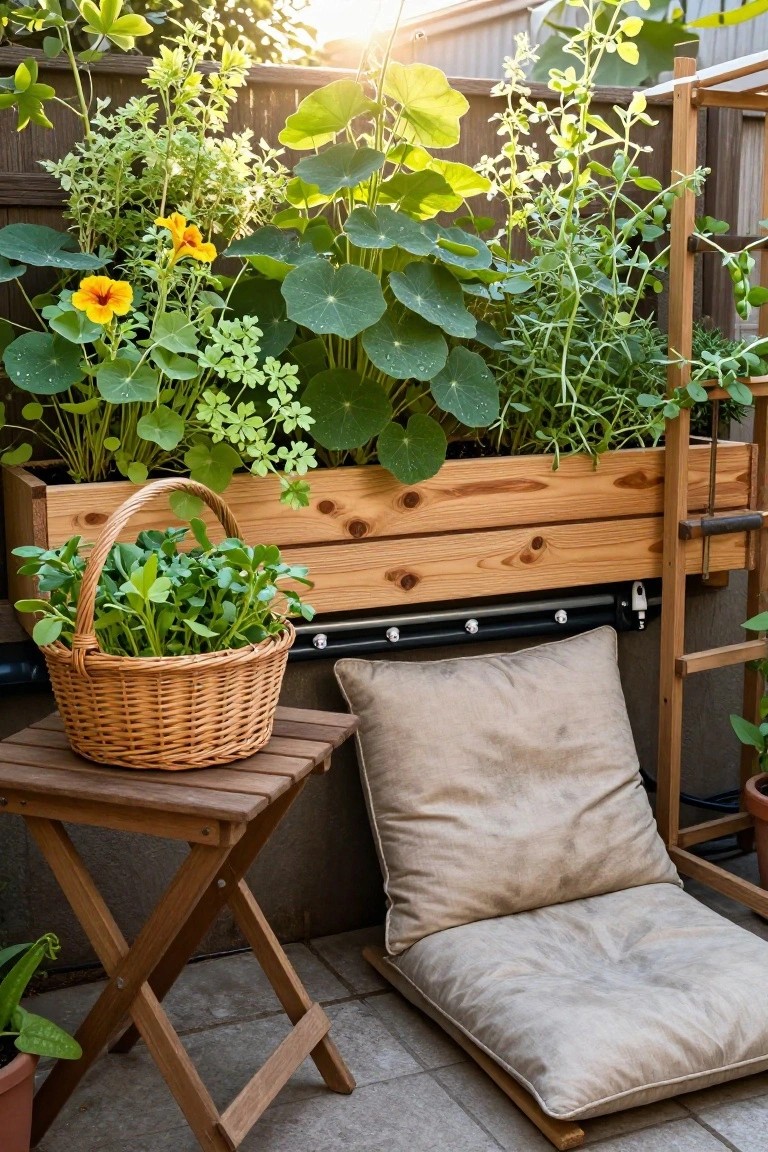
One smart way to garden on a balcony is to mount a long wooden trough planter right along the edge. It turns that narrow ledge into growing space for flowers, herbs, and even veggies. You see big leaves and orange blooms spilling over in this setup, plus a basket of fresh sprouts nearby. The whole thing feels productive without crowding the floor.
This works best in apartments or tight patios where every inch counts. Grab a basic wooden box, like from a big box store, line it to hold soil, and plant low-growers or trailers. Add a little table for your harvest basket and a cushion to sit. Just check your railing can handle the weight, and water carefully to avoid drips below.
Layer Materials In Your Garden Beds

Many people are skipping the heavy work of tilling and trying a simple layering method instead. You place different soil amendments right on top of the ground in sections, then plant into them. The materials break down over time and feed the soil without much extra effort.
This approach fits raised beds and small yards especially well. Keep a few piles of mulch or compost handy so you can add more as needed, and label your plants so you can track what is growing. It keeps the bed tidy and cuts down on weeds once everything settles.
Raised Metal Planters Simplify Succulent Care
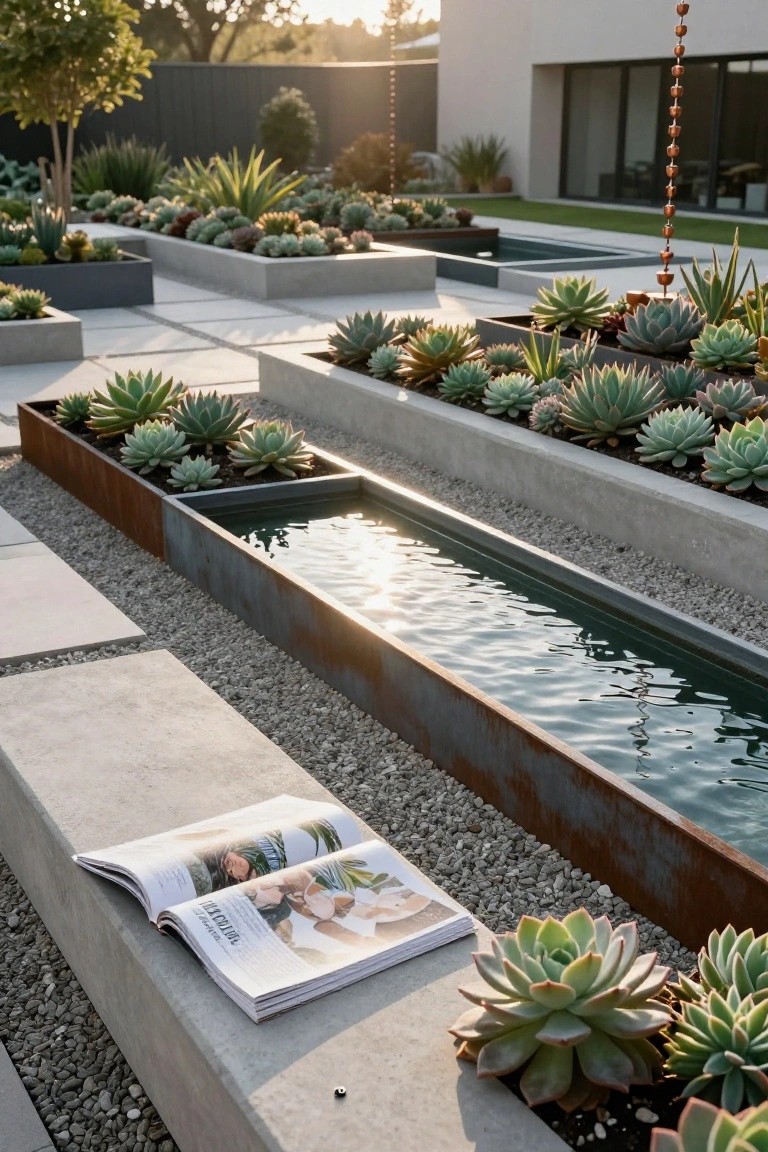
Raised metal planters give succulents the sharp drainage and defined space they need without constant weeding or soil fixes. The long, narrow troughs keep plants contained and make it easy to group different varieties together along a path or beside a water feature.
They work best in sunny yards with gravel or concrete underfoot. Use a durable metal like corten so the beds hold up over time and blend into the rest of the garden without extra upkeep.
Train Vines Up Vertical Supports
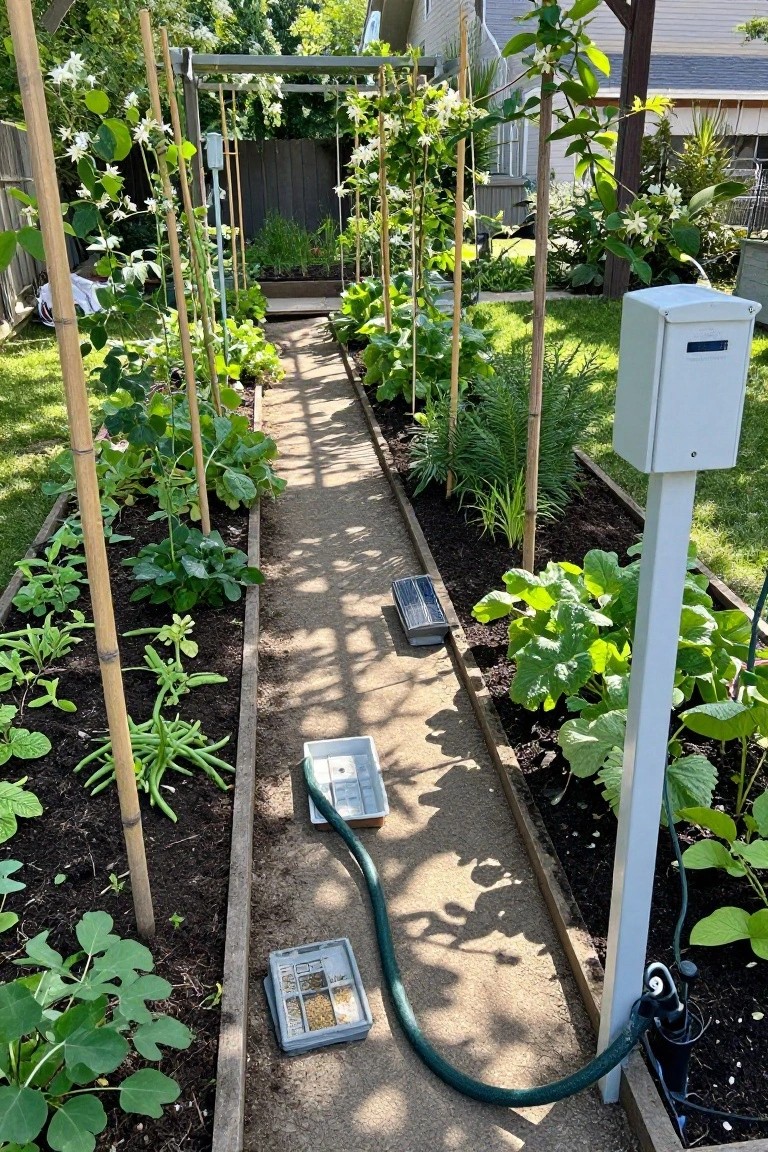
Vertical supports let you grow more in a small garden without crowding the ground. Tall stakes with strings or netting give beans, cucumbers, and other climbers room to stretch upward, which keeps the plants healthier and makes harvesting simpler since the produce hangs where you can reach it easily.
This setup works best in narrow beds or along a path where space is limited. Set the stakes early so the plants can climb as they grow, and use soft ties to avoid damaging the stems. It suits most home vegetable gardens and cuts down on bending over or fighting weeds at ground level.
Frequently Asked Questions
Q: Will these hacks work if I garden in containers on my patio? A: They adapt really well to pots. Mix the soil hacks into your container mix before planting. Then use the watering tricks to avoid soggy roots.
Q: How do I keep bugs away without buying special sprays? A: Try the garlic spray hack from the article. Crush a few cloves and steep them in water overnight. Spray it on leaves in the morning.
Q: My seedlings keep falling over. Is there a hack for that? A: Use a toothpick to prop up each seedling. But check daily so the ties do not cut into the stems.
