

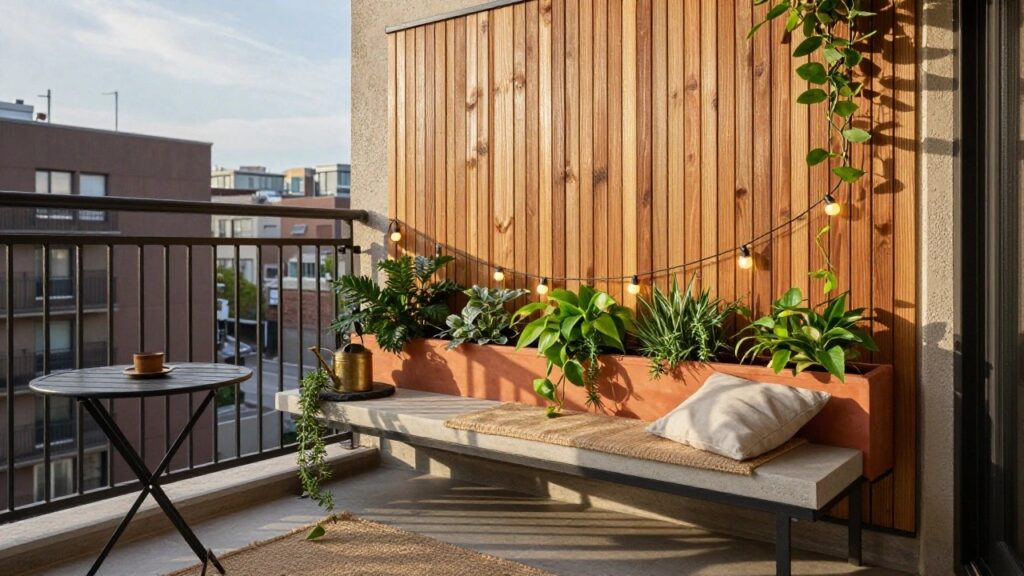
Trying to fit plants into a tiny apartment taught me that most traditional pots just end up in the way of how I actually move through the rooms.
Vertical gardening shifts the focus upward, and I noticed right away how that opens up floor space while still bringing in the green I wanted.
The real test comes when I have to water and trim everything without making a mess or needing special tools every time.
A few simple frames on the wall turned out to be the most practical.
I keep coming back to methods that match the light in each corner and let me adjust as seasons change.
Balcony Railing Planters
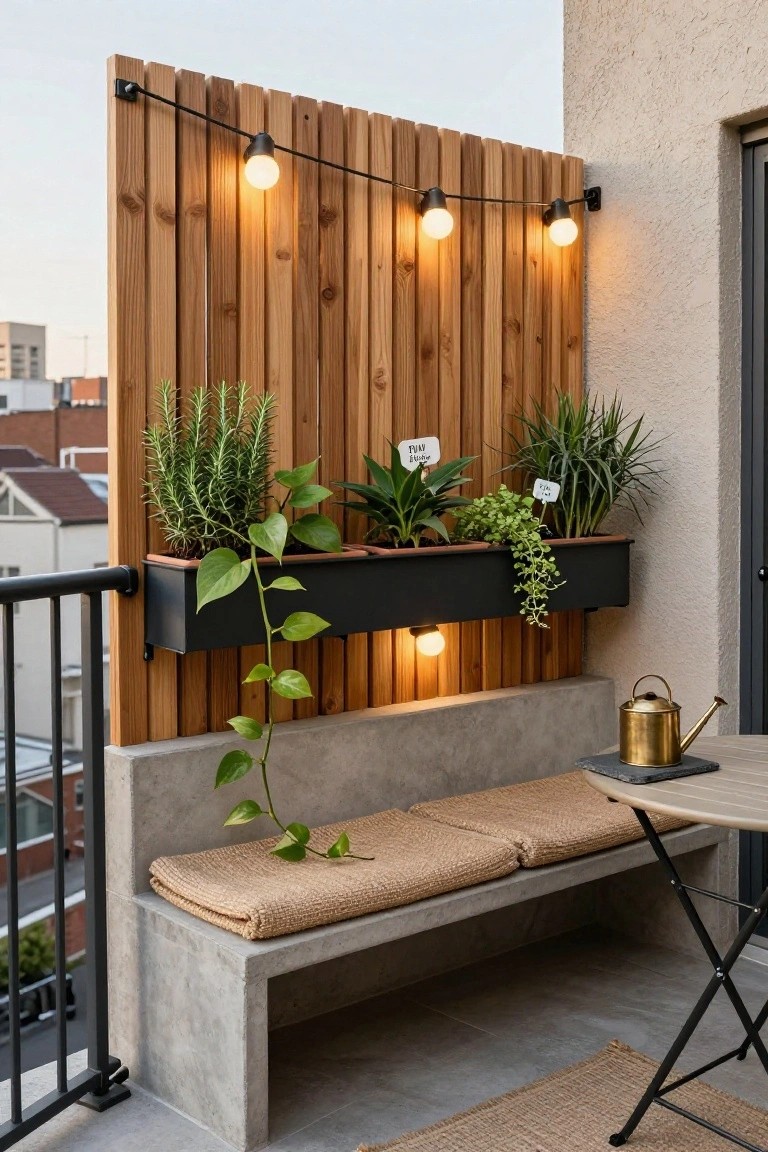
One simple way to add more plants to a small balcony is to use railing-mounted planters. These let you grow trailing greens right along the edge without taking up any floor space. In this setup, a black metal box holds pothos and other vines that spill over nicely, working well against a wooden privacy fence.
This idea fits tight urban spots like apartments or condos. Just check your railing can handle the weight, especially when wet. Go for sturdy metal or plastic planters, and pick tough trailing plants that don’t need much fuss.
Wall-Mounted Shelves as Vertical Planters
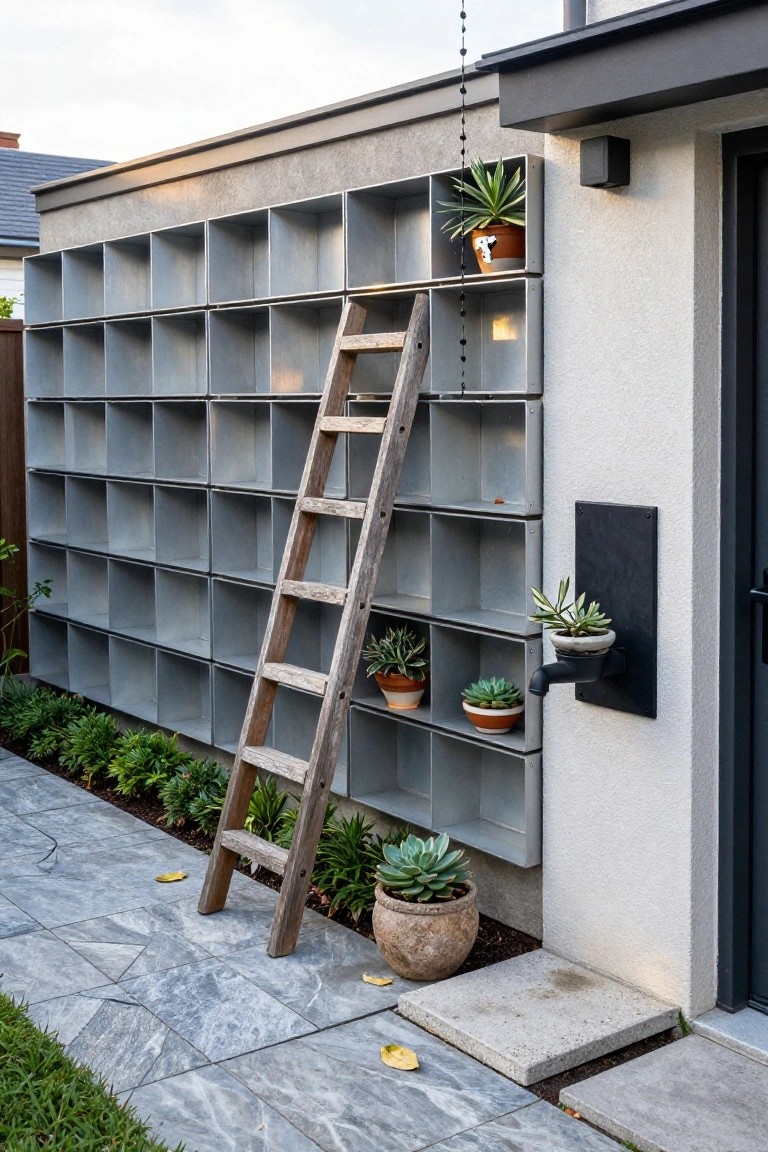
One smart way to add greenery to tight spots is mounting modular metal shelves right on a boundary wall or fence. These open cubes let you stack plants upward, like the succulents tucked into several levels here. It keeps the ground clear for paths or seating, and the industrial gray finish gives a clean, modern edge that fits small urban yards.
Go for sturdy shelves that can handle the weight of pots and soil. Fill them with tough plants like agaves or echeverias that don’t need much water. A leaning ladder makes higher spots easy to reach, and it doubles as a rustic touch. This works best against a plain wall in a side yard or courtyard where you want privacy and color without crowding the space.
Climbing Vines on Balcony Screens
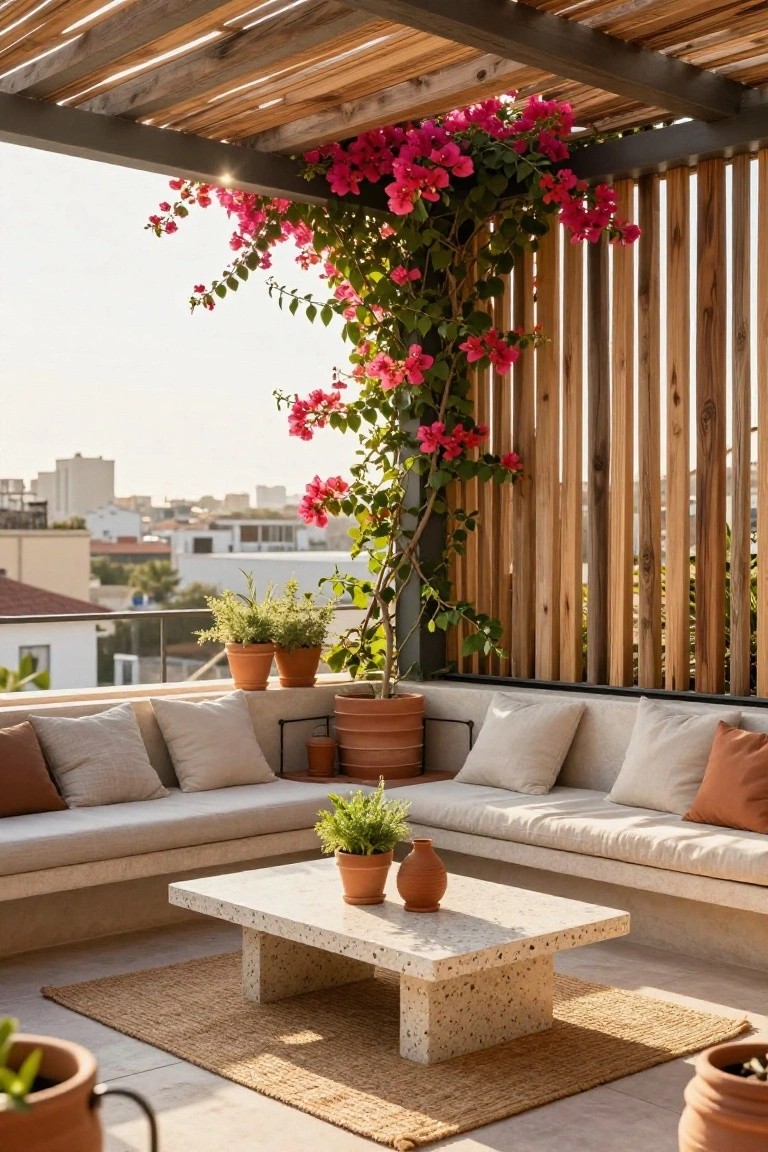
One smart way to green up a small balcony is training climbing vines like bougainvillea up wooden slat screens. It covers the railings fast with pink flowers and leaves. That adds privacy from neighbors without closing off the view. Plus it fits tiny spots since it grows up, not out.
Try this on urban balconies or rooftops where space is tight. Pick a sturdy wood frame that matches your style, then plant the vine at the base in a big pot. Water it regular at first. It works best in sunny spots. Watch that the vine does not overwhelm the structure over time.
Vertical Herb Garden Wall Planters
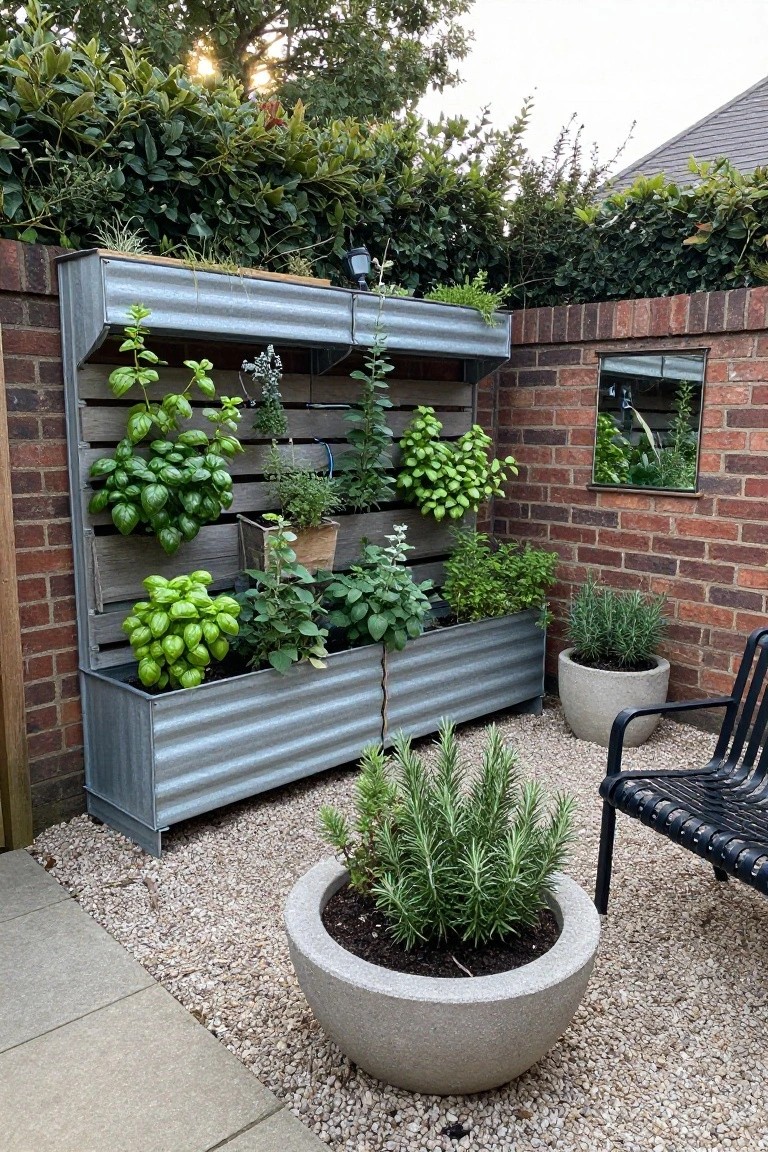
One smart way to grow fresh herbs without eating up yard space is this tall vertical planter built right against a brick wall. It uses corrugated metal troughs at different heights, plus slatted wood shelves for smaller pots of basil, rosemary, and mint. The setup keeps everything off the ground, so even a narrow courtyard like this gravel spot feels open and usable.
You can put something similar on any sunny wall in a small patio or side yard. Start with galvanized metal for good drainage, then mix in herbs that trail or bush out. It works well for townhouses or rentals since it’s easy to take apart. Just make sure the wall gets at least six hours of sun, or pick shade-tolerant plants.
Tiered Concrete Planters for Balcony Gardens
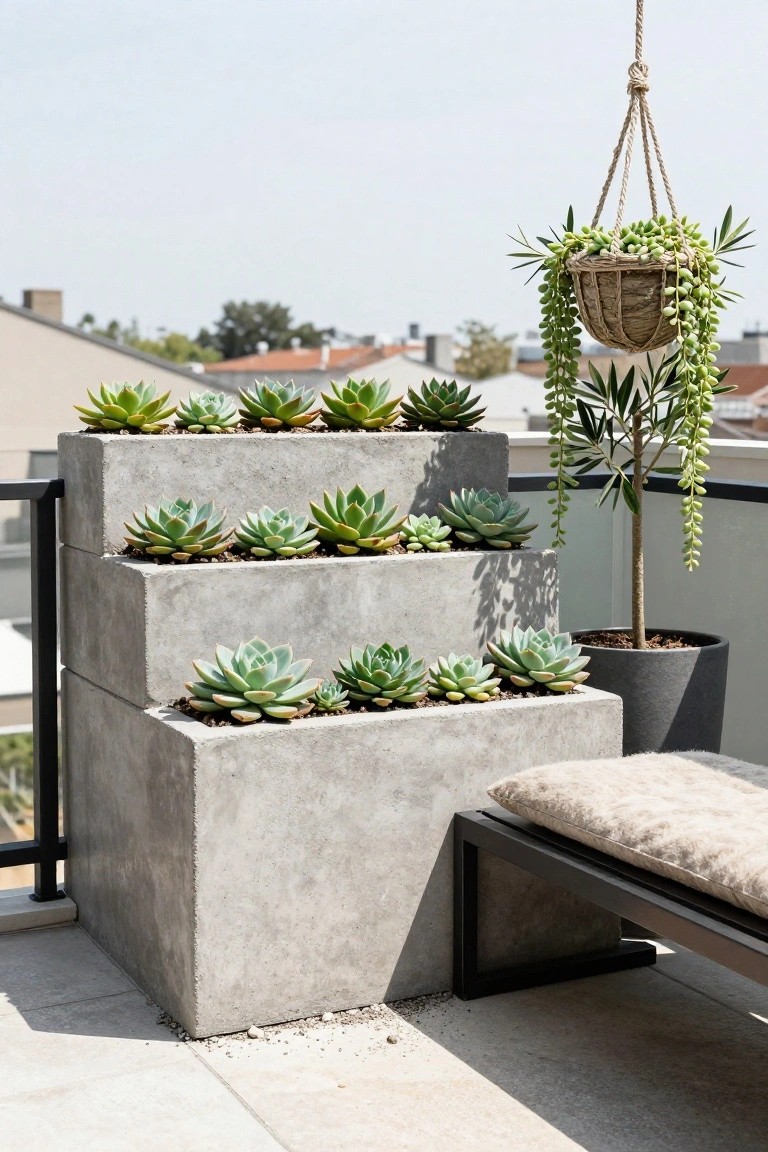
Tiered concrete planters like these make vertical gardening straightforward for tight spots. Stacked in three rough levels and packed with plump green succulents, they pull a lot of plant life into one corner without taking up floor space. The plain gray concrete looks right at home on a balcony railing setup. It stays simple and tough for everyday use.
Put them on a small apartment balcony or rooftop terrace where ground room is scarce. Go for low-water succulents that handle sun well. Tuck a bench alongside for a spot to sit… and watch them grow. Drainage holes are key, though. Skip if your spot gets too much shade.
Hanging Pots on a Simple Wall Rack
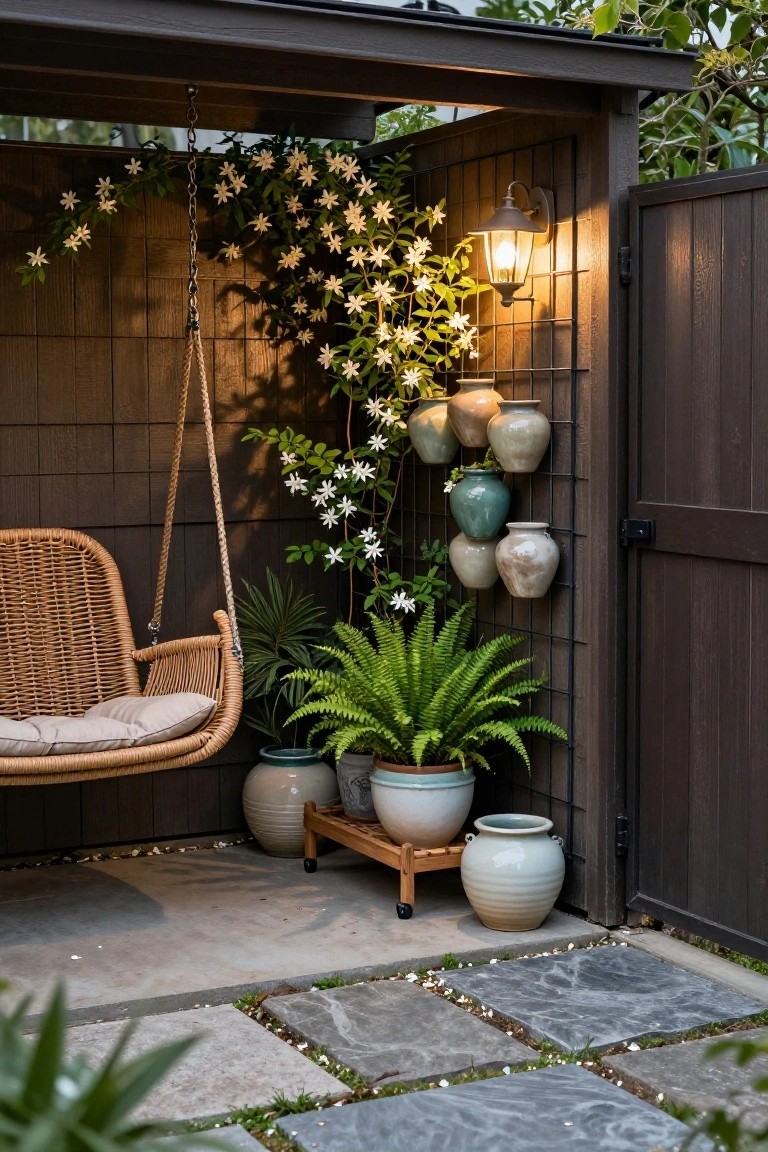
One smart way to add plants without taking up floor space is to mount a rack on the wall and fill it with ceramic pots. You see a row of them here in soft greens and neutrals, tucked into a corner near a swing. It makes the wall feel alive and pulls the eye up, which opens up the spot even more. The climbing vines nearby tie it all together without much effort.
This works best in covered patios or nooks like this, where you want greenery but the ground is limited. Hang low-maintenance stuff like succulents or trailing ivy in the pots. Just make sure the rack is sturdy and the wall can hold the weight. It’s low fuss for apartments or tiny yards.
Vertical Gardens for Poolside Privacy
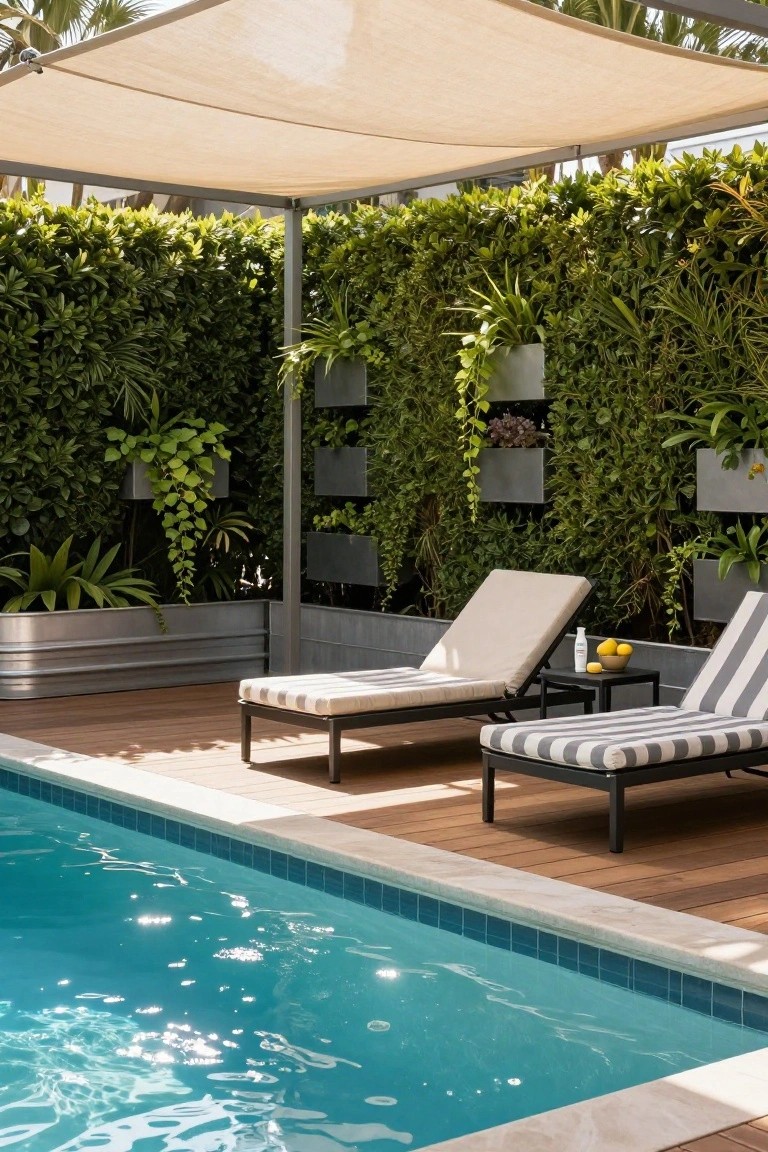
One smart way to green up a small outdoor spot is with vertical walls packed full of plants. Here you see a tall hedge-like wall built right into metal planters and pockets, sitting next to lounge chairs by the pool. It blocks the view from neighbors while making the whole area feel lush and private. No wasted deck space either.
This works best around pools, patios, or even balconies where room is tight. Pick trailing plants like ivy or ferns that hang nicely, and mount them on a simple frame. Keep the metal containers slim so they hug the wall. Sunny spots are ideal, but watch for too much direct sun scorching the leaves.
Vertical Planters Around Balcony Grills
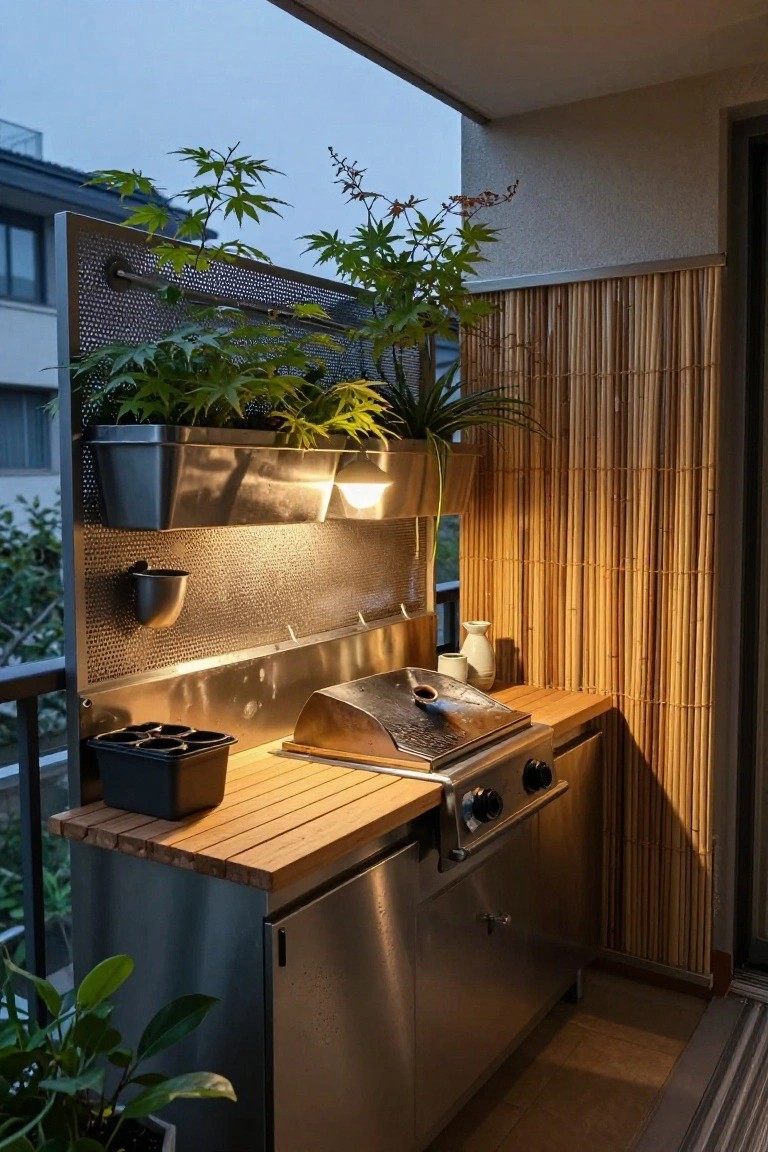
Wall-mounted planters like these make a small balcony feel full of life without taking up floor space. You see them tucked into a metal railing system right next to the stainless steel grill and counter. That setup keeps everything handy for cooking outdoors while the greenery softens the edges and adds a bit of privacy alongside the bamboo screen.
This works best on apartment balconies or any tight spot where you want plants but need room to move. Go for durable metal containers that catch water runoff, and choose tough plants that take some wind or shade. Just check your building rules first… it keeps the vibe practical and green.
Vertical Trellis Screens for Small Patios
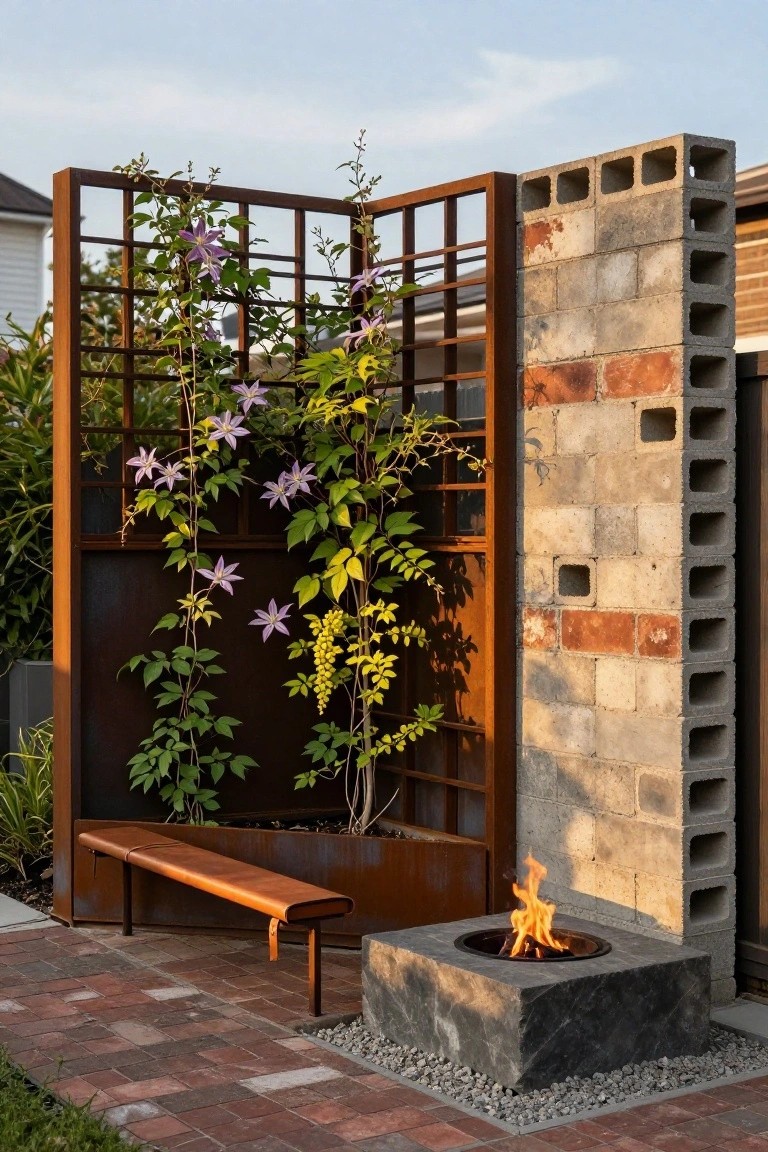
A simple metal trellis stands tall here, covered in climbing clematis and other vines that form a living privacy wall. It runs alongside the bench and fire pit without eating up any ground space. This keeps the patio feeling open while blocking views from the side. Perfect for tight yards where you want green without the sprawl.
Put one of these up along an outdoor seating spot or against a plain wall. It suits city homes or narrow backyards best. Go for sturdy rusted steel frames and quick climbers like clematis. Just make sure the base is planted deep so it stays put in wind.
Vertical Planters on Exterior Walls
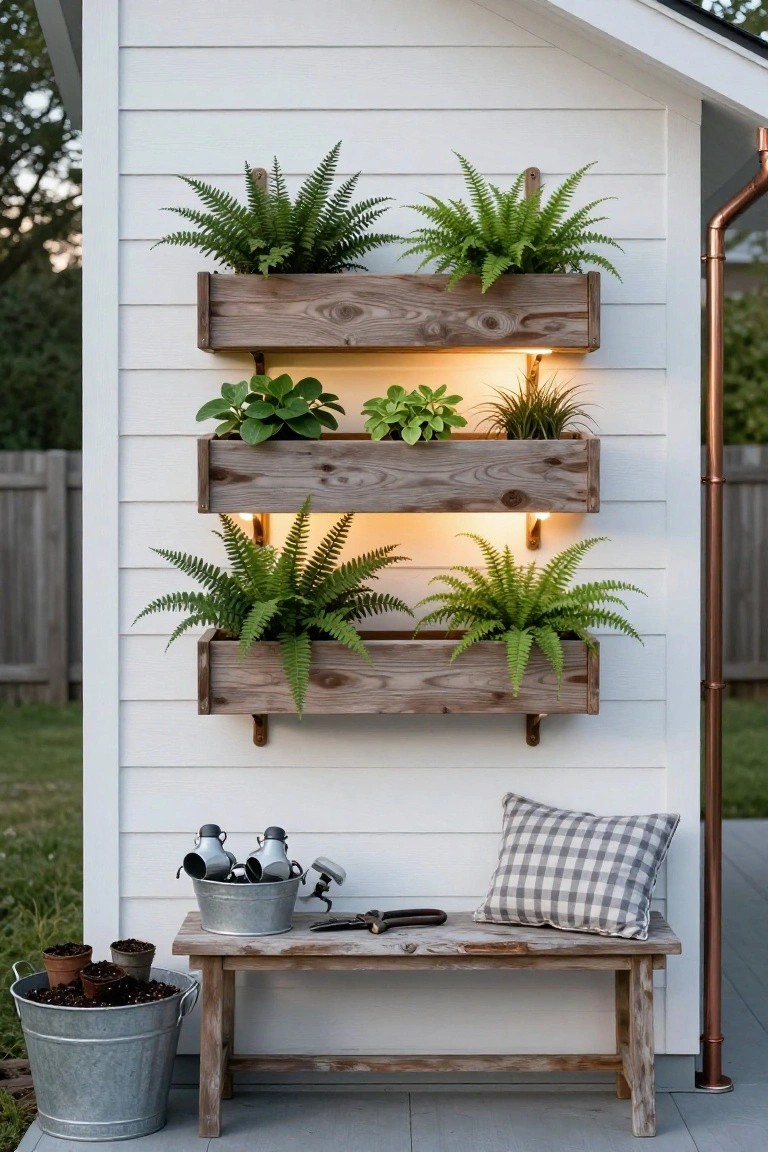
Stacking wooden planter boxes right on a plain wall like this turns blank space into a green backdrop. The tiers hold ferns and trailing plants that spill over nicely, filling the wall without crowding the ground. It’s a straightforward way to add life where there’s not much room to spare.
Try it on a shed side or garage wall that gets filtered light. Pick shade-tolerant plants and keep soil moist. Simple brackets hold the boxes steady, and built-in lights add a soft glow at night. Fits tiny yards or patios best… just watch for wall drainage to avoid rot.
Concrete Vertical Planters for Succulents
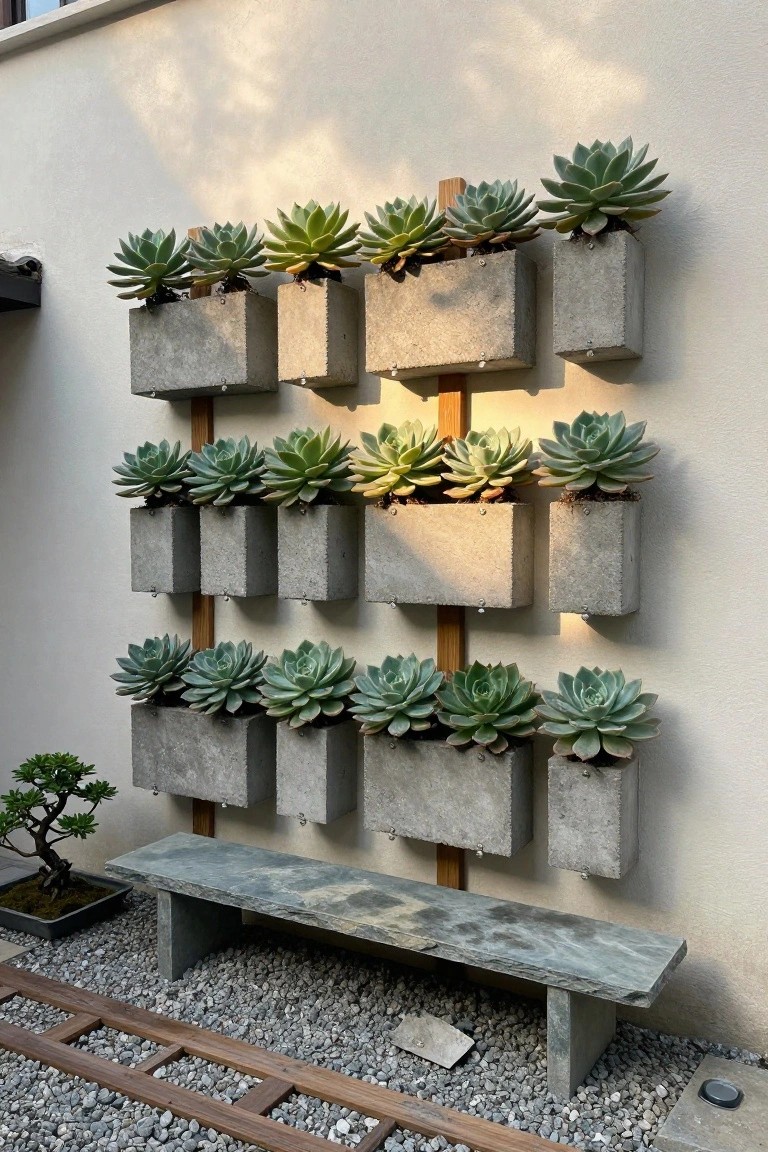
A simple grid of gray concrete boxes mounted on a plain wall makes for an easy vertical garden. Filled with low-water succulents like echeveria, it turns empty space into something alive without taking up ground area. The wooden supports keep it sturdy, and the clean lines fit right into a modern look.
This setup works great on patios or beside a seating spot like a bench in a small yard. Use it where you want greenery but have no room for beds. Just pick drought-tolerant plants, make sure drainage is good, and it stays low maintenance for busy spots.
Vertical Planters on Balcony Railings
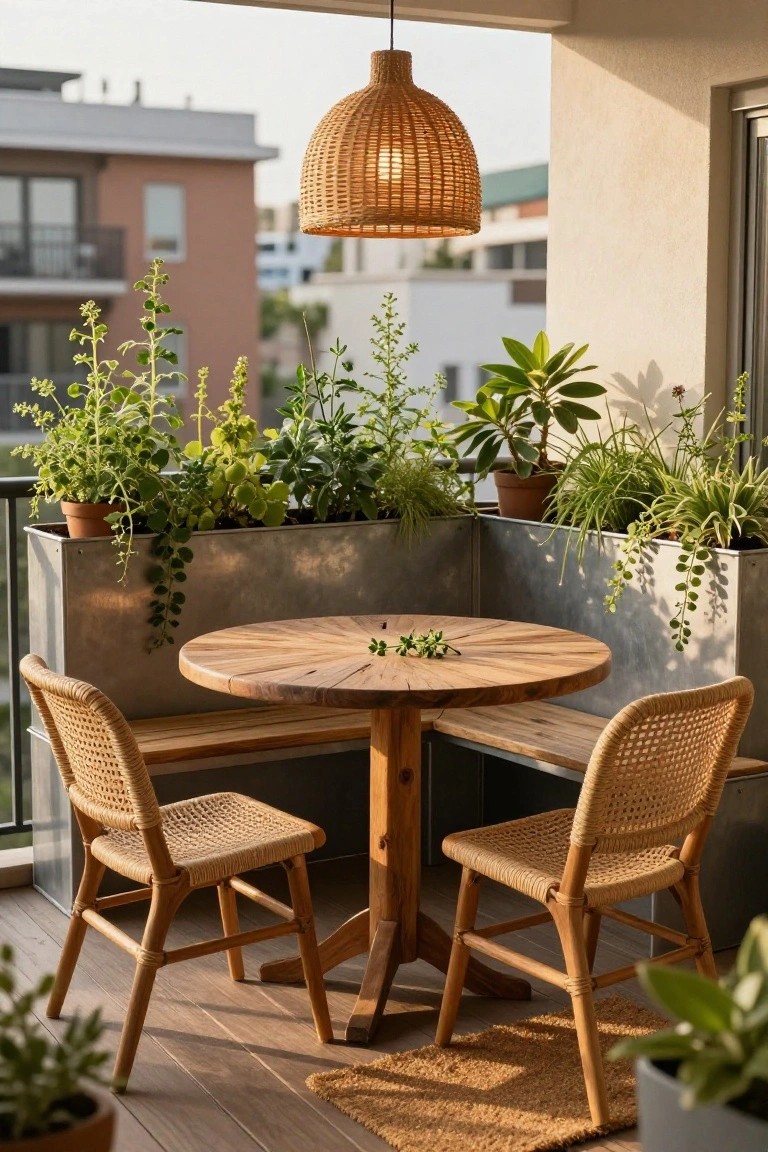
One smart way to add plants to a small balcony is to line the railings with tall metal planters. They hold back greenery that spills over just right, making a living wall without taking floor space. Here, the setup frames a simple round table and bench, so you get privacy and a spot to eat outside. It turns a tight area into something green and usable.
These work best on urban balconies or any narrow outdoor spot. Pick sturdy planters that match your railing height, and go for trailing plants like ivy or herbs that hang down. Keep soil light to avoid extra weight. Watch the drain holes so water does not puddle. In tiny spaces… this keeps things fresh without crowding.
Vertical Planter Walls on Patio Fences

One smart way to add greenery to a tight patio is to turn the fence into a vertical garden. Here, shelves along a black slatted fence hold rows of simple white pots packed with flowers and trailing plants. It fills the wall without taking floor space, and the mix of colors keeps it lively but not busy.
This setup works great for small backyards or balconies where you want seating and a fire pit but still need plants. Bolt sturdy shelves to any fence, pick pots that match your style, and group easy bloomers like petunias or ivy. Just make sure the fence can handle the weight, and water regularly since everything’s up high.
Vertical Gardens with Hanging Pockets
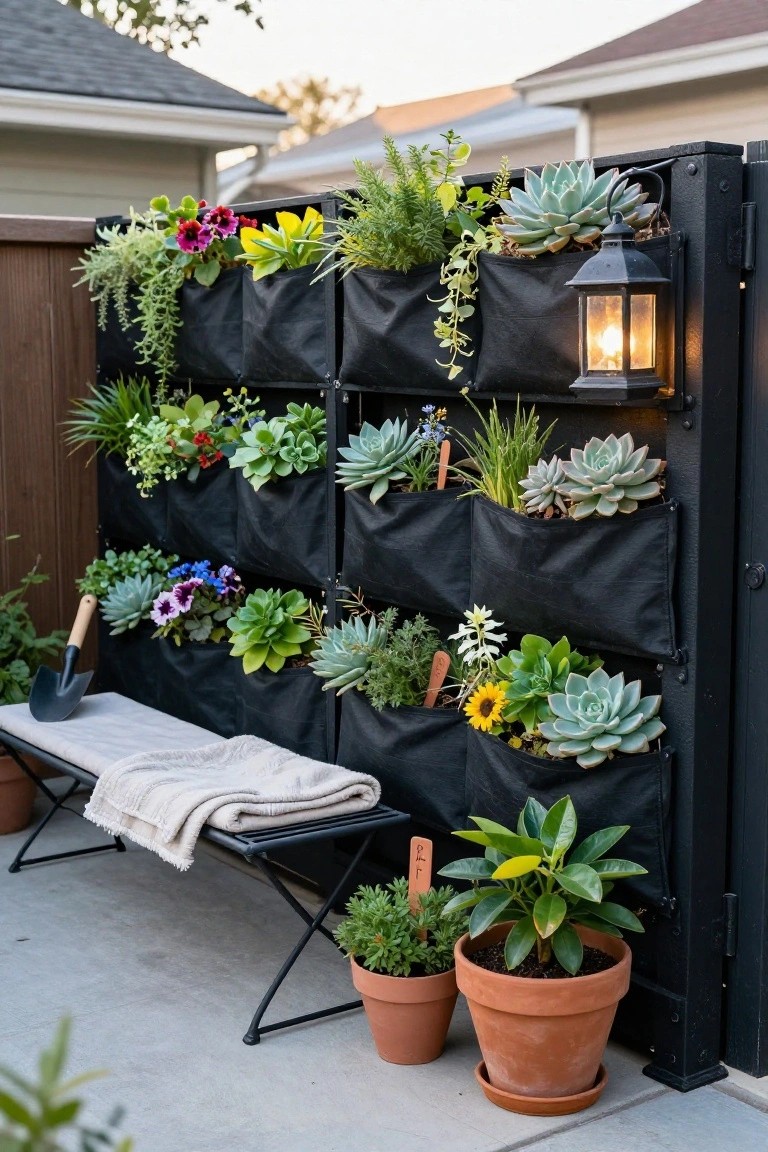
Hanging black fabric pockets on a fence make for a simple way to grow a ton of plants in a small spot. Succulents and herbs fill each pocket here, turning a plain fence into a lush green wall. It keeps the ground clear while adding color and life right where you hang out.
This works best on patios or balconies with fences or sturdy walls. Pick lightweight, low-water plants to avoid sagging. Just attach the pockets with hooks or screws, fill with soil, and plant. Watch for too much sun on delicate flowers though.
Vertical Garden Panels for Tiny Balconies
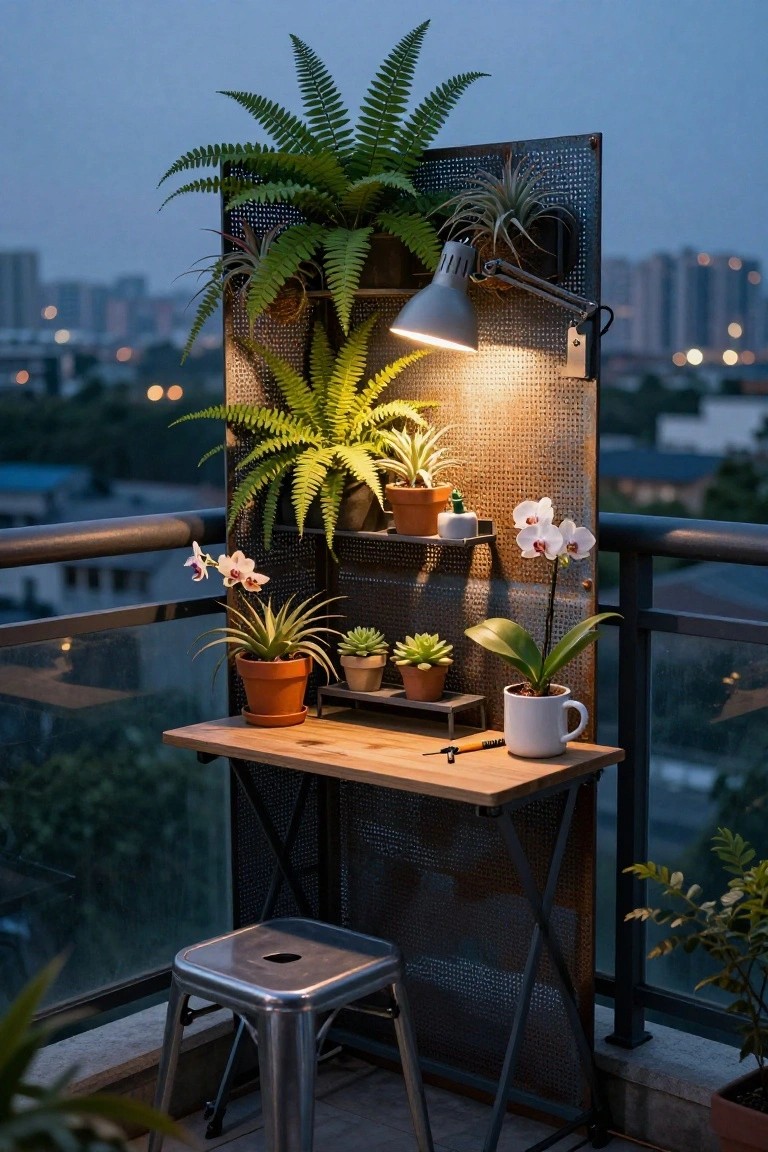
A vertical panel gives you a lot of planting room without eating up floor space on a small balcony. The grid holds multiple pots at different heights so you can mix ferns, air plants, and flowers in one compact spot.
This approach works best when you want greenery close to a seating or work area. Keep the panel against a railing or wall and use a narrow table below for tools or extra pots. It suits apartments and small homes where every inch counts.
Vertical Trellis for Tiny Patios
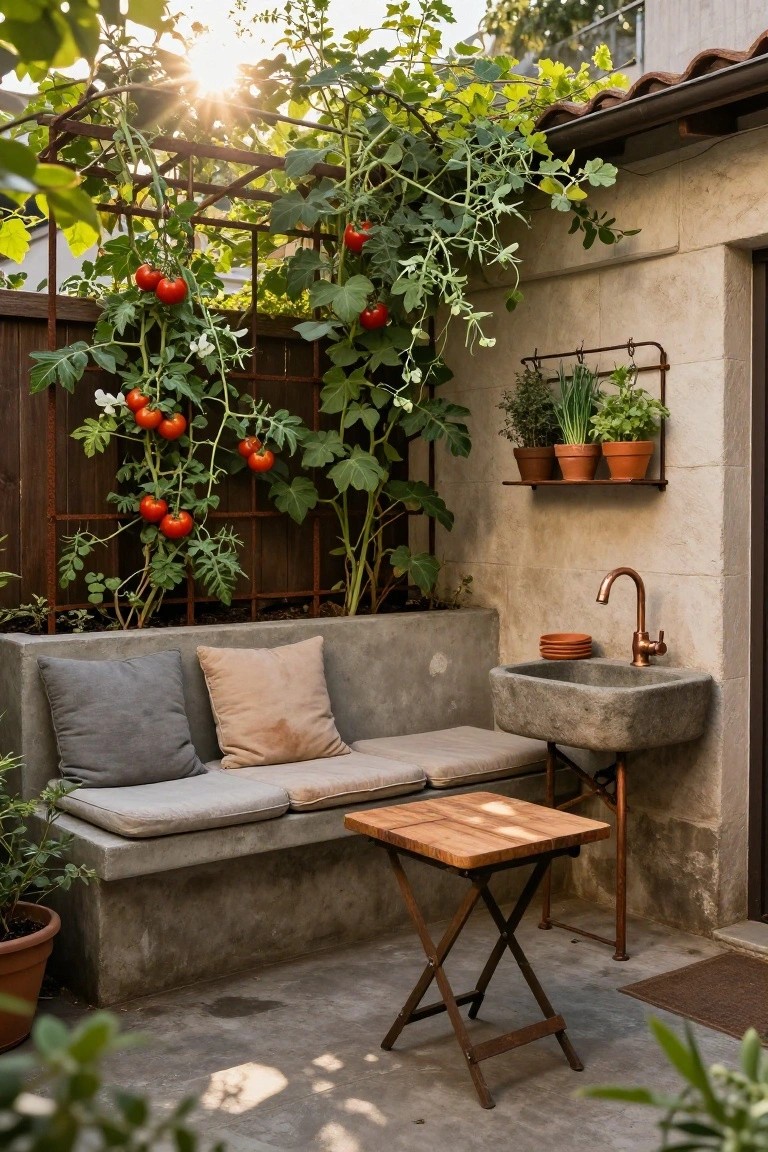
One simple way to add growing space in a small outdoor area is to run a trellis up the wall. It keeps the floor open for seating while letting vines climb and produce without crowding the ground.
A basic metal grid works well for heavier plants like tomatoes and holds up in most weather. This setup suits apartments or townhomes with just a narrow patio, and you can add a bench or small table right below it for easy access.
Illuminated Planters For Small Balconies
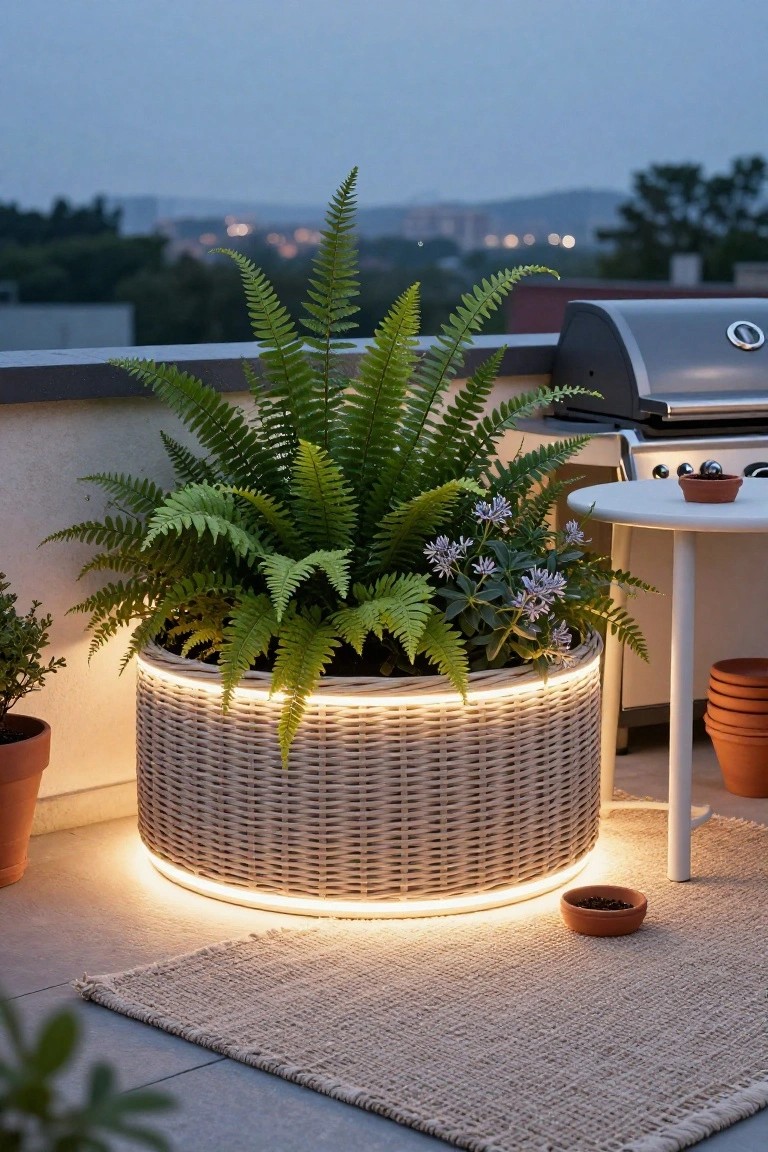
A large planter with a built-in light at the base gives a small balcony some presence after dark. The glow highlights the plants without needing extra lamps or string lights strung overhead.
This setup works best on urban balconies or rooftops where space is tight. Pick a sturdy woven container that can handle weather, add ferns or leafy greens that do well in pots, and run low-voltage lighting so it stays safe and simple to manage.
Mount Vertical Planters on an Exterior Wall
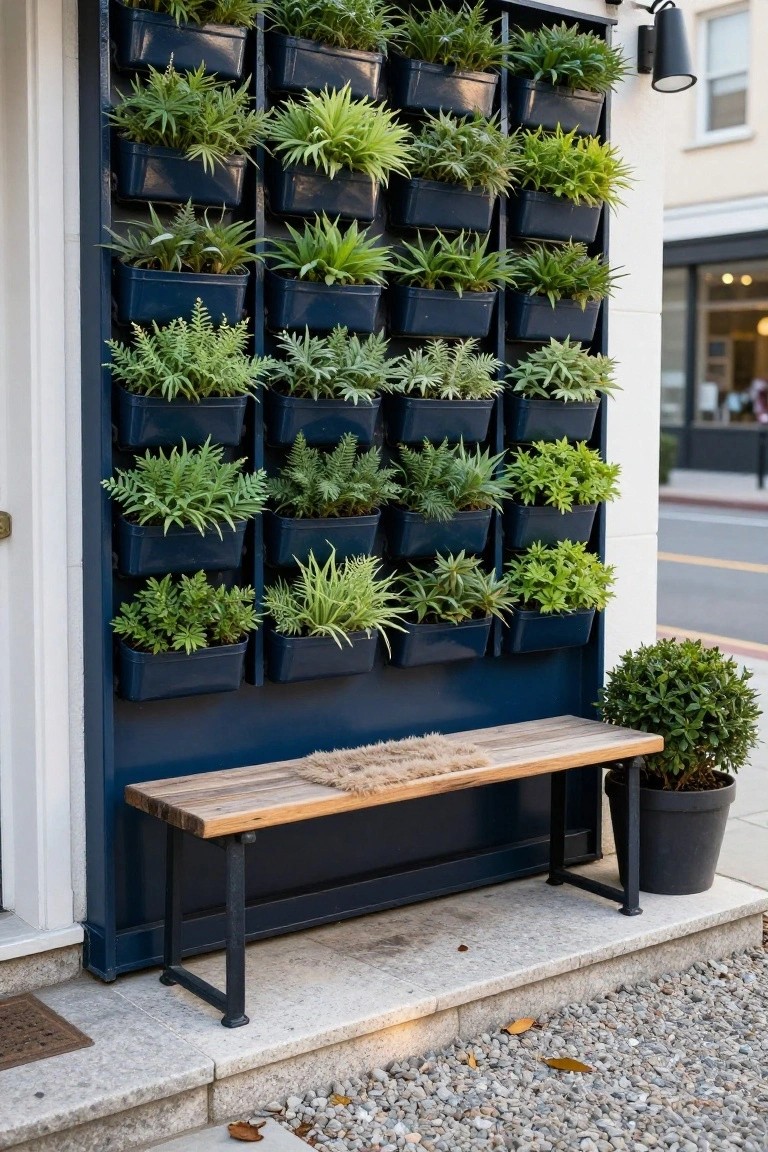
One simple way to add plenty of greenery without using up ground space is to mount a grid of planters straight onto an exterior wall. This turns a blank vertical surface into a full garden that stays out of the way while still giving you room for lots of different plants.
It works especially well on house fronts or side walls where floor space is tight. Use sturdy containers that can handle weather changes and choose plants that match the light conditions on that wall. A bench placed below makes the spot feel finished and gives you a place to sit among the plants.
Wall Mounted Pots For Small Outdoor Areas
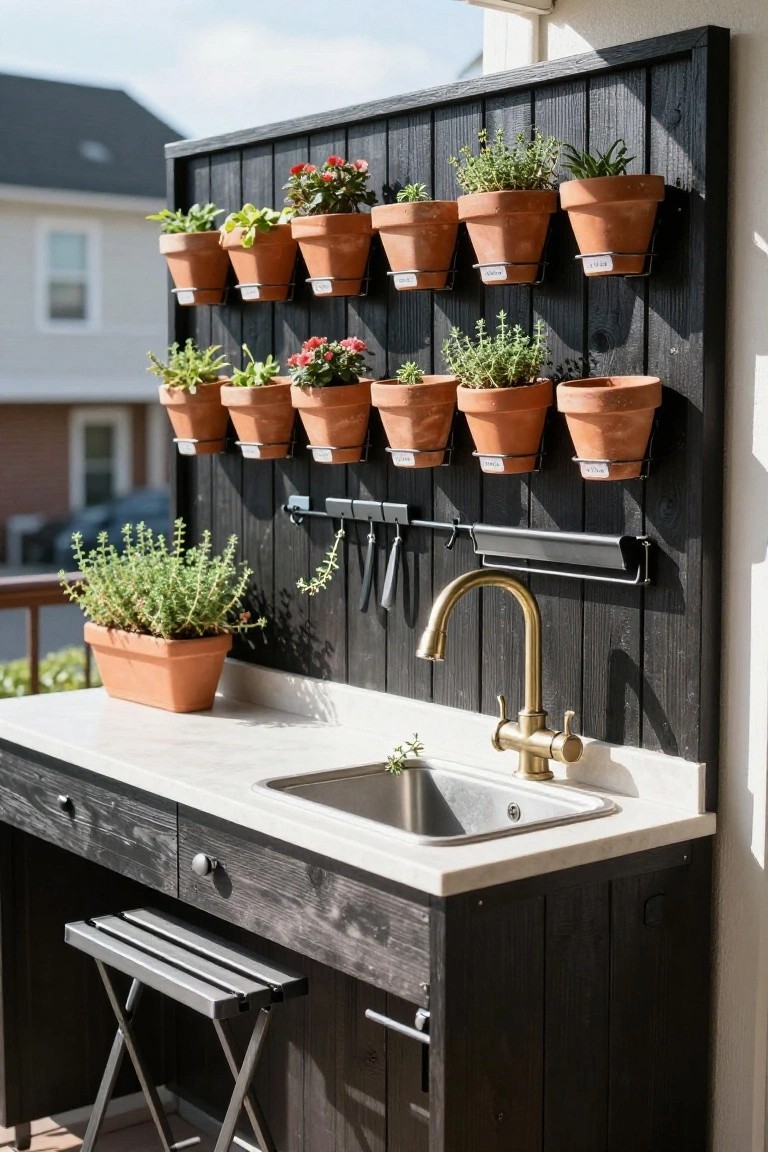
Mounting a row of pots on a vertical wall panel turns unused space into a productive spot for herbs and small plants. This setup keeps everything within easy reach while leaving the floor clear for other uses like a work counter or sink.
It suits small patios, decks, or balconies where floor space is limited. Use strong brackets and a sturdy backing board so the wall can handle the weight once the pots are filled with soil and plants.
Wall Shelves Help Maximize Tiny Outdoor Spaces
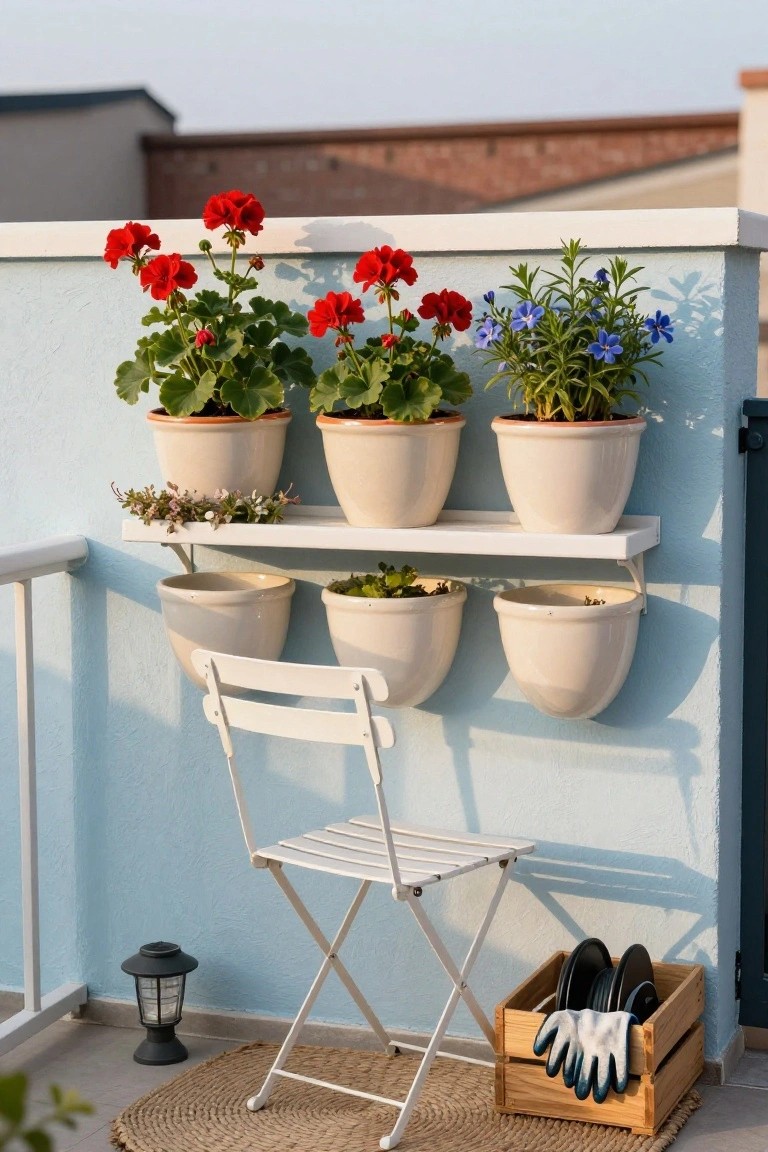
A wall shelf gives you room for several pots without crowding the floor. It works especially well on small balconies where every inch counts and you still want plenty of plants in view.
Mount the shelf at a height that lines up with your railing or eye level. Add a few hanging planters below it if you have the wall space. This approach suits apartments and other compact outdoor areas where a full garden bed is not an option.
Frequently Asked Questions
Q: Will the water from the top rows drip all over the bottom ones?
A: Use a soil mix with plenty of coconut coir so it holds moisture longer. Water from the bottom up when you can and let each level soak in before adding more. Check the lower pockets after a day or two and tweak how much you give based on what you see.
Q: Can my wall handle the weight of a full vertical garden?
A: Start with just a few lightweight pockets or bottles and add anchors rated for at least double the expected load. Most drywall holds steady once you hit the studs or use spreader plates. Skip dense garden soil and stick with lighter potting blends to keep things safe.
Q: How do I keep bugs away without chemicals in such a tight space?
A: Look over the plants every evening and pick off any aphids or mites you spot right then. Basil and mint tucked in between the other greens cut down on visitors fast. A gentle mist from a spray bottle in the morning helps wash away eggs before they hatch.
