


I’ve spent enough time tinkering in my backyard to know that a vegetable garden thrives when the layout respects the yard’s natural flow and sunlight patterns.
You spot the difference right away in how well-defined paths and simple edging keep mud at bay and make daily tending feel straightforward.
One change I made last season was building low-cost raised beds from scrap wood, which transformed a patchy corner into something productive without breaking the bank.
These setups evolve nicely over the years as soil builds up and plants fill in, rewarding patient tweaks along the way.
A few of them are worth sketching out for your own spot.
DIY Vertical Herb Shelves for Tight Spaces

One smart way to grow fresh herbs without taking up much ground is to build simple wooden shelves right on an outdoor wall. You see these rough-cut wood racks holding terracotta pots of basil and other greens, stacked up neatly against a stucco wall. It pulls the garden up off the patio floor, leaving room for a bench or more pots below. Folks like it because it’s cheap to make from scrap wood and lets you harvest right outside the kitchen door.
To pull this off, grab some reclaimed planks, brackets, and pots, then mount them at different heights for easy reach. It works best on a sunny side wall in small patios or balconies where space is tight. Just make sure the wood is treated against weather, and group sun-lovers like basil together. Skip it if your wall gets too windy.
Balcony Bamboo Screen Vegetable Garden

A tall bamboo screen gives this balcony real privacy from the street and neighbors. Hanging black pots clip right onto the poles, holding tomatoes, herbs, and greens that climb up nicely. It turns a plain railing into a vertical garden without taking floor space. Bamboo looks natural and softens the metal balcony edge too.
This works best on small urban balconies or apartments where you want fresh veggies but have limited room. Source bamboo poles from a garden center, tie them together loosely, and add affordable metal brackets for the pots. Pair with trough planters on the floor for bushier plants like squash. Just make sure the screen is secure against wind.
Cinder Block Raised Beds
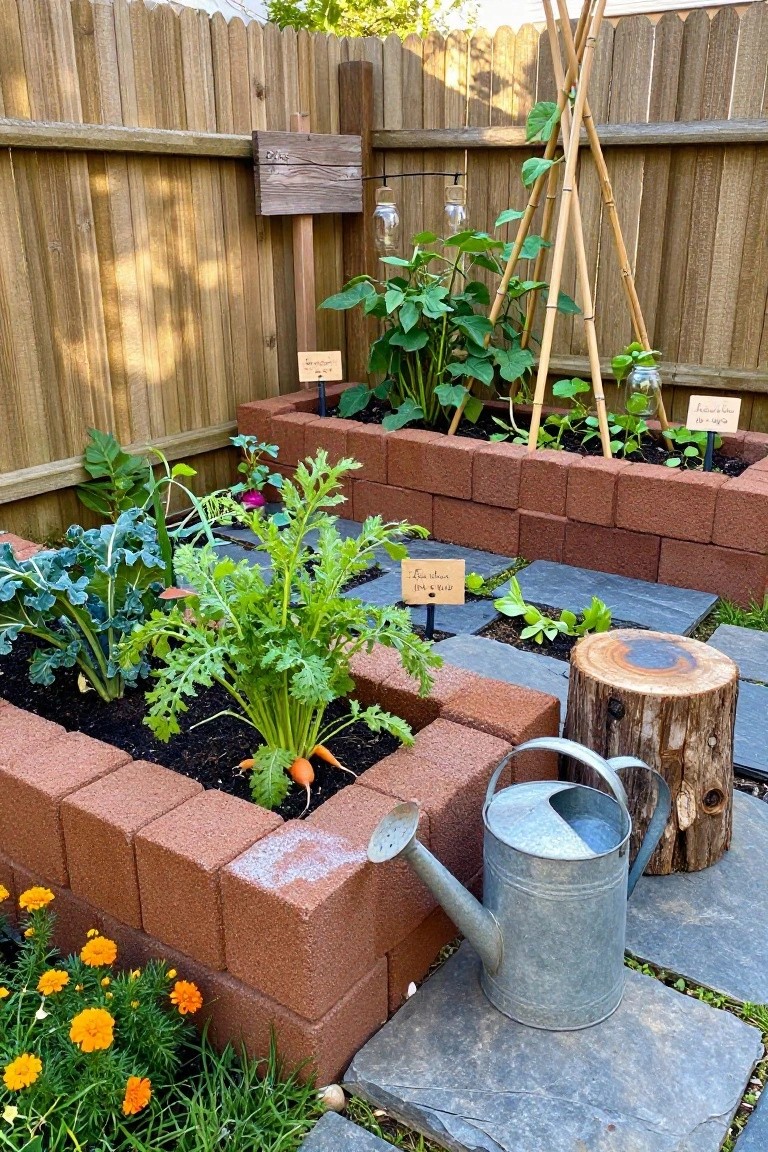
One of the handiest ways to get a vegetable garden going on a budget is stacking cinder blocks into raised beds. These keep the soil right where you want it, make weeding easier, and let you grow things like carrots and kale without bending over too much. In this setup, the blocks form neat rectangles filled with plants, some climbing trellises made from bamboo poles.
You can build them yourself in an afternoon. Just level the ground, stack two layers of blocks, and fill with good garden soil. They fit great in corners of backyards or along fences like this one. Watch for blocks that might shift on uneven spots, though, and line the bottom with cardboard to cut down on weeds.
Linear Gutter Planters for Easy Greens
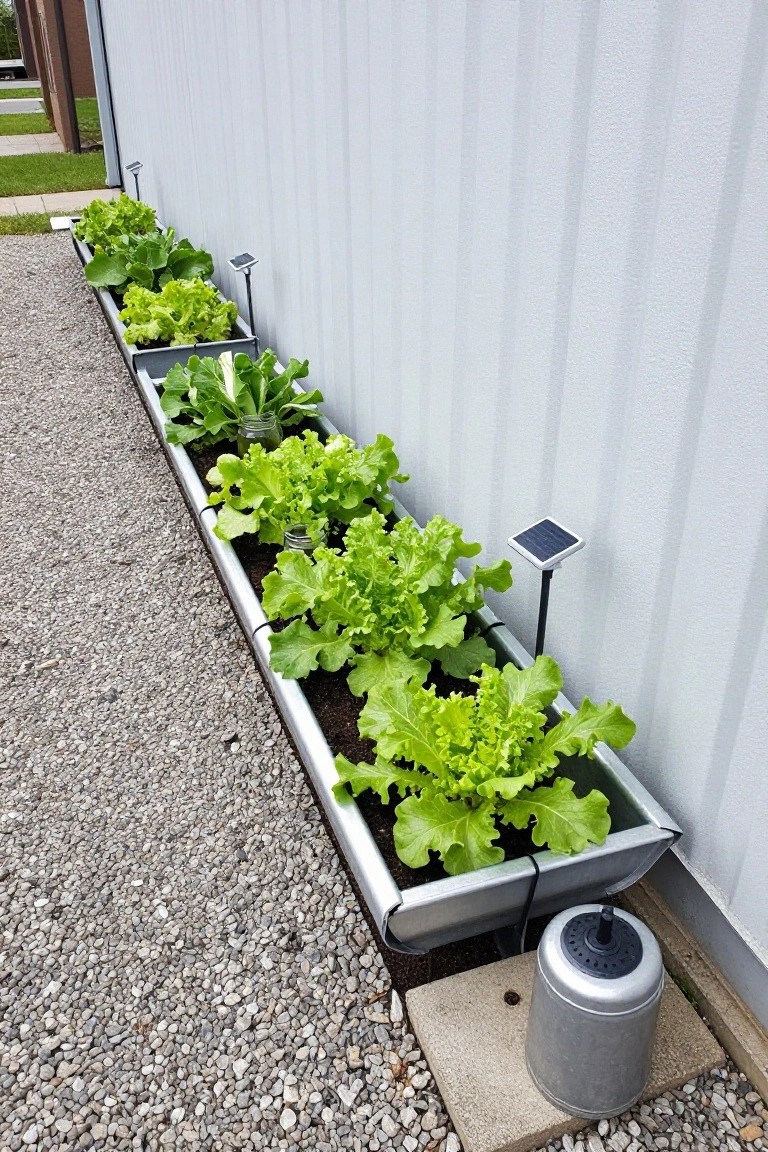
One straightforward way to grow your own salad greens without taking up yard space is lining up long metal gutters as raised planters right against a garage or shed wall. These troughs hold soil and plants perfectly, keeping everything off the ground and easy to reach. In the setup here, rows of lettuce thrive in the narrow beds, showing how productive this can be even in a skinny side area with just gravel underneath.
You can pick up gutters cheap at a hardware store, mount them on brackets or legs, and fill with good potting mix. They work best in full sun spots like this, next to a wall for some wind protection. Add drip lines or just hand-water, and throw in solar stakes for evening checks. Great for renters or small lots… keeps things tidy and harvest-ready all season.
DIY Pallet Bench with Raised Veggie Planter

One smart way to grow veggies without taking up much deck space is building a raised planter right into a bench using pallets. You get a spot to sit and tend your plants at the same time. In this setup, cucumbers climb up a simple metal trellis while the planter holds soil for more crops. It’s all made from recycled wood, keeping costs low and giving that backyard a practical feel.
This works best on smaller decks or patios where you want seating and garden in one. Stack pallets for the bed frame, paint it if you like, and brace the bench part sturdy. Use untreated pallets for food safety. Add gravel underneath for drainage. Fits rentals or tight budgets easy.
Compact Greenhouse for Small-Space Veggies

A small glass greenhouse like this one lets you grow fresh lettuce and greens right in your backyard without much space or cost. The clear panels trap warmth and light, so plants stay healthy longer into cooler months. Black plastic crates hold the soil, keeping everything neat and easy to manage inside.
Set it up on concrete blocks for good drainage and height, add a fan for air flow, and let ivy climb the frame for a touch of green outside. It works great in average yards or patios where ground space is tight. Just watch for strong winds… anchor it well.
Tiered Crate Vertical Vegetable Garden

Old wooden crates stacked into a simple tower make a smart way to grow peas, beans, and herbs without taking up much ground space. The climbing vines on ropes and the mix of greens in each level give it a full, lively look that fits right on a patio or deck. It’s one of those easy ideas that feels both practical and a bit rustic.
Just hunt for sturdy crates at flea markets or reuse some from shipping. Stack three or four, secure them, add drainage holes, and fill with soil. Paint them a soft color like this teal if you like, or leave them natural. It works best in sunny spots near the house, great for renters or small yards. Watch the weight so it stays stable.
Terrace Benches with Raised Veggie Planters

A simple wooden bench setup like this works well when you tuck raised planters right alongside it. You end up with a spot to sit and tend your lettuce or cukes without much walking around. The gray shade canopy overhead makes it usable even on sunny days, and everything feels pulled together on a rooftop terrace.
This kind of layout fits balconies or patios where space is tight. Build the benches from basic lumber, grab some large concrete planters, and fill them with easy veggies. It keeps things practical for city growing… just make sure the planters drain well to avoid soggy roots.
DIY Pallet Raised Beds for Veggies
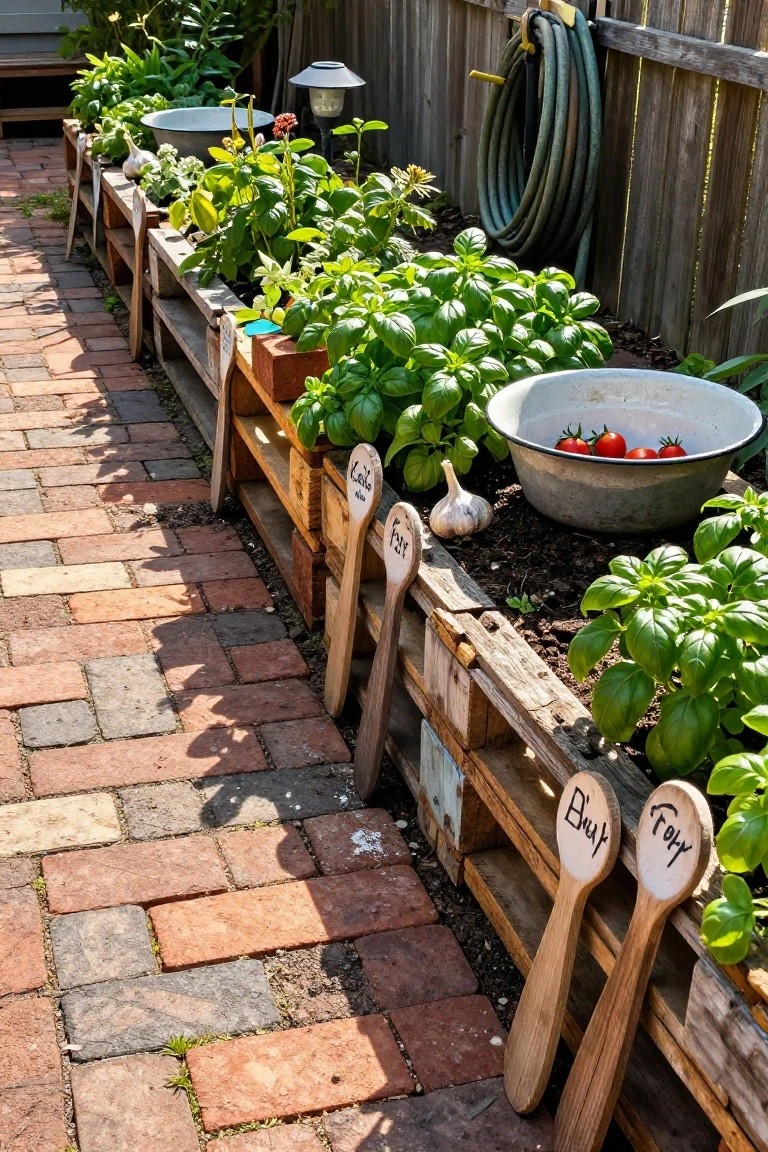
One simple way to start a vegetable garden on a budget is stacking old pallets into raised beds. They line up nicely along a path like this one, keeping plants off the ground and easy to reach. Basil bushes out full, garlic bulbs sit ready to pick, and tomatoes ripen in a metal bowl nearby. It’s practical for fresh eating without buying fancy planters.
Just find sturdy pallets, cut them to size if needed, and stack two high for most beds. Line the inside with landscape fabric to hold soil in, then plant herbs or small veggies. This fits small backyards or side yards best. Add wooden spoon labels for plant names. Keeps things organized and costs next to nothing.
Raised Beds with Built-In Benches

Raised beds like these make vegetable gardening straightforward and keep everything off the ground. You build them from simple wooden planks, add a wire trellis for climbers like nasturtiums, and tuck in strawberries or squash along the edges. The benches right there along the beds turn it into a spot to sit and tend the plants. It’s practical for small yards and keeps soil from compacting underfoot.
Put this setup in a sunny corner of your backyard where you get at least six hours of light. Use untreated wood to avoid chemicals leaching into the soil, and line the bottoms with cardboard for weeds. It works great for renters too since you can take the beds apart. Just watch the wood for rot over time and refresh the stain yearly.
Build Raised Beds from Concrete Blocks

Concrete blocks make some of the easiest raised beds for a vegetable garden. You can grab them cheap at any home center and stack them right into place without much fuss. They hold soil well and give plants a boost in tough spots like this narrow walkway between fences. A gravel path down the middle keeps things neat and easy to walk.
Just stack two or three blocks high, add landscape fabric at the bottom for drainage, then fill with good garden soil. This works best in small yards or along a side path where space is tight. Line up a few beds and you’re growing tomatoes or greens in no time.
DIY Stacked Bucket Planter Tower
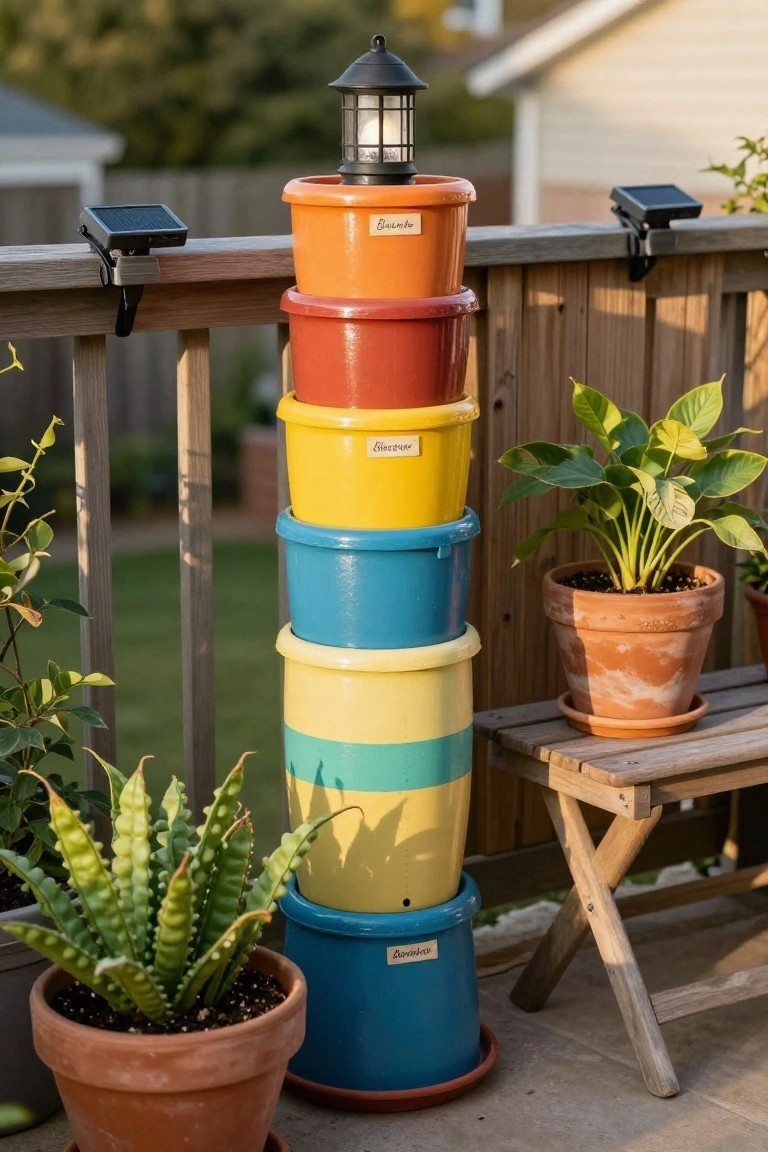
A simple way to grow veggies in tight spots is stacking colorful plastic buckets into a tall planter tower. Like this one on a deck, it uses bright orange, red, yellow, blue, and green buckets piled high with plants poking out the top. The colors make it fun to look at, and adding a solar lantern on top gives light for evenings without any wiring hassle.
This works best on balconies, decks, or patios where ground space is limited. Grab five-gallon buckets from a hardware store, paint them if you want, drill holes in the bottoms for drainage, and stack them with gravel at the base for stability. Fill with potting soil suited for veggies, and plant things like herbs or trailing greens. Just check the weight now and then… it adds up quick.
Raised Bed Veggie Patch Against the Wall

One smart way to fit a vegetable garden into a tight spot is to tuck raised beds right up against your house wall. These wooden beds hold tomatoes staked tall with green fruit showing, plus peppers and herbs all thriving together. The wall gives support and cuts down on weeding, while the setup looks neat without taking much ground space.
Build yours with affordable untreated lumber for the frames, fill with good soil, and line the base with gravel to keep things drained. It suits side yards or narrow strips along garages best. Stake tomatoes as they grow to save room… just watch for pests on those lower leaves.
Straw Bale Garden Edging

Straw bales make a simple, cheap way to edge vegetable beds and paths. They hold soil in place, keep weeds down, and help the ground stay moist. You see it here lining a stone walkway right up to a small greenhouse, with plants tucked in neat. That rustic look fits right into backyard growing without much fuss.
Just stack or lay the bales where you want borders, maybe pin them lightly if needed. It suits tight spaces near fences or walls, like this setup. Keeps mud off your shoes too. Swap out old straw yearly so it doesn’t rot into mush.
Vertical Terracotta Pots on a Garden Fence
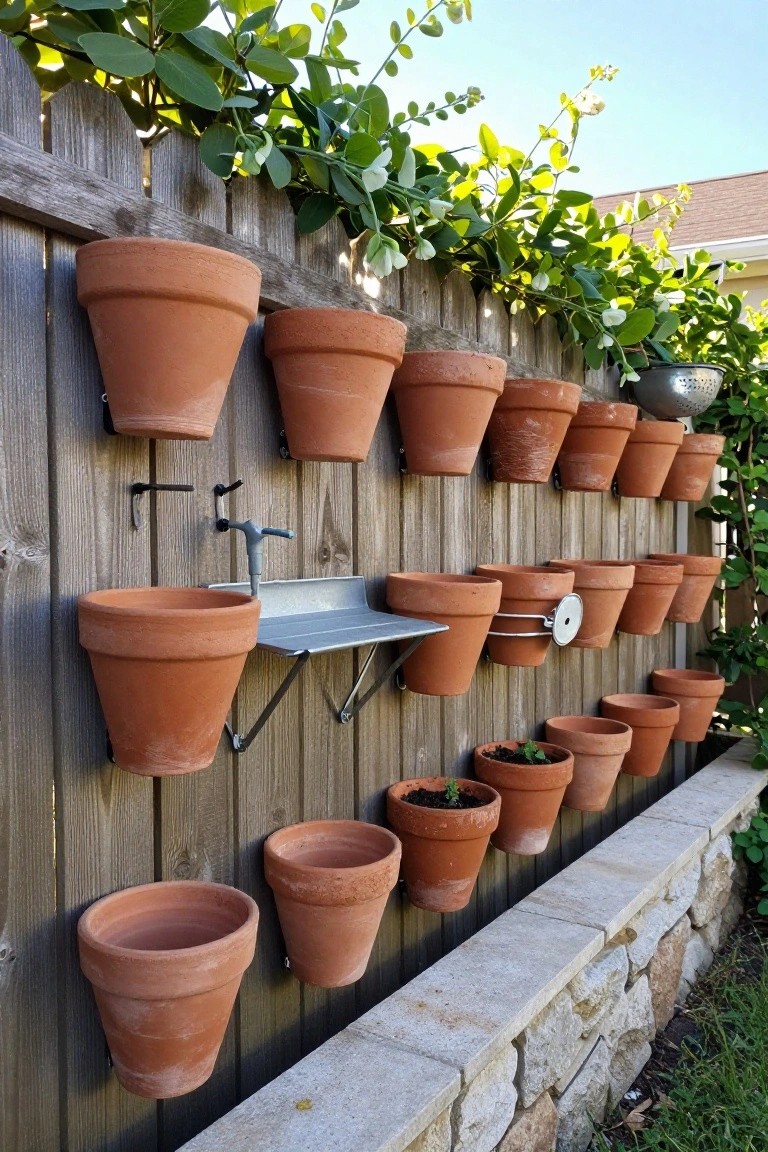
One smart way to grow veggies without needing much ground space is mounting terracotta pots directly on a fence. You see rows of these classic clay pots hung at different heights with simple metal brackets. It keeps things tidy and lets plants get good sun. Vines climbing over top add some natural cover too.
Grab some inexpensive pots and sturdy hooks from the hardware store. Screw them into a solid wooden fence like this one. Fill with soil and plant strawberries or herbs. It suits small yards or tight spots along a driveway. Watch the weight though once they’re watered.
DIY Bucket Planters for Organized Vegetable Plots
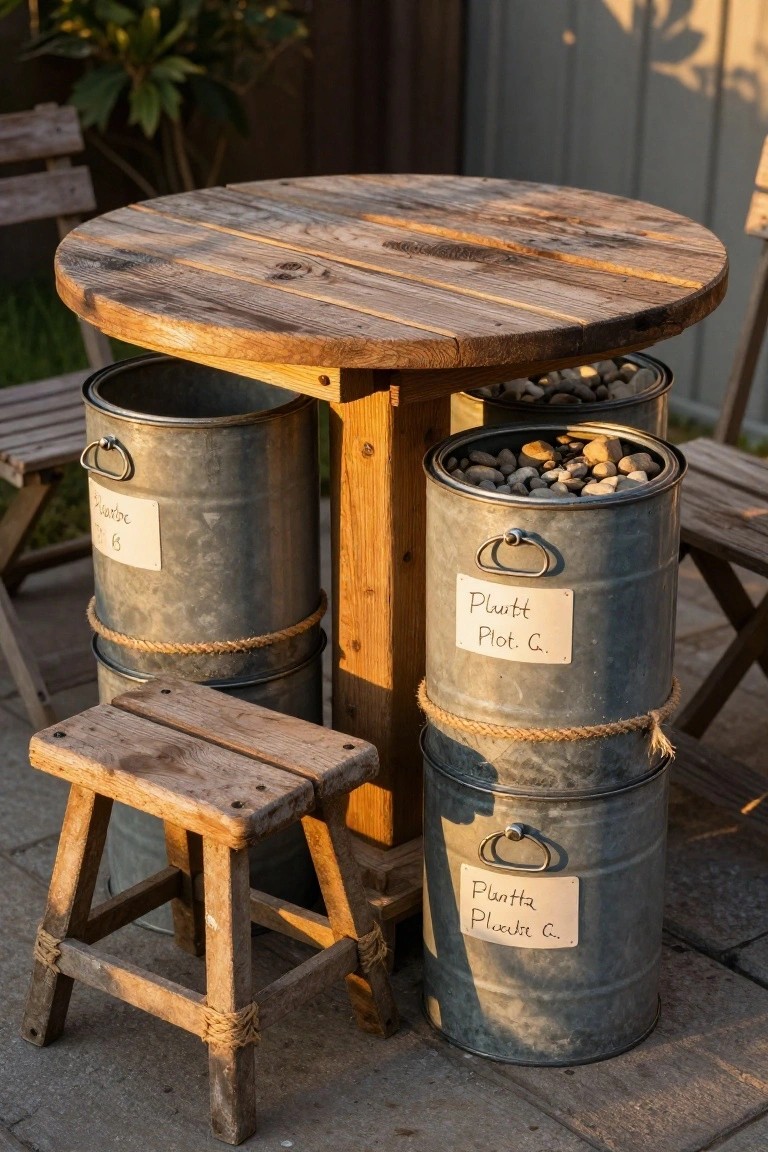
Galvanized buckets make great planters for veggies on a tight budget. You see them here grouped around a simple wooden table, each one labeled like “Plot B” or “Plot C” with a tag, and tied with rope for a clean look. They’re filled partway with pebbles for drainage, which keeps roots happy without fancy pots. This setup turns a basic patio corner into neat growing spots, and the rustic metal fits right into backyard gardens without looking out of place.
Group three or four buckets together like this near a seating area, and you’ve got room for tomatoes in one, herbs in another. It works best in small yards or apartments with patios, where space is limited but you want fresh produce close by. Just drill holes in the bottoms if needed, and watch for rust over time… a coat of liner paint helps. Super cheap at farm stores, and easy to move around as plants grow.
Painted Cinder Block Planters for Veggies

One easy way to start a vegetable garden without spending much is to use old cinder blocks painted in soft colors. These square blocks hold soil just fine for plants like lettuce and arugula, and the colors make the setup look cheerful instead of plain. Stack them or line them up on a bench like this, and you have a tidy growing spot that fits anywhere.
Put them along a fence or on a patio where sun hits most of the day. They work best in small yards or even apartments with a balcony. Grab some concrete sealer first to keep the paint from chipping, and drill holes in the bottoms if water sits too long. Cheap and simple. Keeps things organized too.
Frequently Asked Questions
Q: Can I grow veggies if I only have a tiny balcony?
A: Sure, use hanging baskets or stackable crates filled with soil. Peppers and herbs love these spots and give you fresh picks all summer. Rotate them for even sun.
Q: What’s a cheap way to start my soil mix?
A: Dig up your yard dirt and blend in leaves or grass clippings. Let it sit a week so it breaks down. Your plants will root strong without store-bought bags.
Q: How do I fight pests without spending money?
A: Spray leaves with garlic water; bugs hate the smell. Check plants daily and squish eggs you spot. And plant basil next to tomatoes—it keeps flies away.
Q: Do I water every day in these setups?
A: Feel the soil two inches down; water only if dry. Mulch with straw to hold moisture longer. This cuts your hassle big time.
