


I’ve tinkered with vegetable gardens for years, and nothing frustrates me more than a layout that crowds the plants and turns weeding into a chore. What stands out first in the best ones are the thoughtful pathways and raised beds that guide your steps while letting roots breathe. I pay close attention to edging because it holds everything together as vines sprawl and harvests pile up. A few ideas in here feel right for my own yard, like companion planting frames I could build from scrap wood to test this spring. They show how small structure changes make a garden both bountiful and worth lingering in season after season.
Raised Metal Beds for Veggies
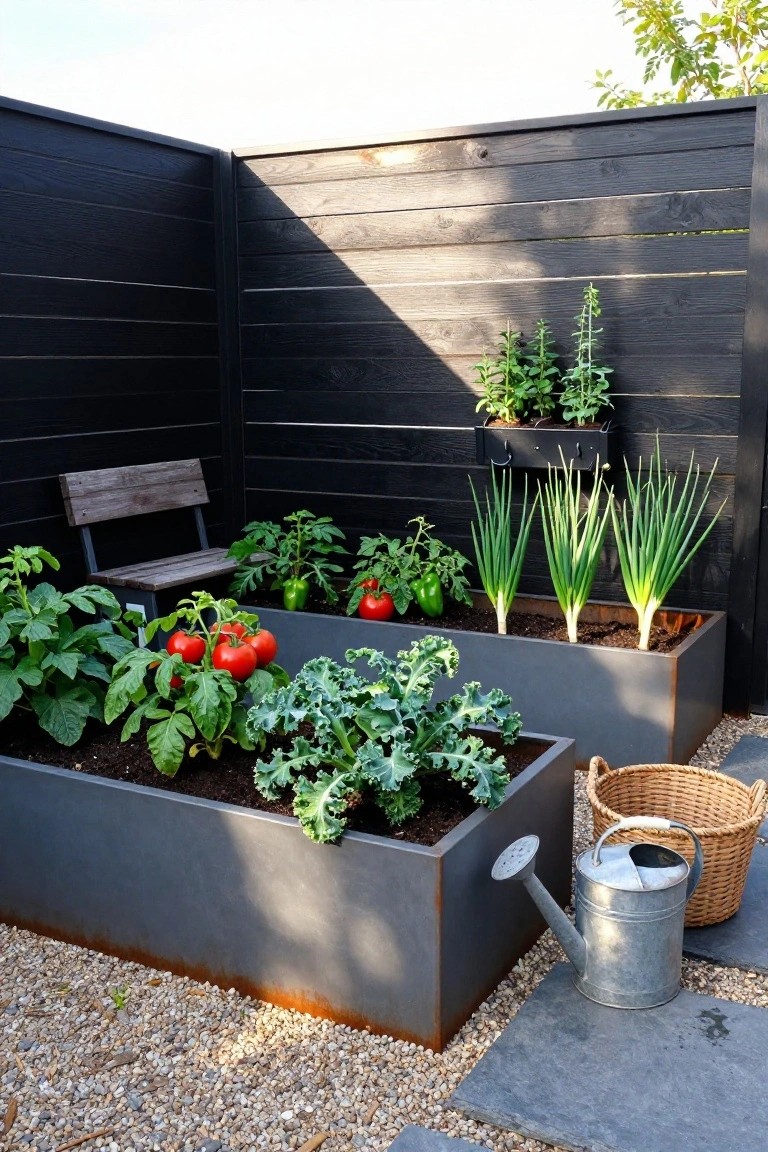
Raised beds made from corten steel or similar metal give vegetable gardens a clean, modern edge. The dark, weathered finish sets off the green leaves and ripe tomatoes without much fuss. It’s a simple switch from wood that holds up better over time.
Put these beds in a sunny corner against a fence, like the black slatted one here. They suit small yards or patios and make tending easier on your back. Line the bottom if soil acidity worries you, but otherwise they’re pretty hands-off.
Rustic Bench as Harvest Spot
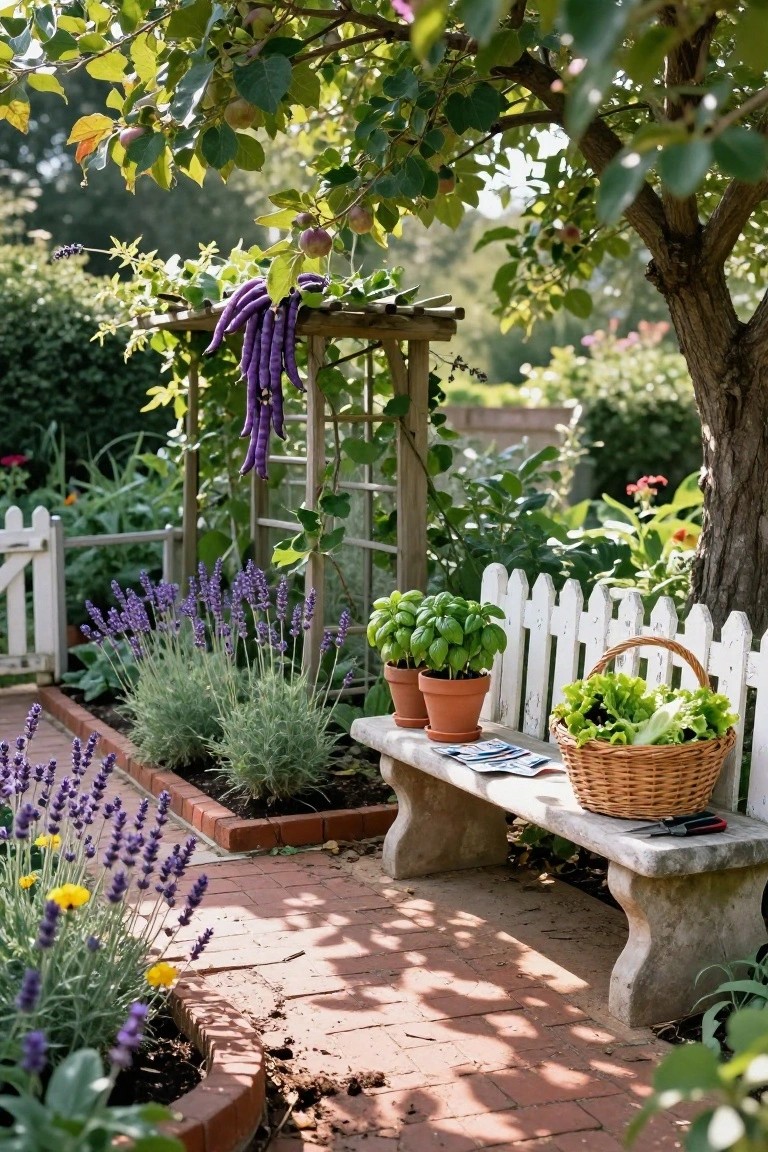
A plain stone bench tucked into the garden makes a perfect spot to pile up your fresh veggies right after picking. Like that wicker basket brimming with greens sitting there next to some basil pots. It turns a working veggie patch into something you actually want to linger in. Practical too. No need to trek indoors with armloads of produce.
Set one along a path near your trellises or borders. It suits cottage-style yards or even tighter spaces where every corner counts. Keep shears or notes handy on the seat. Just make sure it’s sturdy enough for daily use and shaded a bit on hot days.
Container Herbs Beside the Outdoor Kitchen

Terracotta pots full of rosemary and other herbs line this low stone bench, sitting right next to the outdoor sink and cooktop. Fresh peppers and tomatoes piled on the nearby table show off the harvest. It’s a simple way to keep herbs handy for cooking, and it brings that garden-fresh feel straight into meal prep.
Put this to work on any patio with a bit of sun. Choose pots that match your stone or tile, and pick herbs you use most. It fits smaller spaces well… just make sure good drainage keeps things from getting soggy.
Rooftop Raised Bed Vegetable Garden

Growing vegetables up high works well in tight city spots. These wooden raised beds sit right on a deck, packed with lettuce, cukes on trellises, and other greens. A simple shade canopy keeps harsh sun off the plants, and that utility sink makes washing veggies a quick job before you head inside.
Try this on a balcony or flat roof where ground gardening isn’t an option. Go for beds around two feet high so you don’t have to bend much. Use rot-resistant wood, and group plants by height… climbers up top, low growers below. It turns unused space into fresh produce without much fuss.
Boxwood Edging for Vegetable Beds

Boxwood hedges work great around raised vegetable beds. They give the garden a tidy, formal shape that looks right at home next to a house wall. In this setup, the low green borders keep everything contained and neat, while the veggies inside pop with their colors. Beets, chard, and greens fill the space without spilling over. Those two slim trees add some height without crowding things.
This edging idea fits small side yards or spots by a back door. It suits older homes with brick or stone, where you want the garden to feel like part of the yard. Boxwood stays green year-round and needs just light trimming. Plant edibles close together inside for better yields… watch for pests on the leaves though.
Balcony Railing Planters
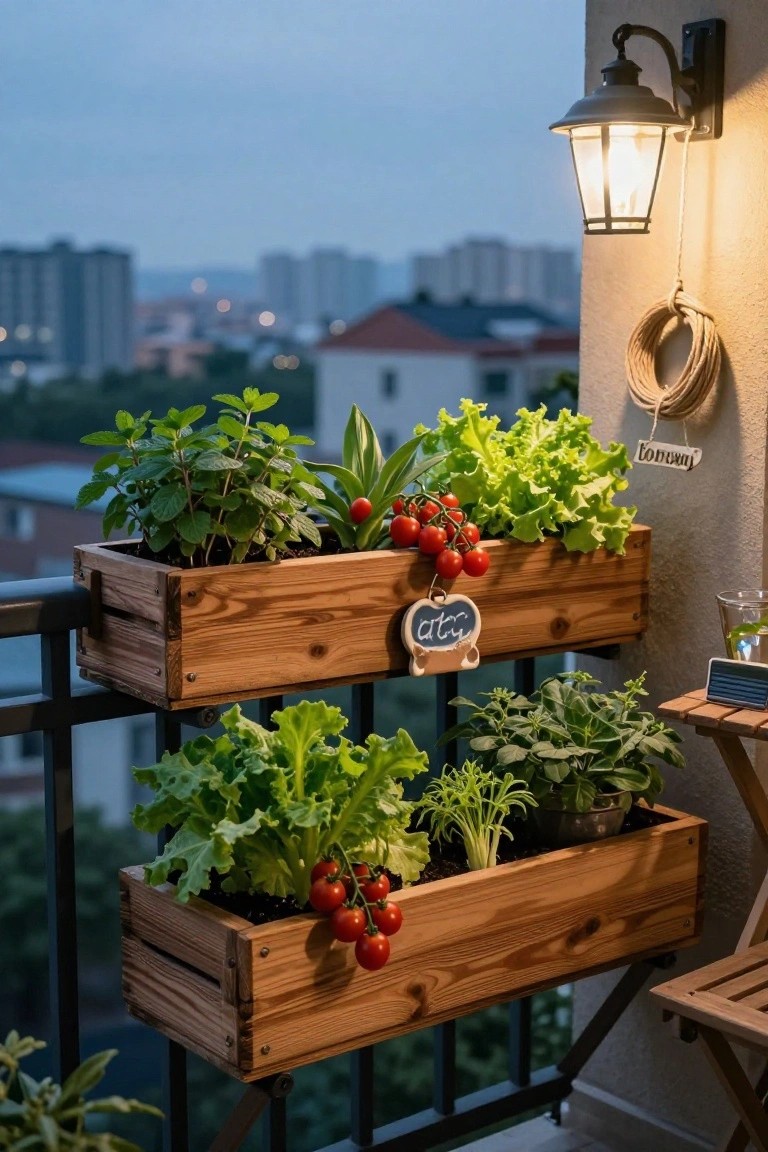
Wooden planter boxes like these, mounted directly on the balcony rail, turn a simple outdoor spot into a fresh veggie garden. They hold lettuce, tomatoes, and herbs without taking up floor space, and the natural wood keeps things looking neat against the railing. It’s a practical way to grow food right where you relax.
This setup works best on sturdy apartment balconies or small terraces. Pick rot-resistant wood like cedar, secure the boxes well so they don’t tip, and plant shallow-rooted stuff like greens and cherry tomatoes. Add a small stool or table nearby, and you’ve got your own little harvest zone. Just check weight limits first.
Raised Beds with a Central Path
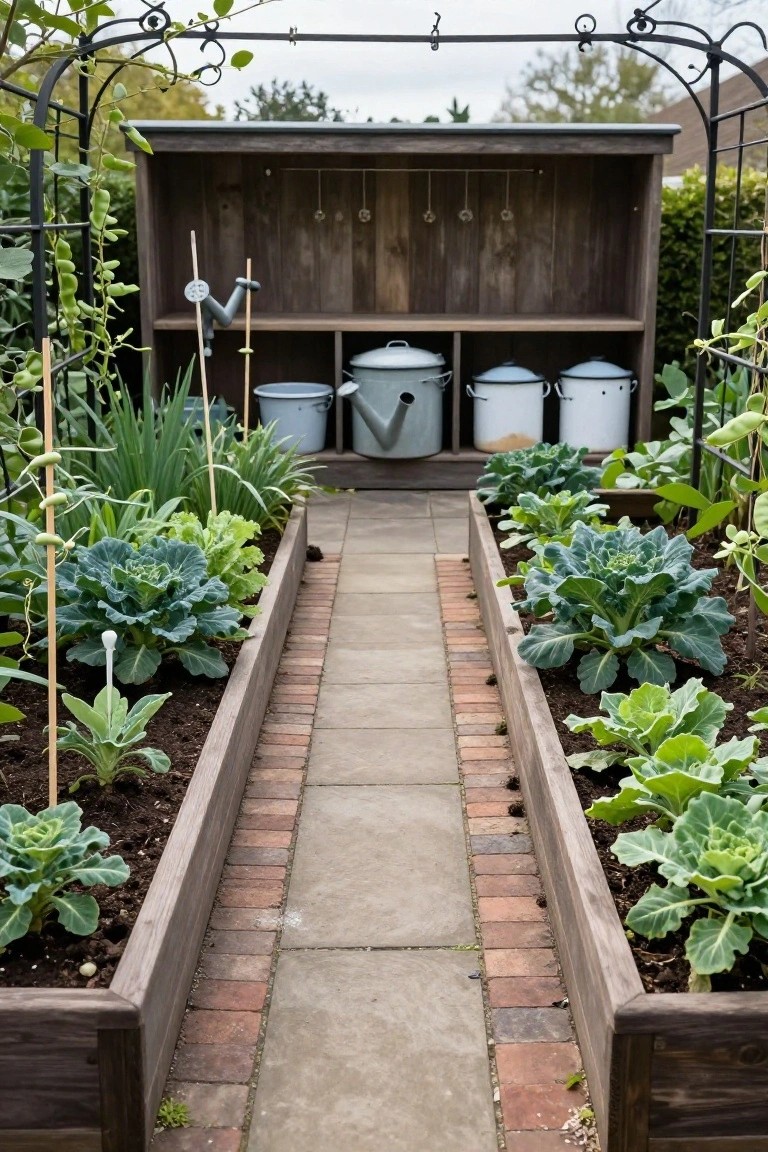
One straightforward way to set up a vegetable garden is with raised wooden beds lining a simple central path. This keeps plants organized in neat rows, like the cabbage and greens here, making it easy to reach everything without stepping into the soil. The path adds a clean line that guides you right through, and it feels practical for everyday tending.
You can build these beds from untreated wood to last a few seasons, keeping them about knee-high for comfort. They work great in smaller backyards or even patios, where you want fresh produce without a big plot. Just edge the path with bricks for stability, and add a basic shelter nearby for tools. Watch the wood for rot in wet spots.
Natural Log Edging for Garden Paths

Old logs line this winding path through a vegetable garden, their mossy surfaces blending right into the beds of pumpkins and squash. The look feels organic and settled, like the garden grew up around the path instead of the other way around. It keeps things simple while guiding you from one planting area to the next.
You can pull this off with logs from fallen trees or scraps, just stack them along your desired route and let nature take over. It suits cottage-style yards or spots with some shade and moisture. Watch for rot over time, though, and refresh as needed.
Steel Raised Beds for Easy Veggie Growing

Steel raised beds like these turn a simple veggie patch into something sharp and organized. The galvanized metal gets that nice rusty patina over time, which fits right into a backyard without looking too fussy. Lined up along a path with greens like lettuce spilling over the edges, they keep everything contained and make picking produce a straight shot.
They’re perfect for tight spaces next to a fence or along a walkway. Fill them with shallow-rooted stuff such as salad greens or herbs, and make sure you’ve got good drainage underneath. Works well in modern yards or even urban setups… just avoid spots with too much standing water.
Raised Beds with Built-In Bench

One smart way to make a vegetable garden more usable is to build a curved wooden bench right into the raised beds. Here stone walls hold back the soil for lettuce, herbs, and greens, and the bench sits at just the right height for tending plants without bending over much. That little wall light adds a nice touch for evenings too. It turns a simple veggie patch into a spot you actually want to hang out in.
This works best in a smaller yard where space is tight. Stack reclaimed stone or brick for the beds, then add oak or cedar planks for the seat. Keep plants like looseleaf lettuce close to the bench for easy picking. Just make sure the wall is solid enough to support sitting, and seal the wood against weather.
Lining Up Pots Along a Garden Path

One clean way to set up a vegetable garden is lining pots right along a stone path like this. The row keeps everything organized and easy to reach for picking greens or herbs. Gravel fills the space between, so no weeding hassle, and it fits a simple backyard without big beds.
This works best in narrow spots or side yards where you want growth but not mess. Choose pots that match your path stones, plant what grows well there, and add bamboo edging for privacy. Keep drainage good to avoid root rot.
Kid-Friendly Raised Vegetable Beds
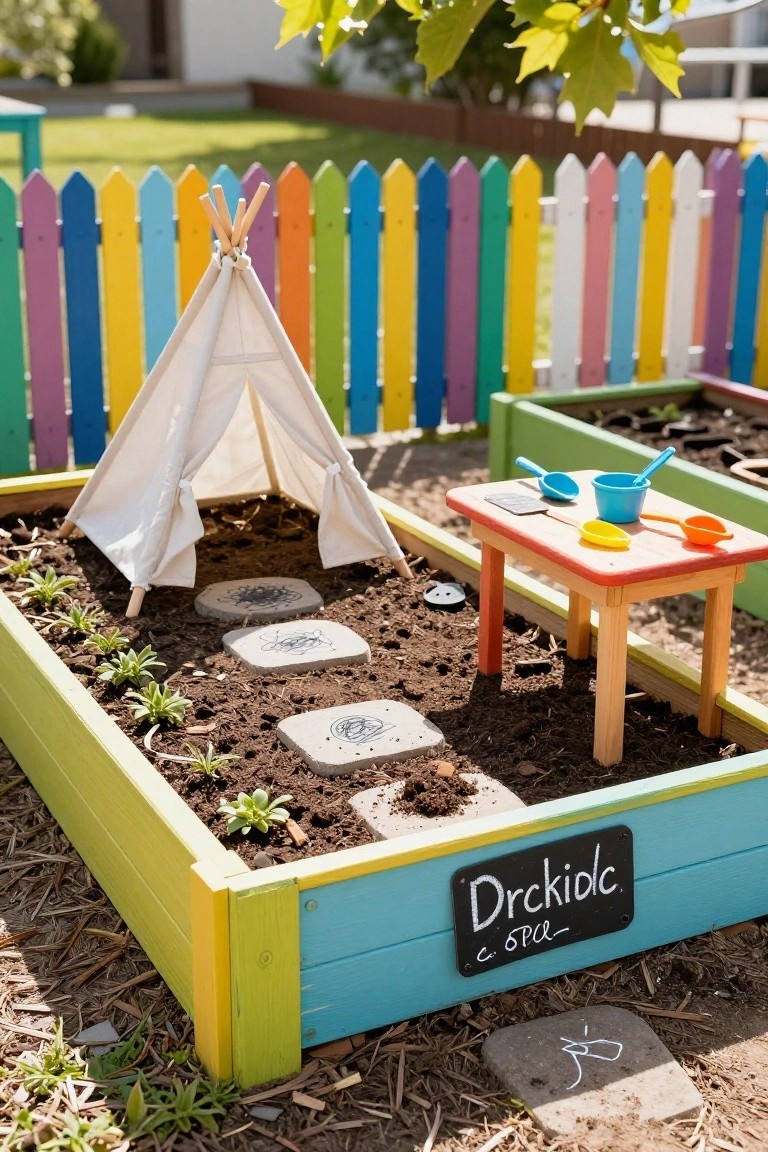
One smart way to get kids into gardening is building raised beds right around their play spots. Here you see a bright lime and turquoise bed packed with soil and sprouts, complete with a little white teepee tent and a toy kitchen table nearby. It mixes growing veggies with pretend play, so children stick around longer and maybe even water the plants without a fight.
This works best in family backyards where space lets you blend garden and play zones. Start with sturdy wood frames painted cheerful colors, add stepping stones for paths, and tuck in simple toys like that picnic table setup. Skip it if your yard is too formal… keeps things practical without much upkeep.
Bee Hotel in the Vegetable Garden
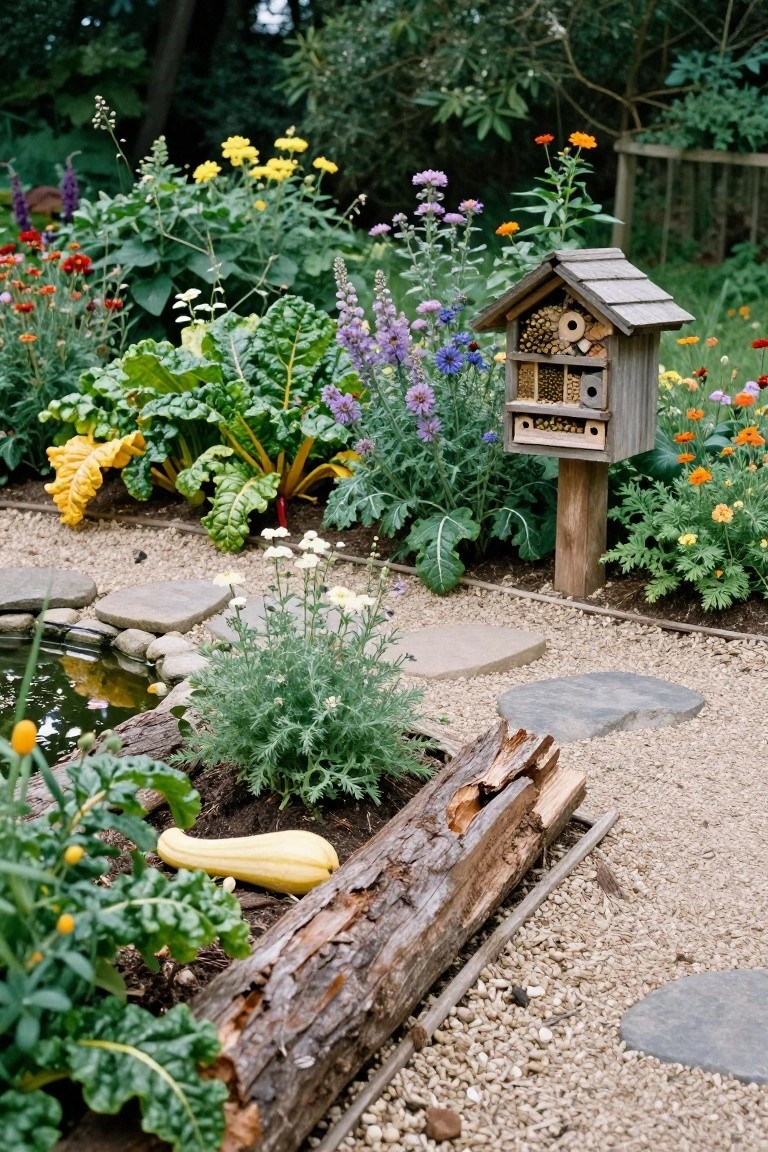
One simple way to make your vegetable garden more productive is adding a bee hotel right in the mix. This wooden one on a post stands out among the chard, squash, and flowers, drawing in pollinators that help everything grow better. It fits naturally without taking up planting space, and the buzzing activity just adds to the garden’s lively feel.
Place it near paths or edges where you walk by often, so you can watch the bees come and go. It works great in small backyards with a mix of edibles and blooms. Keep it sunny and sheltered from wind, and pair it with native flowers for the best results… no fancy setup needed.
Hydroponic Trough Garden on Deck
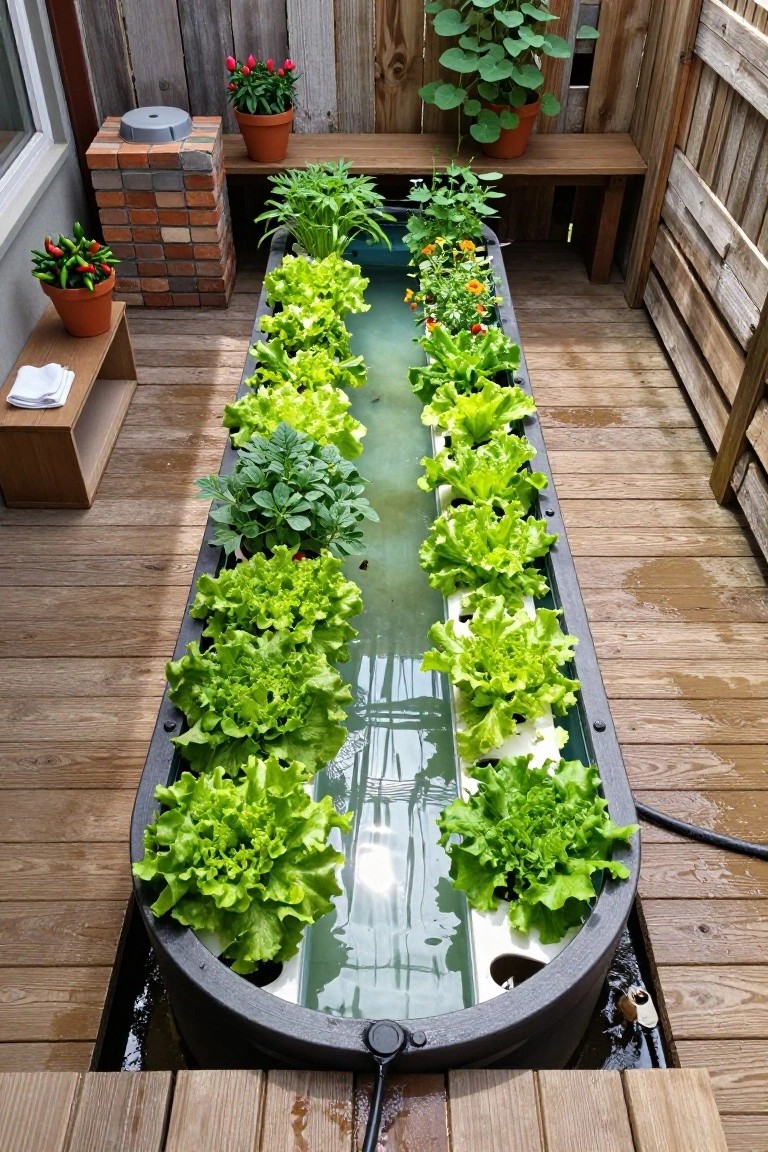
A hydroponic trough like this one turns a simple deck into a steady source of fresh greens. The long black container runs water through net pots holding lettuce and herbs, no soil needed. It stands out for keeping things neat and productive in tight spots, with plants growing fast and healthy right where you can see them.
This works best on balconies or patios with limited ground space. Get a ready-made trough or build one from food-grade plastic, add a small pump for circulation, and plant seedlings in rockwool. It suits renters or city homes… just cover it when not in use to cut algae.
Hanging Vegetables from Wall Vines

One simple way to add fresh produce to a small patio or courtyard is training vines up the walls so the veggies hang right there. Purple eggplants dangle in easy reach against a crisp white backdrop, turning blank space into something useful and full of life. It keeps the ground clear for sitting or walking.
This works best in sunny spots with sturdy walls or a pergola for support. Choose trailing plants like beans or cherry tomatoes that won’t overload the structure. Light walls make the colors stand out, and it’s low fuss once established. Good for townhouses or rentals without much yard.
Raised Planters Along Narrow Walls

One straightforward way to grow fresh veggies without taking up yard space is lining a wall with raised planters like these. They fit right into tight spots, such as alleys or side paths, and keep soil contained while letting plants get good sun. That simple row of black troughs holds a mix of greens and roots, making harvest easy to reach.
You can set this up anywhere along a fence or building wall with basic brackets or shelves. Add a basic bulb light for evenings, especially in shadier urban spots. It suits city homes or rentals best… just pick metal or plastic troughs that drain well and won’t rust fast.
Natural Stone Edging for Veggie Beds

Edging vegetable beds with natural stones keeps things neat and contained, especially along a path like this gravel driveway. The rough stones here border raised beds packed with greens, onions, and a few other edibles. It stops soil from spilling over and gives the garden a structured feel without much upkeep.
This setup fits right next to driveways or walkways on smaller lots. Go for local stones to blend with your yard. Stack them loosely for drainage, and it holds up year after year.
Raised Wooden Beds for Veggie Gardens
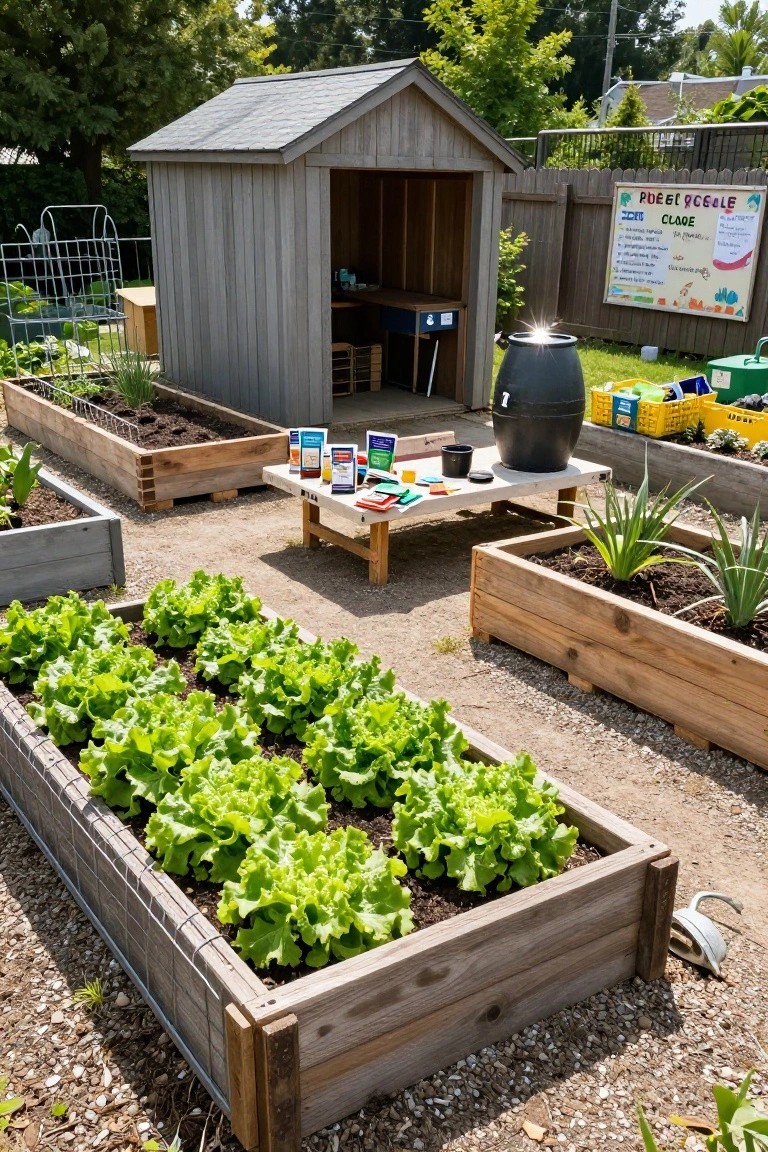
Raised wooden beds turn a simple backyard patch into a productive veggie spot without much fuss. The wood frames keep soil contained and at waist height, making it easier to plant, weed, and pick things like the lush lettuce heads growing here. They give your garden a clean, organized feel that looks right at home next to a fence or shed.
This setup works best in average yards with decent sun. Use cedar or pine boards for beds about 4 feet wide, leave room between them for paths with gravel or mulch, and fill with good soil mix. Watch for wood rot over time… treat it yearly. Great for beginners wanting fresh harvests without tilling the whole yard.
Garden Path Between Raised Beds
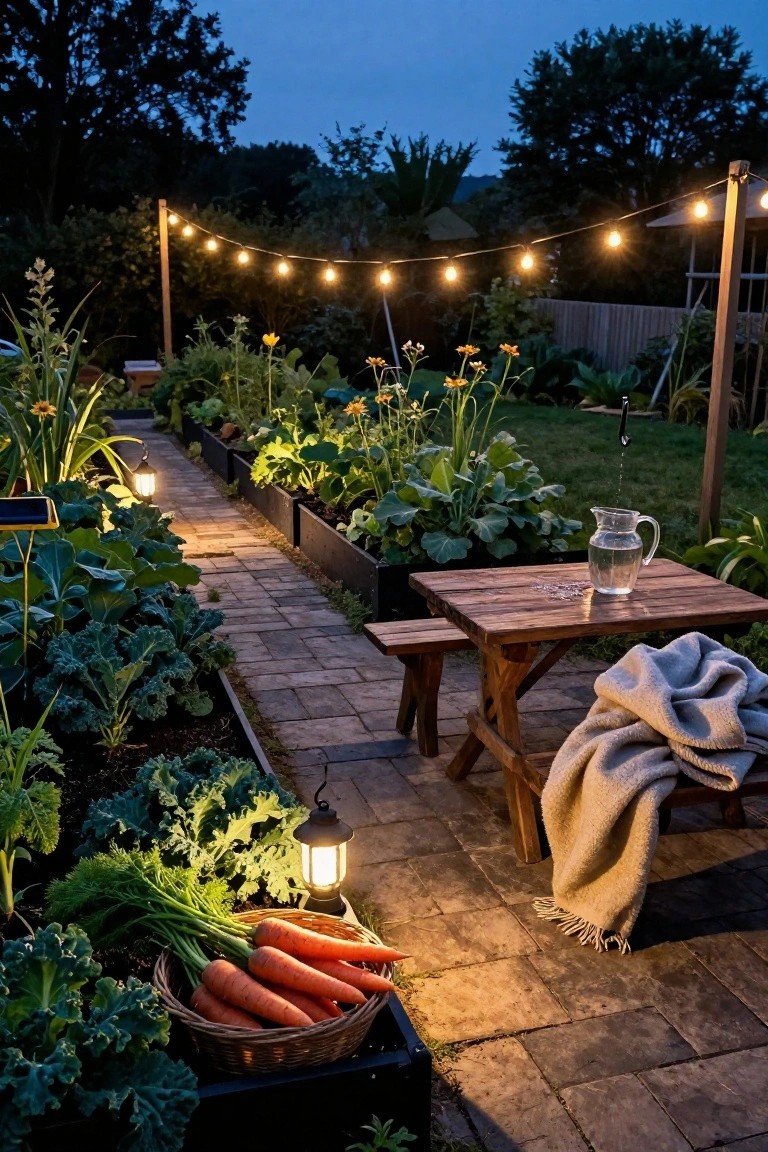
One straightforward way to set up a vegetable garden is with raised beds on either side of a simple path. It keeps plants organized and makes it easy to walk right up for weeding or picking without trampling soil. In this setup, the stone walkway leads your eye through beds full of kale, carrots, and pumpkins, turning a practical garden into something you actually enjoy strolling through.
Add string lights overhead and lanterns along the path to use the space in the evening too. This works great in a backyard corner or along a fence, especially if you want room for a picnic table nearby. Just keep the path wide enough for two people, about three feet, and choose low-growing edging plants to frame it without crowding.
Frequently Asked Questions
Q: How much space do I need for a stylish veggie garden like these?
A: Grab a spot as small as 4 by 8 feet for most designs. They stack up nicely with raised beds or vertical trellises. You harvest plenty without sprawling everywhere.
Q: Can I pull off these ideas on a balcony or tiny patio?
A: Sure, go vertical with hanging planters and wall pockets. Pick compact growers like cherry tomatoes or lettuce. They turn tight spots into fresh produce zones fast.
Q: What veggies mix well for both looks and easy picking?
A: Pair bush beans with colorful peppers, or nasturtiums trailing over strawberries. They climb or bush out to fill space without crowding. And they boost each other’s flavors right in the soil.
Q: How do I keep the garden pretty without daily fuss?
A: Mulch everything with straw or bark to lock in moisture. Tuck in perennials like chives for constant green. Deadhead spent blooms weekly, and it stays sharp all season.
