

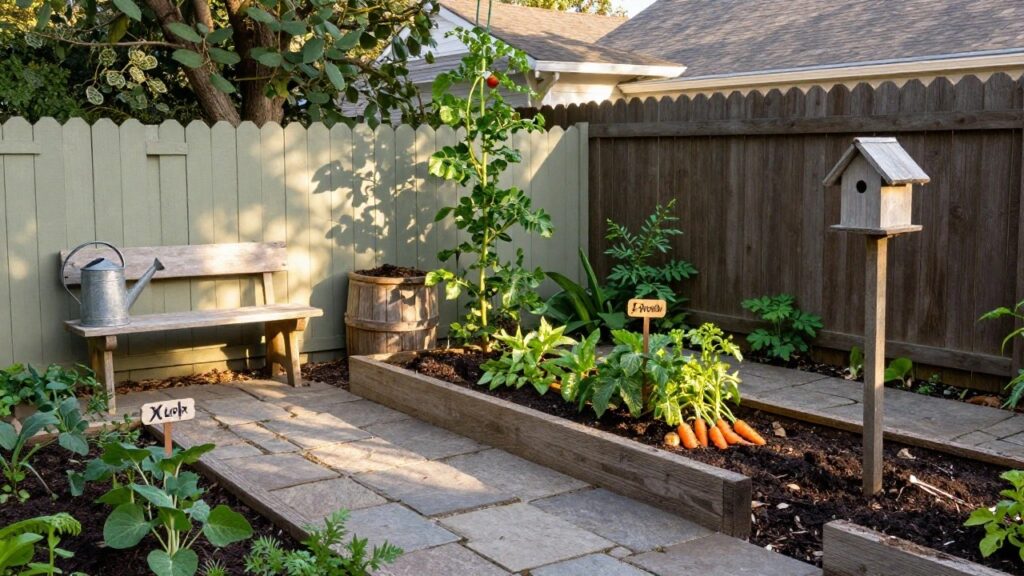
I remember eyeing my backyard and thinking a vegetable garden could turn it into something truly useful, but only if the beds and paths made sense from day one. Beginners like I was back then often pack too much into tight spots, which leads to tangled growth and frustrating harvests down the line. What draws the eye first in a solid setup is usually the clear layout of raised beds or rows that guide your steps naturally through the space. Over a season, smart edging and planting zones shape the yard into a steady producer without constant rework. A few of these ideas, especially the simple companion groupings, are ones I’d tweak and reuse next spring.
Raised Beds for Easy Veggie Growing
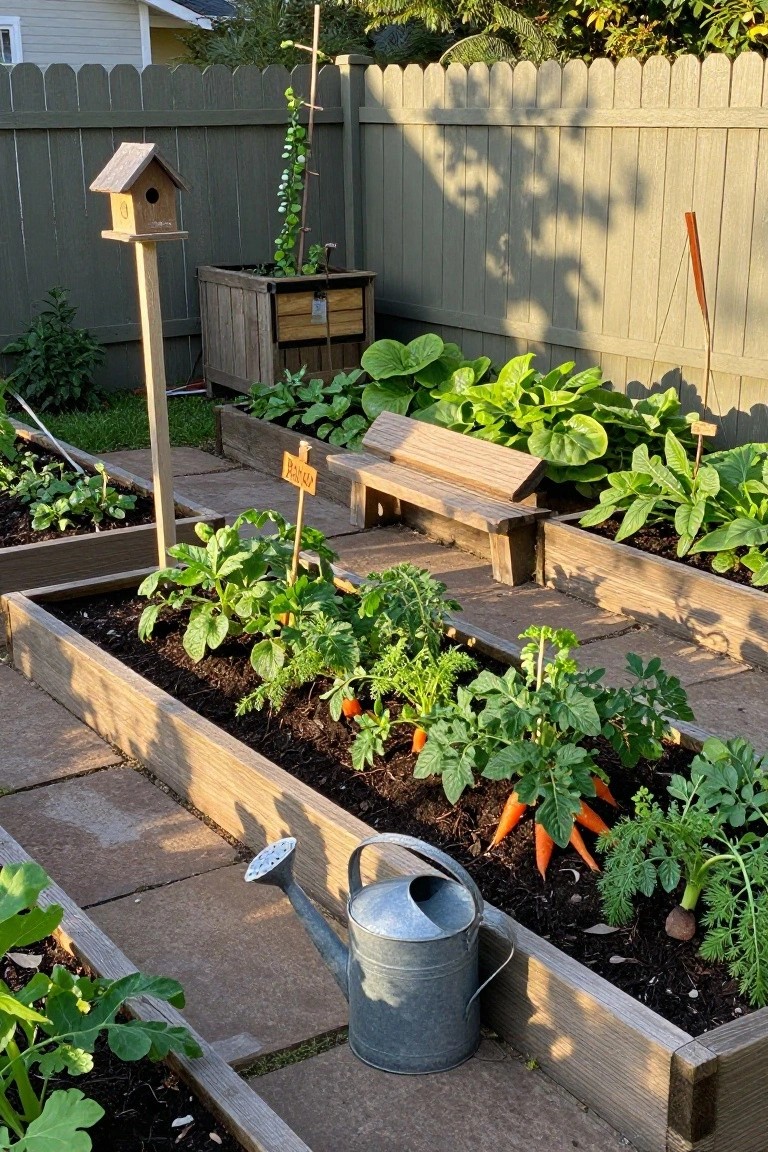
Raised beds like these make vegetable gardening straightforward for beginners. The wooden frames keep soil in place and lift plants to a comfortable height, so you don’t have to bend over much. In this setup, carrots, pak choi, and tomatoes grow neatly side by side, with room for paths in between. It turns a simple backyard patch into something productive without much fuss.
These work best in small yards or on patios where space is tight. Build them from untreated wood or cedar for longevity, about 4 feet wide so you can reach the middle. Fill with good soil mix and mulch to hold moisture. Start with easy crops like these, and watch out for wood that rots too fast in wet areas… go for rot-resistant options.
Planter Benches for Easy Veggie Growing
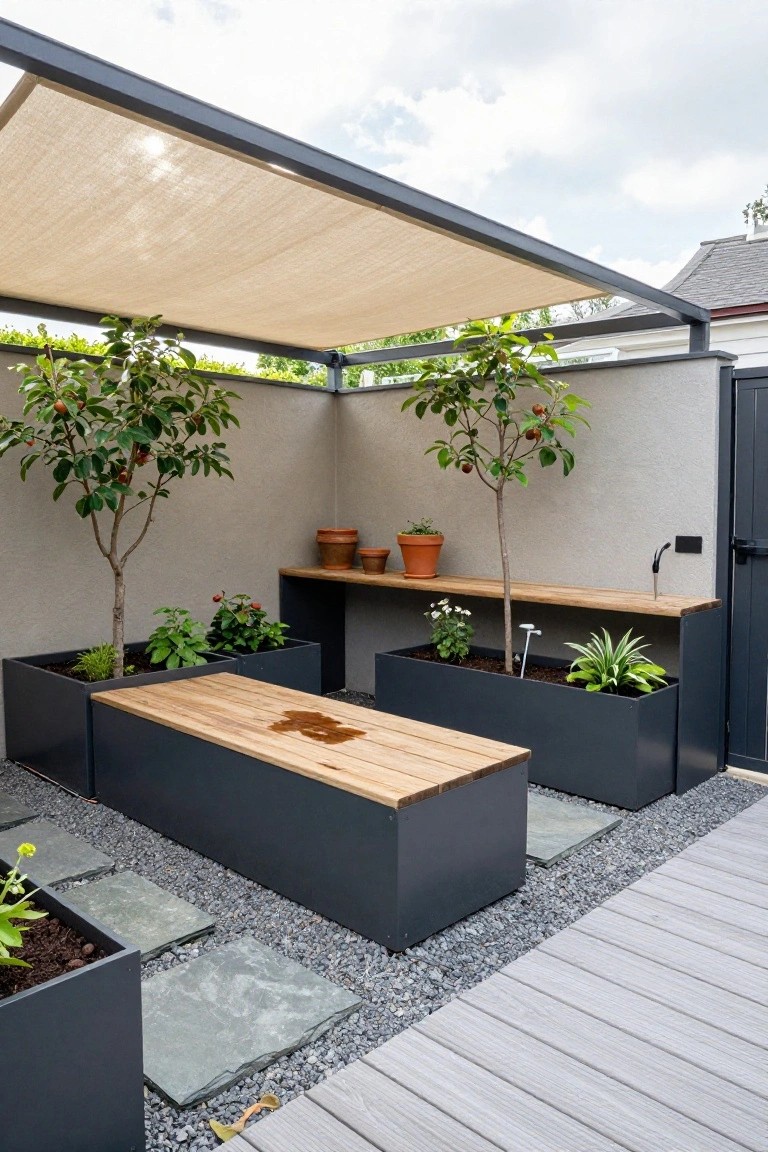
Raised planters like these make a simple bench right where you need it most. The dark metal boxes hold soil for herbs, greens, and even small fruit trees, while a wooden top turns the middle one into a spot to sit and tend your plants. It’s handy for beginners since everything stays at a good height. No more sore backs from bending over rows.
Put this setup in a courtyard or along a fence where space is tight. It works well in sunny spots with some shade overhead, like that sail cloth. Start with shallow-rooted veggies and pots on nearby shelves for extras. Just make sure the boxes drain well to keep roots happy.
Raised Beds Keep Veggies Organized
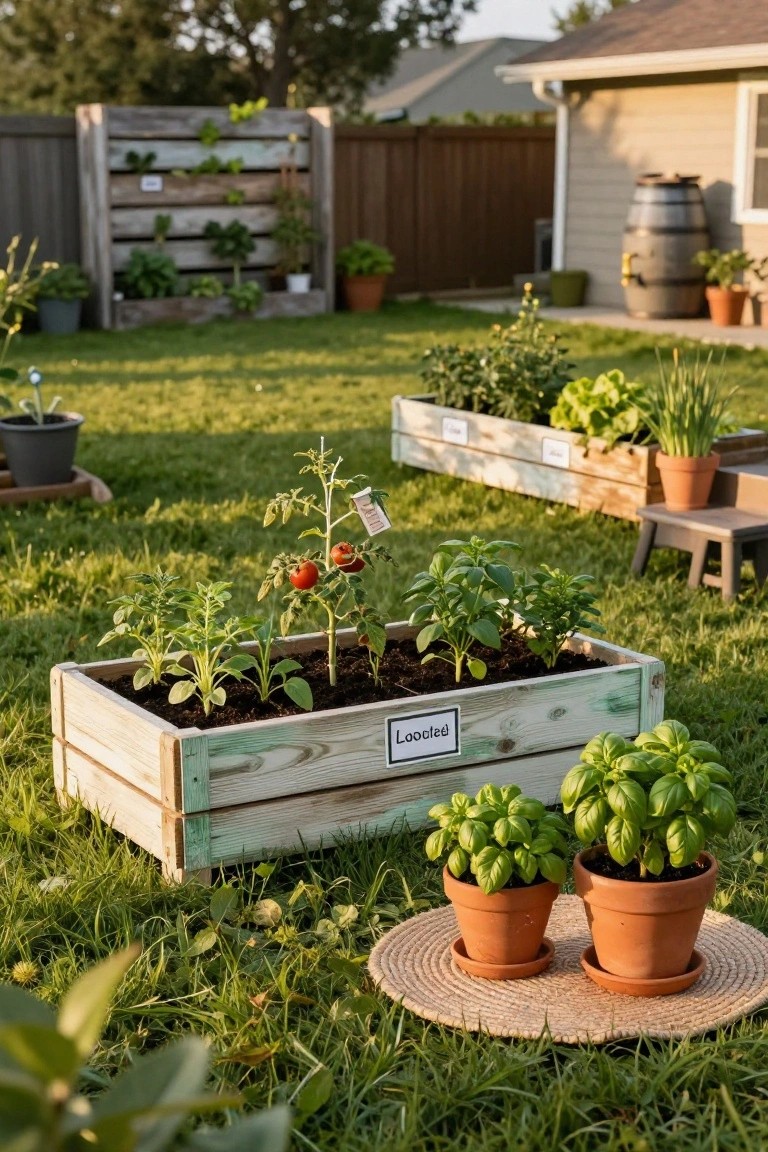
Raised beds like these make vegetable gardening straightforward for beginners. You build them from simple wood pallets or boards, fill with good soil, and plant right in. The label on this lettuce bed shows how easy it is to track what’s growing. No bending over too much, better drainage, and pests stay farther away. It turns a plain grass patch into something productive without much fuss.
Put them in a sunny backyard spot, maybe 4 feet wide so you reach across easily. They work great in small yards or near the house, paired with pots for basil or tomatoes nearby. Start with lettuce or easy greens. Just treat the wood to last longer, and keep soil fresh each season.
Terracotta Pots Along Garden Paths
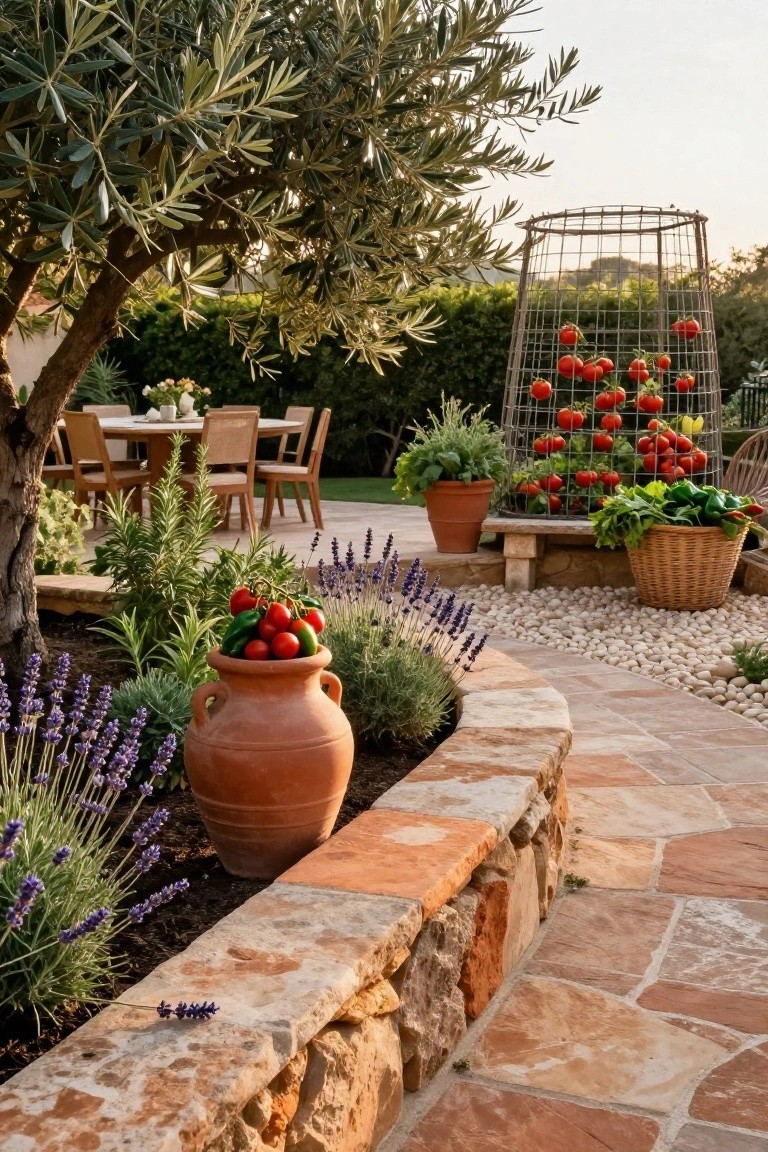
One easy way to make your backyard more productive is filling big terracotta pots with fresh veggies and setting them right along a path or low wall. In this setup, a pot overflows with ripe tomatoes and peppers, tucked next to lavender plants. It keeps things handy for picking and adds a spot of color without much fuss.
These pots work great for beginners because you can move them if needed and they drain well for tomatoes or peppers. Line a gravel path like this in a sunny corner of the yard. Pair with low plants like lavender to fill gaps. Just watch for too much sun on clay pots… they dry out fast.
Circular Brick Raised Beds
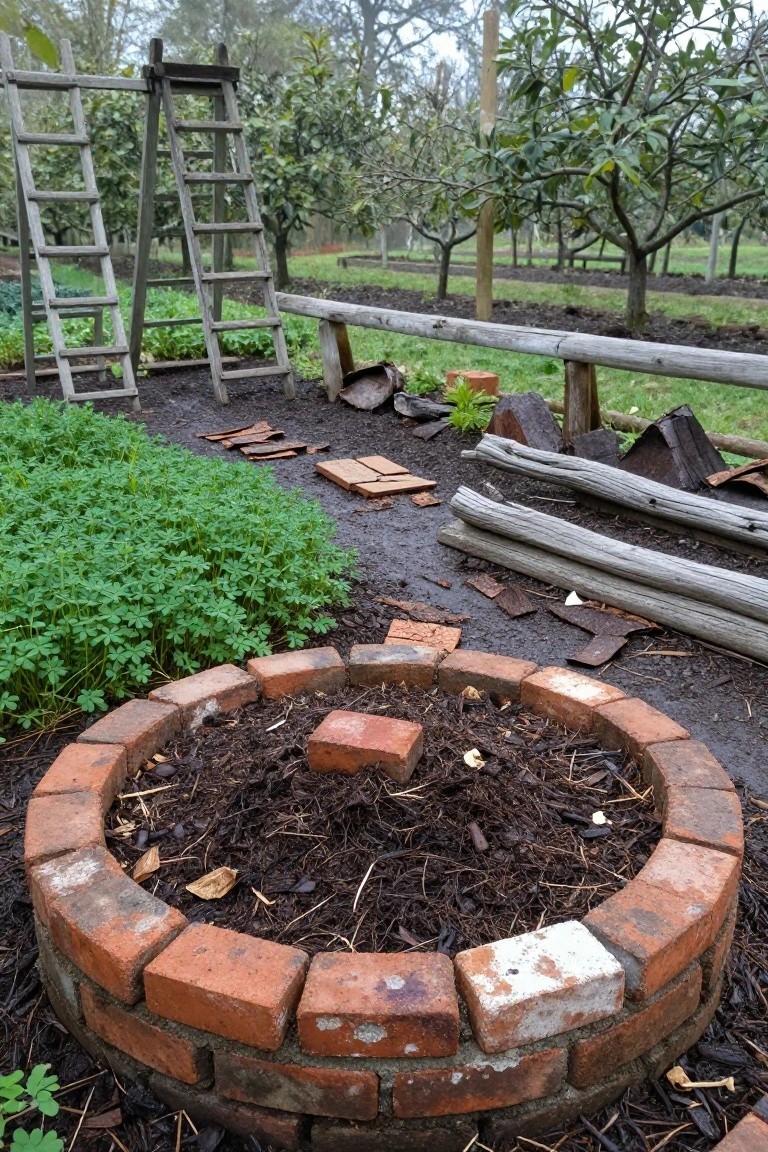
A circular raised bed like this one, pieced together from old bricks, makes vegetable gardening straightforward for beginners. It holds soil and mulch neatly, letting plants like those greens thrive in one spot. The shape adds a bit of style without extra work, and using recycled bricks keeps costs down.
Stack the bricks two or three high to form the circle, then fill with compost-rich soil. It fits right into a backyard with fruit trees around, giving veggies their own productive zone. Keep an eye on drainage so roots don’t stay too wet… simple as that.
Simple Raised Beds for Backyard Veggies
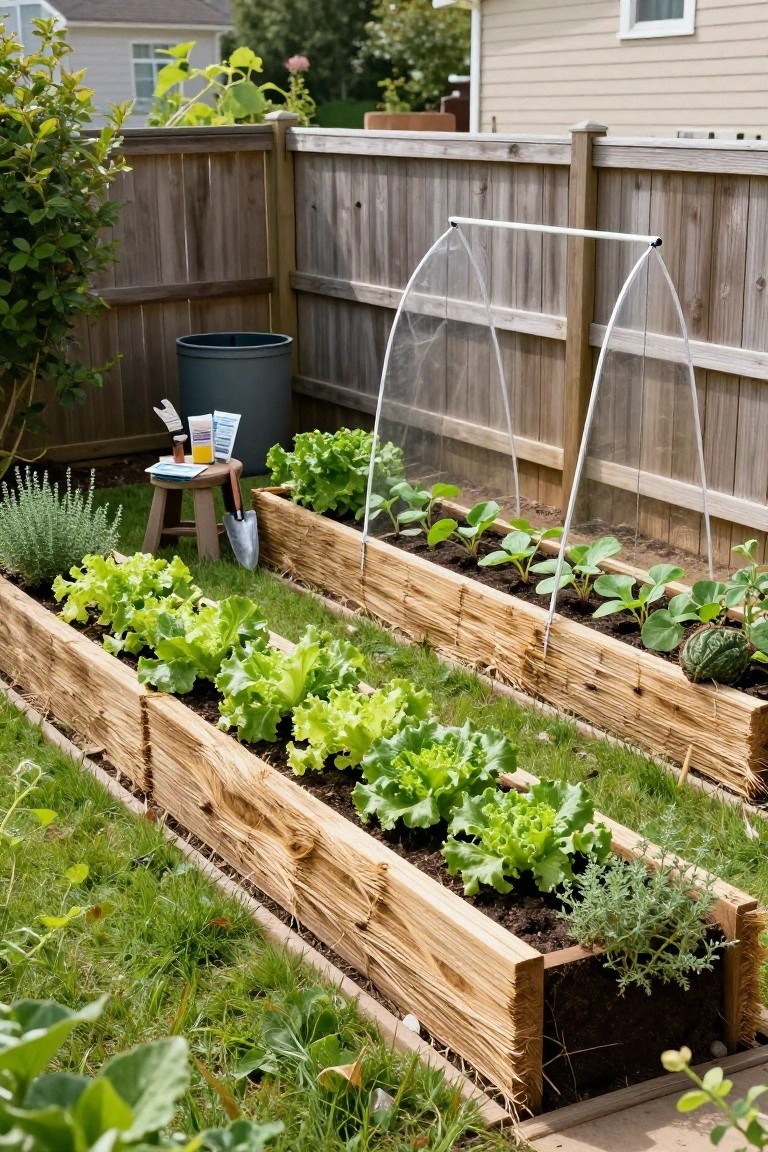
Raised beds like these make starting a vegetable garden pretty straightforward. You see neat rows of wooden frames filled with fresh lettuce and young bean plants, all tucked against a backyard fence. They keep the soil right where you want it, no tilling the whole yard, and make weeding or harvesting easy without bending too much.
Put them in a sunny spot near the house for quick access. Beginners do well with beds about a foot high, using untreated wood to avoid chemicals leaching into the dirt. Throw a hoop cover over one in cooler months… it protects tender starts from frost. Fits most backyards, even small ones.
Raised Planters for Backyard Veggies
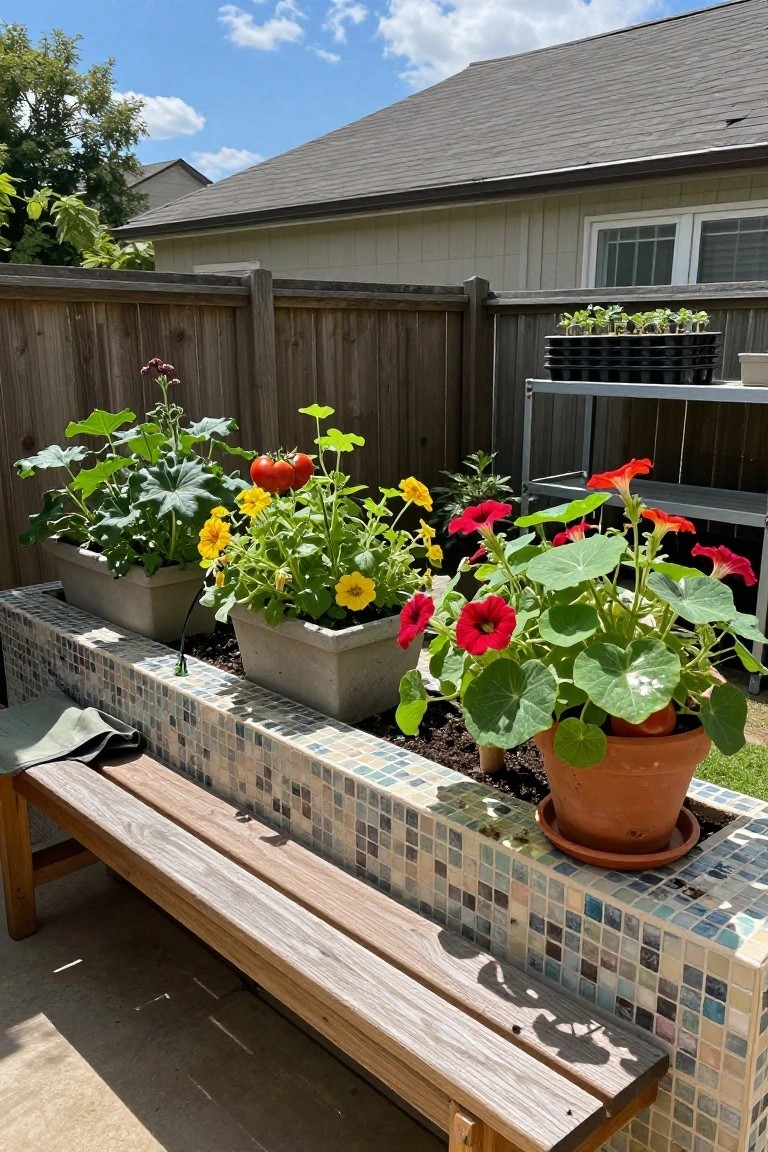
These raised concrete planters tucked right along a low tiled wall make vegetable gardening straightforward. You see tomatoes already producing, mixed in with yellow marigolds and red nasturtiums for some color and pest control. It’s a practical setup that fits into a regular backyard without needing big plots of ground.
This works best in small spaces near a patio or seating spot, like next to that wooden bench. Beginners can fill them with good soil, add drip irrigation if you want, and keep everything at easy reach. Just watch for good drainage to avoid root rot.
Terraced Raised Beds with Stone Walls
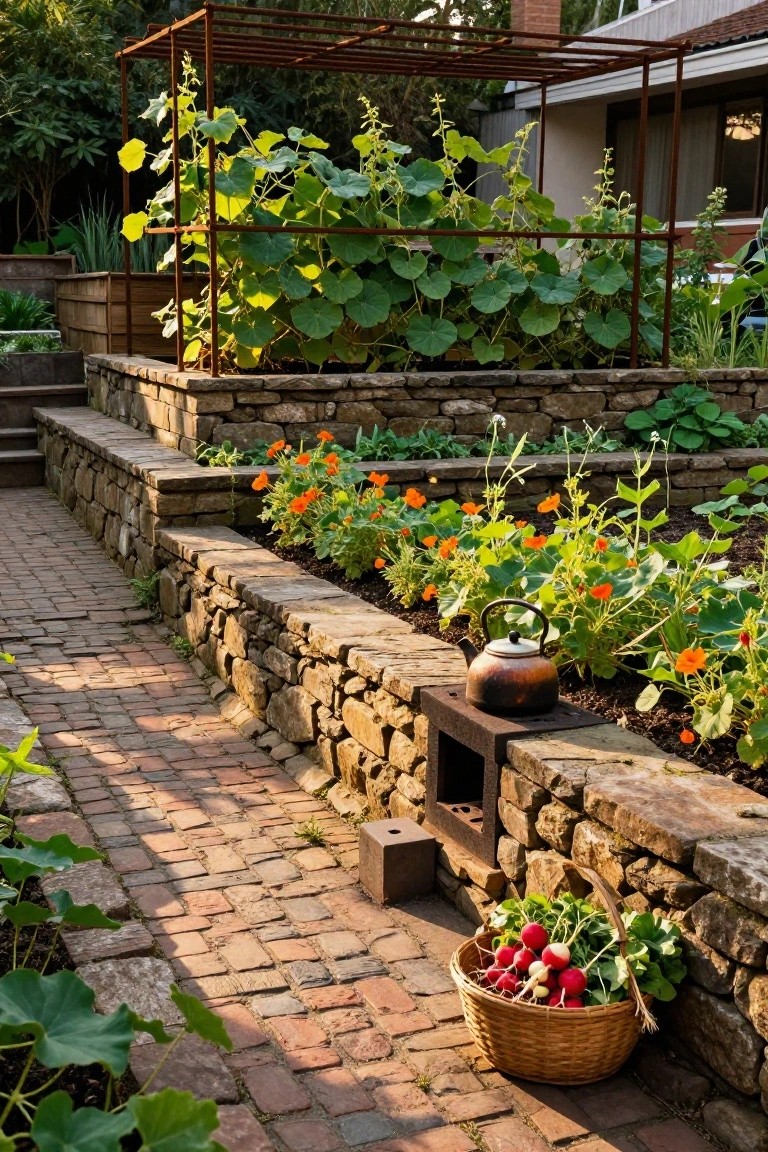
One smart way to make the most of a sloped backyard spot is terraced raised beds built from natural stone walls. These hold back soil while giving plants like climbing pumpkins and sprawling nasturtiums plenty of room to grow. The setup keeps everything tidy and productive. It turns what might be a tricky hillside into good veggie space without much flat ground needed.
Start with sturdy stone for the walls so they last and blend into the yard. Pair them with a simple brick path running alongside for easy access when harvesting radishes or whatever’s ready. This works best in backyards with some slope. Just make sure the beds drain well to avoid soggy roots.
Raised Beds with Tall Bean Poles
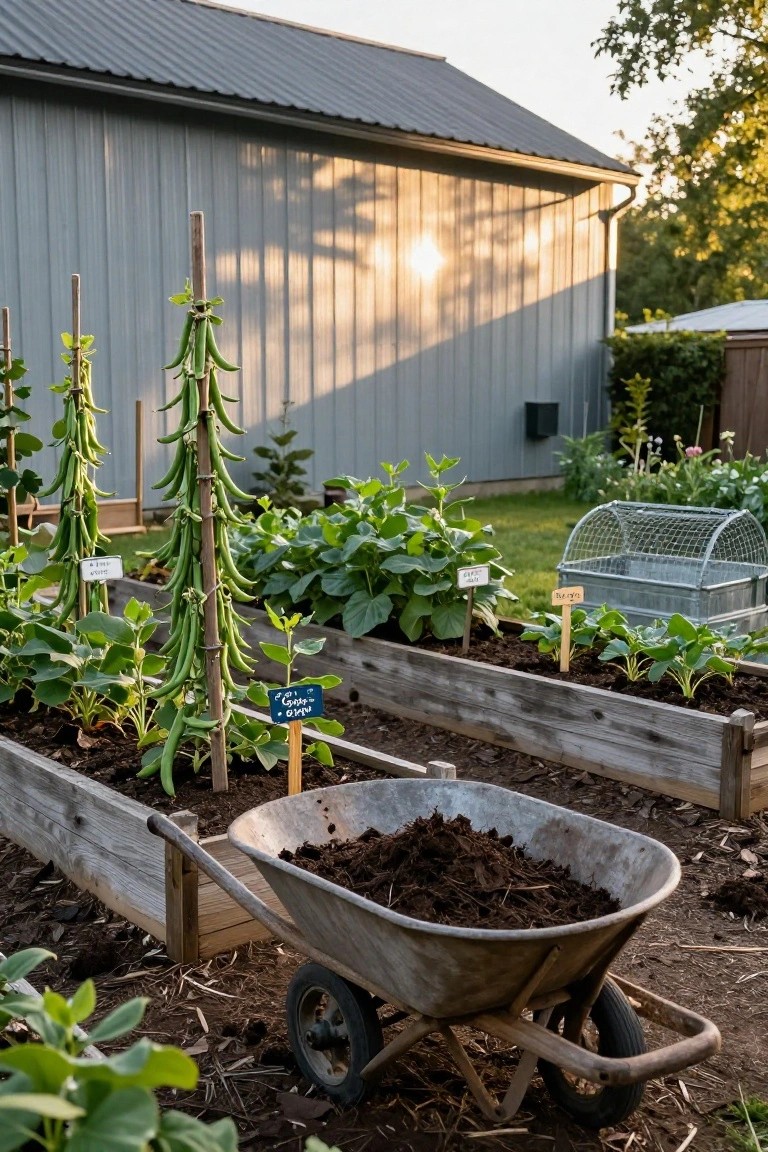
One straightforward setup for beginner veggie gardeners is tall poles in raised beds for climbing beans. The beans grow straight up those simple stakes, saving ground space and making it easy to pick the pods without much bending. You see yardlong beans hanging heavy there, already productive in a small backyard plot.
This works best in limited spaces where you want max yield with low fuss. Tie three or four bamboo poles together at the top, plant seeds at the base in good compost soil, and watch them climb. Suits most backyards near a barn or shed… just keep the beds weeded and watered steady.
Linear Herb Planters Along Walkways
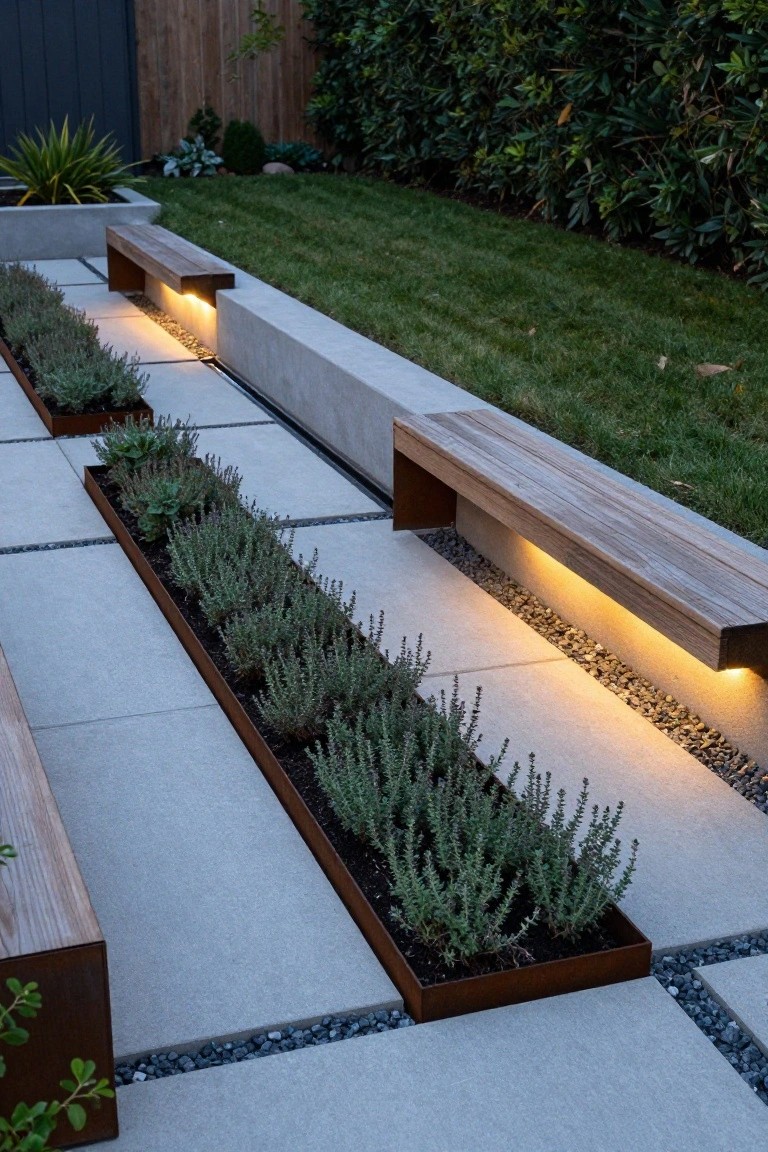
One straightforward way to add fresh herbs to your backyard is with these long, narrow raised planters set right into the path edges. They’re filled with rosemary or similar low-growing plants that thrive in a tidy row. What stands out is how they fit so neatly between concrete pavers and built-in benches, keeping everything accessible without wasting space. It’s productive without feeling like a full garden takeover.
For beginners, build them using corten steel boxes that rust over time for a natural look. Plant densely with herbs you use often, like rosemary or thyme, since the spot gets good sun and easy reach from the path. This works best in smaller yards next to seating areas. Just keep the soil well-drained to avoid root rot.
Raised Beds with Bamboo Supports
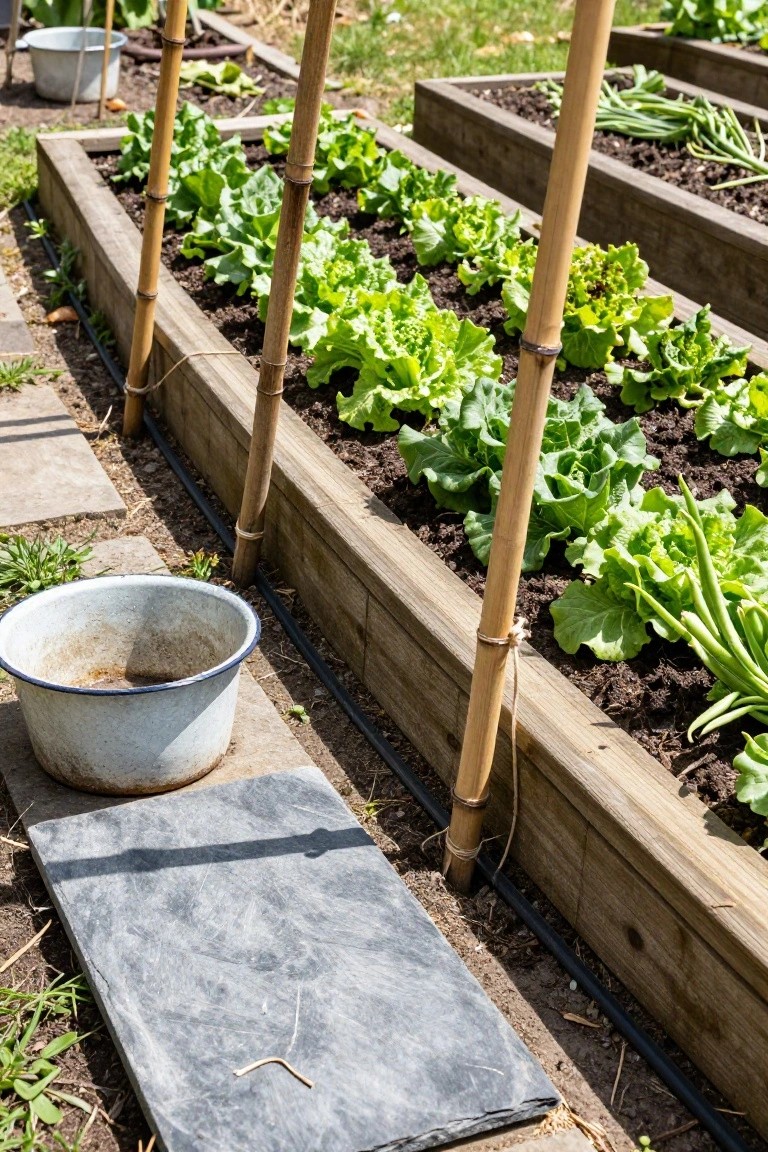
Raised garden beds like these make vegetable growing straightforward for beginners. The wooden frames create neat planting zones right where you want them, filled with lettuce and beans that thrive without much fuss. Bamboo poles tied together add simple vertical support, keeping vines off the ground and letting air circulate. It’s a practical setup that turns a backyard patch into something productive.
You can build these beds from affordable lumber, stacking them two or three high for easy reaching, no kneeling required. They work best in sunny spots with decent drainage, perfect for small yards or even patios. Just stake the bamboo at corners and train your plants up… watch for tying loose as they grow.
Raised Beds for Easy Vegetable Growing
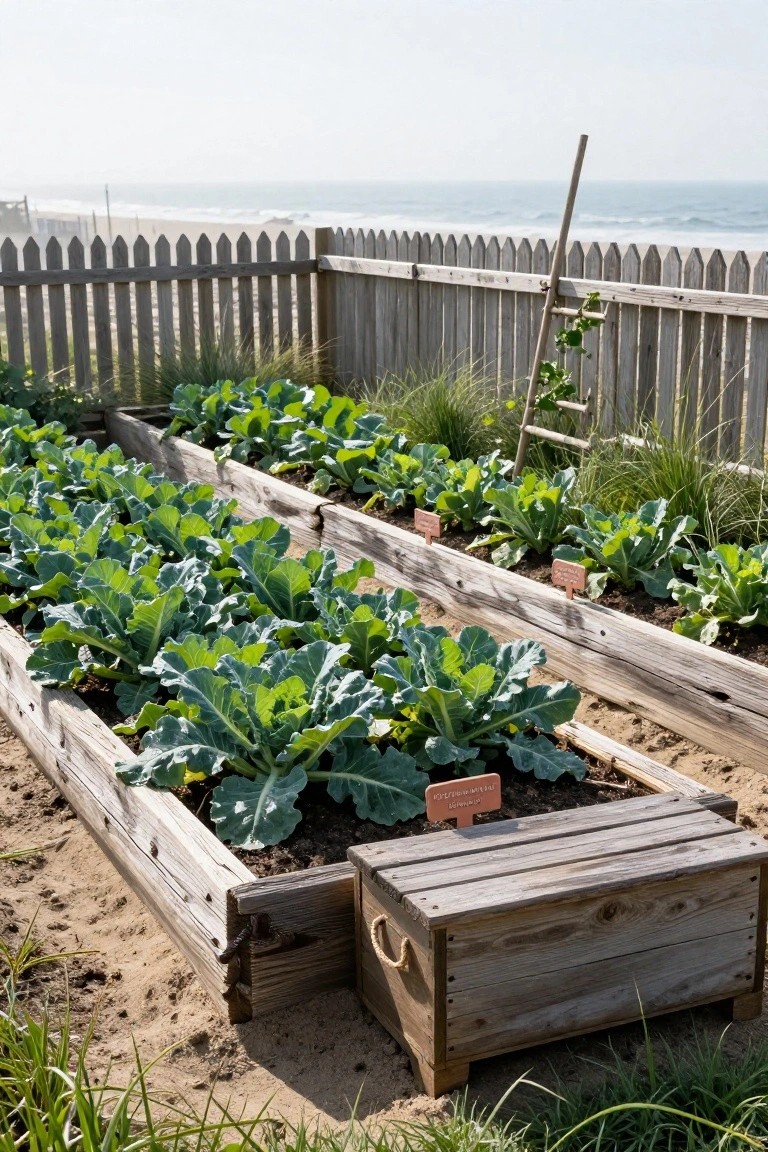
Raised beds like these wooden ones make vegetable gardening straightforward, especially in sandy backyards where soil can be tricky. You fill them with good dirt, and the plants take off without much fuss. Here, collards and similar greens thrive in neat rows, with simple labels to keep track. It’s practical and looks tidy too.
Build them from reclaimed wood or affordable lumber to fit your space. They work best along a fence or fence line, raised up to avoid bending over much. Perfect for beginners near the coast or anywhere with poor ground soil. Just watch for drainage, add mulch on top.
Stone Paths Through Raised Veggie Beds
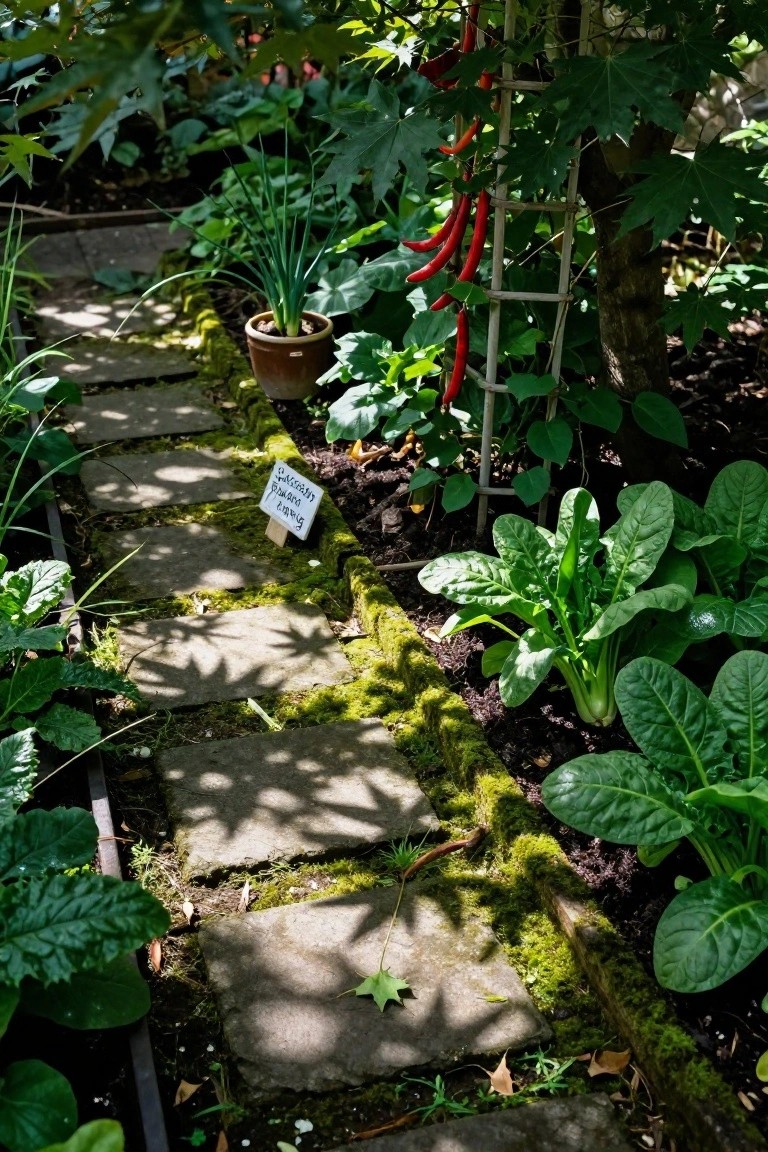
A simple stone path like this winds right between raised beds full of spinach and chard. The irregular slabs with moss on top feel natural and fit a backyard garden without much fuss. It keeps things practical while letting plants take center stage.
These paths work best in small spaces where you want easy access for weeding or picking veggies. Lay flat stones on soil or gravel, leave gaps for moss to grow. Suits beginners since it’s low cost and helps avoid muddy shoes after rain.
Potting Sink Next to Raised Beds
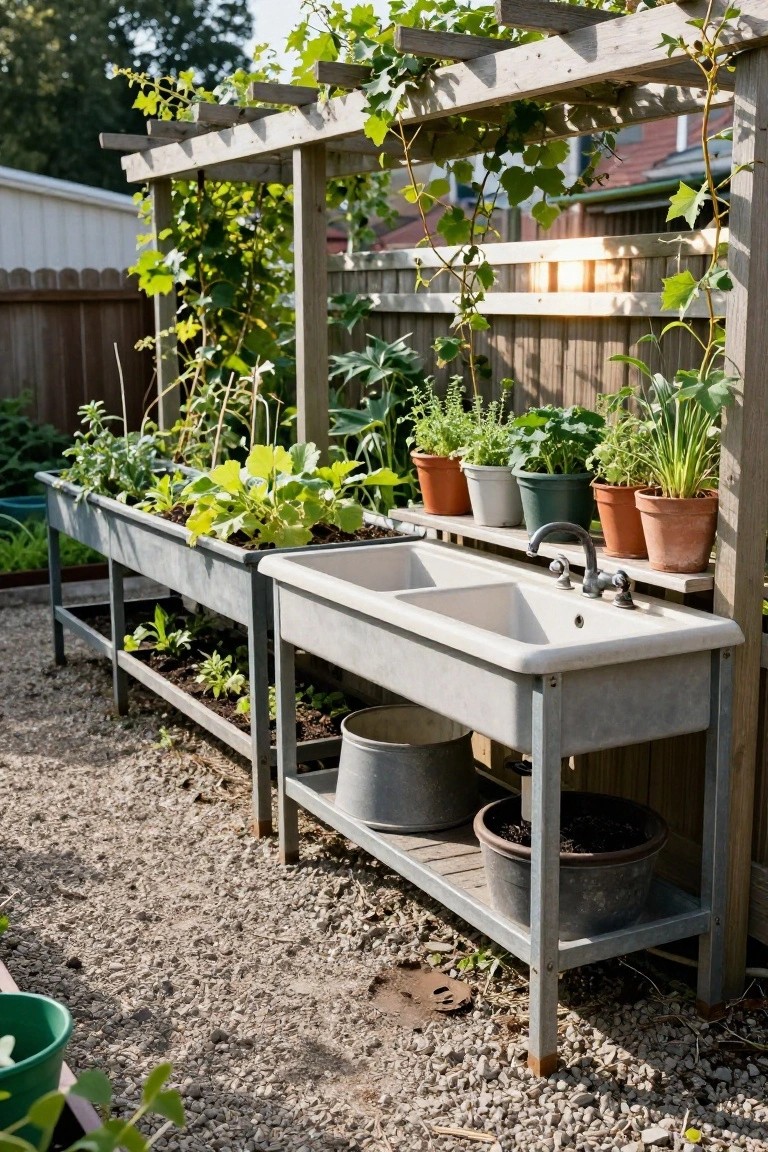
One smart way to keep a vegetable garden running smooth is setting up a potting sink right beside your raised beds. That old galvanized double sink on metal legs catches dirt and water where the work happens. No more tracking mud inside or hauling tools back and forth. It’s handy for rinsing fresh greens or mixing soil, and the gravel ground keeps things tidy.
This works best in a sunny backyard corner with some shade from vines overhead. Beginners can salvage a sink from a flea market and hook up a simple hose faucet. Fits small spaces near a fence. Just make sure good drainage so it doesn’t turn into a puddle zone.
Linear Raised Bed Vegetable Garden
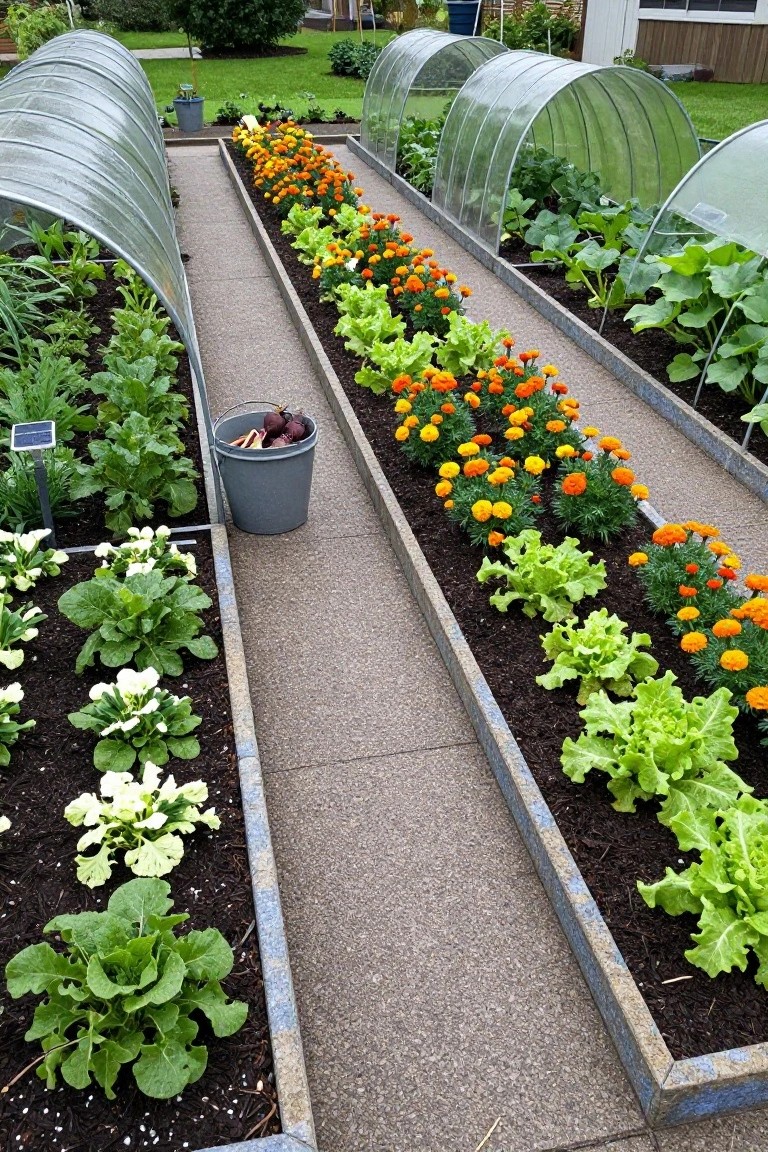
One straightforward way to get a lot out of a backyard is lining up raised beds along a central path. You walk right down the middle to reach everything without stepping on plants. Here, long beds hold lettuce, greens, and beets on one side, with marigolds adding bright spots and helping keep bugs away.
This layout suits smaller yards or beginners who want steady harvests. Build beds from wood or metal, keep them about two feet wide for easy leaning over. Add simple hoop houses like these to grow longer into cooler months. Just watch soil depth, aim for at least a foot.
Raised Bed Vegetable Gardens
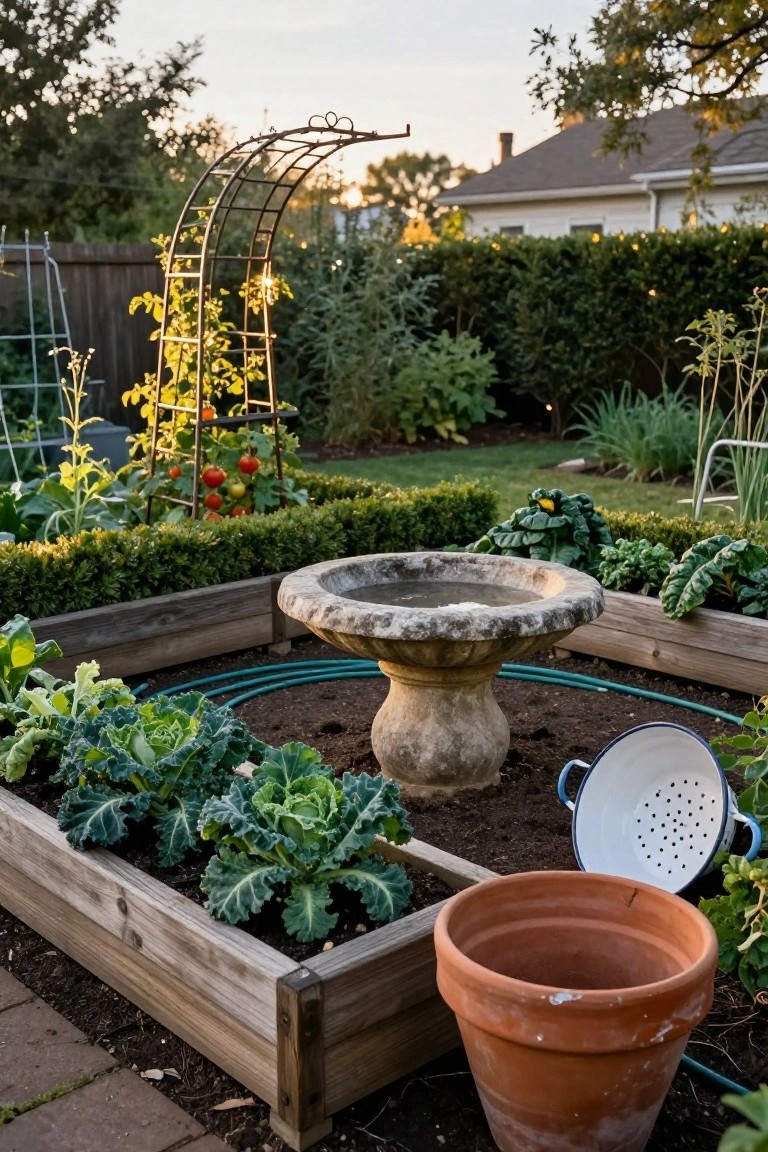
Raised beds like these make vegetable gardening straightforward for beginners. The wooden frames hold in soil nicely and keep plants organized. Kale and cabbage grow strong here, with boxwood hedges along the edges giving a clean, formal touch. A simple stone birdbath sits right in the middle… adds a bit of whimsy without fuss.
Put them in a sunny backyard spot where you can reach everything without bending too much. They’re perfect for smaller yards or if your ground soil isn’t great. Start with untreated cedar or pine for the beds, and mix in compost. Watch for weeds early on, but the edges help a lot.
Backyard Greenhouse for Seedlings
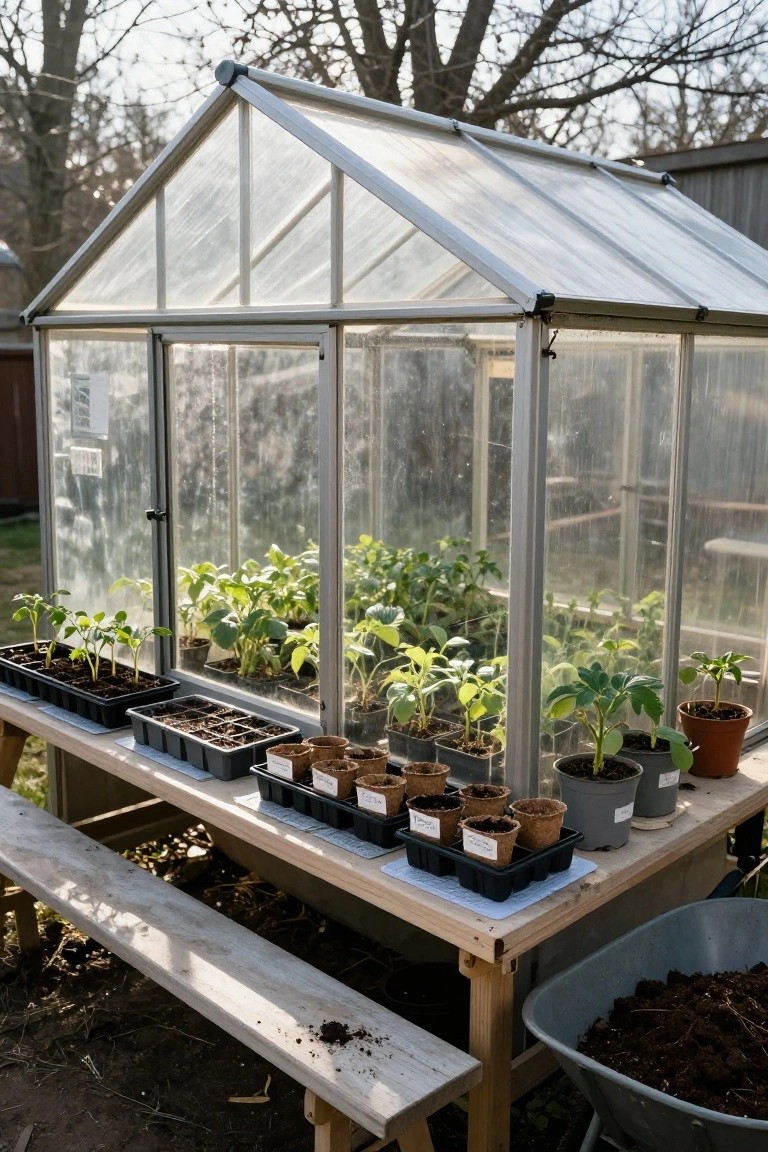
A small greenhouse like this makes it easy for beginners to start vegetables early in the season. The clear panels trap warmth and let in plenty of light, so those young tomato plants push ahead while outdoor soil is still too cold. You get a jump on the growing season without much fuss, and the setup right next to a work table keeps everything handy for daily checks.
Put one in a sunny spot in your yard, close to the house for easy access. It works well in average backyards, even tight ones, since these frames are lightweight and quick to assemble. Start with trays of seeds inside, then move them out to harden off. Just watch for too much moisture buildup… open the door on warm days.
Stone Path Through Raised Veggie Beds
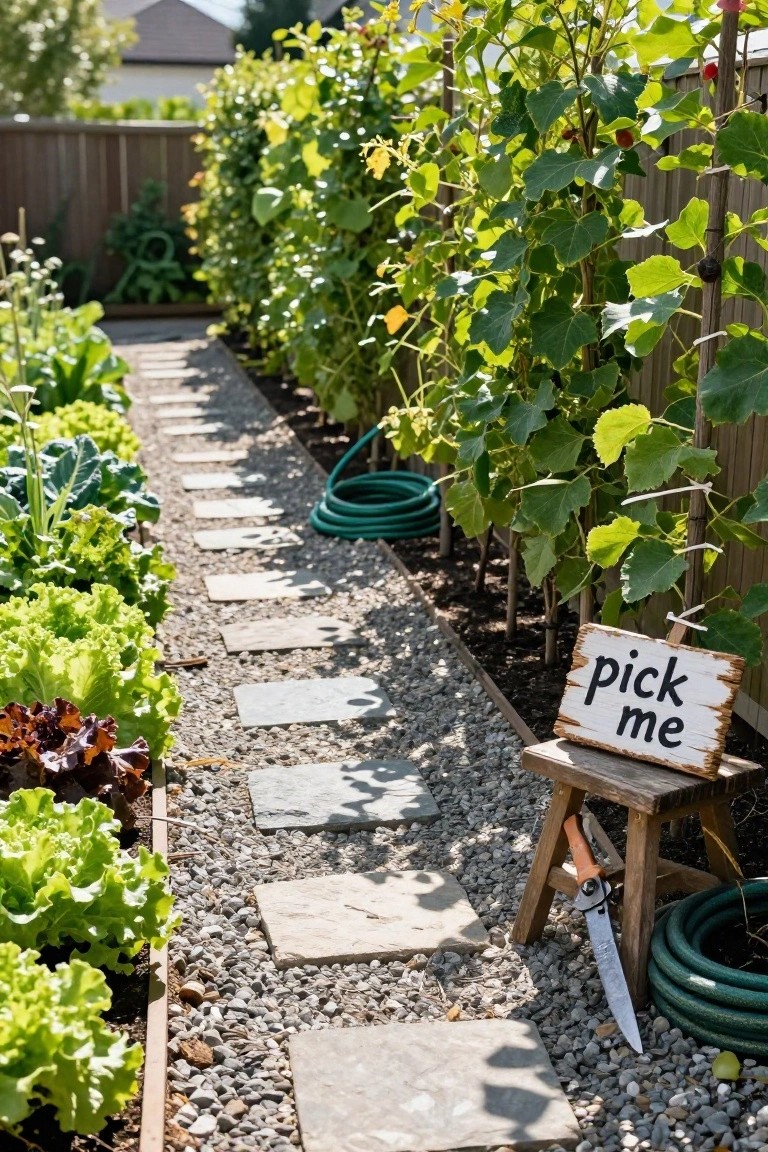
A straight stone path like this cuts right down the middle of raised beds full of lettuce and greens. It keeps your feet out of the dirt so plants stay healthy and you can reach everything without a hassle. That simple walkway turns a skinny backyard strip into real productive space. Plus a little sign saying “pick me” adds some fun reminder to harvest often.
This setup works best in narrow yards or along a fence where you want max growing room. Lay flat stones on gravel for good drainage and stability. It suits beginners since it’s low mess and easy to tend. Just watch the path doesn’t get too wide or you’ll lose bed space.
Rustic Potting Bench for Veggies
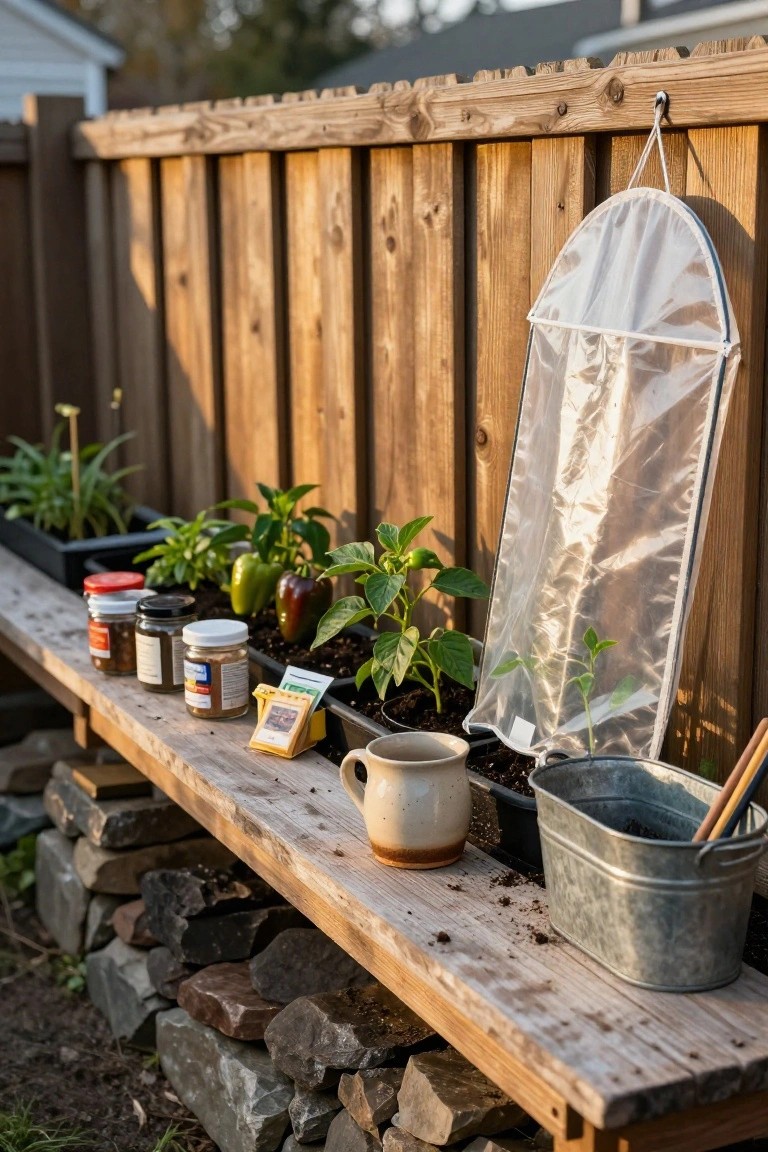
A plain wooden bench pushed up against the backyard fence turns into a perfect spot for starting vegetables. Pots with young pepper plants line the top, next to jars holding soil mixes or seeds. It’s straightforward and keeps everything organized in one place. Beginners like this because it makes tending plants easy, no fancy setup needed.
Lean the bench in a sunny corner where the fence blocks wind. Add a clear protective bag for fragile seedlings, like the one hanging here, and toss tools in a nearby bucket. This works great in small yards or along a side area. Just watch for too much shade from taller plants.
Frequently Asked Questions
Q: My backyard gets mostly shade. Which veggies can I still grow there?
A: Go for spinach, kale, or lettuce. They push through low light better than sun-hogs like tomatoes. Position pots where you snag a few hours of morning sun.
Q: How much should I water my veggie starts?
A: Stick your finger an inch into the soil each morning. Water deeply if it feels dry. Skip evenings so leaves stay dry overnight.
Q: Bugs are munching my leaves already. Help!
A: Hose them off first thing. Plant basil or marigolds right next to your veggies. They confuse pests and keep things natural.
Q: I only have a small patio. Does that kill my garden dreams?
A: Not at all. Pick compact growers like bush beans or baby carrots in pots. Stack them up and harvest all summer.
