


I’ve tinkered with herb gardens in my backyard for years now, and the layout always makes or breaks whether the space feels put-together or overrun.
What catches people’s attention first is usually the way neat beds edge pathways or frame a seating area, giving everything a sense of purpose.
In real yards, strong planting structure keeps herbs from sprawling wildly as they fill out over seasons.
I ended up adapting a couple of raised bed ideas that worked better than I expected on my sloped lot.
They turned a forgotten corner into something useful every single day.
Raised Beds for Courtyard Herbs

One straightforward way to grow herbs right where you use them is with a low raised bed tucked against the house wall. Here, lavender and rosemary fill a simple stone-edged planter on the patio edge. It keeps soil contained on the tiles, stays easy to reach, and fits that rustic outdoor feel without taking much space.
This works best in sunny courtyards or small patios near the kitchen door. Stack local stone or bricks for the edging to blend with your setup, then plant tough herbs that handle dry spots. Add a nearby bench, and you’ve got a spot to sit while snipping what you need. Watch the watering though… copper cans like these look great but need emptying after use.
Balcony Herb Garden in Long Wooden Planters

One smart way to grow a bunch of herbs on a small balcony is with these long wooden raised planters. They’re simple boxes lined up along the edge, stuffed full of basil plants, silvery sage, and bushy thyme. It gives you fresh picks right by your table, without crowding the seating spot.
This setup fits city rooftops or tight terraces perfectly. Use cedar or treated pine for the boxes so they hold up outdoors. Plant a mix for year-round use, but check drainage holes often. Keeps things practical and green.
Rolling Cart Herb Garden

A simple metal cart with a fabric liner makes a perfect spot for herb pots indoors. Roll it into a sunny corner like this one by the window, and you’ve got fresh parsley, chives, lovage, and more right at hand. The rustic look fits right in without taking up wall space, and it’s easy to move for the best light.
This works best in kitchens or breakfast nooks where you cook a lot. Pick a cart with good wheels, group your pots by how much sun they need, and keep drainage in mind. It’s practical for apartments too… just water over a tray to avoid floor messes.
Balcony Railing Herb Troughs
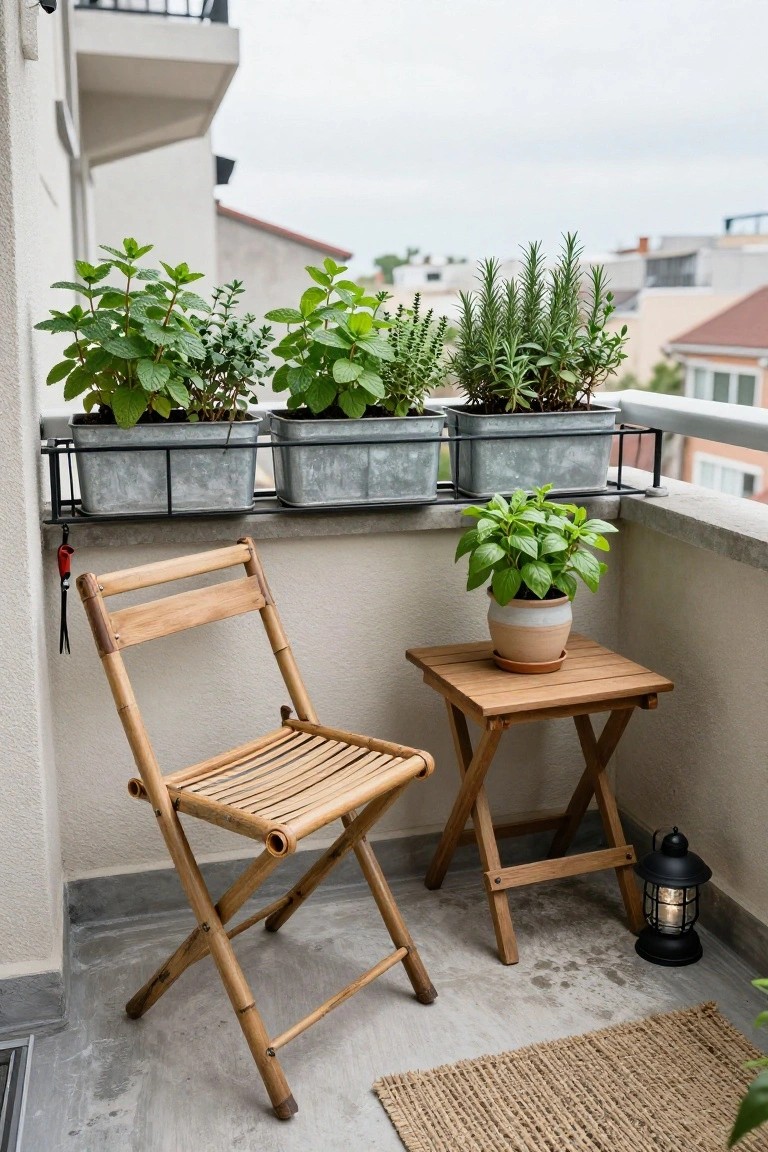
Those long metal troughs hooked right onto the balcony railing make for an easy herb garden that saves every bit of floor space. You can pack in mint, basil, rosemary, and more, all within arm’s reach. It keeps things fresh and green without crowding the spot.
Set up a small folding table and chair nearby, maybe with one herb pot on it, and you’ve got a place to sit and snip what you need. This works best on apartment balconies or any tight outdoor area. Just check the railing’s sturdy enough to hold the weight when watered.
Simple Circular Brick Herb Garden

One easy way to grow fresh herbs right outside your door is stacking old bricks into a low circular bed. It keeps everything contained and at picking height, so you don’t have to bend over much. In this setup, rosemary, lavender, sage, and parsley all tuck in nicely with simple wood labels to tell them apart.
This works great in a sunny gravel spot near the patio or back door, where you can grab a snip while cooking. Use reclaimed bricks for that casual look, and fill with well-draining soil. It suits small yards or even apartments with a bit of ground space. Just make sure the circle is wide enough, at least three feet across, for roots to spread.
Concrete Trough Herb Gardens

One simple way to add fresh herbs right where you relax is with a long concrete trough planter like this. It’s filled with upright rosemary plants that give off that nice scent when you brush by, plus a few tougher plants like agave for texture. Set next to a bench under a pergola, it turns a plain patio edge into something useful and good-looking without much fuss.
These work best in sunny spots with good drainage, since concrete holds heat and herbs like rosemary handle it fine. Go for a modern or minimalist yard, maybe 4 to 6 feet long to match seating. Just watch the soil doesn’t dry out too fast, and pick troughs with built-in drainage or add some gravel at the bottom.
White Picket Fence Herb Garden

Nothing says cottage charm like a little white picket fence around your herbs. This setup uses a simple gate and fence to carve out a dedicated spot right along the path. It keeps the chives, geraniums, and daisies contained but still lets you reach in easily. The look feels tidy without being fussy, and that classic fence adds a touch of whimsy to everyday gardening.
Try this in a small side yard or near the back door where you want herbs close at hand. It works great for older homes or rentals since the fence is lightweight and easy to install. Just make sure the posts sit firm on stone or gravel to handle rain. Keeps rabbits out too, which is a nice bonus.
Potted Herbs Around the Outdoor Oven
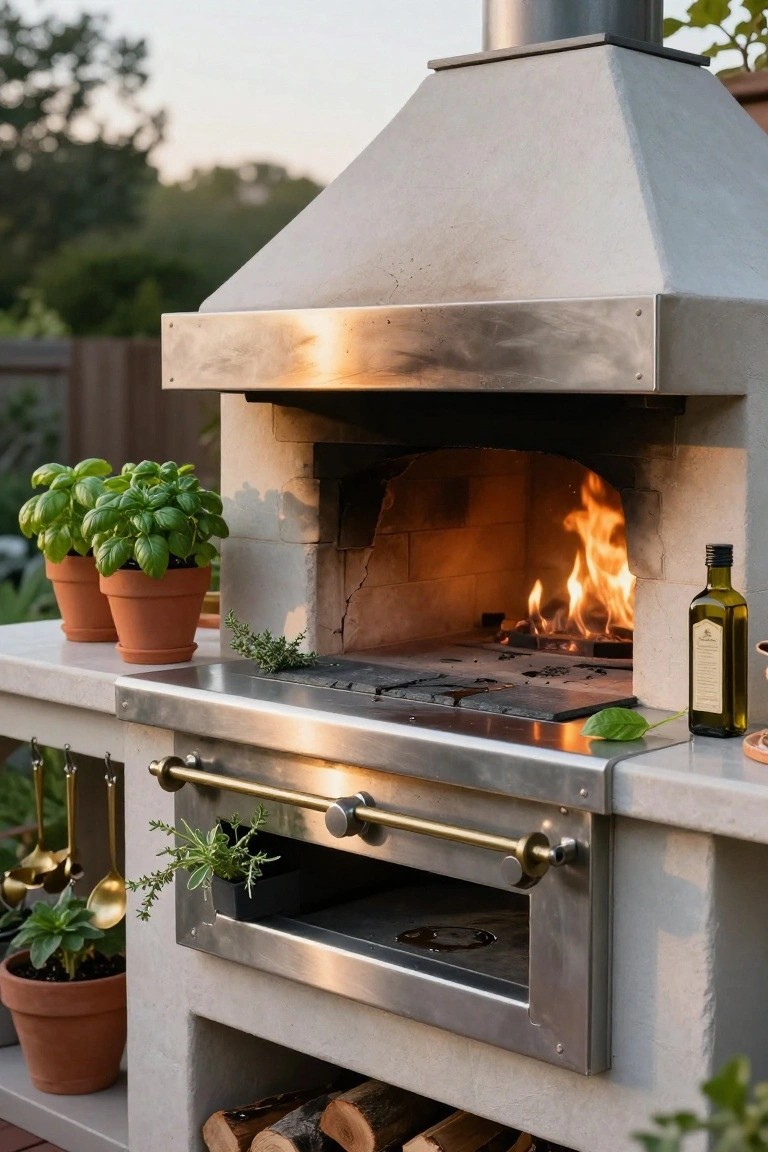
One simple way to bring herbs into everyday use is to set potted plants right on your outdoor kitchen counter, like these basil pots next to a stone pizza oven. The fresh greenery sits close to the fire and cooktop, so you can snip leaves as you go. It keeps things practical and makes the cooking area feel alive with garden touches.
This works best on a sturdy counter near a grill or oven, where herbs get good light without scorching. Terracotta pots blend right in with concrete or stone surfaces. Just watch for heat buildup. Fits patios big or small… even a corner spot.
Boxwood-Edged Gravel Herb Garden

A simple circle of low boxwood hedges sets off a gravel area planted with lavender and rosemary in terracotta pots. That central stone basin in the middle holds water and draws the eye, while keeping everything feeling structured and calm. It’s a smart way to group herbs without raised beds or much dirt to manage.
This works great in a courtyard or tucked backyard spot with good sun. Plant upright herbs like rosemary along the edge, softer ones like lavender closer in. Add a couple chairs if you want to sit there. Just keep the boxwoods trimmed once a year, and it stays tidy.
Raised Wooden Herb Bed Along the Path
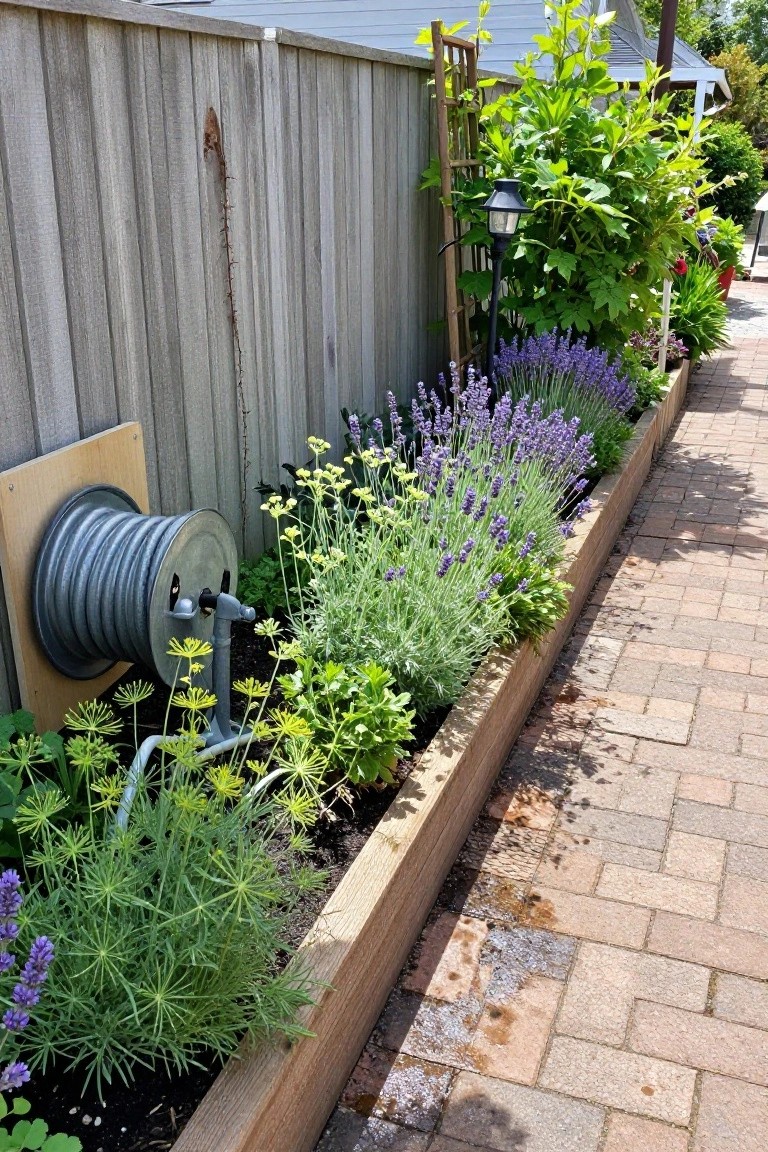
One straightforward way to add fresh herbs right where you walk is a long narrow raised bed made from timber. It runs tight along the edge of a path like this one, keeping everything neat and easy to reach. Lavender spills over with its purple spikes, mixed in with green herbs that fill out the space. That hose reel mounted on a simple wood box is a nice practical touch too. It turns a plain walkway into something useful and pretty without taking up yard room.
This setup works great in side yards or beside a back path where space is tight. Use rot-resistant wood for the frame, fill with well-draining soil, and plant low-growers like thyme or chives in front. Keep taller stuff like lavender to the back. Watch for water pooling at the base after rain. Suits most homes with a casual garden vibe.
Stone-Edged Herb Bed for Street Appeal

A simple rock border turns a strip of yard into a tidy herb garden that hugs the sidewalk. Here lavender spills over with its purple spikes, mixed in with black-eyed Susans and a few bright petunias for color. That white sign saying “Please Health” adds a light touch of humor right where people walk by.
This setup works best along driveways or front paths where you want low upkeep but steady curb appeal. Pick rounded local stones for the edge, plant tough herbs like lavender and salvia that handle foot traffic nearby, and keep the bed narrow. It suits any suburban lot… just refresh the mulch yearly.
Herbs in Galvanized Buckets by the Pool

One simple way to add fresh herbs right where you need them is to line galvanized buckets along the pool edge. These metal tubs hold basil, mint, and other easy growers, keeping everything handy for summer drinks or grilling. The rustic look fits right in with stone pavers and a wooden fence, without taking up much space.
This setup works great for small backyards or any spot near outdoor entertaining. Pick buckets in a couple sizes, plant them close together, and they create a low-key green border. Just make sure they get some sun but not too much splash from the pool. It’s practical… and keeps the herbs from wandering into the yard.
Tiered Raised Beds for Herb Gardening

Raised beds like these make growing herbs straightforward and neat. Stacked in tiers against a fence, they use vertical space well without taking up much ground. Wooden frames give a rustic look that fits right into a backyard setup, and the labels on plants like pak choi keep things sorted as everything grows.
Put this in a sunny spot near your kitchen door for quick picking. It works best in smaller yards or sloped areas where flat ground is limited. Start with untreated cedar or pine to avoid chemicals leaching into the soil… just fill with a mix of compost and topsoil, and space beds about a foot apart for easy walking between them.
Wooden Raised Beds for Terrace Herbs

One easy way to bring fresh herbs right into your outdoor lounging spot is with simple wooden raised beds. Here you see them lining a gravel terrace, filled with soft white-flowering herbs and greens that hug a wicker chair and metal stool. It turns a basic seating area into something productive and pretty, without taking up much flat ground.
These work best on sloped spots or small terraces where soil is tricky. Go for rough-sawn wood that weathers nicely, plant stuff like rosemary or sea thrift that handles coastal breezes, and keep beds about knee-high for easy picking. Just make sure they get good sun… watch for drainage so roots don’t drown in rain.
Vertical Herb Walls in Small Outdoor Corners

One smart way to grow fresh herbs without taking up ground space is to line a wall with rectangular planters. This setup turns a plain brick corner into a green backdrop full of basil, succulents, and trailing plants. The black planters stack neatly and catch the light from strung bulbs, making the spot feel alive even at dusk. It’s practical for picking herbs right where you relax.
Try this on a patio or balcony side wall where you have some afternoon sun. Bolt the planters securely into masonry, fill with soil that drains well, and pick herbs that trail or stay compact. It works best in mild climates or sheltered spots. Add hose storage nearby to keep things tidy.
Tiered Raised Planters for Herbs

Stacking simple wooden planters like this gives you a lot of growing space without taking up much ground area. The soft green paint keeps them looking neat against a fence or patio, and they hold everyday herbs such as parsley, dill, and rosemary all in one spot. It’s practical for fresh picking right outside the kitchen door.
Paint some basic wood crates or build boxes to your size, then stack two or three with braces for stability. Add a short ladder for the top tier if needed. This setup works best in small backyards or on patios where you want herbs close by but off the dirt.
Copper Rain Chain in a Herb Greenhouse
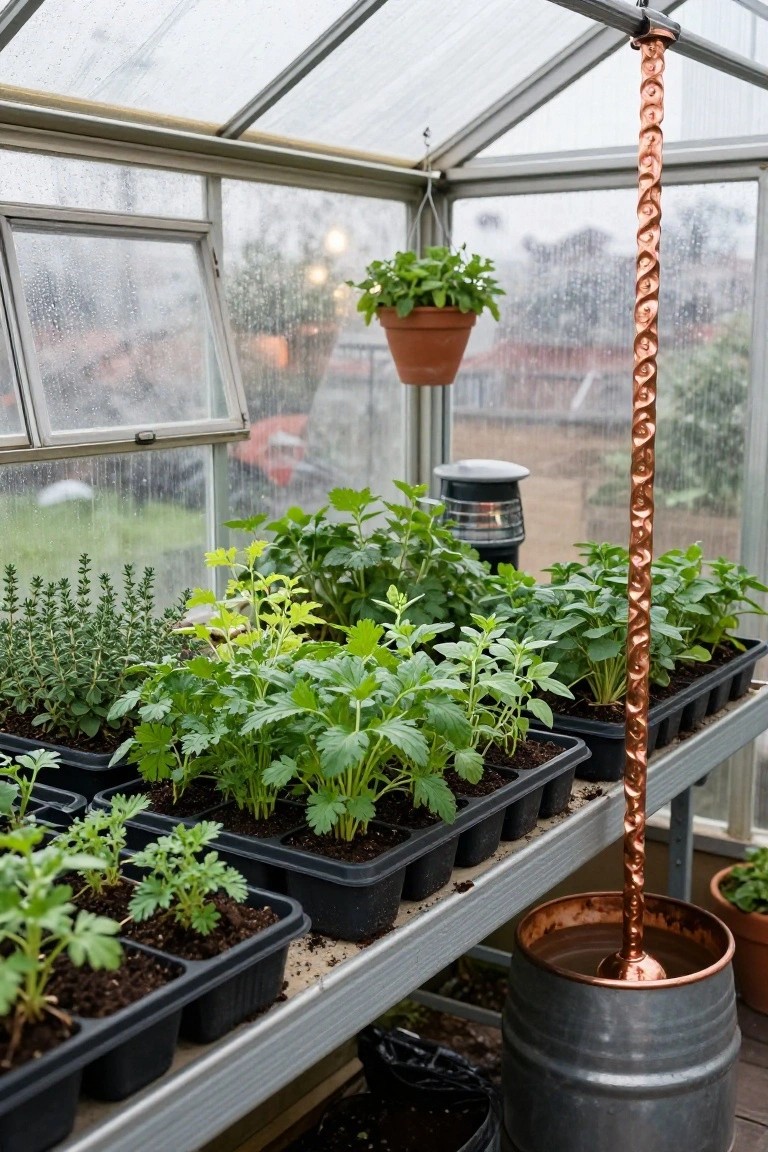
A twisted copper chain hangs from the greenhouse roof straight down to a metal barrel, channeling rainwater right where you need it for the herbs below. It’s a simple way to water seedlings without dragging hoses around, and the copper gives a nice handmade look that fits right in with plants on the shelves. Those young parsley and basil starts stay happy and hydrated.
Put one in any lean-to greenhouse or covered outdoor spot where rain falls. Hang it over a barrel or trough near your trays, and let nature do the work. It suits rainy spots best, and the chain weathers to a soft green patina over time.
Circular Herb Garden with Sundial Center

A simple round bed of herbs gathered around an old stone sundial makes for a tidy focal point in the yard. The brick edging keeps everything contained and gives it a finished look. With benches right there on either side you get a spot to sit and pick fresh sprigs whenever you want.
This works well in a snug corner backed by a hedge for some privacy. Fill it with low growers like thyme rosemary and a few colorful nasturtiums. Just make sure the area gets plenty of sun… since that sundial needs it to tell time right.
Wooden Crate Herb Planter

One easy way to start a herb garden is grabbing an old wooden crate and filling it with plants like basil and mint. That weathered wood gives it a natural, backyard feel without much effort. It stands out because it’s simple and sturdy, holding everything in one spot right where you need it.
Set this up on a deck or patio near the back door for quick picking. It works best in sunny spots with good drainage, maybe add some holes in the bottom if needed. Suits rentals or small yards where you want fresh herbs without digging up the ground.
Linear Herb Planters Along a Fence

Long stainless steel planters run right along the fence here, packed with rosemary, lavender, and other herbs. It’s a smart way to turn a narrow strip into a real herb garden without taking up much room. The metal troughs keep soil in check and match the fence’s industrial look for something clean and low-fuss.
Try this in side yards or beside a garage where space is tight. Pick tough herbs that don’t need much water. Pair with gravel paths and basic concrete benches so you can sit and snip while cooking. Fits modern homes best, but watch that metal heats up in full sun.
Porch Herb Shelf Setup

A straightforward metal shelf mounted right by the front door holds pots of rosemary, mint, and basil. It turns a plain porch wall into a handy herb spot. Everything’s easy to reach for cooking, and the labels keep things clear.
This works best on smaller porches or entryways with limited ground space. Go for simple white and blue pots to blend with house trim. Just make sure the shelf can handle the weight, and group sun-lovers together.
Frequently Asked Questions
Q: What if I only have a tiny balcony or patio?
A: Try the vertical wall pockets or railing planters from the ideas. They squeeze tons of herbs into small spots without crowding your space. Basil and chives love these setups and bounce back quick if you forget a watering.
Q: Which herbs grow best in containers outdoors?
A: Stick with rosemary, thyme, and parsley. They root deep but adapt well to pots with decent drainage. Turn the pots every few days so they get even sun.
Q: How do I deal with pests without chemicals?
A: Tuck in some nasturtiums or garlic nearby. They chase off aphids and beetles naturally. And rinse leaves with plain water blasts early morning.
Q: Can these ideas work in shady yards?
A: Yes, grab mint, chives, or lemon balm for low-light areas. They push through partial shade fine. Skip sun-lovers like basil there.
