


I’ve always appreciated how tiered herb gardens add real dimension to a yard layout, pulling the eye upward and organizing plants in a way that flat beds just can’t match. They shine when the tiers step down thoughtfully along a pathway or border, making the space feel intentional rather than stacked on haphazardly. In my own yard, I learned the hard way that sleek modern materials like powder-coated metal hold their high-end vibe through rain and growth spurts, unlike wood that warps over time. What stands out first to visitors is usually that clean vertical rhythm against the greenery, especially if the herbs spill just enough to soften the edges without overwhelming the structure. Some of these 25 ideas tweak familiar setups in ways worth sketching out for your next project.
Tiered Herb Planters Built into Benches
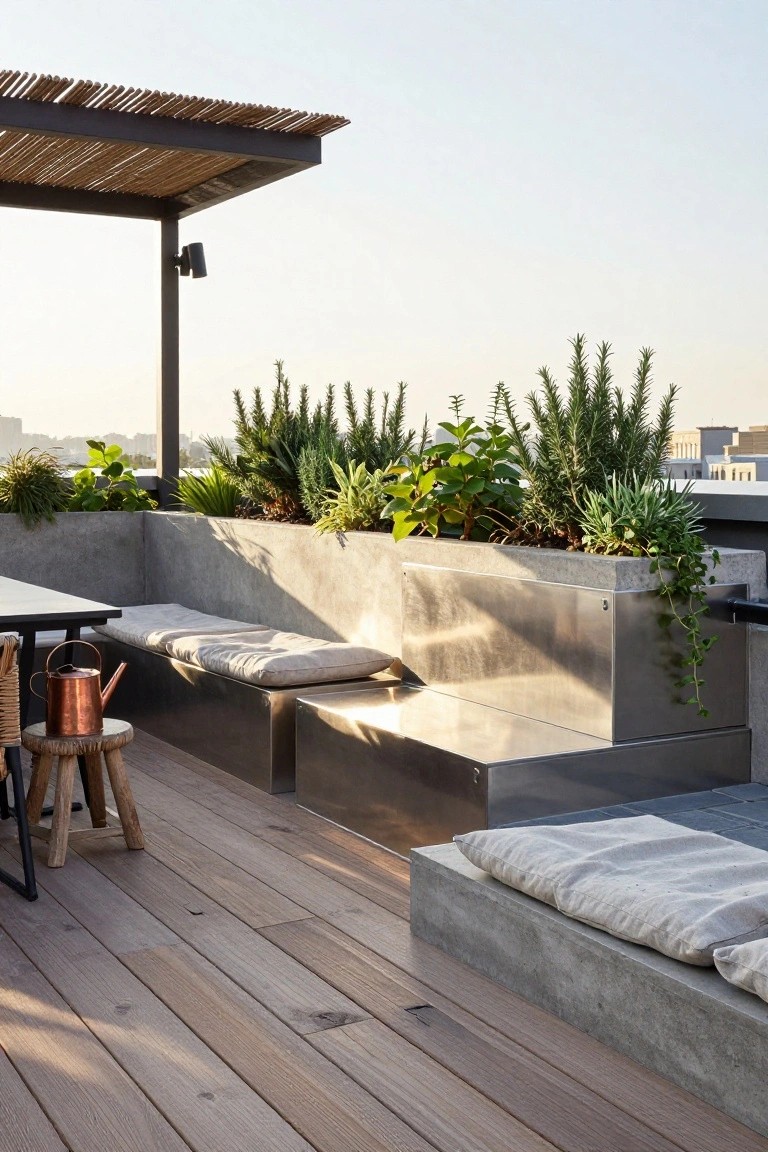
One clean way to work herbs into your outdoor spot is building tiered planters right into the benches. You see it here with concrete benches that step up into planting boxes full of rosemary and succulents. It keeps everything tidy and close at hand. No loose pots to knock over. The herbs soften those hard concrete edges too, making the whole terrace feel more lived in.
This setup works best on rooftops or patios where space is tight. Pick sturdy herbs that handle sun and wind. Go for concrete or metal to match a modern look, but watch the drainage so roots don’t rot. It’s practical for city homes, easy to reach while sitting with a drink.
Tiered Wooden Stand for Herbs

A wooden tiered stand like this one turns a plain balcony corner into a fresh herb station. It holds multiple pots of basil, thyme, and others across three levels, making good use of vertical space. The natural wood fits right in outdoors, and adding a lemon tree nearby gives it a little extra green punch without crowding things.
This works best on small patios or balconies where floor space is tight. Pick a sturdy A-frame style that won’t tip, and go for terracotta pots to keep the rustic feel. Just make sure it gets good sun for the herbs… and water them regularly so they thrive.
Tiered Stone Retaining Walls for Herbs

Stone retaining walls make a solid base for tiered herb gardens. They turn a slope into usable planting space, with each level holding plants like rosemary bushes and lavender clusters. The LED strips tucked under the wall caps add a modern glow that shows off the setup at dusk. It’s practical and looks put-together.
This works best on hillsides or raised beds where soil might wash away otherwise. Go for tough herbs that handle good drainage, and keep the stone local for a natural tie-in. Skip it if your yard is flat. The gravel path alongside keeps things simple to walk.
Tiered Herb Planters in the Outdoor Bar

One smart way to add fresh herbs right where you need them is building tiered planters straight into your outdoor bar counter. Here, concrete steps hold terracotta pots of basil, mint, and oregano, keeping everything handy for cooking or cocktails. It turns a basic bar into a real kitchen garden without taking up extra space.
This idea fits best on sunny patios or terraces with a raised counter. Go for rough concrete or stone to match modern hardscaping, and pick compact herbs that thrive in pots. Just make sure good drainage so the roots don’t stay wet… and it keeps the look clean, not cluttered.
Tiered Metal Troughs on a Fence
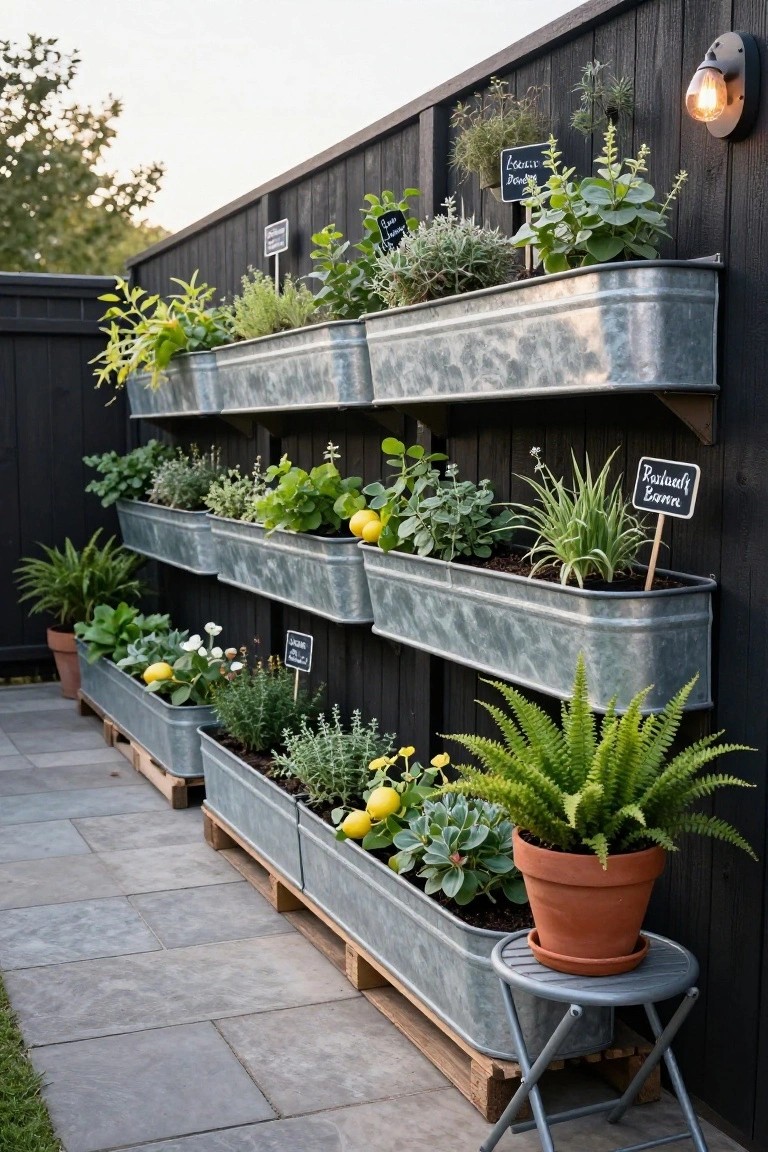
One straightforward way to grow herbs without taking up ground space is stacking galvanized metal troughs right on a backyard fence. These catch the eye with their simple industrial look against a dark wood backdrop, and they hold a mix of herbs, lemons, and greens that spill over just enough. It’s practical for small yards, keeps things organized, and gives that high-end feel without much fuss.
Mount them at different heights with sturdy brackets so you can reach everything easily. This setup works best on a sunny patio or along a side path where you pass by often. Pick troughs around 2 feet long, fill with good soil, and label the plants like they did here. Watch for rust over time, though galvanized holds up pretty well outdoors.
Built-In Herb Planter by the Pool

A built-in rectangular planter works great as a tiered herb garden right in your outdoor seating area. Here it’s tucked into a raised stone platform next to a long sofa, with herbs like basil and rosemary mixed in with succulents and agave. The plants grow at different heights for that tiered effect, and it keeps everything handy without crowding the space.
This idea fits sunny pool decks or patios in warm climates. Pick tough, sun-loving herbs that handle some pool splash, and build the box flush with your seating to blend it in. Stone or concrete keeps the high-end feel, but watch watering to avoid soggy roots near the water.
Tiered Concrete Herb Gardens on Slopes

Concrete retaining walls stacked into tiers make a sloped yard into a practical herb garden. The plain gray blocks hold back soil while letting plants spill over just enough. You see lavender and tall grasses tucked into the beds, with steps cut right into the design for easy picking.
This works best on hillsides where flat ground is hard to come by. Pour the concrete smooth for that modern edge, then plant upright herbs like rosemary up top and trailers below. Add gravel paths for drainage. Steep backyards get a real upgrade… and fresh herbs too.
Tiered Herbs Around a Porch Bench
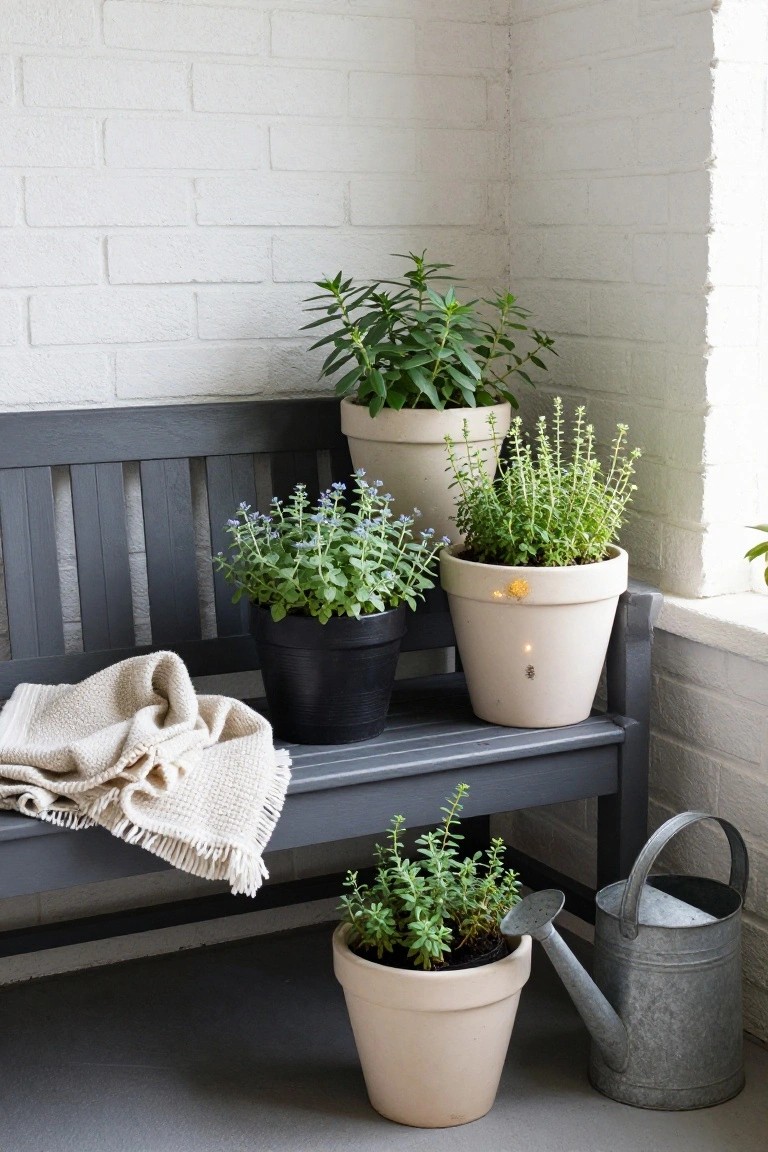
One simple way to get that tiered herb garden look is to work with what you already have like a bench. Stack pots at different levels right on the seat, next to it, and down on the ground. It fills the space without crowding and keeps everything handy for picking a bit of rosemary or thyme when you sit down.
This works best on a covered porch or balcony corner where you get some shelter. Go for simple clay pots in a few sizes and group herbs that like similar sun. Just make sure the bench can handle the weight, and water regularly since they’re close together.
Tiered Herb Planters Built into Benches

One smart way to add a tiered herb garden is by building the planters right into the base of your outdoor benches. You see rosemary and other bushy herbs tucked into wooden frames along an L-shaped seating setup. It keeps everything handy for snipping while you relax, and the levels give that modern stacked look without taking extra space.
This works great on rooftops or balconies where room is tight. Go with teak or cedar for the wood so it holds up outdoors, and stick to compact varieties like thyme or oregano that won’t sprawl. Pair it with a simple concrete table nearby, and you’ve got a fresh, usable spot that feels put-together.
Tiered Herb Stand for Balconies

A tall black metal stand holds multiple round pots brimming with fresh herbs like parsley and cilantro. It climbs up nicely on a balcony, using that vertical space without crowding the floor. The simple design gives a clean, modern feel that fits right in with balcony living.
This works best on small urban balconies or patios where room is tight. Place it near a door or seating spot for easy picking. Keep the stand weighted at the base for wind, and rotate plants for even sun… herbs stay happy and productive all season.
Tiered Steps Planted with Herbs

One practical way to add a tiered herb garden is to tuck planters right into your outdoor steps and walls. The terracotta retaining walls here hold back soil for rosemary bushes and other greens, making the climb up feel like a garden path. Those blue tiles on the step risers add a bit of color without overpowering the plants.
This setup suits sloped yards or homes with a rustic Mediterranean vibe. It keeps herbs handy for cooking, right near the door. Go for drought-tolerant varieties, and build in good drainage so the roots don’t stay too wet.
Tiered Herbs Built into Outdoor Bench Walls

One smart way to work herbs into your outdoor spot is building tiered planters right into the bench wall. Here you see basil, thyme, and others tucked into recessed spots along a dark corner bench. It turns dead wall space into something useful and green, keeping clippings handy for cooking while you relax nearby.
This fits best in tight patios or balconies where you want plants without crowding the floor. Go for metal or concrete frames to match modern looks. Pick sturdy herbs that handle some shade. A simple gravel base keeps it low upkeep.
Black Raised Beds for Tiered Herbs

Raised black wooden beds like these turn a simple herb patch into something sharp and structured. The dark stain keeps things modern and low-key, letting all those greens stand out without much fuss. It’s a clean way to organize basil, oregano, and mint in tiers that feel intentional.
Put them along a path or patio edge where you want easy picking. They suit small yards or urban spots with dark fences already in place. Just line the beds with gravel to keep weeds down, and you get that high-end look without a ton of work.
Tiered Herb Planters Next to a Bench
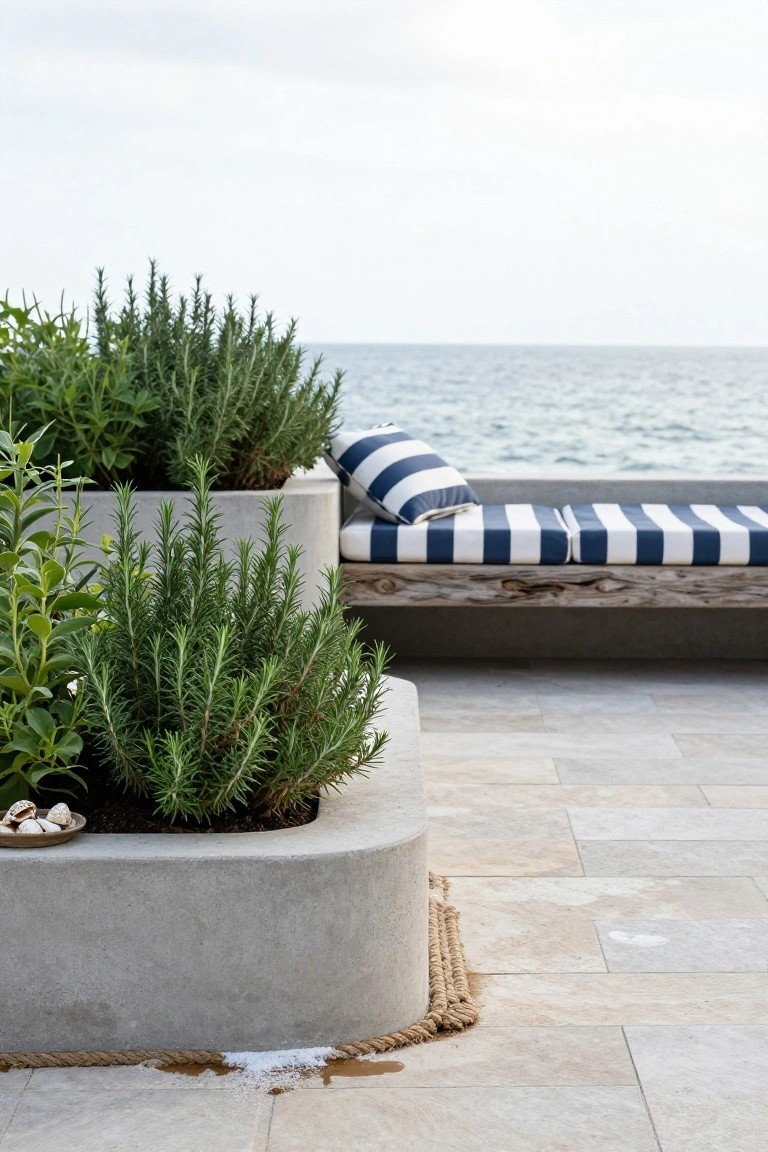
One simple way to add fresh herbs to your outdoor spot is with tiered concrete planters built right along a bench. Here rosemary fills the levels, giving you easy access while the plants soften that plain terrace edge. It keeps things practical and looks clean against the stone tiles and sea view.
This works best on a balcony or terrace where space is tight. Pick tough herbs that handle sun and wind, like rosemary or thyme. Just build the planters sturdy enough to hold soil weight, and pair with a basic wooden bench for everyday sitting.
Raised Metal Beds for Herbs

Long raised beds made from corten steel run right along the fence here, planted thick with basil, greens, and other herbs. The rusty patina on the metal gives it a sturdy, lived-in look that fits right into a backyard without much upkeep. Gravel on the ground keeps things neat and lets you walk close without mud.
These beds work best in tight spots like side yards or next to a patio. Plant in rows for easy picking, mix in a few pots to bump up heights. They drain well and warm the soil quick, so herbs thrive. Just watch the edges don’t rust through too fast in wet spots.
Tiered Herb Garden with Linear Fire Pit

One smart way to give your herb garden a high-end feel is to build it right into a linear fire pit. Here you see a wide concrete planter filled with low herbs and citrus like those bright lemons, with flames flickering along the center. The tiered edges around it create levels for more plants and easy steps to sit on. It pulls the cooking herbs close to your outdoor seating without taking up extra space.
This works best on a modern patio or terrace next to the house, where you want warmth at night. Go for gas flames so it’s simple to light, and pick heat-safe plants like succulents or tough herbs. Keep the concrete plain gray to let the greens stand out… just watch that the fire doesn’t scorch the edges too much.
Stone Steps as Tiered Herb Garden

One simple way to make a sloped spot useful is turning stone steps into a tiered herb garden. The wide, rough slabs here create natural levels where herbs spill over the edges and fill small soil pockets between rocks. It keeps plants off the ground but close at hand, and the mix of thyme, mint, and others gives steady picking without much fuss.
This setup works best on a gentle hill leading to a patio or back door. Go for drought-tolerant herbs in the sunny lower steps, shadier ones up top. Stone like this blends with most yards, but watch for moss buildup on shaded treads… just hose it off now and then.
Recessed Herb Planters in Kitchen Counters

One practical way to keep fresh herbs handy is to recess planters right into your outdoor kitchen counter. These black containers sit flush with the stone surface, holding thyme, parsley, and other greens just steps from the sink. It turns a work space into something productive without taking up extra room.
This setup works best on a wide island where you prep food often. Go for durable pots that match your counter material, and pick herbs that thrive in sun like yours here. Keep soil simple and water easily from the faucet nearby. It suits modern patios that blend cooking and garden time.
Tiered Zen Gravel Garden Layout
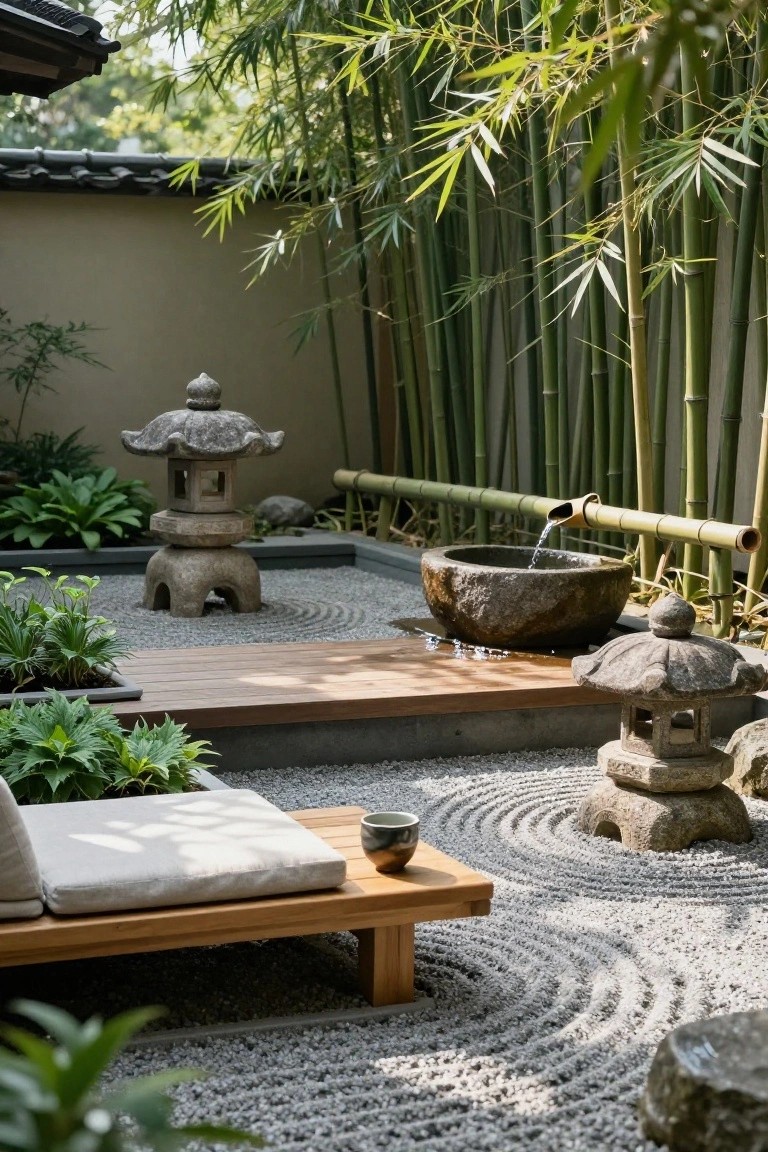
Raked gravel with circular patterns around stone features gives this garden a clean, high-end feel. The different heights from the tall lanterns down to the basin and low plants create natural tiers that work great for herbs. You get that serene Japanese look without much upkeep, and the gravel keeps things neat while letting herbs take center stage in pots or shallow beds.
Put this in a sunny courtyard or side yard where space is tight. Layer herbs like mint or thyme on the upper deck, basil near the water basin for humidity, and tougher ones right in the gravel edges. Skip it if your spot gets too wet, since gravel needs good drainage to stay crisp.
Bench Seating with Built-In Herb Planters

One smart way to fit more herbs into a small outdoor spot is to build them right into your benches. Here the L-shaped wooden seat has raised tiers along the back and sides filled with basil, rosemary, and other easy growers. It keeps the plants at picking height while you relax, and the setup blends seating with garden in a practical way that doesn’t take extra room.
This works best on patios, decks, or rooftops where space is tight. Go with naturally rot-resistant wood like cedar, and line the planters to hold soil in place. Pair it with a hedge for privacy, like the one shown here. Just make sure good drainage so roots don’t stay wet. It’s a low-fuss upgrade for anyone who cooks with fresh stuff.
Tiered Shelving for Indoor Herbs

A simple white tiered shelving unit like this one turns a sunny corner into a fresh herb station. It’s on wheels, so you can shift it easily, and the shelves hold a mix of pots from basil to little lemon trees. What stands out is how it packs in so many plants without crowding the floor. Keeps things practical and looks sharp against glass walls.
This works best in a sunroom or greenhouse where light pours in. If your kitchen has a window nook, roll something similar right there for easy picking. Suits modern homes with that clean extension feel. Watch the watering though. Herbs dry out fast in tight rows.
Tiered Stone Benches with Herb Pots

This setup uses low stone walls to form built-in benches around a simple square table right in the middle. Two pots of rosemary sit on the table, turning the spot into a casual herb garden you can actually use. The beige stone keeps it clean and modern, and the cushions make it comfortable for hanging out. It feels high-end without trying too hard.
You could build something like this in a sunny backyard corner or along a patio edge. It works best where you have flat ground and want a spot for drinks or light meals near the kitchen door. Just make sure the stone is sealed against weather, and pick tough herbs like rosemary or thyme that handle some shade. Easy to maintain once it’s in.
Frequently Asked Questions
Q: Which herbs should I put on the top tier?
A: Go with lighter herbs like basil, chives, or cilantro up top. They won’t weigh down the structure and catch plenty of sun. Save heavier hitters like rosemary or thyme for the lower levels.
Q: How do I water without dripping everywhere?
A: Water from the top down early in the morning. The tiers catch the runoff naturally, so your patio stays dry. Tilt pots slightly toward the center to direct excess into the levels below.
Q: Can I pull these off on a tiny balcony?
A: Absolutely, pick slim vertical tiers that hug the wall. They add that high-end vibe without eating up space. And they turn your railing into a fresh herb station.
Q: What if my spot gets partial shade?
A: Mint and parsley handle lower light just fine across the tiers. Push thirstier ones like oregano to sunnier sides. Rotate pots weekly for even growth.
