


I’ve spent enough time tinkering in my backyard to see how herb planters quietly shape a garden’s layout from the start.
They pull together planting zones and guide foot traffic in ways that feel natural after just one season.
A few well-chosen ones along edges can stop a yard from looking scattered.
Folks usually notice the herbs spilling over first, especially when they’re close enough to brush against on a path.
Some of these setups have held up well for me through different weather, so they’re worth sketching out for your own spot.
Rustic Bench Herb Display

A simple wooden bench makes a perfect spot for lining up terracotta pots of herbs. You see rosemary bushes and other greens tucked into those classic orange pots, with a few tools right there for trimming. It works so well because it turns any outdoor corner into a ready-to-use herb station, nothing fancy needed.
Set one up in a courtyard or along a patio wall, where the bench can hug the stone for that grounded feel. It suits smaller yards or even a sunny balcony edge. Just pick pots that drain well, and keep the bench weathered for charm, but watch for rot if it’s often wet.
Long Trough Planter for Herbs

A galvanized metal trough like this one makes a straightforward raised herb garden. Set on simple legs, it runs right alongside the outdoor sofa, packed with greens like rosemary, succulents, and grasses. The rustic finish fits right into a terrace setup without much fuss, and it’s close enough to grab a handful of herbs while you sit.
This works best on balconies or rooftops where you want plants off the floor. Go for tough, low-water varieties that handle sun and wind. Keep the trough long and narrow to hug the seating edge. Just watch for drainage holes, or add some gravel at the bottom to keep roots happy.
Herb Planters Around the Patio Table
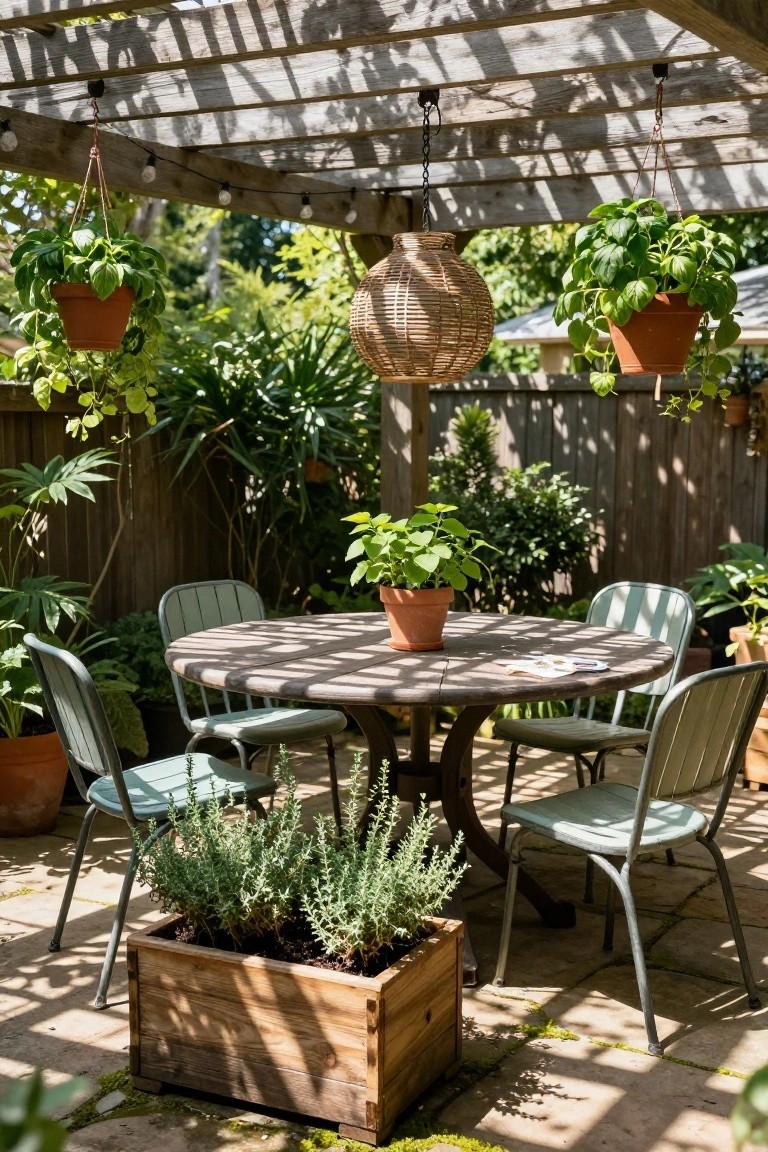
One easy way to bring fresh herbs right into your daily routine is to group them in pots around your outdoor table. You see terracotta pots with basil and rosemary sitting close to the wooden chairs, making it simple to grab a handful while you eat or chat. This setup keeps the garden practical without much fuss, and the plants add some green life to the seating area.
It works best on a covered patio like this one under a pergola, where shade helps the herbs thrive. Start with a few sturdy pots on the ground or in boxes next to the table, pick ones that match your space. Small backyards do well with this too… just don’t overcrowd. Keeps cooking handy and the spot feeling lived-in.
Raised Herb Planter Against the Fence

A narrow wooden raised bed tucked right up against a backyard fence makes a smart spot for everyday herbs. It fits lots of plants like rosemary, parsley, and angelica into a slim space without crowding the yard. The fence acts as a natural backdrop and support, and nearby climbers add a bit of height without much fuss.
This works best in tight side areas or along paths where you want fresh picks close at hand. Pair it with a watering can and hose for easy care. It suits most any yard size, though untreated wood might need a yearly refresh to hold up.
Balcony Herb Planters on the Ledge

Lining up terracotta pots with herbs along a balcony ledge makes for a straightforward herb garden. The plants sit right at arm’s reach, tucked against the wall with a simple wooden chair nearby. It turns downtime into garden time without taking up floor space.
This setup fits sunny balconies or terraces best, especially where you want fresh herbs close by. Choose tough ones like rosemary or lavender that handle pots well. Keep the pots uniform for a clean look, and water regularly since they’re exposed. It suits rentals or small patios nicely.
Vertical Herb Planters on a Fence

One easy way to grow herbs right where you need them is to line a fence or wall with simple black planters. In this setup, they stack up neatly on slatted wood, holding rosemary, basil, and other everyday picks. It keeps the herbs off the ground and close to the kitchen door, so grabbing a handful for dinner takes seconds. Plus, the dark planters blend into the evening light without stealing focus from the seating area.
These work best on a patio or balcony with some afternoon sun. Mount them at arm height for easy picking, and choose metal or plastic ones that won’t rot. They’re great for small yards or rentals since you can take them down if needed. Just water regularly, as they dry out faster up high.
Porch Window Boxes for Easy Herbs

Window boxes mounted right under the porch windows make a simple spot for growing herbs close at hand. These wooden ones hold basil, nasturtiums, and a few other greens that spill over nicely. Paired with wicker chairs nearby, it turns the porch into a spot where you can snip herbs while sitting outside. Folks like this because the plants stay off the ground and get good light from the windows.
You can set this up on any porch with a bit of wall space under the windows. Use sturdy wood boxes that match your house siding, fill them with soil that drains well, and pick herbs that trail or bush up. It works best on older homes with that cottage feel, but watch for too much afternoon sun that might dry things out fast. A watering can right there helps keep it going.
Circular Herb Planter Bench

A round raised bed like this makes a natural spot for herbs while giving you a place to sit. The central olive tree adds height without crowding things. Rosemary and other greens tuck into the edges nicely. Pebbles on the bottom keep it drained and tidy.
Put one in a sunny corner of the yard or patio. It fits small spaces well, especially against a wall. Go for low herbs that don’t mind dry soil. Skip if your spot gets too shady.
Wooden Herb Planter on Deck Railing

A simple wooden box planter tucked right up against the porch railing makes it easy to grow your own herbs without taking up deck space. You see basil, mint, and thyme spilling over the edges here, all in one long container that follows the rail’s line. It keeps everything handy for cooking, and the weathered wood fits right in with outdoor spots like this.
This setup works best on porches or balconies where you want fresh picks close by. Build one from scrap lumber or buy a ready trough, line it with plastic for drainage, then plant low-growers like oregano or rosemary too. Skip it if your rail gets too much direct sun, or the herbs might dry out fast.
Tiered Wooden Shelves for Patio Herbs

A weathered wooden shelf like this one turns a plain patio wall into a handy herb station. Two tiers hold terra cotta pots of rosemary, mint, and thyme, all labeled so you know what is what. It keeps fresh picks steps from the kitchen door and fits right in with the rustic tile floor and stucco house.
This works best on sunny patios in mild climates where herbs thrive. Bolt the shelf to a sturdy wall, space pots to let air flow, and choose drought-tolerant plants. Skip it in wet areas, though. The wood might not hold up long without some sealant.
Hanging Herb Planters on a Backyard Fence

One easy way to grow herbs without taking up yard space is to hang planters right on the fence. You see black pots filled with greens like chives and purslane tucked along the pale picket fence here. It keeps everything handy and turns a plain boundary into a growing wall. The little table nearby with its scale makes it practical for snipping and weighing what you need.
This works best in a small patio or side yard where ground is limited. Pick sturdy fence material and hang pots at comfortable height so you don’t strain. Trailing herbs fill it out nicely, and it suits any casual backyard setup. Just check drainage to avoid drips on the patio below.
Linear Poolside Planter Boxes

One straightforward way to add greenery right to your pool area is with a long linear planter built straight into the edge. Here it’s filled with spiky agaves, soft grasses, and a few succulents that hug the stone without spilling over. The look keeps things tidy while bringing plants close to where people relax, like on those nearby loungers. It turns a plain pool border into something alive and easy on the eyes.
You can swap in herbs such as rosemary or lavender for the same effect, especially in full sun. This works best around smaller pools or patios where you want definition without taking up lounging room. Just pick shallow-rooted stuff to avoid messing with pool maintenance, and go for stone or concrete boxes that match your deck.
Hanging Herb Planters with String Lights

Wall-mounted hanging pots like these make a balcony feel alive with fresh herbs right at hand. The cork pots hold plants such as basil and mint, and the string lights tucked around them give a soft glow come evening. It’s a simple way to grow what you need without taking up floor space.
Try this on any outdoor wall where you have some height. Space the pots at different levels for easy reach, maybe add a shelf bar underneath like here for extra storage or seating. Works best in mild spots… just watch for too much direct sun on heat-sensitive herbs.
Herb Planter on a Dresser Base

One easy way to grow kitchen herbs is to set a wooden box planter right on top of an old dresser outdoors. You get everything at picking height, no bending down much, and the mixed plants like basil, parsley, and dill fill it out nicely. The worn wood gives it that lived-in garden feel without much effort.
Put this setup by a utility sink for rinsing clippings or filling watering cans. It fits small backyards or patios against a fence. Use whatever dresser you have, add a lined box for drainage, and store trowels in the drawers below. Keeps things handy for daily use.
Garden Herb Prep Table

A simple wooden table makes a perfect spot for working with fresh herbs right in the garden. Here it’s set with a mortar and pestle for grinding, plus a lamp for evening use. The basket of picked greens sits ready nearby, all tucked among potted plants like mint. It’s handy because everything’s close, no hauling indoors.
Put one near your herb pots on a patio or along a fence. A bench pulls up easy for sitting, and a throw blanket adds comfort on cooler days. This fits small yards best, keeps things practical without much space.
Herb Planters Built into the Kitchen Counter

One practical way to grow herbs right where you need them is to build planters straight into your outdoor kitchen counter. Here, stainless steel troughs hold basil and other greens next to the grill. It keeps everything handy for cooking, and the herbs get good sun without taking up extra space.
This setup works best on a patio or deck with a built-in BBQ area. Use metal planters that match your counter material so it looks clean. Plant easy growers like basil or parsley, and trim them as you go. Just make sure good drainage is there to avoid water buildup under the wood boards.
Simple Balcony Railing Herb Planter

A long wooden planter box runs right along the balcony edge, filled with rosemary and a few other greens. It turns that narrow railing space into a fresh herb garden without taking up any floor room. The herbs sit close to your seating spot, so picking a sprig for dinner is easy. String lights overhead keep it usable into the evening.
This works best on small balconies or apartment patios where space is tight. Grab a sturdy box, line it for drainage, and plant low-maintenance herbs like rosemary or thyme. Pair it with folding stools and a table for casual meals. Just make sure it’s secure against wind.
Frequently Asked Questions
Q: Can I really use kitchen scraps like cans or jars for these planters?
A: Yep, rinse them out and poke a few drainage holes in the bottom. Line with gravel or coffee filters if you want to catch drips. Your herbs won’t care about the looks.
Q: How do I pick the right spot for my new herb planters?
A: Hunt for a sunny windowsill or balcony that gets at least six hours of light each day. Rotate the pots weekly so every side gets equal sun. Herbs stretch and weaken without enough.
Q: Which herbs grow best together in one small planter?
A: Pair basil with oregano or thyme, since they share similar water needs and won’t crowd each other out fast. Harvest the tops often to encourage bushy growth.
Q: Why are my herb leaves wilting even after I water?
A: Poor drainage usually drowns the roots, so check those holes aren’t clogged. Stick your finger an inch into the soil, and only water if it feels dry. They bounce back quick once you ease up.
