


I’ve noticed how raised herb gardens bring order to backyard layouts, creating defined zones that guide the eye along paths and edges without cluttering the open space.
They shape outdoor areas over time as herbs fill in and mature, turning a blank patch into something productive and polished.
The ones I’ve tried near seating areas work best because they invite closer use, like snipping basil right before dinner.
People tend to notice those sturdy borders first, the kind that hold soil in place year after year and resist weeds.
A couple of these setups use everyday materials in ways worth adapting to your own yard’s quirks.
Tiered Stone Beds for Herbs

A simple way to grow herbs without taking up much ground space is to build raised beds in tiers around a central fountain. This setup uses wide stone steps that hold soil for plants like rosemary, agave, and small green herbs, with neat boxwood edging all around. The fountain in the middle adds a bit of water sound and keeps things from looking too plain.
You can do this in a sunny backyard corner near the house, where the stone ties into patios or walls. It works best for smaller yards since the tiers stack up neatly. Just make sure the stone drains well so roots don’t stay too wet, and pick tough herbs that handle dry spots.
Steel Trough Herb Garden Along the Dining Bench
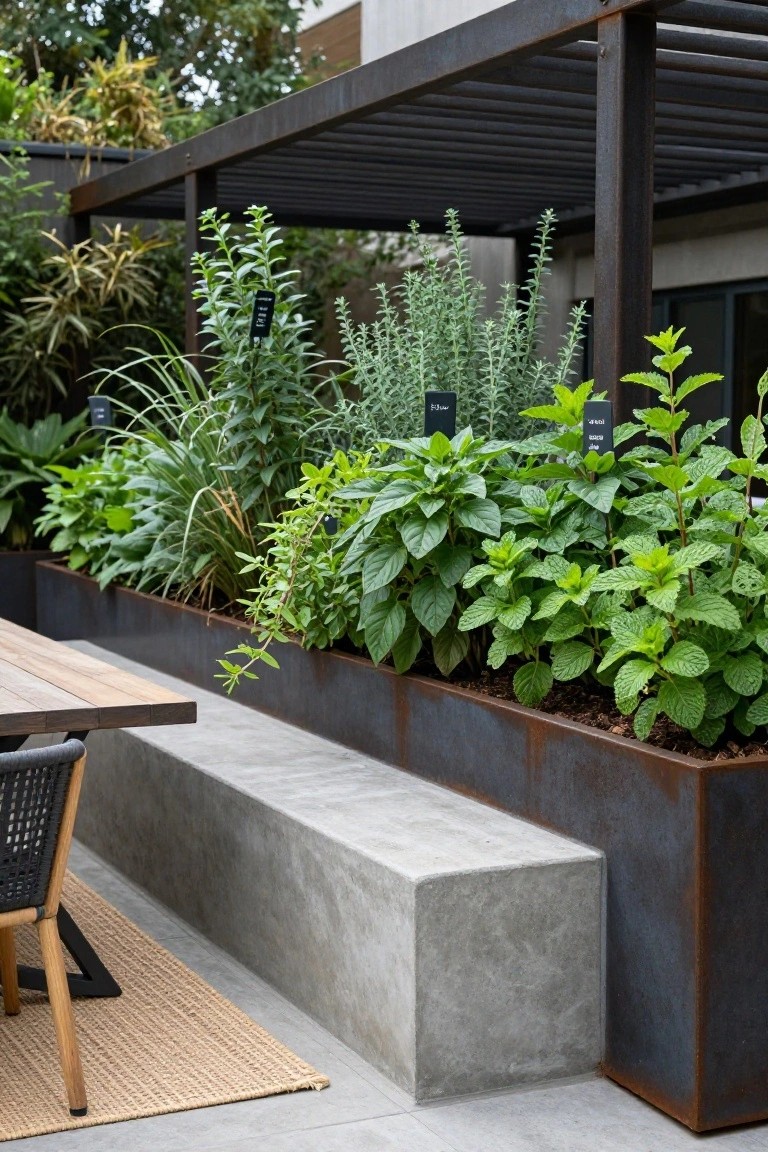
One simple way to bring fresh herbs right where you need them is with long steel trough planters tucked along the edge of a concrete bench. In this setup, the dark rusted metal boxes hold mint, basil, and other easy growers, sitting low and handy next to the outdoor table. It keeps the herbs off the ground but close enough to grab while cooking or eating outside. The metal gives a tough, modern look that fits with concrete and wood seating without getting fussy.
This works best in a small backyard patio or terrace where space is tight. Line up the troughs against any built-in bench, fill with soil and labels for your favorites, and let them spill over a bit for that lived-in feel. It suits modern or industrial style homes, but watch the rust if you want it contained, maybe add a liner. Easy to tend from your seat.
Farmhouse Raised Herb Planter Box

A white wooden planter box lifted off the ground makes a neat spot for growing herbs right against the wall. It holds a mix like rosemary, lavender, and little daisies, all spilling over nicely. That small ladder shelf with the “Thyme” sign gives it a homey feel, keeping things practical yet pretty.
This works well in a backyard corner or near the house for quick picking. Use pressure-treated wood for the box so it lasts outdoors. Add a hanging pot or old milk can nearby if you like the rustic look. Sunny walls are best, and it’s forgiving for beginners since raised beds drain better.
Raised Stone Beds for Fresh Herbs

A raised bed like this one, built from stacked natural stones, makes growing herbs simple and good-looking. The curved shape holds plants such as rosemary, sage, and mint close together. Stone walls keep soil in place and give the garden a sturdy feel that blends with backyard paths.
Put one near your kitchen door or patio for easy picking. Use rounded stones for the edging, add rich soil, and choose sun-loving herbs. It suits most yards, especially if space is tight. Just make sure drainage is right so roots stay happy.
Indoor Raised Herb Planters

One straightforward way to grow fresh herbs right inside is with these raised wooden boxes lined up along a wall. They hold parsley, chives, chervil, and mint climbing a little ladder trellis. The natural wood keeps things simple and warm, and the labels make it easy to grab what you need for cooking.
Set them in a sunny spot near a window where they get good light but stay out of the way. This works well in kitchens or entry areas with enough floor space. Just watch the watering, since raised boxes drain fast, and pick rot-resistant wood if you want them to last.
Raised Herb Beds with Gravel Paths

Raised beds like these make a backyard herb garden feel put-together and easy to tend. The rectangular shapes hold plants such as silvery lavender, upright rosemary, and bushy basil, all kept separate by smooth gravel paths. That clean separation stops weeds from spreading and gives you room to walk right up for picking.
This works well in smaller yards or anywhere you want low upkeep. Build the beds knee-high from wood or blocks, line the paths with gravel over landscape fabric, and plant in blocks by herb type. Sunny spots suit it best. Skip it if your ground stays soggy, since good drainage matters.
Wall-Mounted Raised Herb Planter

One smart way to grow fresh herbs without taking up ground space is a raised wooden planter mounted right on your garden wall. This setup keeps basil, rosemary, and other greens at picking height. The warm wood tone fits nicely against stone or block walls. It looks clean and organized too. Plus that built-in hook for the hose makes it practical for everyday watering.
Mount one like this along a patio edge or backyard boundary where you pass by often. It works best in full sun spots with good drainage soil. Smaller yards love it since there’s no sprawl. Just watch for wood rot over time and seal it yearly. Herbs stay healthier off the damp ground.
Poolside Raised Herb Gardens

Raised herb beds right along the pool edge make it easy to grab fresh rosemary or mint while you relax outside. These beds are built into the stone deck with clean lines and black pebbles for mulch, keeping things neat and low fuss. The herbs like rosemary and lamb’s ear fill them out without spilling over, and that rusty metal table nearby ties into the look.
This setup works best in modern backyards with hard surfaces like concrete or stone. Go for drought-tolerant herbs that handle pool splash and sun. Just make sure the beds drain well… pebbles help with that. It suits smaller pool areas where you want green without grass everywhere.
Raised Herb Garden Against the Fence
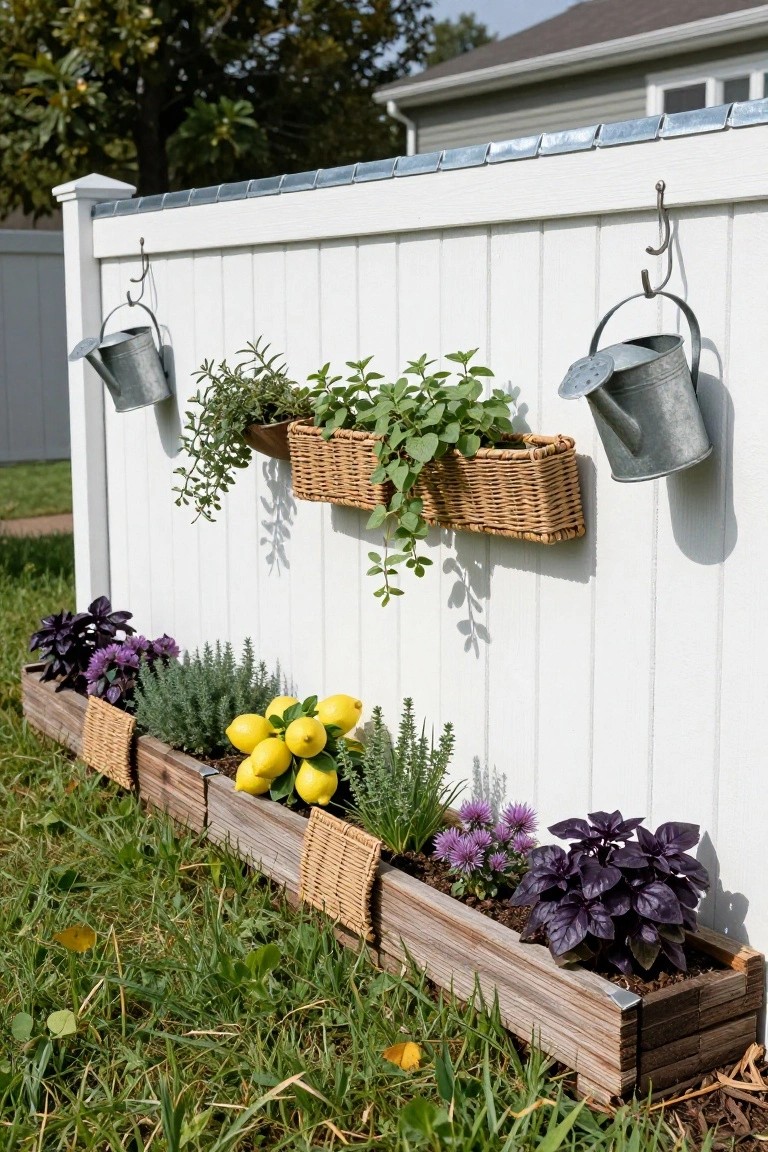
A simple raised wooden planter runs right along the base of a white fence, filled with herbs like purple basil, thyme, and even a cluster of lemons. Hanging wicker baskets and galvanized watering cans higher up add layers without crowding the yard. It turns a plain fence line into a productive spot that feels put-together and easy to tend.
This works best in backyards with taller fences where you want herbs close at hand. Set it in full sun for best growth. Use rot-resistant wood for the box and line it with landscape fabric to keep soil in place. Skip it if your fence gets too much shade, since herbs need light.
Rustic Wooden Raised Herb Beds

These wooden raised beds make growing herbs feel easy and right at home in a backyard. The rough wood gives a natural look that blends with sand and grass, while keeping everything contained and off the ground. You see herbs like mint and basil spilling over the edges, plus a few pots tucked in for extras. It’s practical too, since raised beds warm up faster and drain better.
Put them along a fence or pool edge where space is tight. They work in any sunny yard, even sandy ones, and suit homes with a casual vibe. Just line the wood to stop rot, and keep beds about a foot high for easy picking. Skip painting if you want that weathered charm over time.
Wall-Mounted Herb Planters for Easy Access

These metal troughs bolted right onto a brick wall hold herbs like thyme, mint, and basil at waist height. No bending down to pick leaves. The brass labels keep things neat, and those soft LED lights make the whole setup glow nicely at dusk. It turns a plain wall into a useful growing spot without taking up yard space.
Put them near a back door or patio bench where you prep food often. They suit urban gardens or tight backyards best. Just pick rust-resistant metal and make sure the wall can hold the weight when soil’s wet. Simple to water too, since drips fall straight down.
Circular Raised Herb Garden from Log Rounds

One neat way to set up a raised herb garden is stacking sliced logs into a round bed like this. The charred wood rounds give it a sturdy edge that looks right at home in a gravel yard. You get plenty of room for herbs such as basil and thyme, plus a few tough succulents mixed in for contrast. It keeps soil contained and makes picking fresh leaves easy without bending over much.
This setup works great near a patio table for casual outdoor meals. Use it in small backyards or along a fence where you want some green without taking up much flat space. Go for reclaimed logs to keep costs down, and line the bottom with cardboard to block weeds. Just make sure the wood isn’t treated if you’re growing edibles.
Balcony Herb Planter with String Lights

A simple wooden raised planter runs right along the balcony rail here, packed with everyday herbs like rosemary and sage. Those orange plant labels keep track of what’s what, and the best part is the string of Edison bulbs draped over top. They cast a soft glow that turns the whole setup into an evening spot without much fuss. It fits tight urban spaces perfectly.
Build one like this from untreated wood for easy drainage, line it up against any railing or fence. Tuck in a bench at one end for sitting close to your fresh picks. Great for front balconies or side stoops where yard space is zero. Watch the weight though, especially up high.
Raised Herb Beds with Stacked Stone

A simple way to grow herbs right in your backyard is with raised beds built from stacked natural stone. These beds lift plants up for better drainage and easier picking, and the rough stone edges give everything a clean, grounded look that blends with paths and lawns. You see basil spilling over, rosemary standing tall, and even a little sign marking the spot.
This works best in sunny spots near the house or kitchen door, where you can grab fresh sprigs without trekking far. Pick stones from your area to keep costs down and the style local. It’s practical for small yards too, since you can start with one bed and add more over time. Just make sure the base is level so it doesn’t shift.
Poolside Raised Herb Planters

Raised wooden planters like this one hug the edge of the pool nicely. They’re packed with fresh herbs such as basil, mint, and thyme, all thriving in neat rows. The dark wood gives a clean, sturdy look that fits right into a backyard setup without taking up extra space. It’s a practical way to grow your own kitchen herbs close to where you relax.
These work best around pools or patios where you want greenery without the mess of ground plants. Use rot-resistant wood like cedar for longevity, and keep the beds low enough to not block the view. They’re great for smaller yards too. Just make sure to pick herbs that handle some sun and occasional splashes.
Raised Herb Planter with Built-In Shelves

A white wooden raised planter like this one makes herb growing easy on a balcony or rooftop. It has room up top for soil and plants, plus lower shelves that hold extra pots. The glass panels on one side block wind without blocking light. Herbs such as basil, dill, and parsley fill it out nicely.
This works best in small outdoor spots where space is tight. Set it near seating for easy picking during meals. It’s practical for city homes… just make sure it’s level and drained well. White paint keeps it clean-looking year round.
Raised Herb Garden on a Stone Retaining Wall

One practical way to fit a raised herb garden into a backyard is to build it right into a stone retaining wall. Here lavender, rosemary, and silvery succulents fill the bed nicely, staying contained but still looking natural as they drape over the edge. The thick wooden top adds a spot to sit while you pick what you need.
This works best on sloped lots where you already have or want a retaining wall. It keeps herbs at waist height for easy tending, and the stone holds up well without much upkeep. Pair it with gravel paths or a simple barrel fountain nearby for a tidy, low-fuss setup that fits most any backyard.
Raised Herb Bed with Metal Shelving

A galvanized metal rack sits right over a raised bed, turning it into a multi-level spot for herbs like basil and thyme. The setup feels sturdy and practical, with copper cans for watering and a small grow light to keep things growing strong. It keeps everything organized and off the ground, which makes tending easier.
This works well in a compact backyard where space is tight. Bolt the rack to the bed frame for stability, choose rust-resistant metal, and position it where you get some sun but the light can fill in. It’s suited to modern or simple gardens, and just watch that the shelves don’t block too much air flow to the plants below.
Raised Herb Bed in Brick Wall Border

One straightforward way to add fresh herbs right where you need them is with a low raised bed built into a brick wall border. Here, rosemary towers over basil and other greens in a neat row, tucked against the house near the steps. A small Delftware tile marks the spot, and a cast iron teapot sits nearby for a homey touch. It feels practical yet polished, turning dead space into something useful without much fuss.
This works best in compact spots like entry paths or patios where you want herbs at arm’s reach for cooking. Use bricks that match your house for a seamless look, and stick to tough plants like rosemary or thyme that handle some shade. Keep it low, maybe just knee-high, so it doesn’t block the view… or the door.
Raised Herb Planter Doubles as a Bench

One smart way to fit more plants into a backyard is to build a raised planter right into a bench. Here you see a wooden box filled with basil, other herbs, dwarf lemon trees, and some grasses. It sits low on the patio, making it easy to reach everything without bending much. The wood gives it a warm look that fits outdoors.
This setup works best in smaller yards or patios where you want seating and growing space together. Use cedar or similar treated wood so it lasts. Keep the planter about knee-high for comfort, and add cushions on the bench for lounging. It suits modern or casual homes, but watch the drainage to avoid root rot in wet weather.
Frequently Asked Questions
Q: What’s the best height for a raised herb bed if I have back issues? A: Go for 30 to 36 inches tall. That lets you tend herbs without bending over much. Stack bricks under shorter beds if you need a quick fix.
Q: How do I pick herbs that won’t overrun the bed? A: Start with compact ones like thyme, oregano, and chives. They stay tidy and fill in nicely. Pull aggressive spreaders like mint into their own pots nearby.
Q: Do I need special soil for these elegant setups? A: Mix equal parts potting soil, compost, and perlite. It drains fast so roots don’t rot. Top with mulch to keep it looking sharp.
Q: How often should I fertilize herbs in raised beds? A: And every four weeks with a light fish emulsion works wonders. Skip it in winter when growth slows. Watch for yellow leaves as your cue.
