


When I added a spiral herb garden to my backyard a few years back, it instantly gave the whole area a sense of purposeful structure that flat beds never quite achieve.
These designs work best when the spiral’s curve guides your steps naturally toward the center, making harvesting feel intuitive rather than like a chore.
People always notice the rustic edging first, whether it’s weathered stone or twisted branches, because it sets the tone for how the garden ages gracefully with the seasons.
I learned the hard way that skipping proper drainage in the base leads to soggy roots after rain, so stable foundations make all the difference in real yards.
A few of these rustic twists are straightforward enough to scale down and test in your own space this weekend.
Rustic Brick Circle Herb Bed
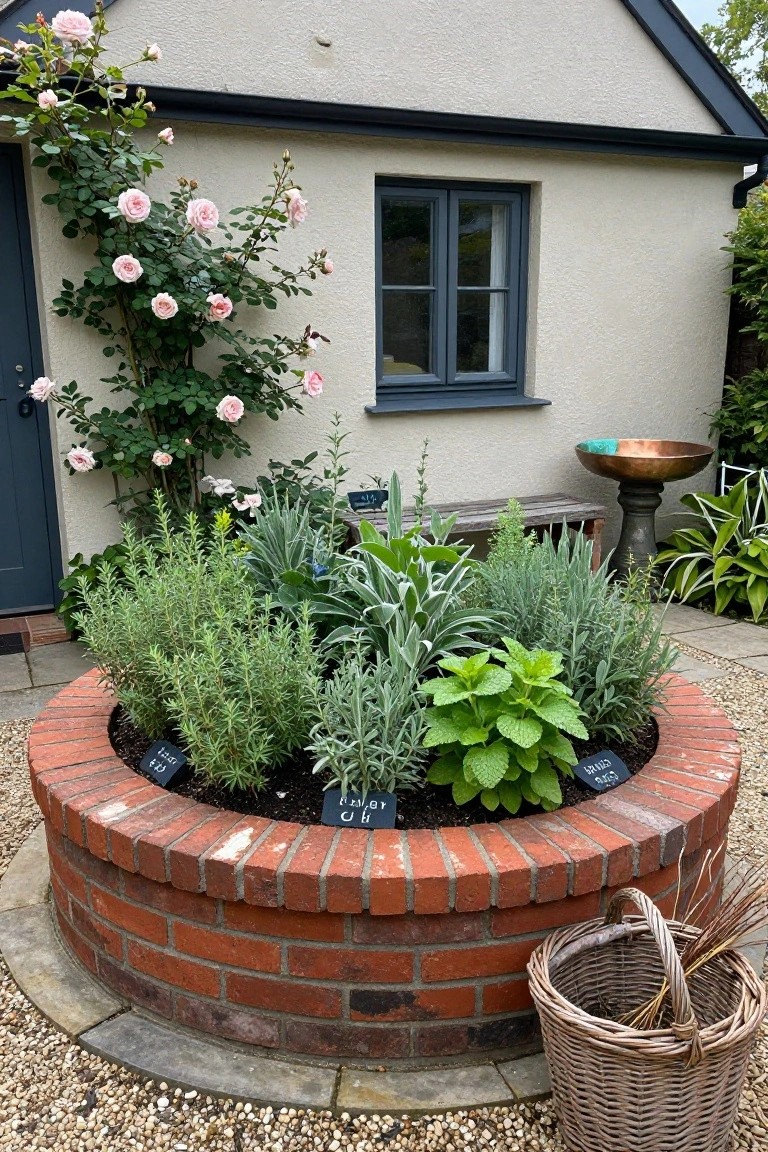
A simple raised bed made from red bricks forms a perfect circle for growing herbs right next to the house. You see rosemary, lavender, basil, and mint tucked in there, each with a chalkboard label stuck in the soil. It’s practical and looks right at home against a plain wall, especially with climbing roses adding some soft color nearby.
This works best in a snug side yard or patio spot where you want fresh picks for cooking. Stack the bricks two or three high for easy reaching, no bending down much. Go for tough herbs that don’t mind some sun, and keep the center open for taller ones like sage. Reclaimed bricks give it that worn-in feel without much cost.
Rustic Log Spiral Herb Garden

One simple way to add a spiral herb garden is by stacking logs into a low raised circle right off your deck or patio. In this setup, terracotta pots of lavender tuck into the curves, with a few herbs spilling over the edges. It keeps things contained and easy to reach while giving that cozy, woodsy feel without much fuss.
This works best in a backyard spot near outdoor seating, where you can snip fresh herbs for dinner. Use untreated logs for natural rot resistance, and plant low-growers like thyme or chives in the center to build height over time. Avoid overcrowding… just a few pots keep it looking tidy year-round.
Rustic Spiral Herb Beds with Wood Edging

Spiral raised beds like these make herb gardening simple and eye-catching. The curving shape uses space well, letting you plant different herbs in neat sections without much bending or reaching. That old wood edging adds a rough, natural look that fits right into a backyard setting, especially with gravel paths keeping mud away.
They’re great for average yards near a fence or patio. Fill them with basil, rosemary, chives, and thyme, just as you see here with the big basil clumps. Keep paths wide enough to walk easily, and add a few tall grasses around the edges for some height. Works best in sunny spots, but watch for wood rot over time.
Rustic Stone Spiral Herb Garden

A spiral herb garden built from rough stone blocks makes a simple standout feature in any yard. The curving shape draws the eye right to the center, where a small stone basin sits, and lavender and other herbs tuck into the levels. It feels organic and sturdy, like something from an old farmstead.
This works best in sunny spots near a patio or seating area, where you can snip herbs fresh. Stack reclaimed stone for low cost, fill with drought-tolerant plants, and keep the center open for a fountain or just soil. Suits cottage gardens or modern backyards wanting some character… watch the scale so it doesn’t overwhelm tight spaces.
Spiral Herb Bed Along the Pool Edge

A simple raised bed curved right around the pool makes for a handy herb garden that follows the water’s shape. The mix of lavender, basils, and grasses softens that hard pool edge, and it keeps fresh picks close when you’re lounging nearby. Rustic touches like the wicker liner and nearby rocks give it a natural backyard feel without much upkeep.
This works best in sunny spots near patios or seating areas, where you can snip herbs for meals or drinks. Go for drought-tolerant plants to handle pool splash, and keep the bed low enough not to block the view. It’s ideal for smaller yards… turns unused edging into something useful and pretty.
Slate Edging for Herb Garden Paths

One straightforward way to add rustic charm to a herb garden is edging paths with stacked slate slabs. Here, a gravel walkway runs alongside lush lavender plants, held back by rough layers of dark slate. It keeps the bed neat but lets the plants feel wild and full. That mix of hard stone and soft greenery works well in simple yards.
You can set this up along a side path or near a fence, like by a hedge for privacy. It suits older homes or cottages where you want low upkeep. Just make sure to tamp down the gravel base so it stays put after rain. Lavender thrives here too, with its scent right underfoot.
Tiered Rusty Drum Herb Garden

One smart way to fit a lot of herbs into a tight spot is stacking old metal drums into a tall spiral planter. You see it here on a deck balcony with rosemary shooting up the sides and basil filling the bottom. The rusty finish blends right in with brick walls and wood decking. It saves floor space and looks like it belongs outdoors.
Try this on a small patio or apartment balcony where ground planting won’t work. Source some weathered barrels or drums, cut drainage holes, and layer soil with plants like parsley or chives. Keep it near seating for easy snips when cooking. Just make sure good drainage so roots don’t rot.
Rustic Trough Herb Planters
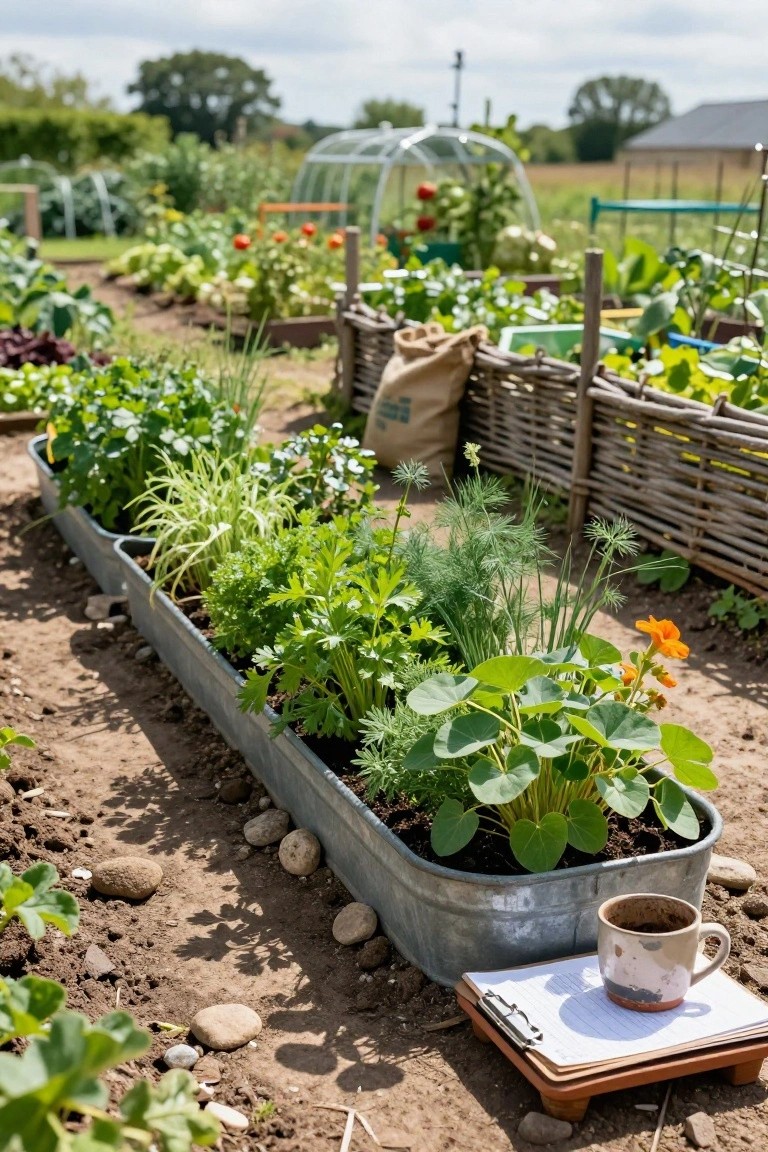
One straightforward idea for a tidy herb patch is using long metal troughs as raised planters. Set them end to end along a path, and you get fresh parsley, dill, chives, and more at arm’s reach. The galvanized metal gives that worn-in farm feel without much upkeep, and it keeps soil off your shoes.
These work well in any backyard garden, especially where space is tight. Source old troughs from a farm sale or buy new ones that match. Plant densely for a full look, and add a spot nearby for your coffee while you tend them. Watch the drainage though… no one wants soggy roots.
Rustic Spiral Herb Garden with Log Rounds
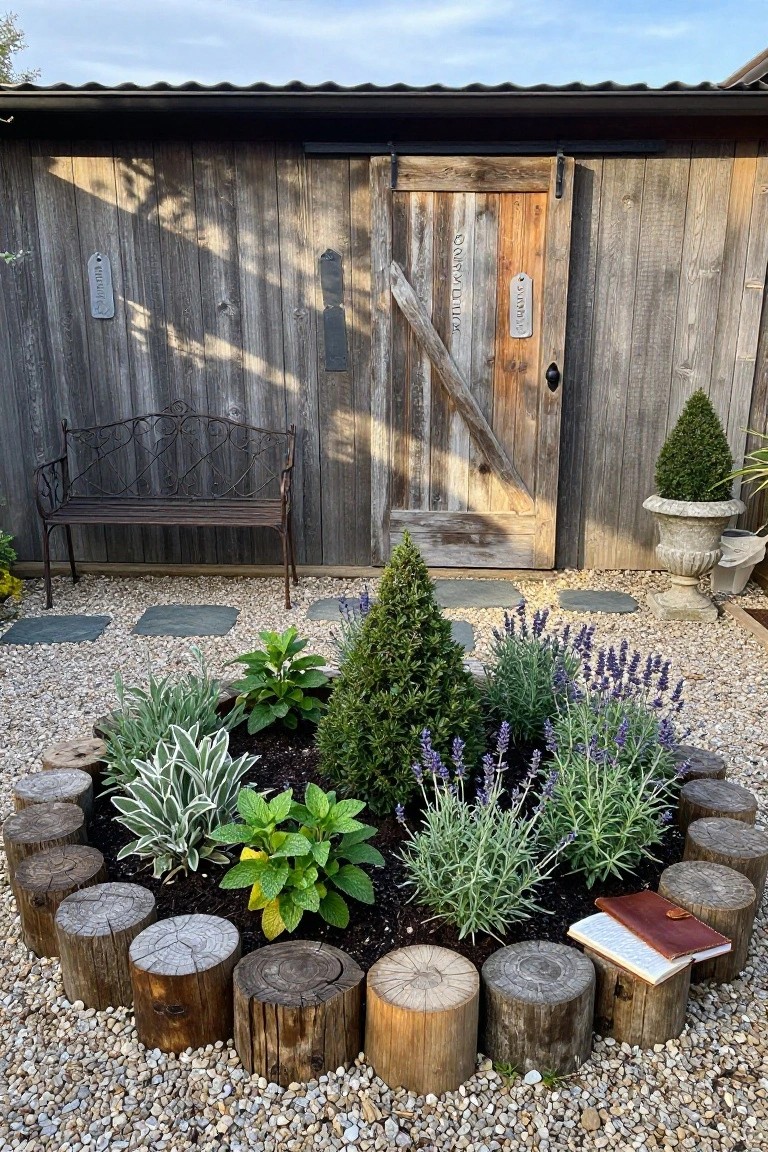
One simple way to build a standout herb garden is to edge it with slices of old logs. This creates a tidy circle that holds in soil and plants like lavender, mint, and small conifers. The wood rounds look right at home against a weathered shed wall, blending into gravel paths without much upkeep.
These gardens suit small yards or spots near patios. Stack the rounds two high for stability, fill with good dirt, and plant low-growers that won’t spill over. They stay neat year-round and add that folksy touch to plain outdoor areas.
Rustic Terracotta Spiral Herb Garden

A spiral herb garden like this one stands out because of the terracotta bricks shaped into curving beds and a gravel path you can stroll right through. It turns a simple planting area into something fun and practical, easy to reach the herbs without stepping on them. The warm brick color fits right in with stone walls and olive trees around it.
Put one on a slope or flat spot near the kitchen door where you get full sun. Fill the pockets with rosemary, lavender, thyme, and maybe some agaves for structure. Keep the spiral about 8 to 10 feet across so it doesn’t take over. One thing. Bricks hold heat well, perfect for herbs that like it dry.
Rustic Tiered Cedar Herb Spiral
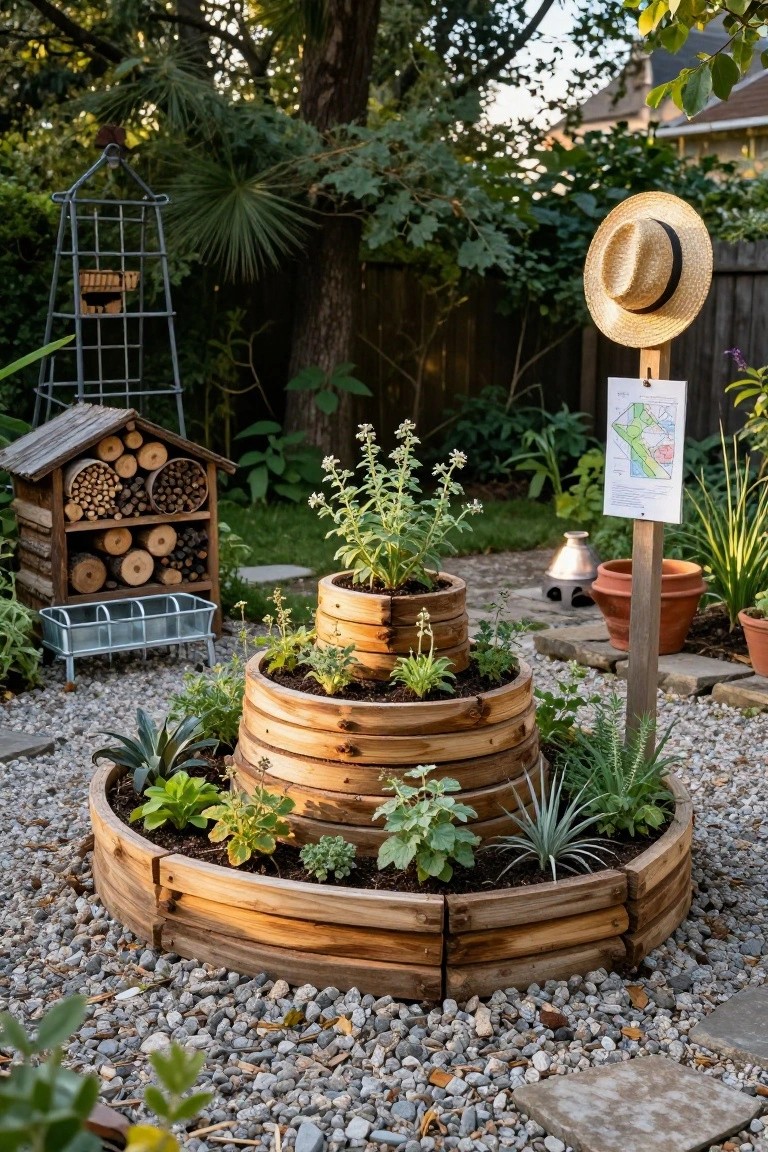
A stacked cedar ring planter shaped like a spiral makes for a practical herb garden that saves space and looks right at home in a casual yard. The wood’s natural grain gives it that rustic feel, and the tiers hold different plants like herbs, succulents, and greens without crowding each other. Gravel around the base keeps things tidy and lets water drain fast.
You can build one like this with cedar slices or logs cut into rings, stacking them wider at the bottom for stability. It suits small backyards or patios where flat ground is limited. Just seal the wood to last longer outdoors, and pick sun-loving herbs for the top tiers.
Stone-Edged Spiral Herb Garden
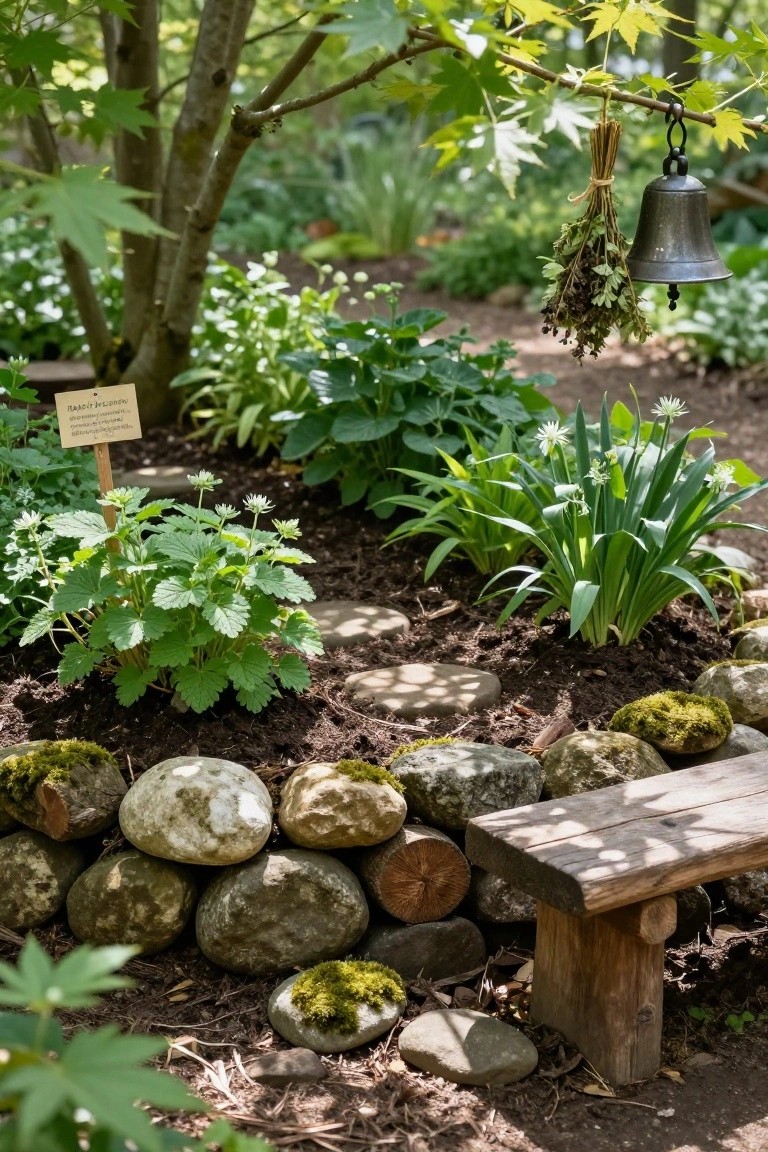
One simple way to shape a spiral herb garden is with a low wall of stacked fieldstones. The curve draws the eye along the path of step stones right to a wooden bench tucked at the end. Moss on the rocks gives it that aged, natural feel without much work, and the herbs like lady’s mantle fill in soft and green.
This works best in a shady corner where the soil stays damp for herbs that like it cool. Stack local stones three or four high, plant inside the spiral, and add the bench for picking spots. Keep it small if your yard is tight. Just watch for weeds creeping into the wall cracks.
Circular Brick Fire Pit Seating
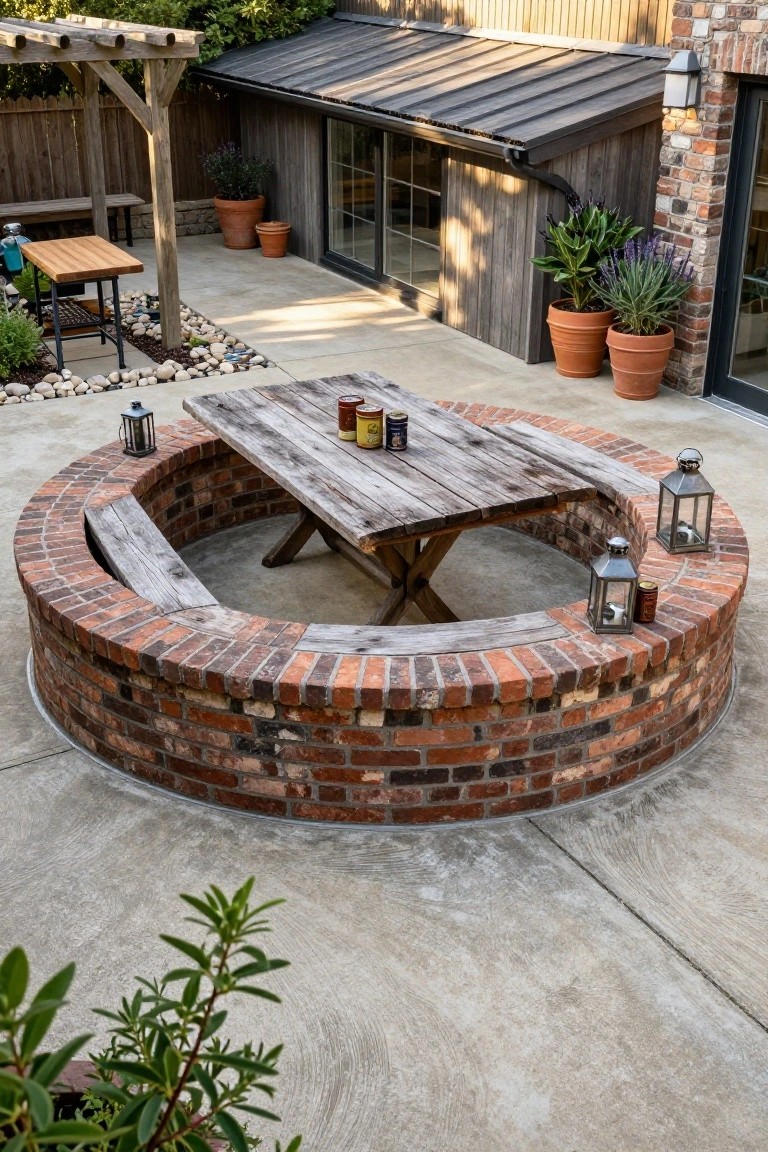
This circular brick fire pit pulls together a simple outdoor spot for friends and family. The low brick wall curves around built-in wooden benches, with a weathered picnic table set right over the center. A few lanterns sit on the bricks, and potted herbs nearby tie it into the garden feel. It’s practical and sturdy, the kind of setup that lasts.
Build one like this in a backyard patio or near a seating area. It fits small yards best, where you want cozy seating without taking much room. Stack reclaimed bricks for easy rustic style, and add herb pots around the edge for fresh picks during cookouts. Just make sure the base is level on concrete to avoid shifting.
Rustic Spiral Herb Garden Tower

A simple metal pole acts as the spine for this herb garden, with burlap sacks and terracotta pots stacked in a loose spiral around it. Fresh herbs like rosemary, thyme, and basil grow right out of the sacks, and small chalkboard labels keep track of what’s what. That vertical setup saves ground space and gives a folksy, handmade feel next to a gravel path.
Put one like this in a sunny corner of a yard or along a fence where you want easy picking. Use a sturdy pole at least six feet tall, fill the sacks with soil, and plant low-water herbs that trail a bit. Watch the weight as you build it up… too much and it might lean. Fits right into cottage gardens or urban patios without much fuss.
Rustic Stone Spiral Herb Garden

A spiral herb garden like this one uses rough stone walls to circle around a simple central pillar. It keeps things contained but feels organic, especially with lavender and low herbs tucked in close. That old pillar adds a bit of history without trying too hard.
You can set this up in a sunny corner of the yard, maybe near a path or pump for easy picking. Stack local fieldstone for the walls, keep the center low like a post or stump, and plant tough stuff like thyme or rosemary that comes back each year. Works best in cottage-style gardens… just watch for weeds sneaking through the stones.
Tiered Herb Stand as Deck Centerpiece
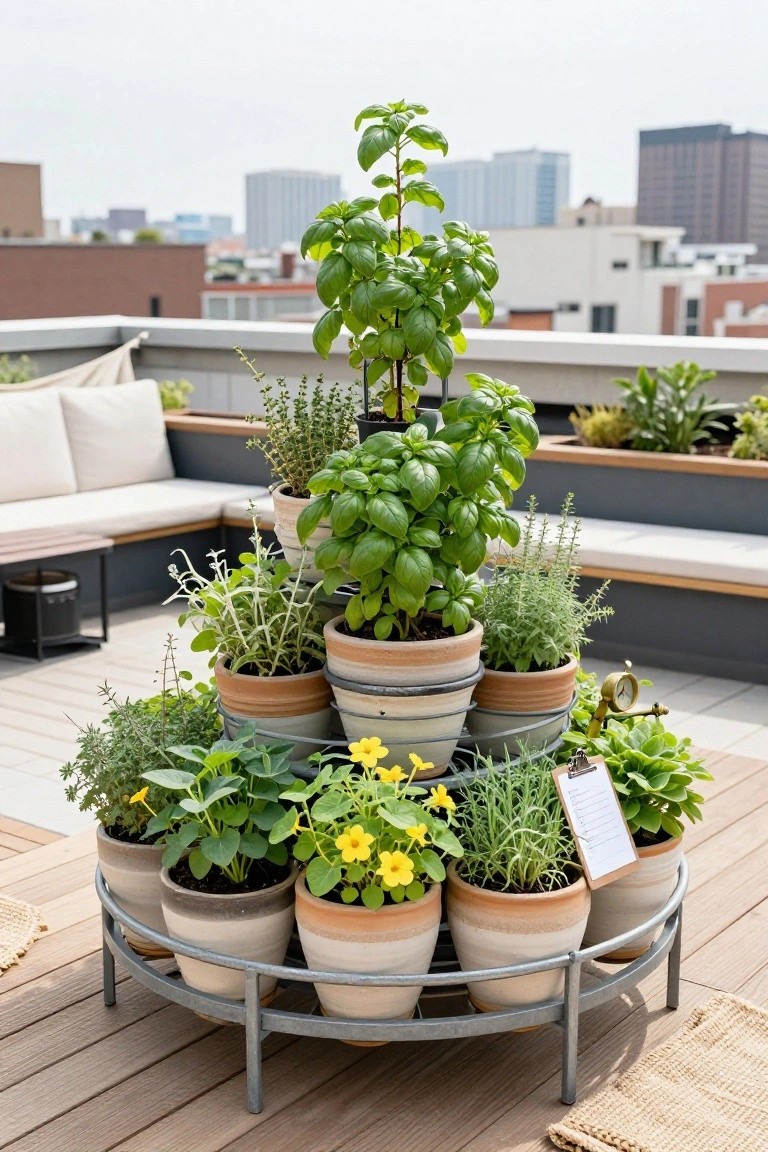
A simple tiered metal stand packed with terracotta pots of herbs turns into the heart of this rooftop deck. The spiral shape lets you fit a bunch of plants like basil, rosemary, and nasturtiums in a small spot. It pulls the eye right in and gives that fresh garden feel without crowding the seating area.
This works great on balconies or patios where space is tight. Go for a galvanized stand to handle rain, and mix in flowers for color. Suits urban homes best, keeps herbs handy for meals. Just check drainage so roots stay happy.
Rustic Driftwood Edging for Herb Beds

Old weathered logs make simple borders for raised herb beds like this one. They keep the soil in place while adding that rough coastal feel. Paired with gravel paths and everyday herbs such as rosemary and lavender, it looks right at home near dunes or beach houses.
Hunt for driftwood on walks or use any old timber. Stack them along the bed edge and secure with stakes if needed. This works best in sunny spots for herbs, away from formal lawns. Just check for rot over time.
Spiral Stone Herb Garden for Rustic Charm

A spiral raised bed like this one, built from stacked stone blocks, turns a simple herb patch into something with real character. It’s filled with basics like rosemary, basil, and a few colorful flowers, all tucked into that curving shape. What stands out is how the rough stones fit right into a garden setting, looking like they’ve always been there.
Put one near a gate or path for easy access when you’re cooking. It suits cottage-style yards or even small spaces along a fence. Keep the soil loose for good drainage, and you’ll have fresh herbs all season.
Stacked Galvanized Tubs for a Spiral Herb Garden
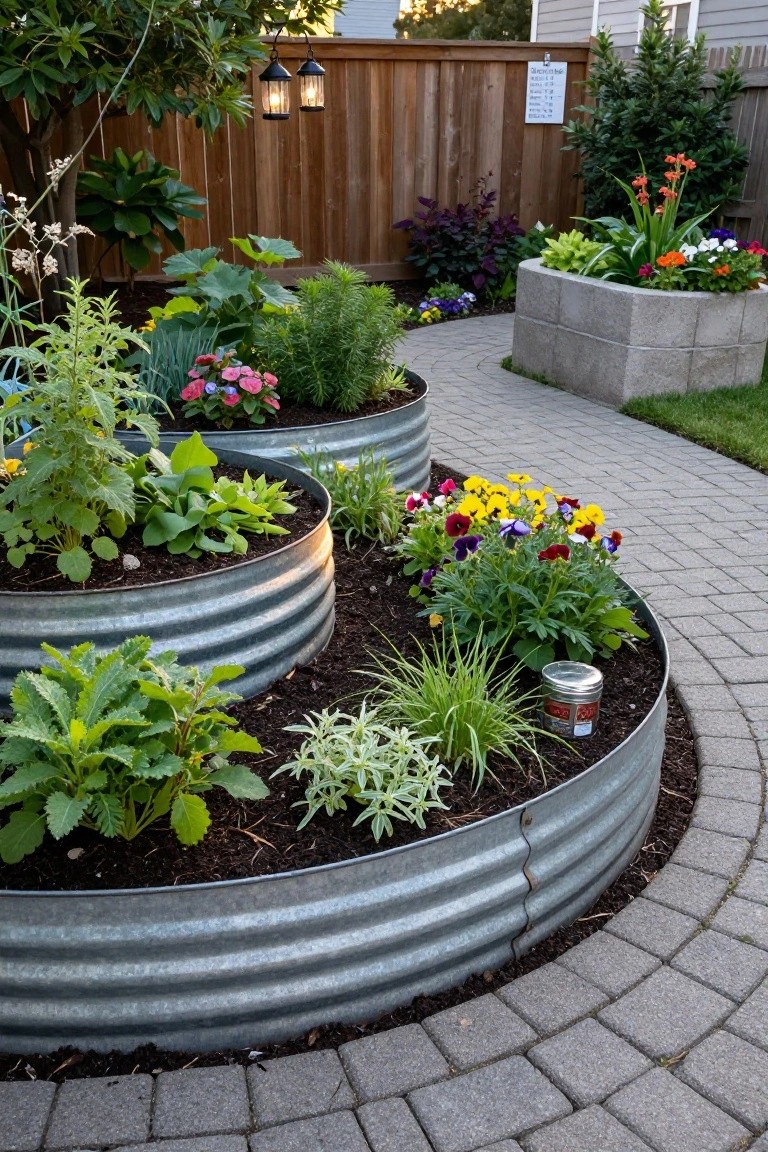
One straightforward way to add a spiral herb garden is stacking old galvanized metal tubs into tiers. You see three rings here building up in a gentle curve, packed with greens, herbs, and a few flowers for color. The metal gives it that worn-in rustic feel without much cost, and the shape makes good use of space around a path.
This setup fits nice in a backyard corner or along a walkway, especially if you want fresh herbs close to the house. Stack two or three tubs, fill with soil, and plant low growers at the base, taller ones higher up. Watch for rust over time… it adds character anyway.
Frequently Asked Questions
Q: Can I squeeze a spiral herb garden into a small patio or balcony?
A: Absolutely, aim for a 2- to 3-foot diameter spiral. Stack flat stones or bricks right on the ground or in a pot. It saves space and packs in tons of herbs.
Q: What herbs fit best in the different levels of the spiral?
A: Put rosemary, thyme, and sage up top where drainage is best and it’s drier. Tuck basil, chives, and parsley midway down for even moisture. Save the bottom for thirsty mint—it loves the wetter soil there.
Q: How do I get that rustic vibe without fancy materials?
A: Hunt for weathered rocks, old bricks, or logs from your yard. Rough up the edges and plant creeping thyme to soften them. Time and weather do the rest, aging it naturally.
Q: Won’t weeds take over my spiral garden?
A: Lay cardboard under the stones before filling with soil—it smothers weeds for a year. Mulch the top with gravel or bark chips after planting. Pull any stragglers weekly, and you’ll stay ahead.
