

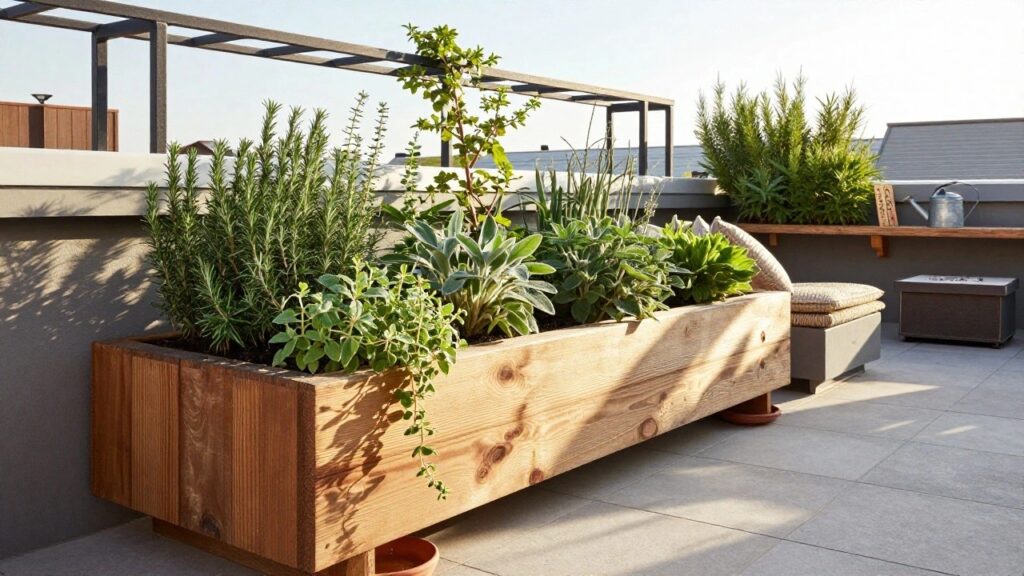
I enjoy how a thoughtfully planted herb garden turns any outdoor spot into a sensory escape, where breezes carry rosemary and lemon balm through the air.
In my yard, I’ve learned that success comes down to smart groupings by sun and soil needs, so the plants thrive without constant fussing.
Curving gravel paths edged with bricks draw you in gently, while container clusters handle sloped or shady areas that beds alone might not.
Gardeners often pick up on the varying textures and heights right away, like upright sages framing soft thymes, which build that relaxed depth over seasons.
Several setups strike me as easy to scale for real backyards, the kind I’d adapt with what I have on hand.
Planter Bench Loaded with Herbs
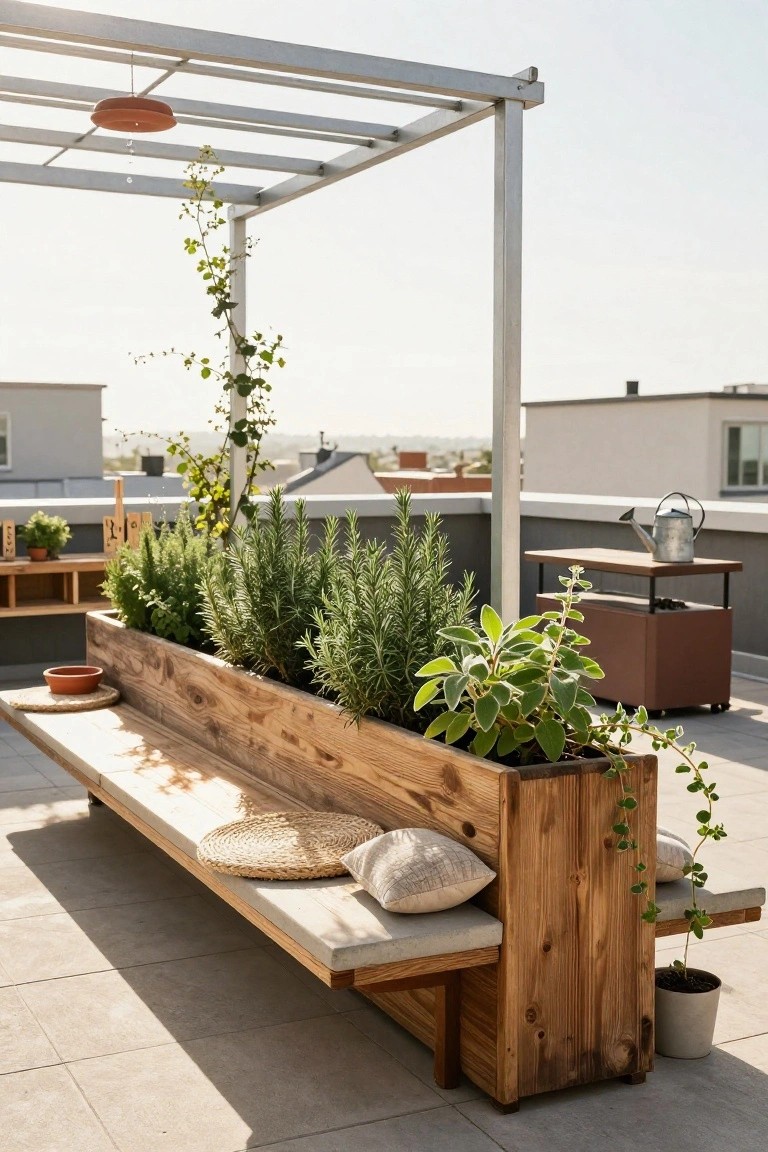
One smart way to mix seating and gardening is this long wooden planter that pulls double duty as a bench. It’s filled with rosemary, basil, and other easy herbs, so you get fresh picks right next to where you sit. The rough wood looks natural outdoors, and it keeps the terrace feeling lived-in without taking up extra room.
This works best on rooftops, balconies, or patios where space is tight. Line the box to hold soil, plant low-growers along the edge, and toss on some cushions for comfort. Skip fancy finishes… untreated wood weathers nicely. Fits urban spots or any sunny outdoor nook that needs green without the fuss.
Potted Lavenders Around a Patio Fountain

Big terracotta pots packed with lavender make a simple way to add scent and color to a patio spot. You see it here with clusters lining the edge of a pebble path, right by a small fountain and a bistro table setup. That purple pop against the warm walls and stone feels right for sunny afternoons. Plus the smell hits you as soon as you step out… relaxing without much work.
Try this in a tucked-away corner off your house, where it gets full sun most of the day. Lavender thrives there in well-drained pots, and terracotta lets the roots breathe. It works best for smaller patios that need definition, keeping things low fuss since you can rearrange the pots anytime. Just trim back after blooming to keep them tidy.
Balcony Railing Herb Planters
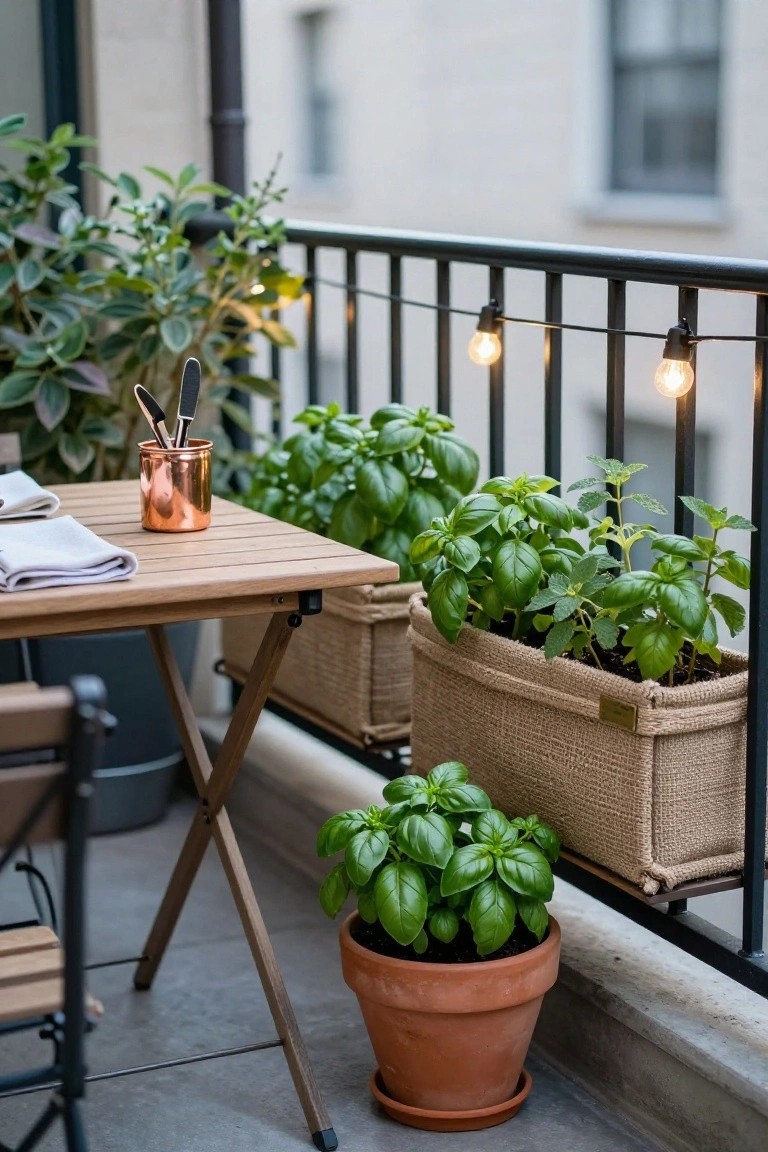
Balconies don’t need much space to grow fresh herbs. These woven planters clip right onto the railing and hold bushy basil plants close to a small wooden table. It’s handy for picking leaves while you eat or relax outside. The setup keeps everything green and useful without crowding the floor.
This idea fits apartments or narrow terraces best. Choose planters that hook securely and drain well so water doesn’t drip below. Pair with a folding table and chairs for easy meals. String lights add a nice touch at night. Just check your railing strength first.
Round Herb Bed Around a Tree
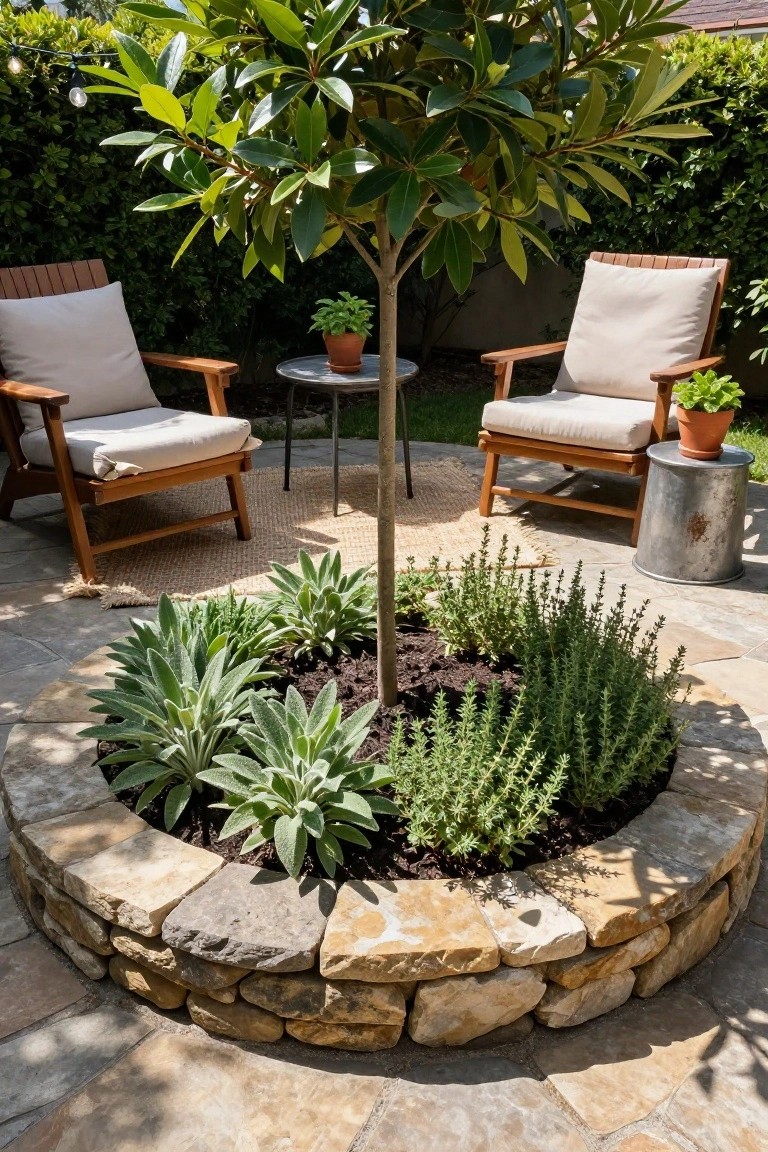
A simple round bed built from stacked stones wraps right around a young tree trunk. It holds in soil for herbs like silver-leafed lavender and bushy thyme types that grow low around the base. This keeps the tree as your focal point while giving herbs a tidy home close to where you sit outside. The shape feels natural and draws the eye without taking much space.
Put this in a sunny patio corner near chairs or a path. Stone walls about knee-high work best to reach plants easily. Choose drought-tough herbs that match your cooking needs. It suits small yards… just watch that tree roots don’t get crowded as it grows. Add gravel mulch to cut down on weeding.
Herb Planters Around the Outdoor Dining Table
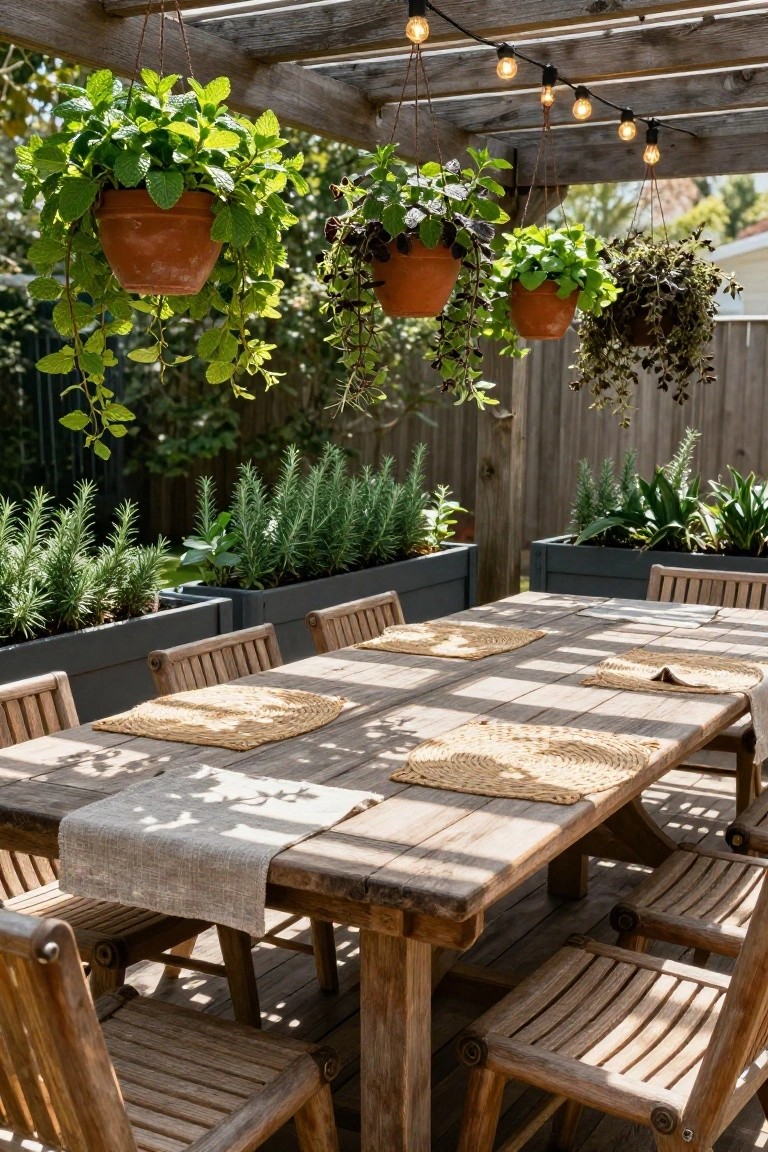
One easy way to bring fresh herbs right into your meals is to line them up around the patio table. Here you see mint spilling from hanging terracotta pots overhead and rosemary tucked into long black planters along the edges. It keeps everything handy for picking a sprig while you cook or eat outdoors. The setup feels relaxed and practical. Plus those herbs give off a nice scent on a warm evening.
This works best on a covered patio or pergola spot where you already gather for dinner. Go for sturdy raised beds or troughs that fit the space without crowding. Stick to low-growers like rosemary, thyme, or mint so they don’t flop over the table. It’s great for smaller yards too. Just watch the watering since herbs dry out faster in pots.
Narrow Herb Beds Along Stone Paths
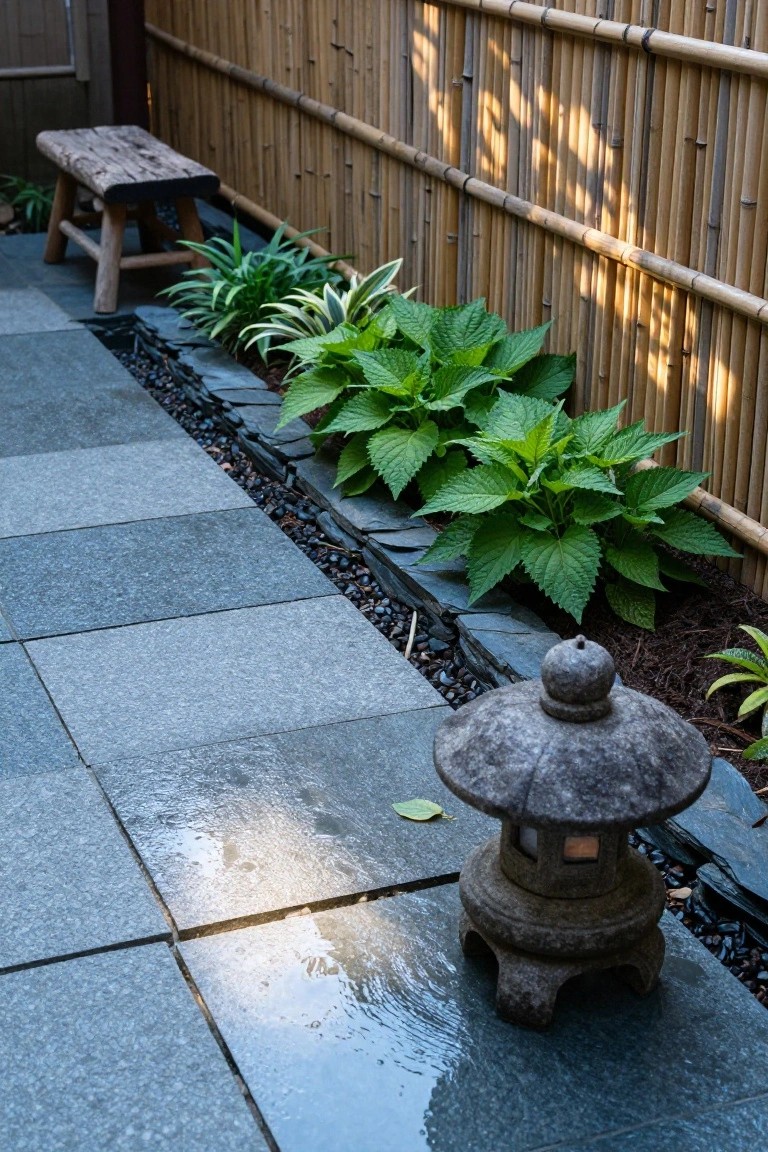
A narrow strip of lush green herbs tucked right against a bamboo fence makes a clean edge for any stone path. Here the broad leaves fill the bed perfectly, spilling just a bit over the gravel border without crowding the walking space. That soft green against the hard stone and fence keeps things calm and lets the herbs’ scent waft up as you pass by.
This works best in tight spots like side yards or courtyards where you want green without losing room to walk. Go for aromatic picks like mint or shiso that thrive in partial shade. Just keep the gravel topped up to stop weeds, and it stays low fuss year round.
Poolside Herb Trough Planter

A simple concrete trough planter runs right along the pool edge here, packed with rosemary and lavender. Those aromatic herbs release their scent just where you’re kicking back on the loungers. It’s a smart way to bring garden smells into your outdoor lounging spot without taking up seating room. The low profile keeps the view open to the water.
This setup works best in sunny pool areas where herbs like rosemary thrive. Plant a mix of upright growers for that full look, and tuck it between pavers or tiles for clean lines. It suits modern patios or any spot needing a bit of green buffer… just make sure good drainage stops root rot in wet spots.
Formal Herb Garden with Boxwood Hedges
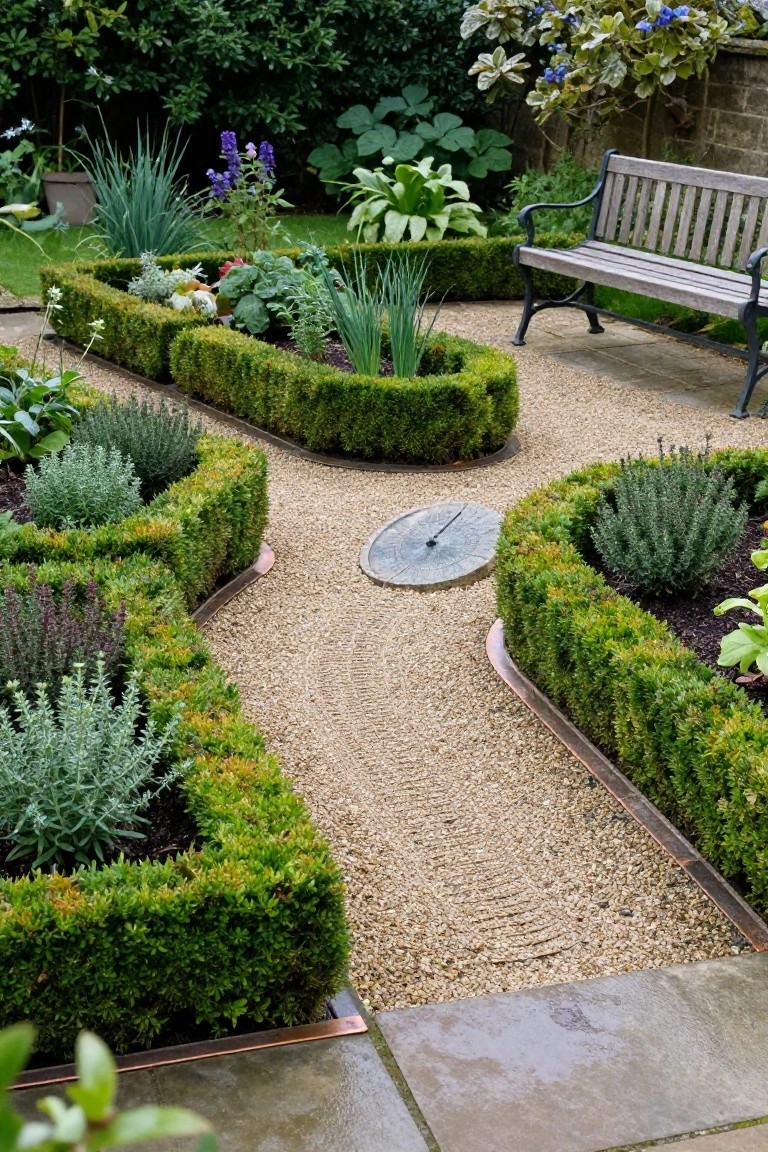
Boxwood hedges trimmed into neat geometric shapes make a simple way to organize an herb garden. They create defined beds for plants like rosemary, thyme, and chives, keeping everything in place without much fuss. The formal layout gives a classic feel, and it lets you walk right up to pick what you need. A gravel path winds through, with copper edging that holds the shape over time.
This setup works best in a smaller yard or courtyard where you want structure but not a lot of upkeep. Plant low-growing herbs inside the boxes, and add a bench nearby for sitting. Keep the boxwoods clipped once or twice a year… it stays sharp. Fits older homes or places with a bit of English garden vibe.
Brick Pathway Edged with Herbs

A simple brick path like this one runs right through a lush herb garden. It invites you to stroll slowly, brushing past aromatic plants on both sides. That wicker basket full of fresh greens on a little stool shows how practical it is too. You pick what you need without bending over far or trampling beds. The path keeps everything organized and makes the space feel calm.
Lay bricks in a gentle curve if your yard allows. Edge it with low herbs like chamomile, feverfew, or lovage that spill over nicely but stay tidy. This works best in a side yard or along a fence, where you want privacy and scent without much upkeep. Skip fancy pavers. Plain bricks age well and let the plants take center stage.
Built-In Benches with Herb Shelf
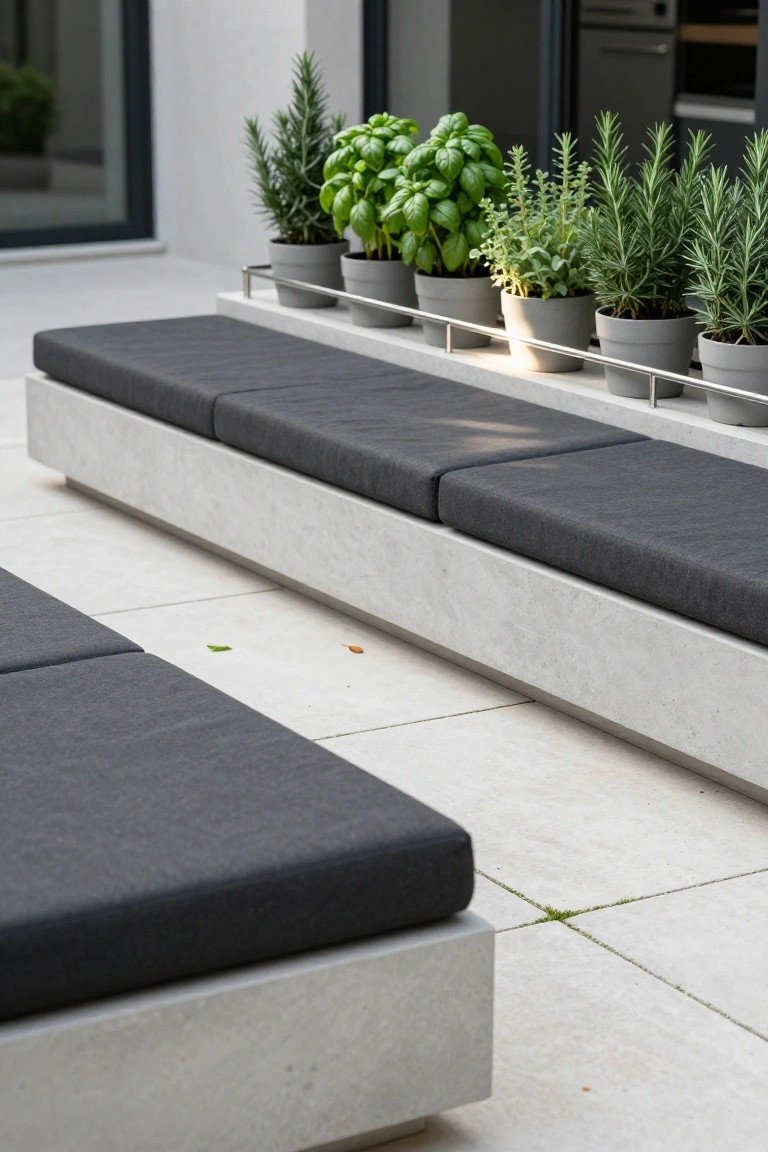
One practical way to bring fresh herbs into your outdoor spot is to add a shelf right above built-in benches. Here concrete benches with dark cushions sit under a simple metal shelf holding pots of basil, rosemary, and thyme. It keeps everything handy for cooking or just picking a few leaves while you sit outside. Plus it turns seating into part of the garden without taking extra space.
This works best on a patio close to the kitchen door, like this modern setup. Go for sturdy concrete bases that match light tiles, and choose herbs that grow well in pots. Watch the watering though. Herbs dry out faster up high. It’s a low-fuss idea for apartments or small yards.
Lavender Edging for Pathways

One straightforward way to bring aroma right to your garden paths is edging them with lavender plants. The repeating lines of purple spikes hug the stone borders here, filling the air with scent as you walk by. Gravel mulch keeps it all low fuss, and those olive trees up the slope add some height without crowding things.
This setup shines in sunny, dry spots like hillsides or Mediterranean-style yards. Plant lavender 12 to 18 inches apart along the edge, back it with stone or low walls for definition, and let it thrive on neglect. Just shear it back after flowering to stay tidy… watch for soggy soil though, since it hates wet feet.
Stacked Crate Herb Garden by the Porch Door
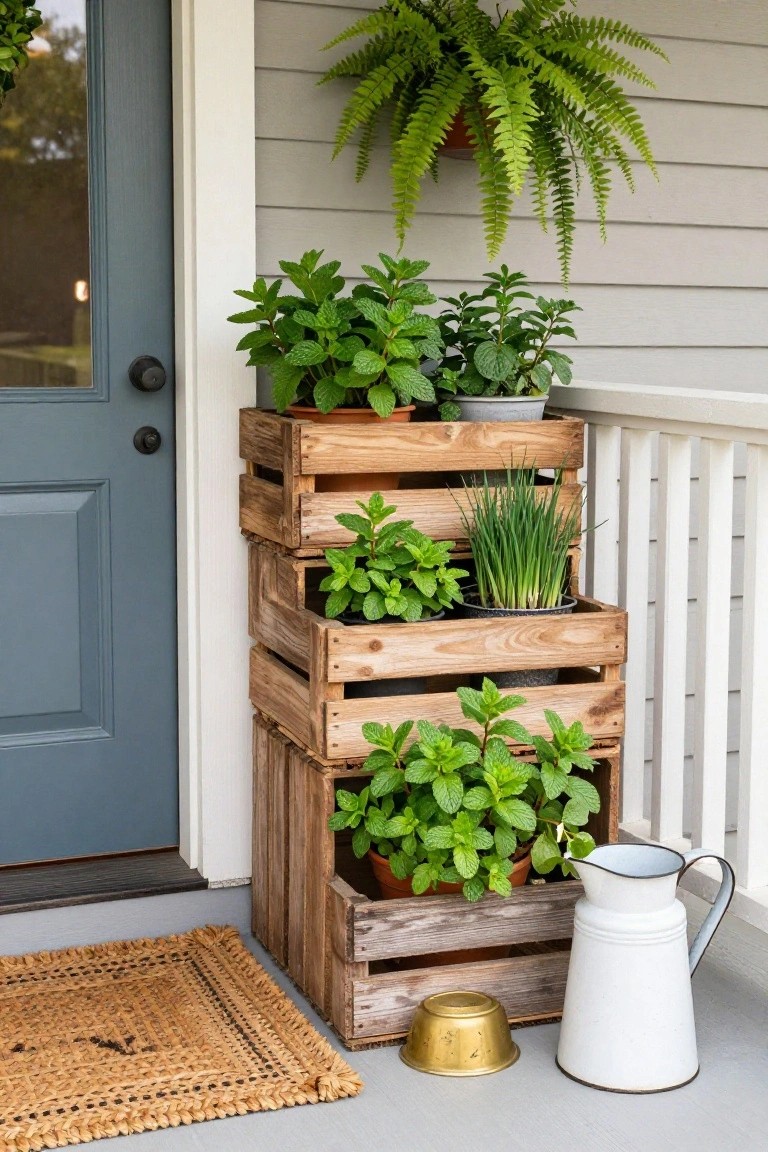
One easy way to bring fresh herbs right to your doorstep is stacking old wooden crates into a tiered planter. It turns a simple porch corner into something useful and pretty, with mint and chives growing in pots tucked into each level. The wood gives a casual rustic feel that fits most homes without much fuss.
This setup works best on small porches or entry steps where space is tight. Just grab some sturdy crates, line them if needed to hold soil, and plant low-growing herbs that like sun. Keep a watering can handy like in the photo. Watch for too much weight though… start small if your porch railing is narrow.
Herb Planter on the Outdoor Dining Table
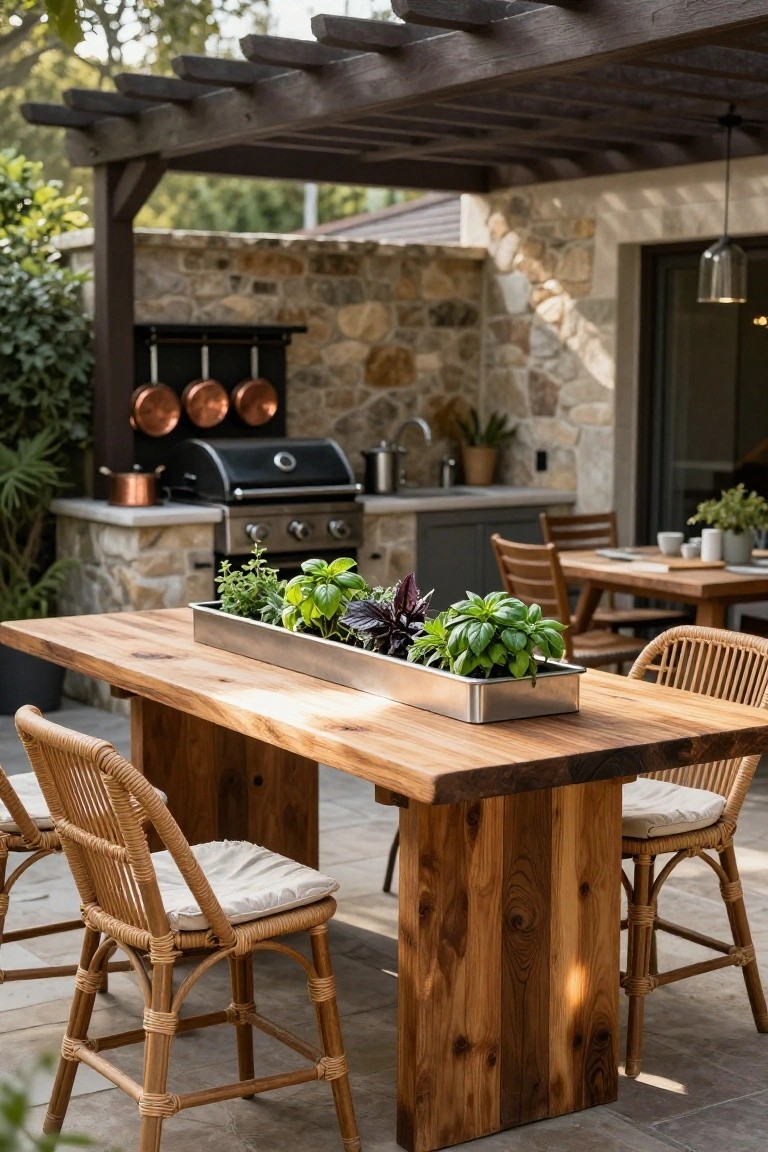
Putting a long metal planter full of fresh herbs right in the middle of your outdoor dining table keeps everything handy for cooking or just enjoying the smell. In this setup, basil and other greens sit there like they’re part of the meal, and it turns a simple wooden table into something useful without much effort. The aroma hits you every time you sit down. Nice for casual dinners.
You can do this on any patio table big enough to handle it, especially near a grill or kitchen like here. Pick herbs you use a lot, keep the soil watered, and snip as needed. It works best in mild spots where plants won’t scorch. Just slide it aside when you need more table space.
Stepping Stone Path Lined with Lavender

A simple stepping stone path like this one winds through beds of lavender and rosemary. The flat stones set into gravel give you a natural way to stroll without compacting soil around the plants. Those aromatic herbs release their scents as you brush past, turning a basic walkway into something sensory and calming. It’s low fuss too, since the herbs hug the edges without spilling over.
You can set this up in a side yard or leading to a back gate. Space the stones about two feet apart for comfortable steps, and plant tough growers like lavender along both sides. Mulch the gravel to keep weeds down. Works best in full sun spots where herbs thrive, and it fits any size garden without much upkeep.
Balcony Herb Table Setup

A small wooden table turns a basic balcony into a fresh herb station. Two white planters hold chives parsley and other greens right on top ready for picking. A mortar and pestle sits there too for quick grinding. String lights draped along the railing keep it usable into the evening.
This works best on tight urban balconies where space is short. Tuck the folding table against the rail near a chair for easy reach. Pick low fuss herbs that thrive in pots. Add your own lights… and you’ve got a spot for relaxing with homegrown flavors. Just watch for wind knocking things over.
Mossy Brick Herb Border
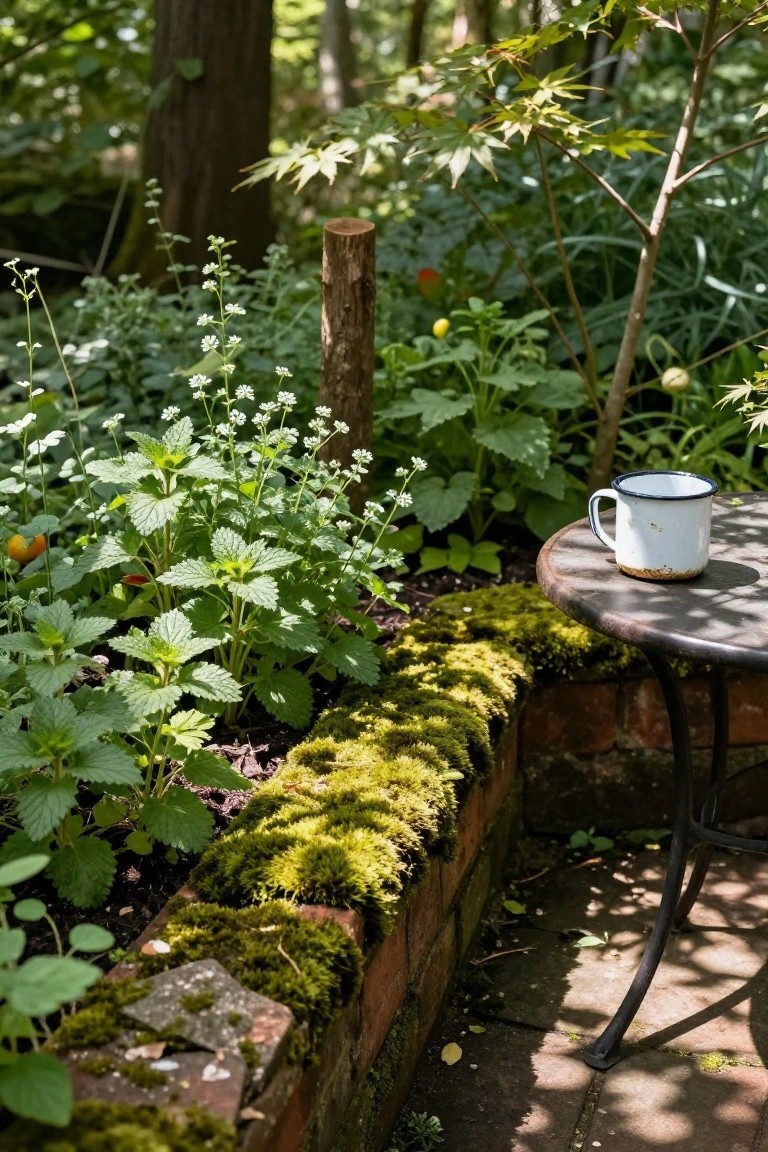
One easy way to edge a garden path or patio is with a low brick wall that’s let nature take over a bit. Moss grows soft on the bricks, and you tuck in aromatic herbs like nettles and deadnettle right along the base. It gives that wild, lived-in feel without much work, and the herbs release their scent when you brush past.
This setup works best in a shady spot near trees, where the moss thrives and the herbs stay happy. Plant them loose, not too neat, and add a simple table nearby for your morning tea… like that old enamel mug suggests. Suits cottage gardens or backyard nooks on older homes.
Brick-Raised Herb Garden
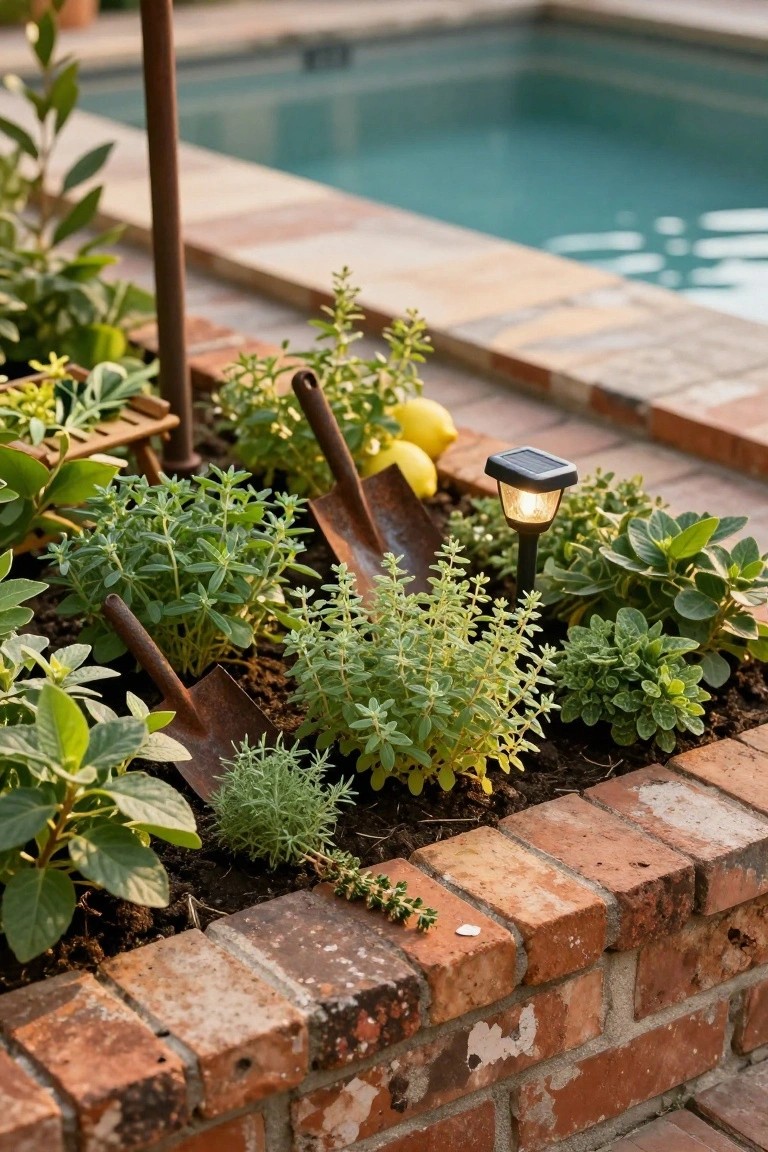
A simple raised bed like this one uses everyday bricks to hold back the soil and keep herbs right where you want them. It’s set close to the pool for easy grabbing when you’re out there relaxing. Those rusty old shovels stuck into the dirt add a bit of farm feel without much work, and a small solar light keeps it visible at night.
This setup works great in any backyard corner near a patio or pool where you cook or hang out. Use bricks you already have or pick up cheap ones to match your house. Plant a mix of rosemary, thyme, and lemon balm for that fresh smell. Just make sure the bed drains well so roots don’t rot. It’s low fuss and pulls you outside more.
Outdoor Herb Bar Setup
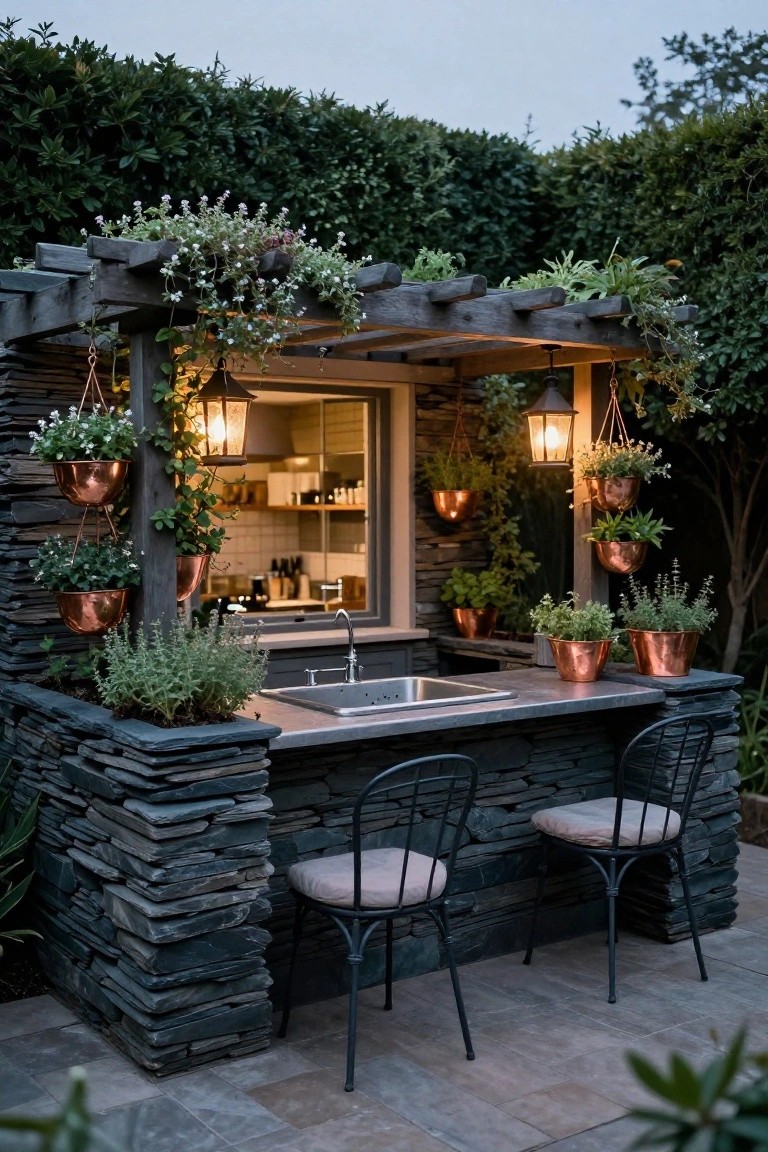
One smart way to bring fresh herbs right to your outdoor cooking spot is with a simple bar counter planted up with pots. Here you see a low stone counter with stools and copper hanging planters full of greenery like rosemary and basil dangling nearby. It makes grabbing a sprig easy while you mix drinks or chop veggies, and the herbs add that fresh garden feel without taking up table space.
This works best in a cozy backyard corner near your kitchen door, maybe under a pergola for shade. Pick tough herbs that thrive in pots, and go for metal ones that weather well outdoors. It’s perfect for smaller patios… just keep the counter height right for sitting and watch that the plants get enough sun.
Corten Steel Edging for Gravel Gardens
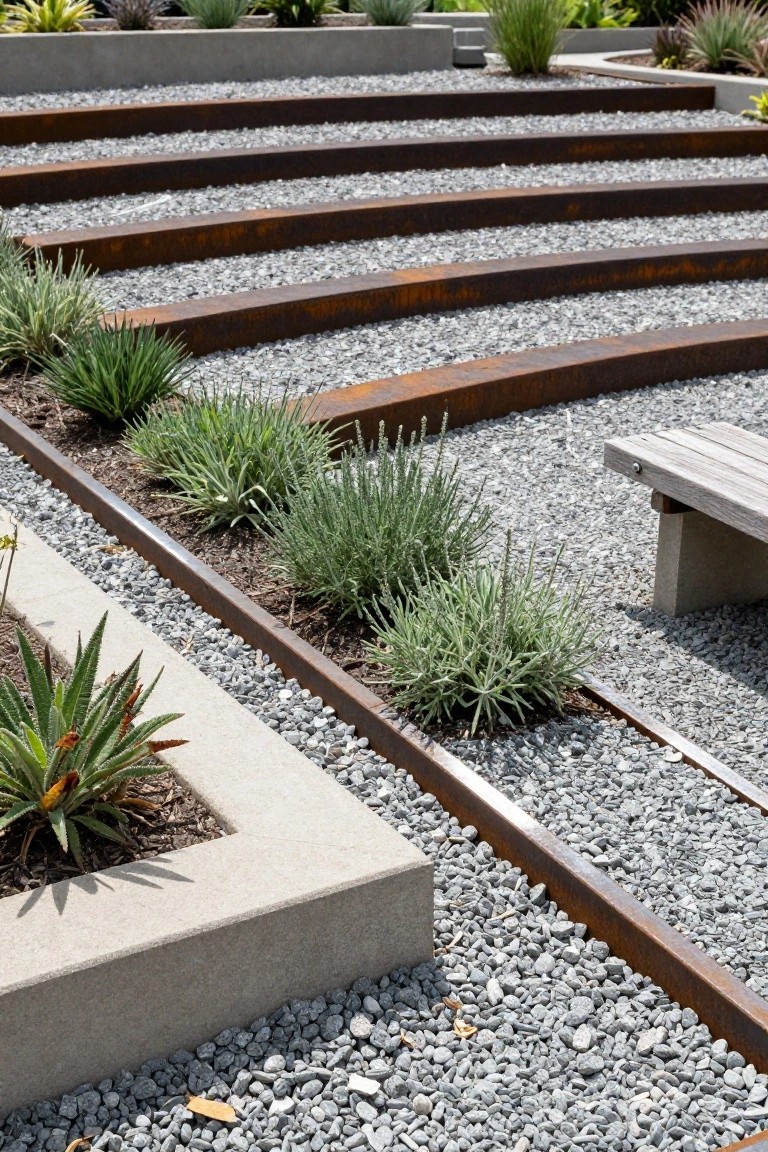
Corten steel edging works great in gravel gardens because it gives those loose stones a sharp, defined edge. You see it here holding back gravel paths and small planting pockets filled with tough plants like lavender and agave. The rust finish blends right in over time. It keeps everything tidy without much upkeep.
Use it on slopes to create simple terraces or just to outline beds along a walkway. Pairs best with drought plants in sunny spots. Go for thicker steel if you have heavier soil. One thing. It can get hot in full sun so keep hands off barefoot paths.
Raised Wooden Planter for Balcony Herbs
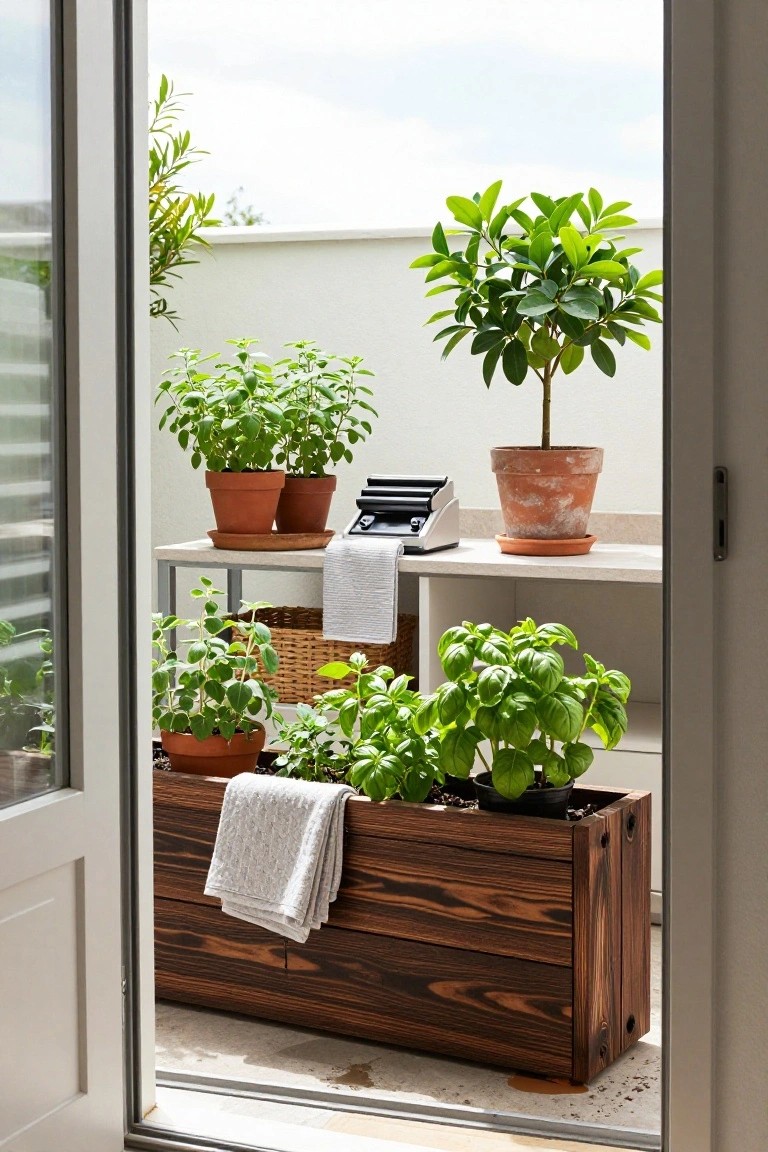
A raised wooden planter like this one sits right on the balcony floor and holds a mix of herbs such as basil and mint. It’s low to the ground but deep enough for good roots, and the dark wood gives a sturdy, natural look that fits outdoor spots. What stands out is how it turns a plain balcony edge into a fresh herb patch without taking up much room.
This works best on small balconies or terraces where space is tight. Position it near the door for quick kitchen access, and pair it with nearby shelves for extra pots. Just make sure it drains well to avoid soggy soil… especially after rain.
Jasmine-Lined Garden Path

A stone path like this one edged with thick jasmine bushes makes for an easy way to add fragrance right where you walk. The white blooms catch the evening light from simple lanterns, and those built-in benches give spots to pause. It’s all low-key but pulls you through the garden with that sweet jasmine smell hanging in the air.
Plant jasmine along a straight or curving path in a sunny spot, keeping it trimmed to form neat borders. Stone or concrete works best for the walkway since it holds up and lets the plants shine. This fits smaller yards or side areas, especially where you want scent without much upkeep. Just watch for jasmine spreading too far in warm spots.
Raised Beds for Kid-Friendly Herb Gardens
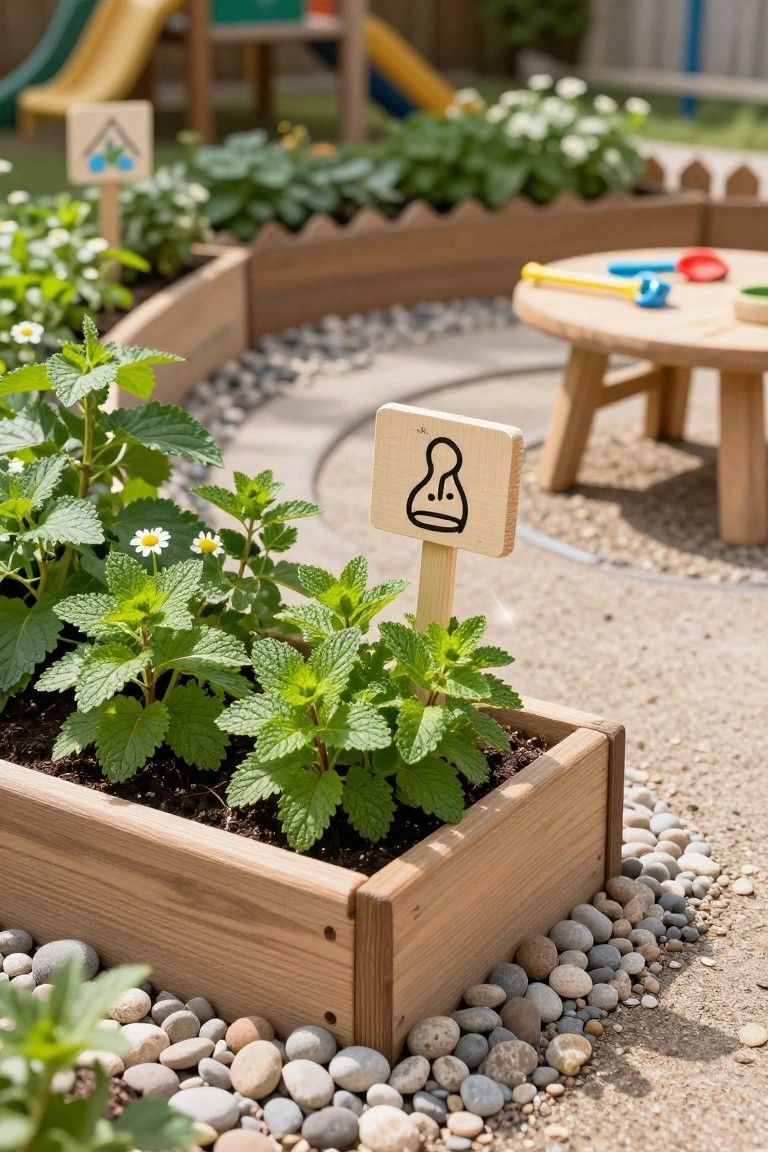
Raised wooden beds like this one make it simple to grow aromatic herbs right where the family hangs out. Filled with lush mint and a few chamomile flowers, this setup sits along a gravel path in a play area. The low height lets kids pick leaves easily, and that wooden label stake adds a fun touch, turning a basic planter into a learning spot. It’s practical too, keeping soil contained and weeds out.
These work best in small backyards or play yards where space is tight. Go for untreated cedar or pine boxes about knee-high for little hands. Plant quick growers like mint or lemon balm, and edge with pebbles to keep it neat. Watch the mint though…it spreads fast, so divide it yearly. Perfect for relaxed family spots that smell great all summer.
Frequently Asked Questions
Q: Can I pull off one of these herb gardens on a tiny balcony?
A: Grab some pots and a sunny railing spot. Basil, mint, and thyme love containers and turn your space into a scent-filled hangout. Just water daily since they dry out quick.
Q: Which herbs smell best for chilling out in the evening?
A: Lavender and lemon balm release the strongest calming vibes as the sun drops. Plant them near a path so you brush past and inhale deep. Their mix beats any candle.
Q: What if my yard soil feels like concrete?
A: Dig in compost or old leaves to loosen it up. Herbs push through tough stuff and reward you with bigger scents. Skip buying dirt; work with what grows wild nearby.
Q: How do I keep bugs from crashing the relaxation party?
A: Tuck in garlic chives around the edges. Pests hate the smell and steer clear. Check undersides of leaves weekly…
