

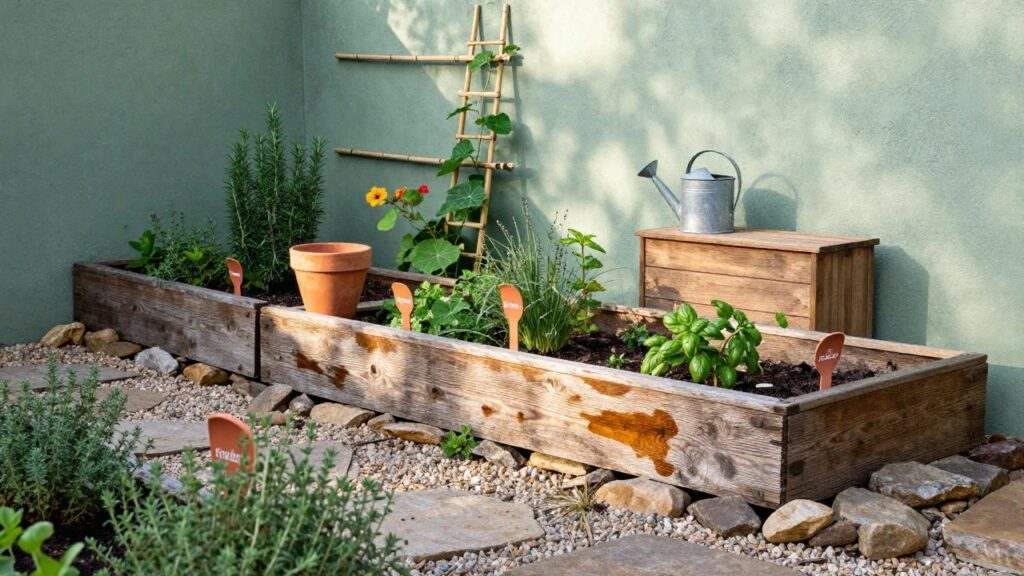
I’ve tinkered with organic herb gardens in my backyard for a couple of seasons now. The layouts that actually thrive put pathways and raised beds where the sun hits just right, letting plants spread without crowding each other out. You spot those clean edges and easy-reach clusters first when you walk into the space. Ones without solid structure quickly turn weedy and hard to maintain. A few tweaks like these have kept mine productive longer than I expected.
Rustic Raised Beds for Herb Gardening
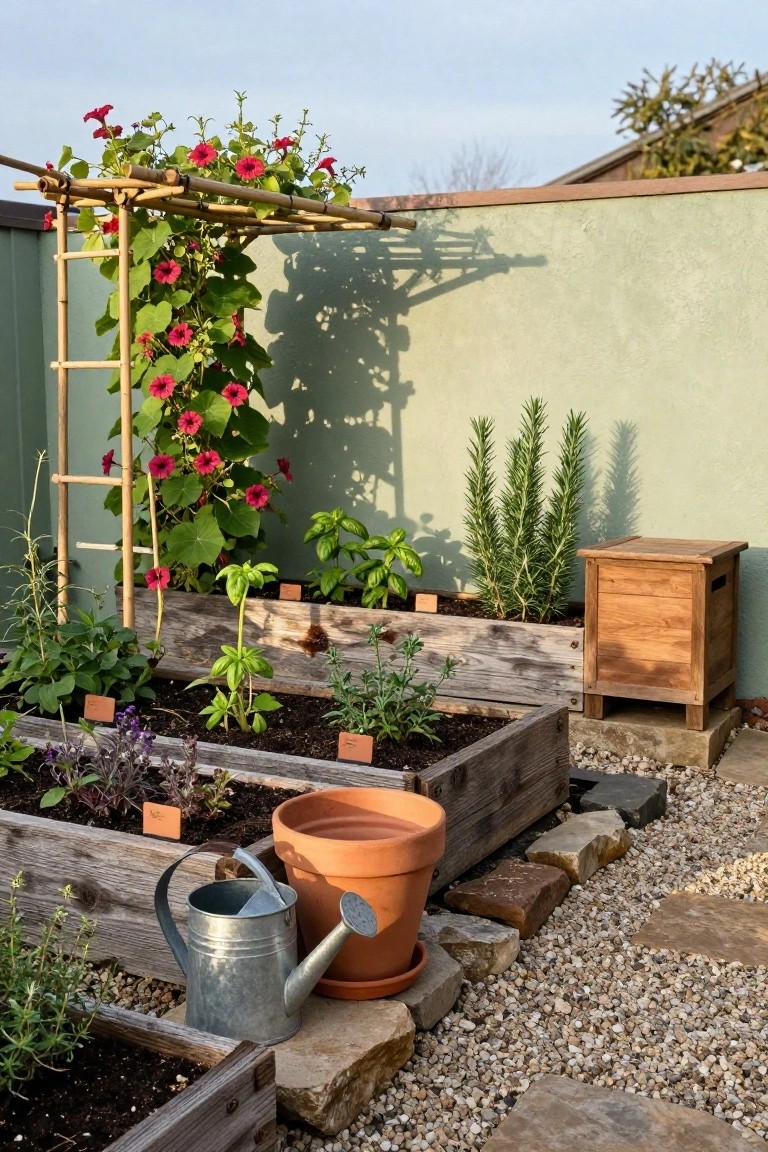
Raised wooden beds like these keep herbs organized and easy to reach. The rough, weathered look blends right into a backyard setup, and it lets you plant basics like basil, rosemary, and lavender in neat rows. Adding a simple trellis for climbers takes the garden up without crowding the ground.
Put them along a wall or fence in full sun for best growth. They’re perfect for smaller spaces since everything stays contained, and the wood ages nicely over time. Watch for rot in wet areas though, so line the beds if your spot gets a lot of rain.
Lavender Borders Along Stone Paths
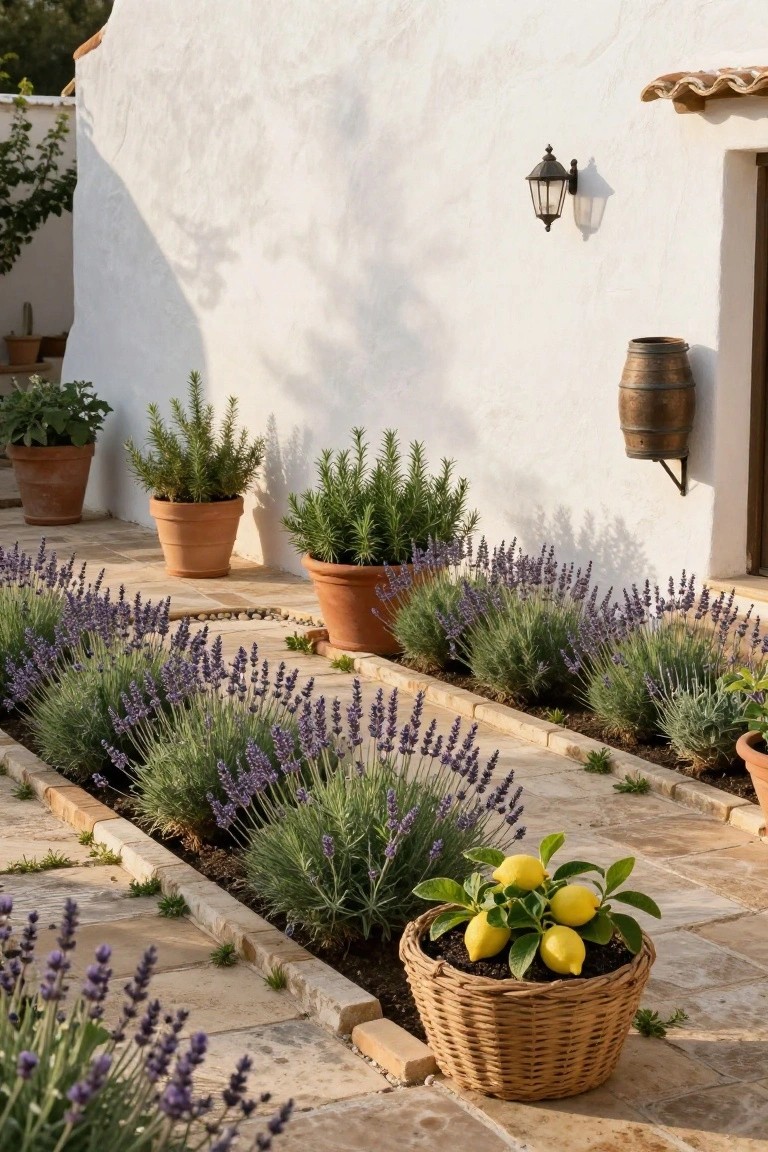
One straightforward way to set up an herb garden is to line a simple stone path with low lavender beds. It keeps things neat and adds that nice scent when you walk by. The raised edges make it easy to tend, and the plants fill in over time without much fuss.
This works great in narrow spots next to a house wall or in a sunny backyard corner. Plant the lavender close together for quick coverage, tuck in terracotta pots of rosemary or lemon nearby, and let the path lead to your door. Just make sure the soil drains well… lavender hates wet feet.
Rustic Raised Planters for Herbs
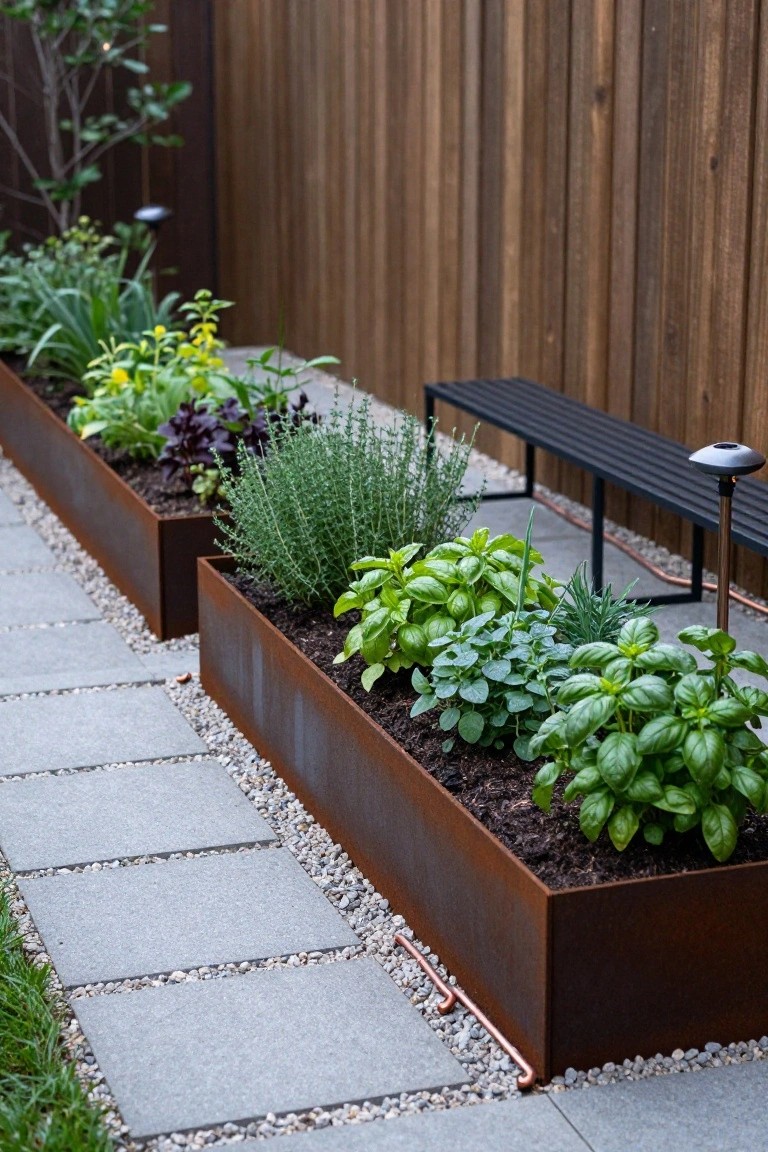
One simple way to set up an organic herb garden is with corten steel raised planters like these. They give herbs plenty of room to grow without bending over much, and the rusty metal look fits right into a backyard without feeling too fancy. You get fresh basil, thyme, and others at easy reach, plus they hold soil well and drain nicely.
Place them along a path or patio edge where you walk by often. They work best in small yards or modern setups with pavers and gravel. Just keep the metal off wood to avoid rust stains, and pick sunny spots for the best growth.
Circular Rock Herb Garden
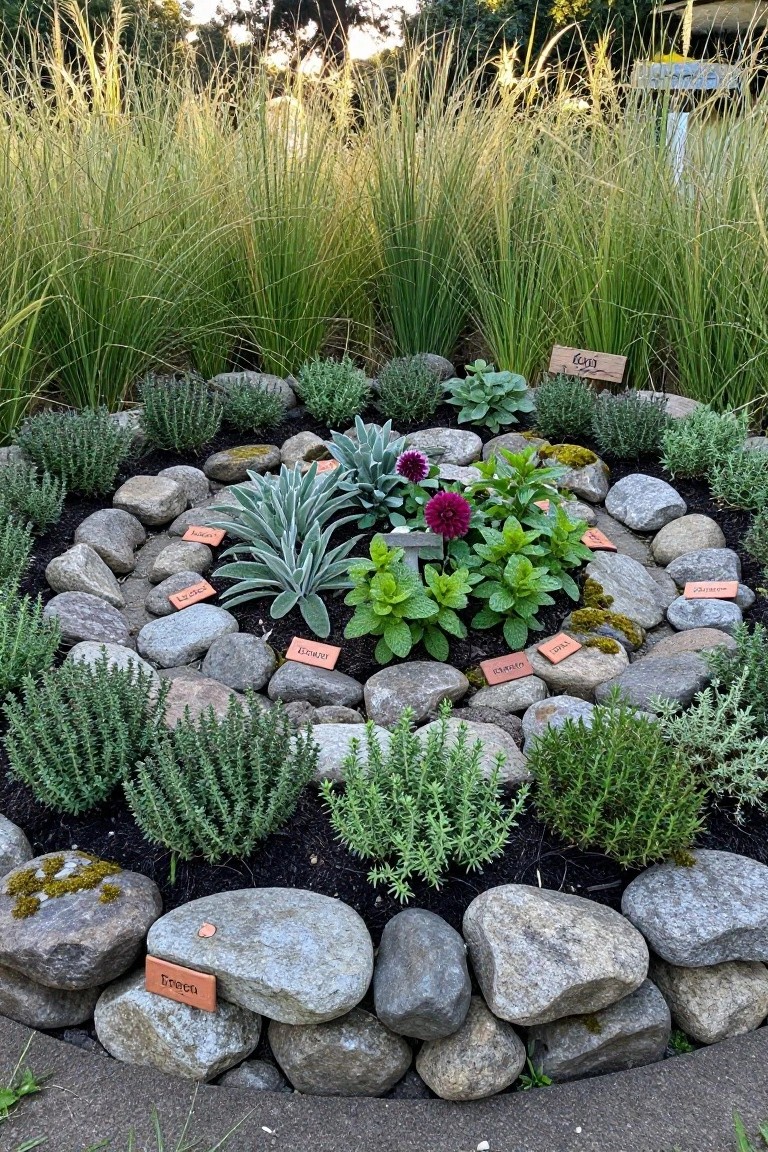
A circle of rocks makes a tidy spot for growing herbs right in the backyard. The stones edge everything in neat, and simple wood labels mark plants like thyme, lavender, and mint so you always know what’s what. It keeps things organized without much fuss, and the shape lets you reach every bit easily from the outside.
This works best in a sunny corner where you want fresh herbs close to the kitchen door. Use whatever rocks you have around, or grab some from a local spot to fit right in. Plant low growers inside to fill it out quick, but watch for mint spreading too far… it can take over if you let it.
Compact Herb Garden on a Backyard Bench
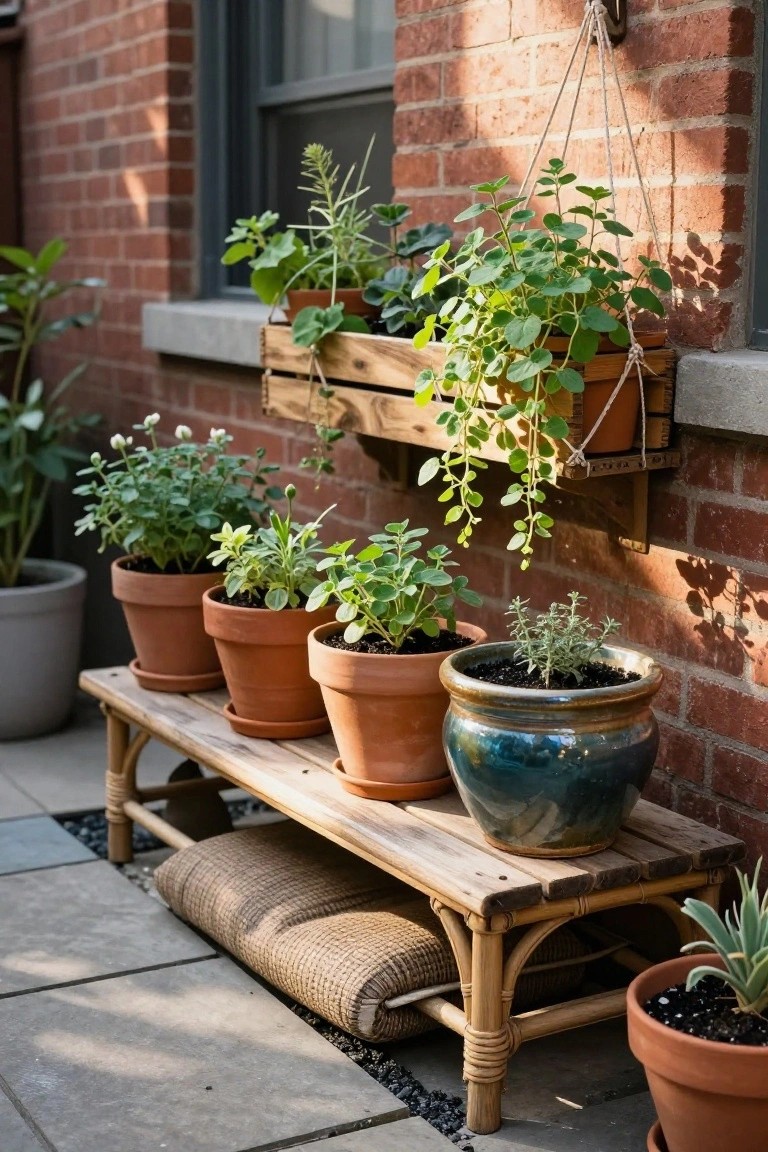
A simple wooden bench becomes the perfect spot for a bunch of potted herbs. You see terracotta pots lined up with different plants like basil and thyme, all within arm’s reach. It keeps things practical for everyday picking, and that hanging planter overhead squeezes in even more greens without crowding the ground.
This works best in tight backyard corners or against a wall near your kitchen door. Go for pots in a few sizes to fit the bench nicely, and pick herbs you use most. It’s low fuss… just water them right there and enjoy fresh flavors all season.
Simple Brick Raised Herb Beds
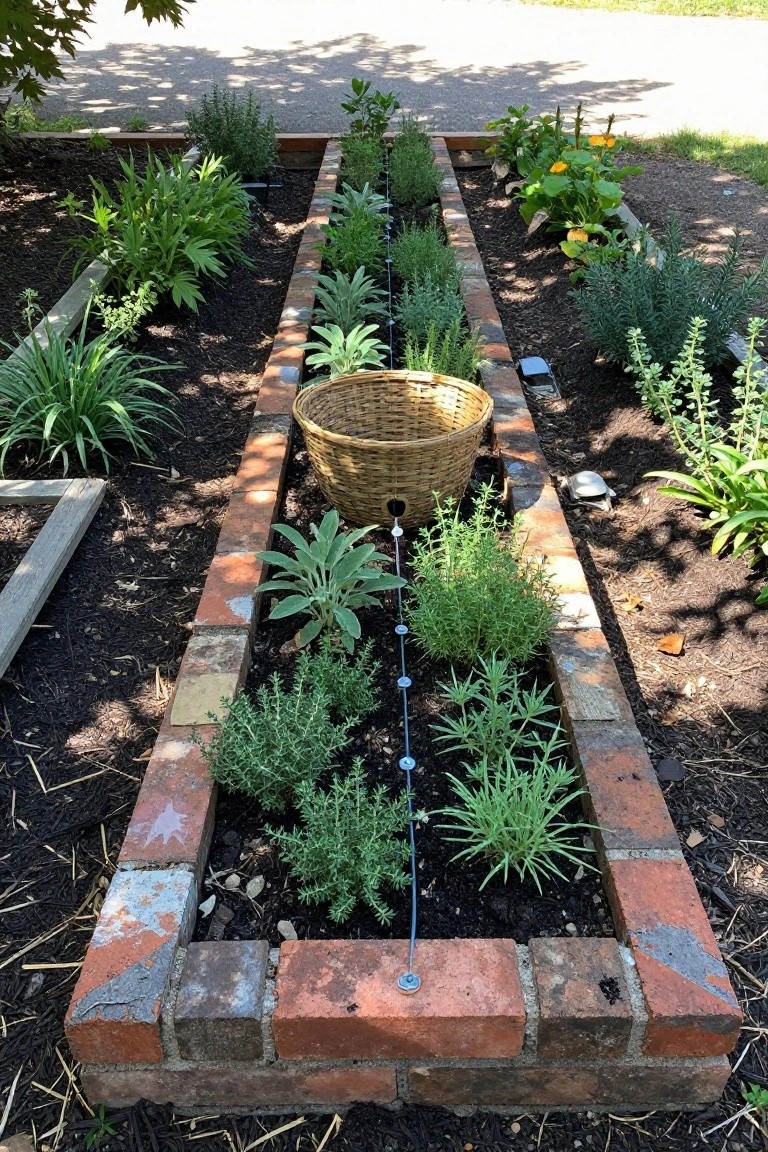
One straightforward way to grow your own herbs is with raised beds edged in bricks. This photo shows a long, narrow bed tucked along a walkway, packed with rosemary, thyme, lavender, and others. The bricks give it a sturdy, finished look without much fuss, and the raised height makes picking easy on the back. It’s perfect for organic growing since everything’s contained and close at hand.
You can set these up in any sunny spot near the house, maybe 12 to 18 inches high with salvaged bricks for that rustic feel. Fill with good soil, space plants for air flow, and add a basket like the one here for harvesting. Works best in smaller yards… keeps weeds out and herbs thriving.
Raised Stone Beds for Herbs
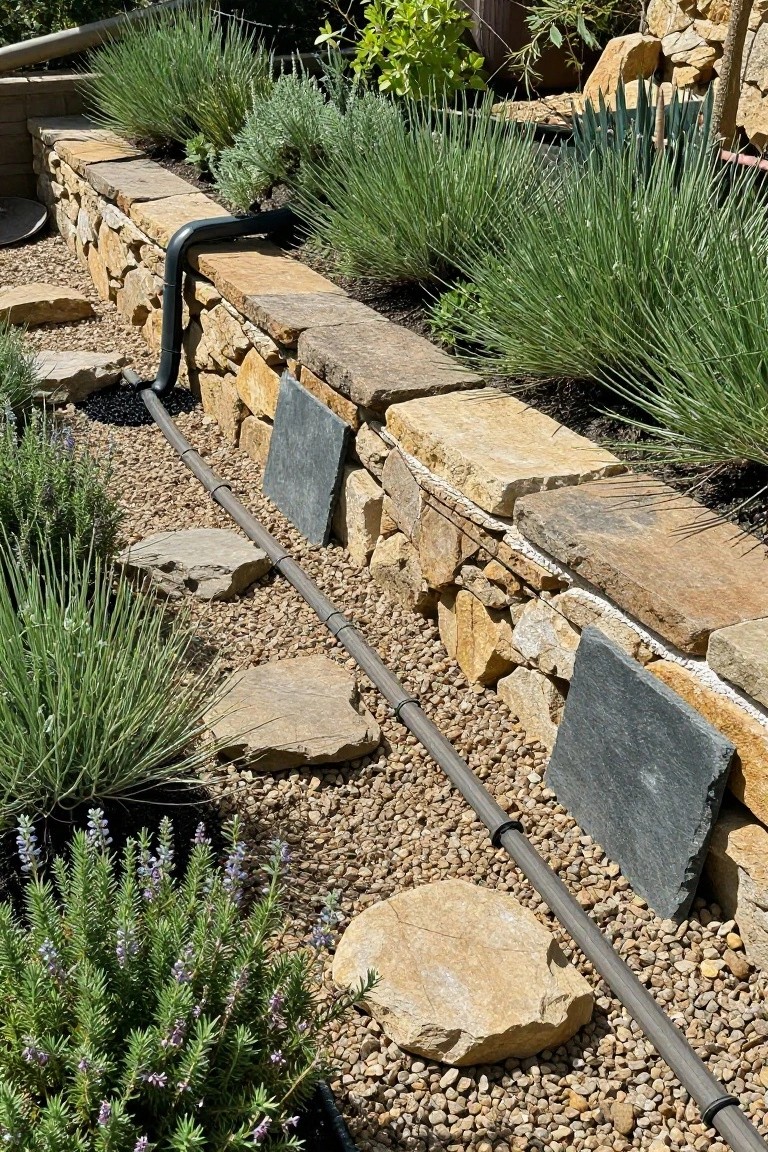
One straightforward way to grow herbs in a backyard is with raised beds made from stacked local stone. These walls hold back soil for plants like lavender and tough grasses, keeping everything neat along a gravel path. The natural stones fit right into the landscape without looking forced, and they let roots spread deep for healthier growth.
Set them up on a slope or flat ground where you want easy access. Tuck drip irrigation pipes along the base under the gravel so watering stays simple and targeted. This works best in sunny, well-drained spots… suits a casual backyard setup that needs low upkeep.
Raised Wooden Planters Against the House
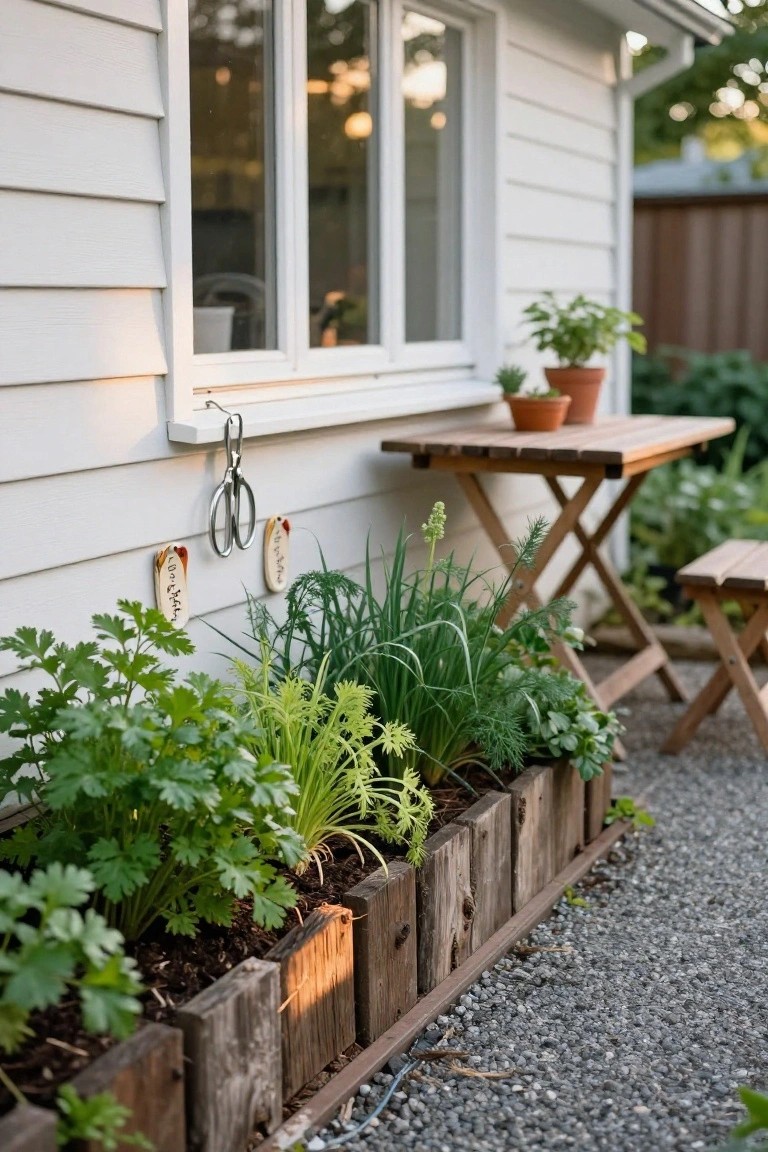
One straightforward way to start an herb garden is to line up raised wooden boxes right along your house wall. These planters make good use of skinny spaces that might otherwise sit empty. You get fresh parsley, chives, and dill close at hand, without taking up patio room. The weathered wood blends in nicely with the siding too.
Build them low, maybe a foot high, so you can reach in easily from standing. They work best in side yards or back foundations where sun hits part of the day. Go with untreated lumber to keep things organic. Just watch for rot over time… refresh the boxes every few years.
Raised Herb Planters Next to a Garden Bench
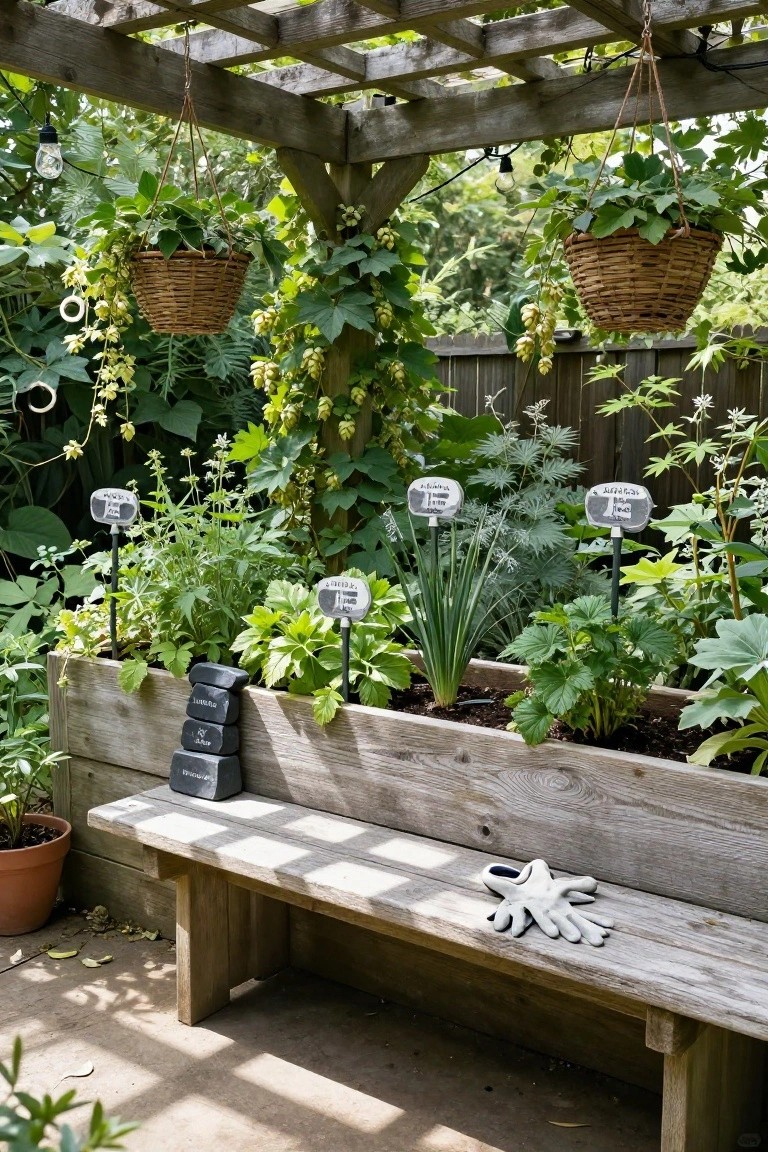
One straightforward way to make your backyard herb garden more useful is to tuck raised wooden planters right up against a simple bench. In this setup, the herbs are easy to reach without standing up. You see mint, basil, and others labeled on stakes in the bed, with a pair of gloves tossed on the seat. It keeps everything handy for snipping what you need while you sit and enjoy the spot.
This works best in a small patio or under a pergola like here, where the wood matches the aged bench and overhead vines. Use untreated lumber for the beds to stay organic. It suits cozy yards that get some sun but not all day. Just make sure the bench is sturdy, since you’ll be leaning over to harvest often.
Raised Beds for Coastal Herbs
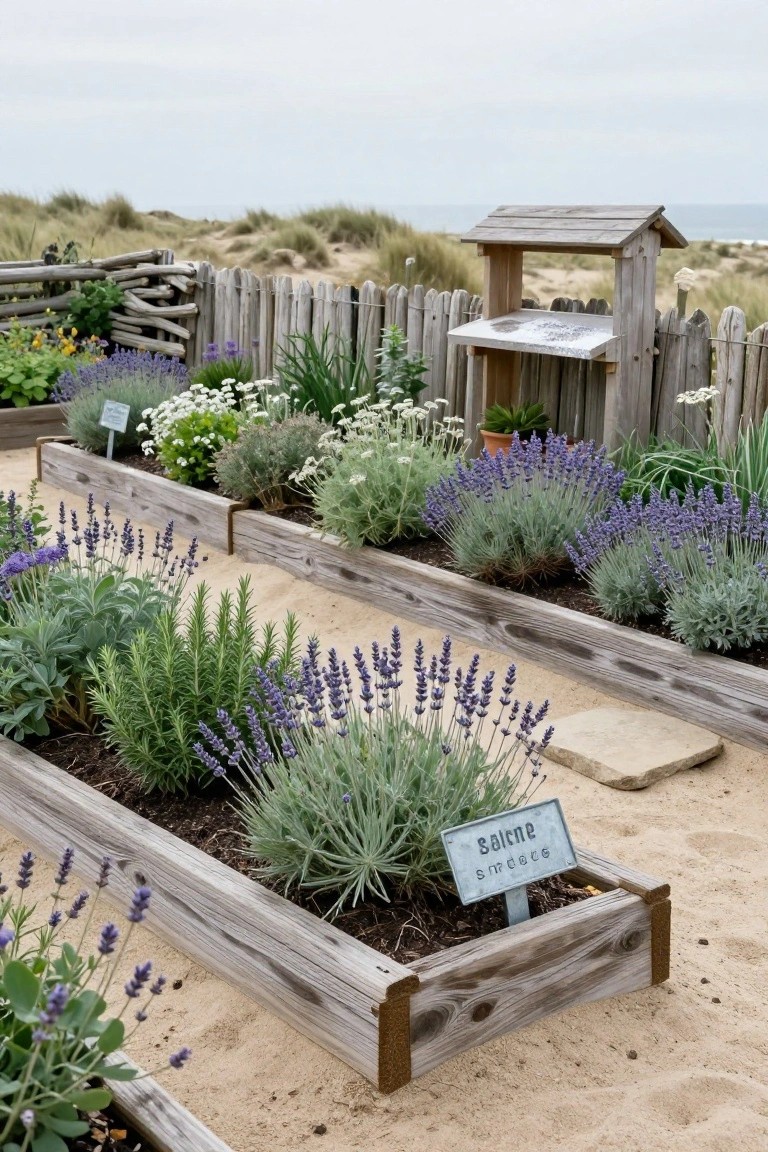
Raised wooden beds make a smart setup for growing herbs right along the coast where sandy soil can be tough on plants. You see lavender spilling over the edges here, along with rosemary and other tough growers that handle salt air and quick drainage. The beds keep everything contained and healthy, turning a tricky spot into something productive.
These work best in beachside yards or anywhere the ground is too loose or salty for regular planting. Use weathered wood for beds about knee-high, fill with a mix of compost and sand, and space them with simple paths. It’s low fuss once established, and herbs like these stay organic without much watering.
Balcony Herb Gardens in Large Planters
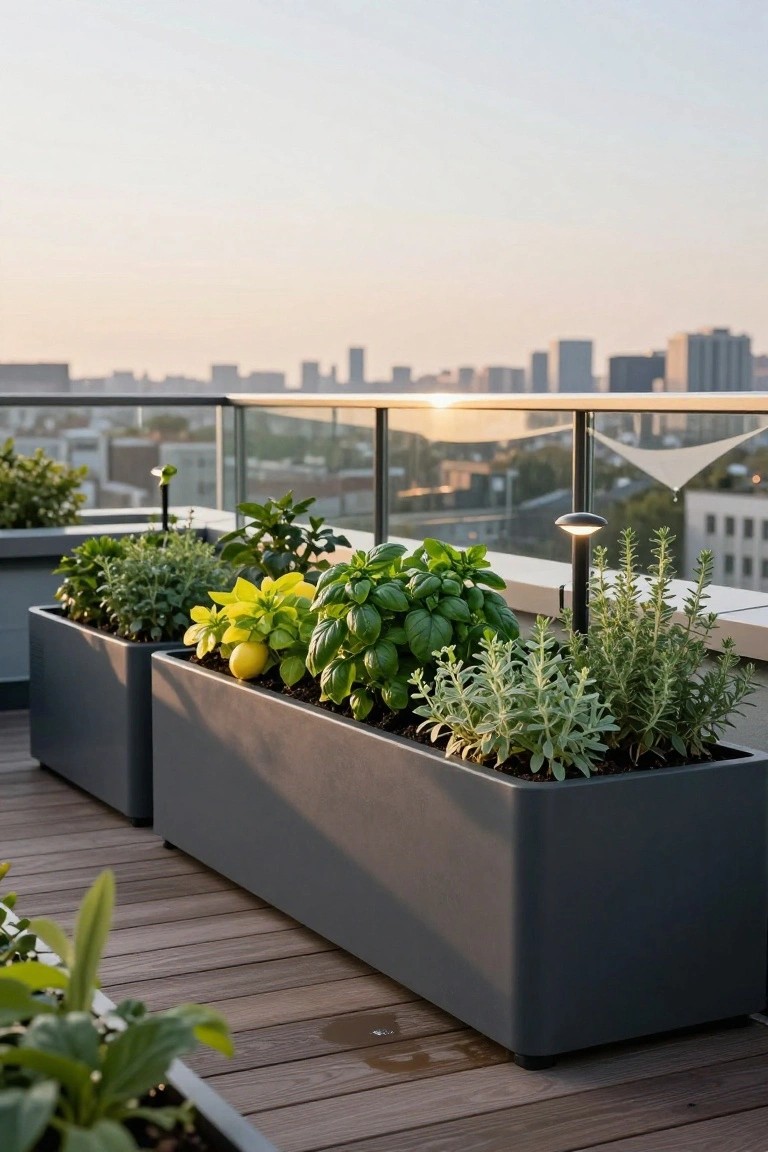
Big rectangular planters like these make it easy to grow a bunch of herbs right on your balcony. You get basil, rosemary, some lamb’s ear, and even a lemon tree all in one spot, without the plants spilling everywhere. The plain gray color fits modern city living and lets the fresh greens stand out against the railing and deck.
These work great for apartments or rooftops with steady sun. Pick planters at least 18 inches deep for healthy roots, mix in herbs that need similar care, and place them where you can snip leaves for cooking. Keep soil moist but not soggy, especially up high where wind dries things out fast.
Herb Garden Border with Stepping Stone Path
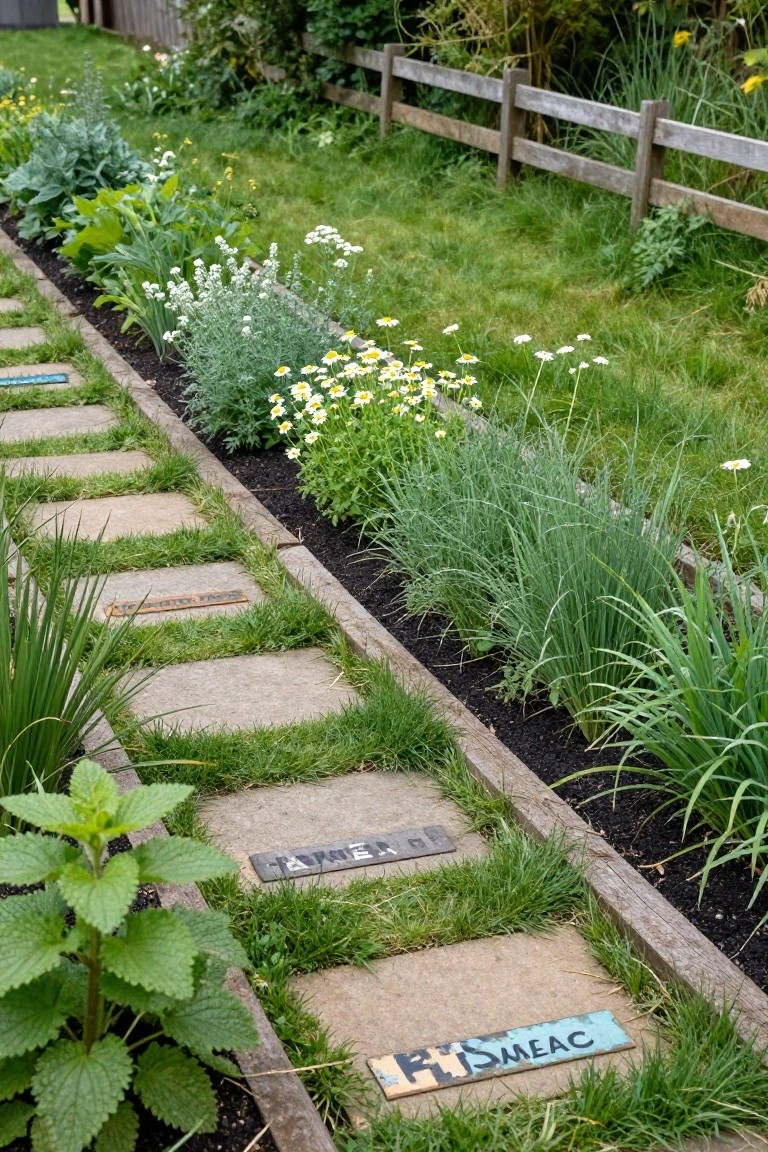
This setup uses narrow raised beds tucked along the yard’s edge, packed with easy herbs like mint and chives. A line of simple stone stepping stones runs parallel, just close enough to reach in and grab fresh sprigs without stepping into the soil. The labels on some stones and beds make it straightforward to spot what you planted where. It keeps things tidy and handy for daily picking.
Try this in slim spots next to a fence or walkway where bigger gardens won’t fit. Go with treated wood for the beds to hold up over seasons, and space the stones wide enough for comfortable steps. Works great in backyards focused on fresh cooking herbs… low fuss, high yield.
Built-In Herb Planters in Outdoor Kitchens
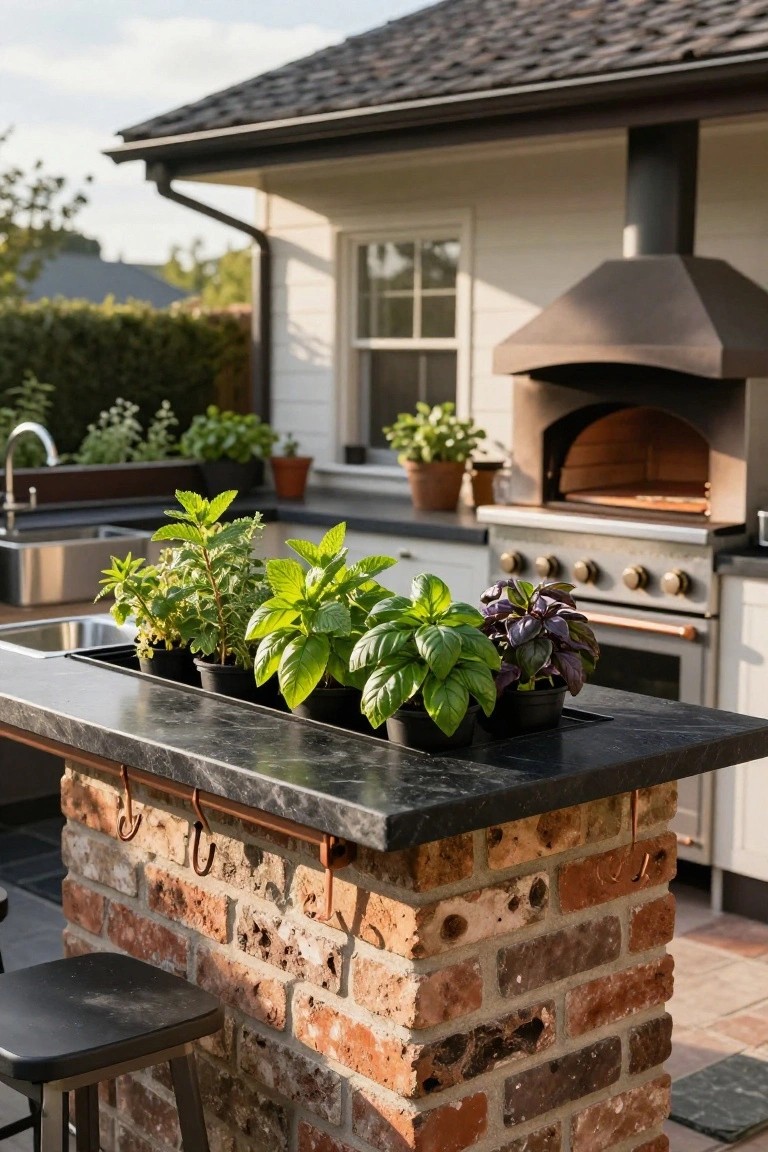
One smart way to keep fresh herbs close is to plant them right into your outdoor kitchen counter. Here, pots of basil, mint, and purple basil sit embedded in the black granite island, just steps from the grill and sink. It makes grabbing a handful for pizza or salad simple, and it brings that homegrown feel to everyday cooking outside.
This works great on covered patios or in backyard kitchen zones with decent sun. Build the planters with drainage holes to avoid root rot, and pick heat-tolerant herbs. It’s perfect for smaller yards where you want function without extra garden space.
Natural Stone Edging for Herb Beds
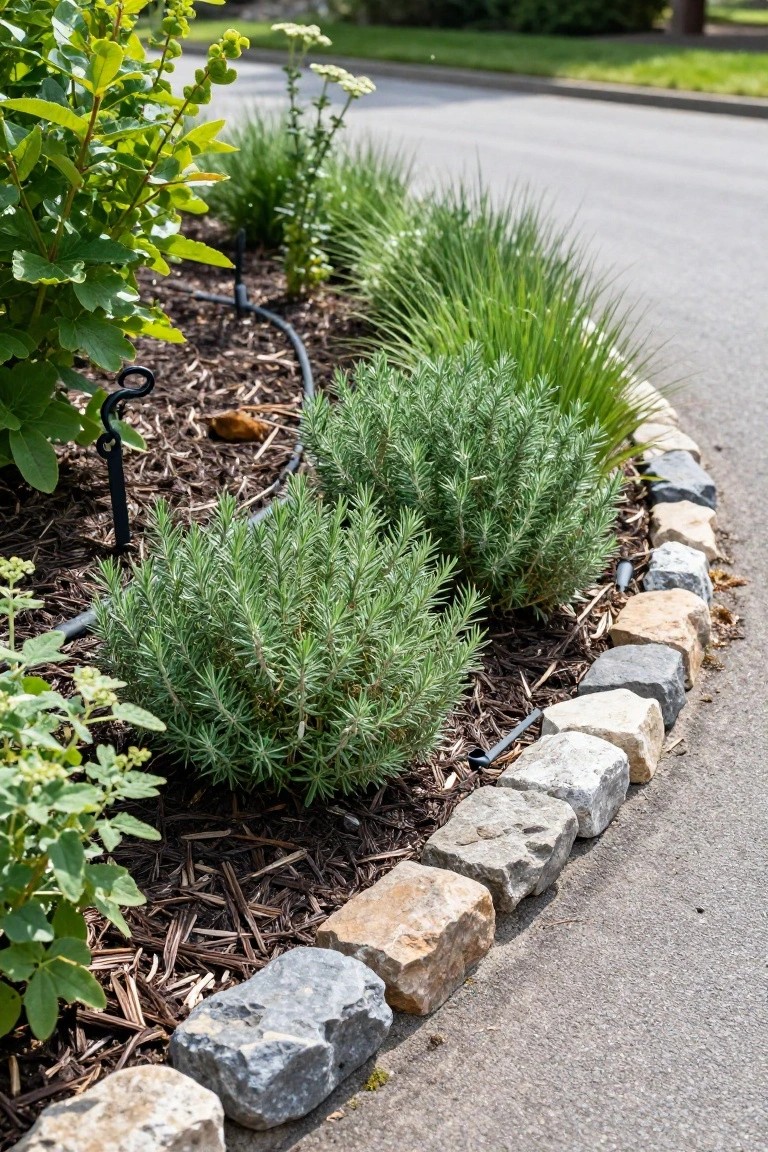
One straightforward way to keep an herb garden looking tidy is with natural stone edging. In this setup, rough gray and tan rocks form a low curved border around mulched beds filled with rosemary bushes and other plants. It gives the space a clean edge without feeling too formal, and the stones blend right in with the organic feel of the herbs.
This works great along driveways or walkways where you want low upkeep. Pick stones in mixed sizes from a local quarry, lay them along drip lines for watering, then fill beds with tough herbs like rosemary that handle sun and dry spells. Just make sure the edging sits level so mulch stays put.
Greenhouse Shelving for Herbs
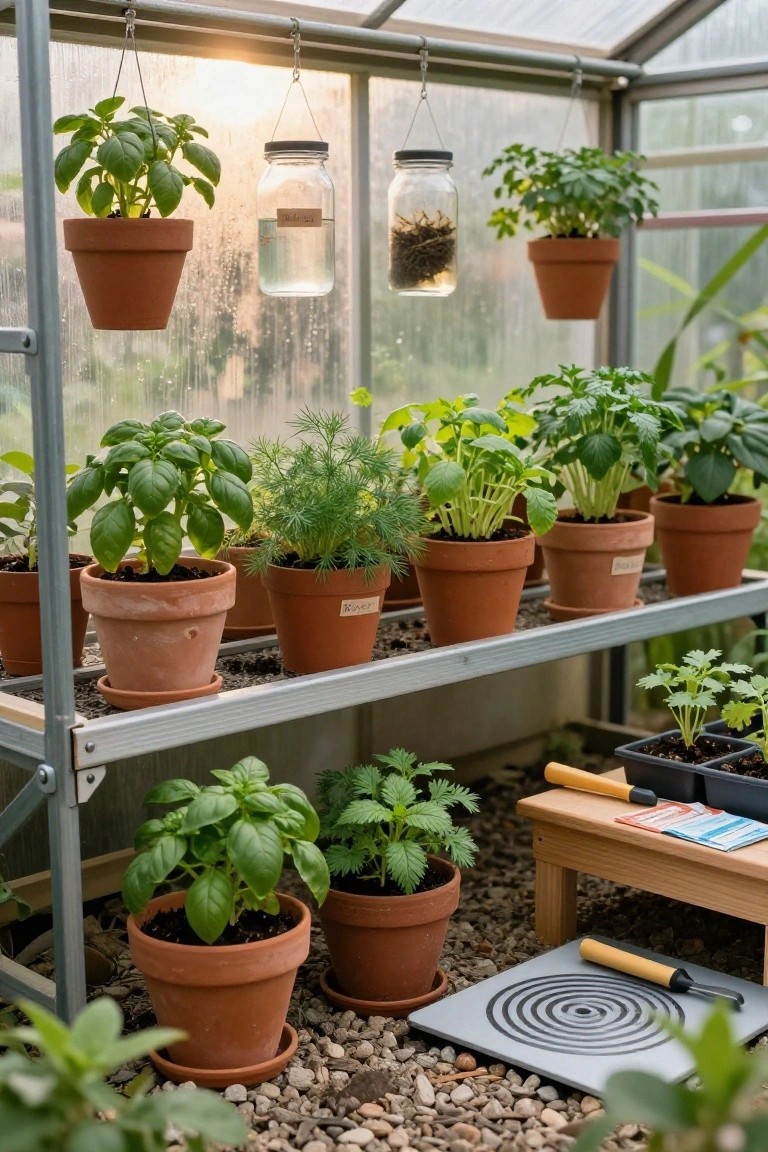
Tiered metal shelves work great in a greenhouse for growing all kinds of herbs. You can fit plenty of pots on different levels without crowding the floor. Things like basil, dill, and parsley get good light and air this way. It’s a simple setup that keeps everything organized and easy to reach.
Put these shelves along the walls to save space. Use unglazed terracotta pots since they breathe in the humid air. This idea fits small backyards best… no need for a big plot. Just watch for rust on cheap metal, so go sturdy.
Terraced Herb Gardens on Steps
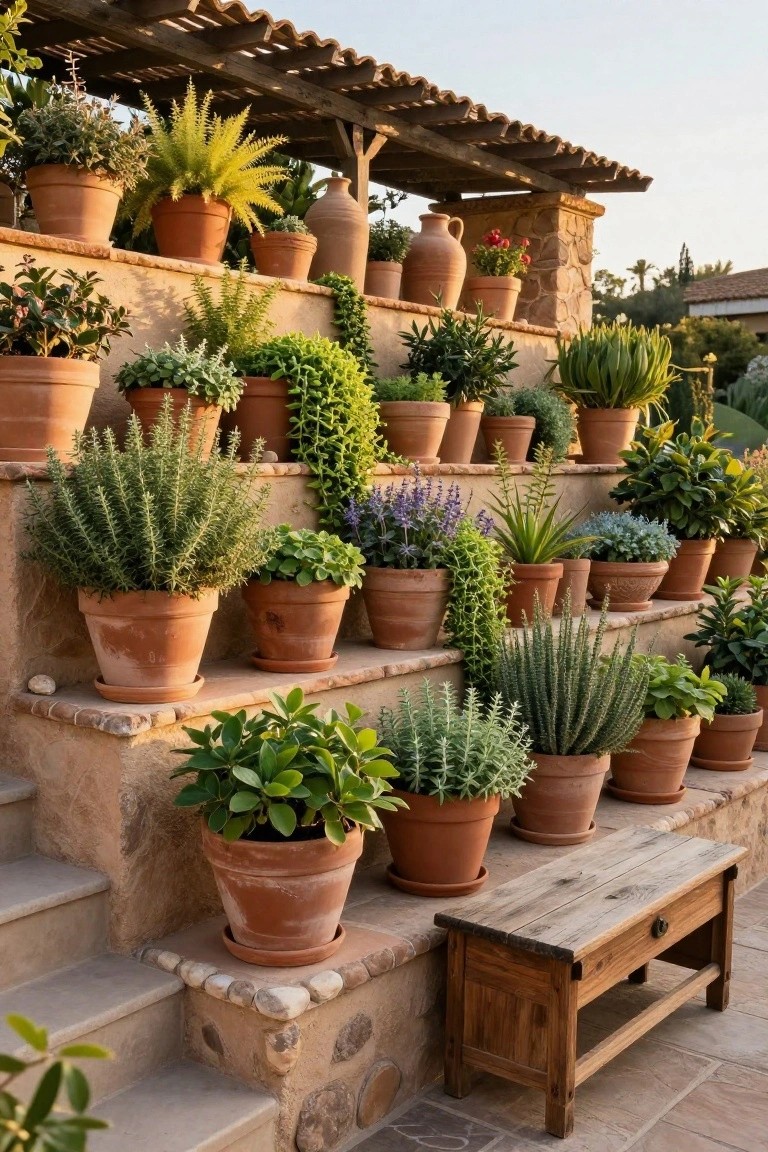
One smart way to fit more herbs into a tight spot is to turn your stone steps into a terraced garden. Here you see all sorts of plants tucked into terracotta pots, from rosemary bushes to lavender and succulents, stacked up the levels. It makes the most of every inch without taking up ground space, and everything stays right at picking height.
This works best in sunny, south-facing spots like a backyard staircase or path to the patio. Go for drought-tolerant herbs that match your climate, and stick to simple clay pots for that clean look. Just watch for overwatering on lower steps… drainage is key.
Galvanized Troughs for Porch Herbs
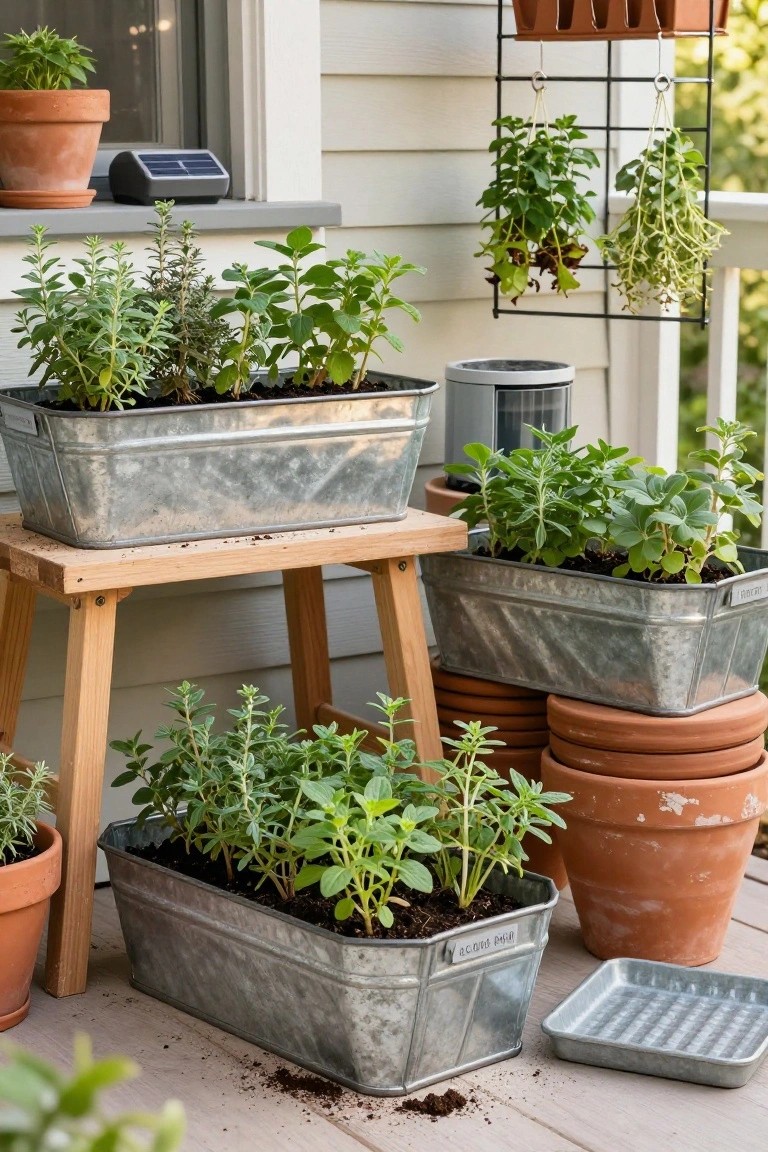
Old galvanized metal troughs work well for growing herbs right on your porch. They’re sturdy enough for soil and plants, and that weathered silver look fits outdoor spots without much upkeep. In this setup, a few troughs hold different herbs like oregano and basil, some labeled simply on the side.
Stack a couple on a low wooden stool or line them along the edge of your deck. They suit small backyards or apartments with balconies best. Just drill drainage holes if needed, and group sun-lovers together.
Gravel Paths for Easy Herb Garden Access
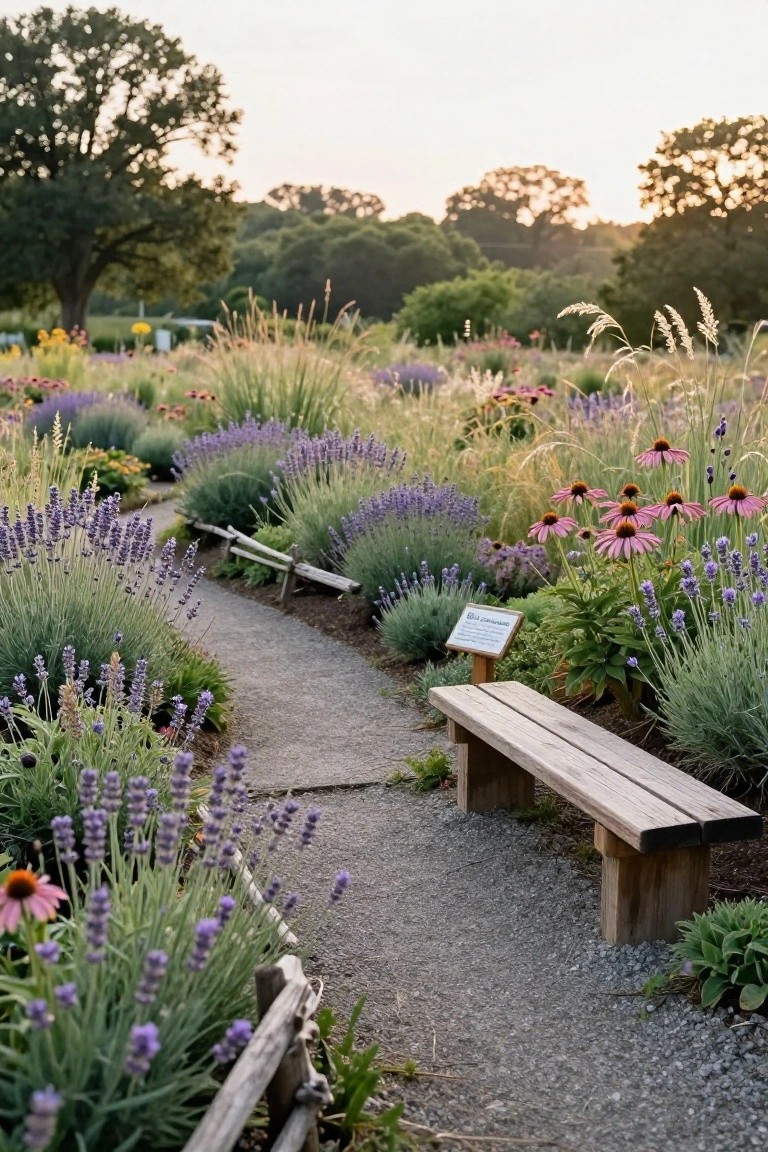
Gravel paths like this one make walking through your herb garden simple and natural. They wind gently between raised beds packed with lavender, which is a tough herb that draws pollinators and smells great up close. The loose gravel gives a soft crunch underfoot, and it lets water drain right through so your plants stay healthy without much fuss.
Put this in a sunny backyard spot where you want low upkeep. Edge the path with wood or stone to keep it neat, then fill beds with lavender, coneflowers, and grasses that come back year after year. Add a plain wooden bench halfway along for picking herbs or just sitting. It works best in bigger yards… smaller spots might need straighter lines.
Frequently Asked Questions
Q: Can I set up an organic herb garden in pots if my yard is tiny?
A: Grab some terracotta pots with good drainage and fill them with a mix of garden soil and homemade compost. Plant bushy herbs like parsley or oregano that don’t sprawl too much. They’ll thrive on your patio and give you fresh picks all season.
Q: How do I fight off pests without any chemicals?
A: Tuck in nasturtiums or garlic chives among your herbs. These buddies naturally deter aphids and beetles. Check leaves daily and squish any bugs you spot by hand.
Q: What’s the simplest way to keep soil healthy long-term?
A: Top-dress with worm castings every few months. You make them from a basic backyard worm bin fed kitchen scraps. And they pack way more punch than store stuff.
Q: Which herbs should a total newbie start with?
A: Go for rosemary, thyme, and chives first. They forgive watering mistakes and bounce back fast. Snip often to keep them happy.
