

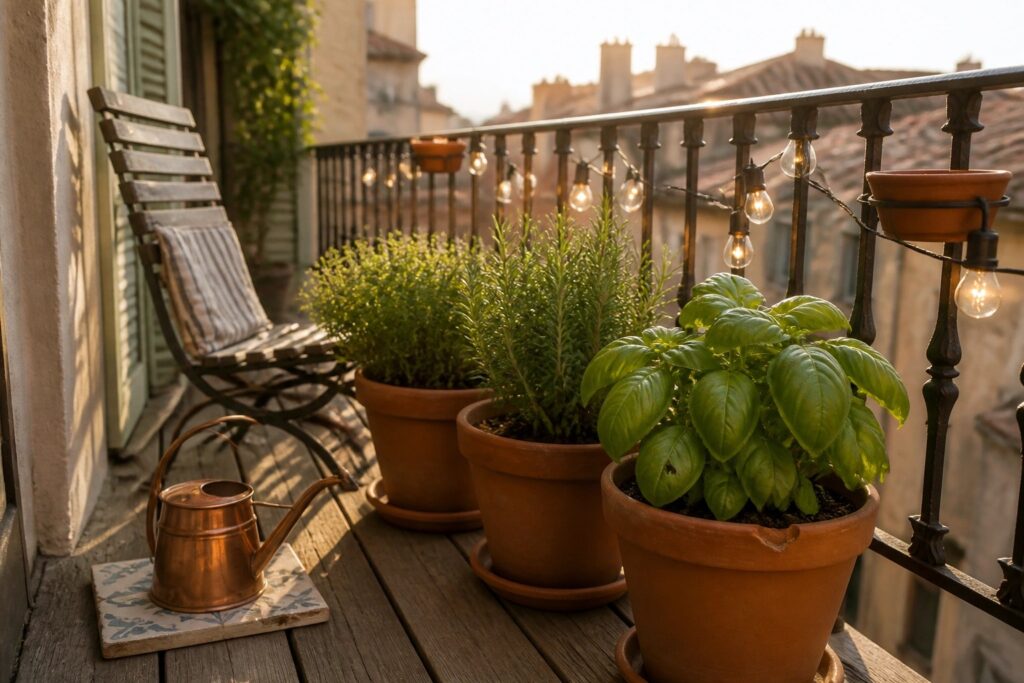
When I first tried growing herbs on my small balcony I noticed that the pots had to leave enough room to actually walk and sit without bumping into them every time.
Many setups look fine in photos but end up blocking the one sunny spot or making the floor feel cramped after a week or two.
I usually test a few simple arrangements first to see which ones hold up once I am using the space daily.
Over time the ones that work best tend to be those placed at different heights so the plants get light while the area stays open.
Adapting these ideas to my own layout has helped me figure out what actually gets watered and picked instead of just sitting there.
Herb Pots Mounted On The Railing

A simple way to grow herbs in a small space is to use the railing itself. Pots that hang or sit along the top edge keep plants off the floor and make watering and harvesting easier without taking up walking room.
This works well on balconies or narrow decks where floor space is limited. Terracotta pots hold up fine outside and the railing gives good sun exposure for most herbs. Just check that the brackets or holders are secure before adding soil and plants.
Line Herb Pots Along a Bench

A bench makes a handy spot for herb pots when space is tight. It keeps the plants off the floor, brings them up to a comfortable height for watering and picking, and turns a plain seat into a small working garden at the same time.
This setup works well on balconies, rooftops, or narrow patios where floor room is limited. Choose a sturdy bench that can handle a bit of moisture, group the pots together so they stay stable, and make sure the spot still gets enough sun for the herbs you want to grow.
Railing Planters Keep Herbs Within Reach

Mounting planter boxes right on the porch railing turns a narrow space into a working herb garden. The boxes sit at a comfortable height so you can water and harvest without bending or stepping off the deck. This setup works especially well when floor space is tight or already taken up by seating.
It suits older homes with wide railings and simple wood construction. Just make sure the boxes are secured so they do not tip, and choose herbs that stay compact like thyme or parsley. The railing also gives the plants good airflow and morning sun in most setups.
Use A Ladder To Stack Herb Pots

A ladder turned into a plant stand gives you several levels for pots without taking up much floor space. This setup works especially well in small outdoor areas where ground room is limited but you still want a good number of herbs growing at once.
Lean it against a wall in a sunny spot and use matching pots on each rung so the whole thing stays neat. It suits patios, side yards, or any tight corner where a regular bed would not fit.
Wall Mounted Pots Keep Herbs Handy

Mounting herb pots directly on a wall turns even a narrow strip of space into a working garden. The setup shown here uses simple metal buckets and a shelf to hold basil, cilantro, and parsley without crowding the ground or stairs.
This approach suits small patios, side yards, or entries where floor room is tight. Pick sturdy brackets, make sure the pots drain, and keep the labels visible so you can grab what you need while cooking.
Hang A Fabric Organizer On The Wall For Herbs

One simple way to fit more herbs into a small balcony is to hang a fabric wall organizer. It turns empty vertical space into growing room without crowding the floor or railings.
This setup works best on a solid wall that gets decent sun. Water the pockets a little more often than regular pots since the fabric dries out faster, and check that the organizer is hung securely so it stays level.
A Rolling Cart Keeps Fresh Herbs Close at Hand

Many people like a rolling cart for herb pots because it gives them flexibility in small spaces. You can shift the whole setup to catch more sun or roll it right up to the door when you need something for cooking.
This idea suits patios, side entries, or tiny yards where fixed beds are not possible. Look for a sturdy cart with decent wheels and room for a few pots on each level.
Tiered Shelves For Small Space Herb Growing

Tiered shelves give you room for many more pots without spreading out across the ground. The stacked levels hold trays and containers at different heights, which works especially well when floor space is limited.
This approach suits decks, side yards, or any spot right against the house. Keep the unit sturdy, face it toward the sun, and check that water can drain properly from the upper shelves.
Metal Troughs Along the Edge

Long metal troughs work well for herbs because they hold several plants side by side without taking up much floor space. They sit low and stable on a hard surface, which makes them easy to reach for watering and picking.
This setup suits a balcony, rooftop, or small patio that gets decent sun. Choose troughs with drainage holes, fill them with a light potting mix, and group herbs that need similar water and light so everything stays healthy.
Use a Balcony Trough for Herb Pots
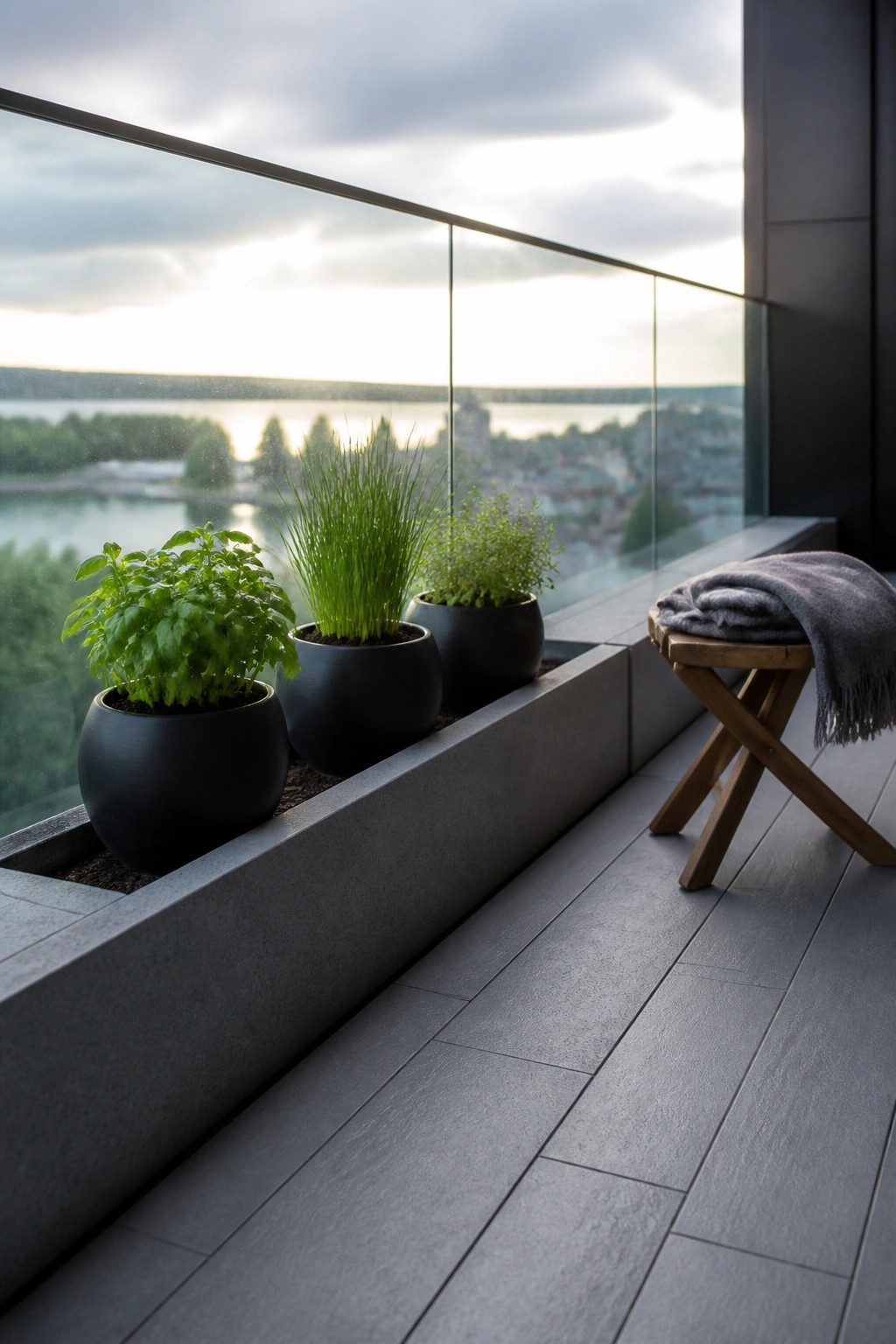
A long trough along the edge of a balcony gives several pots a stable spot without taking up floor space. It works especially well when the pots are all a similar size and color, so the whole row looks tidy and the plants get the same amount of sun.
This setup suits apartments or small homes where the balcony is the only outdoor area. Just check that the trough has drainage holes and that the railing or edge can hold the weight once the pots are filled with soil.
Hanging Herb Jars From A Rod

Hanging jars from a simple rod gives you a way to grow several herbs without taking up floor space. It works especially well on porches or balconies where room is limited and you still want the plants close at hand for cooking.
Use old glass jars or small pots, tie them with sturdy twine or rope, and hang them at different heights so each plant gets light. This setup suits wooden railings or any narrow outdoor wall and keeps the herbs easy to water and harvest.
Herb Pots Right On The Patio Table

Keeping a few herb pots on an outdoor table makes them easy to reach for cooking or quick care. The setup turns the table into a working garden spot without needing extra shelves or ground space.
This approach suits small patios or balconies where floor room is tight. Use a mix of pot sizes so everything fits without crowding the seating area, and check that the table can handle the weight once the pots are watered.
Stacked Crates Turn Steps Into a Handy Herb Garden

Many people like stacking wooden crates on their porch steps to grow herbs in a small space. It keeps the plants off the ground, makes watering simple, and lets you pick what you need without bending down.
This setup works best on steps that get a few hours of sun each day. Choose crates with some gaps for drainage and add a label to each one so you can find the herbs quickly when cooking.
Cluster Pots Of Different Sizes For Easy Herb Growing

Many people start with herbs by placing a few pots together in one sunny spot. This approach keeps everything handy for watering and picking, and it works especially well when space is tight.
Choose a mix of sizes so taller plants do not block smaller ones. Terracotta holds up outdoors for years, while a glazed pot here and there adds a bit of contrast without extra effort.
Mount a Wall Grid for Extra Pots

A simple metal grid on the wall turns a narrow balcony into a productive spot without taking up floor space. It lets you hang pots at different heights so the plants get good light and stay easy to reach for watering or picking.
This setup works best on small balconies or patios where ground room is limited. Use sturdy hooks and check the wall can hold the weight once the pots are full. A low shelf at the bottom can hold a few more pots or tools if you need them.
Spiral Planting in a Large Pot

A big pot with herbs arranged in a spiral gives you several varieties in one spot without needing much room. The layout keeps plants separated by height and spread, so they grow evenly and stay easy to reach for harvesting.
This works well on a patio or small courtyard where ground space is limited. Choose a wide container at least 18 inches across, and start with sturdy herbs like rosemary or thyme on the outer ring before moving inward to smaller ones. Just watch the watering since crowded roots can dry out faster in warm months.
Grow Herbs In Stacked Crates On Stairs

Old crates make a simple way to fit more herbs into a small outdoor area. They stack easily and turn unused steps into growing space without needing extra shelves or big planters. The open sides also let air move around the plants, which helps keep them healthy.
This works best on stairs that get some sun and stay out of heavy foot traffic. Just line the crates with a bit of plastic or landscape fabric before adding soil, and water carefully since crates can dry out fast in warm weather.
Cluster Herb Pots on a Table

Keeping several herb pots on one table makes daily care much simpler. You can water everything at once and reach what you need without walking around a larger area. This approach also keeps the plants in one spot so they get consistent light.
A small table works best on a patio or beside a path where space is tight. Use pots of similar size and group herbs that like the same amount of sun. Move the table as needed when the season changes.
Group Herbs Together In A Long Planter

A long trough gives you a simple way to keep several herb pots in one spot without taking up much floor space. On a balcony this setup keeps the plants organized and makes watering easier since everything sits in the same container.
This works best on small decks or balconies where you want more than a couple of pots but still need room to move around. Just set the trough against the railing or a wall and slide in the pots you use most.
Repurpose A Wheelbarrow For Portable Herbs

An old wheelbarrow makes a handy planter when you need to move herbs around. It rolls easily so you can shift it into better sun or pull it out of the way during gatherings.
This idea suits small yards or patios where fixed beds are not an option. Add drainage holes in the bottom and use a light potting mix so the wheelbarrow stays easy to push.
Use a Small Table for Potted Herbs on the Balcony

A small table gives you an easy spot to grow a few herbs without taking over the whole balcony. It keeps the pots together so you can water them at once and reach what you need while cooking.
A folding wooden table works well in tight spaces and can be moved around as the light changes. Just make sure it can handle the weight of the pots and that you leave enough room to walk past it.
Frequently Asked Questions
Q: Do I need to buy special potting mix or can I use garden soil?
A: You can start with regular potting mix from any store. It drains better than garden soil and keeps roots healthy. Mix in some compost if you have it handy.
Q: My balcony only gets afternoon sun. Will that work for most herbs?
A: Basil and oregano still grow fine with four or five hours of direct light. Move the pots to catch the strongest rays you have. Water a bit less often since the heat hits later in the day.
Q: How do I know when it’s time to harvest my herbs?
A: Pick leaves when the plant looks full and bushy. Start with the outer ones so the center keeps growing. This way you get fresh herbs for weeks.
Q: But mint spreads fast so keep it in its own pot.
A: It will crowd out everything else otherwise. Just give it plenty of water and watch it take off.
