


Covered corners on a patio or deck often stay bare because most plants need more sun than those spots receive.
When I placed a few containers in similar areas last summer the whole space started to feel like an extension of the house rather than an afterthought.
Grouping pots at different heights helped the arrangement look settled instead of scattered across the floor.
I have found that shade tolerant plants with some height make the corner feel more private without blocking airflow.
One change at a time works best.
Cluster Shade Plants in Mixed Containers

Many people find that grouping several different pots together makes a shaded porch corner feel much fuller. The mix of broad leaves and finer foliage adds interest without needing direct sun.
This setup suits any covered deck or entry that stays cool most of the day. Place the larger pots toward the back and let smaller ones spill forward so each plant gets light and stays simple to tend.
Containers for Shaded Porch Corners
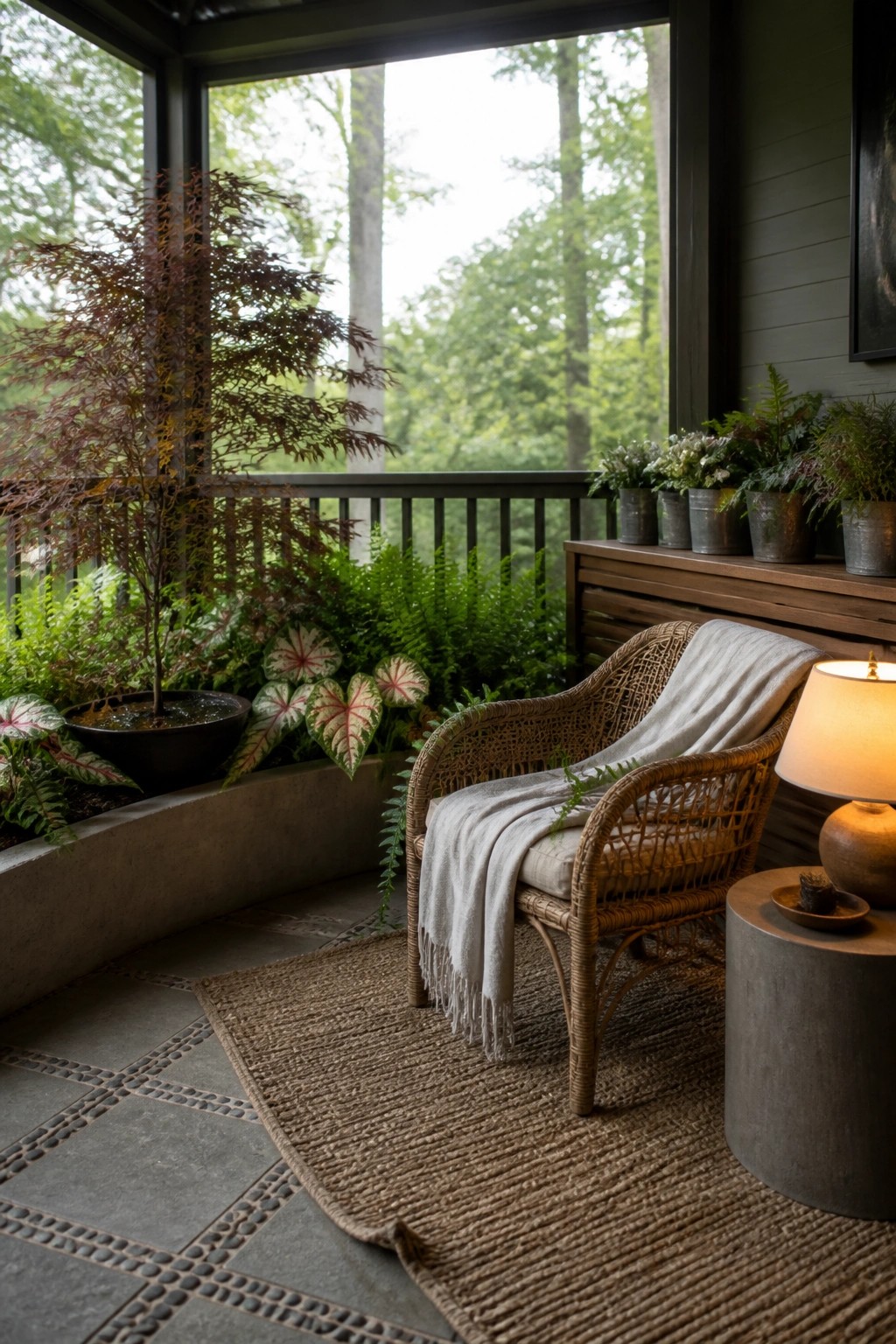
Many people turn to containers when they want greenery on a covered porch. The shade keeps plants cool and the pots let you move things around without digging. It is a simple way to add life to a space that might otherwise feel bare.
This setup works best on porches with solid floors and some protection from heavy rain. Group taller pots with ferns and lower ones with lighter leaves near a chair or bench. Check drainage holes and water less often than you would in full sun.
Group Containers on a Simple Stand

Placing several pots together on one stand makes it easy to fill a shaded corner without crowding the floor. It keeps the plants at a good height for viewing and lets you swap them out when the seasons change.
This setup works best on balconies or covered patios where floor space is tight. A narrow metal stand against a wall or railing keeps everything stable while still letting air move around the plants.
Metal Buckets For Shaded Porch Corners

Metal buckets work well for shade container gardening because they are simple to move and hold up fine in damp covered spots. A few of them lined up near a bench can turn an empty porch corner into a soft green area without needing built-in beds or heavy digging.
This setup suits older homes with wide porches or any covered outdoor space that stays cool most of the day. Keep the plants at different heights so the corner feels full but not crowded, and pick leafy shade lovers that do not need direct sun.
Large Containers Fill Shaded Corners Well
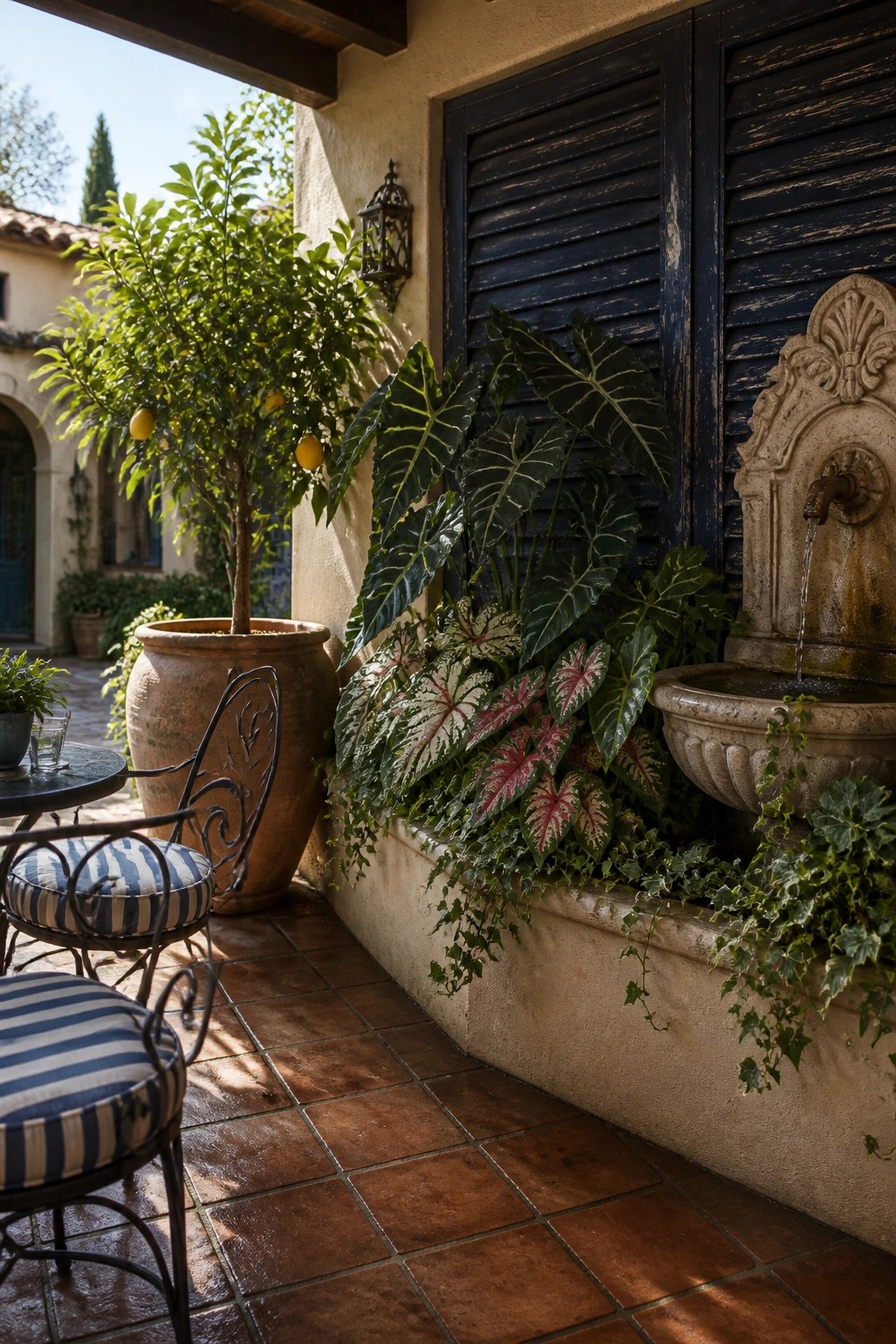
Large containers make it easy to add real greenery to a covered corner where the ground may not be planted. They hold bigger plants that stay healthy even with limited sun, and they can be moved around as needed.
This setup suits patios and porches that get only partial light. Group a few oversized pots together with a mix of bold leaves and trailing plants so the corner feels softer without crowding the space.
Hanging Baskets And Floor Pots For Shaded Corners
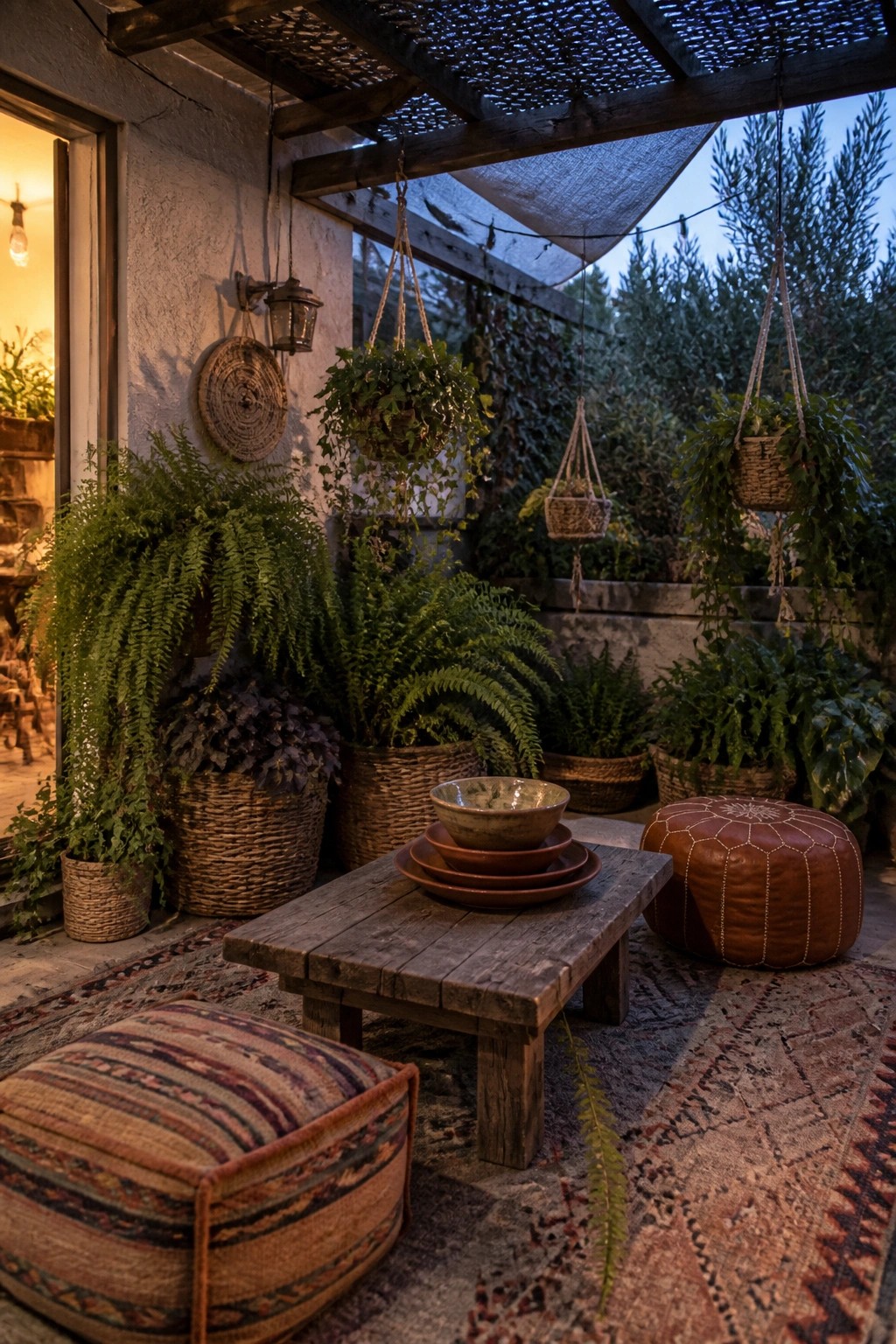
Hanging baskets paired with large woven pots on the floor let you pack a lot of greenery into a covered corner without needing open soil. The mix keeps plants off the ground where they might get too much foot traffic or poor drainage, and it uses the vertical space that shade structures often provide.
This setup suits patios or porches that stay cool most of the day. Hang lighter baskets from the beams and set heavier pots below so the plants can trail and fill gaps. Just watch that the hanging weight stays within what your structure can hold.
Cluster Containers Along A Covered Bench

Large concrete pots work well in covered corners because they bring height and texture without needing much floor space. The mix of tall grasses, low ferns, and darker foliage creates layers that stay interesting even when light is limited.
This setup suits homes with porches or patios that get little direct sun. Keep the pots close together so they read as one planting area, and choose plants that handle shade and occasional dampness from rain.
Cluster Large Pots in Shaded Corners
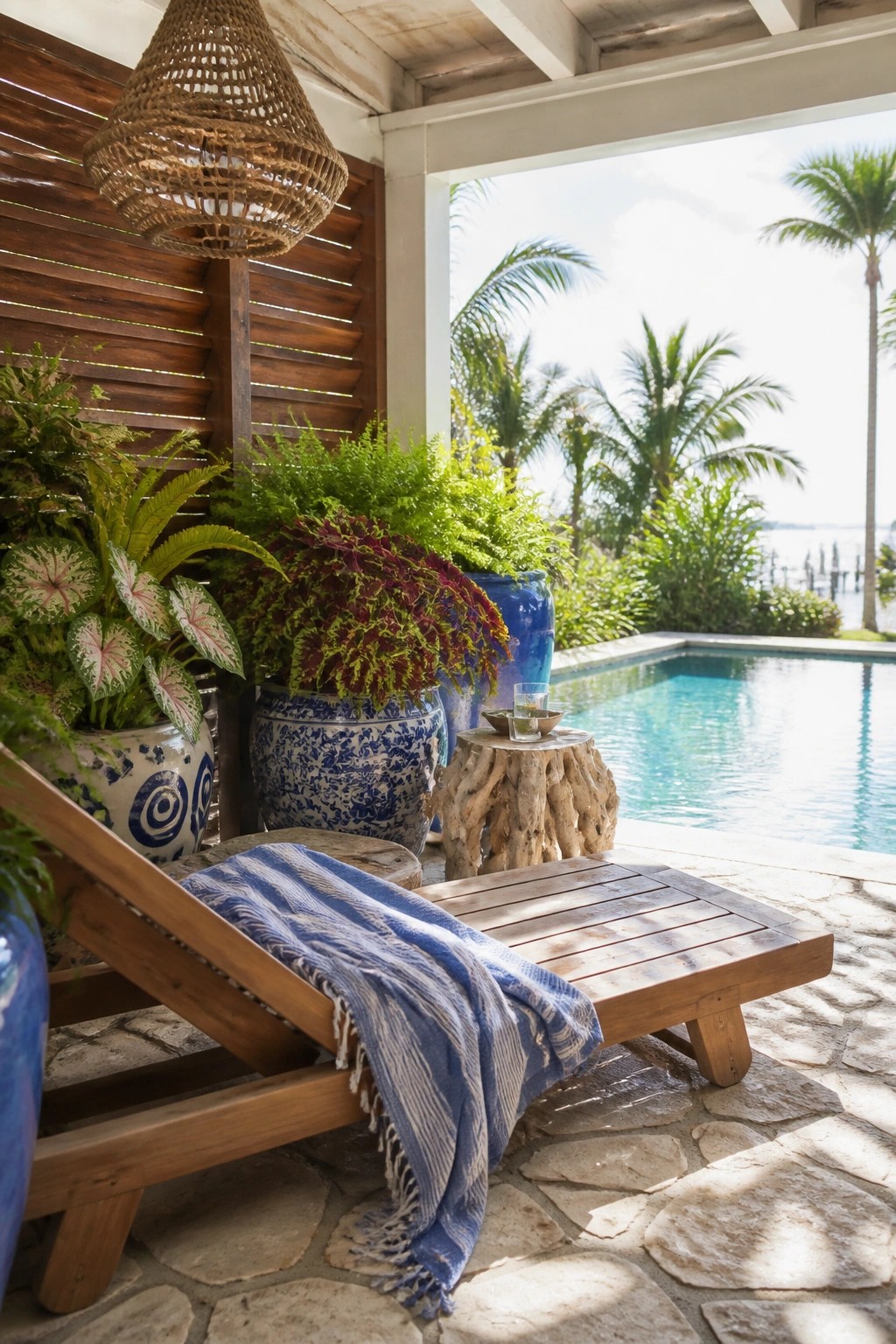
Grouping several big containers together works well in covered outdoor spots because it creates a full, green feel without needing much floor space. The mix of ferns and colorful leaves in those tall ceramic pots brings texture and some natural cooling right where you sit or lounge.
This setup suits poolside patios or porches that get partial shade. Stick to plants that handle lower light, and vary the heights and leaf shapes so the group feels balanced rather than flat. Watch the weight if your surface is older stone or wood.
Cluster Large Pots in Shaded Corners
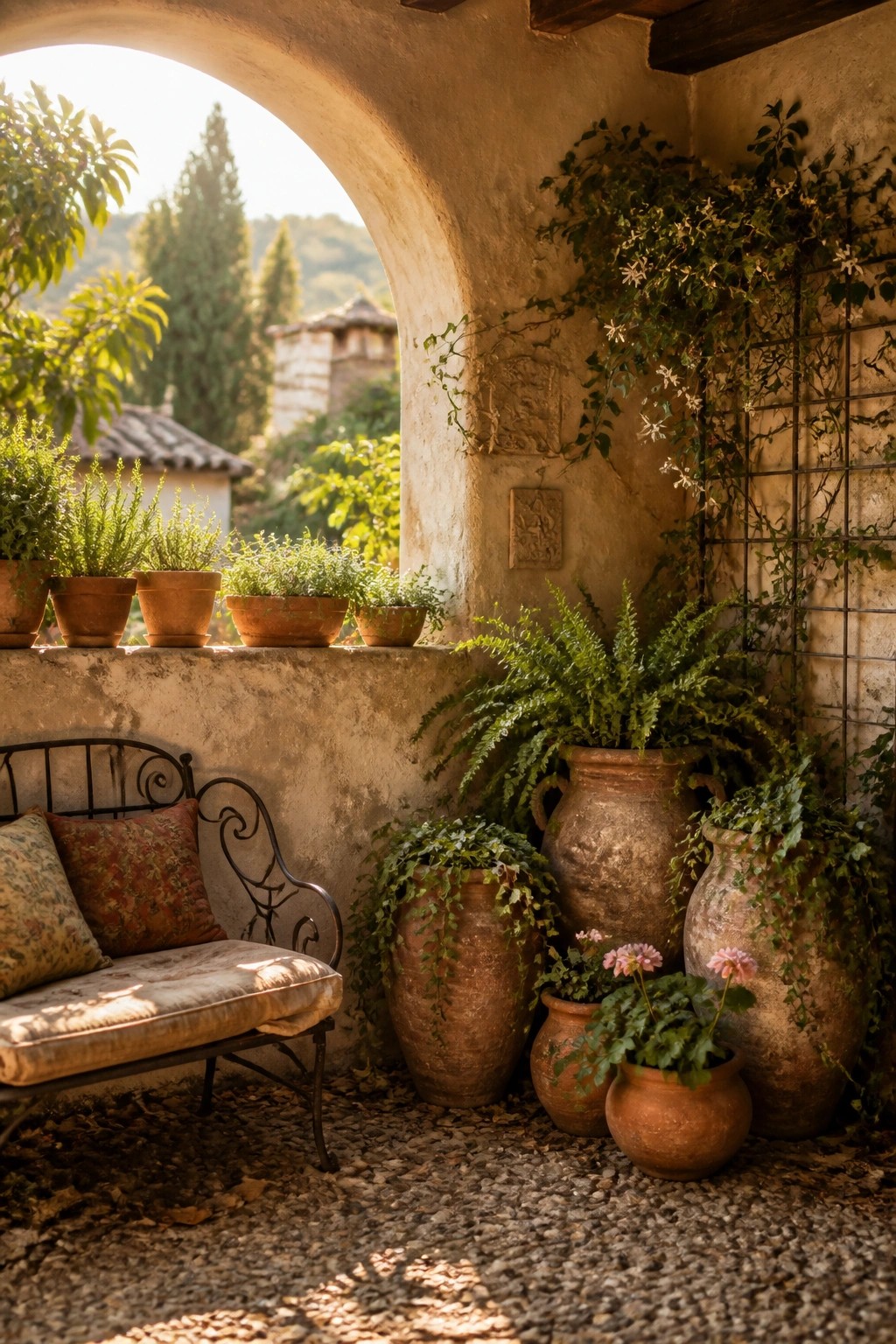
Large containers make it easy to bring life into a covered spot without needing much ground space. The mix of sizes and the way the plants spill over the edges helps the area feel full and green even when light is limited.
This works best on a patio or under an overhang where you can move the pots around as needed. Stick with sturdy clay ones and add a simple trellis behind them if you want some climbing vines to soften the wall.
Container Gardens Around Shaded Seating

Large containers let you add plenty of plants to a covered patio without needing built-in beds. The pots keep everything contained and easy to rearrange, which works especially well when the space has a fixed shade structure overhead.
This setup suits balconies and terraces that stay cooler most of the day. Group several pots of different sizes near the seating so the plants feel like part of the lounge area rather than an afterthought.
Vertical Planters For Covered Garden Walls
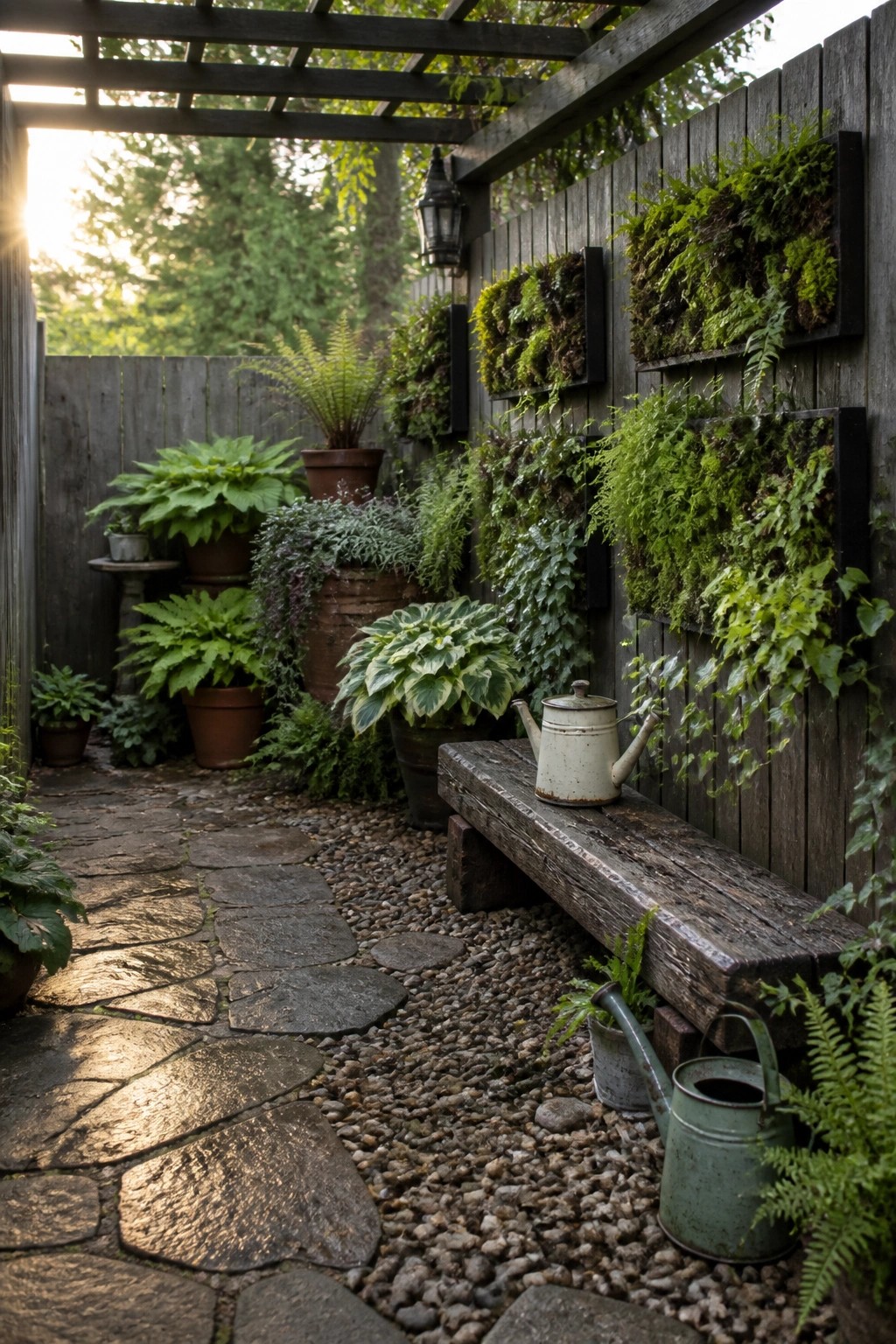
Mounting planters directly on the fence or wall gives you a way to pack more plants into a shaded covered corner without taking up ground space. It turns a plain boundary into the main source of greenery while leaving room for a path or bench.
This approach suits narrow side yards or areas under pergolas where soil beds are not an option. Stick to shade-tolerant ferns and similar plants, and keep a few larger pots on the ground so the look stays layered rather than flat.
Mount Containers Along Shaded Patio Walls
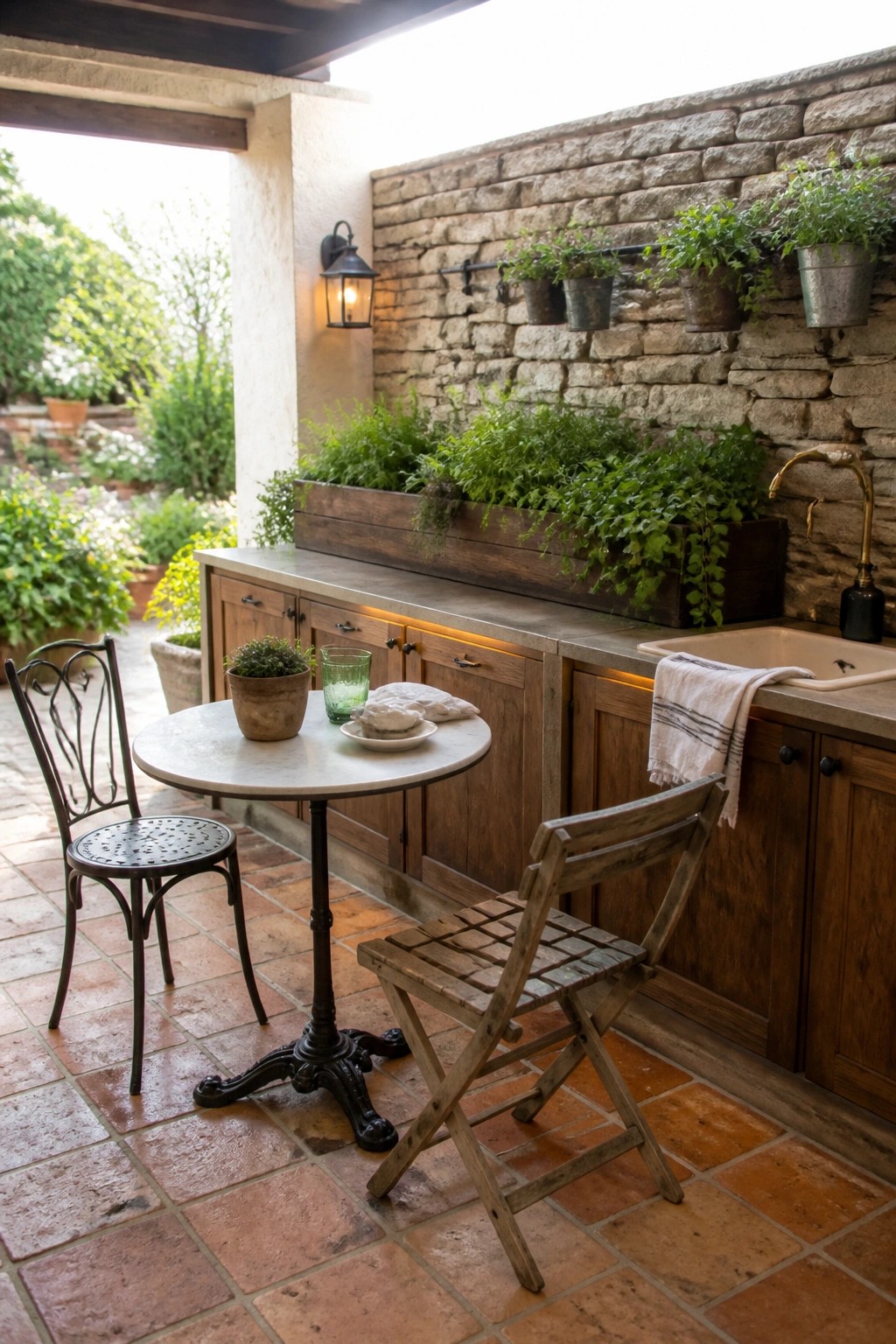
Many covered corners stay empty because people think there is no room for plants. Hanging a row of simple buckets on the wall and adding a long trough planter below fills the space with greenery without crowding the floor.
This setup works best on homes that already have a solid wall or counter under a roof or awning. It keeps plants out of direct sun while still letting you enjoy them from a nearby table or seating area.
Built-In Planter Boxes For Shaded Outdoor Corners
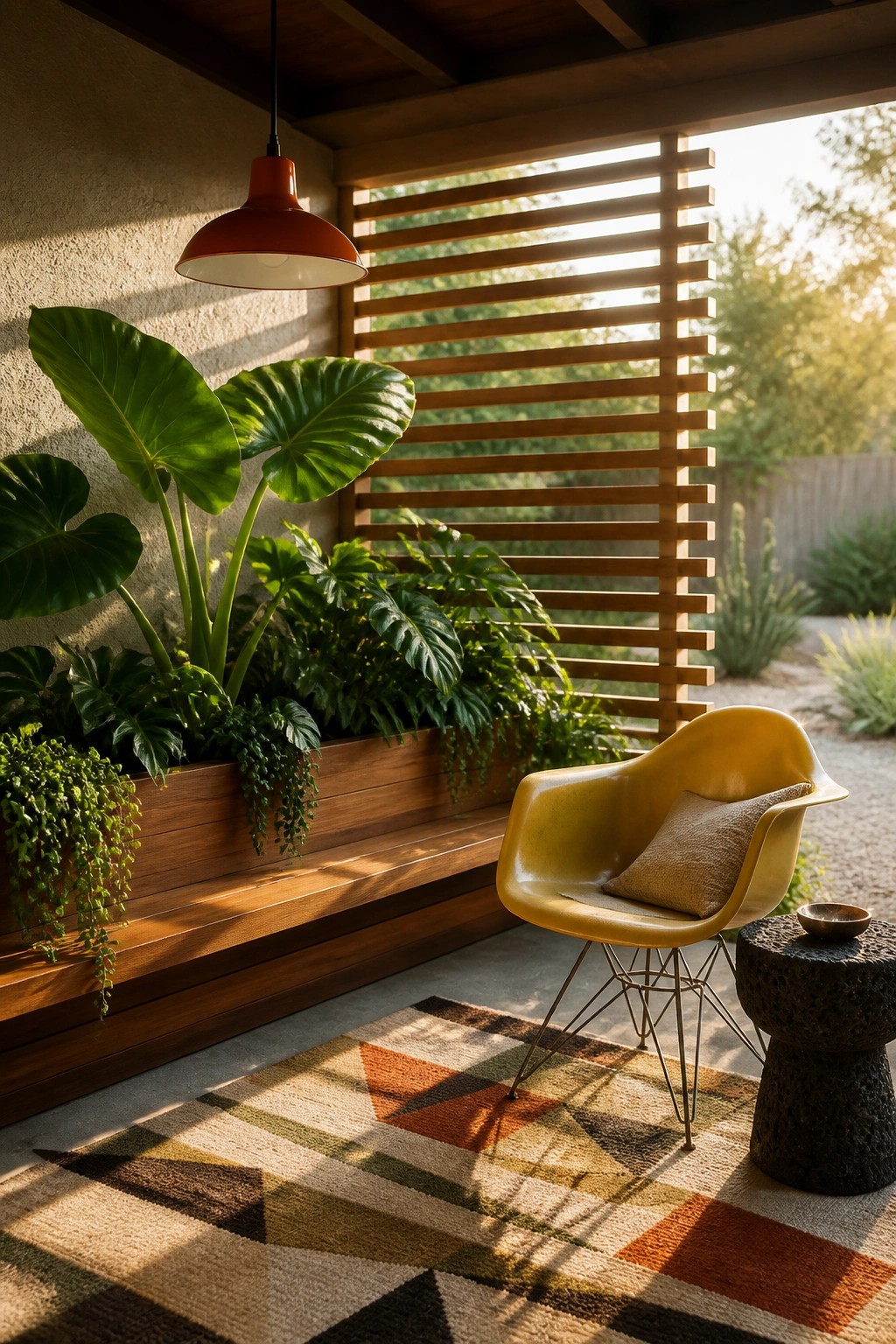
A long wooden planter box set against the back wall works well in covered corners because it brings in a lot of greenery without needing direct sun. The mix of big leaves and trailing plants fills the space and makes the seating area feel more settled.
This setup suits homes with patios or porches that stay cool most of the day. Keep the box at a comfortable height for sitting on the edge if needed, and choose plants that handle lower light so the whole thing stays low maintenance.
Raised Stone Planters for Shaded Corners

A raised stone planter gives you a simple way to group shade plants together in a covered spot without worrying about poor drainage or compacted soil. The solid sides hold moisture evenly and keep the bed looking tidy even when the surrounding ground stays mostly dry.
This works best along covered entries, under deep eaves, or beside a porch where light stays low. Place it near a path so the plants stay accessible, and keep the surrounding gravel or stones raked to help water move away from the base.
Container Gardens Under Pergolas
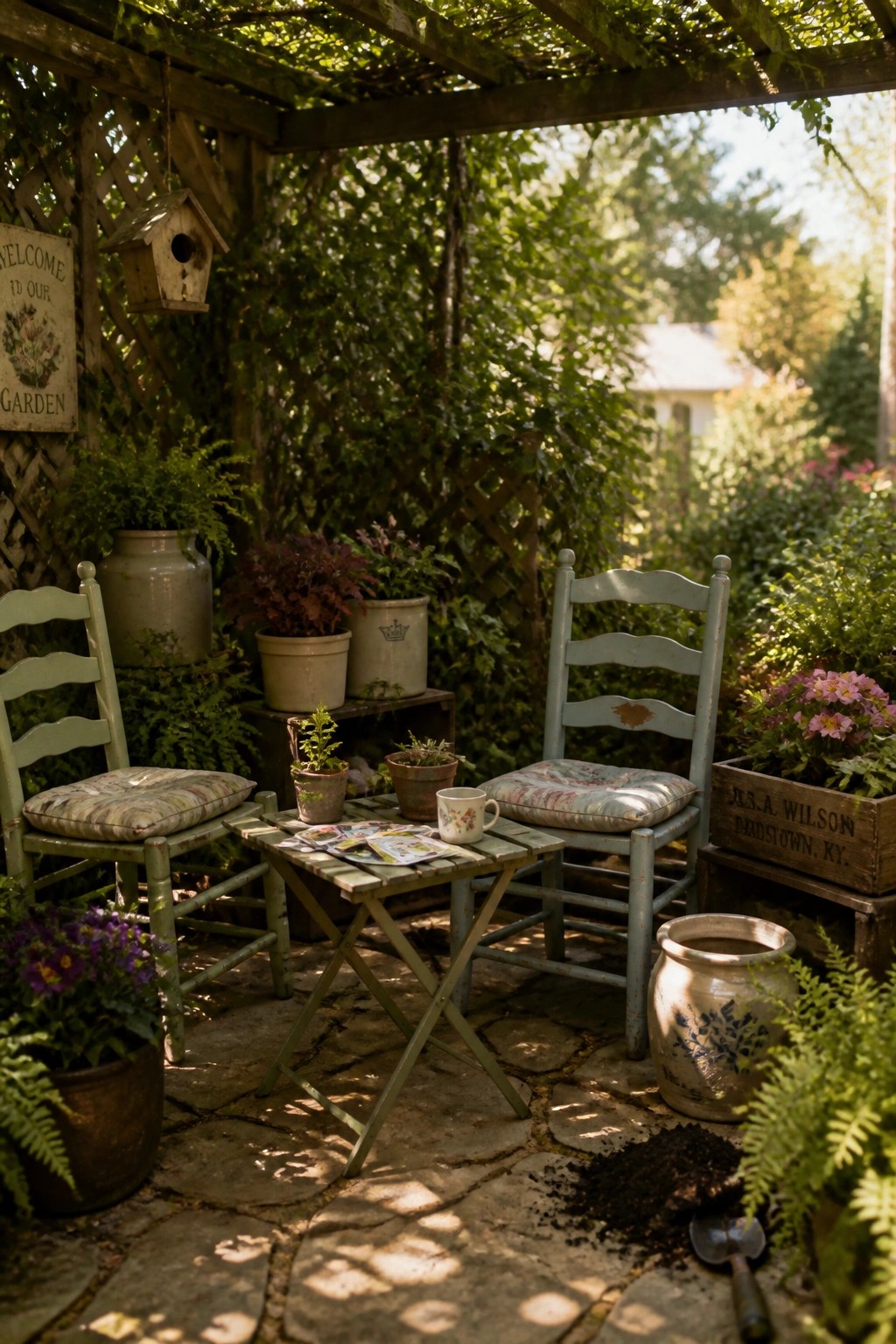
Filling a covered corner with containers lets you add plenty of greenery without needing open soil or direct sun. The pots can sit right on the patio surface, and you can pick plants that handle shade well.
This setup works best on patios or decks with overhead structures like pergolas. It gives you the freedom to rearrange things and swap plants with the seasons. Just watch that the pots have good drainage so water does not pool on the floor.
A Workbench Along the Wall Keeps Things Practical
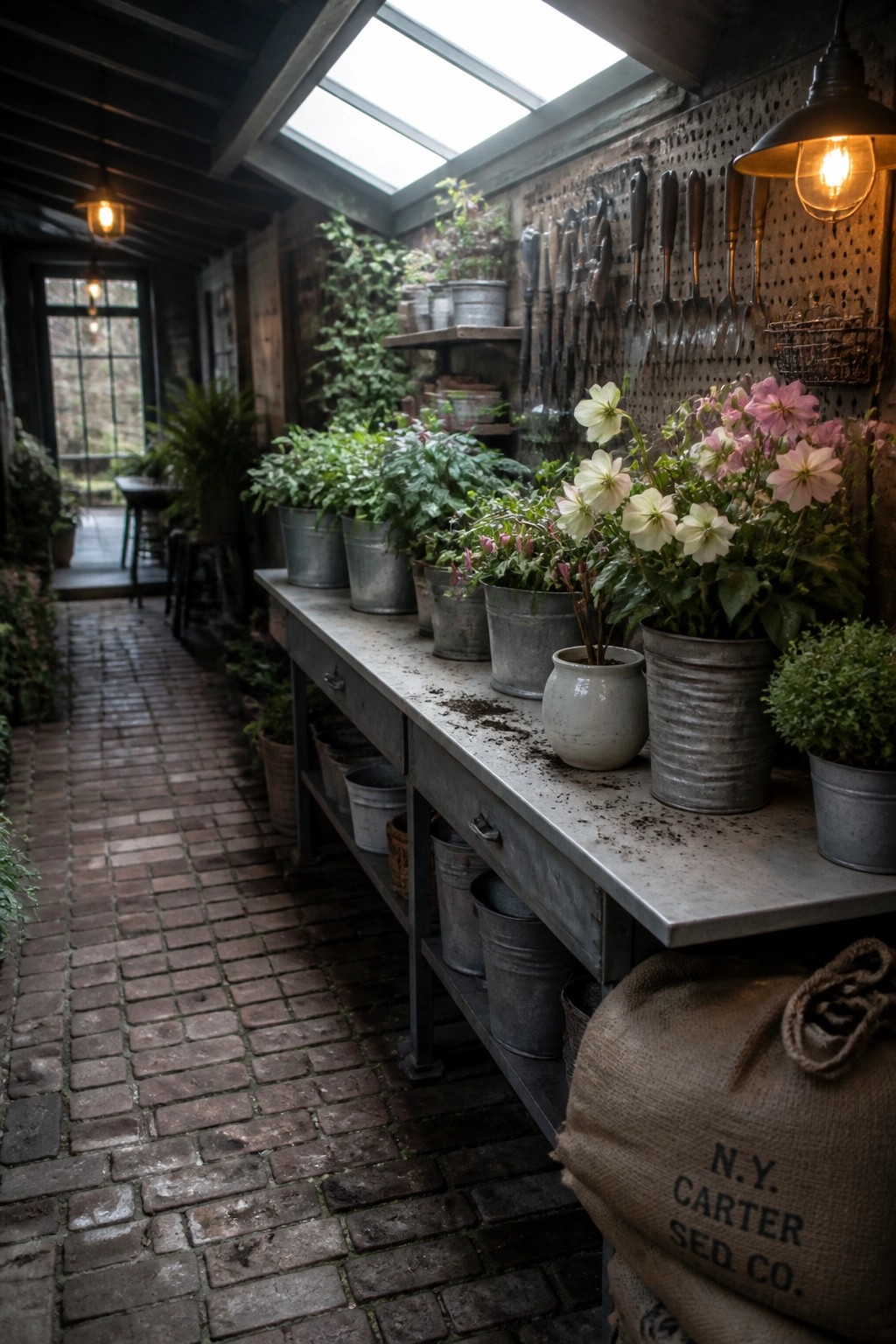
A long workbench gives you a steady place to arrange and tend container plants without crowding the floor. In a covered corner it stays out of the weather, so you can work on your shade plants even on damp days and keep soil and pots contained in one spot.
Place the bench at a comfortable height with open storage underneath for extra buckets and bags. Hang tools on the wall above it so everything stays within reach. This setup works well in any sheltered side area or entryway where light is low but you still want plants close at hand.
Large Ferns In Big Pots For Shaded Corners
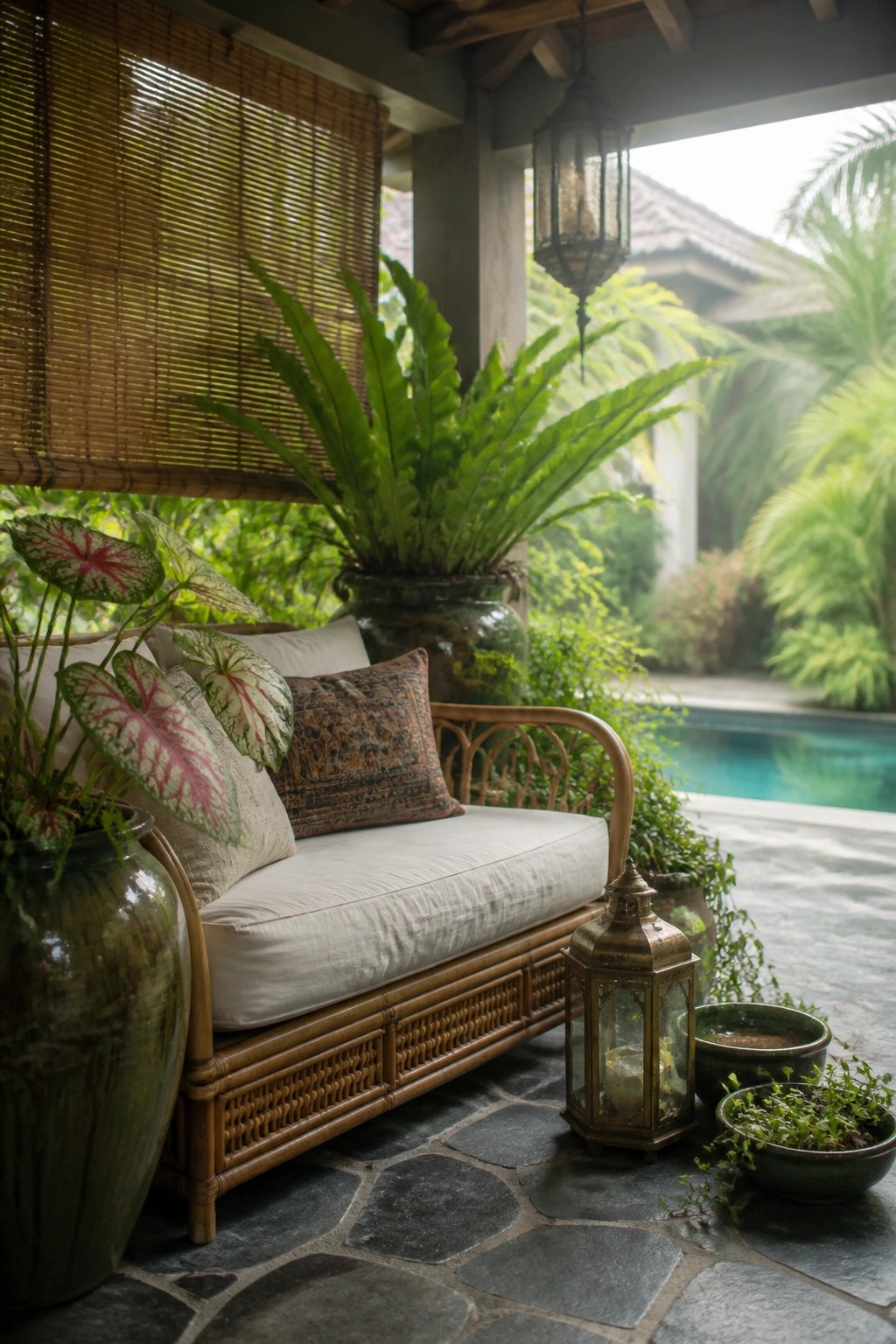
Large ferns planted in oversized containers give a covered patio or porch corner an instant sense of cool shade. They fill the space with soft green texture and make the seating area feel more tucked away.
This setup works best on porches with partial cover and indirect light. Pick pots that are sturdy enough to hold the weight and group two or three different sizes together so the plants feel balanced rather than scattered.
Stacked Crates For A Porch Herb Garden

Stacking old wooden crates gives you a simple way to grow herbs in a shaded porch corner without needing much floor space. The tiers let you fit several plants close together while keeping good airflow, and the crates themselves add a bit of rustic texture that fits most outdoor setups.
This works best on covered porches or decks where direct sun is limited. Use crates of different sizes so the arrangement feels balanced, and pick shade-tolerant herbs like parsley, mint, and chives that stay happy with less light.
Add Height With Potted Trees in Shaded Corners
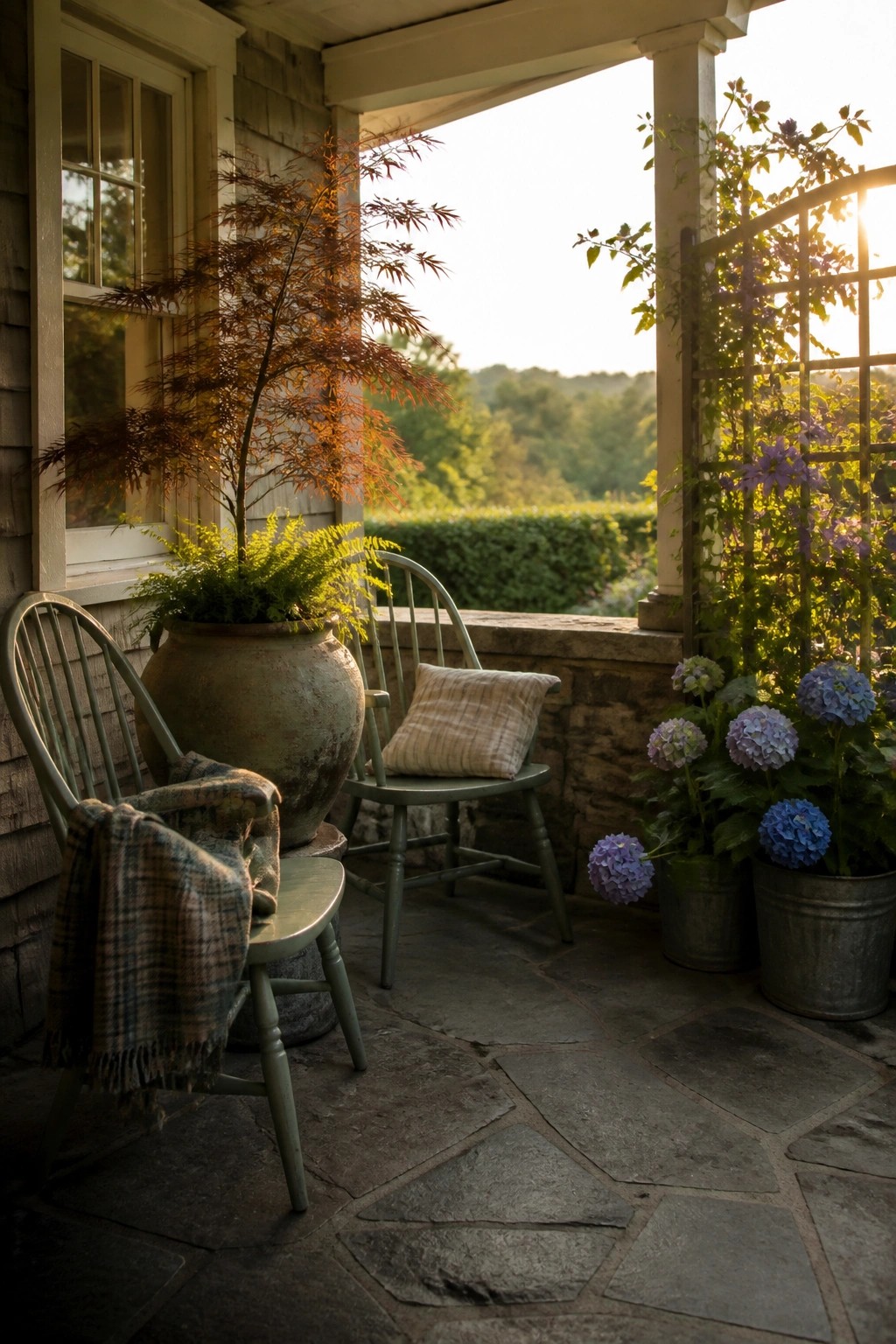
Large containers holding small trees or tall shrubs give a covered porch real presence without needing much floor space. The height draws the eye up and makes the whole corner feel more finished, especially when you tuck in lower plants like ferns around the base.
This works well on any porch or deck that gets limited sun. Choose pots that are big enough to handle a bit of wind and make sure the tallest plant sits toward the back so it does not block the view from the chairs.
Raised Planters Along Covered Edges

A raised ledge built along the edge of a covered patio or balcony gives you a simple way to add container plants without taking up floor space. The height keeps the plants visible and easy to water while the overhead cover protects them from harsh sun. This setup works especially well in spots that already have seating nearby.
It suits homes with balconies, porches, or shaded terraces where you want greenery without cluttering the walking area. Use a sturdy material that matches your flooring so the ledge feels like part of the structure rather than an add-on. Stick to shade-tolerant plants and keep the number of pots modest so the corner stays open and comfortable.
Frequently Asked Questions
Q: How often do I need to water containers tucked in a shaded corner? A: Stick your finger into the soil every couple of days to test moisture. Shade slows evaporation but covered spots can still dry out from wind. Water only when the top inch feels dry to avoid soggy roots.
Q: What plants actually hold up in those low-light containers? A: Ferns and caladiums fill out fast without direct sun. Tuck in a few impatiens for steady color through summer. They stay compact and handle the cooler temps well.
Q: Can I mix pot sizes without the corner looking messy? A: Group three pots of different heights in one spot. Place the tallest against the back wall and angle the smaller ones forward. This adds depth while keeping the area open and easy to reach.
Q: How do I stop soil from staying too wet in covered shade? A: Pick containers with several drainage holes at the bottom. Use a light potting mix instead of garden soil. Set each pot on a couple of flat stones so air can move underneath.
