


I’ve spent years tweaking my own backyard vegetable patches, and what stands out is how a thoughtful layout turns chaos into daily ease. Good gardens rely on clear planting beds, winding pathways, and sturdy edging that guide your steps without overwhelming the plants as they grow. People spot the pathways right away. I learned the hard way that skipping proper spacing early on means crowded rows and tough harvests later, so now I prioritize that in every plan. A few of these ideas have me thinking about fresh borders and vertical supports worth testing next season to keep things thriving.
Raised Beds with a Central Brick Path

One straightforward way to organize a vegetable garden is with raised wooden beds running along both sides of a brick path. This setup keeps everything neat and reachable without stepping into the soil. You get rows of greens like lettuce growing strong, plus pops of marigolds for color and pest control. It’s practical for everyday tending.
Put this in a sunny backyard spot where you want to maximize growing space. The path gives wheelbarrow access and room to kneel for weeding. Wood ages nicely over time… just line the beds to hold soil in. Works great for beginners or sloped yards.
Raised Metal Beds for Vegetables

Raised beds built from corten steel bring a clean industrial look to backyard veggie patches. The weathered rust patina ages nicely over time and sets off the greens without overpowering them. Straight rows like these make harvesting easy and keep weeds in check.
They’re perfect for tight urban yards or paved patios where digging isn’t practical. Line them up along a path, fill with quality soil mix, and plant in blocks for steady picking. Just watch drainage to avoid soggy roots.
Curved Stone Paths in Vegetable Gardens

A simple curved stone path like this one winds right through the raised beds, making it easy to tend the kale, beets, and those bright orange nasturtiums without stepping on the plants. It adds a natural flow to the garden. Feels less rigid than straight lines too.
You can lay this out in any backyard size, especially snug spots next to a fence. Edge the beds with bricks or stone to match. Mix in flowers for pollinators… keeps pests down as well. Just keep the path wide enough for a wheelbarrow.
Terraced Raised Beds for Sloped Backyards

Sloped yards can be tricky for growing veggies, but terraced raised beds solve that nicely. Built from rugged local stone, these beds let you stack planting levels right into the hill. Tomatoes grow straight up on simple stakes, while rosemary pots sit alongside for easy picking. The stone keeps soil in place and gives everything a sturdy, natural feel.
This idea fits any backyard with a drop in grade, especially in warmer spots like the Mediterranean. Stack the stones without mortar for drainage and that old-wall charm. Add gravel paths between tiers for wheelbarrow access. One thing to note: choose plants that handle full sun, since these open setups get a lot of it.
Raised Beds from Corten Steel

These raised beds made from corten steel give a vegetable garden a clean, modern shape. The metal rusts to a warm orange-brown patina that fits right in with plants like beets, spinach, and young apple trees growing nearby. It keeps soil contained and weeds out, while the straight lines make the space feel organized against a plain dark wall.
You can set them up along a path or seating area in a small backyard. They work best where you want low upkeep and a bit of industrial style. Just make sure the steel is treated if drainage might rust nearby concrete too fast.
Tomato Trellis Shades a Patio Bench
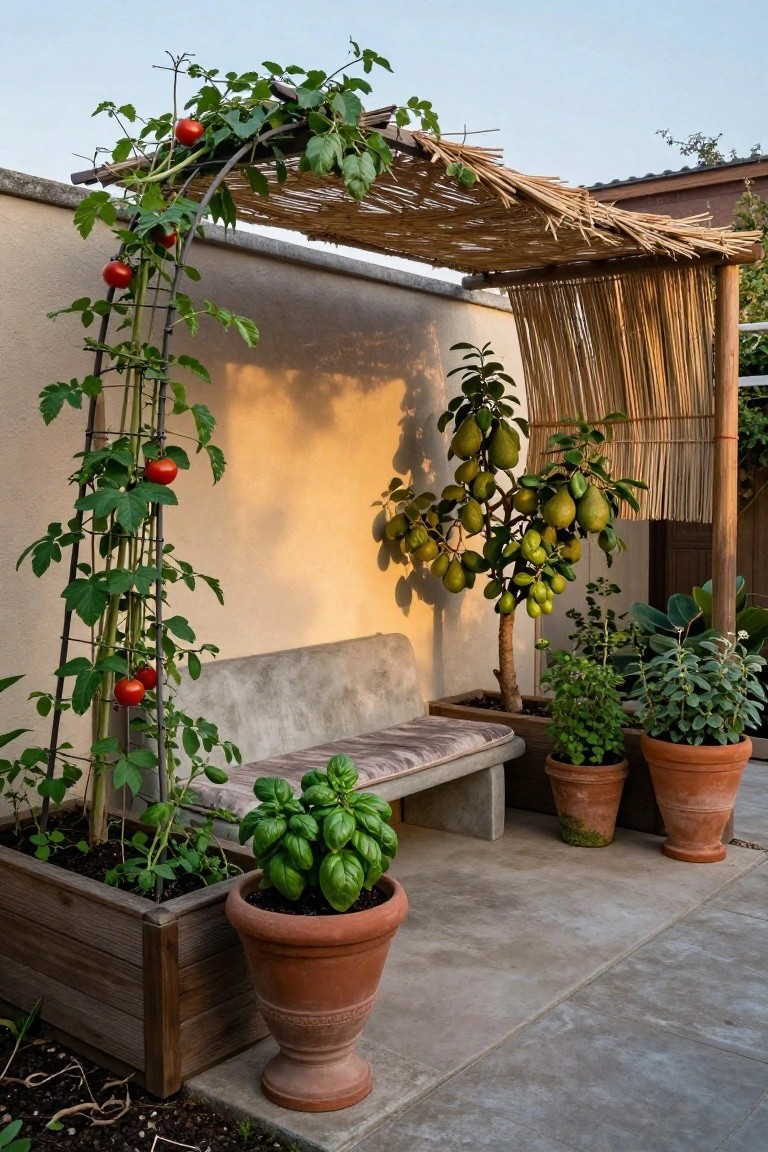
One smart way to make a small patio corner more inviting is to grow tomatoes up an arched metal trellis right over your bench. The vines climb and spread to create natural shade on hot days, while ripe fruits hang close enough to pick. It’s practical too, since the plants do double duty as both food source and cover.
This works best in a sunny spot against a wall or fence, where the arch can lean for support. Plant vigorous tomatoes like cherry varieties that sprawl well, and add potted basil nearby for easy harvesting. Keep it simple with a plain concrete bench, and you’ll have a spot to relax amid your garden without much extra structure.
Greenhouse Raised Benches for Veggies
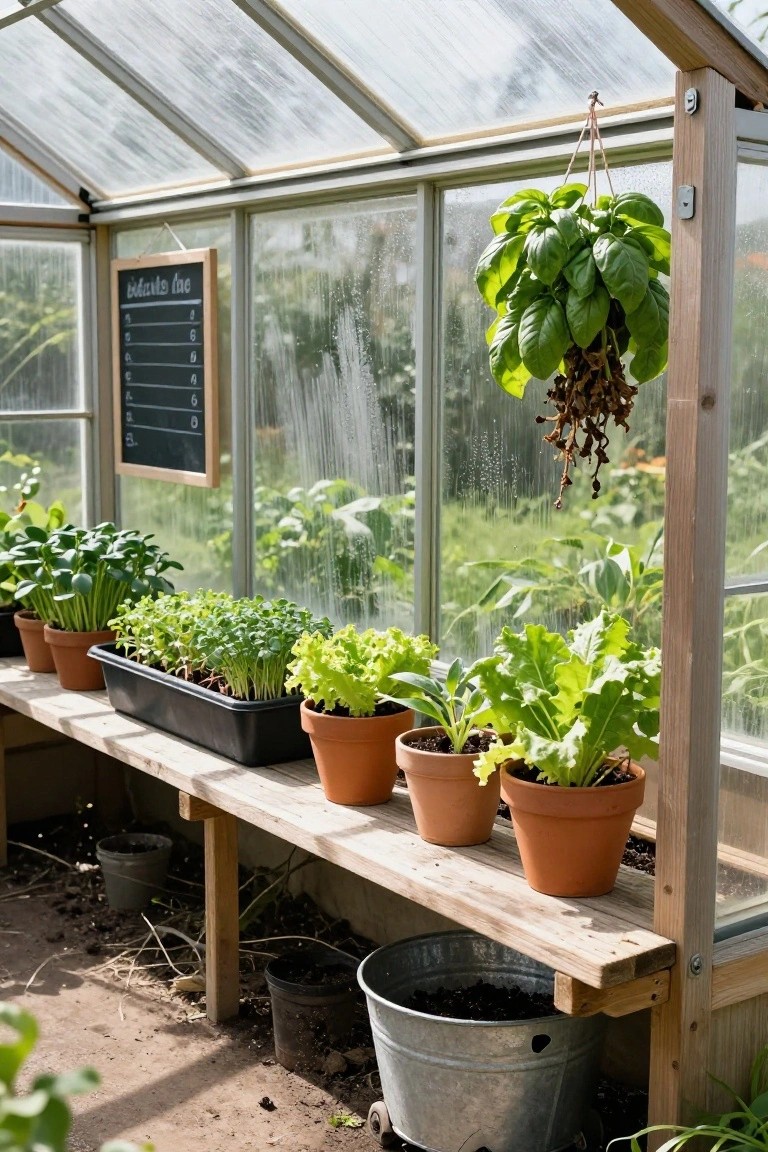
Raised wooden benches like these turn a basic greenhouse into a real workhorse for growing salad greens and herbs. They lift plants up off the dirt floor so you can tend everything without bending over much. Trays of young shoots and pots of lettuce sit right at hand level. A chalkboard tracks planting dates too. It’s practical. Keeps the space organized and productive.
Put these benches along the walls in any backyard greenhouse. They work best in small setups where you want max growing room. Use scrap wood or buy simple lumber. Start with easy crops like microgreens or basil. Watch for good drainage so roots don’t sit wet. Fits most yards without taking much space.
Lavender Borders for Vegetable Beds

One simple way to dress up a vegetable garden is planting lavender right along the edges of your raised beds. That soft purple bloom pops nicely against the greens of chard or beet greens, and it keeps things looking tidy without much fuss. Lavender’s tough too. It handles dry spots well and smells good when you brush past.
Set it up like this in a sunny backyard corner, using low stone walls to hold the soil in place. Tuck in edibles like garlic bulbs or onions amid the veggies, then let the lavender frame it all. It’s low-maintenance once established… just trim back after flowering. Fits small yards perfect.
Raised Beds Along the House Wall

One smart spot for a vegetable garden is that skinny strip right against your house exterior. Build simple wooden raised beds there, like these loaded with tomatoes on supports, green onions, and herbs. It turns unused space into fresh produce without taking over the yard. Those old milk cans nearby add a casual farm feel too.
This works great in tight backyards or along a side wall where you want easy reach. Go for cedar or untreated lumber to last, line them deep with soil, and plant what grows well locally. Suits most homes, keeps weeding straightforward from standing height. Just watch for wall drainage.
Herb Planter Next to the Outdoor Kitchen

One practical upgrade for backyard cooking is placing a raised herb planter directly against the outdoor kitchen counter. Fresh basil, rosemary, and chives grow right there by the sink, so you can snip what you need without walking far. The matching wood keeps it looking built-in and sturdy.
This setup fits most patios, especially if space is tight. Use treated wood that handles weather, and pick herbs you cook with often. It adds fresh produce without crowding the eating area.
Raised Beds Bordered by Boxwood Hedges

One simple way to make a vegetable garden feel more put-together is to edge the raised beds with low boxwood hedges. These clipped borders give a formal look that keeps things neat, even as the veggies grow tall. In this setup, artichokes and beets sit right up against the boxwoods, and it all ties into stone retaining walls for a terraced effect.
This works best in a backyard with some structure already, like paths or walls. Boxwoods stay green year-round and trim easy, so they’re low fuss once established. Just plant them along the bed edges and keep the veggies inside the lines. It suits smaller spaces where you want produce without the wild garden feel.
Raised Beds Backed by Stone Walls

Raised beds like these, built from rough wooden planks and set right on a low stone wall, make vegetable gardening straightforward and sturdy. The stone base holds back the soil, stops erosion, and gives everything a grounded, rustic feel that fits right into a backyard. You see pak choi and greens growing strong here, with vines climbing up the nearby pergola for extra interest.
Put this setup in a sunny corner where you want easy access. It’s perfect for sloped yards or tight spaces, since the elevation improves drainage and keeps weeds down. Add a simple bench along the top like they did, so you can sit while picking. Just make sure the wood is treated to last through wet seasons.
Boxwood-Edged Vegetable Garden Layout

Low boxwood hedges shape this vegetable garden into tidy rectangular beds, perfect for rows of lettuce, beets, and herbs. The setup looks formal like an old parterre but stays practical for home growing. Gravel paths between the beds let you reach everything easily without stepping on the plants, and a simple sundial marks the center for a bit of garden charm.
Try this in a sunny backyard corner where you want veggies to look as good as flowers. It fits cottage or traditional homes best. Just keep the hedges trimmed once or twice a year so they stay neat… otherwise they can get shaggy fast.
Raised Beds for Compact Veggie Gardens

One smart way to grow your own food in a small backyard is with long, narrow raised beds like this one. Made from rusted corten steel, it hugs the fence and packs in spinach, mint, lavender, and other greens without taking much room. The metal edge keeps soil in place and gives a clean look that blends with wood fences.
These beds work great against walls or fences where ground space is limited. Fill them with edibles you use often, mixing in a few pretty herbs for color. Just watch the drainage, since metal holds heat. They’re low fuss once set up and make harvesting easy right outside your door.
Rustic Pallet Bench for Potted Vegetables

A simple wooden bench made from pallets turns into a perfect spot for lining up terracotta pots of tomatoes, peppers, and herbs. It keeps everything off the ground and easy to reach. Plus it gives you a place to sit while you tend the plants. This setup feels practical and homey, especially in a small backyard corner.
You can make one yourself with old pallets, or grab something similar from a garden store. It works great on a patio or near a fence where space is tight. Just watch the weight if your pots get big. Pair it with a rug underneath to define the area, and you’ve got an instant veggie patch that doubles as outdoor seating.
Brick Raised Beds for Vegetables
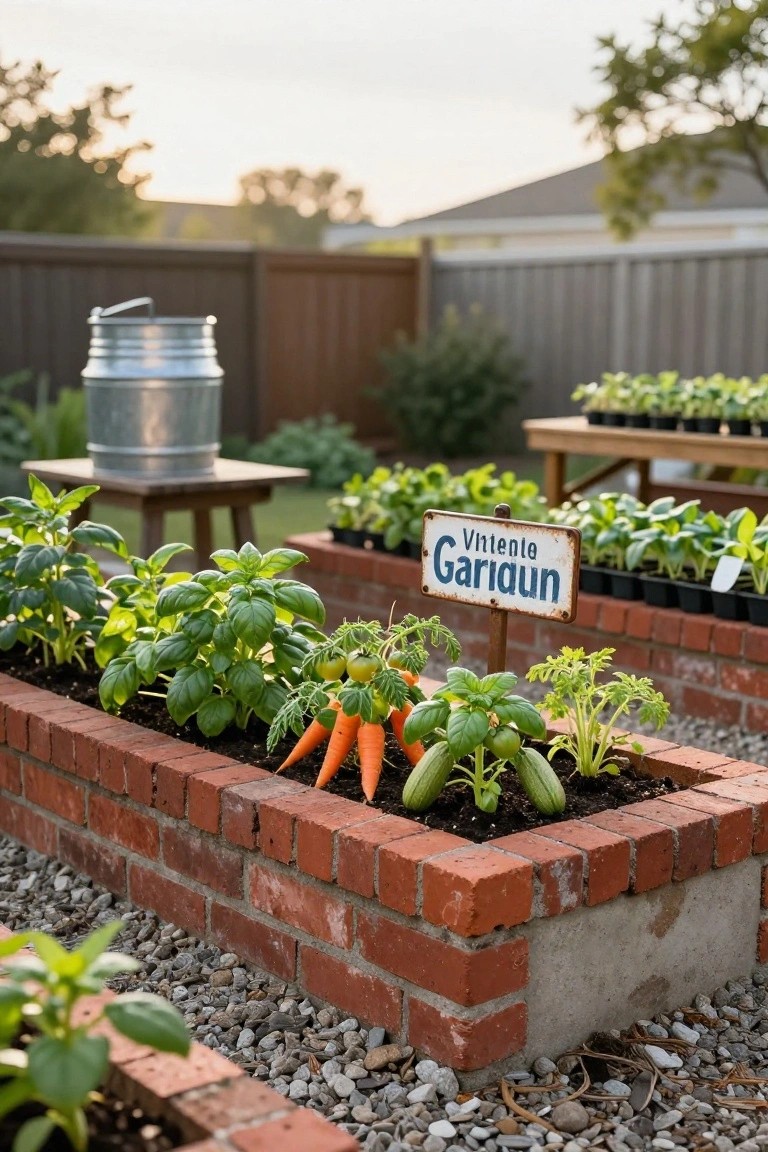
Raised beds made from simple brick create a tidy spot for growing your own veggies right in the backyard. They keep soil contained and make it easy to reach plants without bending over much. In this setup, carrots poke out alongside basil and tomatoes, all looking healthy and organized. The brick gives a sturdy, classic look that blends with most yards.
These beds work great in small spaces or along a fence line. Stack bricks a foot or so high on a gravel base for good drainage. Fill with good soil mix and plant what you like to eat. Watch for weeds at the edges, but overall it’s low fuss. Suits any home with a patch of sun.
Frequently Asked Questions
Q: My yard gets partial shade. Will any of these garden ideas still work? A: Pick ideas like container gardens with leafy greens such as spinach or kale. They handle some shade better than fruiting plants like tomatoes. Position pots where they catch morning sun.
Q: How do I stop weeds from taking over my new veggie patch? A: Lay down cardboard or newspaper under mulch right after planting. It blocks light and smothers weeds as it breaks down. Refresh the mulch layer every few weeks to keep them gone.
Q: What’s a quick win for total beginners trying these setups? A: Go for radishes. Sow seeds straight into soil and harvest in just a month. They pop up fast and taste great fresh from the garden.
Q: Can I mix veggies and flowers like in some of those photos? A: And yes, pair them to draw pollinators. Nasturtiums climb and deter aphids while adding color. Plant them right among your tomatoes for double duty.
