

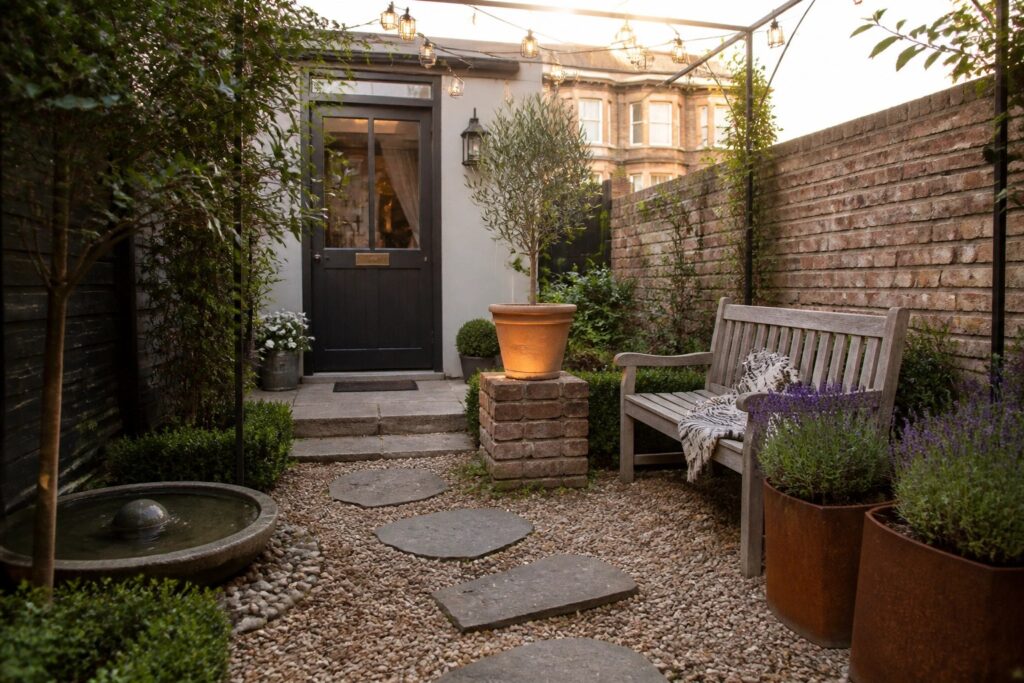
I have found that small gardens tend to look their best when the layout stays simple and the planting follows the natural shape of the space rather than fighting it.
Over time I have noticed that a few repeated materials and consistent edging make a cramped yard feel more settled without adding much cost.
Some setups only reveal their flaws after a full season of growth.
I usually try one adjustment at a time so I can judge whether it actually improves how the garden works day to day.
Testing a few of these ideas in my own yard has shown me which ones hold up once real weather and regular use come into play.
Stepping Stone Paths Over Gravel

A gravel path with stepping stones gives a small garden a finished look without the cost of full paving. The loose material fills in around the stones, so the walkway stays level and drains well even after rain.
This setup suits narrow side yards or tiny back gardens where space is tight. Use a few large pots along the edges to guide the eye and keep the path from feeling bare.
Add A Small Table And Chair For Easy Outdoor Use

A basic table and chair can turn even a tiny balcony into a spot where you actually spend time. The setup works because it stays simple and leaves room for a few plants without crowding everything together.
This idea fits small apartments or any outdoor space with limited floor area. Keep the table foldable so it can be moved aside when you need the floor clear, and choose a chair that is light enough to shift around as the seasons change.
Raised Planters With Gravel Ground Cover

Raised planters make a small garden feel organized and complete even when space is tight. They hold the soil neatly, give plants room to grow, and keep the whole area from looking scattered.
Build them from simple metal sheets or similar low-cost materials, then lay gravel around a few pavers to finish the ground. This approach suits narrow side yards or small back corners where you want low maintenance and a tidy look without high expense.
Gravel For A Tiny Outdoor Seating Spot

Gravel works well when you want a small seating area without spending much. It creates a clear zone for a table and chairs, drains easily after rain, and needs almost no upkeep compared with other surfaces.
This idea fits a small yard or courtyard where you want things to feel finished but not fussy. Keep the gravel layer thin, add a few large pots around the edges, and let climbing plants frame the space if you have a simple arch or wall nearby.
Add a Brick Path to Give Your Garden Clear Structure

A simple brick path helps a small garden feel organized instead of cluttered. It creates a defined route that guides people through the space and keeps planting beds from spilling into each other.
Reclaimed bricks or budget pavers work well for this and can be laid in a basic running bond pattern. The approach suits narrow side gardens or compact front yards where you want the space to feel intentional without spending much.
String Lights Over A Pergola

String lights on a pergola give a small outdoor space a finished look without much cost. The lights create a ceiling of sorts, which makes the area feel more like a room than just a patch of roof or deck.
This setup works especially well on rooftops and balconies where you need to mark off a seating zone. Keep the frame simple, add a rug underneath the table and chairs, and fill a few large pots with plants so the whole spot feels pulled together.
Stepping Stones For A Simple Garden Path
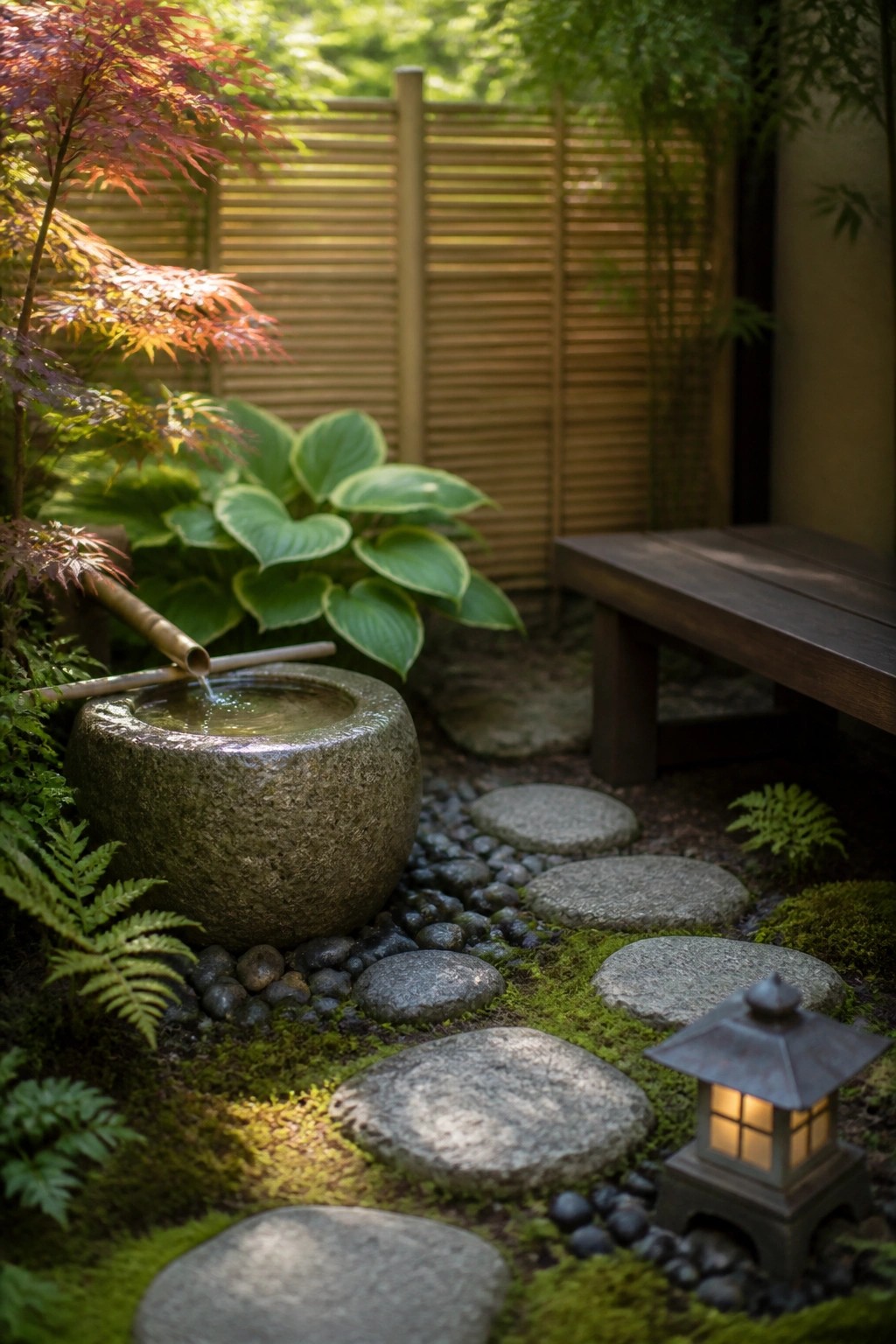
Stepping stones give a tiny garden a clear layout without much cost. They turn an open patch of ground into something that feels planned and easy to walk through, especially when set into moss or gravel.
This approach works best in small side yards or shady corners where you want to lead people toward a bench or water feature. Level the soil first, space the stones comfortably for steps, and fill gaps with cheap gravel or low plants that can handle some foot traffic.
Build a Tiered Brick Circle

A circular bed made from stacked bricks gives you multiple planting levels in one small footprint. It keeps herbs separated, makes watering easier, and turns leftover bricks into something useful instead of buying new edging.
This layout works well in a corner of a small yard or even on a gravel patch beside the house. Start with the widest ring at ground level, then add smaller rings on top so each layer gets sun. Keep the beds narrow enough to reach across without stepping inside.
Repeat Rounded Shrubs Along Walkways

One simple way to give a small garden a polished look is to repeat the same rounded shrubs along a path. The steady line keeps the space feeling organized even when the rest of the planting stays modest.
This approach works especially well in narrow side yards or front walkways on a budget. Use gravel between the plants so the bed stays neat and needs little watering or weeding once everything fills in.
Add A Bench To Make The Most Of A Small Balcony

A built-in bench turns even a narrow outdoor spot into usable seating without taking up much room. Pairing it with a few cushions keeps things comfortable while leaving space for plants along the edges.
This setup works well on balconies or small patios where floor space is limited. Cluster pots of different sizes around the bench to add greenery without crowding the walkway, and keep the cushion covers simple so they hold up outside.
Anchor a Tiny Patio with a Fire Pit
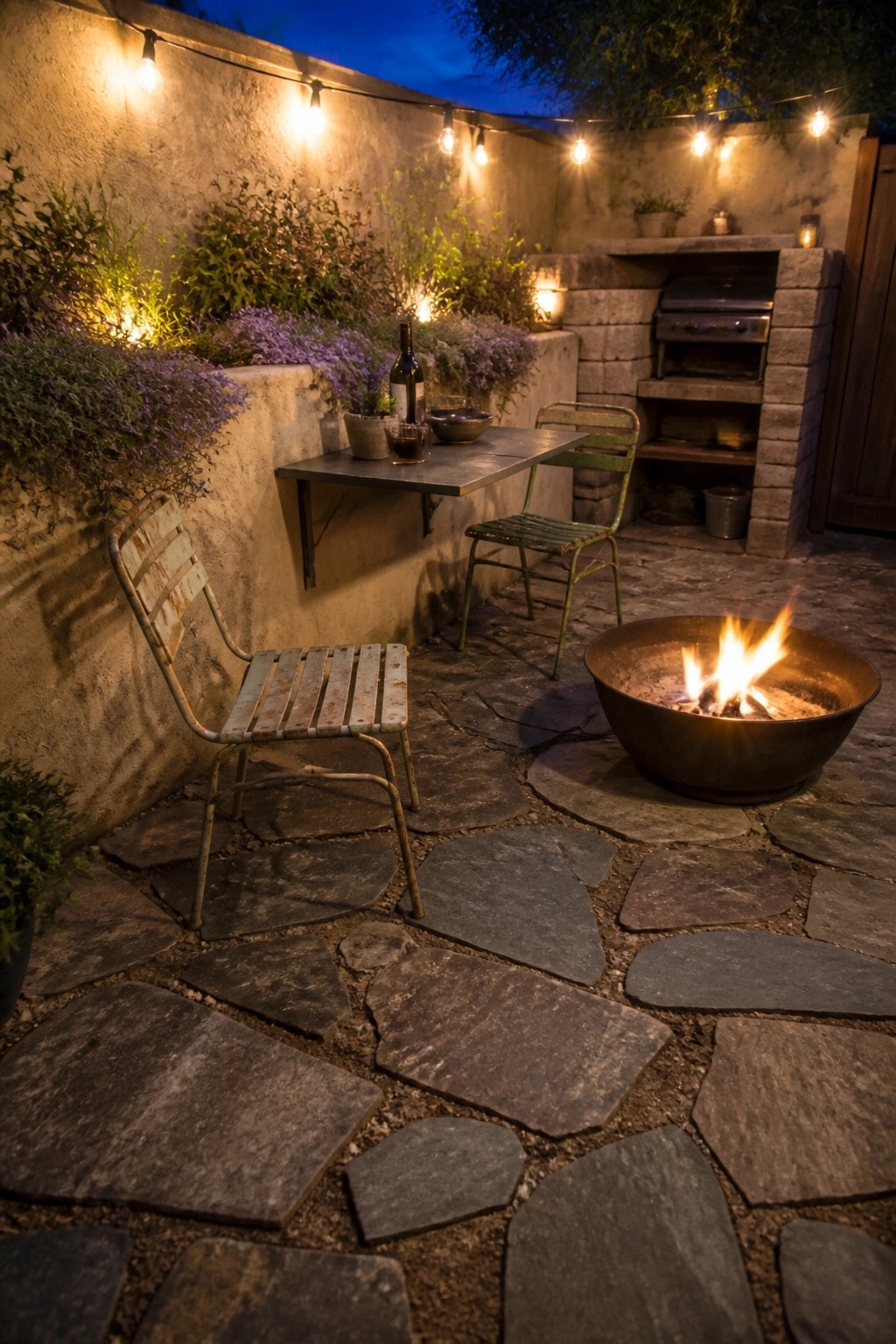
A fire pit gives a small outdoor space a natural center without needing much else. It pulls seating around one spot and makes the area feel used even when the garden itself stays simple. In this setup the pit sits right on the stone pavers so the whole patio stays compact yet inviting after dark.
Choose a basic metal bowl and set it where chairs can face it without crowding the path. Keep the rest of the surface clear so the area still feels open during the day. This works especially well on paved courtyards or small side yards where a larger seating set would take over.
Use Large Pots With Rounded Shrubs
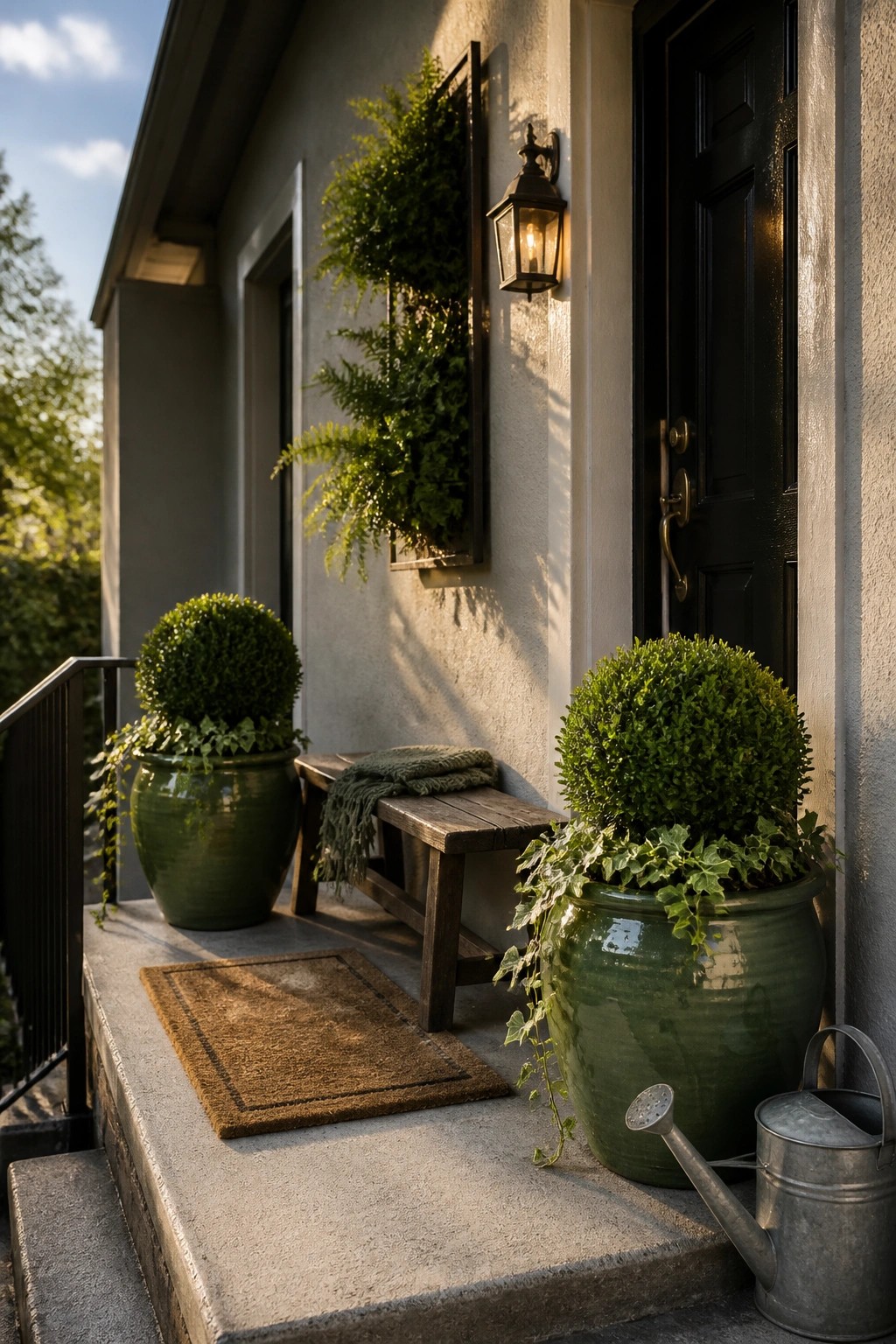
Large pots holding rounded shrubs give a small entry a neat, finished look without needing a full garden bed. The containers keep everything contained and easy to manage, which helps the space feel intentional rather than scattered.
This works well on porches or front steps where space is tight. Choose evergreen shrubs that hold a round shape and pair them with a couple of trailing plants for softness. The result stays polished through the seasons and stays affordable since you only need a few good pots.
Plant Succulents In A Wooden Trough Planter
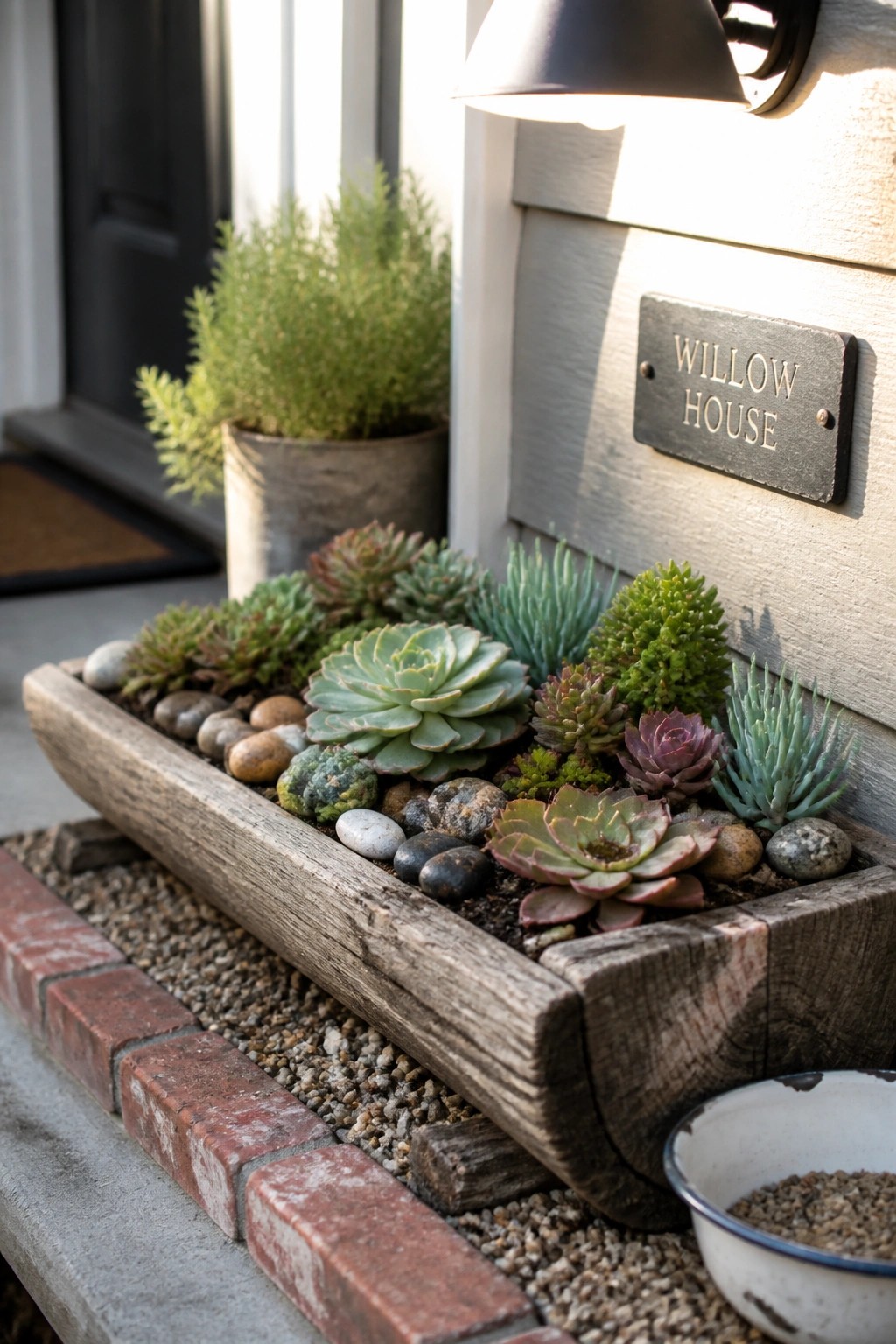
A wooden trough gives you a clean way to grow succulents without taking up much ground space. The container keeps everything contained, and the pebbles help the plants stay neat while cutting down on weeds.
This idea works well along a front step or beside a door where the ground is already paved. Use a mix of low succulents and a few taller ones so the bed looks full but still simple to care for.
Fold Down A Table To Free Up Floor Space

A wall mounted drop down table gives you a usable surface on a tiny balcony without eating into the floor area all the time. It stays flat against the wall when you do not need it and drops into place quickly when you want to sit outside with a drink or a book.
This setup works best on narrow balconies or small terraces where every inch counts. Use sturdy brackets so the table feels solid, and keep the stool or chair lightweight so it can be tucked away easily when the table is up.
Stone Edging Frames Small Garden Beds
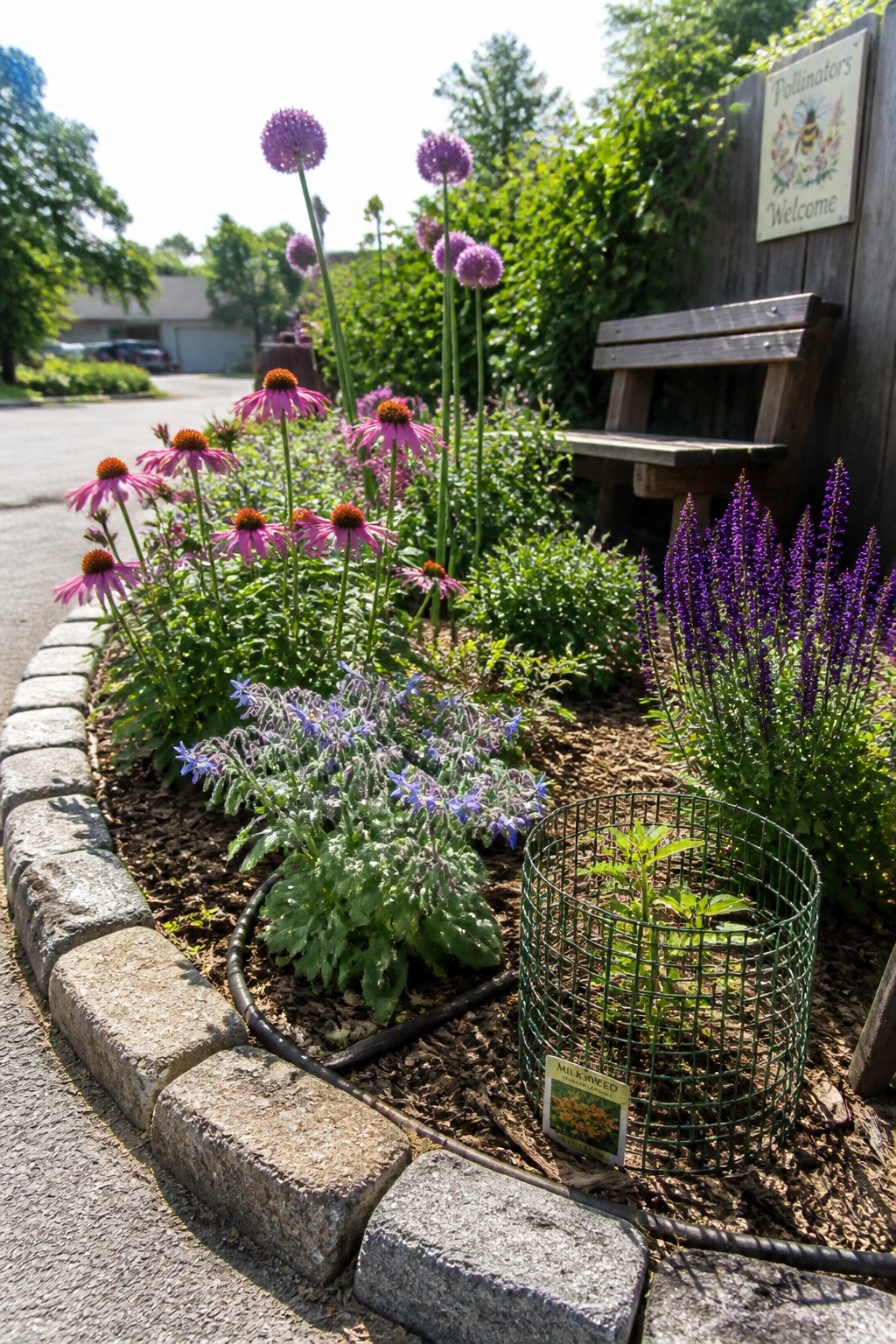
Stone edging gives a tiny garden bed a finished border that holds everything in place. It separates the planting area from the surrounding path or lawn so the bed looks intentional instead of scattered. The curved line of stones also helps keep mulch from spilling out after rain.
This method suits narrow strips beside driveways or along fences where space is tight. Lay the stones directly on leveled soil or a shallow sand base and backfill with mulch inside the curve. The same edging works with almost any low-cost plants as long as the border stays consistent.
Train Fruit Trees Along a Fence

Training fruit trees flat against a fence is one of the simplest ways to add structure and productivity to a small garden. The trees take up almost no ground space, yet they create a clean, layered look that feels intentional rather than crowded. Horizontal wires make it easy to keep the branches in line as they grow.
This approach works especially well in narrow side yards or along property lines where there is little room for traditional beds. All you need are basic wires, a few young trees, and regular tying in the early years. Barrel planters placed in front can add seasonal color without taking away from the main line of trees.
Gravel Paths Keep Small Gardens Simple

A gravel path gives a garden an easy flow without needing fancy materials or a big budget. It works well when you want to link seating areas to the rest of the yard while keeping the ground level and practical.
Edge the path with logs or stones you already have and let low plants grow along the sides. This setup suits compact yards that need a relaxed layout and light maintenance.
Stone Edging Defines Small Garden Beds

A low stone border gives a garden bed clear shape and keeps plants from spilling onto the path. In a tight space this simple edge makes everything look more finished without needing fancy materials or a big budget.
It works well along gravel paths or narrow side yards where you want structure but still need room to walk. Stack the stones in a slight curve so water drains away from the house and tuck in tough plants like ferns that fill in quickly.
Create A Pocket Wildlife Garden

Native plants paired with a simple water source can turn a narrow strip of ground into a useful wildlife spot without much cost. The mix of layered grasses, flowers, and a shallow dish on stacked stones gives the area a finished look while keeping everything low maintenance and affordable.
This approach works well along a side path or in a small corner where space is tight. Lay down gravel, add stepping stones for access, and focus on local plants that already thrive in your area. The result feels intentional rather than scattered.
Dark Pavers Give A Tiny Patio A Clean Base

Large dark stone tiles work well when you want a small outdoor space to feel finished without spending much. They hide dirt better than lighter options and cut down on the scattered look that comes from mixing too many surfaces.
This approach suits compact courtyards or side yards where the goal is simple upkeep. Stick to one tone for the floor and let a few black planters do the rest so the area stays open and easy to move around in.
Vertical Pocket Planters Add Growing Space Without Taking Room

Many small gardens run out of ground space fast, so stacking plants upward makes sense. Fabric pocket planters let you fit several rows of herbs or greens on a single wall or frame while keeping everything at a workable height.
This approach suits narrow side yards or patios where floor room is tight. Mount the pockets on a simple wood or wire grid, water from the top, and rotate plants as needed. The pockets drain well and can be swapped out when one crop finishes.
Frequently Asked Questions
Q: What if my space is just a windowsill with barely any room to spare? A: Grab a few small jars or tins from your kitchen and line them up in a row. Drop in some soil and quick-sprouting seeds like basil. Water them lightly each morning and watch them fill the ledge without taking over.
Q: How do I keep cheap plants from looking scraggly after a couple weeks? A: Pinch back the tips every few days to encourage bushier growth. Stick to one type of plant per container so nothing crowds its neighbor. A quick sweep of fallen leaves keeps the whole setup tidy.
Q: My budget really is zero after buying soil. Can I still add any polish? A: Collect smooth stones or twigs from a walk outside and arrange them around the base of your pots. This frames everything neatly. The contrast makes even simple plantings stand out.
Q: Do these ideas hold up once summer heat hits? A: Move pots into shade during the hottest part of the day. Water early so roots stay cool. Most budget setups bounce back fine with that simple shift.
