

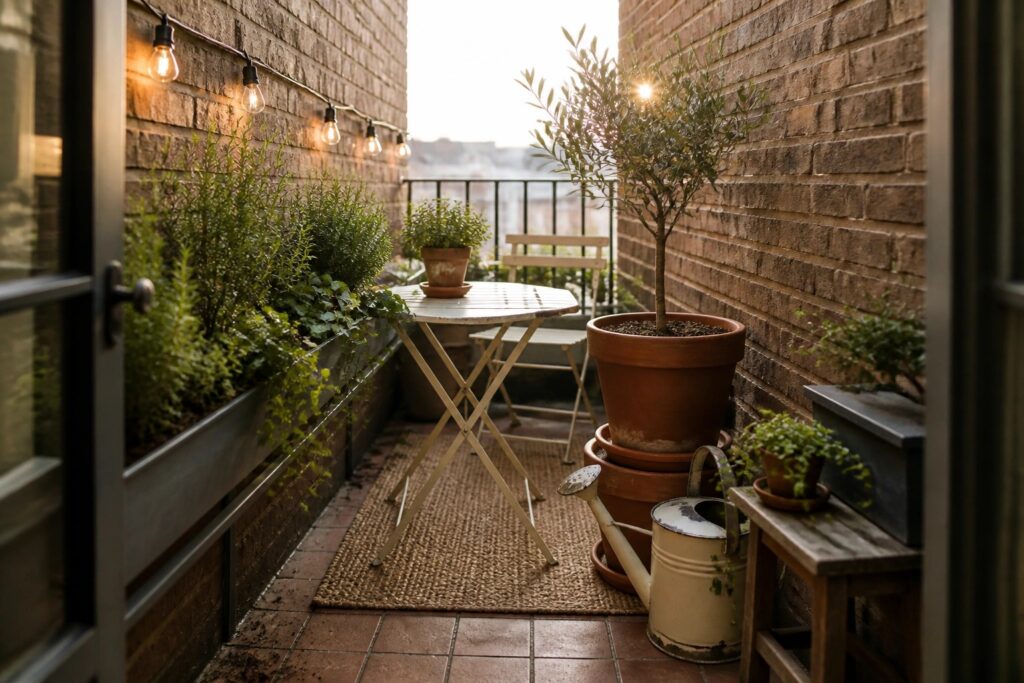
I’ve found that small patios rarely feel comfortable unless the containers leave actual walking space and room for a chair or two.
Many setups look fine in photos but quickly get in the way once you try to spend an evening outside.
Not every layout survives real use.
I usually start by placing empty pots on the floor first to test traffic patterns before committing to soil and plants.
Those trial moves often show which ideas will actually hold up once the season changes and the space gets regular foot traffic.
Wall Planters Stretch a Small Patio
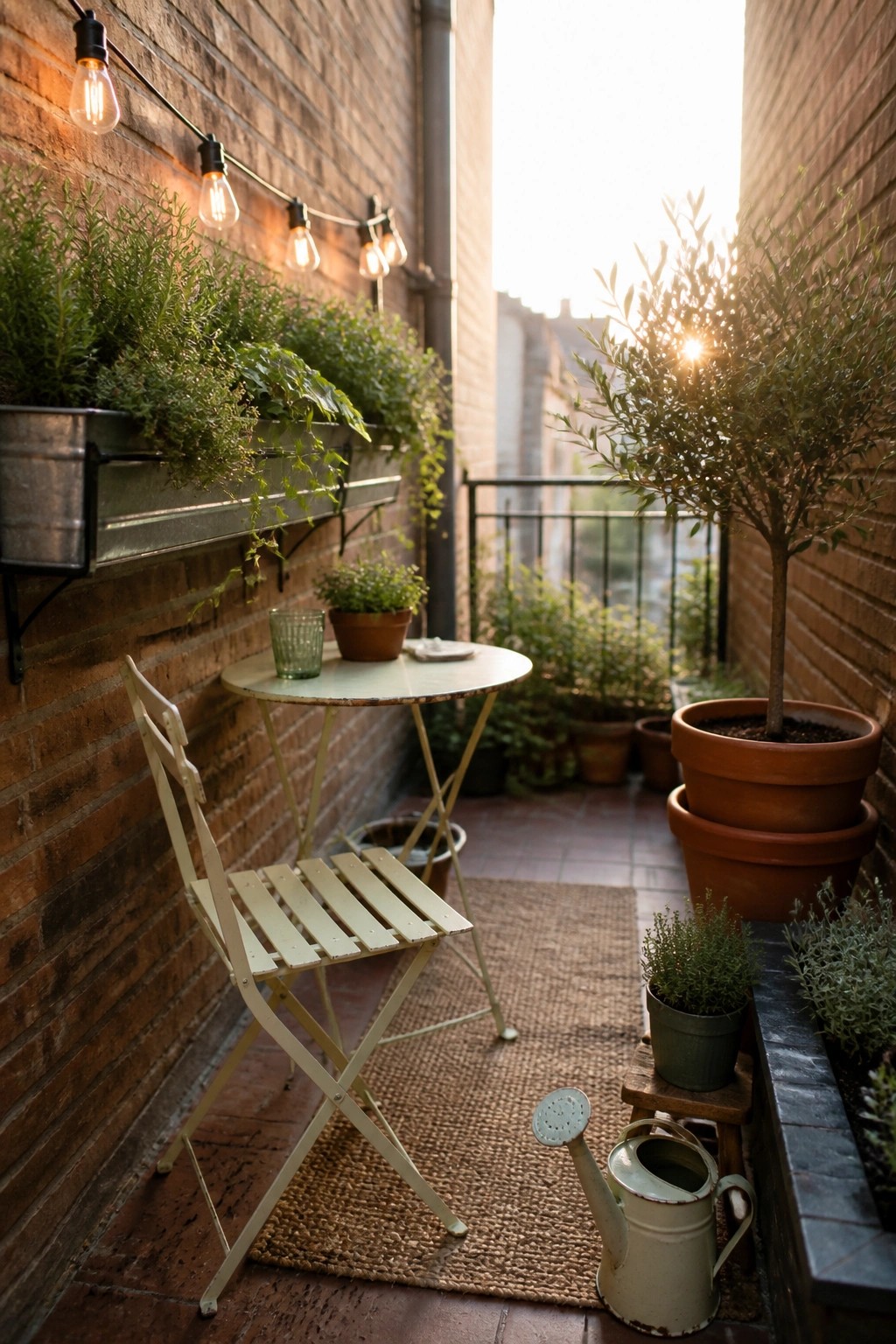
Mounting planters on the wall gives you room for more plants without losing floor space for a chair or table. It keeps the area from feeling crowded while still bringing in plenty of greenery.
This approach works best on balconies or narrow patios with solid walls. Use sturdy brackets, choose lighter containers, and mix trailing plants with taller ones so the setup feels balanced rather than top-heavy.
Mount Crates on the Wall for Vertical Planting
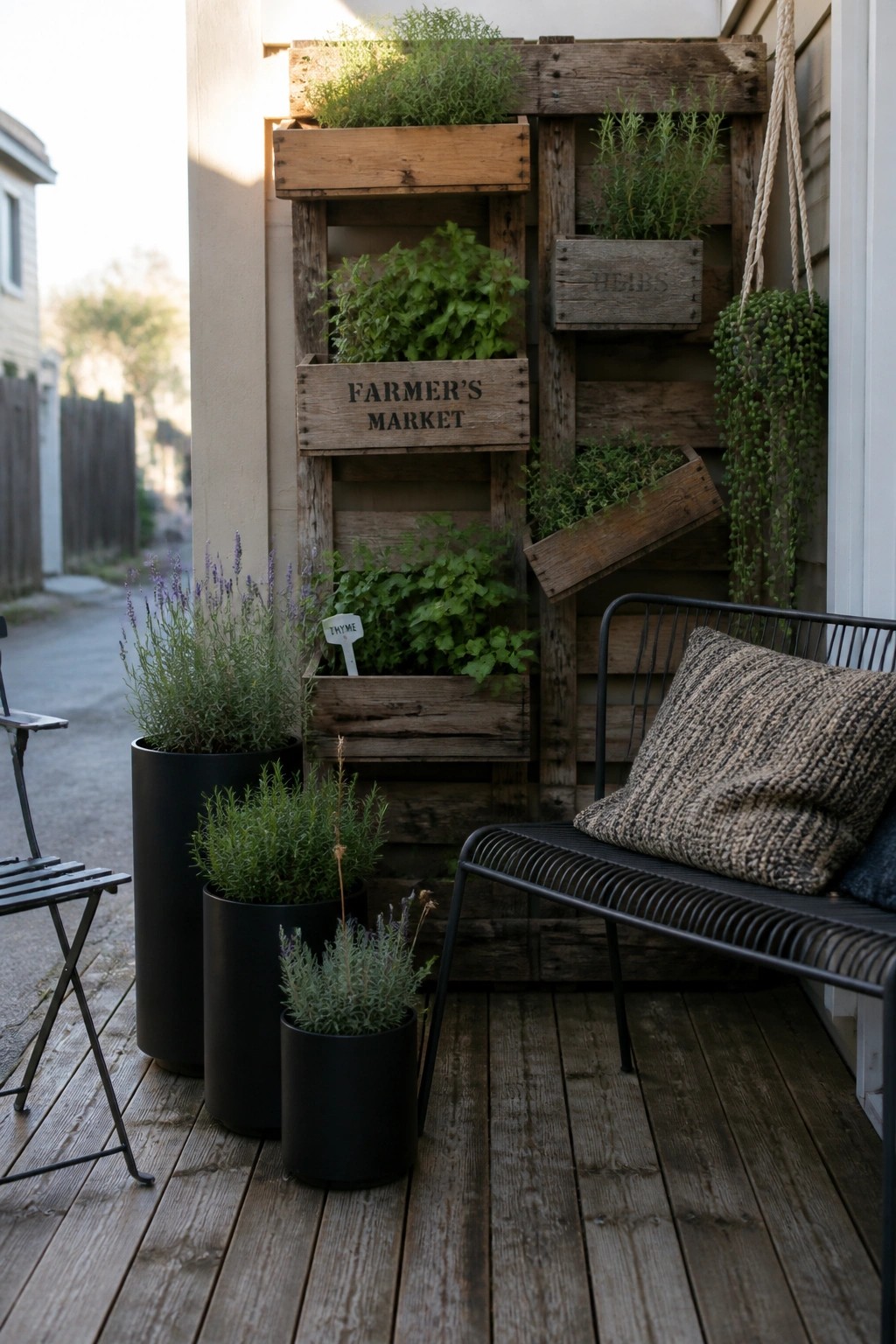
One simple way to add more growing room on a small patio is to mount wooden crates directly onto a wall or fence. This keeps the floor clear while turning empty vertical space into a spot for herbs and leafy plants.
It works best on compact decks or urban patios where every square foot counts. Arrange the crates at different heights so you can reach everything easily, and use the lower area for a few larger pots if you need more variety.
Tiered Stands Keep Small Patios Open
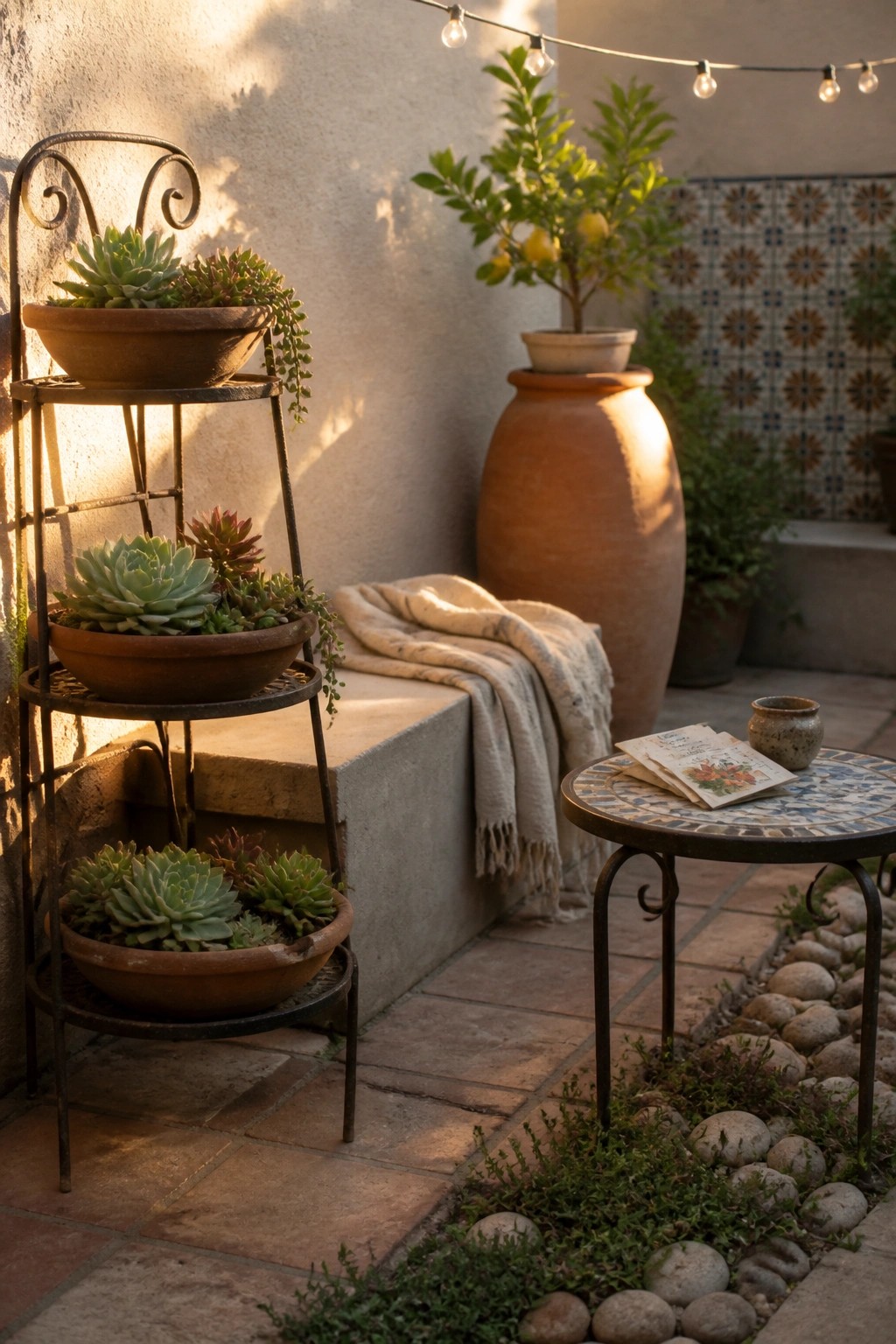
A tiered stand lets you fit more plants without crowding the floor of a compact patio. The vertical layout keeps everything in one area so the rest of the space stays usable for a chair or table.
This setup works best on patios with at least one solid wall or corner. Place it where it gets the right sun for the plants you want to grow and choose pots that fit the shelf depths without tipping.
Large Containers Add Height in Small Spaces

One simple way to garden on a compact patio is to use a few oversized containers instead of scattering lots of small pots. The big pots hold taller plants that give the space some structure while leaving the floor open for seating and walking around.
Set them along the back wall or railing so they do not get in the way. This approach works well on balconies and rooftops because the containers give plants room to grow and stay stable in wind.
Line the Edges With Mixed Containers

Placing pots of different sizes along the sides of a narrow balcony keeps the center open for seating while still packing in plenty of plants. This approach works especially well when you have a long but skinny space, since the greenery frames the area without blocking movement.
You can stack taller planters against one wall and set smaller pots on a shelf or ledge opposite, mixing flowers with herbs for both looks and use. It suits apartments or townhomes where floor space is limited, and it avoids the common mistake of scattering pots randomly in the middle.
Vertical Wall Pockets For Compact Patios
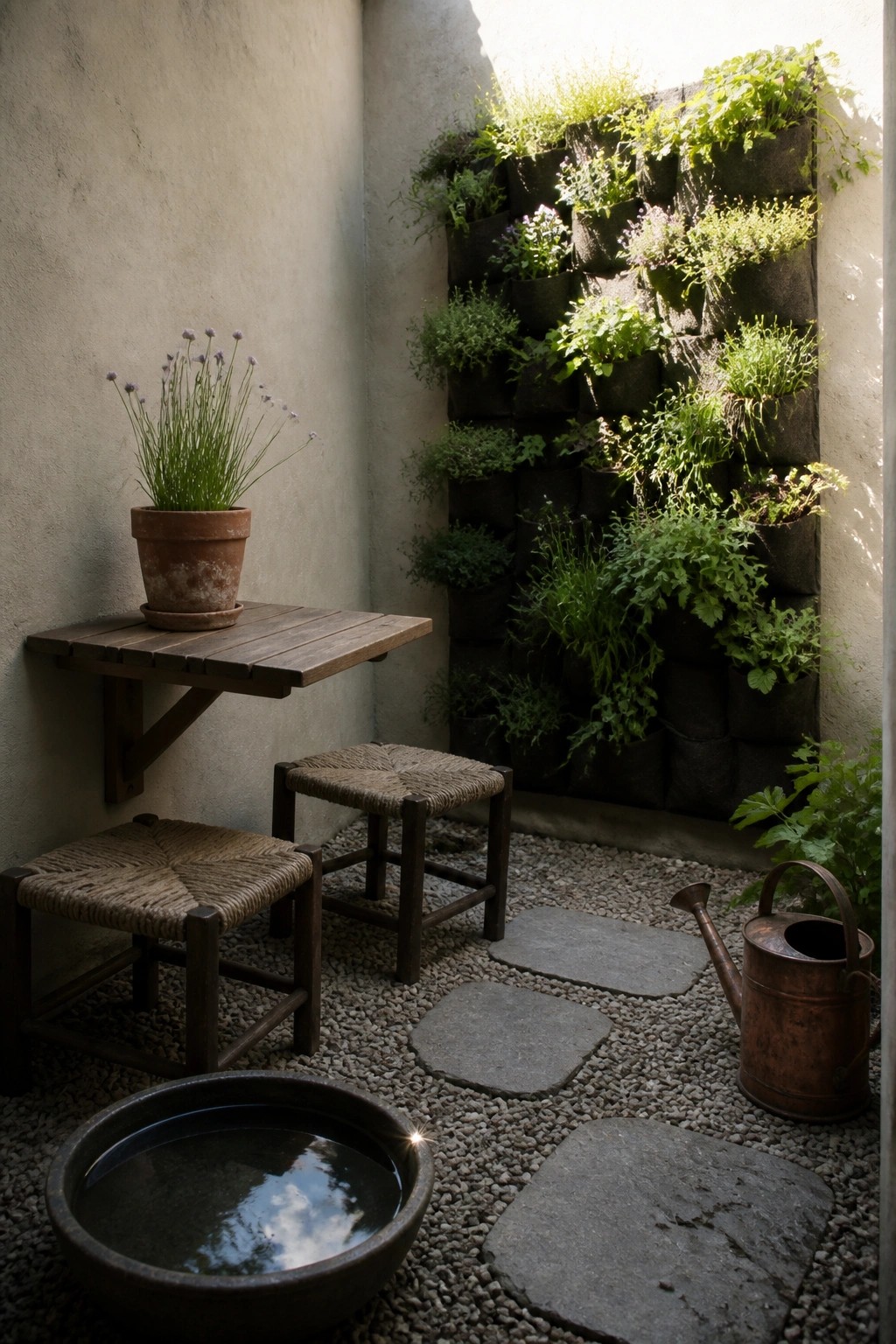
Many small patios run out of floor space fast. A wall fitted with planting pockets turns that empty vertical surface into room for herbs, flowers, and leafy greens without adding clutter below.
This works best on a solid fence or courtyard wall that gets decent light. Keep a watering can nearby and choose plants that handle the same conditions so the whole setup stays simple to manage.
Rolling Carts Simplify Small Patio Gardening

A rolling cart gives you a simple way to keep container plants organized without taking up much permanent space. It works especially well on balconies where floor room is tight and you need to shift things around for sun or shade during the day.
Load the cart with pots of different sizes and roll it where it fits best. This setup suits small urban patios that need flexibility, though you may want to check the wheels can handle any uneven surfaces.
Group Pots In Different Sizes
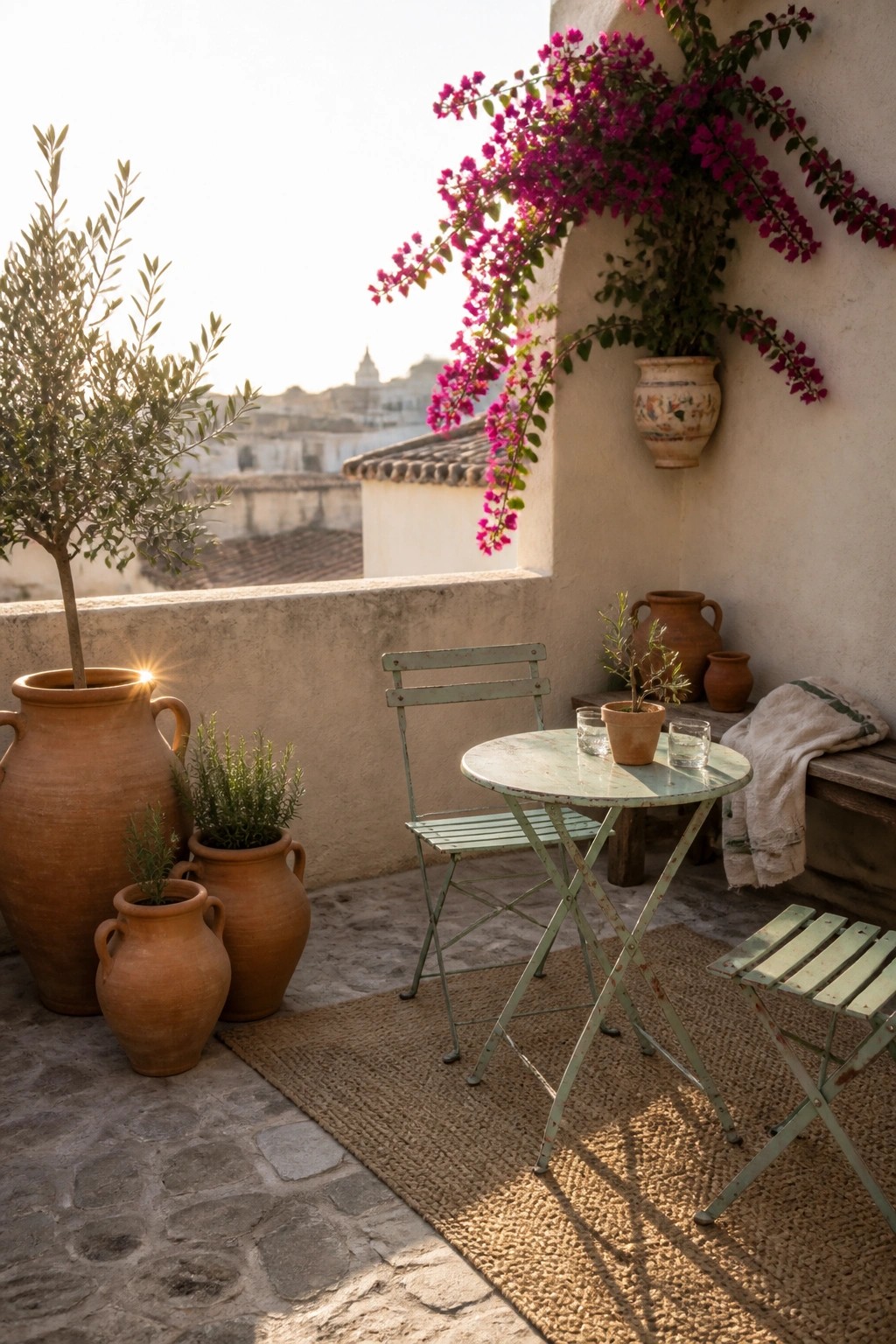
Clustering pots of different heights and widths gives a small patio a fuller look without taking up much floor space. The large ones anchor the area while smaller pots tuck in around them, letting you fit more plants into a tight corner or along a wall.
This works especially well on stone or concrete patios where you cannot dig beds. Stick to a simple color for the pots so the plants stay the focus, and leave a little room between groups so the space does not feel crowded.
Group Tall Containers Along One Side
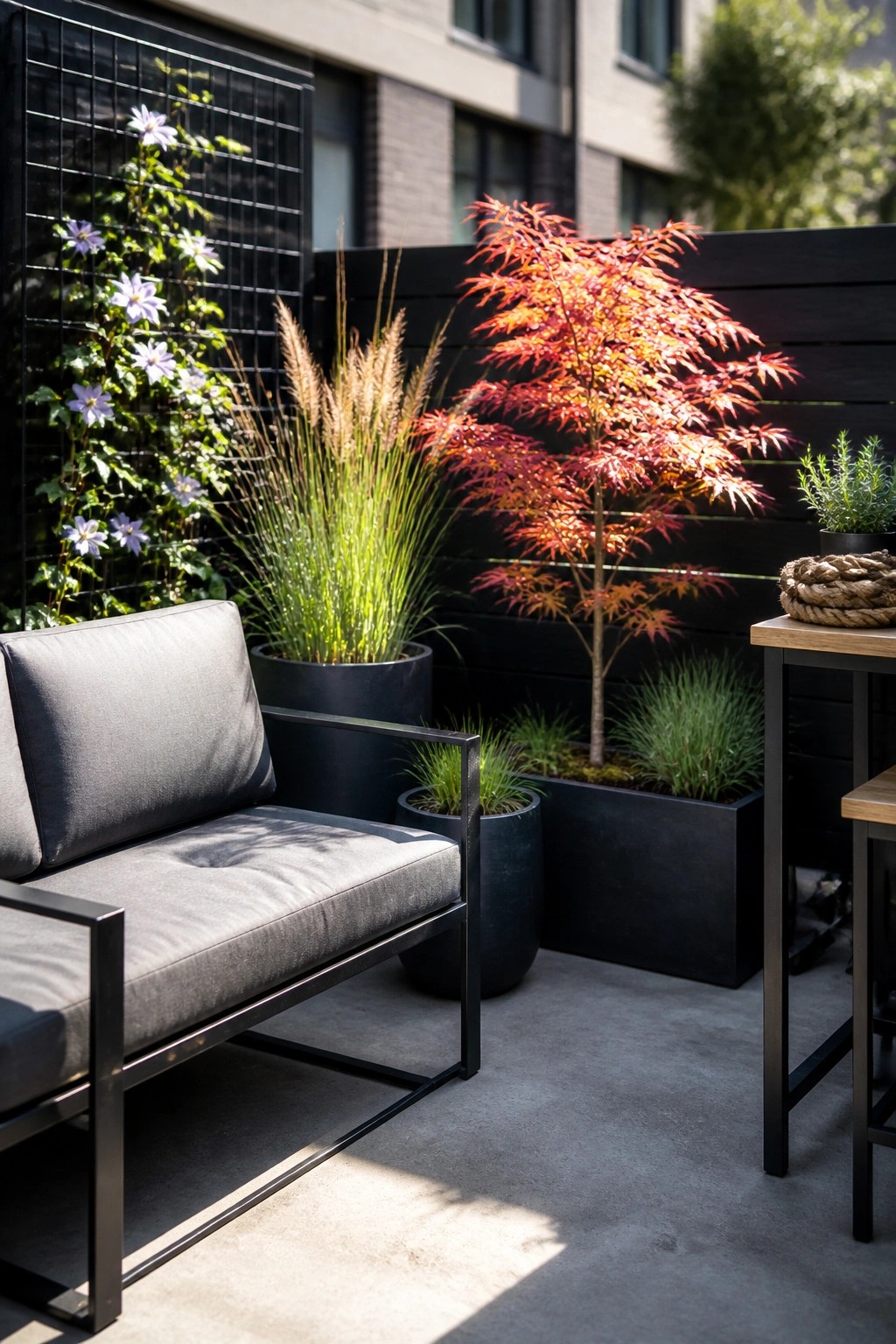
Large pots make it easy to bring height and greenery into a small patio without using up floor space. Placing them together along one edge creates a soft screen that feels more like a garden than a few scattered plants. The mix of grasses, shrubs, and a small tree adds layers that change with the seasons.
This setup works well on concrete or deck patios where digging is not an option. Choose containers in similar colors and materials so they read as one group rather than separate pieces. Keep the front area open for seating and leave enough room to walk around the pots for watering.
Hang Planters Overhead To Free Up Floor Space
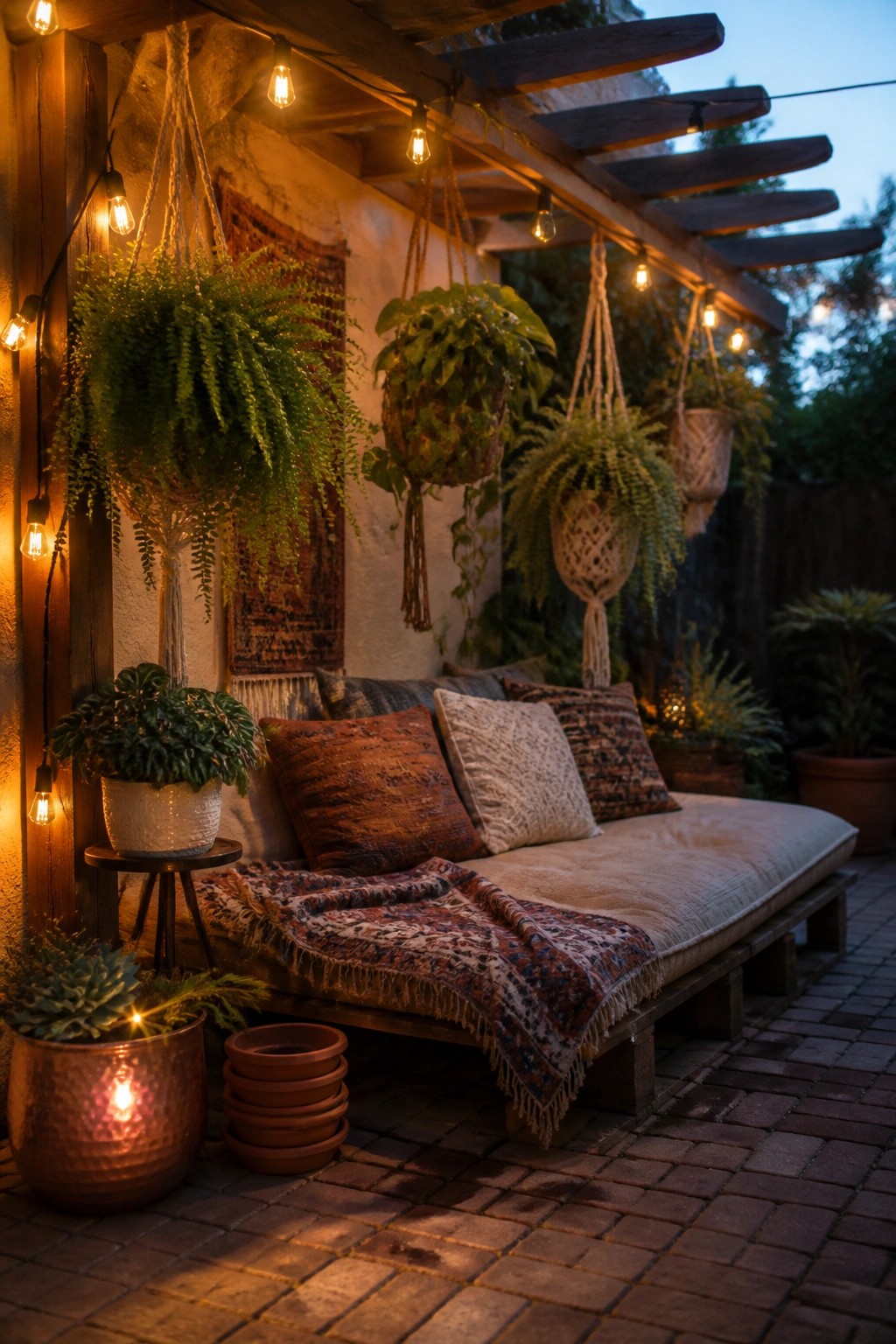
Small patios often run out of room fast once you add seating. Hanging containers from beams or hooks lets you bring in plenty of plants while keeping the ground clear for chairs or a bench.
This works best on covered patios where you can attach hooks securely. Mix a few larger hanging baskets with smaller ones at different heights, and use lightweight pots so nothing feels too heavy on the structure.
Mix Pot Sizes Along The Bench
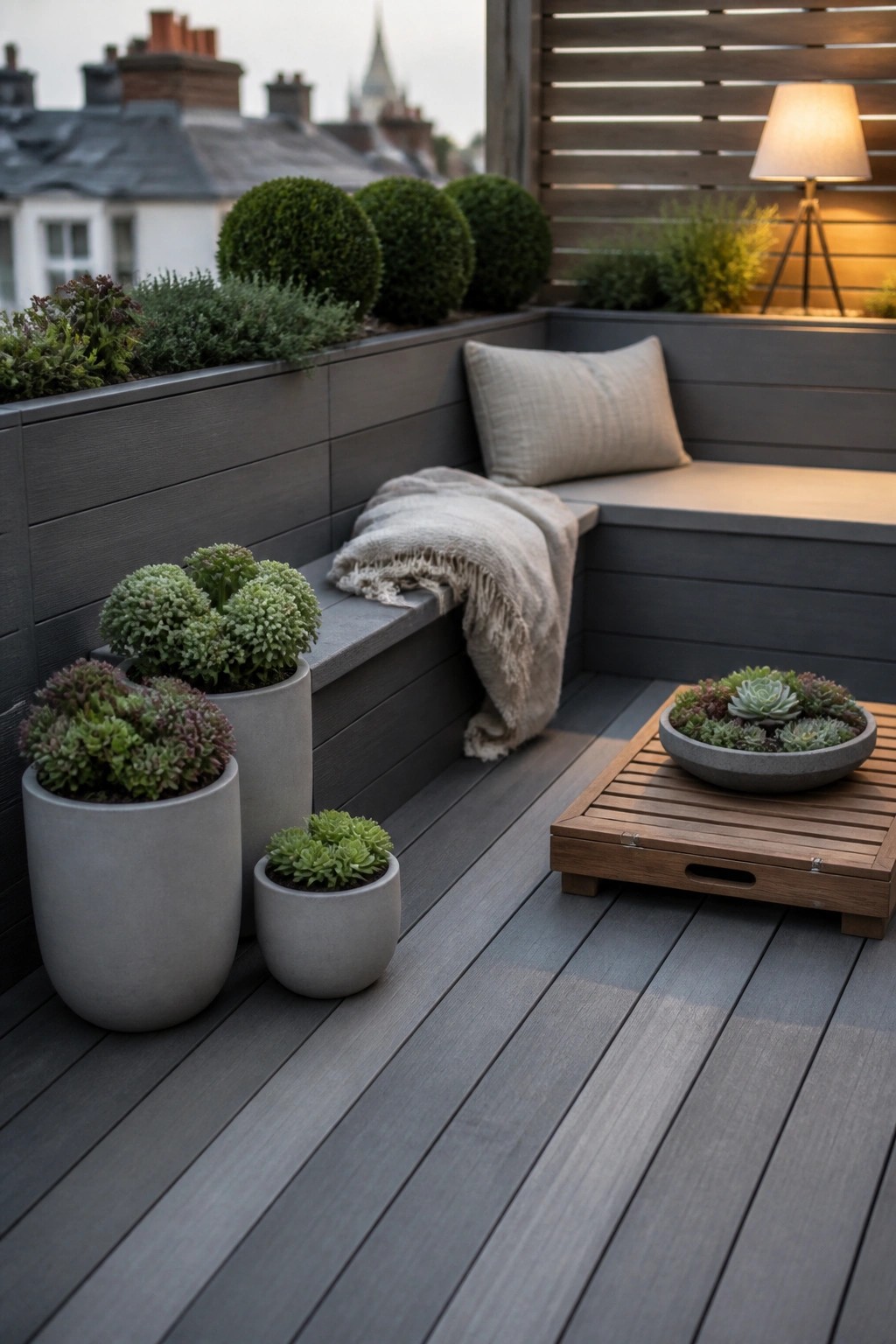
One simple way to add more greenery to a small patio is by using pots in a few different sizes all in the same area. The mix keeps things from looking too flat and lets you fit more plants without crowding the floor.
This works best on decks or balconies with built-in seating. Place the larger pots toward the back and tuck smaller ones in front so the plants stay visible and easy to water. You can also shift them around when the seasons change.
Wooden Crates Work Well for Small Patio Gardens

Wooden crates give you a flexible way to grow herbs and vegetables on a tight patio. They stack and move easily, so you can adjust the layout as plants grow or seasons change.
Try lining a few along one side of your seating area. This keeps everything within reach and works especially well for renters who cannot build permanent beds.
Hang Containers From Overhead Structures
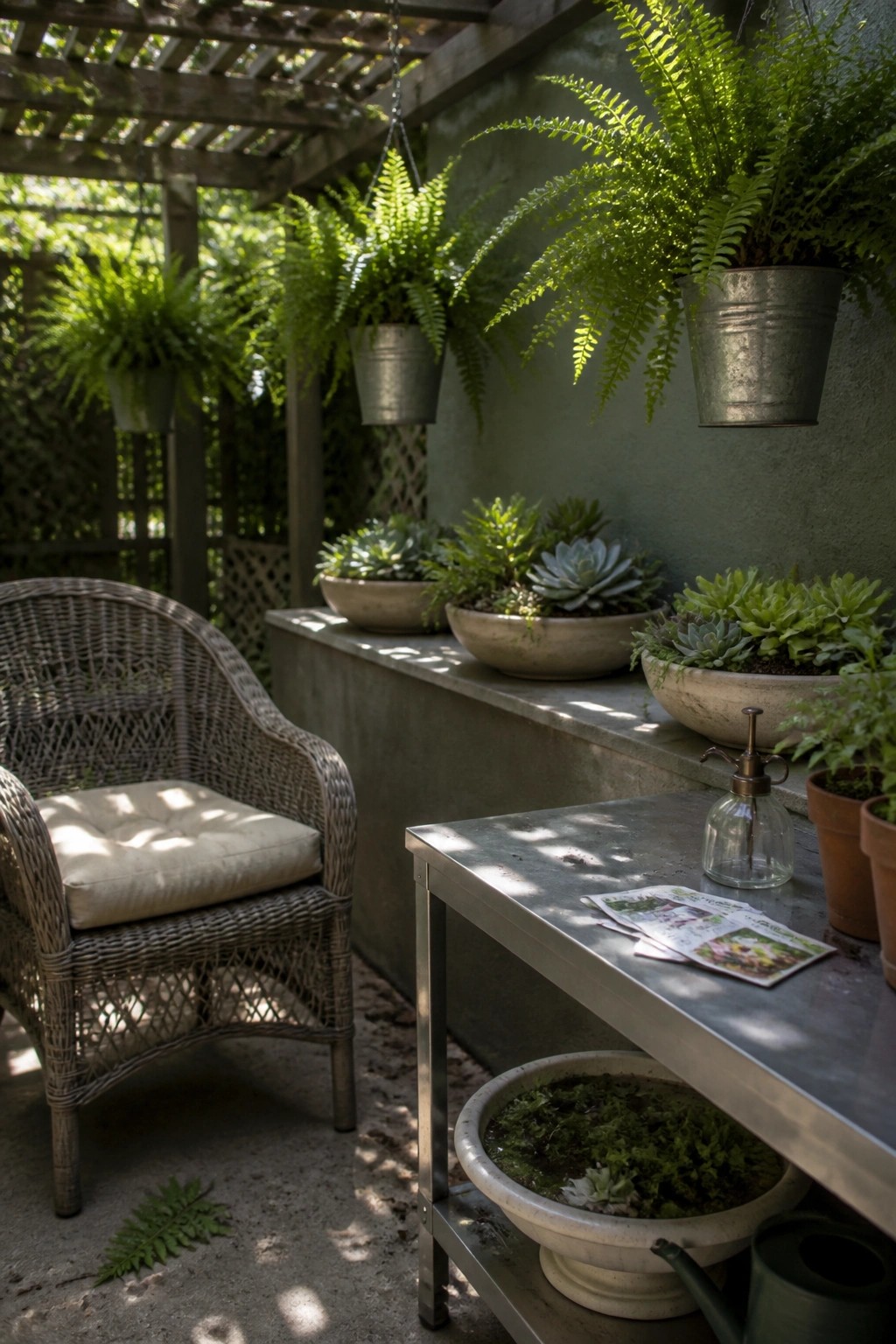
Hanging containers is a simple way to add plenty of plants without losing floor space on a compact patio. It keeps seating areas open while still bringing in soft greenery overhead.
This approach works best on patios that already have a pergola, beam, or solid ledge to work with. Choose lightweight pots and check that the supports can handle the weight once the plants are watered.
Grow Fruit Trees on a Wall Trellis
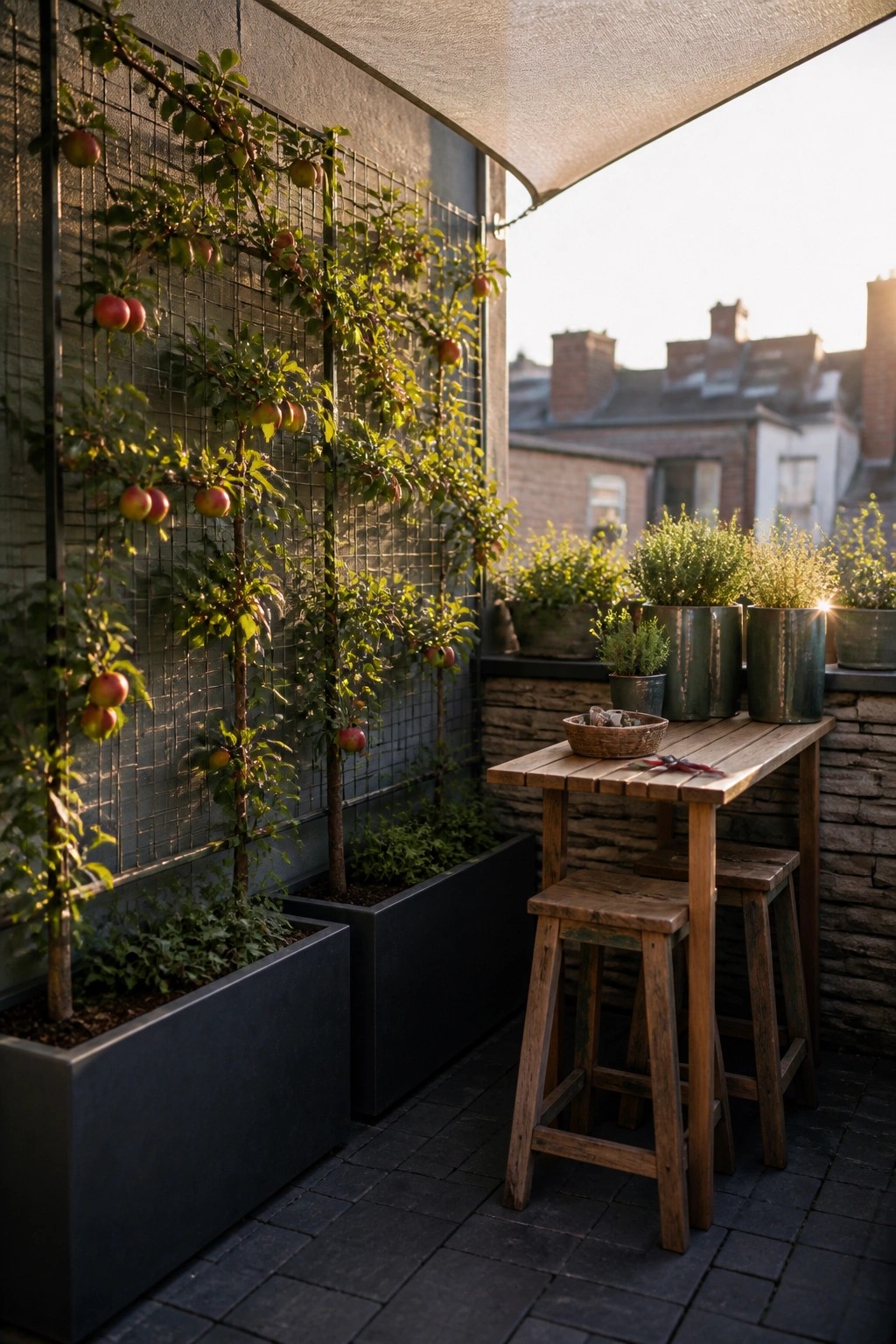
Many small patios feel cramped once you add seating and a few pots, so growing fruit vertically solves that problem. Training apple trees along a grid on the wall uses the vertical space without crowding the floor, and the containers still let you move things around if needed.
This setup works best on a sunny wall that can support the weight of larger planters. Pick dwarf varieties, keep the soil well drained, and prune lightly each year to maintain the flat shape against the grid.
Use a Tiered Planter to Grow More in Less Space

A tiered planter gives you three levels of growing room in the same spot where one pot would normally sit. On a small patio this matters because floor space stays open for seating or walking through while the plants still get plenty of light and air.
Place the unit against a wall or fence so it does not block movement. Choose a size that matches your available height and keep the bottom tier low enough for easy watering. The wooden frame in the photo shows how simple construction can blend with other outdoor pieces without taking over the area.
Tuck a Bistro Table Against a Raised Planter

A small seating spot gains a lot when it sits right next to a planted edge. The raised bed holds bigger plants that would crowd the floor if kept in loose pots, and it turns the back of the patio into a green wall without eating into walking room.
This setup works best on narrow patios or side yards where floor space stays tight. Keep the table and chairs simple and foldable so they can shift when needed, and fill the bed with a mix of herbs, shrubs, and one taller plant like a citrus tree for height.
Hang Plants In Jars From A Wall Rack

Hanging jars from a simple wall rack gives you a way to grow more plants without crowding the floor of a small patio. The jars take up almost no ground space and let you line up several herbs or small greens at eye level where they get good light.
This setup works best on a compact patio or balcony with at least one solid wall. Use sturdy rope or twine and check that the rack is firmly mounted so the weight stays balanced. It is an easy way to add more growing room when pots on the ground start to feel crowded.
Vertical Wall Planters Free Up Floor Space
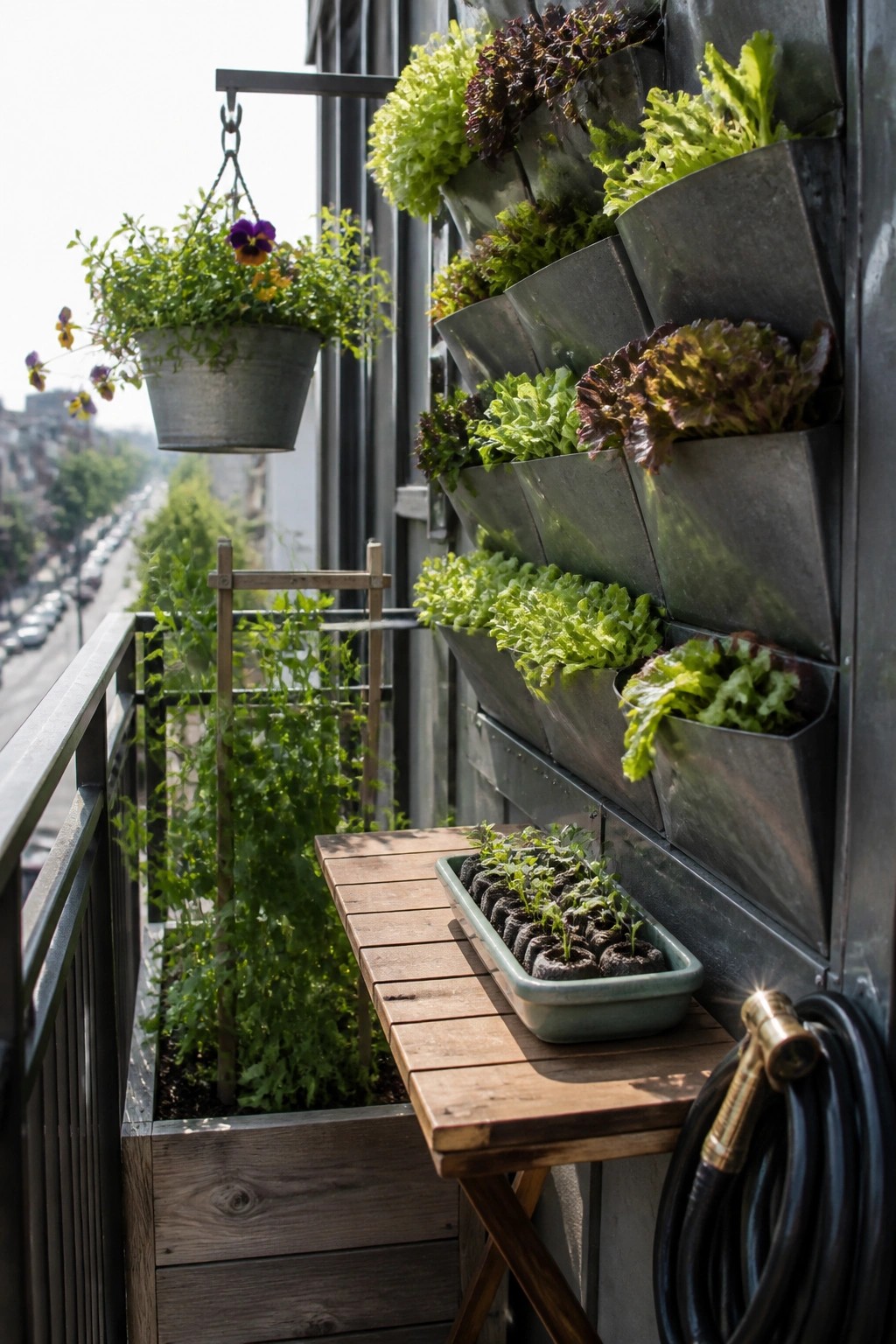
Wall mounted planters let you grow more without crowding the floor on a small balcony. They turn an empty wall into growing space and keep walkways clear so the area still feels usable.
This setup works well on narrow balconies or patios where floor room is limited. Metal pockets like these hold soil well and can be arranged in rows to fit whatever you want to grow. Just check that the wall can support the weight once the planters are filled and watered.
Use a Ladder for Vertical Container Displays
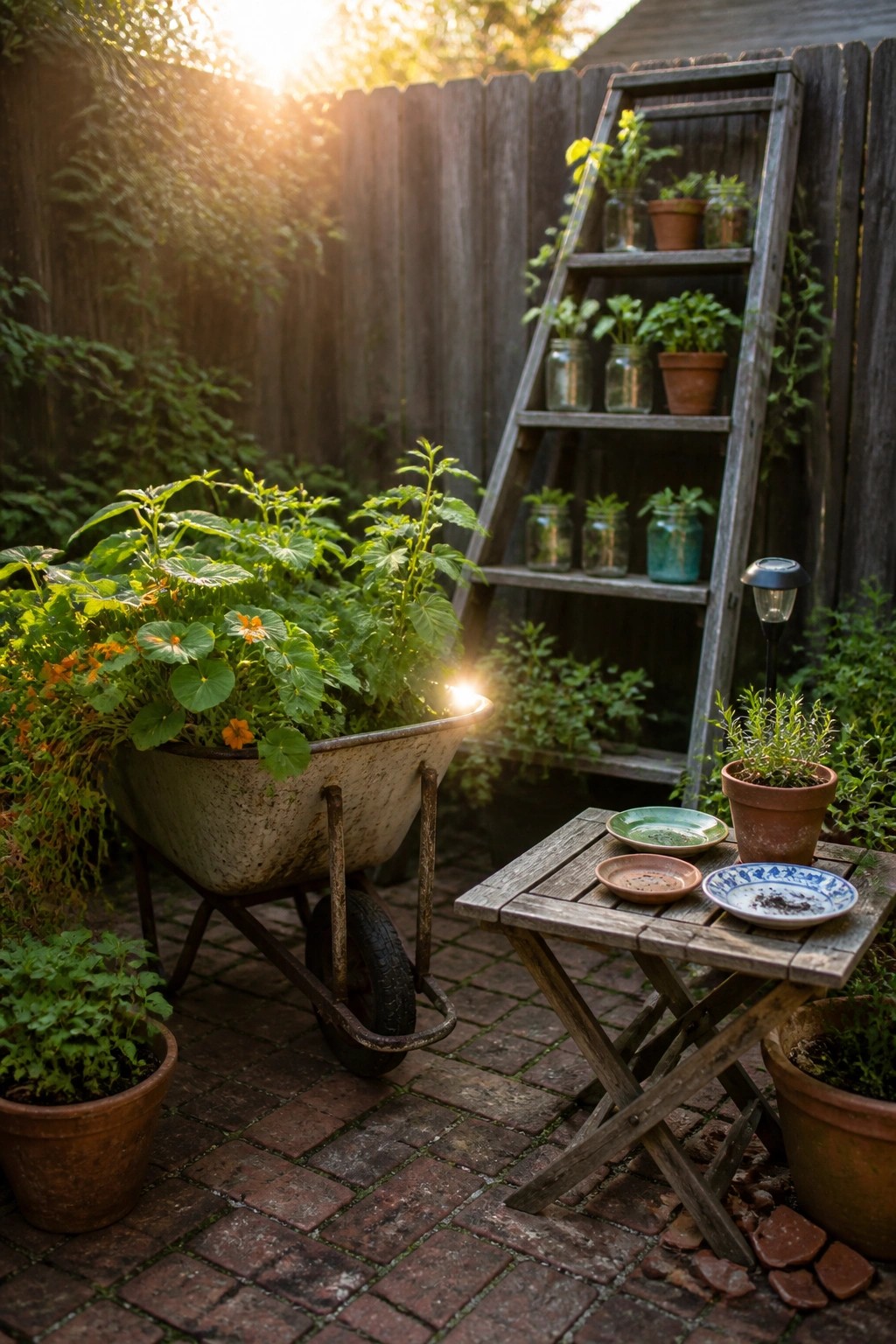
A ladder gives you extra planting room without spreading out across the patio floor. Lean it against a fence or wall and set small pots or jars on the rungs so plants sit at different heights and still leave walking space below.
This setup works best in tight patios or balconies where ground space is limited. Use sturdy rungs that can handle the weight and group plants that need similar light so everything stays easy to water and care for.
Use Steps For Layered Container Planting
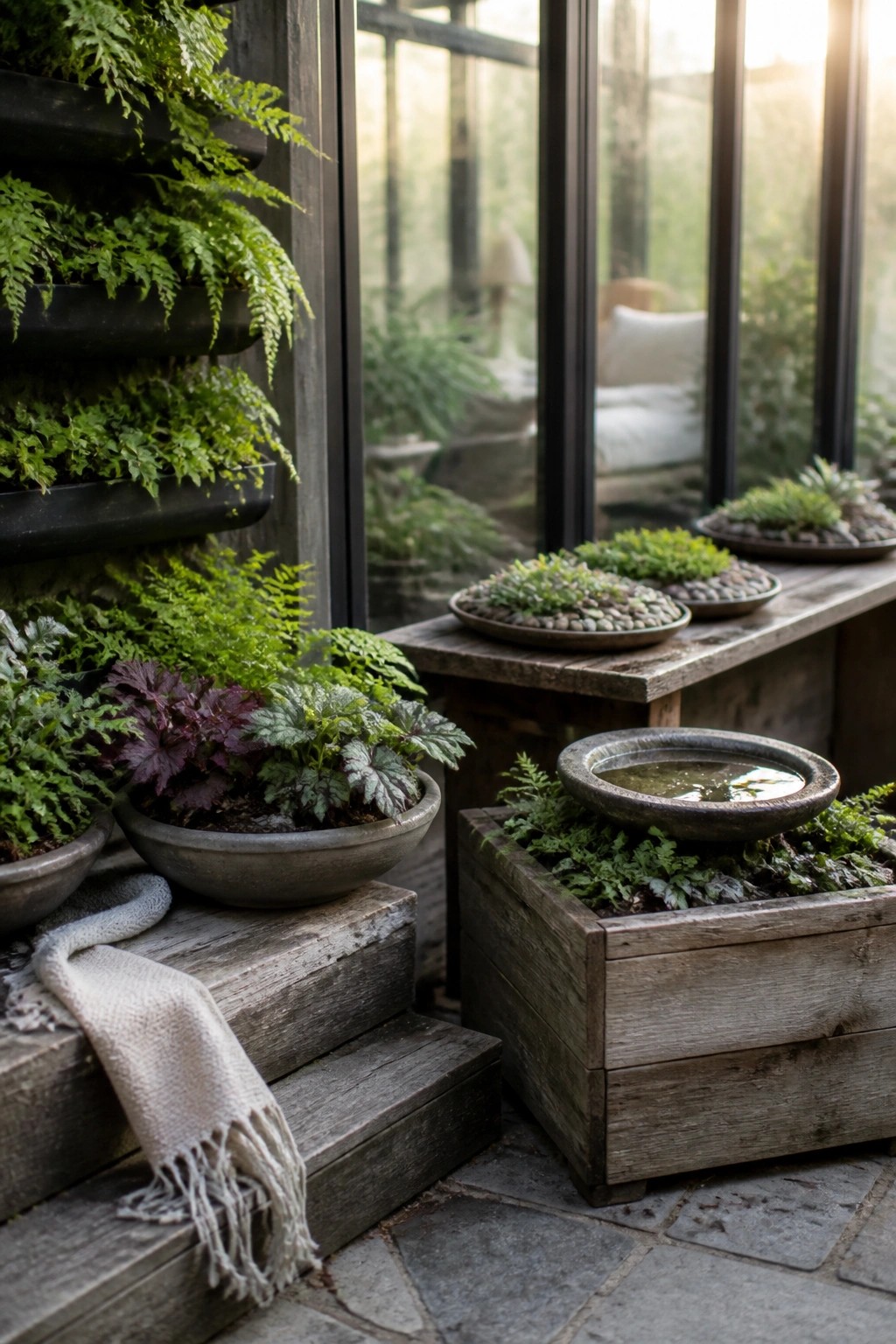
Steps often sit empty in small patios, but they make a simple place to add more plants without losing walking room. Set pots of different sizes on each level so the greenery builds upward instead of spreading out across the floor.
This setup suits compact urban patios or townhouse decks where floor space is tight. Choose sturdy containers that will not tip and group plants that like similar light so watering stays easy.
Hang Wooden Boxes on the Wall for Vertical Planting

Hanging a row of wooden boxes on the wall adds planting space without taking over the floor. On a small patio this keeps things open while still letting you grow more than just a few pots at ground level.
Use rope or chain to suspend them at different heights and fill each one with succulents or grasses that do not need much soil. This setup works best on decks or balconies that have a solid fence or siding to attach to, and it stays simple to move or change out later.
Cluster Pots Along Seating Edges
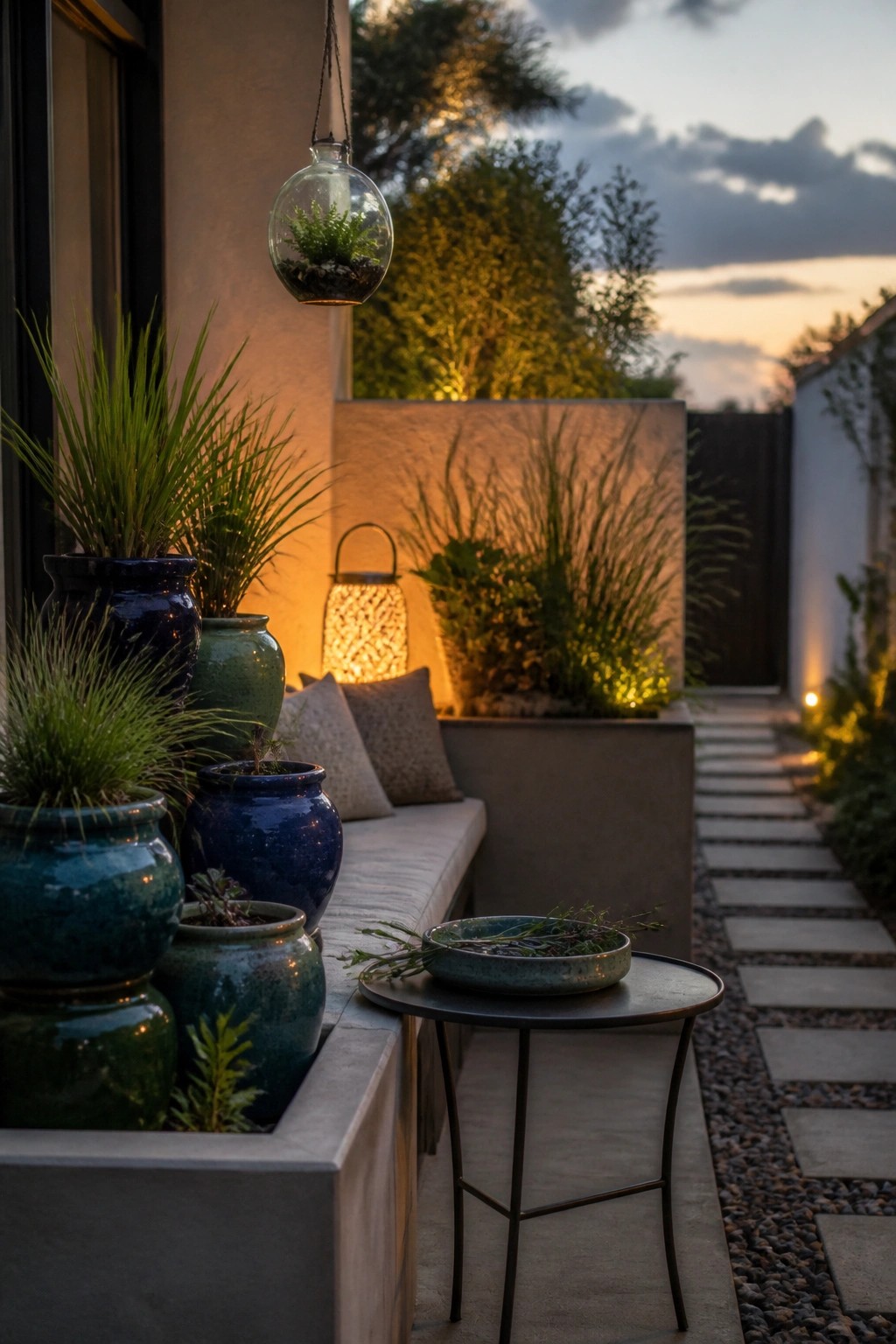
One simple way to add plenty of plants to a small patio is to line up several pots right along the edge of a bench or low wall. The mix of sizes and colors keeps the display full without spreading things out across the floor.
This approach works best on compact spaces where you already have built-in seating. Stick to two or three container colors and mix taller grasses with smaller plants so the group feels balanced. It leaves the main walking area clear while still giving you a lush corner.
Frequently Asked Questions
Q: What plants actually thrive in tiny containers on a patio?
A: Start with herbs like basil or thyme since they handle cramped roots and give you fresh picks for meals. Leafy greens such as lettuce also fit if the pot has decent depth. Skip anything that needs to spread wide.
Q: How can I keep soil from drying out too fast in summer heat?
A: Water early in the morning so roots take it up before the sun hits hard. Add a layer of mulch on top to hold moisture longer. Grouping a few pots together lets them create a bit of shared shade.
Q: My patio only gets morning light, what still grows well there?
A: Focus on shade-tolerant options like mint or ferns that do not demand full sun. Move the containers to catch whatever light appears. Check growth every week and shift them if stems start stretching thin.
