


I have watched yards that look fine at first slowly turn into more work than they are worth once the plants start spreading and the edges blur.
The layouts that hold up best tend to use fewer varieties and let the ground cover do most of the filling in.
Small choices in plant spacing change how often you reach for the pruners later.
When I look at my own yard I keep returning to ideas that cut down on weekly tasks while still giving the space a clear shape through the seasons.
A handful of these suggestions seem practical enough to try without committing to a full overhaul.
Succulent Gravel Beds with Steel Edging
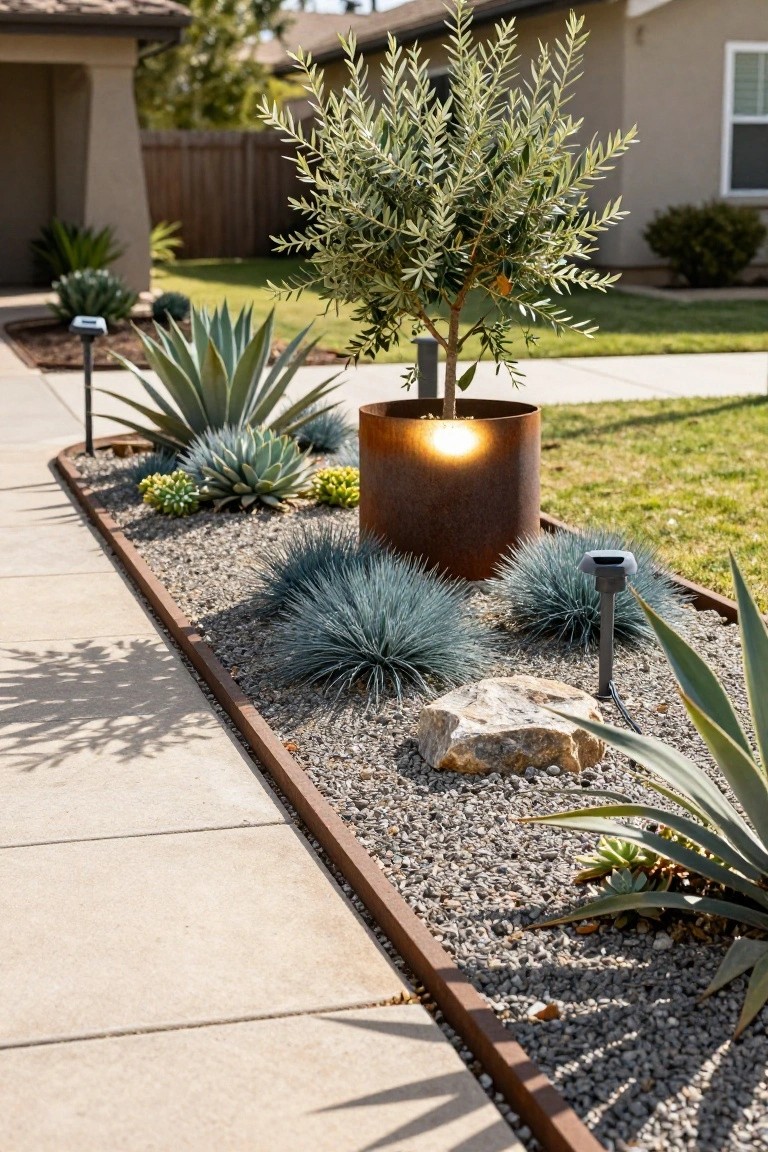
One easy way to keep yard work down is to build gravel beds full of tough succulents like agaves and blue fescue. The rusted steel edging gives it a neat shape that holds everything in place without much fuss. That big olive tree in the center pot adds some height without needing constant pruning or watering. It looks put-together but stays simple.
These beds work great along walkways or driveways where you want definition without grass to mow. Pick gravel in a neutral color to let the plants stand out, and go for edging that’s already got that weathered look so it blends right in. Just make sure the spot drains well, or the succulents might not thrive. Fits most homes with sunny yards.
Simple Fire Pit Courtyard Setup
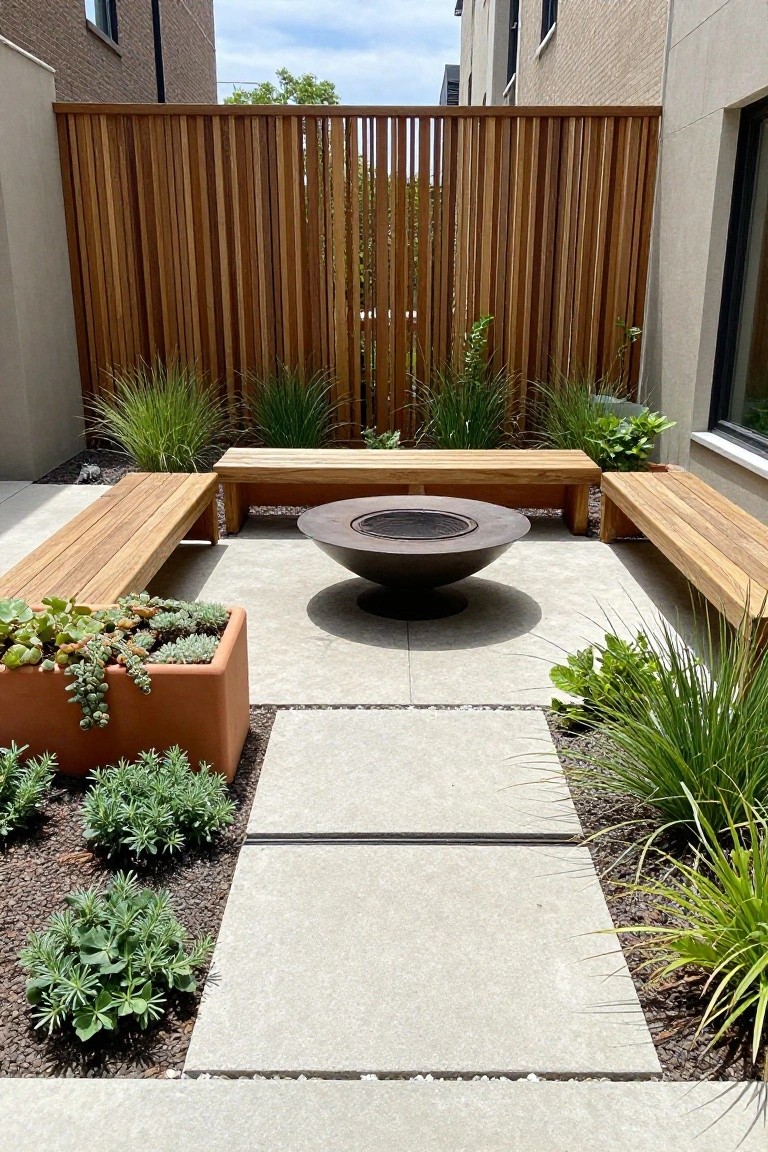
A central fire pit like this one pulls together a small outdoor space into an easy spot for evenings with friends. Wooden benches wrap around it on three sides, keeping things open yet cozy. Low-maintenance grasses and succulents edge the area without much fuss. It’s all paved with simple concrete slabs, so no grass to mow.
This works great in tight backyards or between buildings where you want usable space year-round. Go for teak or similar wood benches that weather well. Stick to drought-tolerant plants to keep upkeep low. Just make sure the fire pit is gas if codes require it… safer that way.
Lavender-Lined Garden Paths

One easy way to make a backyard path feel put-together without much work is to line it with lavender. These plants come back year after year, need little water once established, and give off that nice smell when you brush by them. In this setup, they’re planted tight along both sides of a stone walkway, with mulch holding down weeds and drip lines keeping things simple.
It works great in sunny spots where you want some color and structure but not a ton of upkeep. Just pick a tough lavender variety like English or Spanish, space them about a foot apart, and let them fill in. Add low path lights if you walk it at night. Skip it in shady areas though, since lavender wants full sun to stay healthy.
Linear Gravel Pathways with Easy Grasses
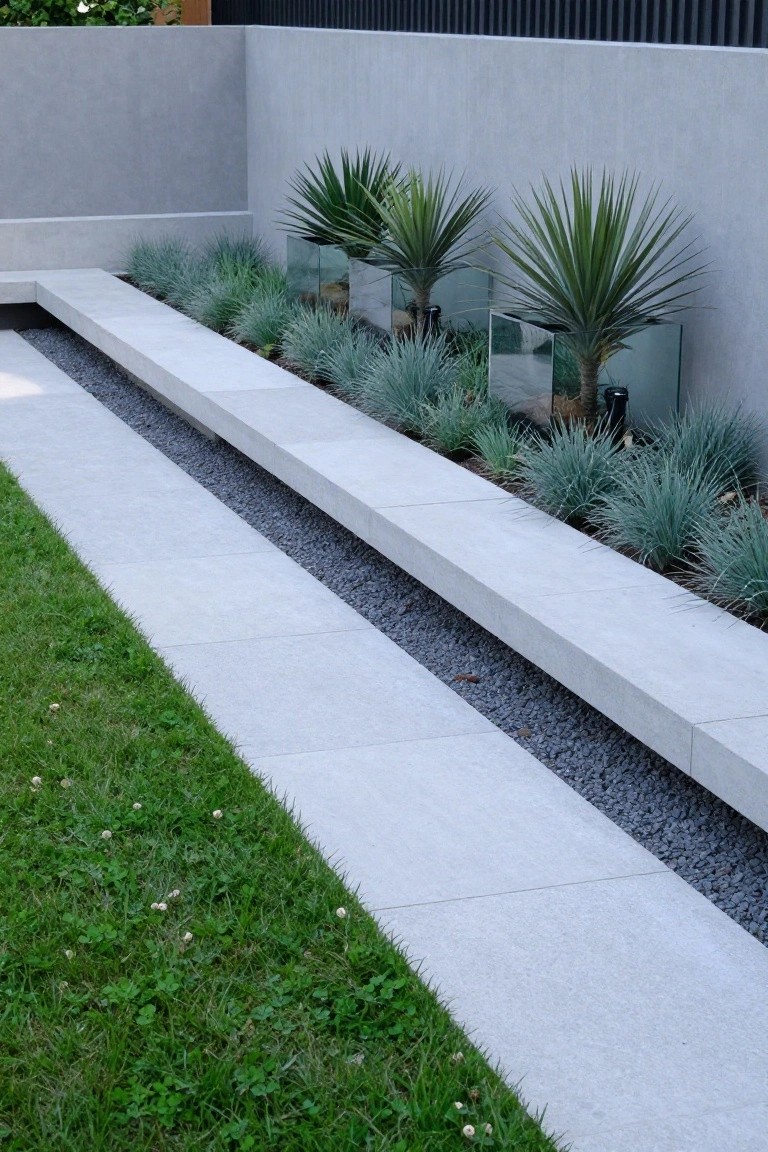
A gravel trench path like this runs between simple concrete slabs. Low clumps of blue-green grass fill the beds along the edges. A few structured palms add height without much fuss. The gravel handles drainage and cuts down on weeding. It’s clean and modern. Tough plants mean less watering once they’re going.
Put this in side yards or along walls where space is tight. It suits sunny spots with average soil. Line the trench with landscape fabric first to block weeds long-term. Skip it in wet areas unless you add extra slope.
Galvanized Trough Raised Beds
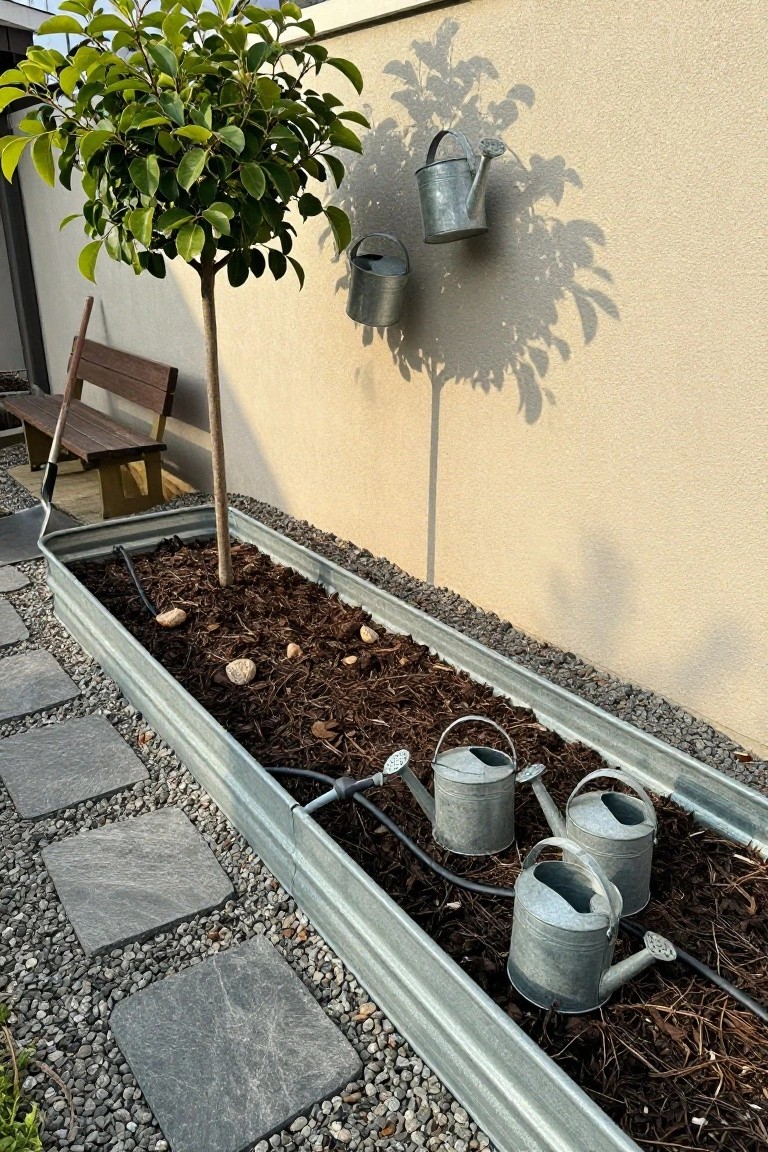
One straightforward way to garden without much work is turning a long galvanized trough into a raised bed. It sits right against the house wall, filled with mulch and a few rocks for drainage, and a small tree takes center stage. Drip lines run through it, so watering stays simple. No digging up the yard, just contained planting that looks tidy.
These work best in narrow spots along fences or walls, where you want veggies or herbs close to the kitchen door. They’re cheap if you find used troughs, and the metal holds up for years. Just keep an eye on hot afternoons… the sides can warm the soil, but thick mulch takes care of that. Fits any yard style, really.
Low-Maintenance Path Edges with Tall Grasses

Tall ornamental grasses make a simple border for walkways, and they keep things easy once they’re growing. Plant them along the edge of a concrete path like this, where fluffy golden plumes add movement without crowding the way. Mix in low shrubs with white flowers and rough driftwood pieces for a natural hold-back. These grasses handle sun and dry soil well, so you skip constant watering or fussing.
This setup fits sunny side yards or coastal spots best. Pick tough varieties like fountain grass that won’t spread too much. Line the base with pebbles or shells to cut down on weeds, and the path stays neat year after year. Just trim the old growth in late winter if needed.
Tall Grasses for Easy Path Borders

Ornamental grasses like these tall, feathery ones make great low-maintenance borders along garden paths. They grow quickly, fill in nicely without much fuss, and pair well with simple yellow flowers such as black-eyed Susans. The grasses sway in the breeze and hide the base of stone edging, giving a natural look that doesn’t need constant trimming or deadheading.
Plant them in a row next to walks or driveways where they get full sun. They’re tough against drought once established, so they’re perfect for busy yards. Just cut them back in late winter, and they’ll bounce back. Works best in larger spaces, but even a short run adds movement without the work of formal hedges.
Potted Succulents for Balcony Gardens

Big terracotta pots overflowing with succulents make a balcony feel like a real garden without much fuss. These plants store water in their leaves so you water once a week or less. They cluster together nicely, filling out the space with greens and soft yellow flowers on vines nearby. It’s a simple look that stays tidy.
This works best on sunny balconies or small terraces where ground planting isn’t an option. Group a few large pots along the edge, maybe add a bistro table for coffee. Choose varieties like agave or echeveria that handle heat. Just ensure good drainage to avoid root rot.
Central Gravel Bed for a Focal Tree

A single tree planted in the middle of a round gravel bed makes an easy focal point that doesn’t take much work to keep up. The gravel handles mulch duties and cuts weeds way down, while low edging plants like boxwood hold the shape without needing constant trimming. It’s a clean look that fits right with simple walls or patios.
This idea shines in small courtyards or sunny side yards where space is tight. Choose a drought-tough tree for your area, line the bed with fabric first, then add gravel and a few decorative stones at the base. It suits dry climates best… watch for root room as the tree grows.
Easy Poolside Grass Beds
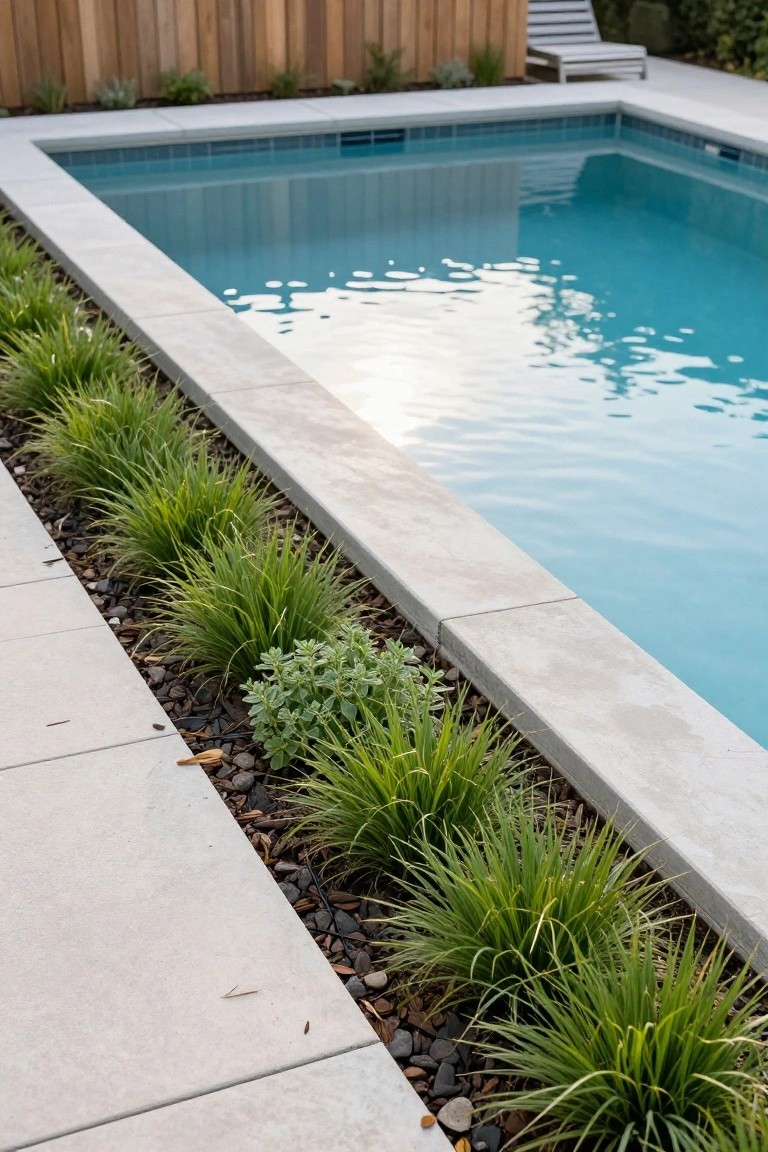
Narrow beds of grasses tucked right up against the pool edge make for clean, no-fuss landscaping. These tough, upright grasses fill the space without spilling over, and the pebbles underneath keep soil in place while holding moisture. It gives that fresh green look that ties into the water without demanding daily attention.
Plant them in any sunny spot along concrete coping like this. They suit modern yards or smaller pools best, where you want definition but not big maintenance. Choose varieties like carex or fescue that handle wet feet near the pool, and top with local gravel to cut weeding even more.
Simple Stone Paths with Pebble Edges

A straightforward stone path like this one makes getting around the yard easy without much upkeep. The flat gray pavers set into the ground with white pebbles along the edges keep weeds down and give a clean line through the plants. Pair it with tough shade lovers such as hostas and ferns that mostly take care of themselves once established. It pulls the garden together without needing constant trimming or mowing.
This setup works best in shadier spots where grass struggles anyway. Lay the stones close enough to walk comfortably, fill the borders with pebbles for drainage, and plant low-fuss greenery on both sides. Skip fussy flowers that need deadheading. Just watch for moss on the stones if it’s damp… a quick brush keeps it looking fresh.
Steel Edging for Clean Garden Beds

Steel edging like this corten-style border keeps everything in place without constant trimming. It frames the evergreens, grasses, and that round boxwood shrub nicely, giving the bed a sharp modern look. The rusty patina fits right in with gravel paths and mulch. Low fuss once installed.
Put it around front yard plantings where you want definition but not upkeep. It holds back soil well against lawns or walks. Suits gray houses or any siding really. Go for thicker gauge if you have heavy clay soil… keeps it straight for years.
Dry Creek Beds Along Walkways
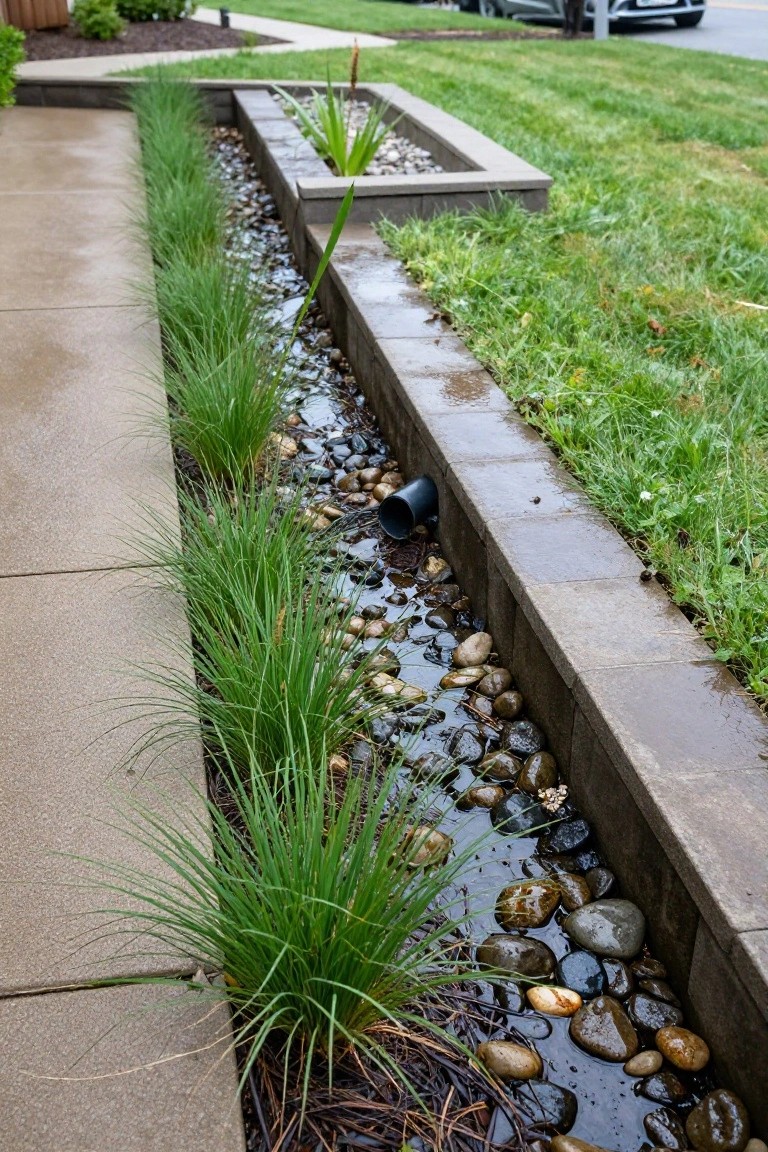
One easy way to handle yard drainage without much upkeep is a dry creek bed running right next to your sidewalk. You dig a shallow trench, line it with rocks in different sizes, and plant tough grasses along the edges. When it rains, water flows through naturally instead of pooling up. In this setup, the grasses stay green year-round, and the rocks keep weeds down.
These work great in front yards or beside driveways where runoff is an issue. Use concrete or stone edging to hold it all in place. Pick grasses like fountain grass that don’t need much water or trimming. Skip it if your soil drains too fast already… might stay too dry. Fits most homes, especially ones with sloped lots.
Brick Edging Makes Garden Beds Easier to Maintain

Brick edging gives beds a solid line that stays in place year after year. It keeps gravel from creeping into the soil and cuts down on weeding along the edges, so the whole area stays tidy with less effort.
This setup works especially well in yards that already use gravel or stone underfoot. Lay the bricks flush with the ground, add a simple layer of mulch inside, and fill with tough plants like lavender or ornamental grasses that do not need constant care.
Raised Beds With Mulch Cut Down On Weeding

Raised beds give you clear edges and better soil control right from the start. That setup means fewer weeds, less bending, and a garden that stays tidy without constant fuss.
Wood chips spread over the beds and paths help lock in moisture and block new growth between plants. This approach suits smaller yards or anyone who wants vegetables and herbs without turning the whole weekend into yard work.
Arrange Pots on Gravel for Easy Maintenance

Many people like setting large pots right into a gravel area because it cuts down on weeding and watering. The plants stay contained, the ground stays tidy, and you can still walk through the space without worrying about mud or overgrown beds.
This setup works best in sunny yards where you want simple paths and flexible planting. Place the pots along stepping stones, choose succulents or other tough plants, and keep the gravel layer thick enough to block weeds. It suits homes with dry soil and gives you room to rearrange things whenever you want.
Winding Stone Paths Cut Lawn Maintenance

A curved stone path lets you replace large stretches of grass with something that needs almost no regular care. The flat pavers create a solid walking surface while the rock borders keep mulch and plants from spilling onto the walkway, so you spend less time weeding and edging.
This layout works especially well in front or side yards of single-story homes where you want a natural flow without adding more lawn to mow. Use durable flagstone or concrete pavers set on a gravel base and fill the beds with low-water shrubs and grasses that stay neat on their own.
Line Paths With Evergreens
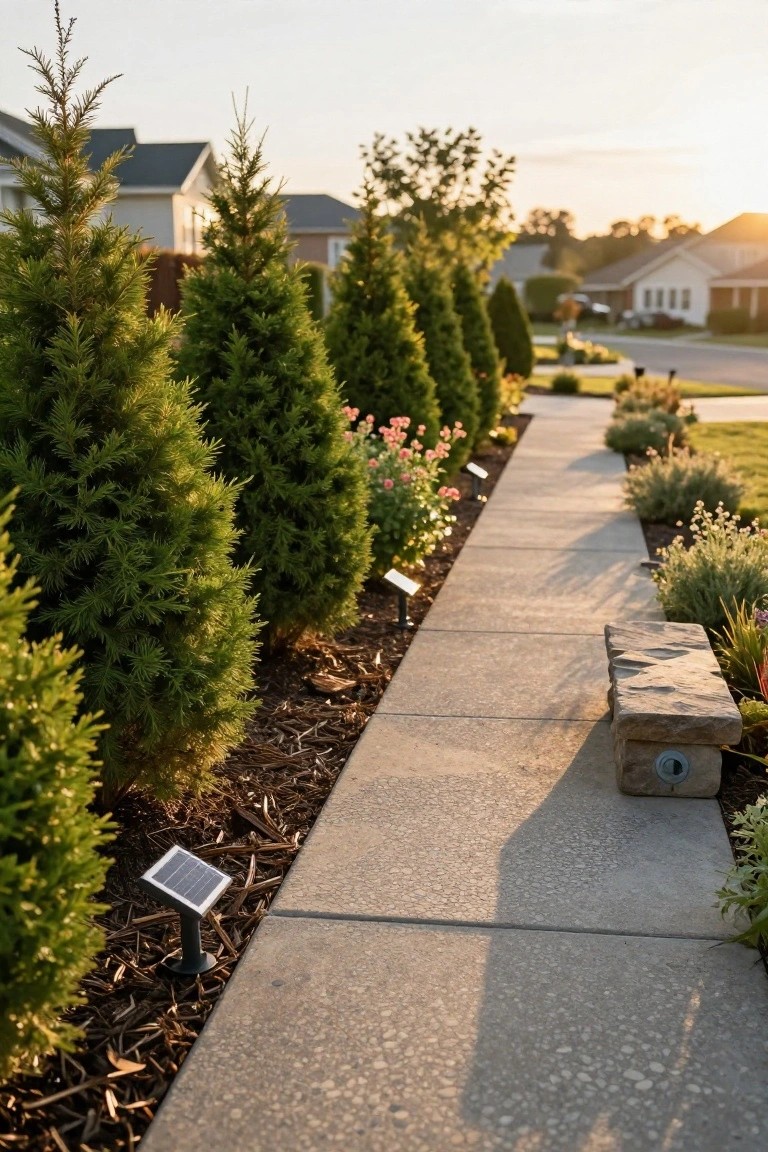
Evergreens planted along a walkway give the yard a steady shape that lasts all year. They cut down on replanting and trimming, and they keep the path looking neat even when other plants go dormant. This approach works especially well if you want a simple border that does not demand constant attention.
It suits suburban homes with straight sidewalks or side yards where you need clear lines. Choose slow-growing varieties, space them evenly, and add a few low solar lights if you want light at night without running wires. The result stays tidy with just occasional watering and light pruning.
Raised Concrete Planters With Built-In Seating

Raised concrete planters let you add structure to a yard without much fuss. They keep soil contained, cut down on weeding, and give you a solid edge that can double as seating when topped with a simple bench. The look stays neat even when plants grow a bit wild.
This setup works best along a patio or in a smaller backyard where you want clear boundaries. Use a tough material like concrete for the sides and add a wood cap for comfort. It keeps maintenance low because everything stays in one place and you avoid scattered pots or extra furniture.
Gravel Edging Defines Beds Without Extra Work

Gravel edging gives a garden bed a clean line that holds up well over time. It separates the path from the plants so grass does not creep in and weeds stay easier to spot. The look stays neat even when you cannot get out there every week.
This works best along front walkways or side paths where you want low fuss. Lay a strip of river rock or pebbles right against the pavers, then fill the bed with tough grasses and a few taller flowers. The contrast keeps the edge sharp without needing constant trimming or new mulch each season.
Gravel Gardens Cut Down on Upkeep

Gravel works well when you want a tidy yard without constant mowing or weeding. The raked surface stays looking neat for weeks at a time, and a single planted mound in the center adds interest without needing much care or water.
This layout suits smaller yards or side areas where grass would be hard to maintain. Lay down a solid base first, then add stepping stones so you can walk through without disturbing the gravel. Keep the planted section small and choose slow-growing plants that need little trimming.
Gravel Paths With Stone Edging

Gravel paths edged with stacked stones keep garden beds defined without constant trimming or weeding. The hard surface handles foot traffic and rain well, so the lines stay clean even after a busy weekend or a stretch of bad weather.
This setup works best in yards that already have some lawn and planting areas to separate. It suits homes looking for a simple, casual style that still feels intentional, and the stones can be adjusted easily if you want to change the curve or add more beds later.
Stone Retaining Walls Create Low-Maintenance Terraces

Stone walls let you build planting levels on a slope without constant upkeep. The different tiers keep plants separated so weeds stay easier to spot and water does not run off as fast.
This approach works well on yards that drop away from the house. Choose hardy shrubs and ground covers that fill in on their own, and the stone does most of the holding work after the first season.
Raised Beds With Tough Plants
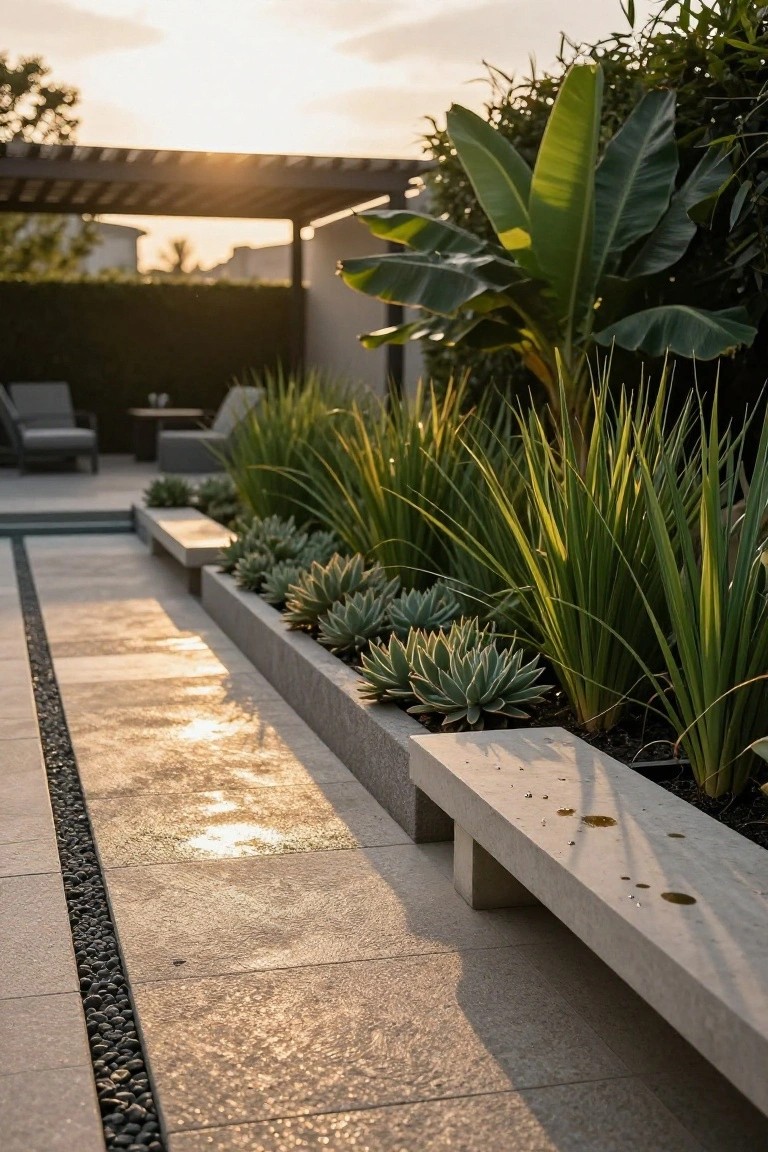
Many yards stay easier to manage when the planting stays contained in long raised beds. The concrete edges give a clean line and hold the soil in place so you spend less time weeding and reshaping beds every season. Succulents and tall grasses work especially well here because they need little water once established.
This setup suits homes with straight walkways or patios where you want order without much fuss. Keep the plant list short and repeat the same types along the length of the bed. It looks neat even when you only have time for occasional trimming.
Frequently Asked Questions
Q: What if my yard gets a lot of shade? Will these ideas still keep things easy?
A: Choose shade-tolerant options like hostas or ferns from the list and they will fill in nicely with almost no work. Water them well the first season then let nature take over. You will end up with a lush spot that needs nothing more than an occasional glance.
Q: How do I stop weeds from taking over between the plants?
A: Lay down a thick layer of mulch right after planting to block most weeds from sprouting. Pull any that do appear during your normal yard walks and they stay under control easily. This approach keeps everything looking neat without extra effort.
Q: Is it okay to start small and add more later on?
A: Begin with just a couple of these ideas in one corner to test what works best for you. Most people find they want to expand once they see how little upkeep is involved. And the plants you add later blend right in with the ones already growing strong.
