


I still recall how my first backyard garden attempt turned into a muddy mess because the ground sloped just enough to drown everything in spring rain. Raised beds fixed that by giving me control over the layout and soil right away. They create those clean pathways and sturdy edges that make walking through feel natural even as plants grow thick over time. New gardeners usually spot the smart spacing first since it keeps things from crowding out the harvest. I’ll be adapting a few of these for my shady corner next season.
Simple Brick Raised Beds for Veggies

Raised beds built with bricks give your vegetable garden a clean, sturdy look without much fuss. In this setup, one bed holds rows of crisp lettuce while the other has beans, tomatoes, and marigolds mixed in. The gravel path running down the middle keeps things accessible and stops mud from tracking everywhere. It’s practical for growing food right at home.
These work best in small backyards where you want to control the soil and skip tilling the whole yard. Stack bricks two or three high on level ground, fill with good dirt, and plant close together. Bricks hold up year after year… just make sure they drain well so roots don’t rot.
Concrete Raised Beds with a Simple Path

These tall concrete raised beds make growing veggies straightforward in a small space. You see swiss chard, basil, peppers, and herbs tucked right in, with a gravel walkway and flat stepping stones running down the middle. The setup keeps everything neat and contained, no sprawling dirt to deal with. Concrete holds up year after year.
It’s perfect for beginners who want low fuss. Line the beds against a wall or fence, add gravel for drainage, and space the stones for easy reach. Works best in modern yards or tight spots. Just make sure the beds drain well to keep soil from getting soggy.
Wooden Raised Beds for Vegetables

These straightforward wooden raised beds make vegetable gardening simple and tidy. The weathered wood gives a natural rustic feel that blends right into a backyard or patio setup. You see carrots poking up, lettuce leaves spilling over, and beets tucked in the soil – all thriving without much fuss.
They’re perfect for first-timers with limited space. Line them up along a path or patio edge, fill with good soil, and plant a mix like greens and roots close together. Skip fancy treatments on the wood to keep costs down, and they’ll age nicely over time.
Terraced Raised Beds with Gabion Walls

One smart way to handle a sloped yard for veggies is terraced raised beds made from gabion walls. These are just wire baskets stuffed with rocks, creating sturdy retaining walls that double as planters. You see kale and strawberries thriving in them here, with soil held right in place and no erosion worries. It turns a tricky hill into flat growing space without a ton of digging.
This works best on any hillside spot where flat ground is short. Grab mesh baskets from a hardware store, fill them with whatever rocks you have around (or buy rounded ones for looks), line the back with landscape fabric, add soil, and plant. It’s beginner-friendly since the structure does most of the work. Watch the wire for rust over time, but overall it’s low-fuss and blends into the landscape.
Rustic Metal Raised Beds for Patio Veggies

These weathered metal raised beds turn a simple patio corner into a productive veggie spot. The corten steel has that nice rusty patina that blends with backyard fences and stone pavers. Tomatoes hang heavy on the vines, mixed right in with basil and bright orange nasturtiums for easy picking.
They’re perfect for beginners with no yard to till. Set them on concrete or gravel, fill halfway with good soil, and plant compact veggies that won’t sprawl. They drain fast to avoid root rot… and last years without upkeep. Great near a house door for quick harvests.
Raised Beds Next to the Outdoor Kitchen
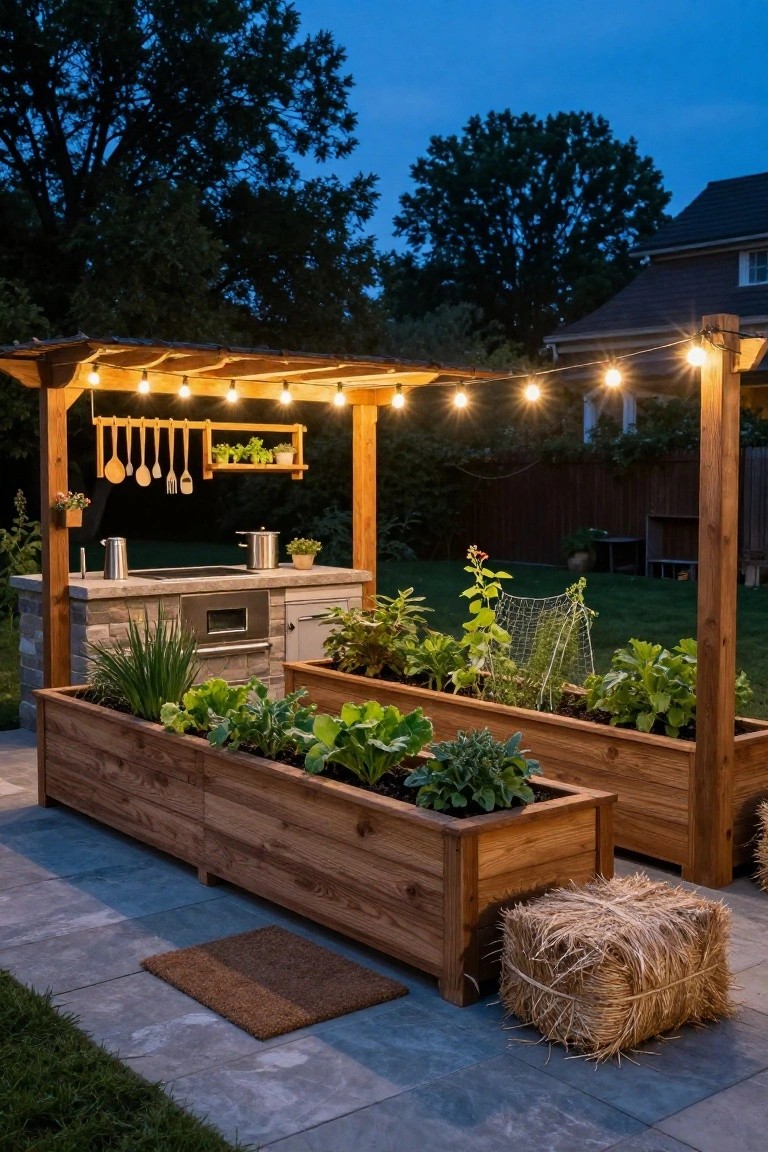
One smart way to start vegetable gardening is placing raised beds right up against your outdoor kitchen or patio counter. In this setup, sturdy wooden planters full of lettuce and greens sit directly beside the stone cooking area. It keeps everything handy so you harvest fresh picks without walking far, which makes gardening feel less like extra work and more part of daily life. First-timers especially like how it ties growing food to cooking.
These beds work best on a paved patio where you already spend time outdoors. Build them with cedar wood to hold up against weather, about 2 feet high for easy reaching, and line them up along the kitchen base. Plant quick growers like salad greens or herbs that thrive in partial shade from a pergola. Skip this if your spot gets too much direct sun all day, or the plants might bolt early.
Easy Cinder Block Raised Beds

One straightforward way to start a vegetable garden is stacking cinder blocks for the bed walls, then capping them with wood boards. You see it here with beds full of greens, pumpkins, and vines climbing the fence. It’s cheap to build, holds soil well, and keeps things neat without much fuss.
These work best in a backyard with some sun and space for paths between beds. Fill the blocks with soil, plant in rows, and mulch on top to cut down weeding. Skip fancy liners unless your soil’s extra wet… just get growing.
Straight Raised Bed Vegetable Garden

A simple row of wooden raised beds makes vegetable gardening straightforward for beginners. You see carrots, beets, and onions tucked into the soil, with tall sunflowers adding height at the edges. This layout keeps paths wide enough to walk between beds without compacting the dirt. It’s practical and lets you plant in blocks for easy rotation next season.
Put these beds in a sunny backyard spot against a fence for wind protection. Use untreated cedar or pine boards about 12 inches high so you don’t have to bend too much. Mix quick growers like carrots with slower ones like beets, and toss in flowers to draw bees. Watch for weeds in the paths, but mulch helps there.
Wooden Raised Beds Against a Wall

Raised beds like these make vegetable gardening straightforward for beginners. Built from simple wooden planks and lined up along a wall, they keep soil contained and plants at waist height for easy tending. The metal trellis right behind catches climbing beans, so you get more harvest from the same footprint.
This works best in tight spots like side yards or patios where ground space is limited. Line them up two or three deep for variety, lettuce in front, beans up top. Go with cedar or untreated pine to avoid chemicals leaching into your food. Watch the drainage though. Add gravel at the bottom if your soil stays soggy.
Raised Beds from Galvanized Tubs Along a Fence
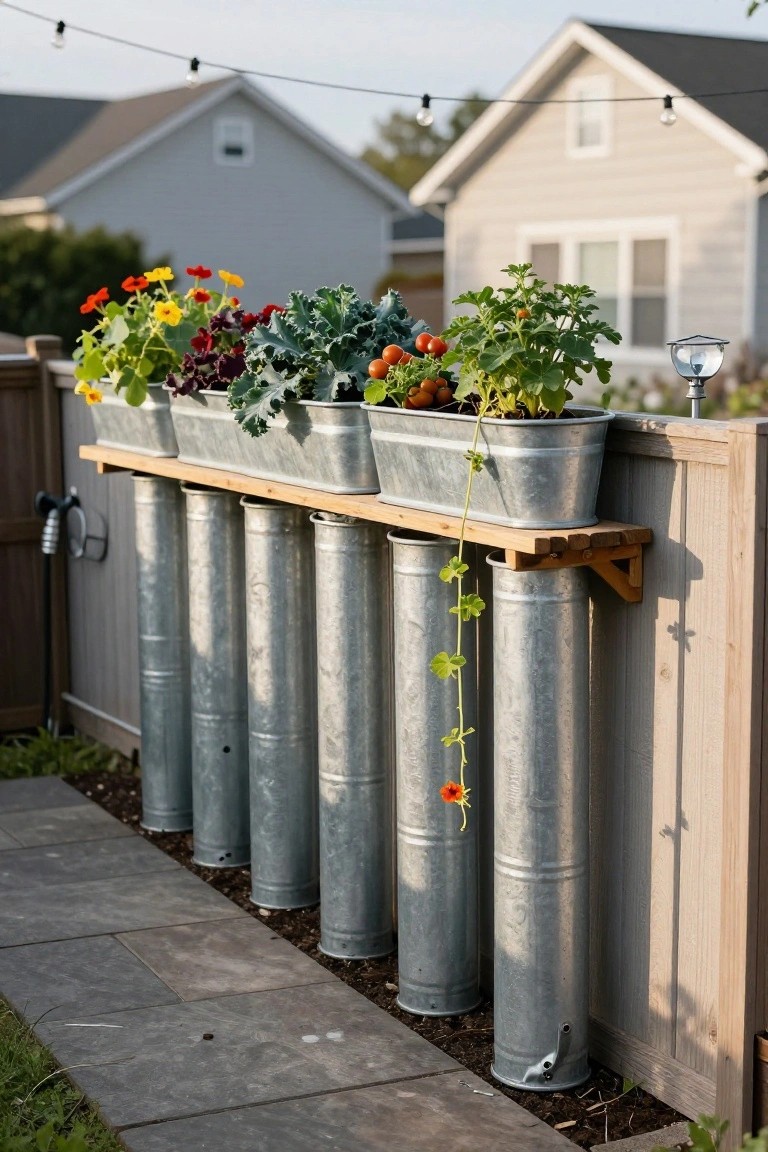
One straightforward way to start raised bed gardening is lining up galvanized metal tubs on a basic wooden shelf against your fence. These tubs hold a mix of veggies like tomatoes and kale plus colorful flowers, making good use of vertical space without eating into your yard. It’s practical and gives that casual farm look folks like in their backyards.
For beginners, grab some used tubs, add drainage holes at the bottom, and mount them on a simple shelf you can build or buy. This works great in tight spots next to paths or patios, keeping everything off the ground and easier to tend. Watch the weight though, especially after rain, and brace the shelf well.
Brick Raised Beds for Vegetable Gardens

These brick raised beds turn a simple yard patch into an organized veggie spot. Everything grows neat and tidy, like the lettuce and herbs tucked right in. Gravel paths between keep your feet clean and soil firm. It’s a no-fuss way to start gardening that looks put-together from day one.
Stack bricks a couple feet high in squares or rectangles, then fill with loose soil for roots to spread. Fits any sunny backyard corner, even against a wall. Just check drainage first… add gravel at the bottom if needed. Beginners love how it makes weeding and picking straightforward.
Stone Raised Beds with Curved Paths

Raised beds like these use simple stone walls to hold back the soil, curving around a gravel path that makes everything easy to reach. The natural look fits right into a backyard without feeling too fussy, and it lets you grow lettuce and other quick veggies close together. That hoop house in the middle protects tender starts too.
Stack flat fieldstones or whatever local rock you have into low walls, no mortar needed if you pick stable ones. Aim for beds 12 to 18 inches high so they’re comfy to work. This works best in sunny spots with decent drainage… plant edibles along the path edges for fast picking. Keeps weeds down and soil healthy.
Easy Metal Raised Beds for Veggies

Raised beds made from rusted metal give a clean, modern edge to vegetable gardening. They’re sturdy enough to hold soil without spilling, and the industrial look fits right into patios or rooftops like this one. First-time gardeners like how they keep plants contained and weeds out. You see carrots, leeks, and chard thriving here, all in neat rows.
These beds work best in small urban yards or balconies where ground space is limited. Buy pre-made corten steel ones or have a welder make them to size. Fill with good soil mix, and space plants for air flow. Just note the rust adds patina over time, so pick a spot away from house siding if you want to avoid stains.
Rooftop Raised Beds in Straight Rows

Raised beds lined up in tidy rows make vegetable gardening simple on a rooftop deck. These gray rectangular planters hold lush lettuce and greens without much fuss. The setup keeps everything organized and reachable, which is perfect for beginners who want fresh produce close by.
This idea suits urban apartments or townhomes with flat roofs. Go for durable, neutral-colored beds about waist-high to avoid back strain. Space them a foot or so apart on the deck for walking paths, and add a small table nearby if you like. Watch the wind up there, though, so secure taller plants.
Frequently Asked Questions
Q: What if my yard soil is total junk? Do raised beds solve that?
A: They do. You fill them with fresh soil and compost, so plants grow happy no matter what’s below. Skip digging up your yard.
Q: How deep do the beds need to be for most veggies?
A: Aim for 12 to 18 inches. That lets roots spread without trouble. Potatoes might want deeper, but start here.
Q: …and how often do I water these things?
A: Stick your finger in the soil. If the top inch feels dry, give them a good soak. Do it in the morning so leaves dry out.
Q: Can I move my raised beds once they’re set up?
A: Build them light if you might. Use untreated wood or metal kits you can disassemble. But pick a spot you’ll love.
