

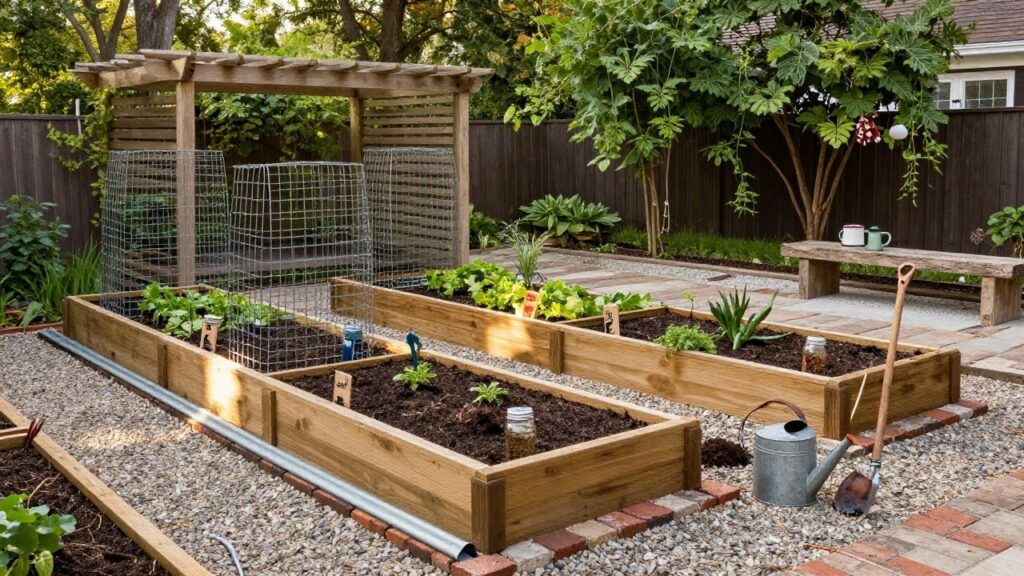
I’ve spent a few seasons turning my backyard into something that actually pulls its weight for our daily meals and routines.
What surprises most people first is how usable the space feels once you add simple zones for growing, composting, and even a few chickens without it turning chaotic.
Paths that lead right to the harvest spots and shaded work areas make all the difference in keeping it practical year-round.
Skip the fancy looks at first.
A handful of these beginner setups have me rethinking my own layout for next spring.
Winding Stone Path in Herb Garden
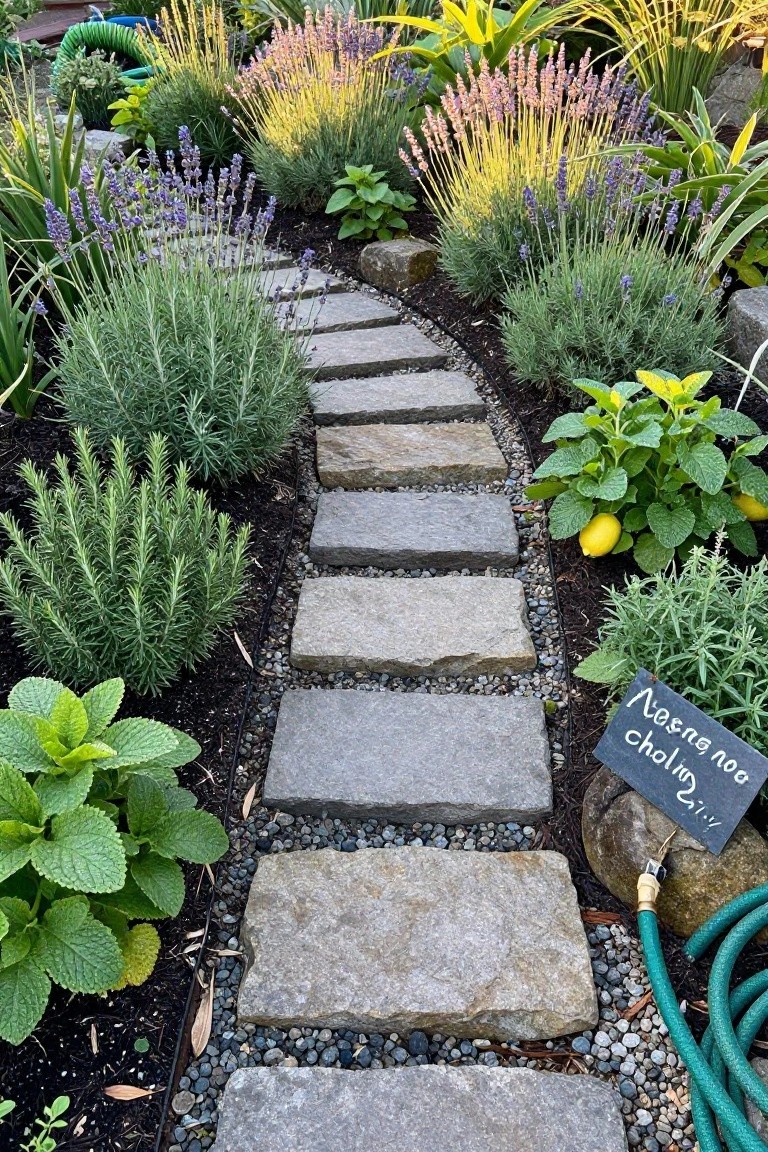
A simple winding path of flat stone steppers runs right through this herb garden. It gives you easy access to plants like rosemary, lavender, and mint without trampling beds. For backyard homesteading beginners, this keeps things practical. You harvest fresh herbs for cooking every day, and the path organizes the space neatly.
Set it up in a sunny corner with good drainage. Use gravel under the stones for stability, then edge with mulch to cut weeds. Raised beds around the path suit small yards. Stick to low-growing herbs that bounce back from picking. Watch for soggy spots after rain…
Crate Shelves for Backyard Pantry Storage

Stacking wooden crates into shelves turns a basic backyard shed into handy pantry space. You see jars of beans, grains, and popcorn tucked right in, keeping bulk buys organized and dry. It’s a cheap way to store what you grow or buy in quantity, with that worn wood look fitting right into homesteading life.
Set one up near your garden or kitchen door for easy access. Grab crates from markets or online, stack them secure against a wall, and add a lock for critters. It suits small yards best, where you want practical over fancy.
Raised Beds with Hoop Covers

One straightforward way to get started with backyard homesteading is setting up raised beds and topping them with simple hoop covers. These keep off frost, bugs, and harsh sun while letting plants breathe. You see young sprouts poking up under the white fabric, safe until they’re ready to stand on their own. It’s practical for beginners who want fresh veggies without a big greenhouse investment.
Just bend some PVC pipes or wire into hoops, anchor them along wooden bed frames, and drape on lightweight row cover fabric. Secure the edges so wind doesn’t lift it. This works great in small yards like this one, next to fences or paths. Watch for too much heat buildup on warm days… vent by propping one end.
Raised Beds with Dwarf Fruit Trees
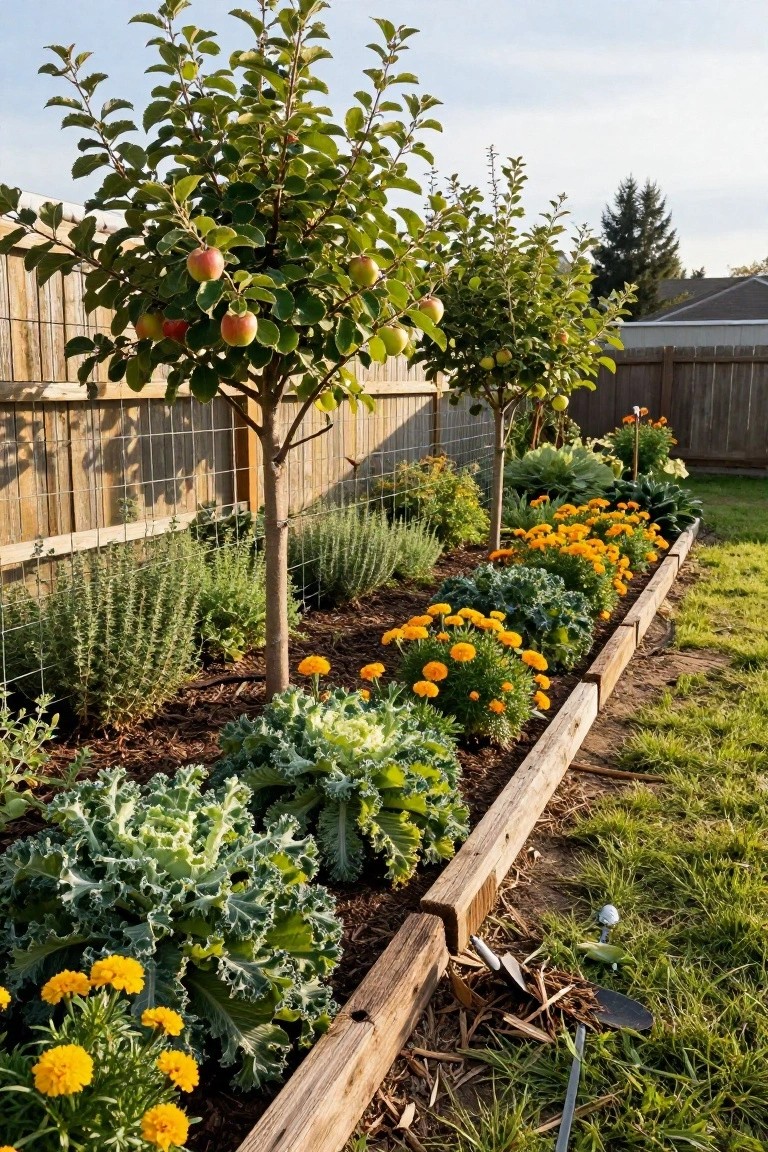
One smart way to start homesteading in a small backyard is planting dwarf fruit trees right inside raised beds. These young apple trees are already bearing fruit, tucked alongside kale, marigolds, and herbs. It saves space along the fence and makes harvesting easy without bending too much. Beginners like this because the beds warm up soil faster and keep things organized.
Set up wooden raised beds about two feet high with good drainage. Plant low-growing veggies and flowers around the tree base for companion planting that deters pests. This works best in sunny spots on average yards. Just watch for tree roots crowding out plants after a couple years, and prune as needed.
Espaliered Fruit Trees Save Backyard Space
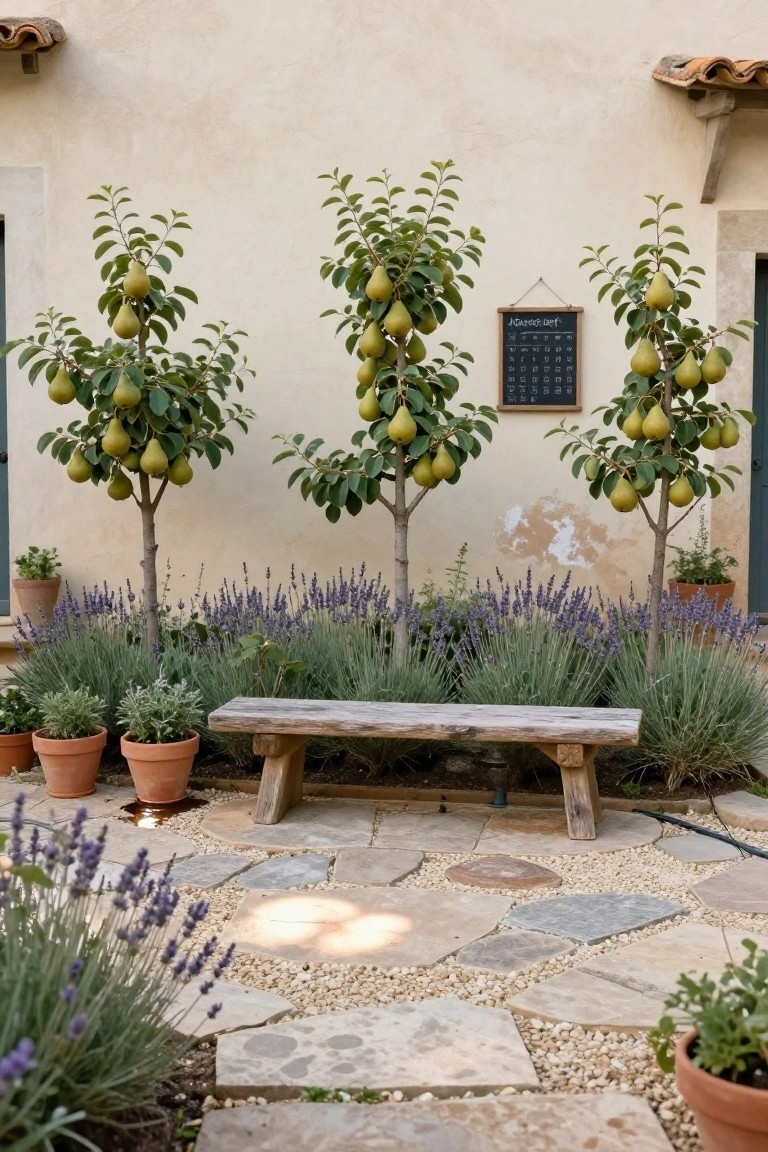
One smart way to get fresh fruit without taking up much room is training trees flat against a wall, like these pear trees here. They grow up instead of out, so you end up with pears hanging right at picking height. In a homestead setup, this keeps things productive and pretty, especially in a small courtyard where every inch counts. The trees line up neatly, and the fruit looks ready to eat.
This works best in sunny spots next to a south-facing wall, perfect for beginners with limited yard. Pick dwarf varieties that handle pruning well, and tie branches to wires or a frame as they grow. Pair them with low plants like lavender at the base to fill in. Just keep an eye on watering since roots are close together.
Built-In Outdoor Pizza Oven
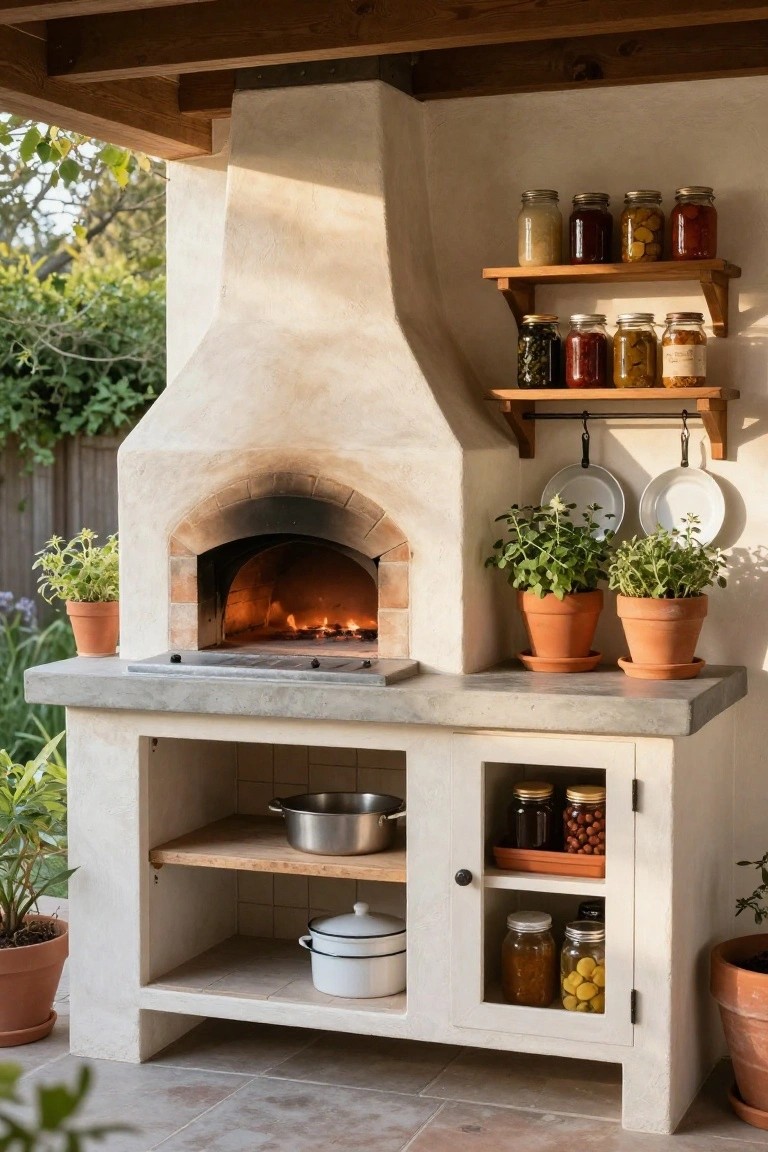
If you’re starting out with backyard homesteading, a wood-fired pizza oven like this one makes baking simple and fun. It’s tucked right into a sturdy counter setup, with room for dough prep and easy access to the fire. What stands out is how it pulls in everyday homestead chores, like using fresh herbs from the pots nearby or grabbing home-canned tomatoes off the shelf. No fancy gear needed. Just wood and your own ingredients for pizza, bread, or roasts that taste like the real thing.
Put it on a covered patio to keep rain off, and build around it with basic concrete counters and open shelves for jars. It works best in mild climates where you can fire it up year-round, and it’s great for beginners since you can start small with a kit or DIY the dome from firebrick. Watch the spot though. Needs good airflow and a safe base so smoke drifts away from the house.
Simple Backyard Composting Station

One easy way to start homesteading is with a basic wooden stand like this. It holds three blue bins for separating kitchen scraps and yard waste, plus a tray of rich soil up top and tools right there in a holder. Keeps everything organized outdoors where you can tend it daily without taking over the yard.
Build yours from pine boards on legs with a shelf, wheels for moving if needed, and bins that stack neatly. It fits patios or porches near the kitchen door best, works in small spaces, and gets you making your own compost fast. Just label the bins and add a sign for the family.
Garden Pond with Stone Edging
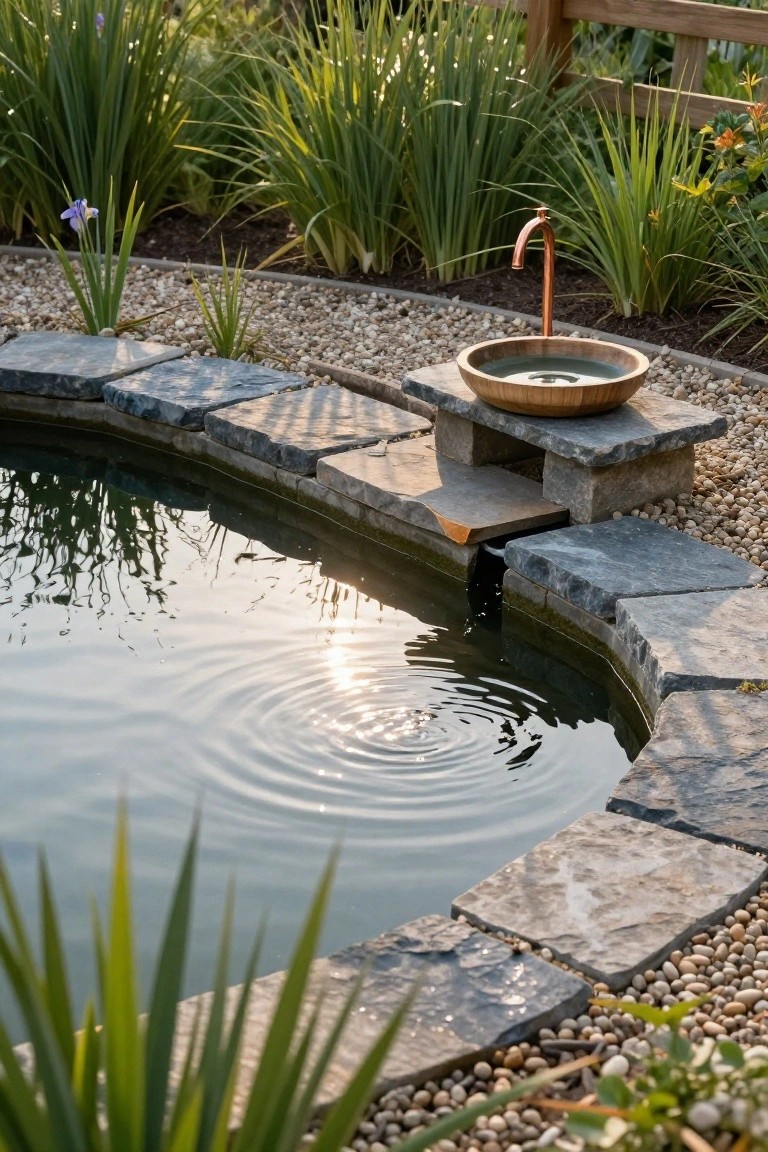
A simple garden pond like this fits right into a backyard setup. The rough stone slabs curve around the water nicely and hold up the gravel path beside it. It pulls in wildlife without needing fancy pumps or filters. Just the soft ripples from the faucet keep things moving.
Dig a shallow oval shape in a quiet spot away from trees. Line it with bentonite clay or a liner then stack local fieldstone for the edge. Top the surround with pea gravel for easy drainage. Works best in average yards where you want low upkeep and a spot to sit nearby. Keep it under four feet across if you’re starting out.
Tiered Shelves Boost Greenhouse Yields

One smart way to get more from a small backyard greenhouse is stacking plants on tiered shelves. Here you see black plastic shelving loaded with strawberry trays, plus some hanging baskets overhead. It lets you grow way more in the same footprint, keeping everything off the floor and easy to reach. Good light filters through the glass walls, and plants don’t crowd each other.
Set this up in any basic greenhouse or even a spare shed with windows. Start with sturdy shelves that hold soil weight, like metal or heavy plastic ones. Fill lower tiers with bushier plants, hang trailers up top. Works great for beginners since strawberries thrive in trays and produce fast. Just watch watering… it runs down easier on tiers.
Compact Outdoor Potting Station
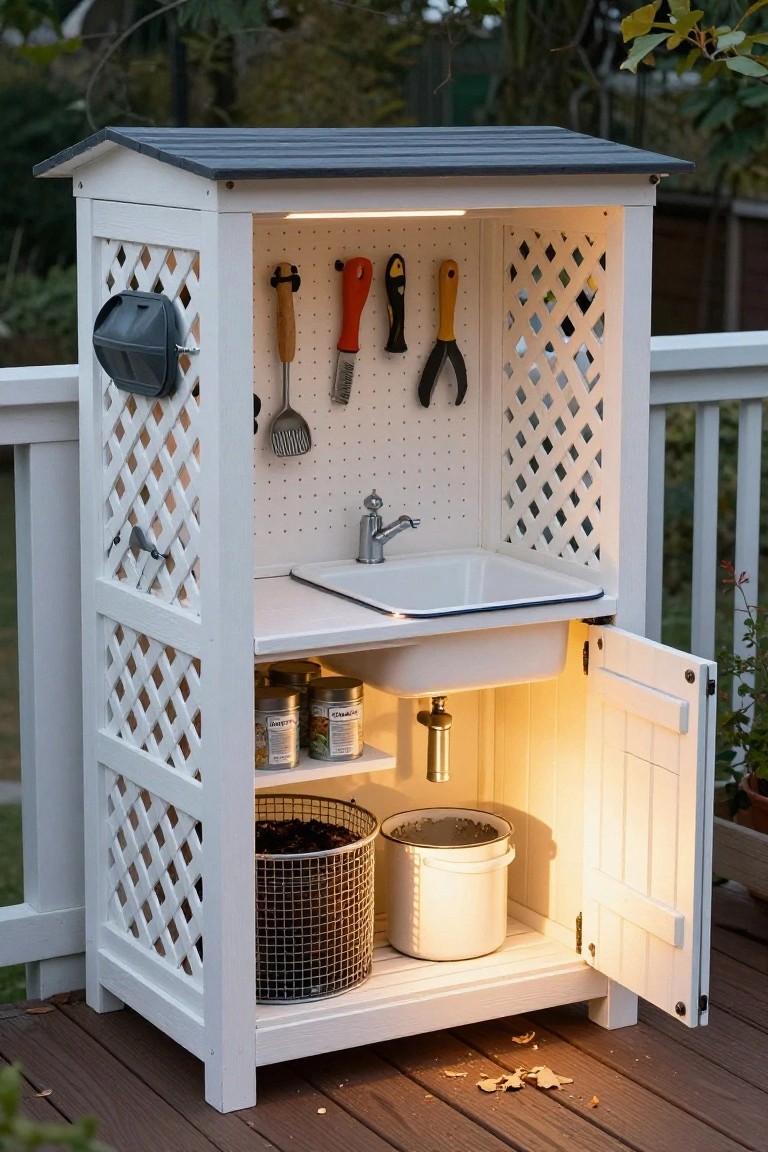
A potting station like this pulls together storage, workspace, and cleanup in one small footprint. It has a handy sink for rinsing dirt off tools or plants, plus pegboard hooks right there for trowels and shears. For backyard homesteading, it keeps everything organized so you spend less time hunting and more time gardening.
Set it up on a deck or patio where you do most of your outdoor work. It suits beginners with limited space, since the lattice sides let it blend into the yard. Just make sure the wood is treated against moisture, or it won’t hold up through seasons.
Vertical Fence Planters for Small Yards
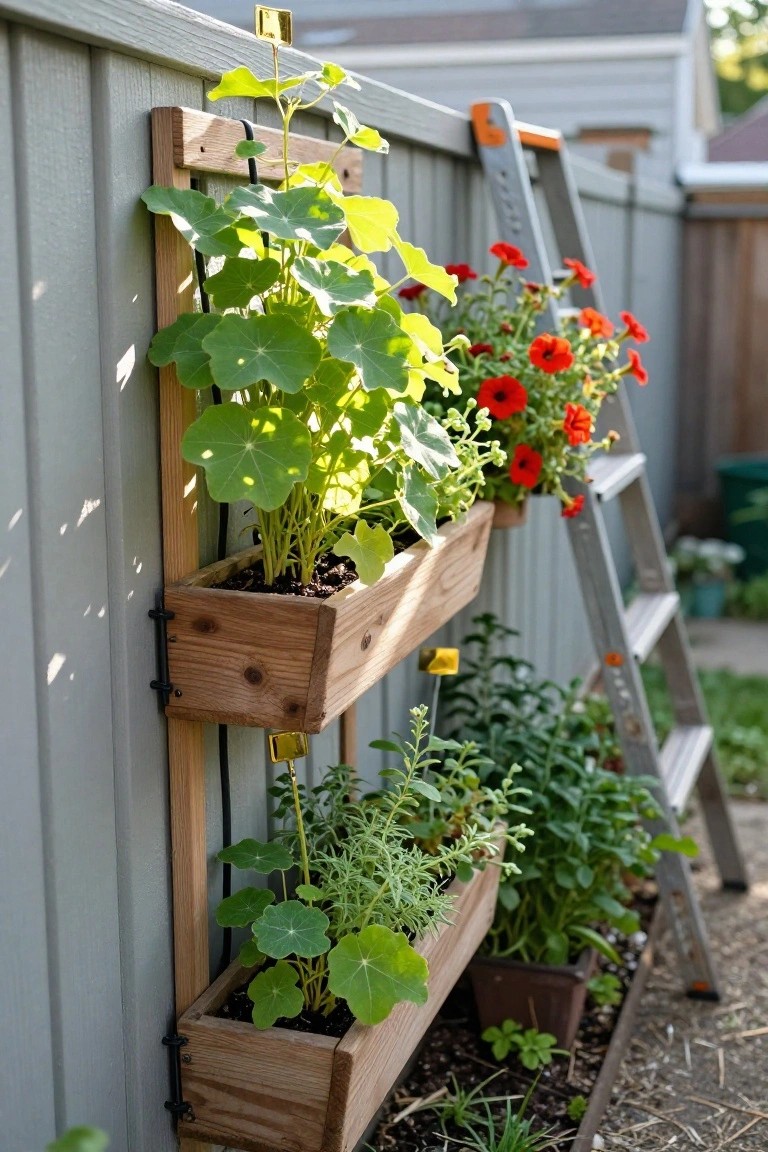
One easy way to grow more in a tight backyard is to mount wooden planters right on the fence. You see nasturtium vines climbing up and herbs tucked in below, making use of that vertical space without taking up the ground. It keeps things practical for everyday picking and adds some green where there wasn’t much before.
These work best on a solid fence in a sunny spot. Secure the boxes with brackets, fill them with good soil, and plant trailing stuff up top and bushy herbs underneath. Suits beginner homesteaders with limited room… just check your fence can hold the weight when wet.
Pergola Covered Outdoor Dining
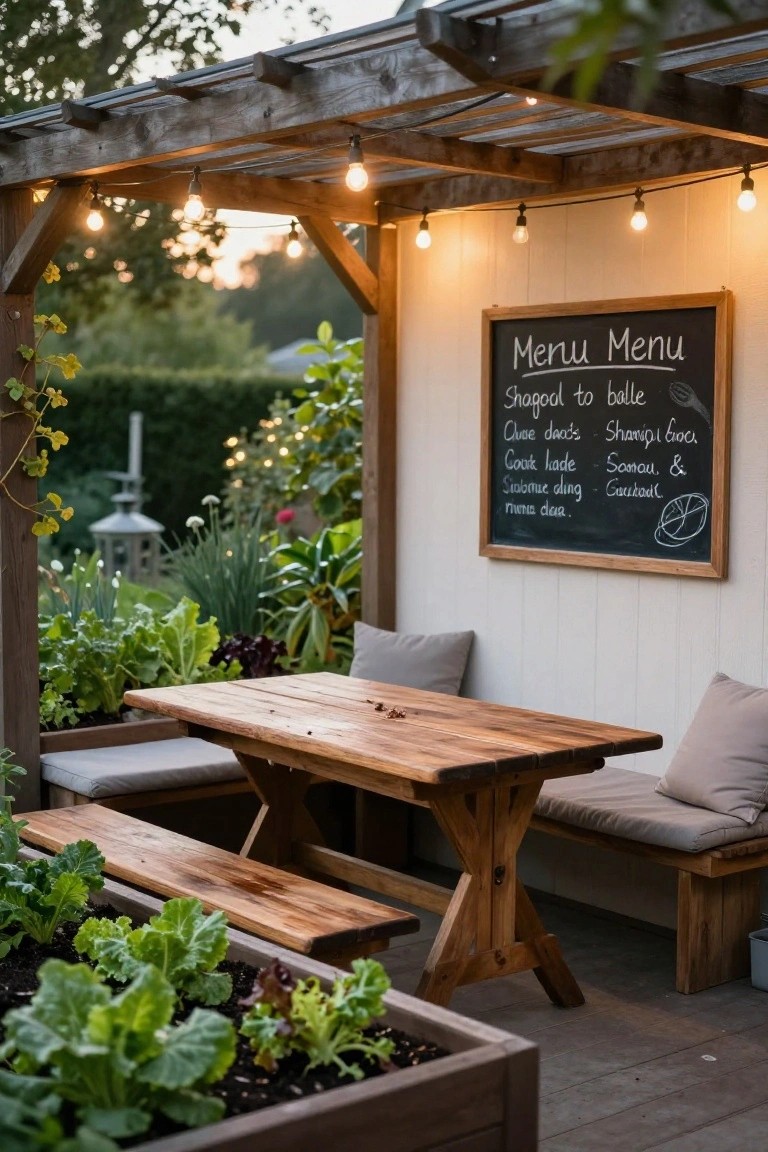
A pergola over a simple wooden dining table turns any backyard deck into a real living spot. Those string lights hanging above make it work morning or evening, and with raised beds full of greens right next to the benches, it’s easy to grab fresh picks for the meal. Folks starting out homesteading love this setup because it keeps daily eating close to the garden without much fuss.
Put one up over your existing table if you have a deck or patio. It suits small yards best, adds shade on hot days, and the lights give a soft glow for family dinners. Just pick sturdy wood that matches your place, and keep plants low around the edges so no one trips. Works great for beginners who want that farm feel without building a whole new area.
Pallet Shelves for Patio Plants

A simple wooden pallet turned into shelves makes a great spot for potted plants right on the patio. It holds dwarf citrus trees loaded with lemons and limes, keeps them up off the ground, and adds spots for seed jars and tools underneath. This rustic look fits backyard homesteading without taking much space or money.
Put one against a wall where you get good sun for fruit trees. It’s ideal for beginners with a small terrace or apartment balcony. Stack pots on top, stash beans or corn kernels in glass jars below, grab pruners when needed. Just make sure it’s sturdy… pallets can vary.
Outdoor Shelves for Home Preserves
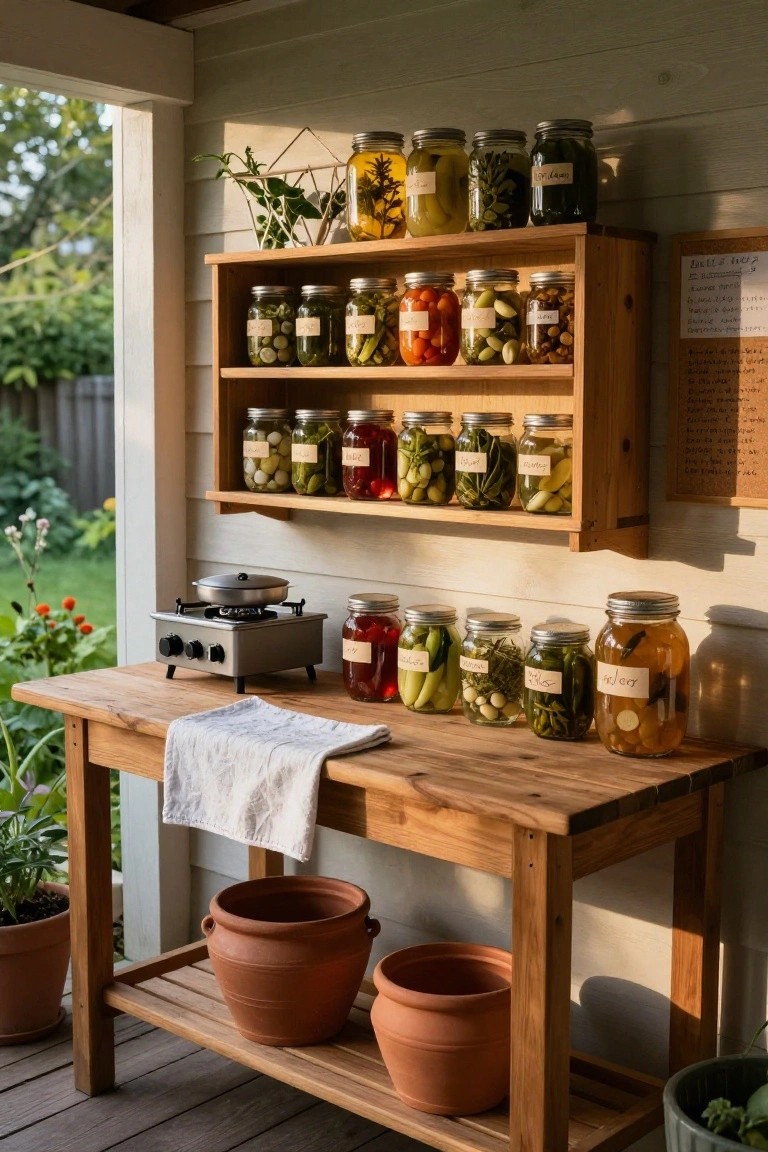
Wooden shelves like these make a smart spot to store your home-canned jars right where you need them. Rows of colorful mason jars packed with pickles, beans, peppers, and fruits line the wall, easy to grab during prep or just to admire your hard work. It’s practical storage that fits backyard homesteading without taking up floor space.
Mount simple pine or oak shelves on a porch or shed wall near a worktable. Label the jars for quick finds, and keep them out of direct rain. This works well on smaller properties or in mild weather spots, turning a corner into a useful pantry that encourages more preserving.
Build a Simple Solar Hydroponic Garden
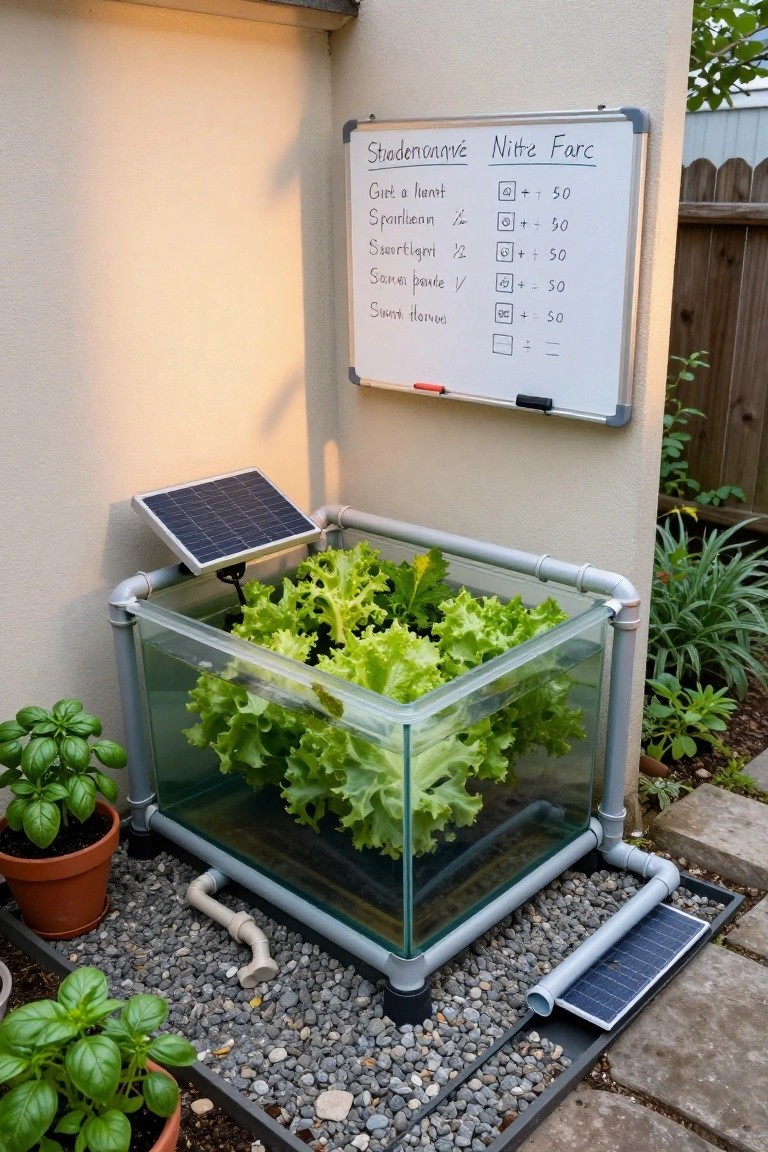
One smart way to start homesteading in a small backyard is this hydroponic setup. It uses PVC pipes and a glass tank to grow lettuce right in nutrient water, no soil needed. A couple solar panels on top keep a pump running for circulation, making it off-grid and low-cost to run. That whiteboard on the wall tracks planting and harvest, which helps beginners stay organized without much fuss.
This works best tucked against a sunny wall where space is tight. Beginners can start with easy greens like lettuce or basil in pots nearby. Watch the water levels and add nutrients every week or so. It suits renters or anyone short on yard room, giving fresh picks all season without weeding.
Outdoor Harvest and Tool Station

One practical move for backyard homesteading is a dedicated spot for tools and fresh produce. Big blue barrels and labeled metal buckets sit under a simple metal shelter, keeping things sorted and close to the garden. No more hauling stuff across the yard. It just works.
Set this up near your veggie patch or fruit trees. Use numbered labels on the buckets for quick sorting, like #1 for tomatoes or whatever. Great for beginners with limited space. Pick a shady corner by the fence to protect from sun and rain.
Build a Simple Mushroom Grow Tent
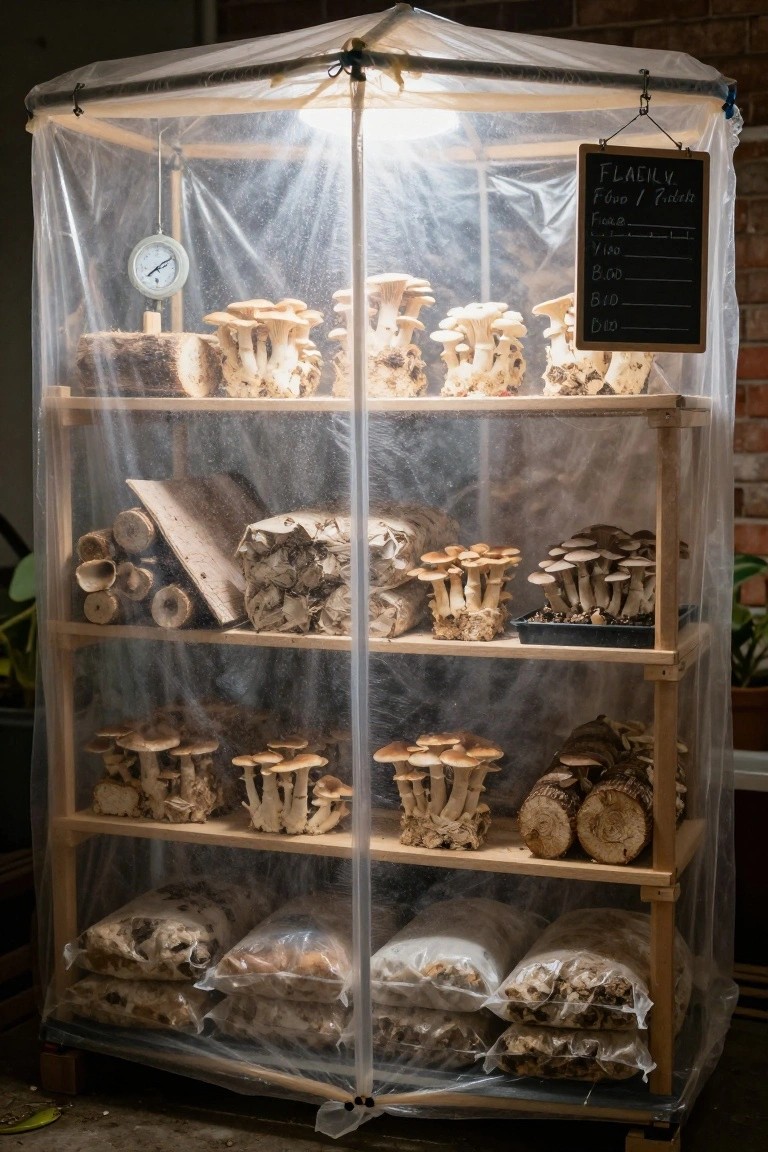
Growing your own mushrooms right in the backyard is one of those homesteading ideas that pays off quick. This setup takes basic wooden shelves, wraps them in clear plastic for a mini greenhouse effect, and loads the tiers with inoculated logs, substrate bags, and trays. It keeps humidity steady and pests out, so even beginners get good yields without much fuss.
Put it in a garage corner, shed, or covered spot where you can control light and moisture. Grab hardwood logs or straw bags, add mushroom spawn from a supplier, and mist daily while checking the thermometer. Works best for oyster or shiitake varieties in small spaces. Just watch for mold if air gets too stagnant.
Simple Stepping Stone Garden Paths
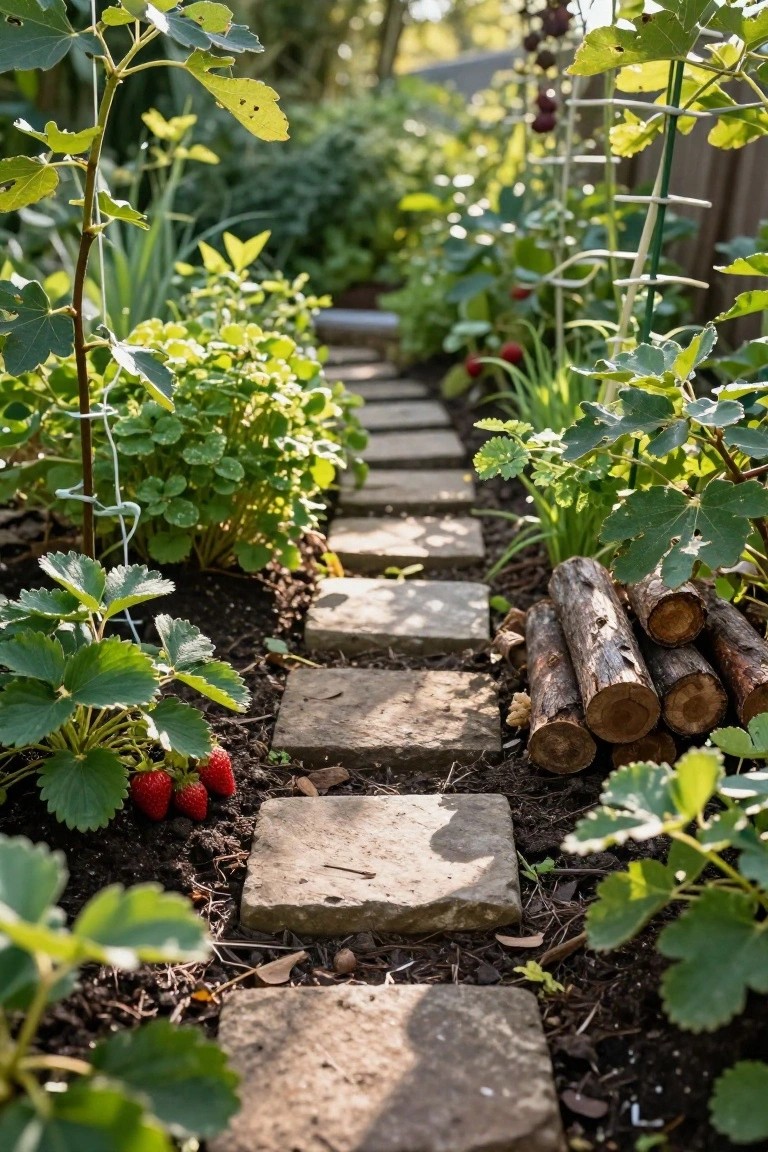
One easy way to make your backyard garden more practical is with stepping stone paths. They let you walk right to your plants without stepping on the soil and crushing roots. In this setup, rough stone pavers lead through beds of strawberries and greens, keeping everything tidy and reachable. It’s a low-cost fix that fits right into homesteading life.
These paths work best in small spaces where you want to grow food close to the house. Space the stones about two feet apart so adults can step comfortably, and edge them with logs or bricks to hold back the mulch. Start with a few flats of strawberries along the way. They’ll give you fresh berries all season, and the path makes picking simple. Just keep weeds out from between the stones.
Simple Outdoor Herb Drying Station
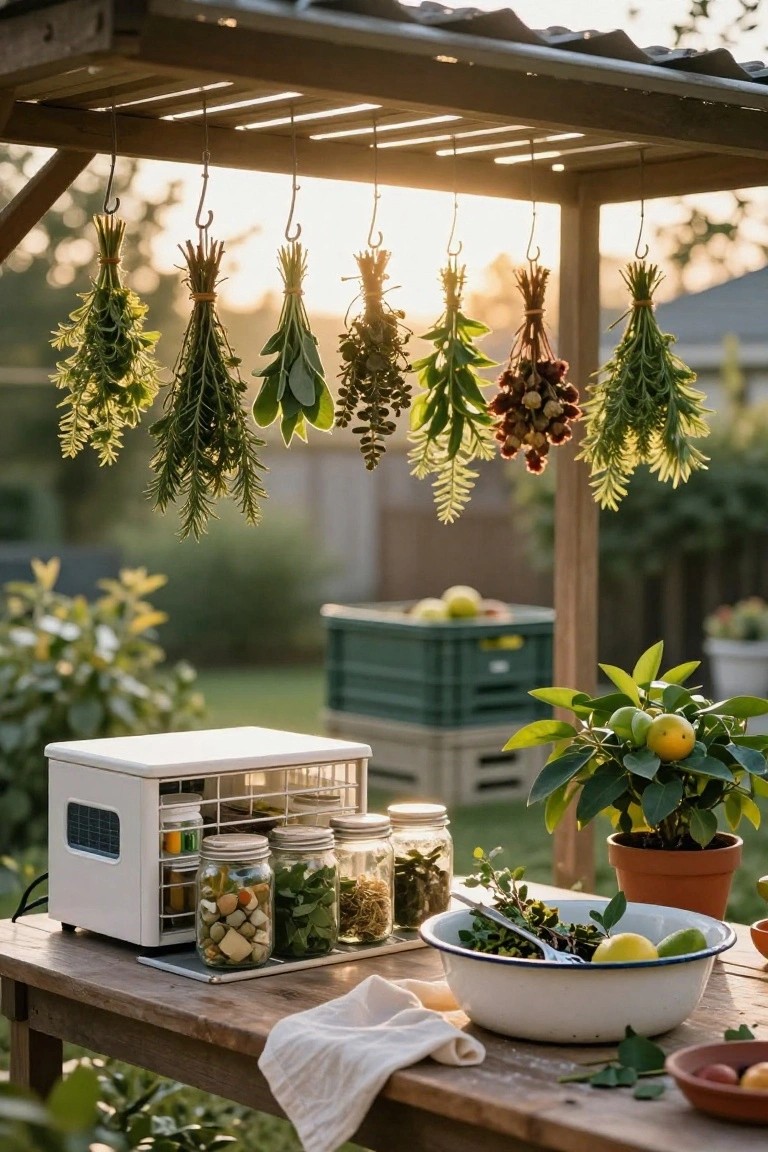
Hanging bundles of fresh herbs to dry under a backyard shelter gives beginners an easy entry into preserving their own harvest. No fancy gear needed. Just tie up sprigs of rosemary, thyme or whatever’s growing, and let the breeze do the work. It keeps things organized above your workspace and adds a practical, farm-like feel to the spot.
Put it on a basic wooden table near your garden beds, with hooks from the pergola roof and jars below for storing the results. A compact dehydrator fits right in for veggies or fruits. Best for patios with some cover… suits most backyards and makes daily harvesting feel simple.
Frequently Asked Questions
Q: How do I start a compost pile without the stink? A: Layer kitchen scraps with dry leaves or cardboard in a corner bin. Stir it every few days to let air in. Bury fresh stuff under browns, and it stays fresh.
Q: What’s the fastest veggie to grow as a newbie? A: Plant radishes or baby greens right in good soil. They pop up in weeks and you pick as you need. Thin them out early so the rest grow strong.
Q: Can I raise chickens if neighbors are close? A: Choose calm breeds like Orpingtons that don’t squawk much. Set the coop far from fences and toss treats to keep them quiet. And fresh eggs beat store ones every time.
Q: What if pests hit my garden hard? A: Blast leaves with a hose first thing in the morning. Follow up by dropping garlic peels in water overnight, then spray. Pests bounce quick.
