

Peas are a cool season crop that can be planted as soon as the soil can be worked in the spring. Peas require very little space to grow and can be planted in rows or in a mass planting. Planting peas in rows will give you the most peas, while a mass planting will give you the least.
Peas need about 2 inches of space to grow.
Recommended Products

Beautiful - Large full-color packet of Black Eyed Cowpea (Vigna unguiculata) seeds. These useful legumes have deep roots that fix nitrogen to the soil and help the plants survive heat and drought.. Excellent cover crop and food source for a variety of animals such as deer, cattle, rabbits and chickens. Minimum of 13 g per packet (Minimum of 60 seeds).

Early Frosty English Pea seeds garden seeds vegetable seeds bulk

AWARD-WINNING PEA VARIETY – Patio Pride (Pisum sativum) is an AAS Award-winning dwarf pea that thrives in containers, producing abundant sweet pods on tidy, compact 12–18 inch bush plants
Do peas need a lot of room to grow?
Space climbing-type peas 2 to 3 inches apart in any formation that fits your garden. Bush-type peas will need more room, so plant 2 to 3 inches apart in rows that are 18 to 24 inches apart. Climbing-type peas will require something to grow up.
When planting peas, it is best to plant the seeds 1-2 inches deep. This can vary by variety, so it is important to check the packet instructions. Ultimately, you want plants spaced around four inches apart, and in rows that are at least two feet apart. For an early crop, it is best to start peas off under cover.
How do you grow peas in a small space
When growing dwarf and short varieties of plants, it is important to use pots that are 6 inches deep. This will help to ensure better drainage and promote airflow. If you’re using shallow containers, consider adding a fast-draining potting mix.
Different vegetables have different soil depth requirements in order to grow successfully. Kohlrabi, bok choy, and lettuce are shallow rooting vegetables and only need 12″-18″ of soil to grow. Peas, watermelon, peppers, and onions are medium rooting vegetables and need 18″-24″ of soil to grow. Potatoes, squash, and rutabagas are deep rooting vegetables and need 24″-36″+ of soil to grow.
What vegetables dont need much space?
Leafy greens are a great choice for growing vegetables in a small space. They don’t require a lot of depth, so a shallow window box is perfect. Plus, they’re fast-growing, so you’ll have a nice crop in no time. Just be sure to water regularly and fertilize every few weeks.
When grown on a well-prepared soil, the main care need of peas is a regular supply of water, especially when the pods are forming. Don’t water log the soil but keep it moist.
Recommended Products

Garden Trellis for Climbing Indoor and Outdoor: This 3-pack stackable trellis set provides flexible support for climbing plants in pots. Perfect for both indoor and outdoor use, it helps vine plants grow vertically, turning them into beautiful home decorations while saving space.

🌑[Plant Growth Support]:Garden plant trellis are committed to helping your indoor for potted plants and adds to the natural beauty. As plants grow, the houseplant trellis takes the form of a ladder to help your plant climbing and growing.

【Package included】:Crafted from robust hollow steel, this garden stakes features a fade-resistant green plastic coating, offering reliable protection against wind, rain, and rust. This Trellis for Climbing Plants Outdoor comes complete with everything you need to get started: 17pcs metal stakes, 8pcs T shape connect pipe, 2 A-shaped connectors, and a 0.9x1.8meter bird net.
Can you plant peas close together?
Seed should be planted at a depth of 1/2 to 1 inch and 2 to 3 inches apart. Space rows of peas at least 18 inches apart.
Planting peas in double rows with a space of 6 inches in between is a great way to provide support for the tall vining varieties. Using wire netting or a trellis will also help keep the peas from falling over.
Recommended Products
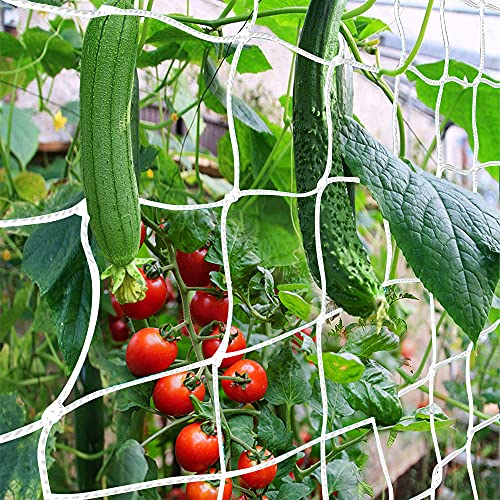
★【Reusable, High-quality, Versatile Trellis Netting】Soft, yet heavy-duty, this plant trellis netting helps plants cling to a smooth surface and will last a couple of years.
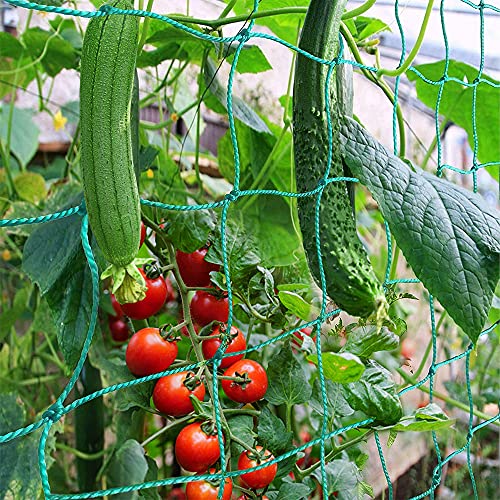
【Garden Trellis Netting】Garden mesh trellis netting is perfectly used in garden, yard and farms, keeps your plants off the ground, reducing rot and disease. Suitable for both vertical and horizontal garden application.

Support Strong Growth - Unique net designed, intertwined to support strong growth of plants. 10x10cm mesh allows you to hold plants tight, avoid tangled and dropped. In the meantime, you can also harvest some beautiful plants and a joyful time.
Can I grow peas in a container
Peas can be planted in a pot and kept inside or outside on a deck, patio, stoop, or roof. All you need is a container with drainage holes and some potting mix. Peas prefer full sun but will tolerate partial shade. Sow the seeds about 1 inch deep and 2 inches apart. Thin the seedlings to 4 inches apart when they are about 4 inches tall. Water regularly and fertilize monthly. Pea plants will begin to produce pods in about 60 days.
About 60 days: Most varieties of peas need about 60 days of growth before harvest. But they will stop growing and not produce flowers or pods once temperatures get above 85°F, as often happens in June. Although the plants do need full sun, peas produced in hot weather may also have poor quality.
Do peas need to climb?
In general, peas come in two heights: bush peas and climbing peas. All benefit from some kind of support. Though bush peas are only 2 to 3 feet tall, they will flop on the ground if you don’t give them something to climb on. Climbing peas may reach 6 to 8 feet tall and they need a sturdy trellis.
Pea plants require very little in the way of soil depth, so a shallow, wide container such as a windowsill planter box is perfect. The container should have adequate drainage holes and good air circulation in order to prevent the roots from sitting in water.
What month do you plant peas
Peas are a cool-weather crop, so they should be planted in early spring, before the weather gets too hot. In warmer regions, they can also be grown as a fall or winter crop. Peas need to be planted in well-drained, fertile soil, and they need plenty of sunlight. They also need to be kept well watered.
Green peas don’t need a trellis, but their pods will be easier to pick when the vines are held upright. If you’re using a trellis, insert it prior to planting. Use netting, stakes, and string, a wood frame trellis covered with chicken wire, metal fencing, or a collection of twiggy branches stuck into the ground among the plants.
Do peas need loose soil?
If you want to grow peas, it’s best to start with a soil that has a good, loose structure. You can amend the soil with compost in fall, which will help to avoid compaction in the spring when you’re ready to plant.
Squash is a very versatile plant that can be grown in a variety of ways to suit your needs. If you have a small garden, growing squash vertically is a great way to maximize space and still get a good harvest. Squash is also a very hardy plant, so it can handle being left to its own devices without taking over your entire garden.
Final Words
Peas need about 4 inches (10 cm) of space to grow.
Peas need little space to grow and are a good plant for small gardens. They can be grown in raised beds, in containers, or directly in the ground. Peas need around 6 inches of space in between each plant, so a small area can yielded a good amount of peas. Your local hardware or garden store should have everything you need to get started growing peas.
