

Ever wondered how to grow your very own crisp cucumbers in your garden? Picture this: it’s a warm summer day, and you’re craving a fresh cucumber salad. But wait, you realize you don’t have any cucumbers on hand. What if you could just step outside and pluck one from your own garden?
Choosing the Right Variety of Cucumber
When selecting cucumber varieties for your garden, consider the following:
- Slicing cucumbers: Perfect for fresh eating or salads.
- Pickling cucumbers: Ideal for canning or pickling.
- Bush cucumbers: Compact plants suitable for small spaces.
- Vining cucumbers: Climbing plants that need support to grow.
Pick a variety that suits your preferences and garden space. Cucumbers come in various sizes, shapes, and colors, so explore and find what appeals to you!
Check out the table below for important cucumber varieties and their characteristics:
| Variety | Best Use | Characteristics |
|---|---|---|
| Marketmore | Slicing | Dark green, tender skin |
| Boston Pickling | Pickling | Crisp and excellent for pickling |
| Lemon | Slicing/Pickling | Yellow, round fruits with a mild flavor |
| Straight Eight | Slicing/Pickling | Classic, straight cucumbers for various uses |
Preparing the Garden Bed for Planting
When it comes to planting cucumbers in your garden, the first step is to ensure that your garden bed is ready for your new additions. Here’s what you need to do to prepare the optimal environment for your cucumber plants:
- Choose a Sunny Location: Find a spot in your garden that receives full sun for at least 6 to 8 hours a day. Cucumbers thrive in sunny conditions and will thank you with a bountiful harvest.
- Test the Soil: Check the pH of your soil. Cucumbers prefer a slightly acidic soil with a pH level between 6.0 to 6.8. Test kits are readily available at garden centers to help you determine your soil’s pH.
- Enhance the Soil: Prior to planting, amend your soil with well-rotted compost or manure to provide essential nutrients for your cucumber plants to grow strong and healthy.
- Create Supports: Depending on the variety of cucumbers you choose, you may need to set up trellises or cages to support the vines as they grow. This helps prevent overcrowding and keeps the cucumbers off the ground.
- Space Appropriately: Allow for enough space between your cucumber plants to ensure proper air circulation and healthy growth. Typically, plants should be spaced around 12 to 24 inches apart in rows that are 3 to 5 feet apart.
- Mulch the Soil: Once your cucumber plants are in the ground, consider adding a layer of mulch around them. Mulch helps retain moisture, control weeds, and maintain an even soil temperature.
Remember, proper preparation of your garden bed sets the foundation for a successful cucumber harvest. With these steps in mind, you’re well on your way to cultivating thriving cucumber plants in your garden.
Recommended Products

【Multi-Function】 Tall Tomato Cage-Each tomato cage can be adjusted from 16inches to 47 inches in height,suit for different growth stages of plants, offering versatile supports for a wide variety of tomato plants, ensuring they grow tall and strong.

DIY Shape and Height: Our garden trellis is a two-in-one design that can change into different shapes according to different plants, providing ample growing space for your plants and adding a sense of design to your garden. The Tower Obelisk provides support for a variety of climbing plants and flowers and is the perfect addition to your yard, garden, patio, outdoors and more.
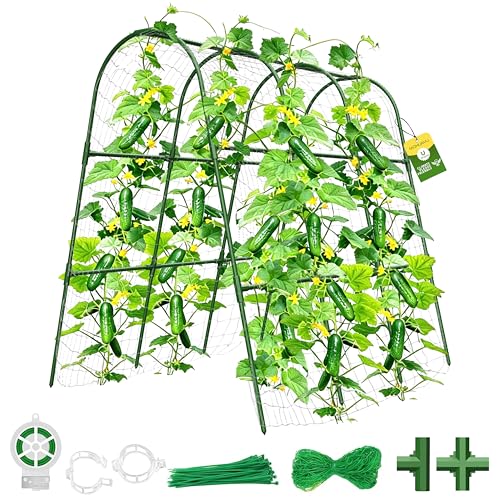
【U-Shape Stability Structure 】 U-frame trellis is more stable than A-frame trellis. Allowing you to plant a row on both sides. The arch design maximizes the garden space.
Planting Cucumber Seeds or Transplants
When it comes to planting cucumbers in your garden, there are two main options: seeds or transplants. Here’s what you need to know:
- Seeds: If you opt for seeds, sow them directly into the garden after the last frost date.
- Transplants: Transplants can be purchased or started indoors about 3-4 weeks before the last frost date. They are then planted in the garden once they have a few leaves.
To plant your cucumbers:
- Prepare the soil: Ensure it’s well-drained and rich in organic matter.
- Spacing: Plant your seeds or transplants about 12-24 inches apart in rows that are 4-6 feet apart.
- Depth: Plant seeds about 1 inch deep and transplants at the same depth as they were in their containers.
- Watering: Keep the soil consistently moist, especially after planting, to help the seeds germinate or the transplants establish.
By following these steps, you’ll set your cucumber plants up for success in your garden.
Providing Adequate Care and Maintenance
When it comes to cucumber plants, ensuring proper care and maintenance plays a significant role in their growth and productivity. Here are some crucial steps to help you maintain healthy cucumber plants in your garden:
- Watering: Cucumbers require consistent moisture to thrive. Water your plants regularly, especially during dry periods, to prevent the soil from drying out.
- Pruning: Removing any damaged leaves or overgrown vines can help improve air circulation around the plant, reducing the risk of diseases.
- Fertilizing: Consider applying a balanced fertilizer to provide essential nutrients to the plants. Be cautious not to over-fertilize, as it can harm the plants.
- Weeding: Regularly remove weeds around your cucumber plants to prevent them from competing for nutrients and water.
- Mulching: Applying a layer of mulch around the plants can help retain moisture, regulate soil temperature, and reduce weed growth.
- Pest Control: Keep an eye out for common pests like aphids and beetles. Consider using natural remedies or organic pesticides to protect your plants.
| Watering: | Regular and consistent watering is crucial for cucumber plants, especially during dry periods. |
|---|---|
| Pruning: | Regularly remove damaged leaves and overgrown vines to promote plant health and air circulation. |
| Fertilizing: | Apply a balanced fertilizer to provide essential nutrients, but avoid over-fertilizing to prevent harm. |
| Weeding: | Regularly remove weeds to prevent competition for nutrients and water. |
| Mulching: | Applying mulch helps retain moisture, regulate soil temperature, and reduce weed growth. |
| Pest Control: | Monitor for pests like aphids and beetles, consider natural remedies or organic pesticides. |
Harvesting Your Cucumbers
When it’s time to harvest your cucumbers, it’s important to pick them regularly to encourage more fruit production.
- Check your cucumbers daily to see if they are ready for harvest. They should be firm, green, and about 6-8 inches long.
- To harvest, hold the cucumber near the vine and use a sharp pair of scissors or garden shears to cut it off. Avoid pulling or twisting to prevent damage to the plant.
If you notice any overripe or yellow cucumbers, remove them immediately to redirect the plant’s energy into producing new fruit.
Remember that proper harvesting not only ensures a bountiful crop but also promotes the plant’s continuous growth and overall health.
Conclusion
Harvesting cucumbers correctly is key to maximizing your crop yield and ensuring your plants stay healthy and productive. By checking your cucumbers daily, using sharp tools for harvesting, and promptly removing overripe fruits, you can support the continuous growth of your cucumber plants. Remember, proper harvesting not only benefits your harvest but also contributes to the overall well-being of your garden. Happy gardening!
Frequently Asked Questions
Why is proper cucumber harvesting important?
Proper cucumber harvesting is crucial to encourage more fruit production, support plant growth, and maintain overall garden health.
How often should I check cucumbers for harvesting?
Check cucumbers daily to ensure they are firm, of the right size, and ready for harvesting.
How should I harvest cucumbers?
Harvest cucumbers by using sharp tools to cut them near the vine to prevent damage and promote plant health.
What should I do with overripe cucumbers?
Promptly remove overripe cucumbers to redirect the plant’s energy, fostering continuous growth and a bountiful crop.
