


Small garden corners tend to collect odds and ends because they sit just out of the main flow, yet they respond well to simple decisions about where plants meet hard surfaces.
I find that paying attention to the way pathways curve or stop at the edge often changes how usable the space feels over a full season.
Clean lines come from choosing materials that match the rest of the yard rather than trying to fill every inch.
Edging makes the biggest difference.
Once that part sits right the rest of the planting can stay low and structured without looking sparse.
Slim Raised Beds For Tight Garden Paths

A slim raised bed gives you a clean way to add planting along a narrow path without crowding the walkway. The low grasses bring soft texture and a bit of movement while the straight edges keep everything looking tidy and simple.
This works best in small side yards or corner spaces where you want structure but still need room to walk. Stick with compact grasses, keep the bed narrow, and add a low light strip along the base if you want the path to feel usable after dark.
Curved Planters For Compact Corners

A low curved edge lets you turn a tight outdoor corner into a real planting bed without wasting space. It follows the wall naturally and softens the angle so the area feels more open instead of boxed in.
This works best on patios or side yards where you need planting but do not have room for a wide bed. Keep the wall height modest, use a mix of upright and trailing plants, and let one or two spill over the rim so the whole spot stays simple to care for.
Stepping Stones Over Gravel Keep Small Corners Simple

Gravel with a few stepping stones makes a small garden feel open instead of crowded. The loose surface drains well and the stones give you a clear place to walk without needing a full patio or deck.
This works best along the side of a house or in a narrow side yard where you want a path but do not want to fill the space with hard paving. Keep the stones spaced for comfortable steps and let low plants spill over the edges a little.
Wooden Plank Paths For Small Corners

A wooden plank path gives a small garden corner a clear route without crowding the space. It sits low to the ground, blends with gravel, and keeps the planting beds looking neat rather than scattered.
This layout suits narrow side yards or tight areas next to the house where a full patio would feel too heavy. Use pressure-treated wood, leave small gaps between planks for drainage, and keep the surrounding gravel raked so the path stays defined over time.
Gravel And Pavers For A Simple Floor

Gravel with large stepping stones works well in tight outdoor corners because it keeps the ground looking neat without adding much visual weight. The dark gravel fills the space evenly while the pavers create an easy path that stays dry and low maintenance.
This approach suits small gardens next to brick walls or concrete beds. Just make sure the pavers sit level and leave enough room around the edges for plants to spill over without crowding the walkway.
Build A Bench Along The Wall

A built-in bench keeps small outdoor corners tidy because it turns unused wall space into seating without adding extra furniture. It works especially well in narrow spots where freestanding chairs would crowd the area or feel temporary.
This setup suits townhomes or small yards that need a simple place to sit near a fire pit or plants. Keep the bench low and the same material as surrounding walls so it blends in rather than stands out.
Combine Pavers And Moss For Clean Garden Corners
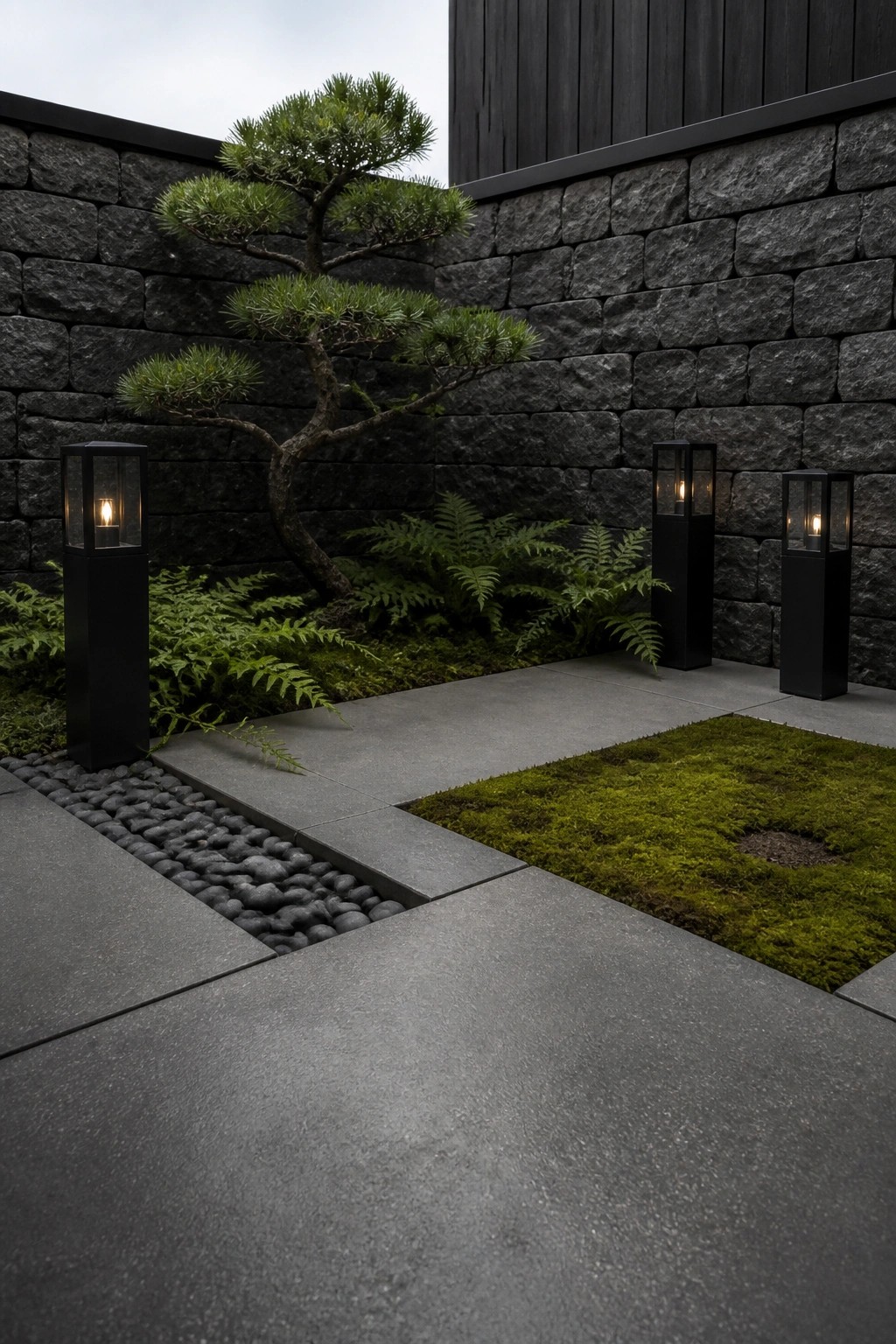
Many small corners look better when you divide the ground into clear zones instead of using one surface everywhere. Concrete pavers give a solid walking area while a narrow pebble strip and a moss bed create soft contrast right next to the wall.
This approach suits homes with limited outdoor space and dark stone or concrete walls. Keep the moss in a simple rectangle and let the pebbles act as a buffer so the edges stay sharp without much upkeep.
Vertical Wall Planters Add Greenery Without Taking Space

A vertical garden wall works well in small outdoor corners because it turns an empty vertical surface into planting space. The modular planters let you grow a mix of foliage and smaller plants right on the wall, so the ground stays open for seating or walking through. This approach keeps the area from feeling crowded while still giving you plenty of green.
It suits narrow side yards, patios next to fences, or any spot where floor space is limited. Mount the planters on a sturdy wall, choose plants that match your light conditions, and add a few pots at the base if you want more color. Keep the layout simple so the wall does not start to look cluttered.
Train a Small Tree on a Trellis

A trellis mounted to the back of a raised bed gives you extra growing room without taking up floor space. In a tight corner it turns a flat wall into a productive vertical layer, and the structure keeps things neat along a path.
This works best in small gardens where ground room is limited. Choose a compact fruit tree or climber, tie it in as it grows, and keep lower plants like herbs at the front so nothing crowds the edge.
Add a Stone Basin to Anchor Small Plantings
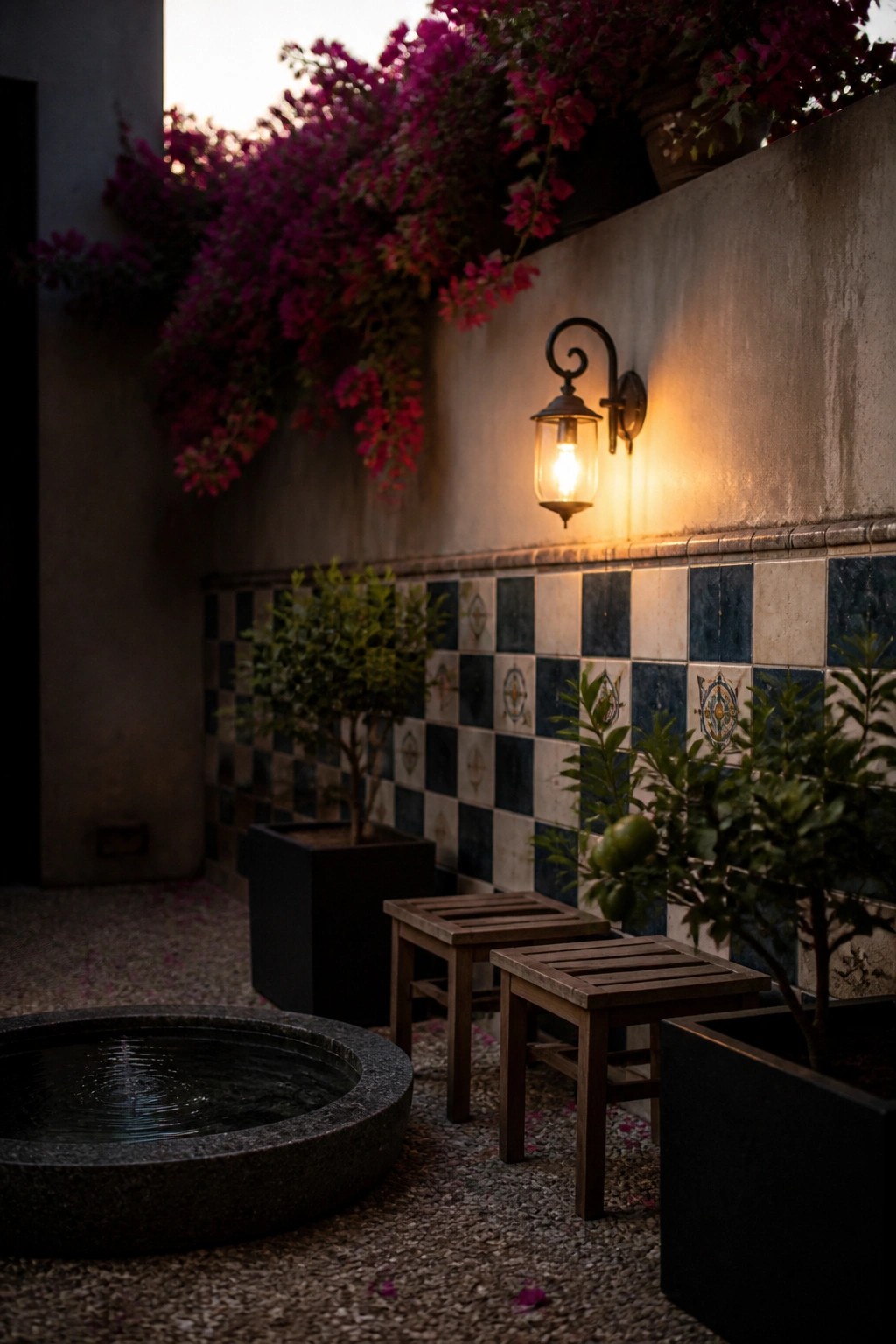
A round stone basin gives a small garden corner something solid to build around. It draws the eye without crowding the space and pairs easily with a few potted plants set at different heights along the wall.
This works best in narrow side yards or compact patios where you need one clear focal point. Keep the basin shallow so it stays easy to maintain, and group the pots close enough that the greenery feels connected rather than scattered.
Planters With Built-In Seating

Many small gardens gain a lot when the planters themselves provide a place to sit. This approach cuts down on extra furniture while keeping the layout clean and simple. The dark wood ties the planting and seating together without adding visual clutter.
It suits tight corners on patios or side yards where space is limited. Use a similar height and material for the bench section so it feels like part of the same structure, and keep the planting simple with grasses that soften the edges without taking over.
Stone Edging For Small Garden Corners

Large rocks make a simple border that keeps a small planting neat and contained. They give the bed a clear shape without adding much height or fuss, which helps the corner feel organized even when space is tight.
This approach works best against a wall or along a path where you need to stop soil and leaves from spreading. Use the stones to outline the bed, then add one tall container plant if you want extra height without crowding the ground.
Raised Planters Create Clean Edges in Small Gardens

A long raised planter set against a wall gives a narrow garden corner a simple frame. It keeps plants contained, adds height without crowding the space, and makes the whole area feel more intentional and easy to maintain.
This setup suits side yards or small outdoor corners where you want greenery but not a lot of upkeep. Use a light-colored box to reflect light, stick to rounded shrubs for softness, and lay stepping stones over gravel so the path stays practical and low maintenance.
Raised Beds Along a Gravel Path

Raised beds give a small garden clear shape and make it easier to manage plants in a tight space. The wood edging holds everything in place while the gravel path keeps the area from feeling cramped or muddy.
This works best in side yards or back corners where you need order without taking up much room. Keep the beds narrow so you can reach across them, and use simple materials that match the rest of the yard.
Add a Mirror to Open Up a Small Garden Corner

A mirror can make a tight outdoor spot feel less closed in. It bounces back the greenery and light so the corner reads as part of a bigger garden instead of a leftover space.
This idea works best on a plain wall where you can lean or hang a simple framed mirror. Keep the planting low and layered in front so the reflection stays clear and the whole area stays easy to maintain.
Built-In Seating In Small Garden Corners

A built-in bench along a wall turns an unused corner into actual seating without eating up floor space. The low profile and clean lines keep the area from feeling crowded, and the soft under-lighting adds just enough glow at night to make the spot usable after dark.
This setup works best against a fence or house wall where you already have a straight edge. Keep the planting simple with a few pots so the bench stays the main feature. It suits small yards or side yards where freestanding furniture would feel too bulky.
Anchor a Small Corner with One Large Planter
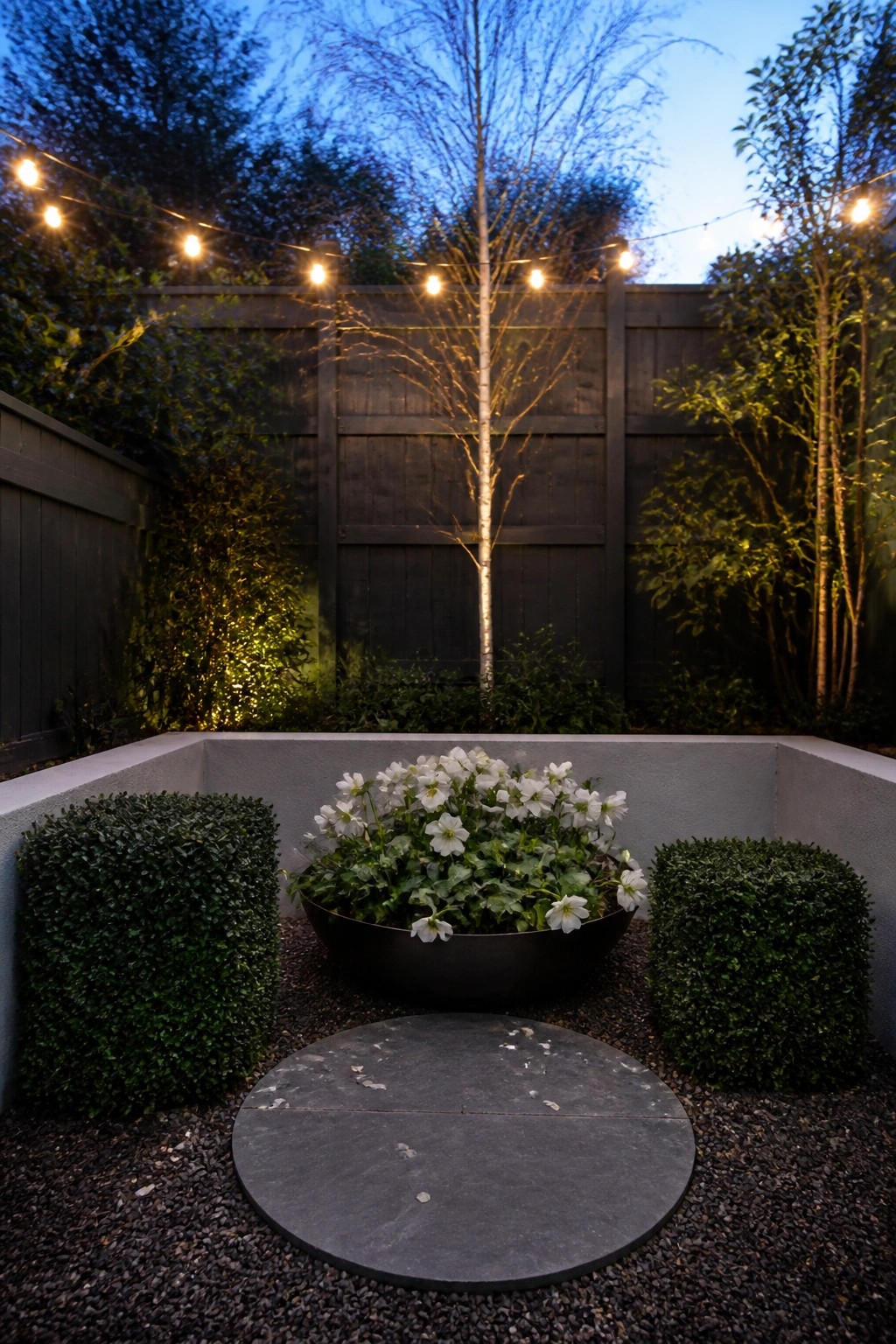
A single big container can pull a tight garden space together fast. It creates a natural center point and keeps the layout simple without needing multiple beds or complicated planting schemes.
This approach works best in gravel corners or paved areas where you want low maintenance. Pick a plain dark bowl, fill it with seasonal flowers, and add a couple of rounded shrubs on either side to frame it. The result feels balanced and stays easy to manage year after year.
Use Metal Buckets For Small Corners

Metal buckets give you a simple way to add plants without digging beds or committing to one spot. They work especially well when space is tight and you want to move things around as the seasons change.
Place a few together near a door or along a path. Choose hardy plants that can handle the same light and water needs, and keep the group small so the corner stays neat.
Add a Small Pond for Quiet Corners

A raised concrete pond gives a small garden corner real presence without crowding the space. The water reflects light and the plants soften the hard edges, which helps the whole area feel calmer and more finished.
This approach works best against a wall or fence where you can add a simple screen of tall plants behind it. Use neutral paving and a few rounded stones along the edge to keep things clean and low maintenance.
Frequently Asked Questions
Q: My corner gets full sun all day. Which ideas from the article hold up without plants burning out? A: Go for drought tolerant grasses or succulents in clean pots. They thrive in heat and keep the lines sharp. A simple water feature can cool the space too.
Q: Do these designs require a lot of upkeep once set up? A: Choose evergreens and low growing ground covers to cut trimming time. Sweep the area weekly to maintain that clean look. Most setups stay tidy with just basic seasonal checks.
Q: Can I add lighting for evenings without wiring hassles? A: Solar lights tuck easily into pots or along edges. They charge during the day and glow softly at night. This extends the use of your corner without extra work.
