

I’ve noticed over years of shaping my own yard that planters set the rhythm for everything else, from winding paths to layered beds. They pull the layout together when they echo the garden’s structure instead of clashing with it. Upcycling odds and ends into them lets you build that cohesion on a dime, watching the space mature naturally over time. Last spring I edged a border with a few homemade ones from forgotten crates, and it grounded the whole planting scheme right away. A handful here feel solid enough to tweak for your setup.
Hanging Teacups as Balcony Planters
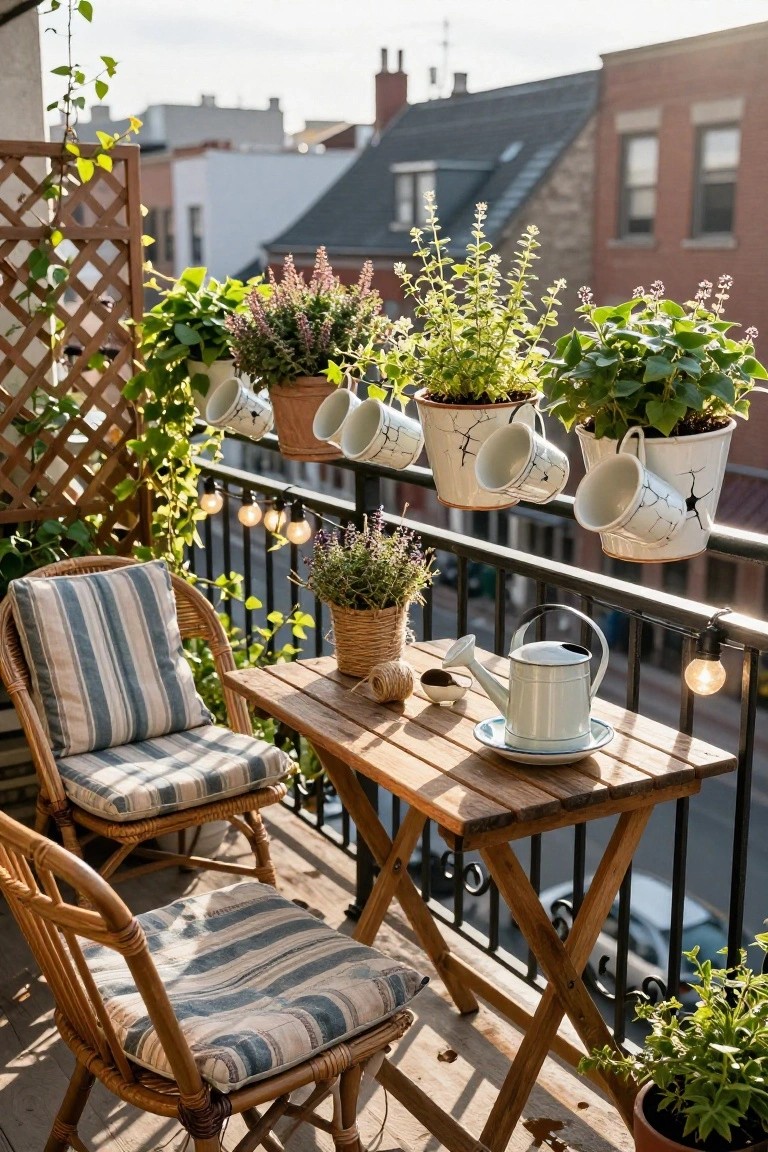
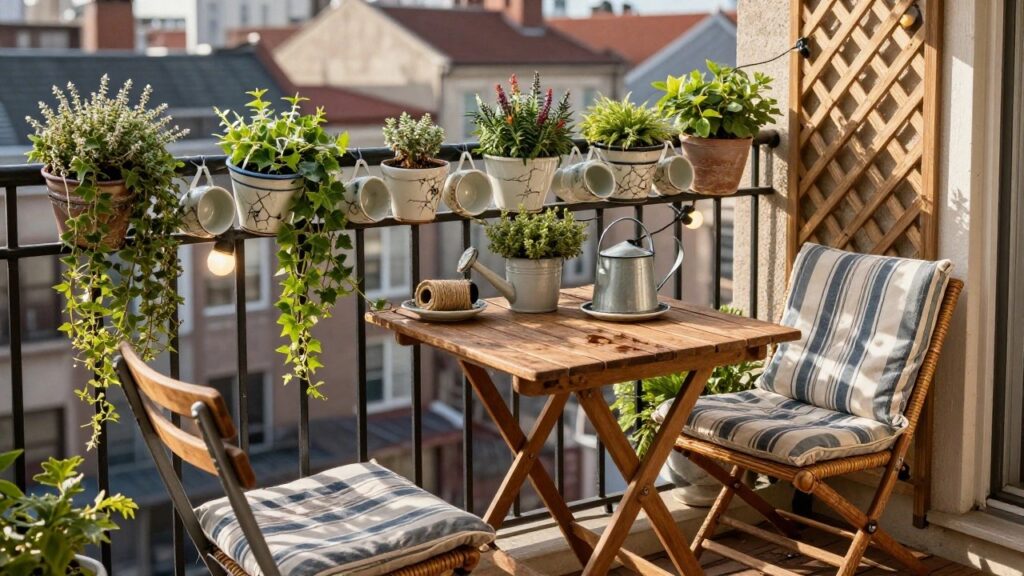
One simple trick for squeezing more plants into a tight balcony spot is hanging old teacups right off the railing. These white ones with a crackled finish hold small herbs and flowers, keeping the floor clear for chairs and a table. It’s budget-friendly since you can grab mismatched cups from thrift stores, and they add a bit of whimsy without looking cluttered.
To pull this off, drill small drainage holes in the bottom and suspend them with wire or S-hooks. They suit urban balconies or porches best, especially for lightweight trailing plants or succulents. Just check the weight so they don’t pull on the rail…and water carefully to avoid drips below.
Upcycled Crate Planter by the Bench

A simple wooden crate makes a great planter when you set it right next to outdoor seating like this bench. Painted a soft green with some wear showing through, it holds rosemary, succulents, and sedum that trail a bit. The look stays casual and fits right into a patio setup without taking up bench space.
This works best on small patios or along fences where you want plants close at hand. Line the crate with plastic to keep soil in, then plant drought-tolerant stuff that won’t need daily water. It suits sunny spots and older homes with a relaxed yard vibe. Just make sure it’s sturdy enough not to tip.
Galvanized Tub Turned Planter
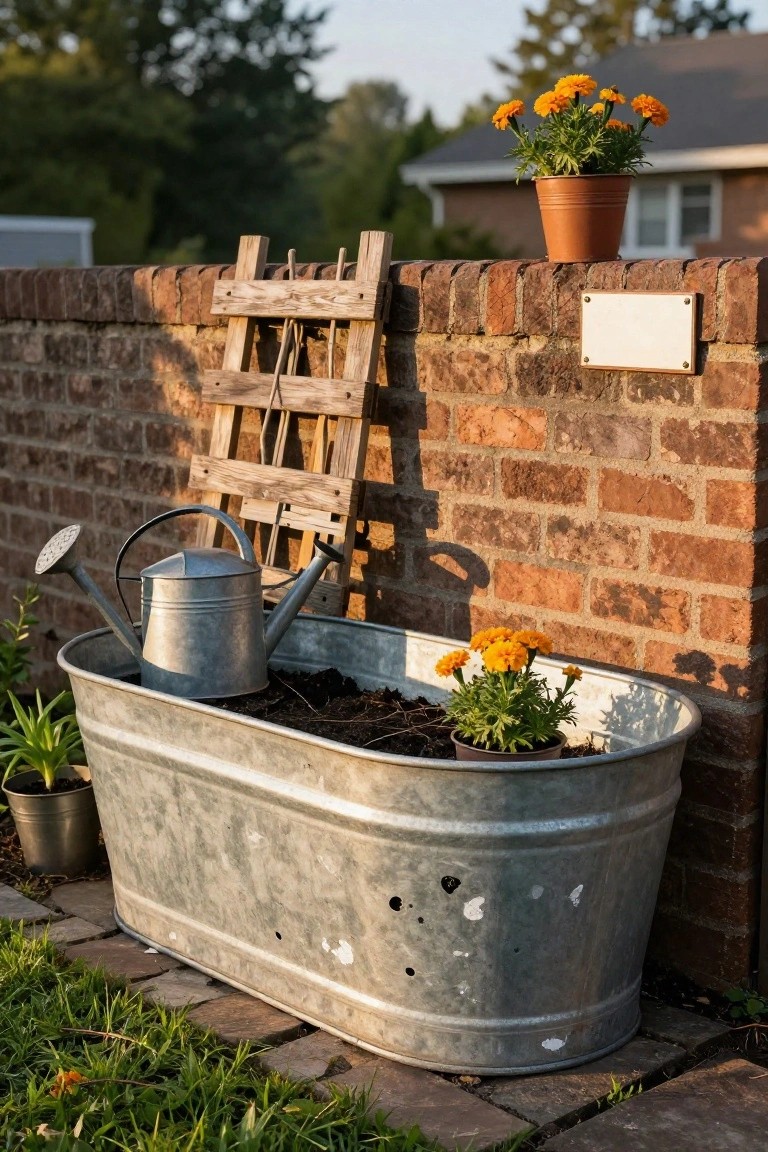
Old galvanized tubs make sturdy, eye-catching planters for the garden. They hold a good amount of soil and plants like these cheerful marigolds, and that weathered metal patina fits right in with brick walls or fences. The bonus here is tucking a watering can inside for easy access.
Just find a tub at a flea market or salvage yard, drill some drainage holes in the bottom, and fill it with soil. It works well in small yards or along paths where you want height without much effort. Keep it in full sun for flowers that thrive.
Ladder Shelf Planter for Porch Gardening

One simple way to add more plants to your porch without taking up floor space is to lean an old wooden ladder against the wall and use the steps as shelves. Those weathered rungs hold terracotta pots just right, and you can tuck in a wooden box at the top for bigger herbs like basil. It gives the spot some height and a casual, lived-in feel that fits right in with porch life.
Put it near the door or by a bench where you sit in the evenings. It works best on covered porches in milder spots, since the plants stay out of heavy rain. Watch the weight on those steps, and secure the ladder so it doesn’t slip. Easy to switch plants with the seasons too.
Mosaic Bench with Upcycled Tile Planters
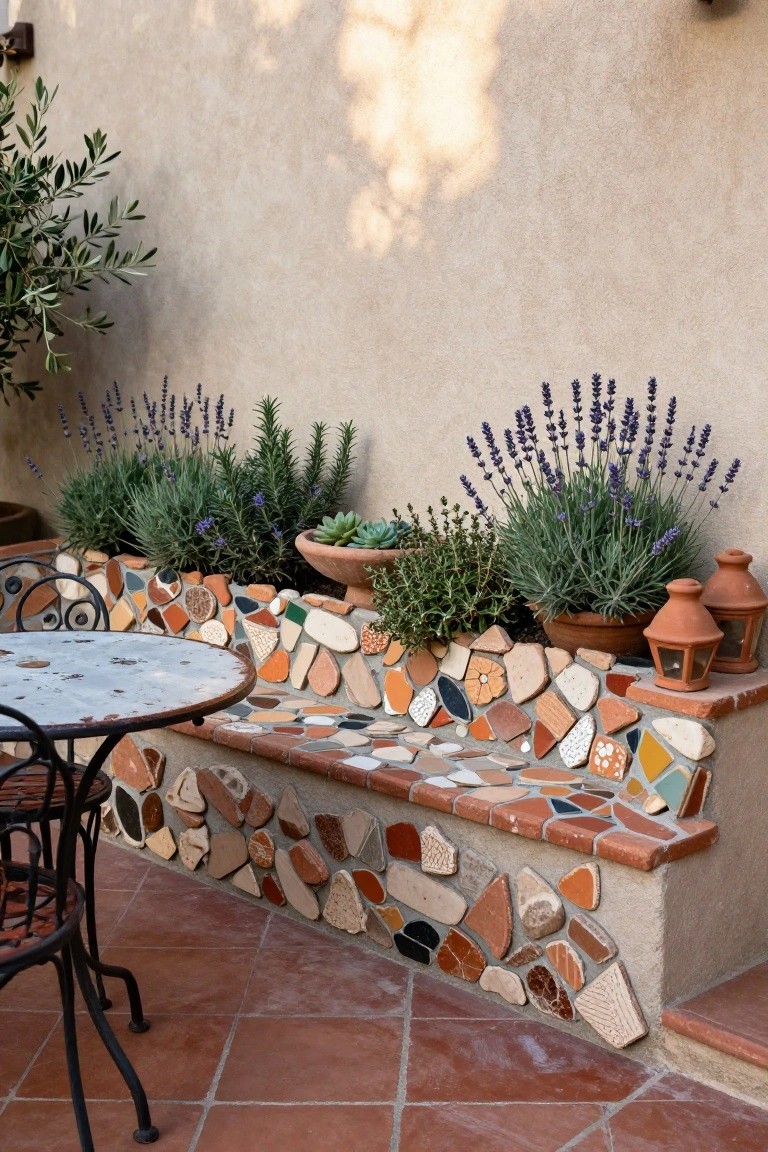
One smart way to mix seating and planting is this bench edged with broken tiles set into a mosaic pattern. The tiles, in oranges, blues, and earth tones, form the back and side, holding in soil for herbs and lavender right where you sit. It turns a plain spot into something useful and pretty without much cost.
Try this on a sunny patio or along a walkway where space is tight. Build the bench low, maybe two feet high, mortar the tiles over concrete blocks, then plant low growers like rosemary or succulents. Just make sure good drainage… wet roots won’t last. Fits old homes or rentals fine.
Raised Planters from Wooden Pallets
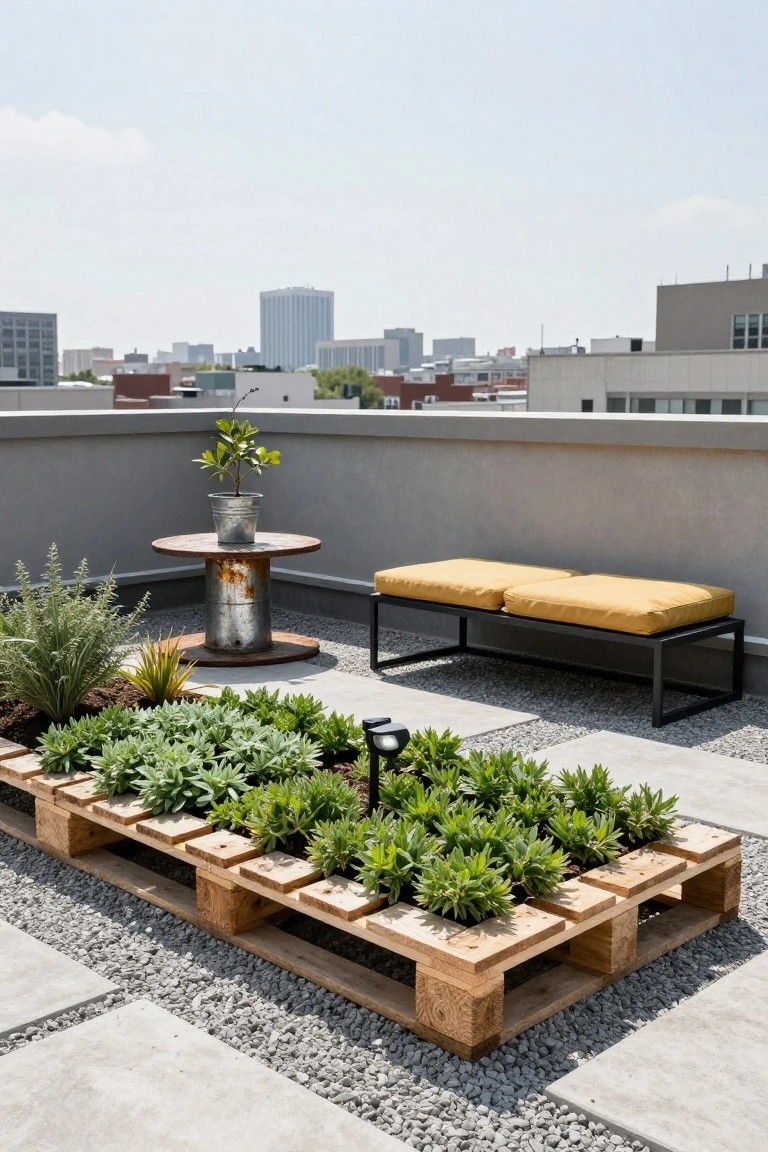
Old wooden pallets make great raised planters for tight spots like rooftops or balconies. In this setup, they’re lined up to hold clusters of green succulents and low plants that spill over the edges a bit. It’s cheap, sturdy enough for regular watering, and gives you that instant garden look without digging into the ground.
Line the pallets with landscape fabric first to keep soil in place, then fill with good potting mix. They fit right on concrete or gravel patios, perfect for renters or city homes with no yard. Just pick heat-treated pallets to avoid chemicals… and anchor them if wind’s an issue.
Vintage Colanders as Hanging Planters
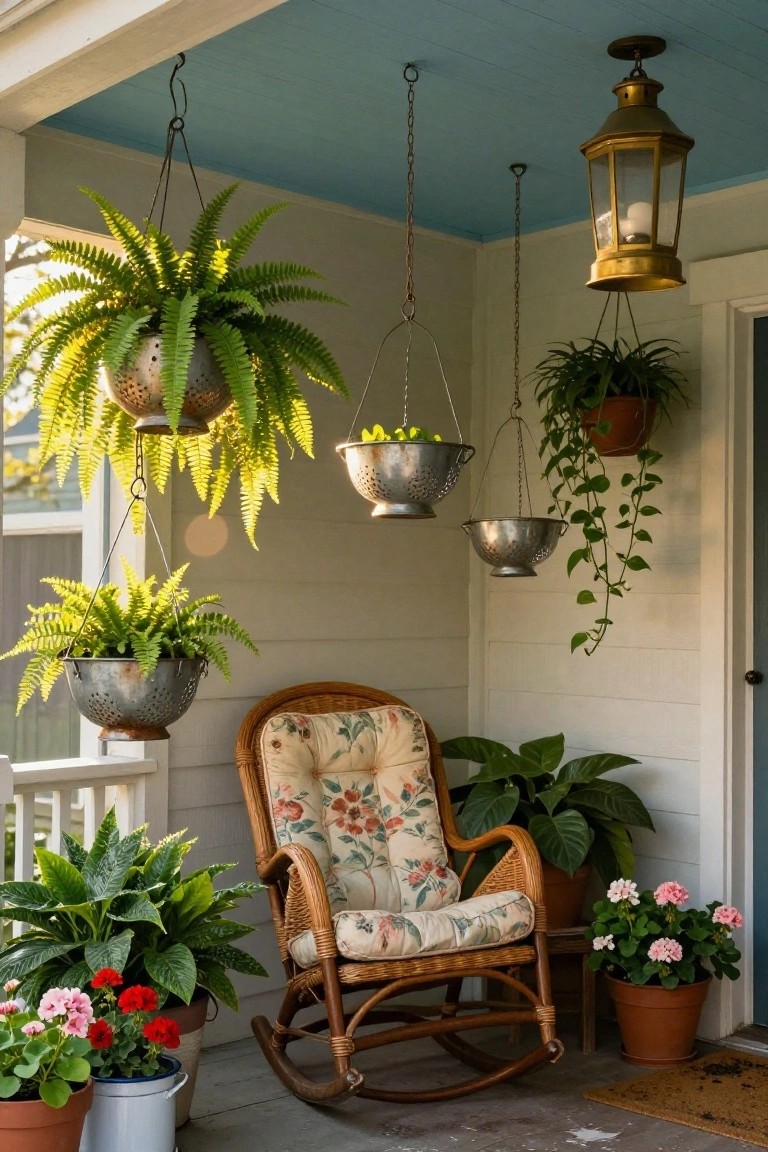
One simple way to add plants to a porch is by turning old colanders into hanging planters. You see them here with ferns spilling over the edges, hung from chains right above a rocking chair. They give height to the space without much cost, and the holes let water drain right through so the plants stay healthy.
These work best on covered porches or patios where you want greenery up high. Grab some galvanized ones from a thrift shop, poke extra holes if needed, and hang them with sturdy chains. They suit casual spots like this, keeping things practical and a bit rustic. Just make sure the chains can hold the weight once the plants grow.
Wooden Crate Planter for Patio Dining
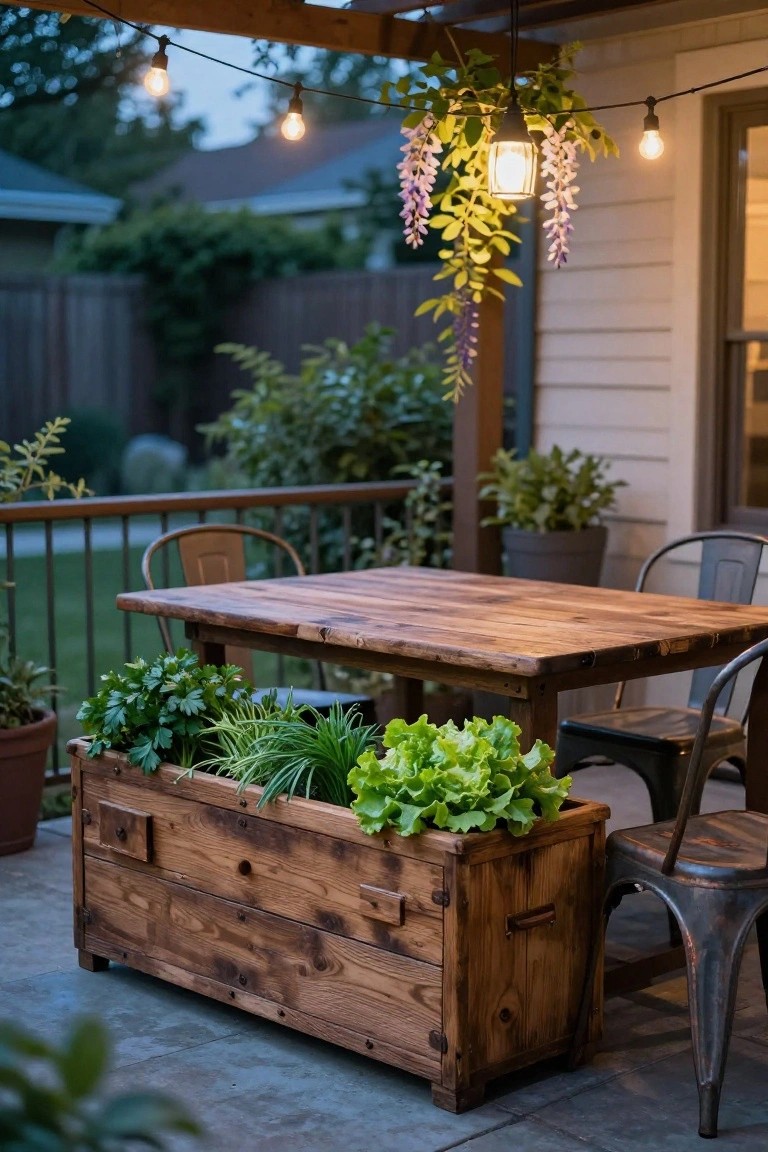
A simple wooden crate makes a great planter when tucked under or next to your outdoor table. In this setup, it’s filled with herbs like parsley and chives, plus some lettuce, all thriving in the open air. The box has those handy drawer fronts, giving it a chest-like look that fits right in with a rough-sawn wood table. It keeps things practical without taking up extra space.
You can source old crates or pallets from salvage yards pretty cheap, then line them for drainage and soil. Plant edibles you use often so harvesting is easy during meals. This works best on covered patios or decks in mild climates, where it adds green without overwhelming the seating area. Just seal the wood if rain is heavy.
Upcycled Barrel Tree Planter
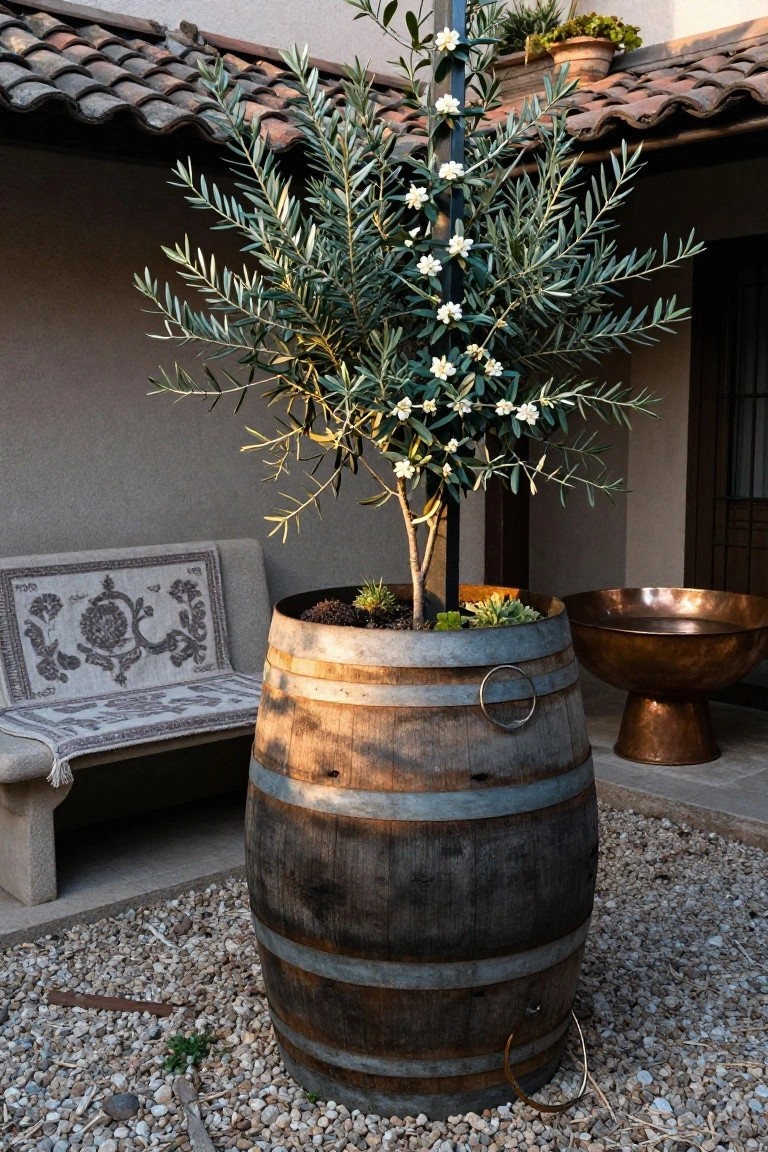
Old wooden barrels make great planters for bigger plants like olive trees. You get instant height and a mature look without years of waiting. The barrel here holds a flowering olive tree, with some succulents tucked around the base for extra green. It’s sturdy and fits casual outdoor spots.
Grab a used barrel from a winery or salvage yard. Cut off the top, drill drainage holes, and fill with soil. Plant a tree or shrub that likes well-drained spots. This works best in courtyards or patios with gravel or stone ground. Keep it near a bench for scale.
Dresser-Turned Raised Planter
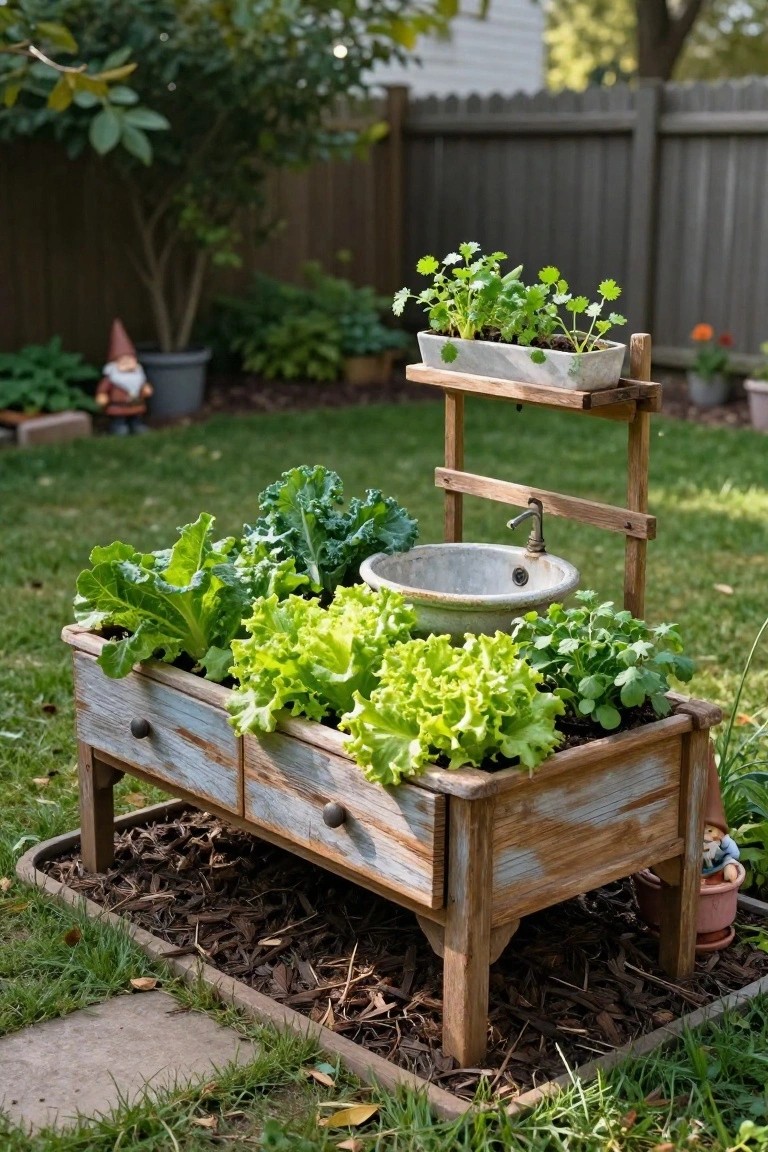
Old dressers like this one make perfect raised planters. Pull out the drawers, fill with soil, and plant right in the frame. Here it’s packed with lettuce and kale, with a rusty sink and faucet rigged up top for rinsing greens or watering. The wood gives it a worn-in backyard feel that fits right in.
Put one like this in a sunny spot near your patio or back door. It works well for veggies or herbs if you don’t have much ground space. Line the inside with plastic to keep the wood from rotting too fast, and elevate it on legs if needed for easier reach.
Repurposed Metal Drawers as Planters

Old metal file drawers like these make smart planters for a balcony setup. You can grab them cheap at flea markets or salvage yards. They hold up outdoors with their galvanized finish and give that rough industrial edge without much cost. Here they cradle rosemary, succulents and a few herbs right on a simple bench. It’s a clean way to grow your own stuff in tight spots.
Just line the bottom with plastic or mesh for drainage then fill with soil. They’re stackable if you want height and work best on sunny balconies or patios. Skip heavy soil to keep the weight down. Great for renters too since they move easy.
Vintage Wagon Planter
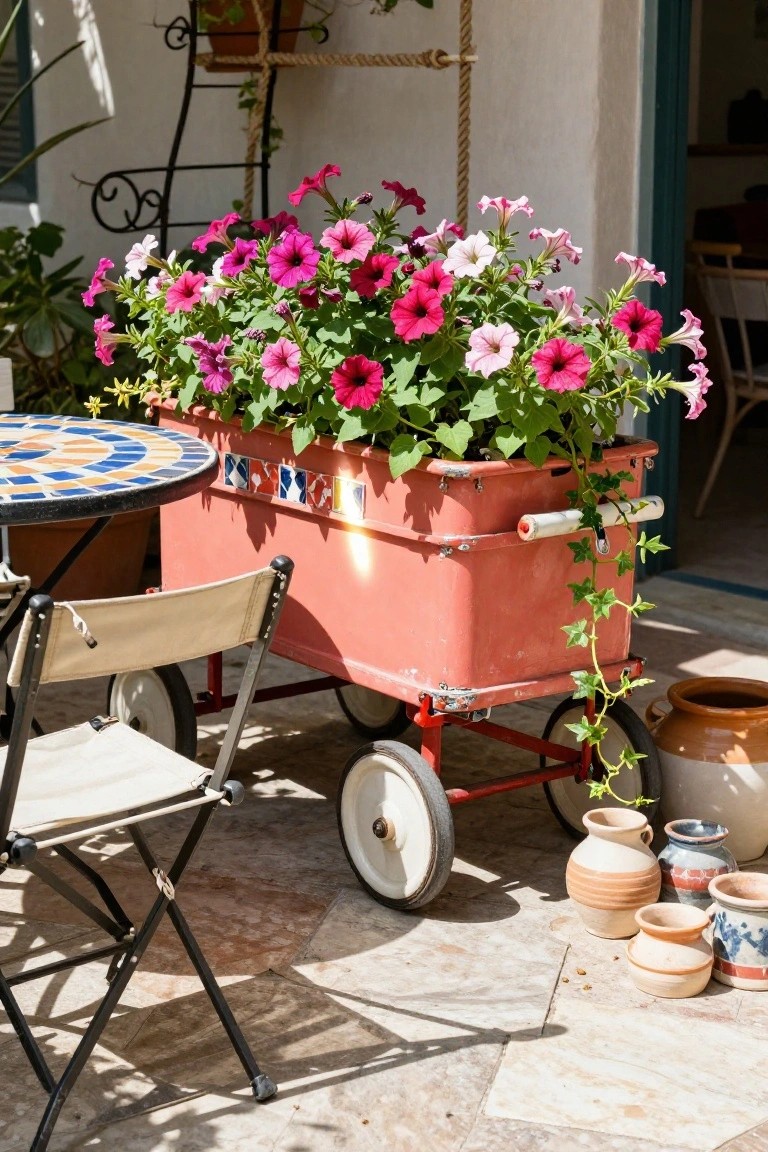
Nothing beats turning an old wagon into a planter for that easy patio charm. Here it’s filled with pink and white petunias plus some trailing ivy, sitting right by a little table and chairs. The rusty red finish gives it character, and being on wheels means you can shift it around for sun or to make room.
This works great in small outdoor spots like patios or balconies where you want flowers without permanent setups. Hunt thrift stores for a kid’s wagon or Radio Flyer type, drill drainage holes in the bottom, then plant spillers like petunias or ivy. Keeps things mobile and low fuss… just watch for rust if it’s out in the rain a lot.
Upcycled Glass Boxes as Succulent Planters
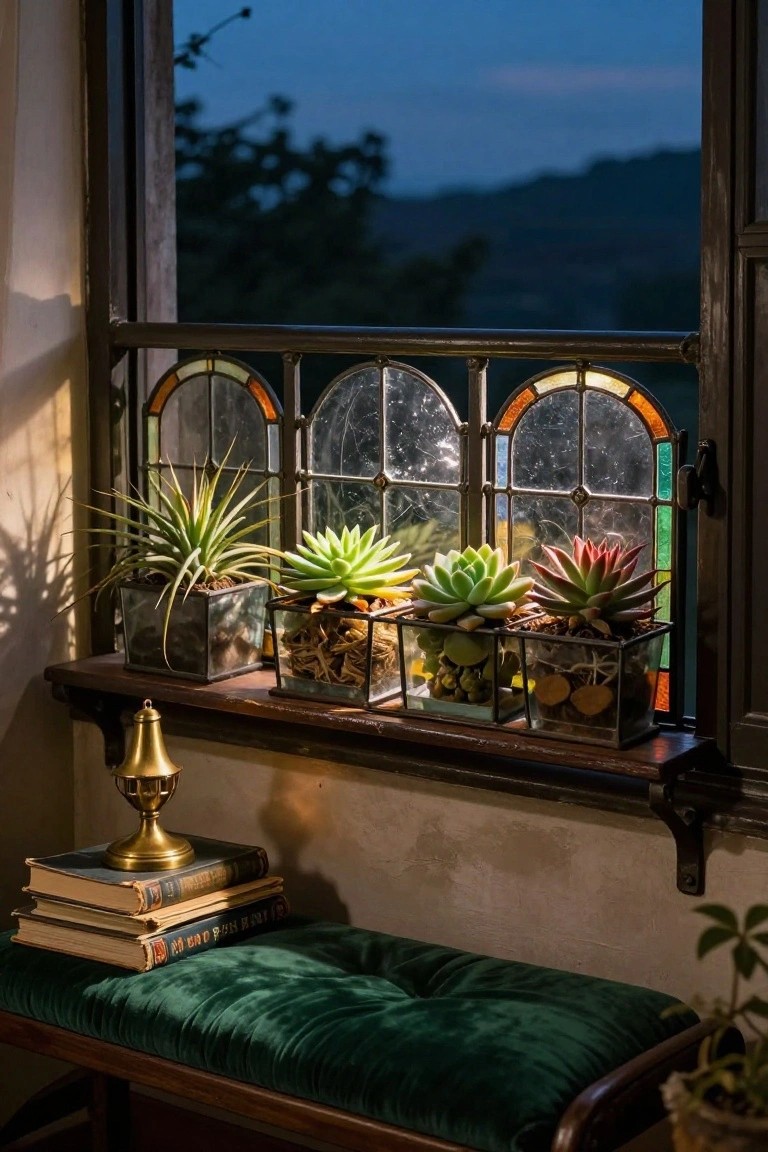
One simple way to bring plants indoors without spending much is to use old glass boxes or jars as planters. In this setup, square glass containers hold different succulents right on a windowsill shelf. The clear glass lets light through to the plants, and it picks up the colors from the stained glass window nearby. It’s a low-cost idea that looks collected over time.
These work best in kitchens or reading nooks where you want a bit of green but not a lot of fuss. Pick thrift store glassware with tight lids if you want, or just sturdy boxes that won’t tip. Succulents do fine here since they need little water. Keep them grouped like this for easy care, and dust the glass now and then. Fits older homes with character… or any spot needing life.
Galvanized Drum as Tall Planter
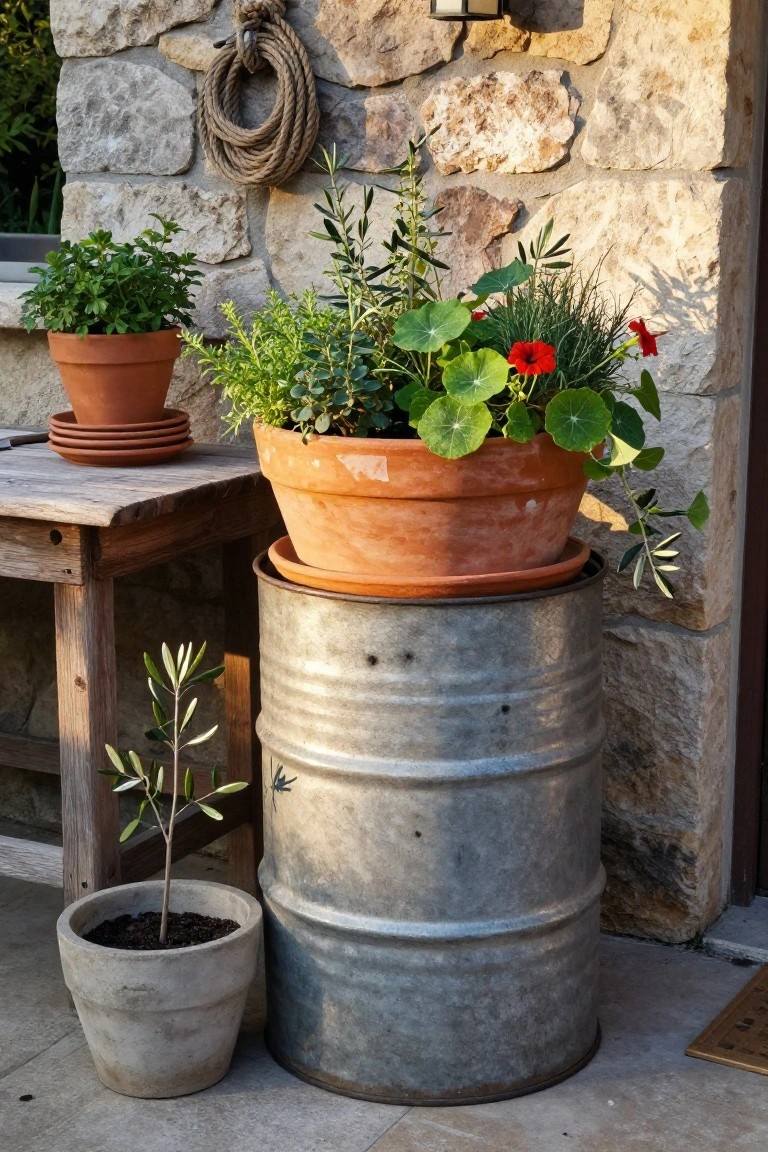
One simple way to add height and interest to a patio corner is stacking plants on an old galvanized drum. This setup uses the drum’s sturdy shape to hold a larger terracotta pot on top, filled with lush greenery like nasturtium. A young olive tree sits right beside it in its own pot, making the whole group feel established without much effort.
It works great near an entry or seating area where you want a bit of garden presence. Hunt for a used drum at a farm supply or salvage yard, give it a quick clean, and set it on level ground. Pair with everyday pots you already have. Just make sure good drainage in the top pot, or the roots could get too wet.
Upcycled Crate Planter on Legs

One easy way to add greenery to a patio is turning an old wooden crate into a raised planter. Just add short legs to lift it off the ground. This keeps plants away from wet tiles and makes tending easier on your back. In the setup here, ferns and a blue hydrangea spill out nicely, filling the space without crowding.
Put this on a small terrace or courtyard corner where floor space is tight. It works with any style home, from modern to cottage. Source crates from pallets or markets, seal the wood if needed, and group with simple terracotta pots for balance. Skip heavy soil loads to keep it stable.
Fence-Mounted Crate Planter Shelf
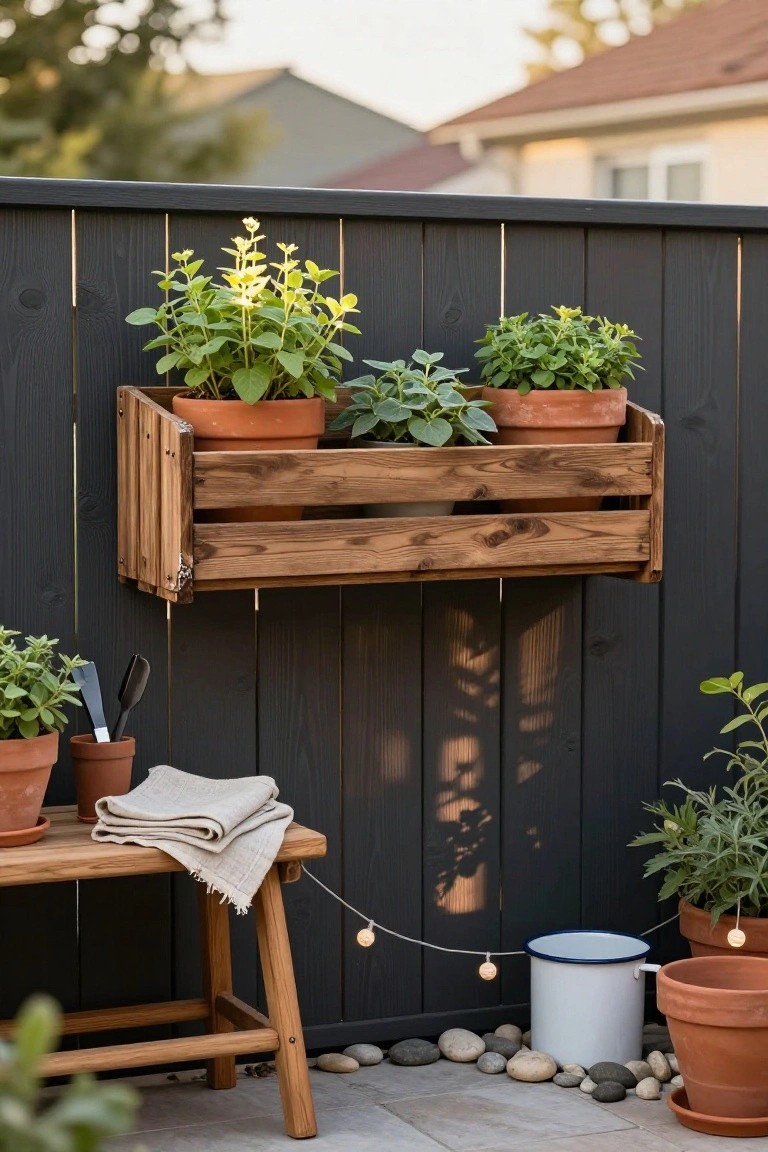
One simple way to grow herbs without taking up ground space is to mount a wooden crate right on your fence. Like this one made from reclaimed wood, holding a row of terracotta pots with mint and other greens. It keeps plants at eye level and easy to reach, perfect for snipping leaves while you sit nearby.
This works best in a backyard corner or along a patio edge where you already have a bench or seating. Secure the crate with brackets so it won’t shift, and pick pots that fit snugly. It’s ideal for renters too, since you can take it down without damage. Just water regularly, as wall spots dry out faster.
Frequently Asked Questions
Q: Do I need to drill drainage holes in every upcycled container?
A: Always add a few holes in the bottom to let excess water escape and keep roots happy. Grab a drill with a masonry bit for tough materials like metal or ceramic. Pour water through first to test it out.
Q: What if my old boots or shoes leak soil everywhere?
A: Line the inside with a scrap of landscape fabric or an old coffee filter. Poke holes in the liner for drainage. Fill with soil and plant away, no mess.
Q: Will wooden crates rot outside after a season?
A: Brush on a coat of outdoor sealant before adding soil. Pick naturally rot-resistant woods like cedar if you can. Refresh the sealant yearly to keep them going strong.
Q: Can I plant herbs right in a chipped teapot?
A: Go for it with shallow-rooted herbs like basil or mint. Tuck in some gravel at the bottom first for drainage. They thrive in quirky spots like this.
