

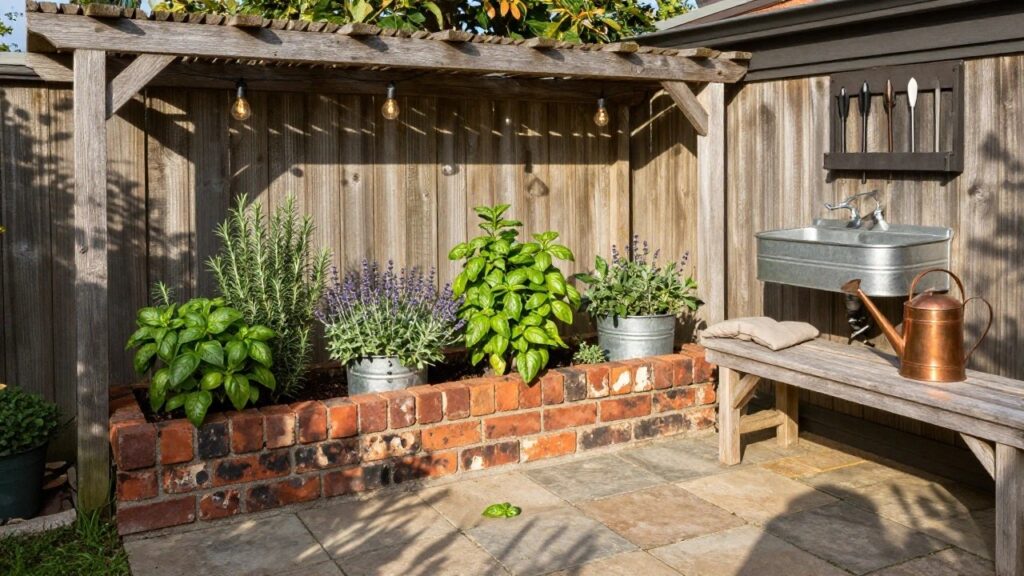
I’ve always found that a herb garden works best when its layout guides you naturally through the plants, making it easy to snip what you need without trampling the beds. The first thing people notice in these backyard setups is usually the clean lines of edging or winding paths that keep everything contained as the herbs fill out over time. I tested a raised bed arrangement like one in here last spring, and it saved my back while letting the taller ones shade the low growers. Structure matters more than showy varieties. These ideas give you solid starting points to adapt for your yard’s sun and soil, so the garden shapes up reliably season after season.
Raised Brick Herb Garden
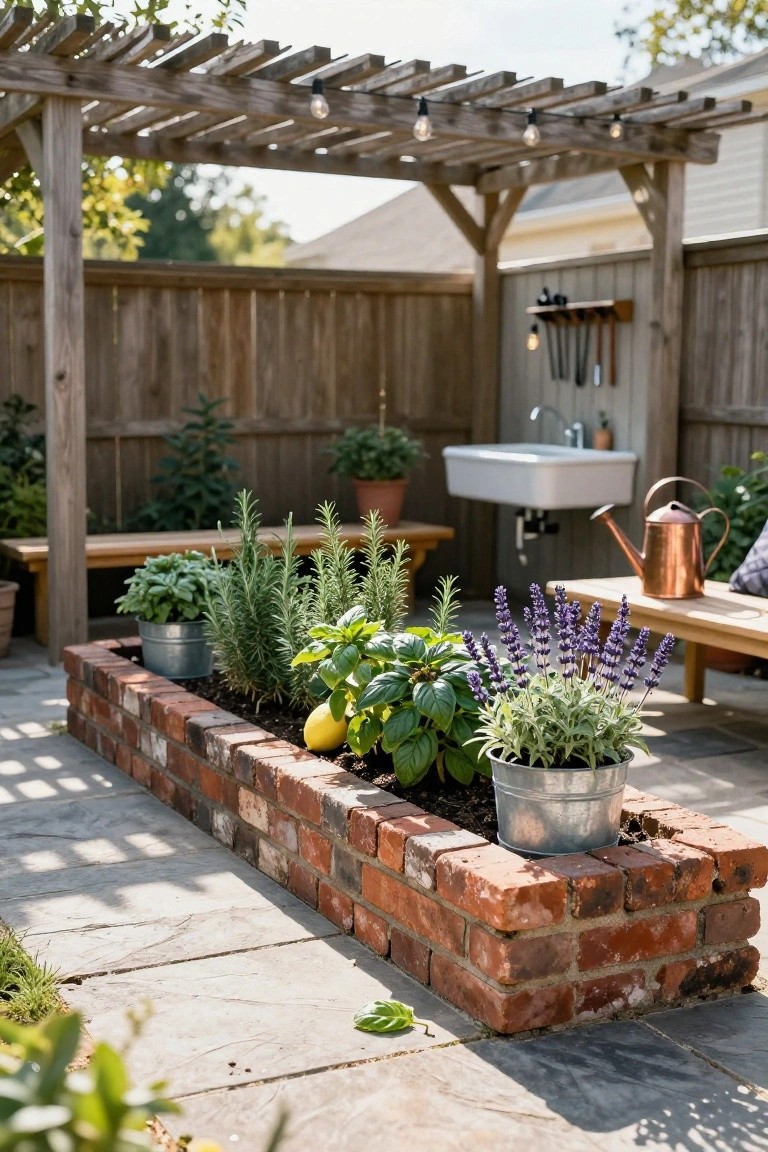
A raised brick bed like this keeps your herbs organized and easy to reach without bending over much. The rustic brick walls hold soil well and give a sturdy, timeless look that fits right into a backyard patio. You see rosemary, basil, and even a small lemon plant tucked in, all thriving together.
This works best in cozy outdoor spots near the house, maybe along a fence or walkway. Stack reclaimed bricks for a low-cost build, fill with good soil, and plant favorites close for daily picking. It stays neat and adds charm without taking up much room.
Rustic Stone Wall Herb Garden

A low curved wall made of rugged stone holds a ring of terracotta pots filled with herbs like rosemary and basil. This simple hardscape turns a gravel patch into a tidy herb spot without needing much ground space. The stone edge keeps everything in place and adds a bit of countryside feel to the yard.
It works best in sunny backyard corners near seating, like by that iron bistro table you see here. Stack pots at different heights for easy reach, and choose drought-tolerant herbs to keep watering low. Avoid overcrowding so plants get air.
Built-In Herb Planters for Fire Pit Seating

One smart way to add herbs to your backyard is by planting them right into concrete benches and planters around a fire pit. Here, rosemary bushes fill the edges, giving off that fresh smell while you relax. The setup keeps everything tidy and close at hand for cooking or just brushing against the leaves.
This works best on patios or terraces with limited space. Go for tough herbs like rosemary or thyme that won’t mind the heat from the fire. Concrete planters hold up well and match modern looks, but make sure drainage is good to avoid root rot.
Rustic Raised Herb Planter
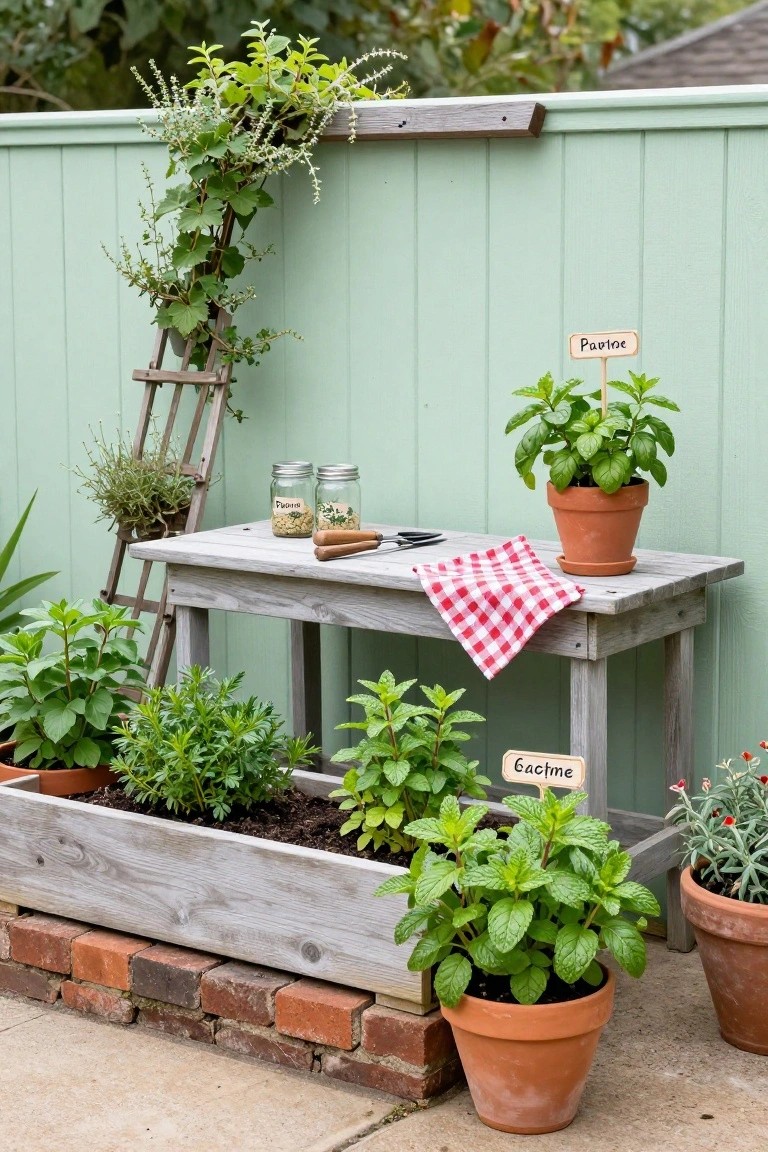
A raised wooden planter box like this one makes growing herbs straightforward and pretty. Filled with basil, parsley, and mint, it sits right on the patio edge, using that weathered gray wood to blend with backyard fences. The box keeps soil contained and plants at picking height, which beats bending over in the ground.
This works best in tight spots, like along a house wall or near a door for quick harvests. Pair it with a few pots of extras around the base, maybe a small table for jars of seeds. Watch the drainage though, raised beds dry out faster in hot sun.
Patio Herbs in Terracotta Pots

One easy way to bring fresh herbs into your backyard is with large terracotta pots placed right around the patio seating. These weathered clay urns hold rosemary and other sun-loving plants perfectly, sitting along a low wall near the table. It keeps everything handy for cooking or just picking a sprig, and the orange pots pick up the warm stone tones for a natural flow.
Try this in a sunny corner where you like to eat outside. It fits small patios or wider terraces, especially if your yard has a bit of slope for that raised wall. Stick to tough herbs that don’t need much water, and group a few pots together so they look full without crowding the chairs.
Outdoor Kitchen Herb Garden
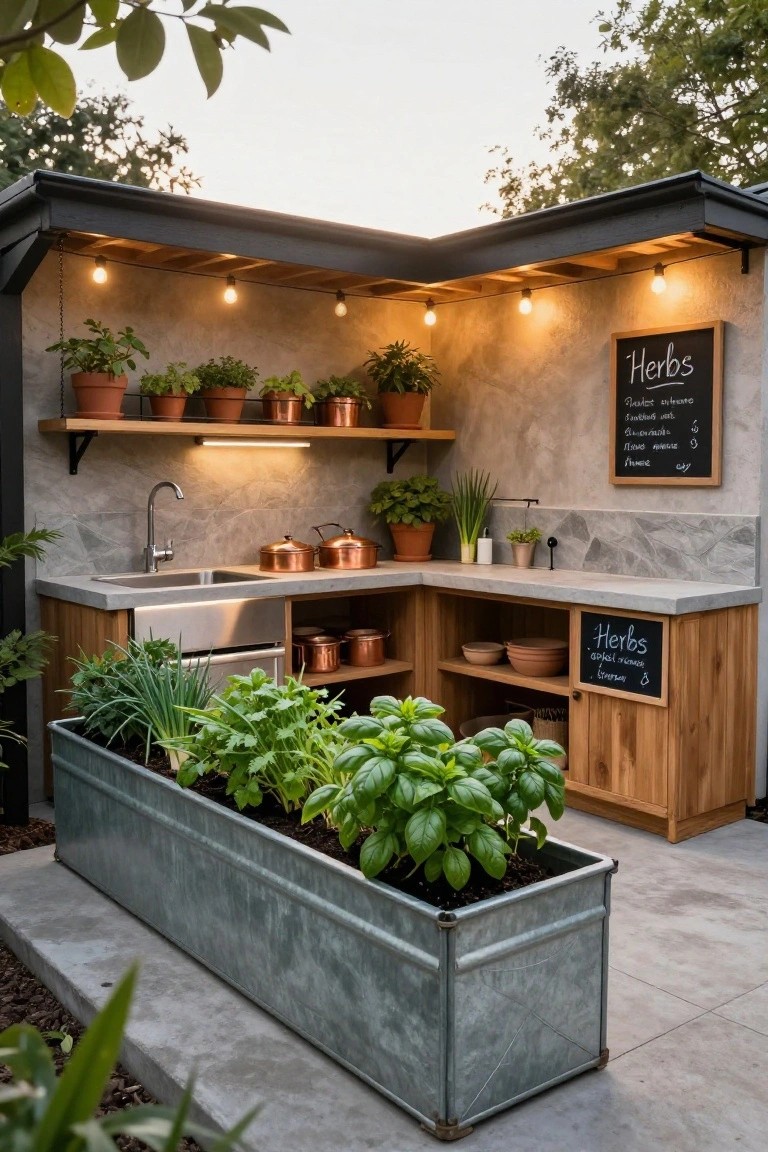
One smart way to grow herbs right where you need them is building planters straight into your outdoor kitchen counters. This L-shaped setup has a long galvanized trough filled with basil and greens along one side, plus pots on open shelves above the sink. It keeps everything fresh and handy for cooking outdoors, without taking up extra yard space.
Try this in a covered patio spot where you grill or prep meals often. Pick trough-style planters for bigger herbs like basil or rosemary, and smaller pots for chives or thyme on the shelves. It works best in milder climates, and just make sure good drainage so roots stay happy.
Tiered Pallet Herb Planters
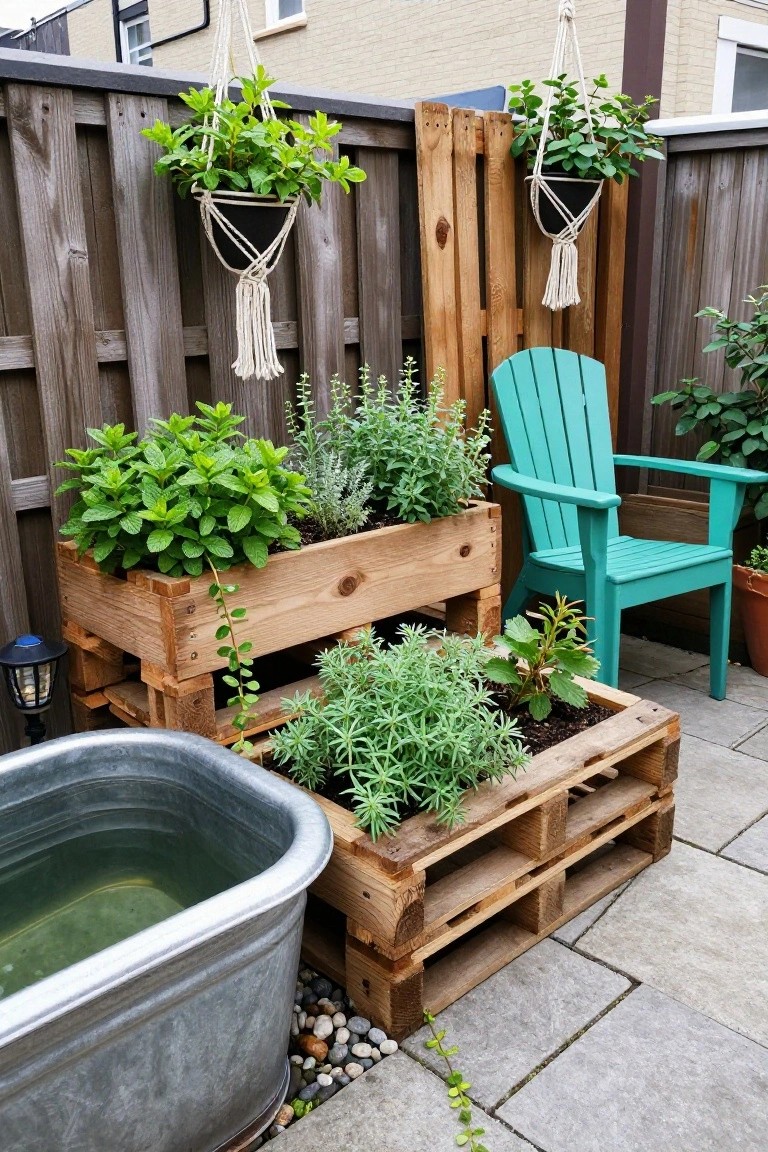
One smart way to grow herbs without taking up much ground is stacking pallets into raised beds. You see mint spilling over one side and rosemary tucked in another, all on simple wooden pallets set right on the patio. It keeps things off the dirt, makes harvesting easy from different heights, and gives that casual backyard feel people go for.
These work best in tight spots like city patios or side yards where you want fresh picks close to the kitchen door. Grab sturdy pallets, line them with landscape fabric to hold soil, and plant low-water herbs that like good drainage. Pair with a nearby chair… and you’ve got a spot to sit while you snip. Just check pallets for chemicals first.
Cozy Outdoor Lounge with Potted Herbs

One easy way to make a backyard herb garden feel like part of your daily life is to tuck potted herbs right around a simple seating spot. Here, a rattan loveseat and low table sit under a big tree, with lavender and other herbs in terracotta pots nearby. It keeps things casual and green-focused, without needing a full raised bed or fancy layout. The herbs add that fresh scent and look while the seating makes you want to stay out longer.
This setup works great in smaller yards or patios where space is tight. Pick sturdy pots that match your style, group herbs like lavender, rosemary, or mint around the edges, and add a table for fresh picks. It suits sunny spots with some tree shade… just watch for too much sun scorching delicate leaves. Easy to pull together with thrift finds or basic garden store stuff.
Symmetrical Herb Garden with Gravel Path

A simple gravel path runs straight down the middle of this herb garden, with flat stone slabs set in for steps. Lavender plants edge both sides, backed by tidy boxwood hedges, and raised metal planters hold the main herbs. Black benches sit at each end. That layout keeps everything neat and walkable. It makes harvesting easy and turns a backyard patch into something structured.
Try this in a rectangular sunny spot near your kitchen door. Start with gravel for the path, add stepping stones every few feet, and plant lavender along the borders for scent and color. The raised planters work well for chives, thyme, and such. Fits small yards best. Just keep the hedges trimmed once a year.
Herb Planters Along the Patio Edge
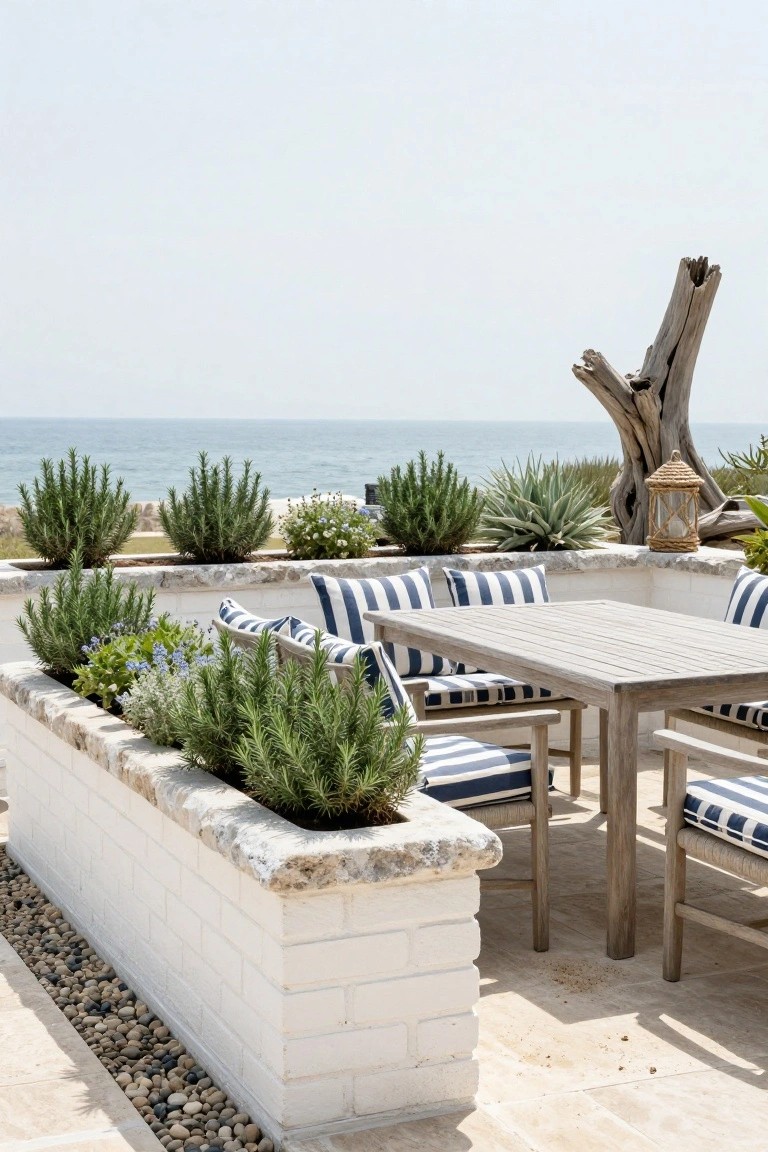
One simple way to bring herbs into your outdoor dining spot is to line the low boundary wall with built-in planters. Here, rosemary bushes fill the white brick planters right next to a teak table set with striped cushions. It keeps fresh clippings handy without taking up seating space, and the setup works well with an open view like this ocean backdrop.
This idea fits terraced patios or backyards where you want edibles close by. Pick tough plants like rosemary or lavender that thrive in full sun. Build the planters shallow for easy reach, add gravel mulch at the base for drainage, and it suits coastal spots best.
Linear Herb Planters Along the Pool

One simple way to add herbs right where you use your backyard most is with a long built-in trough planter along the pool edge. Here it’s filled with lavender and a few low green plants that hug the stone nicely. The setup keeps everything tidy and close at hand, plus the fragrance drifts over when you swim. No sprawling beds to mow around.
This works best in sunny spots with hard patios or decks. Pick drought-tough herbs like lavender, thyme, or rosemary so they handle the reflection off the water. Stone troughs blend into modern pool surrounds… just make sure it’s deep enough for roots, about 12 inches or so.
Raised Stone Beds for Patio Herbs
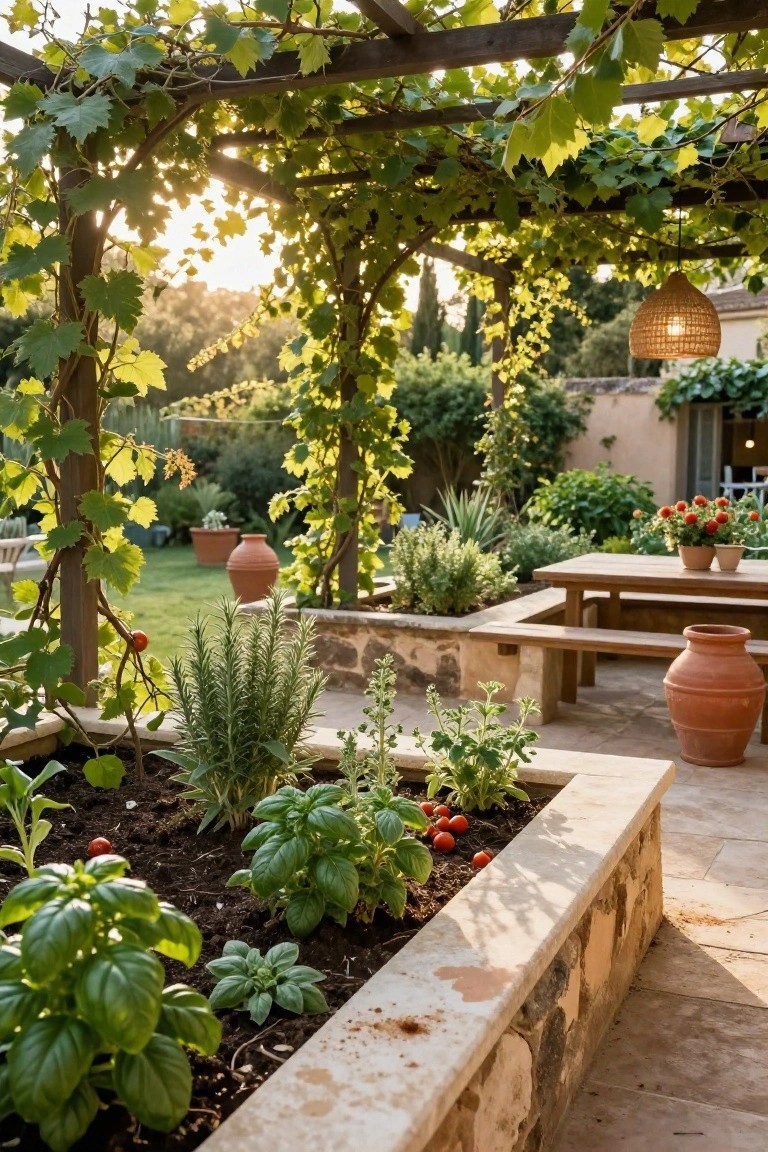
One smart way to grow herbs right where you use them is with raised beds built from stone along your patio edge. Here, lush basil plants and little tomatoes fill the bed, sitting flush with the terrace so you grab fresh sprigs without stepping far from the wooden dining table. It ties the garden into everyday outdoor living, keeping things handy and the look cohesive.
These beds work best in sunny backyards with a bit of rustic charm, like stone houses or simple patios. Stack local stone or reclaimed blocks for walls about a foot high, fill with good soil, and plant heat-lovers like rosemary nearby. Just watch drainage to avoid soggy roots… position near shade like a pergola for afternoon protection.
A Pathway Lined with Raised Herb Beds

One simple way to fit a lot of fresh herbs into a small backyard is to line a narrow stone path with raised wooden beds. You get parsley, cilantro, and other greens right at hand, plus the path creates a nice walkway that draws you through the garden. A small fountain in the middle adds a bit of water sound without taking up planting space.
This setup works great in tight spots like urban yards or side areas. Build the beds about knee-high with untreated wood, fill them with good soil, and label jars like the one for parsley sitting on the path. It keeps everything organized and harvest-ready… just watch for weeds creeping in from the gravel edges.
Stepping Stones Through Gravel
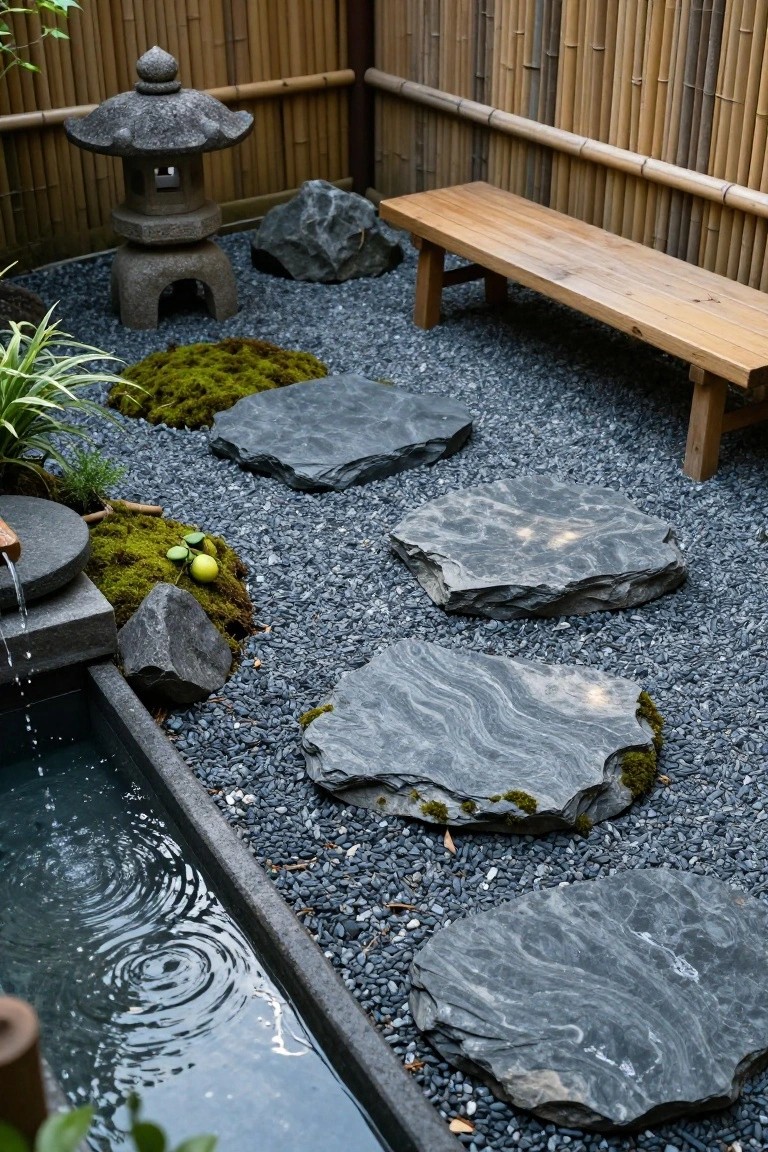
A simple path of flat, irregular stones set into gravel makes walking through a garden feel natural and calm. It keeps things low fuss too. No muddy trails after rain. In this setup, the dark slate steps stand out against the gray pebbles, with bits of moss softening the edges here and there. Folks like it because it guides you right to where plants need tending, without stepping on growing spots.
Use this in a small backyard or side yard where space is tight. Lay gravel two inches deep for drainage, then sink stones level so they feel steady underfoot. It suits herb gardens great. Plant chives or thyme in the gravel pockets around the path. Skip it in super wet areas though. Add a lantern nearby for evening visits.
Stock Tank Herb Garden

One easy way to grow fresh herbs right where you need them is with a big galvanized stock tank. These metal troughs make great raised planters, and they fit right into a backyard setup like this one near the grill. You get plenty of room for different plants like oregano, succulents, and trailing ones that spill over the edge. The rustic look holds up outdoors, and it keeps soil off the ground.
Set one on a simple concrete base for stability, especially if your yard slopes a bit. It works best in casual patios or cooking zones where you grab herbs while grilling. Fill the bottom with gravel for drainage, then good potting soil. Just watch that it doesn’t rust too fast in wet climates… a coat of liner paint helps.
Lavender-Lined Stone Pathways
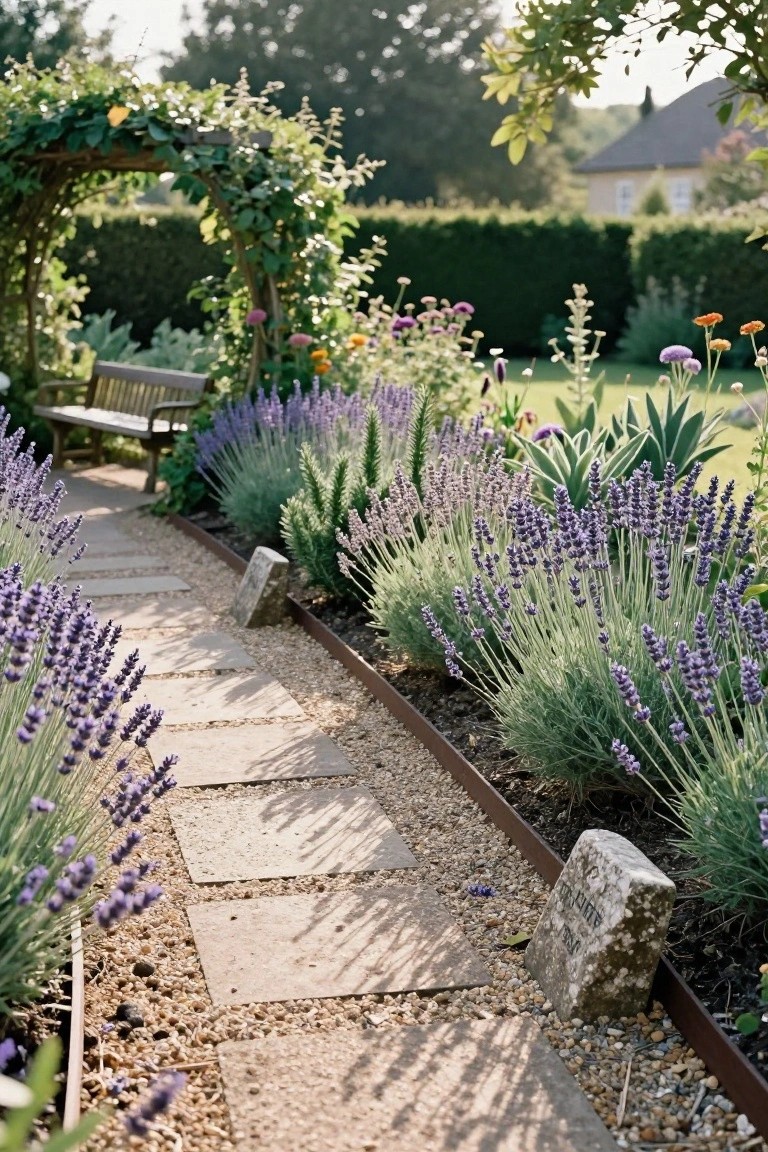
A stone path like this one, edged tight with lavender, turns a plain walkway into something you actually want to use every day. The gravel fill between slabs keeps it casual, and those soft purple blooms give off a fresh scent right at foot level. It’s low fuss but feels put together.
Plant lavender along paths heading to seating areas or the back door, especially in full sun where it thrives without much water. Metal edging holds the beds neat, and it suits smaller yards too. Just trim it back once a year to keep the shape.
Tiered Herb Stand by Outdoor Seating

A black metal tiered stand holds pots of basil, thyme, and other fresh herbs right next to a small bistro table. It pulls the garden into your seating area without taking up much floor space. Everything stays within arm’s reach for meals or drinks, and the vertical setup keeps things tidy.
This works great on narrow patios or decks where you want herbs close but not cluttered. Choose pots in soft greens and creams to blend with the stand. Sunny spots are best… just water regularly. Fits most backyards, especially if you’re into easy cooking outdoors.
Tidy Herb Beds with Metal Edging
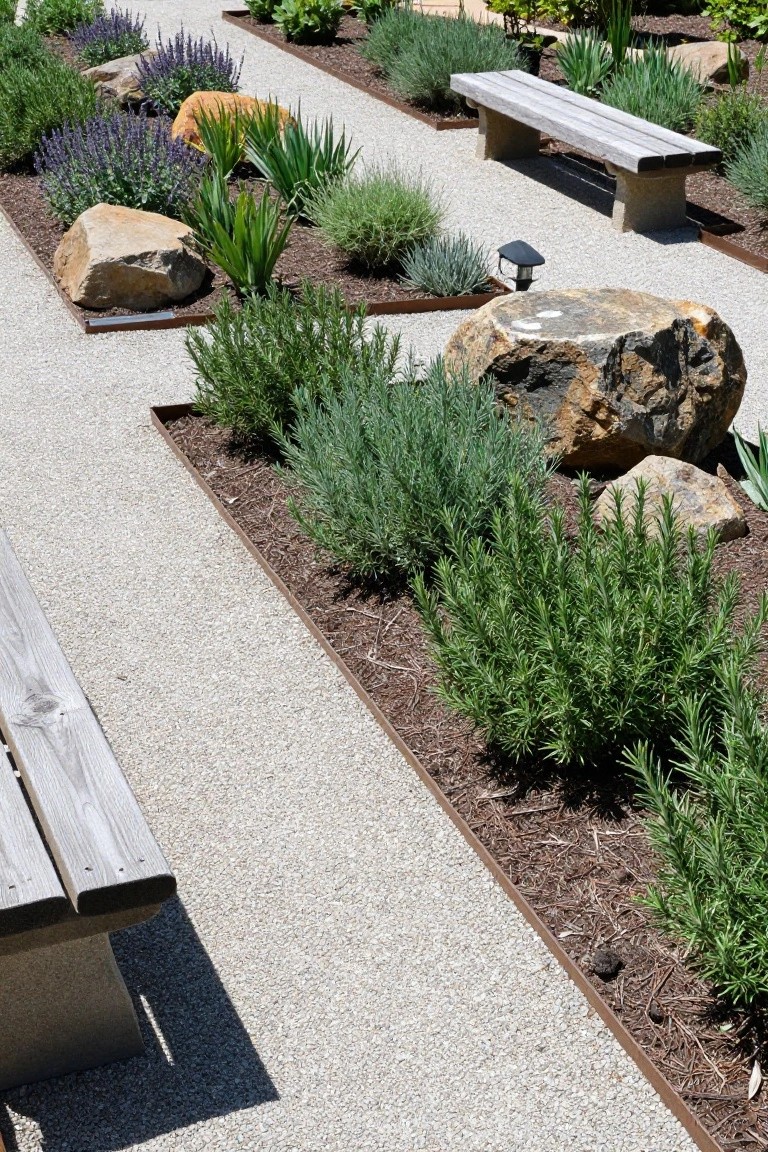
One straightforward way to organize a herb garden is with slim metal edging along a gravel path. It keeps plants like rosemary and lavender neatly in place, so they don’t wander into walkways. Those clean lines make the whole area feel put-together, and tossing in a few big rocks adds some natural heft without extra work.
This works best in backyards where you want herbs close to the house for easy picking. Line both sides of a path leading to a patio or seating spot… scale it down for a small yard or stretch it out for more space. Just pick rust-resistant metal to hold up over seasons.
Patio Dining with Built-In Herb Planters
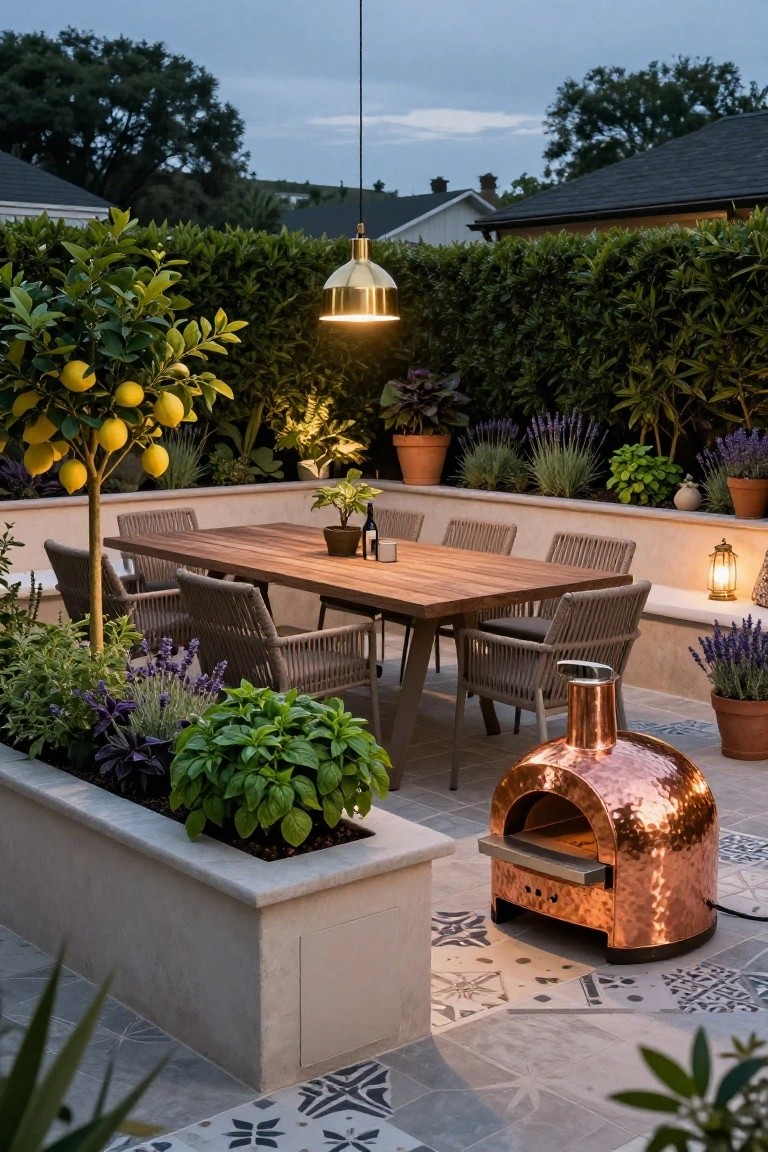
Putting herbs in raised beds right along your patio edge keeps everything handy for outdoor meals. Here, basil and lavender sit next to a simple wooden table and that shiny copper pizza oven. You pick what you need while cooking or eating. No trekking across the yard. It makes the space feel useful, not just pretty.
This works great in smaller backyards where you want a cooking zone. Build the beds low against a wall, fill with easy growers like rosemary or mint. Pick spots with some sun but afternoon shade. Drainage matters, or you’ll have soggy roots. Fits most any patio style, especially if you entertain a lot.
Raised Herb Planters for Backyard Play Areas
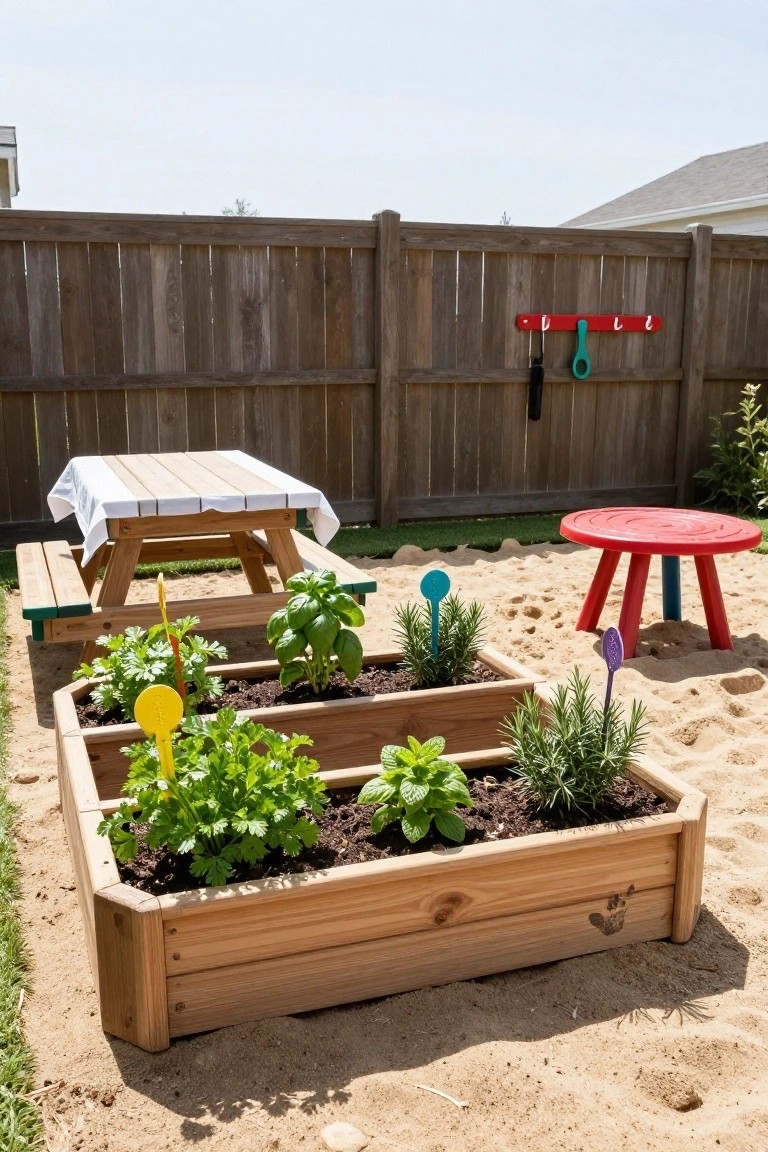
These wooden raised planters make herb growing simple and fun right in the middle of a kid’s play space. Filled with basil, parsley, mint, and rosemary, they sit low enough for little hands to reach without much bending. Colorful markers stick out from the plants, helping everyone learn names as they pick leaves for dinner. It’s a practical way to mix gardening with play.
Put them in sandy spots or near a picnic table where families gather. They work best in sunny backyards with good drainage, so roots stay happy. Just line the bottom with mesh if sand shifts too much. This setup suits casual homes with kids, turning empty yard patches into useful spots year after year.
Herb Garden by the Outdoor Grill

One smart way to set up a herb garden is right next to your built-in grill. Pots of rosemary, basil, and other basics sit on the stone counter, so you grab what you need without stepping away. It keeps things practical for cooking outdoors and gives the space a fresh, lived-in feel with those terracotta pots blending into the stonework.
This works best on a terrace or balcony with good sun. Cluster a few key herbs where you cook most, maybe add olive trees nearby for shade and style. Just make sure the pots drain well to avoid root rot. It’s simple for small spaces and cuts down on trips to the garden.
Greenhouse Herb Station with Workbench
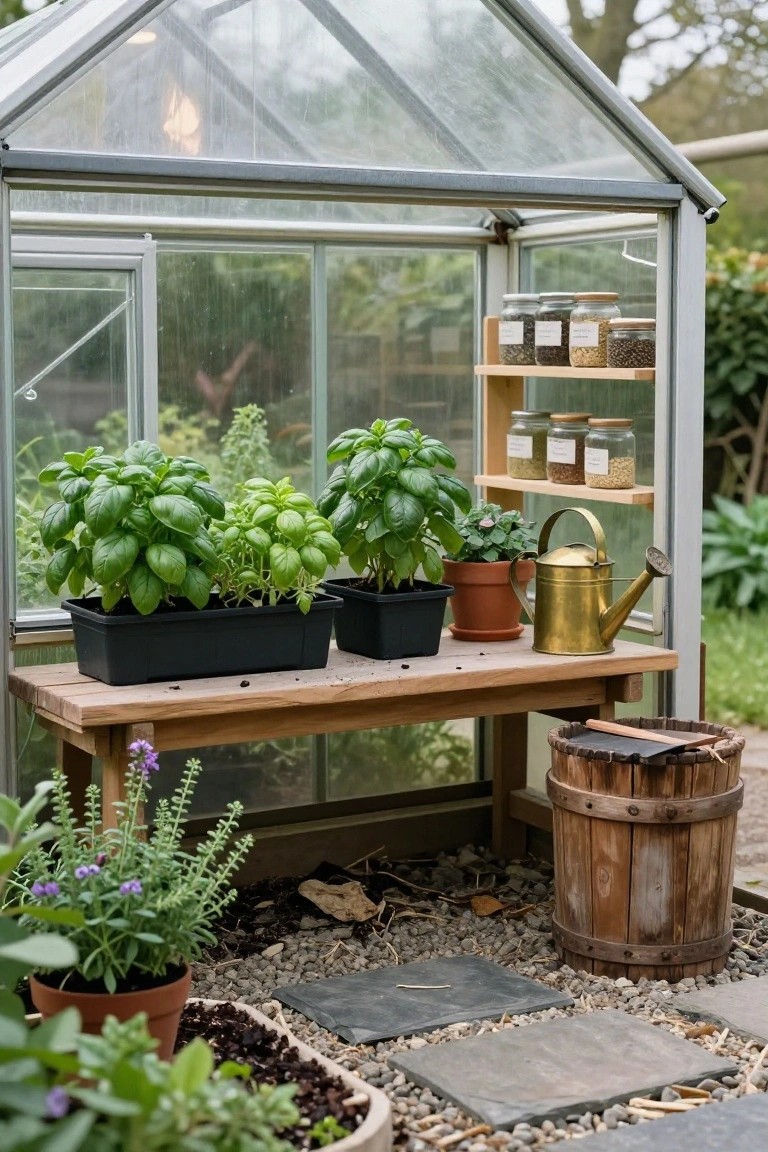
A small glass greenhouse turns a backyard corner into a practical spot for growing herbs. Here, big pots of basil sit right on a sturdy wooden bench, while open shelves above hold jars of seeds and spices. A brass watering can waits nearby, keeping everything you need close at hand. This keeps the mess out of your kitchen and makes harvesting simple.
Set one up if your yard space is tight but you want steady supplies of fresh basil or other herbs. It works best against a fence or wall for shelter. Use gravel paths around it to handle water runoff, and choose a bench wide enough for pots plus a stool. Watch for too much humidity inside, though. Open the door on warm days.
Frequently Asked Questions
Q: Can I recreate these designs using pots on a patio or balcony?
A: Go for it with thrift-store pots painted in soft pastels for that dreamy vibe. Cluster thyme, basil, and lavender in groups of three or five. Elevate some on stands to build height without ground space.
Q: Which herbs work best grouped together in a single bed?
A: Pair rosemary, sage, and oregano—they love the same dry, sunny conditions. Tuck in chives for color pops and easy snips. This combo stays tidy and pumps out flavors all season.
Q: How do I prevent my herbs from stretching out leggy?
A: Pinch off the tips weekly as they grow. This keeps plants bushy and full. And move any indoor starts outside gradually to toughen them up.
Q: What’s a quick fix for poor soil in my herb garden spot?
A: Mix in compost or aged manure right at planting time. Herbs root deep and reward you with lush growth. Top with mulch to lock in moisture…
