

I’ve squeezed vegetables into the narrow strip along my fence for years now, and it always comes down to smart layout that respects the paths you actually walk. People spot the edging and supports first, the things that keep chaos at bay as plants grow thick over summer. Without them, even clever planting turns into a tangle that discourages you from tending it daily. Structure wins. These ideas remind me which tweaks I’d test next to shape my spot without starting over.
Tiered Stands for Balcony Vegetable Gardens

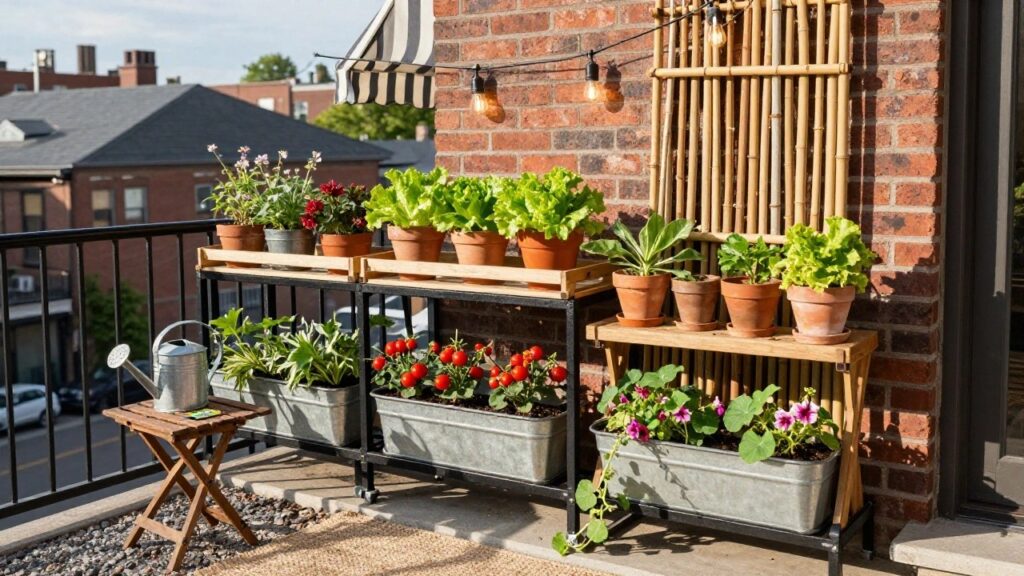
A wooden tiered stand like this one turns a narrow balcony railing into extra growing space. Stack pots of lettuce, cherry tomatoes in galvanized buckets, and herbs without crowding the floor. It keeps things organized and lets you harvest fresh produce right outside your door… even in a tight urban spot.
These stands work best on sunny balconies four feet wide or less. Anchor them securely to handle the weight of soil and water. Mix veggies that need similar light, and add a small table nearby for tools. Perfect for renters or anyone short on yard.
Vertical Fence Planters for Small Veggie Patches

Tight spaces don’t have to limit your vegetable growing. Mounting wooden planters directly on a backyard fence lets you stack plants upward, like the peppers, herbs, and lavender tucked into these rustic boxes. It turns a plain fence into productive growing space without taking up any ground.
These setups suit narrow yards or urban lots where flat dirt is scarce. Use reclaimed wood for easy building and a weathered charm. Pick sun-loving veggies and drought-tolerant fillers together. A hanging watering can keeps tending simple… just reach and pour.
Tiered Stand for Doorway Herbs
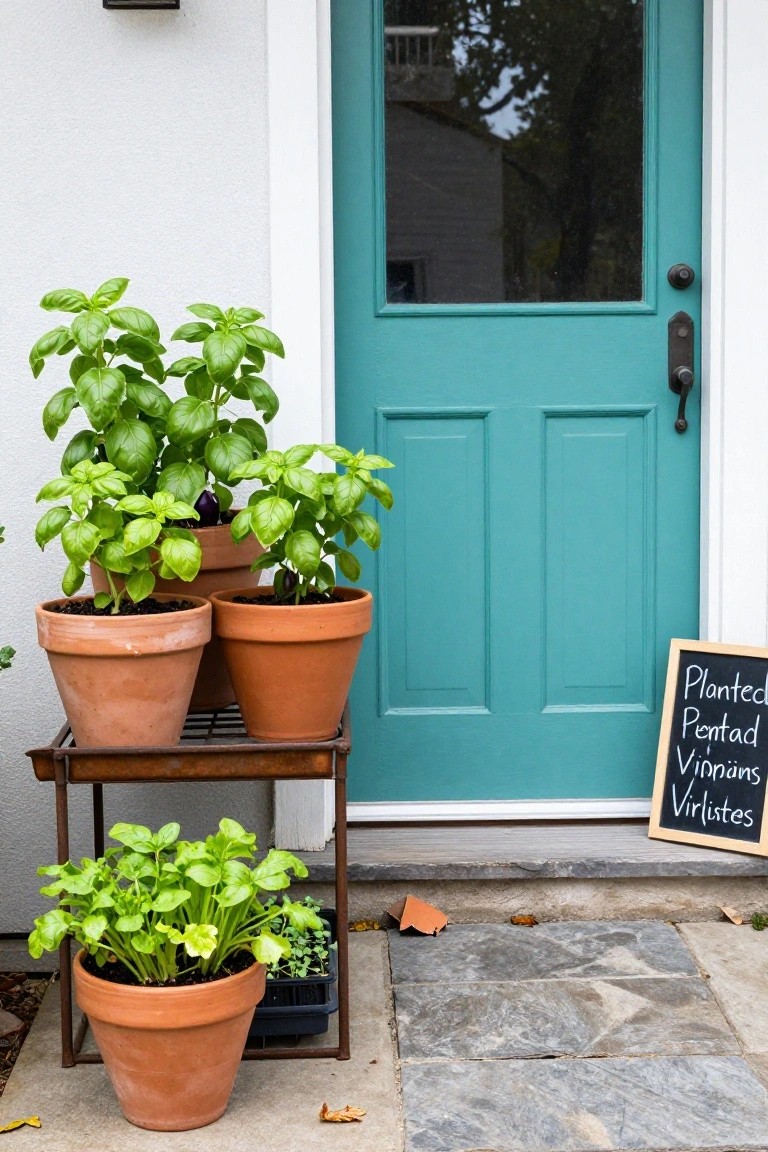
A basic metal rack holds several terracotta pots stacked up next to the front door. Basil fills the pots, along with a few other greens, making good use of that narrow strip by the entry. It’s handy for fresh picking without sprawling into the walkway.
This works great in small entry areas or city stoops where ground space is limited. Set it in a sunny spot, group heat-loving herbs like basil together, and keep soil moist but well-drained. Rustic metal fits most homes… just avoid overcrowding.
Hanging Planters Under Pergola

A simple way to fit more veggies into a small outdoor spot is hanging baskets from the pergola beams above. Those woven rope ones hold greens and herbs nicely, leaving the bench and floor free for pots of potatoes or whatever else. It keeps things open down low while growing up high where sun filters through.
Try this on any covered patio or balcony with overhead structure. Pick trailing plants like arugula or cukes that climb a nearby trellis for extra yield. Just make sure the ropes are strong and hooks are secure. Fits tight backyards best, adds green without crowding.
Tall Grow Tower for Patio Veggies

One smart way to fit more vegetables into a tight outdoor spot is this tall cylinder grow tower. It uses a metal drum base with a glass enclosure and top light to grow peppers right up high. The young plant inside gets steady light even on a shady patio, and it tucks neatly against a fence without taking ground space.
You can make something similar from an old metal container, adding clear panels and a simple grow bulb. It works great on back decks or balconies where floor room is short. Just seal it well against rain, and keep the light on a timer for easy care.
Wooden Crates as Tiered Stair Planters

If you have a narrow set of stairs leading to your door or balcony, stacking wooden crates makes a smart way to grow veggies without taking up ground space. These old crates hold tomatoes, green onions, and nasturtiums right on the steps, turning a plain walkway into a productive little garden. The numbers on the front add a fun touch, like labeling your own mini farm rows.
This setup works best in tight spots where flat yard is scarce, such as urban entries or apartment stairs. Line the crates with plastic or line them to keep soil in place, then fill with easy growers like herbs or cherry tomatoes. Just make sure they’re secure so they don’t tip, and water from the top down to avoid mess.
Corner Bench with Veggie Planters

Tight outdoor spots like balconies or patios often go to waste. This idea fixes that by building a simple L-shaped wooden bench right into the corner, then tucking a concrete planter at the base for growing easy veggies like lettuce and cherry tomatoes. It keeps seating cozy with those tan cushions while the plants add fresh green right where you sit. No extra square footage needed.
Try this on a small deck or terrace where space is at a premium. Use weatherproof wood for the bench frame and make sure the planter drains well to avoid soggy roots. It works best in spots with decent sun… and you’ll pick dinner while kicking back. Just scale the planter to fit your harvest plans.
Window Box Vegetable Gardens
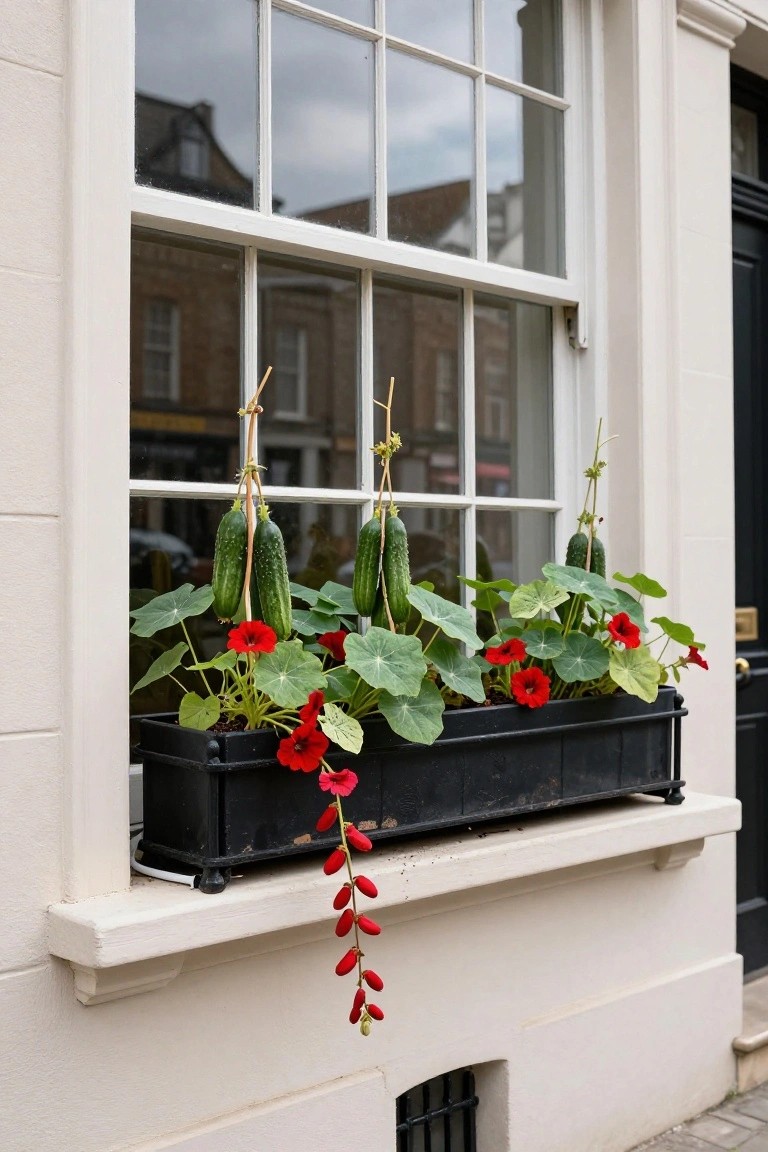
Window boxes make perfect sense for tight spots like city townhouses or narrow front stoops. You can grow real food right there on the sill, stuff like cucumbers that dangle over the edge and nasturtiums that trail and flower. It turns a plain exterior wall into something productive without taking any ground space. Folks notice the fresh greens peeking out, and it fits old brick rowhouses especially well.
Just pick a sturdy box that matches your trim, like this black one against white siding. Plant vining veggies up high so they hang down, mix in easy flowers for color, and keep soil moist since they’re exposed. Works best facing south or getting good light. Watch for wind knocking things over in breezy spots.
Wheeled Tiered Planter for Balcony Veggies
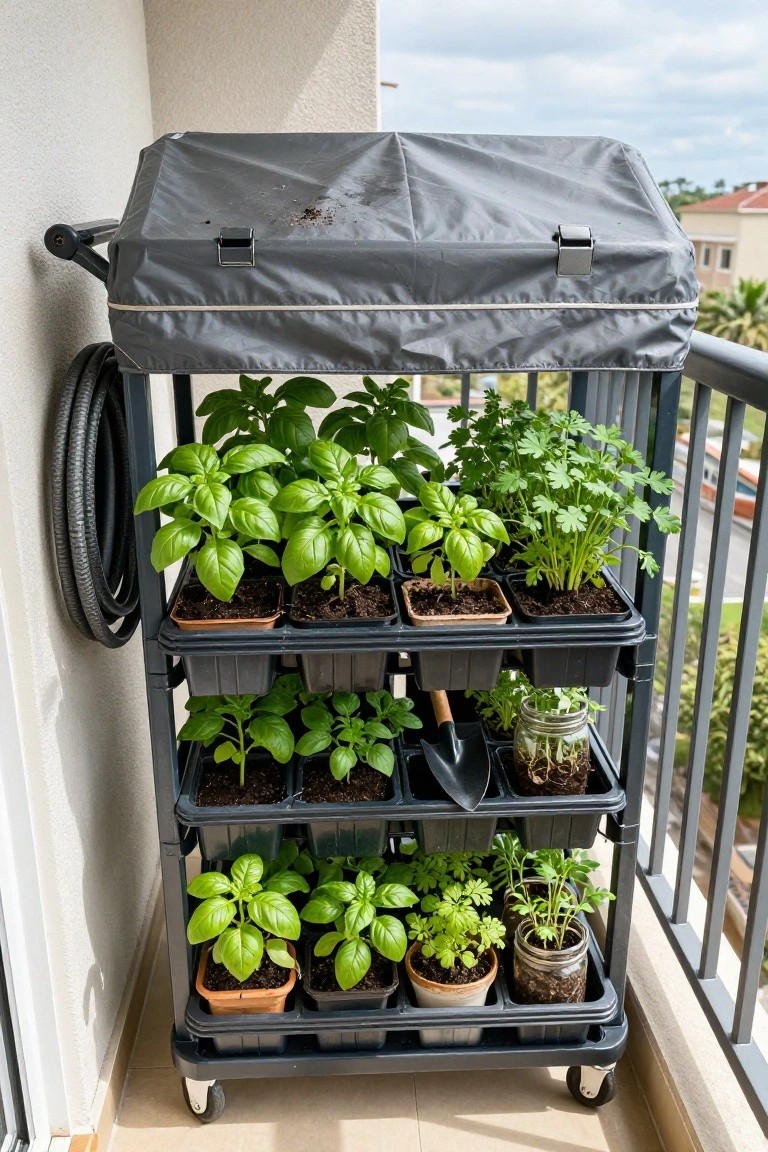
A rolling black cart like this packs a lot of growing space into a tight balcony spot. With four shelves holding basil plants, seedlings, and pots of parsley or similar herbs, it turns vertical room into a mini garden. The gray cover on top keeps off heavy rain or too much sun. And that hose coiled on the side makes watering simple.
This works best on apartment balconies or any narrow outdoor area where floor space is short. Just wheel it into morning sun or shade as needed. Go for sturdy plastic trays to catch drips, and pick heat-loving herbs that thrive in pots. Keeps things practical without much fuss.
Vertical Hanging Pots for Small Veggie Gardens
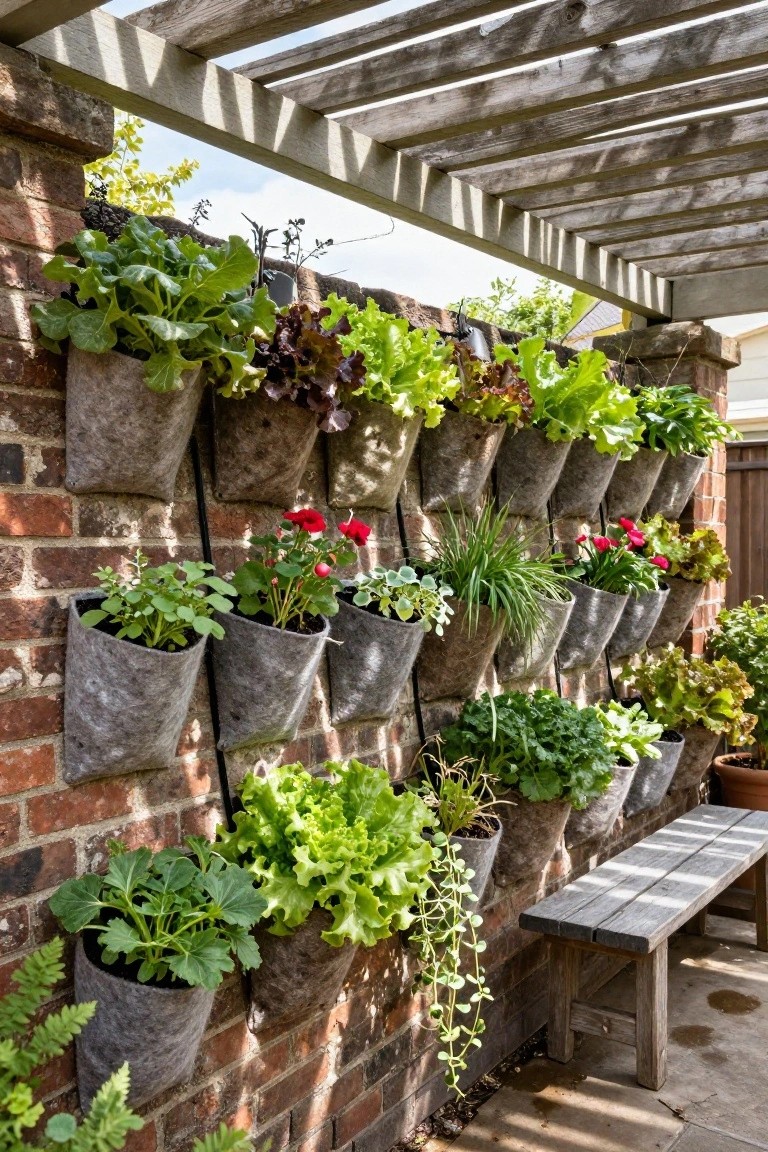
Growing vegetables doesn’t need much ground space when you use the wall. These soft fabric pots hang right on a brick wall, packed with lettuce, herbs, and greens. It turns a blank spot into a productive patch, and keeps paths clear for walking.
Pick a sunny wall or fence, and space the pots so air gets through. Fabric ones like these let roots breathe and drain fast, but check them daily in hot weather. Great for city backyards or patios where every inch counts.
Wheeled Terracotta Bench as Veggie Planter

This setup turns a simple bench into a growing spot for tomatoes and herbs right where you sit. The terracotta top cushions on a base of stacked rocks gives it a natural, sturdy look that fits outdoor spots without taking up much room. Wheels underneath make it easy to move for sun or watering, and the plants tucked around the edges keep everything green and productive.
It works best on balconies or small patios where space is tight. Stack local stones for the base, add a cushioned seat, and plant in pots or soil pockets nearby. Just make sure the rocks are stable and the wheels handle the weight. Good for renters too, since you can roll it inside if needed.
Raised Beds on a Rooftop Terrace

Raised wooden beds like these turn a plain rooftop into a working vegetable garden. You see beans climbing trellises, potatoes poking through soil, and herbs in pots all fitting neatly into tight spots. The gravel paths keep things clean and simple between beds. It works because everything’s at waist height. No bending over much. And the wood gives a natural look that blends with the surroundings.
This idea suits apartments or townhomes with flat roofs and not much yard. Build beds about two feet high from untreated cedar or pine to last a few years. Fill with good soil mix and add gravel or pavers for walking paths. Watch drainage though. Roofs can pool water so line the bottom with mesh. Start small with four beds like this and grow what you eat most.
Tiered Planters Along the Wall

If you have a skinny strip of yard next to the house, try stacking concrete planters right up against the wall like this. It turns that awkward space into a real vegetable garden without taking up any patio or walkway room. The tiers let you grow different plants at different heights. Lettuce and herbs fill these boxes nicely, and they catch the light just right in the evening.
These work best in side yards or along fences where width is the problem. Go for sturdy concrete or stone boxes that won’t tip, and make sure there’s good drainage so roots don’t rot. Add a lantern nearby if you want to check on things after dark. It’s practical for beginners too… low fuss, fresh picks close to the kitchen door.
Tiered Balcony Planters for Tight Spaces
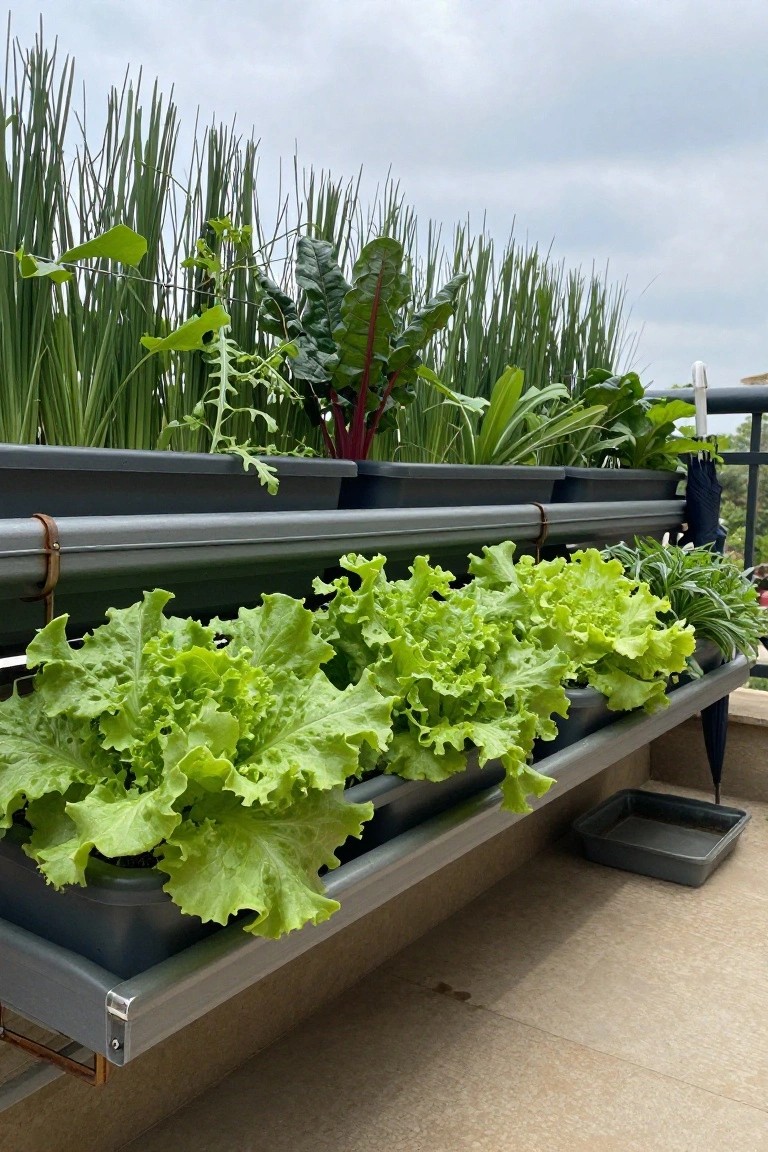
Balconies don’t offer much room for gardens. But these tiered planters hanging off the railing change that. You get layers of fresh veggies like lettuce and greens without taking up the floor. Tall reeds in the back add some privacy too. It’s a simple way to grow your own food right outside your door.
This setup works best on sunny balconies in apartments or small homes. Use sturdy planters that won’t overload the railing. Check for good drainage and water regularly since everything’s exposed. Pick easy growers like lettuce or herbs to start. It’ll give you salads all season.
Tiered Greenhouse for Balcony Veggies
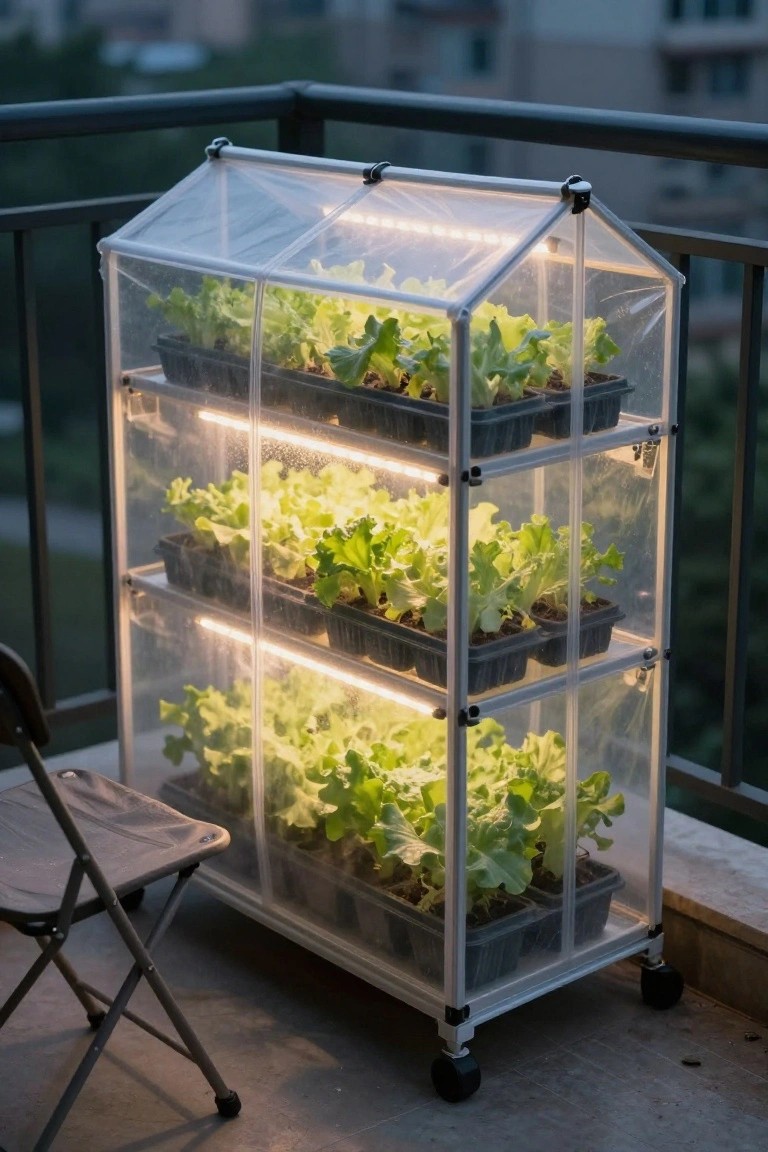
If you have just a balcony and no yard, a tall shelved greenhouse like this one lets you grow a bunch of greens without taking much floor space. The clear plastic cover keeps things humid and protected from bugs or wind, while LED grow lights run right on the shelves to help plants thrive even at night or in shady spots. It’s a simple way to stack trays of lettuce or herbs vertically and get fresh picks close at hand.
Set this up on any apartment balcony or small patio where you want veggies but space is tight. The wheels make it easy to roll inside during bad weather, and it fits against a railing without blocking the view. Just make sure it’s stable and not too heavy when full of trays, especially up high.
Vertical Bean Trellis in a Narrow Border

A simple tall trellis leaned against a block wall lets you grow climbing beans straight up in a slim garden strip. Those long green pods drape down without crowding the ground, turning tight edges into real veggie producers. It keeps the space open while packing in the harvest.
Set one up along a fence, garage side, or walkway where you have just a foot or two of soil. Pair it with low plants like lavender for ground cover and pollinators, then add flat stepping stones over gravel for easy picking access. Works great in small backyards… just make sure the trellis is sturdy against wind.
Frequently Asked Questions
Q: Can I pull this off with zero gardening experience? A: Start with forgiving picks like lettuce, radishes, or bush beans. Plant them in pots following the spacing tips from the ideas. You’ll see quick wins that build your confidence.
Q: What if my spot only gets a few hours of sun? A: Go for shade-tolerant veggies like spinach, kale, or beets. They crank out greens even in partial light. Shift pots around if you can to chase the best rays.
Q: How do I keep pests off without harsh sprays? A: And… plant flowers like marigolds nearby to repel bugs naturally. Hand-pick larger ones in the evening. A strong hose blast in the morning knocks off aphids fast.
Q: Will I get enough veggies to actually eat from these small setups? A: Yes, focus on cut-and-come-again greens and cherry tomatoes. Harvest often to keep plants producing. One square foot can feed you salads all summer.
