


I’ve tinkered with vegetable gardens in my backyard for years, and the ones that last are those with layouts that actually match how plants grow and sprawl over time. People spot the pathways and edging first, since they make the whole space feel intentional instead of overrun. I finally nailed mine by stacking raised beds along a sunny fence line, which freed up room for paths that don’t turn to mud after rain. Too many setups look pretty at first but fade when harvesting gets awkward or weeds take over. A few of these ideas changed that for me, and they’re simple enough to adapt right away.
Brick Path Splits a Veggie Garden

One smart way to fit a lot of growing into a skinny backyard is lining both sides of a brick path with raised wooden beds. Tomatoes climb tall on one side, greens and herbs fill the others, all easy to reach without stepping into the soil. That path pulls it all together, giving you room to walk and work without crowding.
Set this up in any narrow yard or side space along a fence. Use affordable wood for the beds, keep them about knee high for less bending, and add a simple arch for vining plants. Tuck a bench at the end for a quick sit with your harvest. Just watch for weeds creeping into the bricks.
Vegetable Garden at the Front Gate

Tuck a few rows of greens right beside your garden gate like this. Lettuce sits happily next to lavender and a couple pots of flowers. It turns that narrow strip by the entrance into something useful. No big space needed. Just looks like part of the yard.
This works great on small city lots or older homes with picket fences. Plant shallow-rooted veggies in the ground or pots so you can harvest without bending too much. Mix in herbs or blooms to keep neighbors happy. Watch the sun there though. Might need to shift things around seasons.
Black Raised Planters Line a Narrow Path

One smart way to fit a vegetable garden into a tight spot is lining the path with tall black metal planters. They hold everything from lettuces and herbs to climbing beans on simple trellises, keeping the plants off the ground and easy to reach. The dark color blends right into the walls, so the focus stays on the greens without any busy edges getting in the way.
This works best in side yards or alley spaces where you want growing room but not a big footprint. Add a bench right into one planter like here, and you’ve got a spot to sit while you tend things. Just pick sturdy planters that drain well, or your soil stays too wet.
Stone Raised Beds for Vegetable Gardening

Raised beds made from natural stone fit right into the yard like they grew there. They give veggies and herbs their own spot without taking over the ground. In this setup the beds are built into low walls creating little terraces that make everything easy to reach and neat looking. Rosemary fills a round one smack in the middle and greens edge the sides.
These work great in small backyards or against a house wall where space is tight. Stack them two or three levels high for more planting room but keep the stone local if you can to blend in. Watch the drainage though. Add gravel at the bottom so roots don’t drown after rain.
Beachside Raised Bed Vegetable Garden

Growing vegetables right next to your beach house makes total sense when you see this setup. A simple red wooden raised bed sits packed with big leafy chard plants and some kale, all thriving in the salty air. It’s tucked by a blue shed under a pergola, with rosemary and other herbs in pots nearby. The whole thing feels practical and pretty without much fuss, especially on sandy soil where raised beds help keep things growing strong.
This works best for coastal spots or any yard with tough ground. Build the bed from untreated cedar or pine to last in the weather, fill it deep with good compost-rich soil, and plant quick greens like chard that handle wind and mild temps. Keep it close to the house for easy picking… just watch for rabbits or salt spray buildup. Small scale like this fits rentals or tiny lots too.
Raised Bed Veggie Garden Along the House
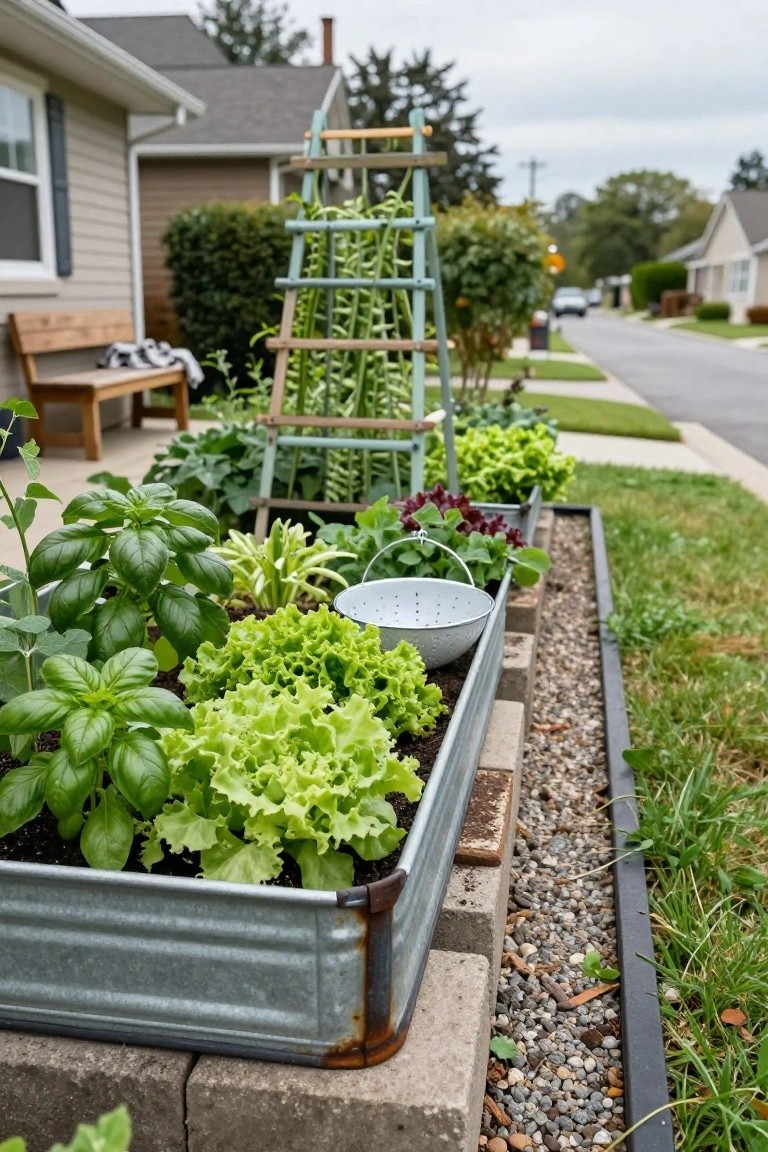
Tuck raised beds right up against the house foundation for a no-fuss vegetable patch that saves yard space. Galvanized metal troughs make sturdy planters for basil, lettuce, and climbing beans on a simple trellis. The setup looks tidy and pulls the garden into daily view without sprawling everywhere.
This idea fits narrow side yards or walkway edges best, especially on smaller lots. Line up a few beds, fill with quick-grow greens, and mulch with gravel to keep weeds down. Watch the sun there though… some spots stay too shady for tomatoes.
Wagon Wheel Raised Planter

Old wagon wheels make great accents in the garden. Here one sits right in a low stone wall that forms a round raised bed, packed with lamb’s ear, marigolds, and other easy plants. It pulls together that farmhouse feel without much effort, and the height keeps things off the ground for better growth.
Try this in a sunny side yard or along a path where you want some color. Stack local stones for the wall, tuck the wheel halfway in for stability, then fill with soil and veggies like herbs or greens. It works best on homes with a casual vibe. Just make sure the wheel is sturdy so it doesn’t shift over time.
Formal Parterre Garden Beds

One simple way to organize a home vegetable garden is with a formal parterre layout. Low boxwood hedges form neat squares around raised soil beds, like the ones here centering an olive tree. This setup keeps everything tidy and defined. It makes tending crops easier since paths stay clear and beds don’t sprawl.
You can plant veggies, herbs, or even dwarf fruit trees in those beds. Gravel paths between them drain well and suit sunny spots. It works best in a courtyard or side yard with good sun. Just trim the hedges a couple times a year to keep the shape.
Vertical Veggie Garden on a Pallet Fence
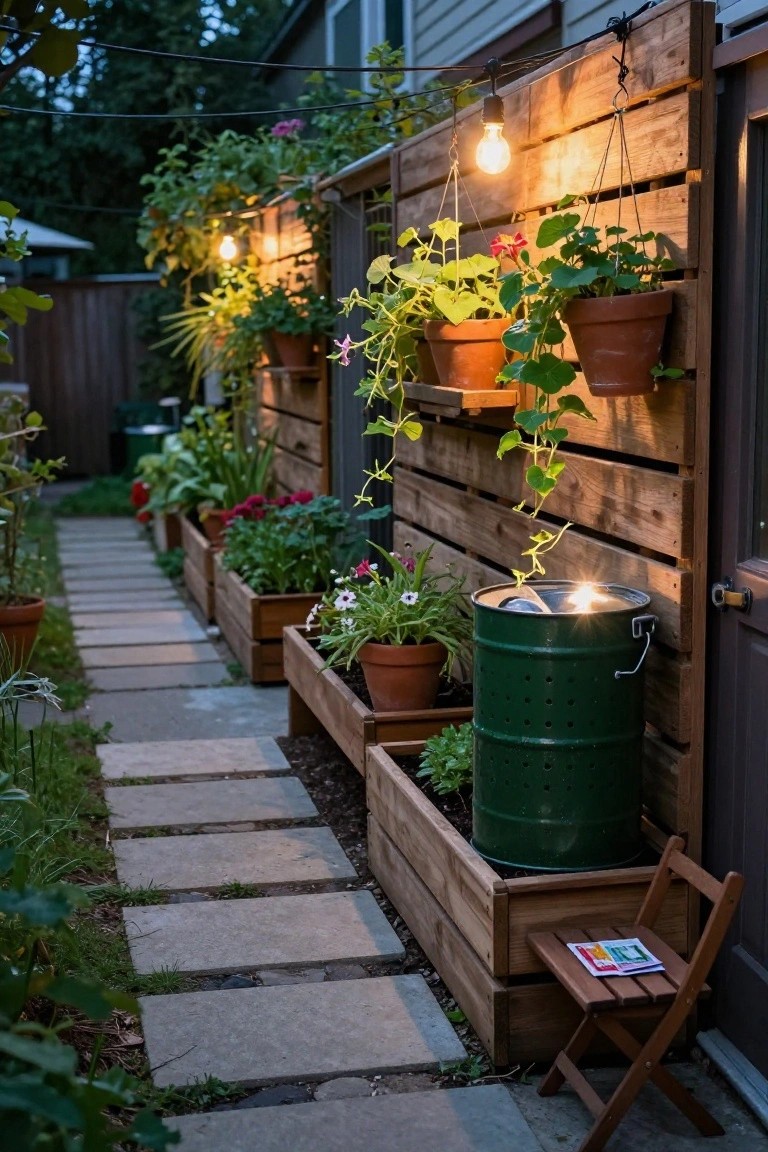
This idea turns a plain wooden pallet fence into a growing wall packed with pots and trailing plants. It works so well in tight spots like side yards because it grabs that unused vertical space for herbs, greens, or vining veggies. The warm wood pairs right with the greenery, and those string lights make it usable at night too.
Try it where you have a narrow path or alley next to a fence. Bolt on shelves or hooks to hold pots, pick plants that hang down like cherry tomatoes or strawberries. It suits rentals since pallets are cheap and easy to source, but check for rot if it’s damp there. A compost drum nearby keeps scraps close for feeding the beds.
Balcony Vegetable Gardens in Raised Beds
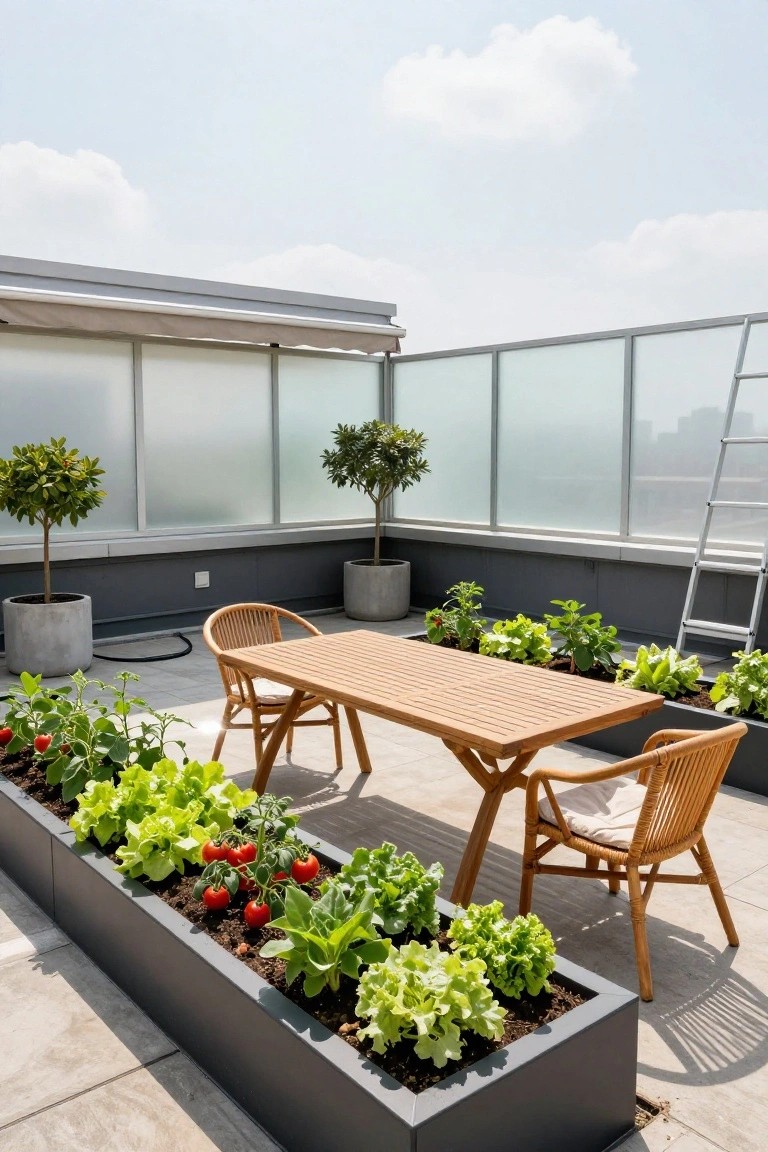
One smart way to grow your own veggies without a yard is to line the edges of a balcony or rooftop terrace with long, narrow raised beds. You see tomatoes, lettuce, and greens thriving in these black metal planters here, hugging the perimeter and leaving room in the middle for a simple wooden table and chairs. It turns a plain outdoor spot into something productive and pretty, with plants softening the edges and giving you fresh picks right outside your door.
These setups work best on sunny urban balconies or rooftops where space is tight. Go for sturdy, weatherproof beds about a foot deep, fill them with good soil, and plant easy growers like herbs, salad greens, or cherry tomatoes. Pair it with basic seating, and you’ve got a spot for meals surrounded by your harvest. Just make sure the structure can handle the weight, especially up high.
Winding Paths in Backyard Veggie Gardens
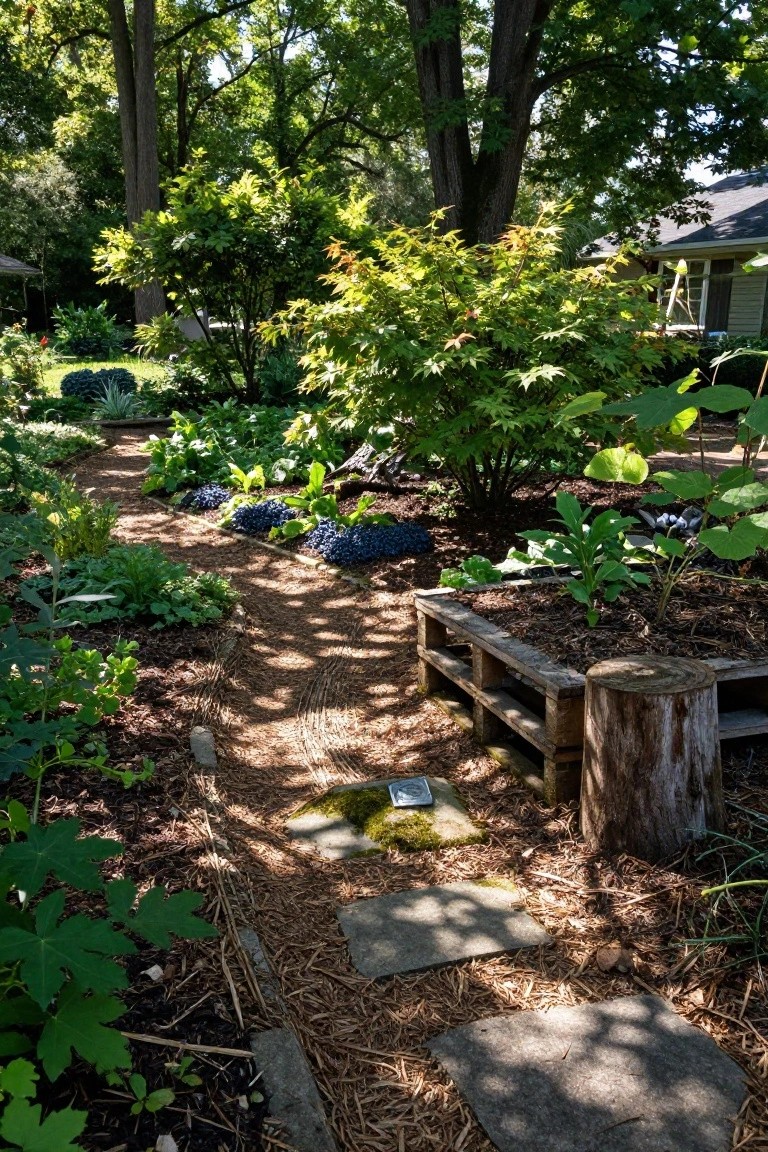
A simple winding path like this turns a vegetable garden into something you actually want to wander through. Instead of straight rows that feel like work, the mulch trail curves gently past raised beds and mixed plantings. It keeps your shoes out of the dirt while letting plants grow right up to the edges. That Japanese maple and those big-leafed greens add color without taking over the food crops.
You can make one with bark mulch and a few flat stones for steps. It works great in small backyards where space is tight. Just edge it loosely so roots don’t creep in. Pair it with pallet raised beds for veggies, and you’ve got low-cost access that lasts a season or two.
Tiered Vertical Planters for Small Balconies

Living in an apartment or tight space doesn’t mean skipping fresh veggies. This setup uses a simple metal shelving unit with four levels of black plastic trays packed with lettuces, herbs, and greens. It turns a plain balcony wall into a productive garden without crowding the floor. Everything stays within reach for easy picking and watering.
Grab a basic galvanized steel rack that holds up to wet soil weight. Fill trays with compact growers like kale, spinach, or microgreens. It works best on sunny balconies or patios facing south. Just make sure to drain well… no one wants soggy roots.
Tree-Centered Front Yard Garden Bed

A simple way to add fresh produce right out front is to build a garden bed around a young fruit tree. This setup uses the tree as the main focal point, with low boxwood hedges for clean edges and spots of color from blue-flowering perennials like salvia. Gravel mulch keeps weeds down and gives it a tidy look without much upkeep. That rusty metal sign on a stake marks what you’ve planted, which is handy for visitors or just keeping track yourself.
It works great in smaller yards where you want curb appeal plus something edible, like pears or apples from the tree as it grows. Plant the tree first in a mounded bed, then add the shrubs and flowers around the base. Skip grass there to save on mowing. Just make sure the spot gets enough sun, and go easy on water once it’s established.
Raised Beds Flanking a Courtyard Fountain
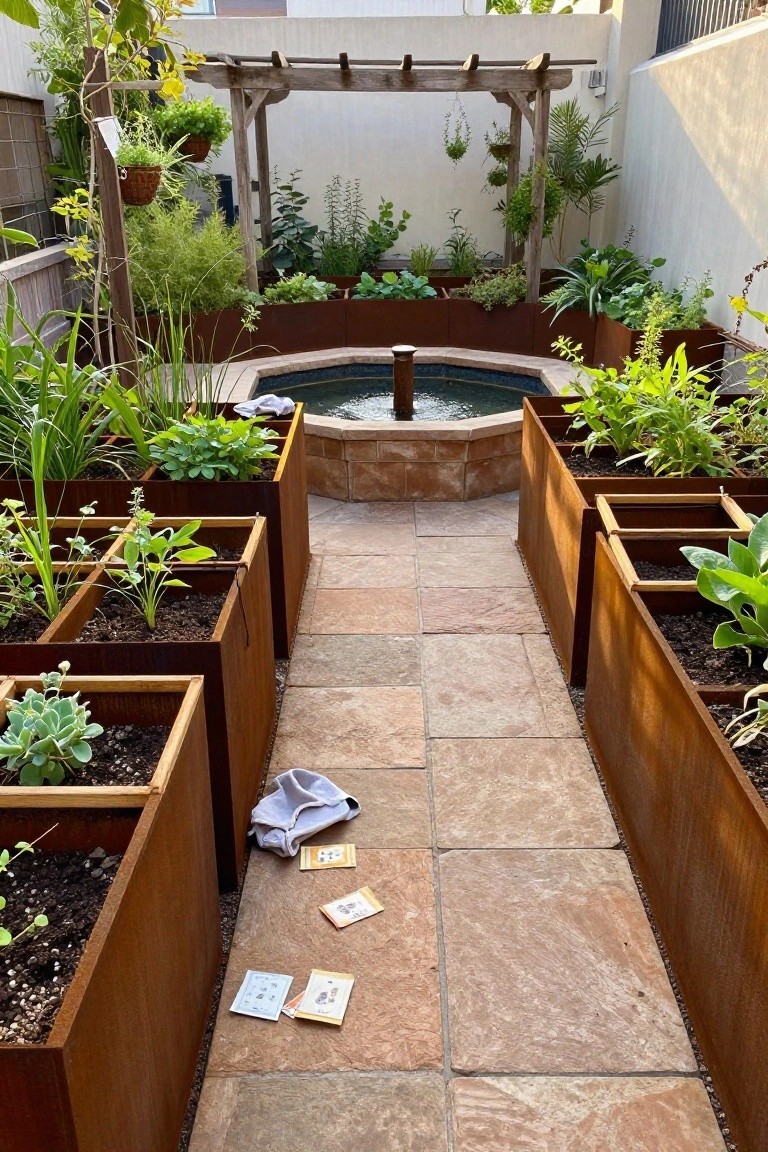
This garden uses tall corten steel raised beds lined up on both sides of a walkway, all pointing toward a simple fountain in the center. The metal gives a modern edge that won’t rust away fast, and the setup keeps everything neat for growing veggies like greens and herbs right outside your door. That central water feature adds a quiet spot in the middle without taking up planting space.
It works best in a small enclosed yard or patio where you want structure but not a lot of ground work. Line up the beds to frame a path like this, and fill them with easy crops. Just keep an eye on drainage in those boxes, especially if your spot gets heavy rain.
Raised Beds with Glass Bottle Edging

One simple way to edge raised vegetable beds is lining them with old glass bottles pushed neck-down into the soil. It makes a wavy turquoise border that keeps mulch in place and adds a bit of recycled charm without much cost. Here you see it along wooden planters full of lettuce, kale, and greens, right next to a walkway. The bottles catch the light nicely and give the garden a folksy look that fits casual home setups.
This works best in narrow side yards or along fences where space is tight. Just collect clear or green bottles, bury the necks about halfway, and fill gaps with soil. It suits sunny spots for veggies but watch for sharp edges if kids play nearby. Pair it with sturdy raised beds like these for easy harvesting.
Kid-Friendly Vegetable Garden Setup

One easy way to get kids excited about growing food is to set up a small vegetable garden just their size. This spot uses a raised bed with a simple teepee trellis for beans, plus a chalkboard labeled “Today’s Harvest” right next to it. The toy wheelbarrow and tools make it feel like playtime, while the picking path with letter stones adds a learning twist. It’s practical too, since everything stays contained and low to the ground.
You can copy this in any backyard with a sunny corner. Start with a basic raised bed kit, add poles for climbing plants like beans or peas, and hang a cheap chalkboard for daily updates. Toss in some kid-sized garden gear from the dollar store. It works best for families with young children, keeps mess off the main lawn, and teaches responsibility without much effort from parents.
Raised Steel Planters Along a Path

These raised planters made from corten steel sit right along a simple concrete path. They hold tall grasses and white-leafed plants that spill a bit over the edges, with pebbles tucked in between for clean lines. The rusty patina on the steel warms up the look over time, making the whole setup feel more natural. It’s a smart way to grow veggies without the mess of soil everywhere.
Put them in a side yard or patio edge where space is tight. Line the path with gravel to cut down on weeding, and they’re low fuss for things like lettuce or herbs. Works best in modern homes… just make sure the steel won’t rust through pots if you line them inside.
Frequently Asked Questions
Q: What if I live in an apartment with just a balcony or patio?
A: Grab some pots, vertical planters, or hanging baskets to make the most of your space. Pick compact veggies like cherry tomatoes, lettuce, or herbs that thrive in containers. You will see fresh picks right outside your door in no time.
Q: How do I keep pests away naturally?
A: Plant flowers like marigolds or nasturtiums nearby. They draw bugs off your veggies. Check leaves daily and squish any aphids you spot by hand.
Q: Which of these ideas work in partial shade?
A: Go for raised beds with leafy greens such as spinach, kale, or Swiss chard. They handle less sun better than fruiting plants. Tuck them under trees or along north-facing walls for steady harvests.
Q: My soil looks awful. Where do I start?
A: Build raised beds or use grow bags filled with a mix of compost and topsoil. Skip amending bad ground soil. Your plants root happily and produce more that way.
