


I’ve spent the last couple years turning my compact backyard into a working homestead, and the biggest lesson is how every square foot needs to pull double duty without feeling cramped. What stands out first in these setups is usually the flow—clear paths that let you move from raised beds to compost bins easily, instead of dodging obstacles. A lot of small yards fail when they cram in too much at once, leaving no room to actually harvest or tend things comfortably. I finally got mine right by layering in vertical elements along the fences, which opened up the ground for chickens and crops. These ideas show real ways to test that balance in your own space.
Raised Brick Garden Beds
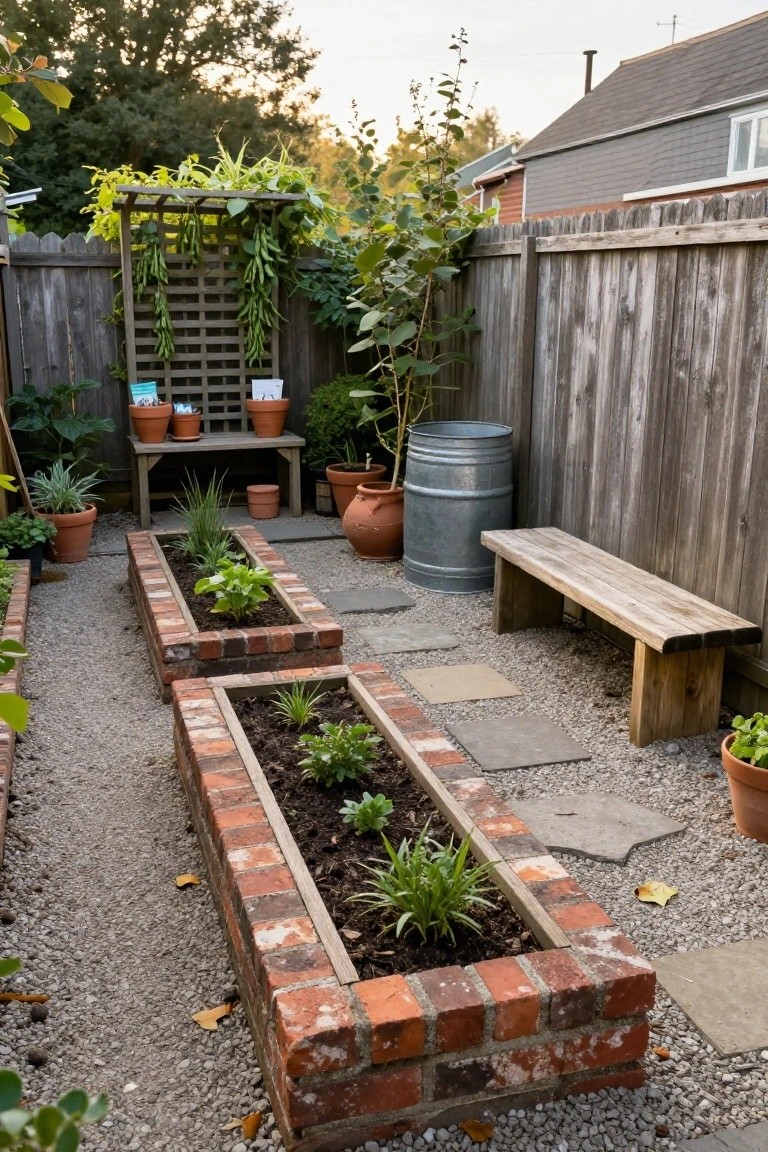
Raised beds made from bricks work great in tight backyards like this one. They keep soil contained and make it easy to plant veggies or herbs without digging up the whole yard. The bricks give a sturdy edge that lasts, and they blend right in with gravel paths or fences. You get good planting space without taking over the area.
Put these in sunny spots along a fence or wall, filling them with things like greens or beans on a nearby trellis. They suit renter yards or older homes with uneven ground. Just make sure there’s drainage holes at the bottom so roots don’t drown. Simple to build yourself with reclaimed bricks too.
Linear Raised Beds for Tight Backyard Gardens

These long raised beds made from corten steel run right along the wall, turning a skinny strip into a real food garden. Strawberries, herbs, and greens grow close together and easy to pick. The gravel path in between stays clean and simple to walk. Benches tucked into the bed edges give you a spot to sit while you work.
Set this up in any narrow sunny yard behind the house. It fits renters or small lots, keeps soil contained, and boosts harvest without taking much room. Add young fruit trees for some height if you want. Just make sure the beds drain well so roots stay happy.
Build a Circular Raised Bed Garden
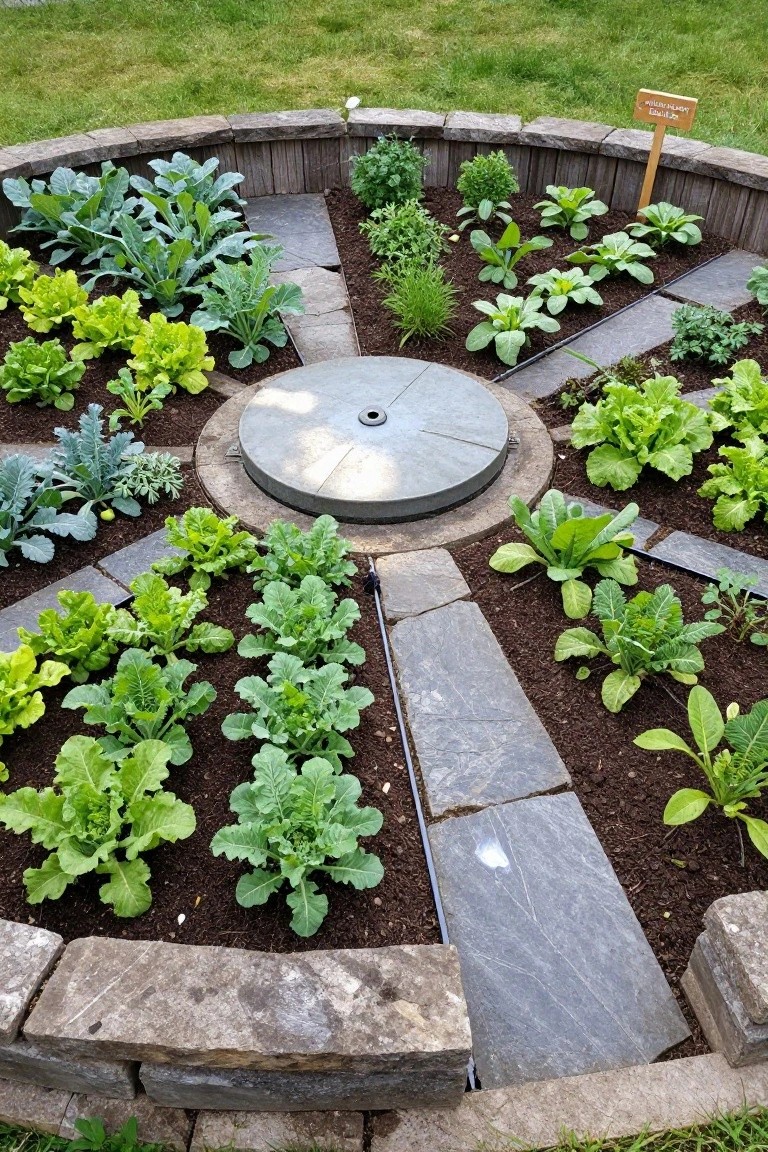
A round raised bed like this one packs a lot of growing space into a small footprint. Divided into wedge-shaped sections with stone paths leading to a center access point, it lets you reach every plant without stepping into the soil. Different greens and herbs fill each spot, making it simple to rotate crops and keep things productive.
This works best in tight backyards where you want fresh produce without taking over the yard. Use rot-resistant wood or stone for the edges, add drip lines under the mulch, and pick shallow-rooted plants like lettuce and kale. Just make sure the bed gets full sun… and watch for weeds sneaking in from the paths.
Greenhouse Shelving for Small Space Growing
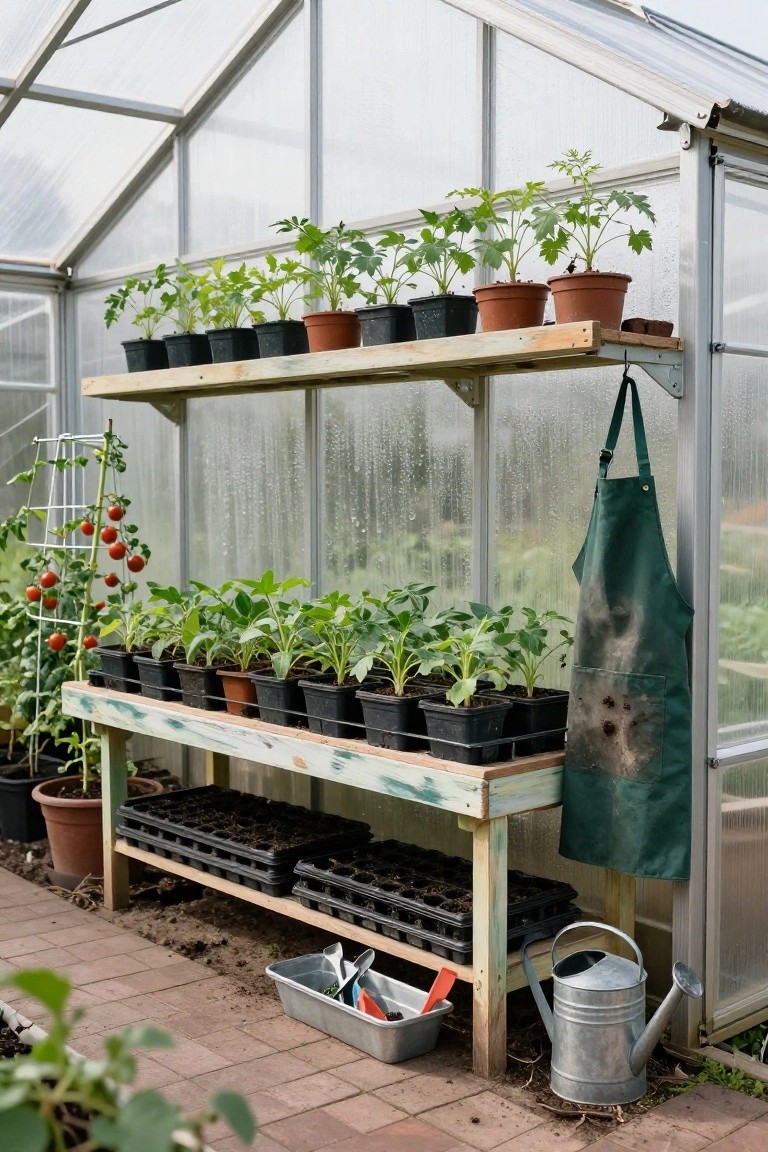
A basic wooden shelf setup like this turns a simple greenhouse into a real production spot for seedlings and young plants. You see pots lined up on two levels, with tomatoes already fruiting on a trellis nearby. It keeps everything organized and off the ground, so you can fit more in a tight backyard without crowding.
Put one of these benches right inside your greenhouse door for easy access. Use plastic trays for seeds and black pots for starts, then add hooks for tools. Works great in small yards where every square foot counts, especially if you’re starting veggies from scratch each spring. Just make sure the wood is treated to handle dampness.
Tiered Raised Planters on a Slope
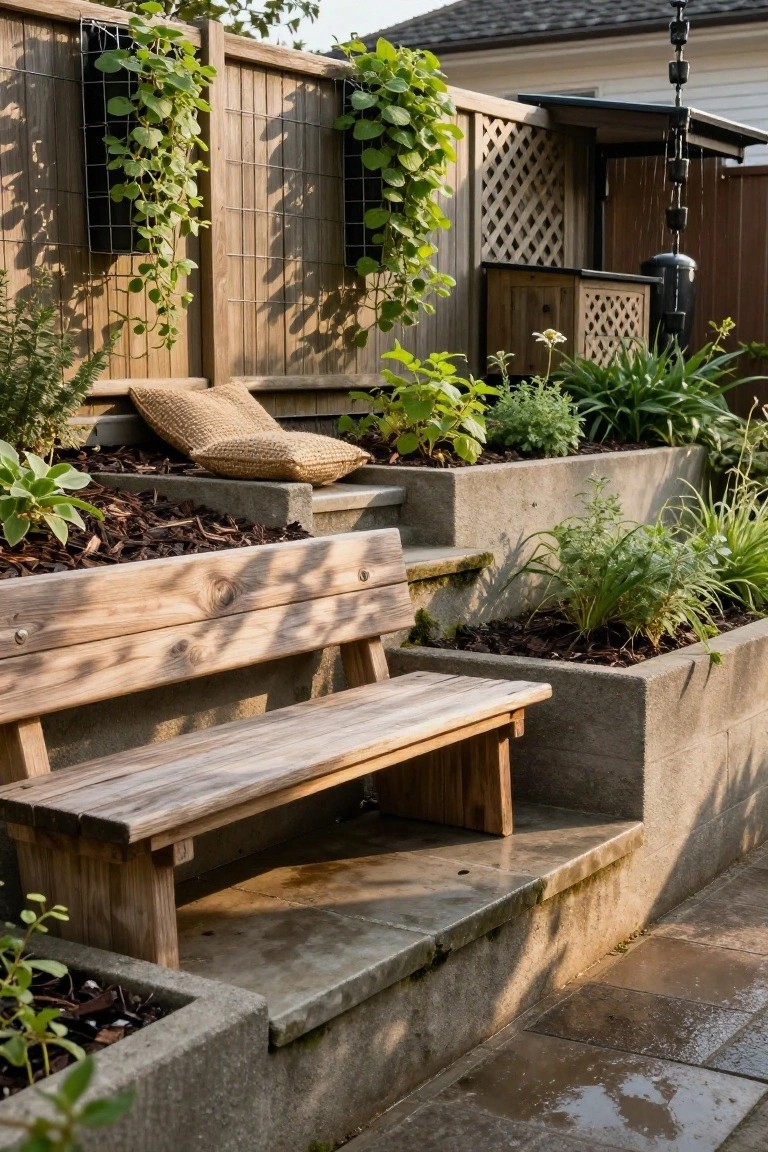
Concrete tiers like these turn a tricky sloped spot into flat planting areas. You get more room for herbs, veggies, or flowers without losing ground to paths or wasted space. A simple wooden bench fits right into one level, so you can sit and tend the garden.
This works best in small backyards where the land drops off. Stack concrete blocks or pour forms for sturdy beds that hold soil well. Plant low growers at the bottom, taller ones up top. Watch drainage so roots don’t stay too wet.
Grill Station with Hanging Herbs
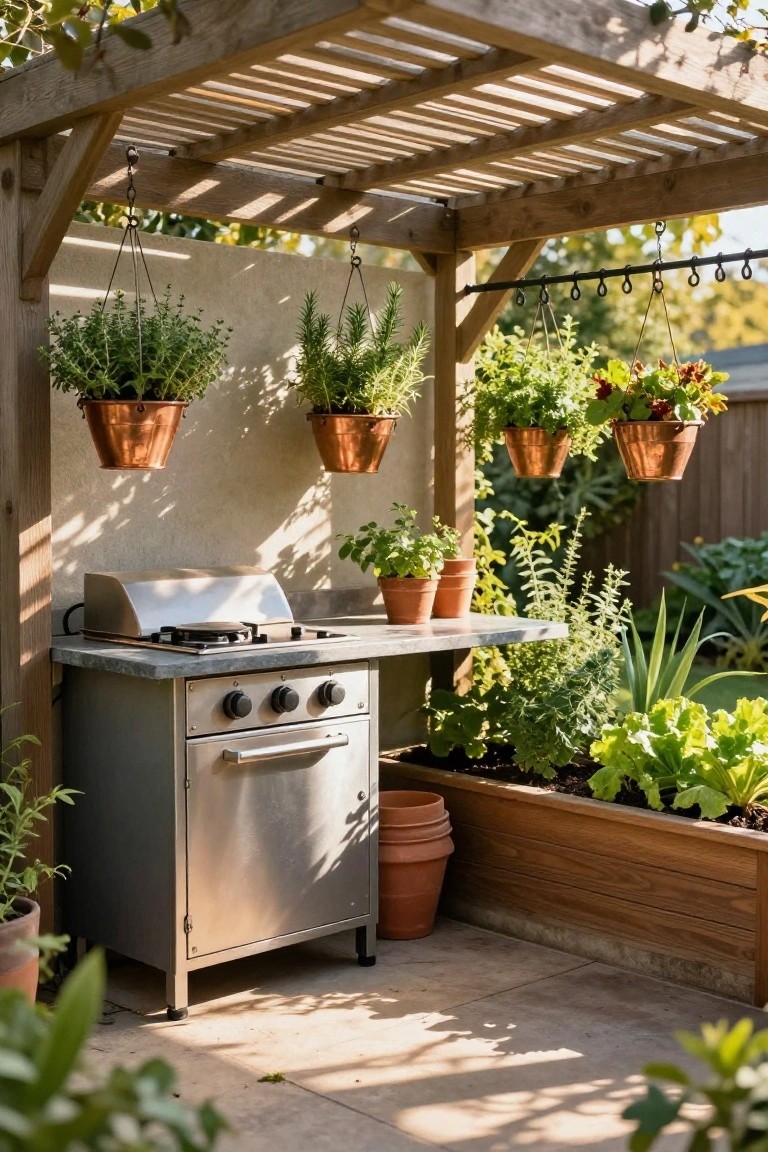
One practical idea for a small backyard homestead is planting herbs directly around your outdoor grill. It turns a simple cooking spot into something productive, with fresh picks like rosemary and basil just steps away. The hanging copper pots and countertop planters keep everything handy without taking up much floor space.
This setup shines on shaded patios under a pergola, where herbs get dappled sun. Go for durable pots and easy-grow varieties. It’s ideal for tight spaces, but make sure good drainage to avoid root rot.
Raised Black Planters for Backyard Veggies

Raised black planters like these turn a plain patio corner into a productive veggie patch. The long rectangular boxes hold kale and greens neatly, with simple labels to keep track of what is what. That dark color works well against a fence, keeping things tidy without taking up ground space.
Set them along an edge or near seating for easy picking. They suit small urban backyards best, where soil might be poor anyway. Just make sure they drain well… and pick containers that stack or connect if you want to expand.
Raised Beds Next to a Pond
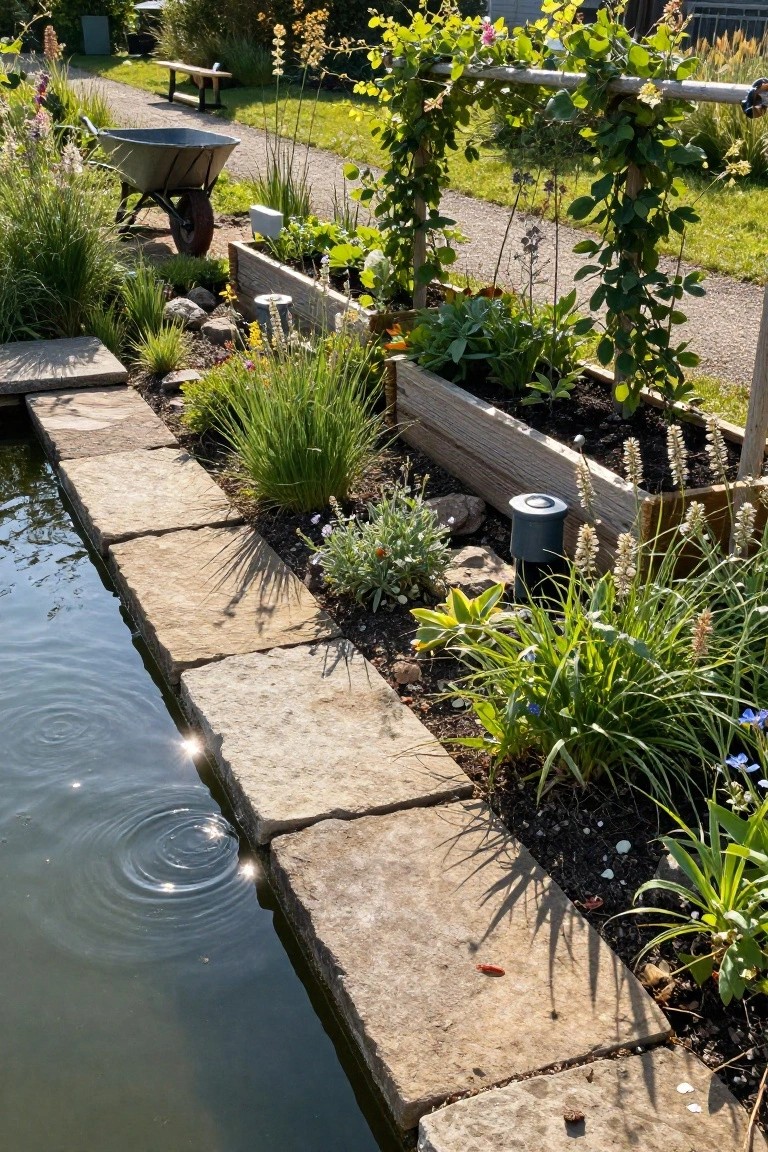
One simple way to make a small backyard more productive is to tuck raised beds right up against a pond edge. The stone slabs give a clean border for the water, and the wooden planters hold veggies or herbs that grow well with a bit of reflected light. It keeps things tidy while using every inch for growing food. That wheelbarrow nearby makes it feel like real work happens here.
Put this setup in a sunny corner where the pond can double as a water source for your plants. It works best on level ground so drainage stays simple. Go for shallow beds if your soil is heavy, and pick tough plants like greens or herbs that handle some shade from taller grasses. Just keep the stones level to avoid slips around the water.
Olive Trees in Terracotta Pots
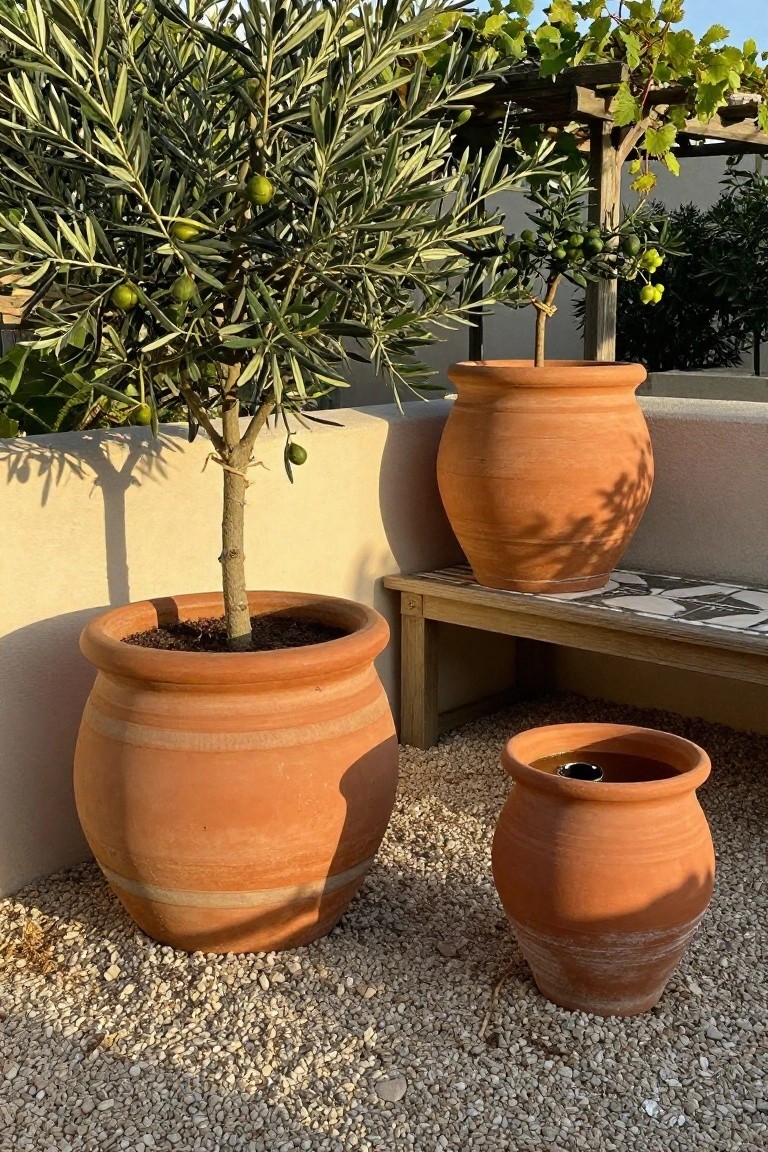
Olive trees do well in big terracotta pots. They give a small backyard that Mediterranean homestead look without taking up much ground space. You get fruit down the line too, which fits right into a productive setup. The clay pots let roots breathe and drain fast, keeping things healthy even in tight spots.
Put a few like this on gravel or near a bench for easy picking and sitting. They work best in sunny, dry areas with mild winters. Just check drainage holes and use gritty soil mix to avoid root rot. Scale matches small yards perfectly.
Garden Shed with Built-In Grain Storage
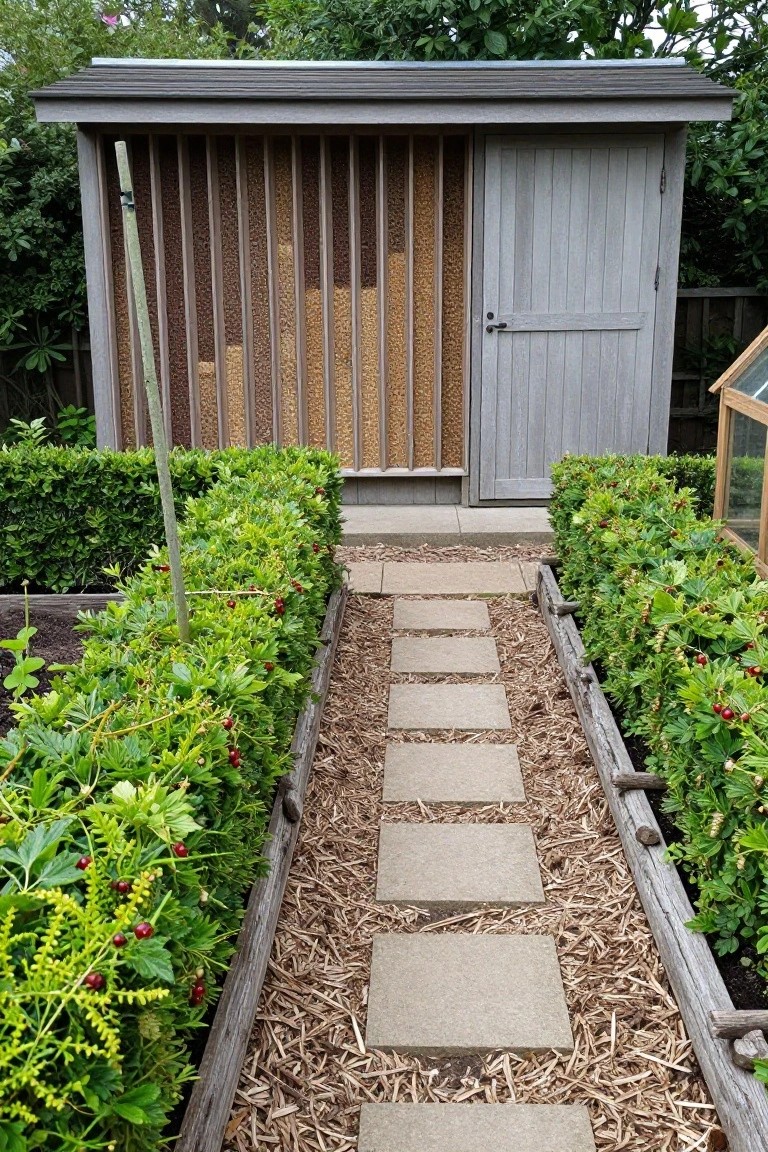
One smart way to make a small backyard more productive is turning part of your garden shed into grain storage. Those vertical slats on the side let you see the golden grains inside without opening doors all the time. It keeps things handy for feeding chickens or milling flour right there in your homestead setup, and the look fits right in with the garden hedges around it.
This works best in tight spaces where you want storage without taking up extra room. Put it near raised beds or paths like the stone steps through mulch here. It’s practical for urban yards or anyone starting small-scale homesteading, just make sure the slats are tight enough to keep pests out.
Winding Water Path in Garden Beds

One smart way to make a small backyard feel more like a homestead is with a simple winding water path snaking through your planting beds. Here it’s edged in black metal that holds a gentle flow of water, curving around rocks and layered plants like hostas, grasses, and flowering shrubs. That movement draws the eye and breaks up the greenery without taking up extra room. Plus it keeps soil moist nearby for healthier growth.
You can set this up in any tight yard spot by digging a shallow trench, lining it with flexible edging, and running a recirculating pump for the water. It suits sunny or part-shade areas with mixed perennials and evergreens. Watch the pump maintenance though… a quick clean keeps it going. Tuck in some herbs or veggies along the edges for real productivity, and add a bench to sit and watch.
Vertical Pallet Herb Garden

A simple way to grow fresh herbs in a tight backyard is to turn pallets into wall shelves. Fill mason jars and pots with plants like parsley or thyme, and mount the whole thing right on your fence. It keeps the ground clear for other uses and looks right at home with weathered wood.
This works best along a side yard fence where space is short. Add a downspout that drips into a barrel at the base for rainwater collection, and you’ve got low-effort watering too. It’s practical for anyone starting a small homestead, just seal the wood first to last longer.
Backyard Pergola with Climbing Vines
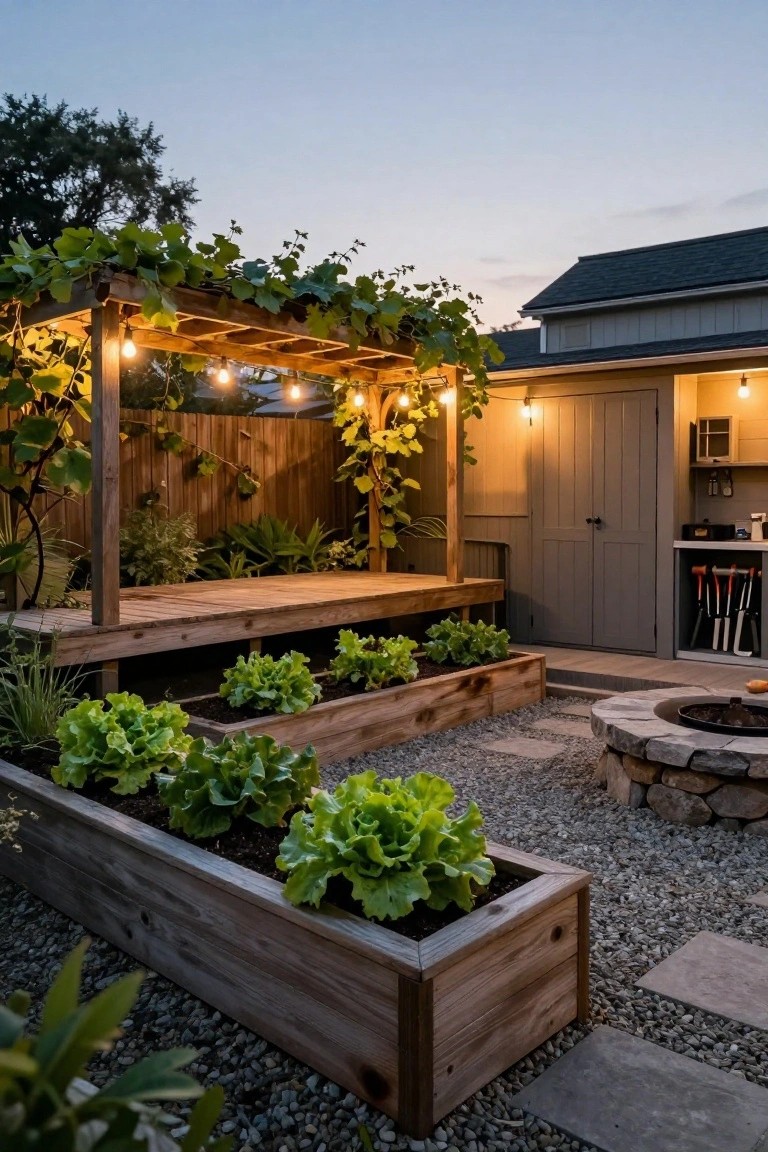
A wooden pergola like this one, draped in lush climbing vines, makes a natural roof for outdoor time without blocking all the light. String lights tucked among the leaves give it that easy evening glow, perfect for small yards where you want a spot to sit or eat. It sits right by raised beds full of greens, so the space feels productive and lived-in.
Put one over a simple deck or platform in a compact backyard. Choose quick-growing vines that suit your climate, like grapes if you want edible cover. Keep the ground gravel or stone for low upkeep, and it fits most homes looking to stretch their living area outside. Just make sure the posts are sturdy for wind.
Vertical Herb Garden on the Fence

A simple way to grow fresh herbs in a tight backyard is to mount wooden planters right on the fence. These rustic crates hold plants like parsley, basil, and mint, each labeled for easy picking. It frees up ground space and keeps everything handy for cooking. Folks with small lots love how it turns a boring fence into something useful.
Hang a few old crates or build simple ones from scrap wood. Use brackets to secure them at different heights for good airflow. Pick herbs that match your sun and go for pots with drainage holes. This fits most backyards… just water regularly since they dry out faster up high.
Row of Cold Frames for Extended Growing
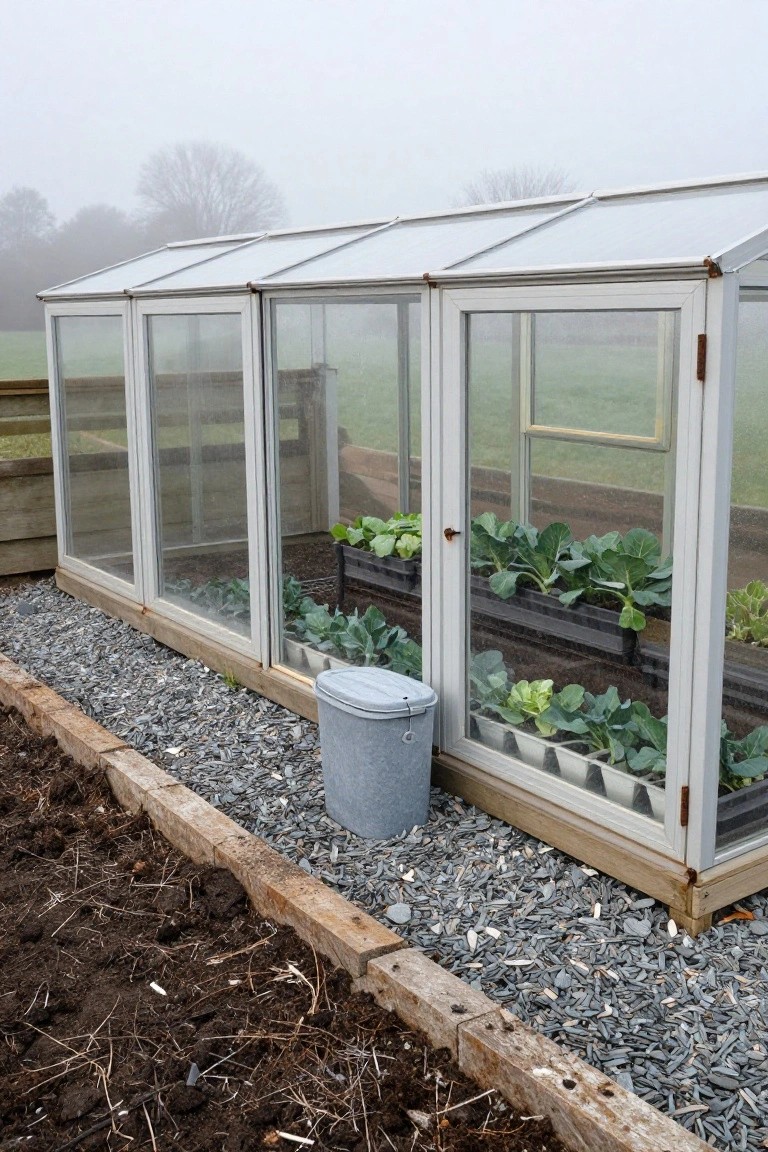
Cold frames like these make a big difference in small backyards. They’re basically mini greenhouses made from old glass panels and wood frames, set right into the garden beds. You can start veggies early or keep them going later, even on foggy days like this one. The plants inside—cabbages and such—stay protected from frost while everything else hunkers down outside.
Put them along a sunny path or edge of your plot, where they catch good light but block wind. They’re cheap to build from scraps, perfect for homesteaders short on space. Just vent them on warmer days to avoid cooking the plants. Fits right into raised beds too, turning bare dirt into steady harvests.
Build a Wood-Fired Pizza Oven in the Courtyard

A brick pizza oven like this one turns a tight backyard corner into a real working spot. It’s built right into the wall, with a chimney that pulls smoke up and away. In a small homestead setup, it lets you bake bread, pizza, or veggies fresh from the garden without taking up much room. The warm tones match the clay pots and path around it, keeping things simple and earthy.
This works best in enclosed courtyards or patios where you want cooking close to seating. Place a small table nearby for eating outside, like the metal one here. It suits city lots or older homes with stucco walls. Just make sure it’s sturdy and vented right, or check local rules before building.
Raised Beds from Galvanized Panels

These raised garden beds use simple galvanized metal mesh panels for the walls. They hold soil well and let roots grow without much hassle. In a small backyard, this setup gives you good planting space without taking over the yard. The panels are tough against weather and pests. Plus they drain fine on their own.
You can build them any size to fit your spot. Stack the panels for height if you want less bending over. They work great near a house or fence, like here with bushes along one side and a rain barrel close by for water. Keep them filled with good soil and mulch on top to hold moisture. Just check the panels now and then for rust.
Rustic Wooden Shelves for Balcony Plants

A set of simple wooden shelves fitted against the balcony rail holds pots of herbs, greens, and succulents in tight layers. That corner unit with its slatted back and open drawers below turns unused wall space into a growing spot without crowding the floor. Folks like it because it fits small areas and keeps plants healthy close to hand.
Try this on any deck or terrace under 100 square feet. Use reclaimed wood for that weathered look, secure it well against wind, and group plants by light needs. The small table nearby works for tools or a lamp to tend things at dusk. Just watch moisture on the wood.
Frequently Asked Questions
Q: My backyard is tiny, like 10×10 feet. Which ideas fit without feeling cramped?
A: Stack planters vertically on fences or walls to grow greens and herbs skyward. This frees up the ground for a small compost pile or worm bin. You’ll harvest fresh stuff weekly.
Q: I rent my place. Can I still try these homestead hacks?
A: Focus on pots, raised beds, and hanging baskets you can take with you. Grow microgreens or cherry tomatoes indoors if needed, then move outside. Neighbors won’t even notice.
Q: Chickens sound fun, but what if pests or smells become a problem? A: Build your coop on legs with wire mesh floors so droppings fall into a tray you clean daily. Add herbs like mint around it to naturally deter bugs. Fresh bedding weekly keeps odors low.
Q: What’s the fastest way to see results from my new setup? A: Plant radishes or lettuce right now. They mature in weeks and keep producing if you harvest outer leaves. Boom, salads on your table soon.
