

Growing your own vegetables can be an incredibly rewarding experience, but it often comes with a hefty price tag. From seed and soil to equipment and labor, the cost of growing your own vegetables can quickly add up. But with the right strategy, you can keep costs low while still enjoying a plentiful harvest. In this article, we’ll explore how much it costs to grow vegetables and how you can save money while still getting delicious produce.
The cost of growing vegetables can vary greatly depending on the type of vegetables, the methods used, and the amount of time and energy invested. Generally, the cost of growing vegetables includes the costs associated with purchasing soil and fertilizer, as well as seeds or plants. Additionally, there may be costs related to preparing a garden or allotment, such as acquiring tools or other equipment. Furthermore, there are also ongoing costs associated with watering and maintaining the garden. The cost of growing vegetables can range from a few dollars to hundreds or even thousands of dollars.
What Are the Costs of Planting Vegetable Seeds?
Planting vegetable seeds is a great way to grow your own vegetables and enjoy the satisfaction of harvesting them right from your own garden. However, growing vegetables requires more than just planting the seeds, as there are associated costs involved such as purchasing the right equipment and supplies, and making sure the soil is suitable for gardening. In addition, while some vegetables are more expensive to purchase than others, some vegetable seeds can be more expensive than others as well.
The cost of vegetable seeds will depend on a variety of factors, including the type and variety of seed you choose to purchase. Some of the most popular vegetable varieties are tomatoes, peppers, eggplants, cucumbers, squash and zucchini. Heirloom varieties may be more expensive than hybrid varieties and organic or non-GMO seeds may also be more costly.
In addition to purchasing the actual vegetable seed packet or individual packets for specific varieties, there are other costs associated with planting vegetable seeds such as soil amendments and fertilizers to help your plants grow healthy and strong. If you plan on starting your plants indoors before transplanting outdoors in warmer months, you’ll need to factor in additional costs for containers or seed trays for sprouting your plants.
You’ll also need to consider additional supplies such as hoses or sprinklers for watering your plants regularly if you don’t have an irrigation system in place. And if you’re using raised beds or containers to plant in you’ll need to take into account their cost as well.
Overall, the cost of planting vegetable seeds can vary greatly depending on how much you’d like to spend in terms of supplies and equipment that will help ensure a successful harvest season. While some vegetables may be more expensive than others due to their variety or organic status, there are many options available that can fit any budget.
What Are the Costs of Purchasing Vegetable Starts?
Purchasing vegetable starts is an essential part of any home garden. Vegetable starts are young plants that have been started indoors and transplanted into the garden. The cost of purchasing vegetable starts can vary depending on the type of plant, the size, and the supplier.
The cost of individual vegetable starts can range from a few cents to several dollars each. Generally, larger plants will cost more than smaller ones. Some suppliers offer bulk discounts if you purchase multiple plants, which can help to reduce costs.
Organic vegetable starts tend to be more expensive than conventional varieties, but they are usually healthier and better for the environment. Heirloom varieties may also cost more due to their limited availability and demand.
Another factor that affects the cost is where you purchase your vegetable starts. Local nurseries or garden centers often have a wide selection of plants at reasonable prices. If you don’t have access to these stores, online sources such as seed catalogs or specialty stores may also be an option. You may be able to find deals or discounts from these sources if you look around.
Finally, some people choose to grow their own vegetable starts from seed at home. This option can help save money in the long run and is great for those who want more control over what they’re growing in their garden.
Overall, there are many factors that affect the cost of purchasing vegetable starts for your home garden. Knowing what type of plant you want, where to buy them from, and taking advantage of discounts or deals can all help keep costs down when buying these essential items for your garden.
Recommended Products

NUTRIENT-RICH, NATURAL, AND ORGANIC SOIL: Grow a bountiful garden in your home with the Back to the Roots All-Purpose Natural and Organic Peat-Free 3-in-1 Seed Starting Mix, packed with the nutrients needed for your plants, flowers, and vegetables to thrive

Includes Back to the Roots Compressed Seed Starting Potting Mix that expands to 12qt of soil. A balanced pH, which means it’s truly all-purpose. Use alone or as an amendment for anything in a pot or in the ground — vegetables, flowers, herbs, and even starting seeds.

CONTAINS: This organic Seed Stating soil mix is a rich blend of sphagnum peat moss & perlite with yucca extract and lime to ensure correct pH.
Costs of Fertilizers and Pesticides
Fertilizers and pesticides are essential components of modern agriculture, but their usage comes with a cost. The cost of fertilizers and pesticides depends on the type of product being used, the quantity, the quality and where it is purchased from. Fertilizers and pesticides can range from relatively inexpensive to extremely expensive. The cost of fertilizers varies widely depending on the type being used, with some synthetic products being more expensive than natural ones. Commonly used types of synthetic fertilizers include urea, ammonium nitrate, potassium chloride and calcium phosphate. Natural fertilizers such as compost or manure can be much less expensive but may take more time to break down in soil than synthetic products.
Pesticides also vary in cost depending on their type and formulation. Insecticides may be cheaper than herbicides or fungicides due to their lower toxicity levels. Synthetic insecticides such as pyrethroids are usually less expensive than natural products like neem oil or diatomaceous earth. Additionally, certain types of pesticides may require special equipment for application which can add to overall costs. For example, aerial spraying requires a plane or helicopter which will add to the expense.
Overall, the costs associated with fertilizers and pesticides vary greatly depending on the type being used and the quantity purchased. It is important for farmers to do research into various products before purchasing them in order to ensure they are getting a good value for their money. Additionally, farmers should consider alternative methods for pest control such as crop rotation or biological controls in order to reduce their reliance on chemical inputs which can be costly in both financial terms as well as environmental impact.
Recommended Products

KILLS LISTED INSECTS THROUGH CONTACT: Spinosad-based formula controls aphids, caterpillars, mealybugs, spider mites, thrips, and 30 listed pests on edible and ornamental plants

For more nutritious and tasty vegetables

Burpee Organic All Purpose Granular Plant Food is formulated for long-lasting results
Costs of Water and Irrigation
The costs of water and irrigation depend on the type of system being used, the size of the area to be irrigated, and the location of the system. In most cases, the cost of installing a water and irrigation system can range from a few hundred to several thousand dollars. This cost may include equipment such as pumps and pipes, labor to install the system, and recurring costs for maintenance and repairs.
For residential purposes, water is usually supplied from a local source such as a well or municipal supply. The cost for this type of system can vary depending on how much water is used and whether additional pipes or pumps are needed. In some cases, homeowners may need to purchase additional equipment such as tanks or water softeners to improve water quality.
For agricultural purposes, irrigation systems may range from simple systems such as sprinklers or drip irrigation to more complex systems such as center pivot irrigation or subsurface drip irrigation (SDI). The cost of installing these systems can vary greatly depending on the size of the area being irrigated. For large-scale agricultural operations, costs can run into thousands or even tens of thousands of dollars.
The cost of operating an irrigation system will also depend on factors such as energy usage for pumping water and fertilizer costs for soil health maintenance. Additionally, there may be fees associated with water rights that need to be taken into consideration when looking at total costs.
In summary, the costs associated with installing and operating a water and irrigation system can vary significantly depending on a variety of factors. Homeowners should consider all these factors when deciding what type of system would best suit their needs.

Recommended Products
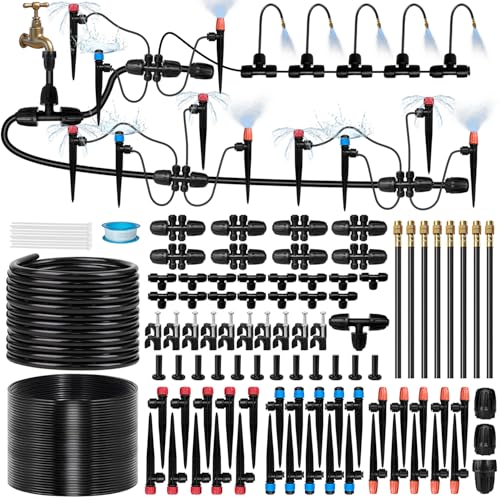
【Upgraded Tube Design & Water Saving】 Our garden watering system is upgraded to 1/2” diameter to support high water pressure. The 1/2” tee connector allows seamless splitting into 2 independent zones for customized watering schedules. By delivering moisture directly to root zones, this drip Irrigation system significantly reduces evaporation and runoff—saving more water compared to conventional sprinklers while eliminating the need for manual watering.

✔Comprehensive Drip Irrigation Kit:MIXC drip irrigation system, equipped with a versatile range of components, caters to all your garden watering needs.Includes essential parts such as 197ft 1/4'' irrigation tube, 33ft 1/2'' irrigation tube, 1/2‘’ Lock Barbed Tee connectors, drip emitter streams, vortex emitters, Blue Mist Nozzles, Quick connection tees, Faucet Connector, and more.
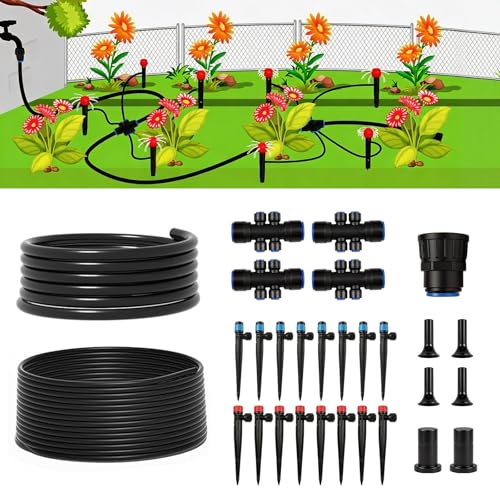
TRUE QUICK CONNECT – NO LEAKS, NO STRUGGLE: Unlike traditional kits that require twisting and force-fitting, our quick-connect design lets you simply push tubing into place. Secure, leak-resistant connections every time — no tools needed.
What Are the Costs of Equipment and Supplies?
The cost of equipment and supplies can vary greatly depending on the type of project. For example, a small-scale project may require basic materials such as tools, lumber, or paint, which may be purchased for a few hundred dollars. On the other hand, a larger-scale project could require specialized tools and materials that could cost thousands of dollars. Additionally, some projects may require additional supplies such as safety equipment or machines that could add to the overall cost. It is important to carefully consider the cost of all necessary equipment and supplies before beginning a project so that it can be completed within budget.
It is also important to consider any additional costs related to transport or storage when calculating the total cost of equipment and supplies. For example, if large pieces of material need to be moved from one location to another, it will likely require an additional fee for transport. Additionally, if items need to be stored for an extended period of time before they are used in a project, there may be additional fees associated with renting storage space. Taking these additional costs into account will help ensure that all costs associated with a project are accounted for in the total budget.
Ongoing Maintenance Costs for Growing Vegetables
Growing vegetables can be a rewarding and cost-effective way to get fresh, healthy produce. However, there are some costs associated with maintaining a vegetable garden, such as soil preparation, water, and fertilizer. Depending on the size of the garden and the types of vegetables being grown, the ongoing maintenance costs can vary greatly.
Soil preparation is one of the most important elements in growing vegetables. Good soil should be well-drained, nutrient-rich, and free of weeds and pests. To achieve this, gardeners may need to purchase soil amendments such as compost or manure to help improve the soil structure and fertility. Additionally, raised beds can be constructed to provide better drainage and add organic matter to the soil.
Water is an essential component for plant health. Depending on where you live and what types of vegetables you’re growing, you may need to supplement natural rainfall with regular watering from a hose or drip irrigation system. If your garden is large enough, you may also want to invest in an irrigation system that runs on a timer for convenience and efficiency.
Finally, fertilizer is important for providing plants with additional nutrients that may not be present in the soil naturally. There are many different types of fertilizers available – organic or synthetic – but it’s important to choose one that is appropriate for your particular vegetable varieties. Additionally, fertilizers should be applied according to directions as too much can damage plants or lead to nutrient runoff into nearby bodies of water.
The ongoing maintenance costs for growing vegetables will vary depending on factors such as size of the garden and type of vegetables being grown. However, by investing in quality soil amendments, an efficient irrigation system (if necessary), and appropriate fertilizers when needed – gardeners can ensure their gardens are healthy and productive for years to come!
Location
The cost to grow vegetables can be affected by the location of the garden. Different regions have different climates and different soil conditions that can affect the cost of growing vegetables. In areas with a longer growing season, it may be easier and less expensive to grow vegetables than in areas with shorter growing seasons. Additionally, access to water sources, fertilizer, and other materials necessary for gardening can affect the cost of growing vegetables.
Size
The size of the garden can also influence the cost to grow vegetables. Larger gardens require more supplies and materials, such as soil amendments, mulch, pesticides, and seeds or seedlings. If a gardener is trying to save money on gardening costs, it may be best to start with a smaller garden that can be expanded as needed over time.
Types of Vegetables
The types of vegetables grown in a garden can also affect the cost. Some types of vegetables require more maintenance and supplies than others, so it is important to consider which types are best suited for a particular budget before planting. For example, tomatoes require staking and pruning throughout their growth cycle, while other vegetables such as carrots may not need any extra maintenance.
Time Commitment
The amount of time someone is willing or able to dedicate to their garden will also affect the cost. If someone has limited time available for gardening, they may need to purchase more expensive materials or labor in order to get their garden off the ground quickly. On the other hand, if someone has plenty of time available for gardening tasks such as weeding and pruning, they may save money on supplies or labor costs.
Source of Seeds or Seedlings
Finally, where the seeds or seedlings are purchased from will also affect the cost of growing vegetables. Purchasing from local nurseries or farmers markets may be more expensive than buying online or in bulk from large retailers. Additionally, some varieties may only be available from certain sources which could increase costs further.

Conclusion
Growing your own vegetables is a great way to save money, provide healthy and delicious options for your family, and reduce your environmental impact. The cost of growing vegetables at home can vary greatly depending on the type of plants you choose and how much space you have available. Generally speaking, the initial costs are low, but ongoing maintenance costs such as water and fertilizer can add up over time. Additionally, if you live in an area with a short growing season or harsh weather conditions, you may need to invest in additional supplies such as greenhouses or special irrigation systems.
No matter what type of garden you decide to have, it’s important to do your research and understand all the potential costs associated with growing vegetables before you begin. With proper planning, commitment and a little bit of patience, growing your own fresh produce can be a rewarding experience that will benefit both your wallet and the environment.
